Aave's Internal Conflict Escalates, Morpho Quietly Doubles: Is the Lending Throne About to Change Hands?

Odaily星球日报Published on 2026-03-01Last updated on 2026-03-01

Abstract

The article discusses the escalating internal conflicts within Aave and the rising prominence of Morpho in the decentralized lending space. While Aave remains the largest lending protocol by total value locked (TVL), it is facing significant governance disputes, including a controversial $51 million funding proposal and accusations of poor fund utilization by its team. These issues have slowed decision-making and created internal division. In contrast, Morpho has gained attention due to its modular, permissionless lending infrastructure, Morpho Blue, which allows for isolated markets with independent risk parameters set by curators rather than relying on slow global governance. This design reduces friction and enables faster adaptation. Morpho’s metrics show strong growth: TVL surpassed $9.5 billion in late 2025, active loans exceeded $3.5 billion, and quarterly active addresses grew from 30,000 to 400,000. Protocol revenue remained stable around $50 million per quarter. A major catalyst for Morpho is the involvement of traditional finance. Apollo Global Management plans to acquire up to 90 million MORPHO tokens (9% of supply) over four years, worth approximately $162 million at current prices. This signals institutional interest, potentially using Morpho’s leveraging RWA (real-world asset) products for higher yields. Despite Morpho’s growth, it still trails Aave in TVL. However, Aave’s governance challenges may provide an opportunity for Morpho to capture market share. Th...

Original | Odaily Planet Daily (@OdailyChina)

Author | DingDang (@XiaMiPP)
Altcoins are dead—this is a consensus that crypto users have been reluctant to admit but have had to face over the past year. Even former blue-chip tokens have fallen into prolonged sideways movement or gradual declines amid the continuous market weakness, showing little sign of recovery.

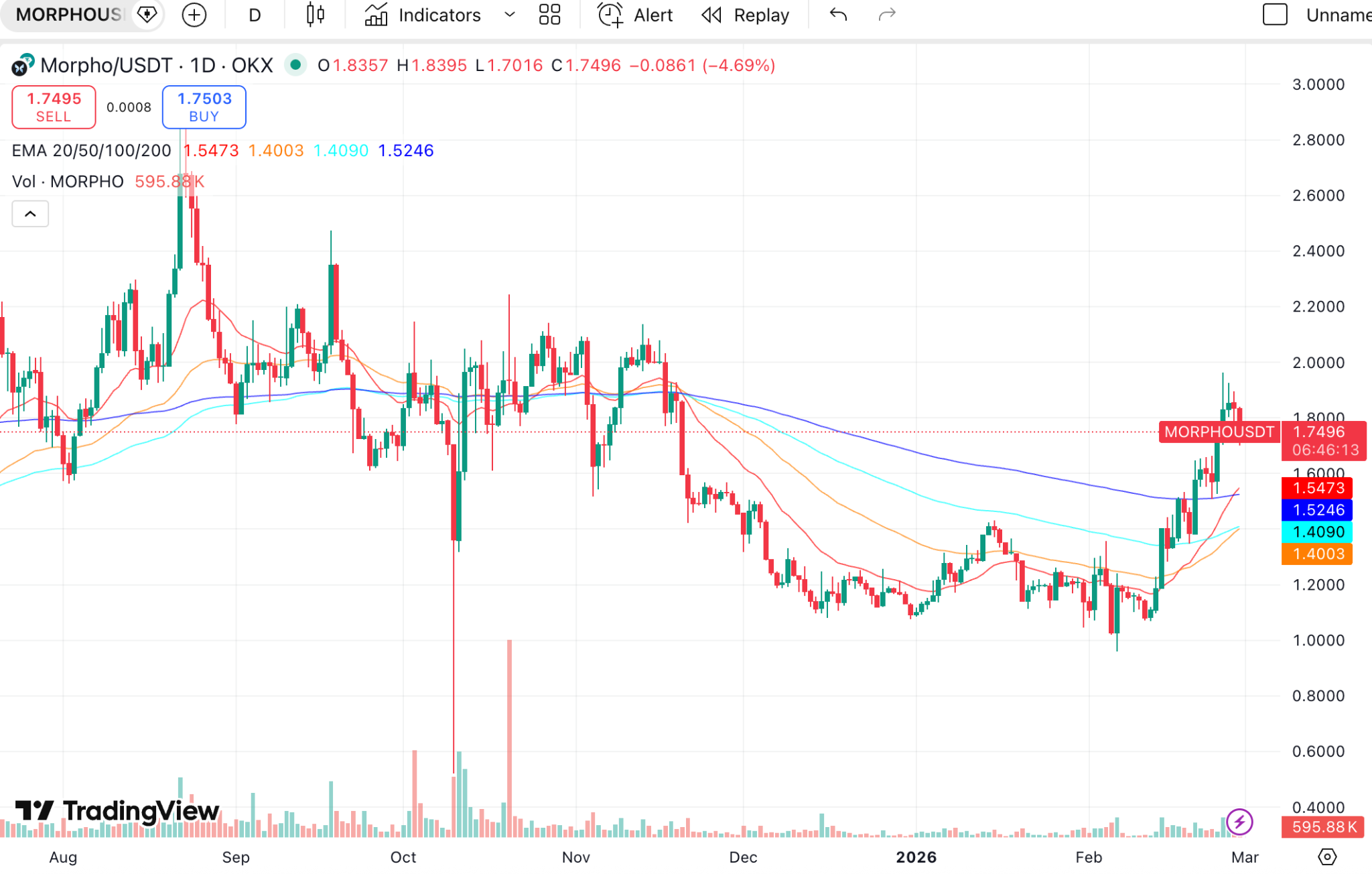
However, amidst this overall slump, the MORPHO token has rebounded from a low of $0.96 in early February to the $1.8-$1.9 range, doubling against the trend. From the daily chart perspective, this rebound has largely formed a rounded bottom pattern, potentially signaling a bottom reversal. Is this surge merely driven by short-term market sentiment, or is it the start of a trend fueled by fundamental and structural factors?
When the Old Dynasty Begins to Consume Itself

Morpho is a lending protocol launched in 2021. Initially, its mechanism was similar to lending protocols like Aave and Compound. However, in 2023, Morpho began rolling out Morpho Blue (now its main version), completely transforming into an independent, permissionless lending base layer, firmly positioning itself among the top lending protocols in the Ethereum ecosystem.

That said, in the lending sector, Aave remains the largest by volume and the strongest in brand—an undeniable fact. But recently, Aave has once again found itself in serious governance controversy due to a $51 million "Aave Will Win" funding framework proposed by its founder, Stani.

This fund was originally intended to support new product development, and the proposal explicitly stated that future related brand revenue would be 100% returned to the DAO treasury—a move that seemed like an ideal operation of "surrendering control and benefiting the community" by the project team. However, it unexpectedly ignited long-simmering internal conflicts within the DAO.

The reason is that DAO governance representative and ACI founder Marc Zeller publicly released an "audit" report on February 25, accusing Labs of low fund utilization, having taken approximately $86 million from the DAO over the past few years without transparent disclosure. Meanwhile, core DAO developer BGD Labs announced it would exit in April 2026 due to governance friction. The founder's high voting power once again dominated the controversial proposal, further pushing the entire DAO into an open tug-of-war over power and fund distribution. As early as December last year, cracks had already appeared within the Aave community. For details, refer to Can You Still Buy AAVE Amid Deep Divisions After the Second-Largest Holder Dumped Their Bag?.

Now, as Aave slows down due to governance friction, the "simplicity" of Morpho's governance model is beginning to catch many people's attention. Aave can be considered the first-generation lending governance paradigm of "DAO-led, global parameter adjustment," where all risk parameters (such as collateral factors and liquidation thresholds) are determined by global DAO voting. While this design ensures overall robustness, it easily leads to governance bottlenecks—any minor parameter adjustment requires broad community consensus, and any disagreement can delay decisions, especially during contentious periods, potentially paralyzing decision-making.

In contrast, Morpho follows a second-generation path of modularity and market-driven mechanisms: the protocol itself is highly permissionless, allowing anyone to create isolated markets at any time. The risk parameters for each market (such as LTV, interest rate curves, and liquidation incentives) are set by independent professional risk managers (curators), rather than relying on全网 DAO voting. This means risks are strictly localized within individual markets, with responsibility分散 to specific curators, significantly speeding up decision-making. Curators can quickly iterate parameters based on actual market conditions without waiting for global consensus. The advantage of this design is that it greatly reduces governance friction and decision delays.

When the old dynasty begins to consume itself, it may be an opportunity for new forces to overtake on the curve.

Data Verification: Does It Deserve This Window?

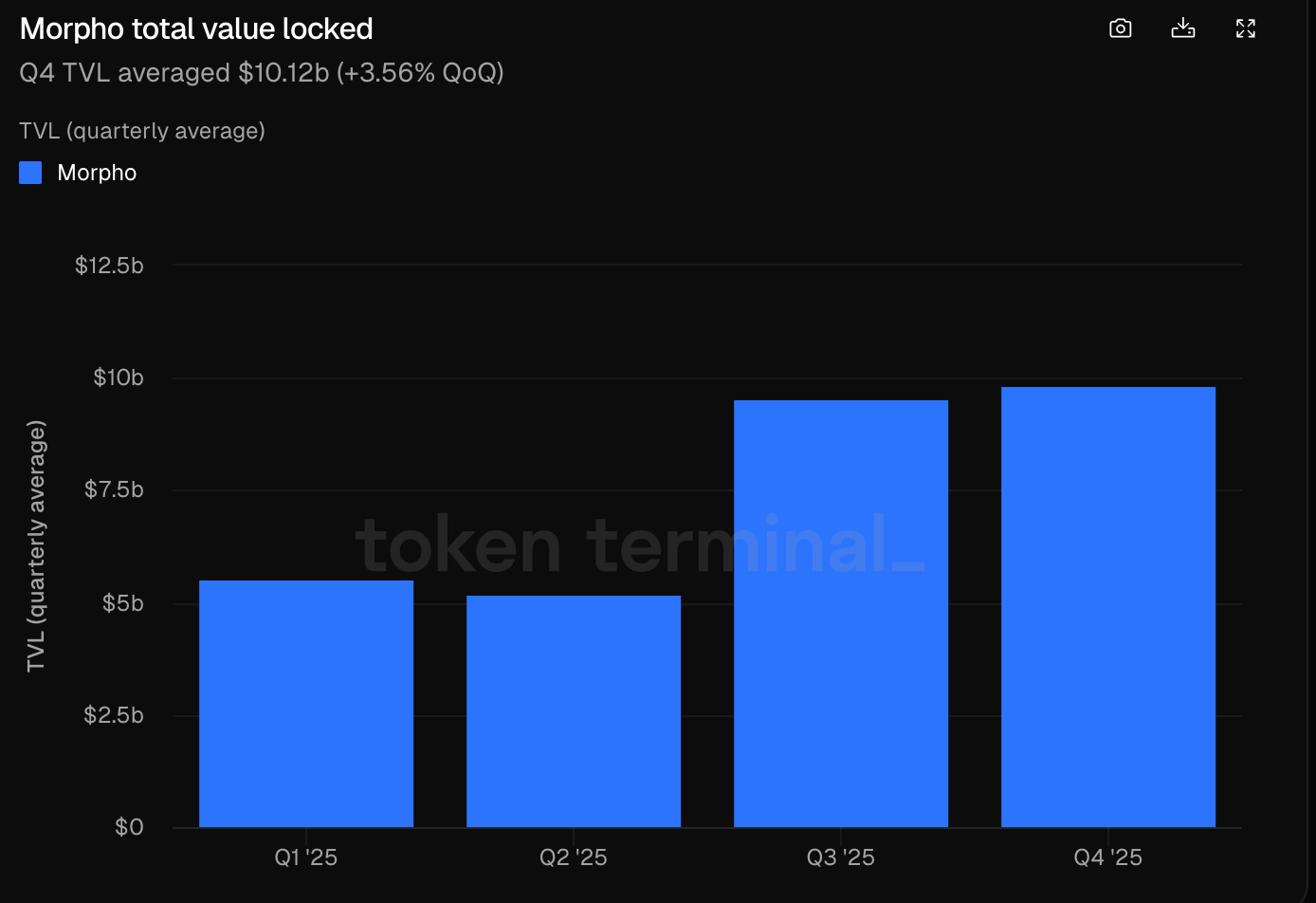
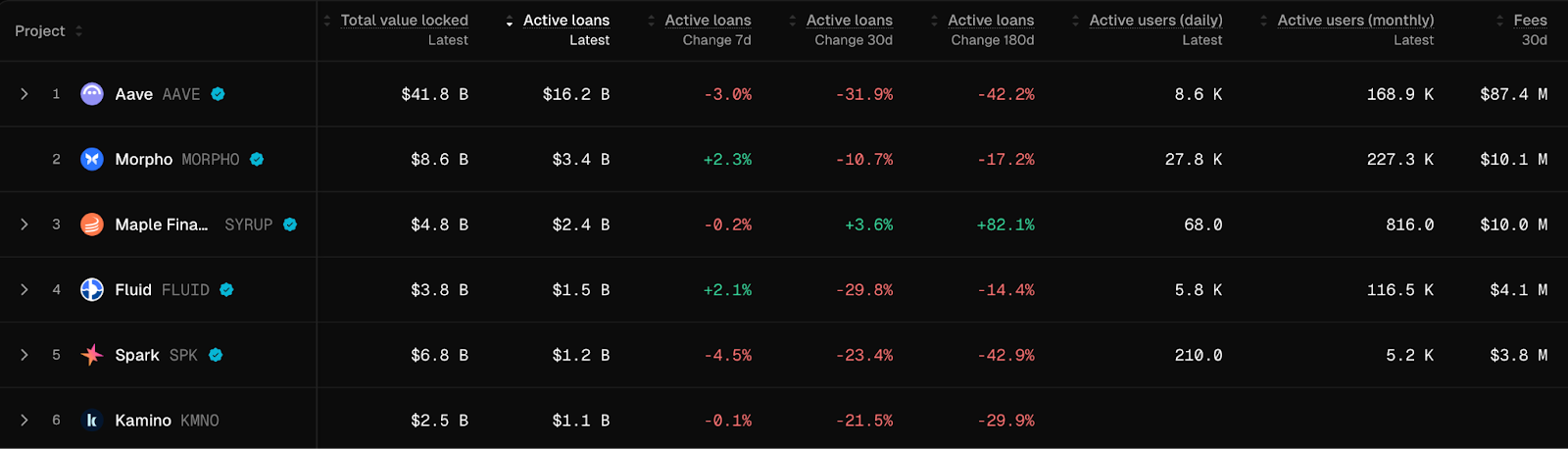
Let's look at Morpho's fundamentals to see if it has the potential to challenge Aave's lending throne. According to Tokenterminal data, in Q3 and Q4 of 2025, Morpho's protocol TVL remained above $9.5 billion, an increase of about 80% compared to the first half of the year.
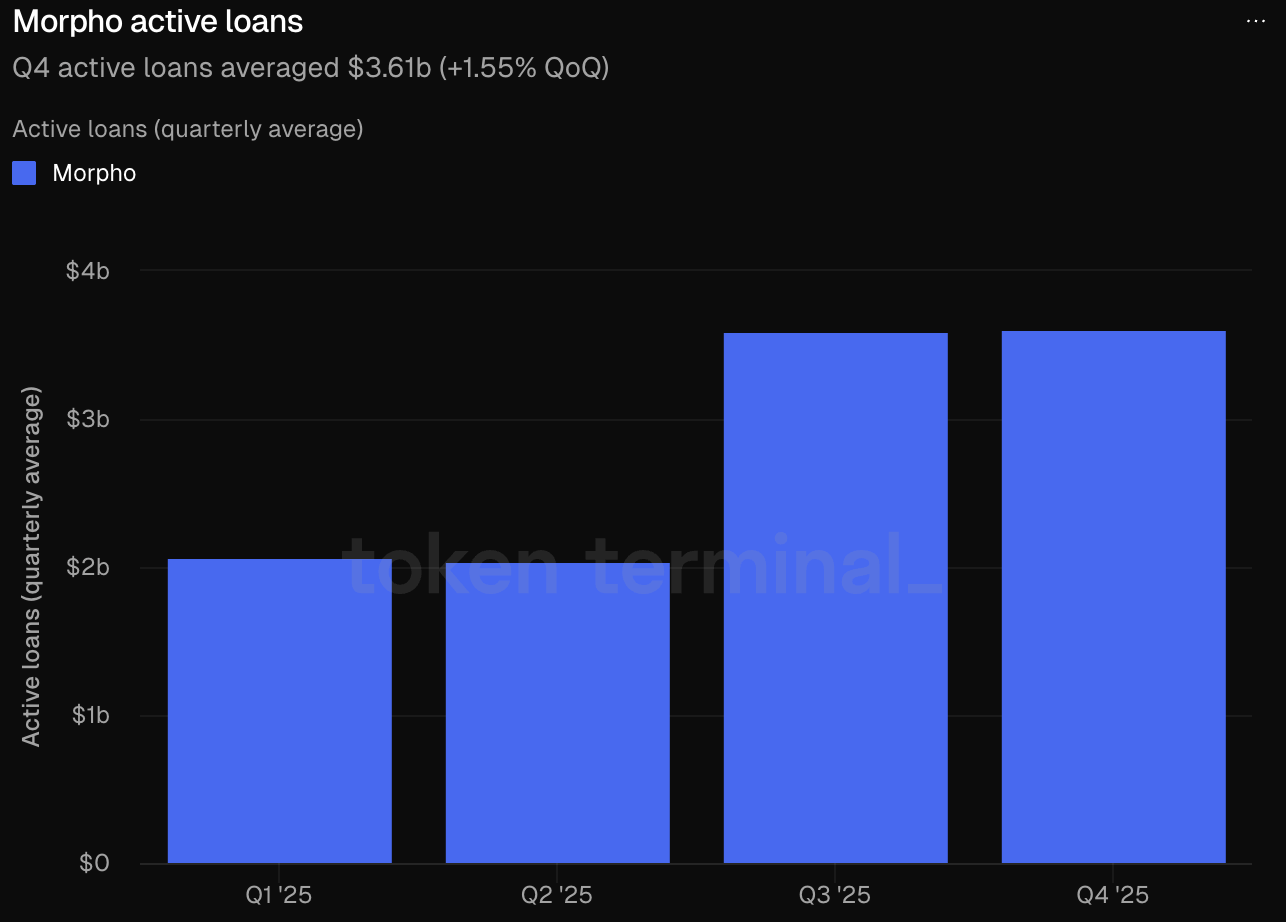
The active loan size within the protocol also stayed above $3.5 billion in both Q3 and Q4, a year-on-year increase of about 80%.
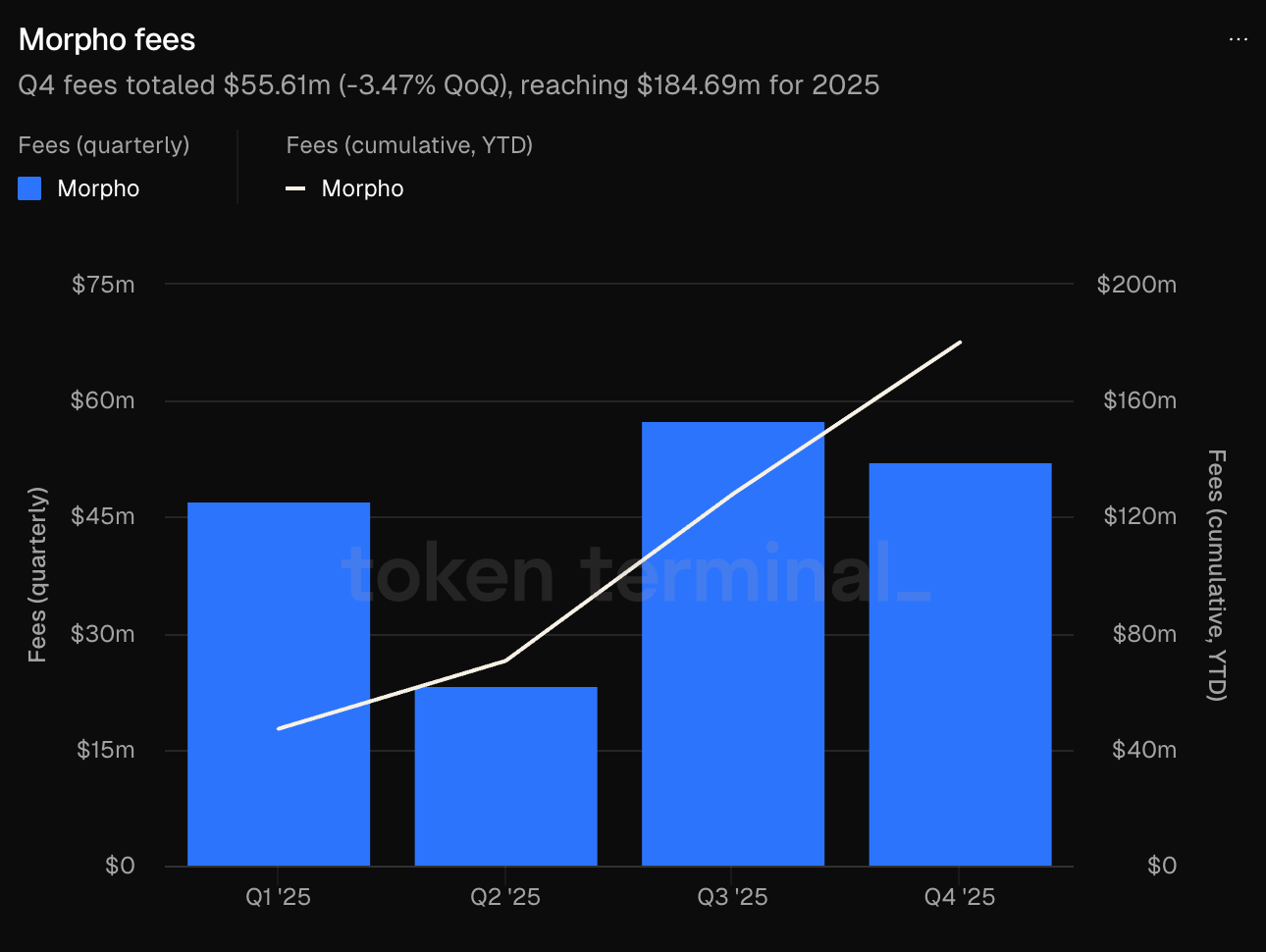
In terms of protocol revenue—one of the core metrics for DeFi protocols—aside from relatively weak performance in Q2, it remained stable at around $50 million in other quarters.
User growth is even more直观, with its quarterly active addresses rapidly expanding from about 30,000 in Q1 to the 400,000 level, showing strong organic growth momentum.
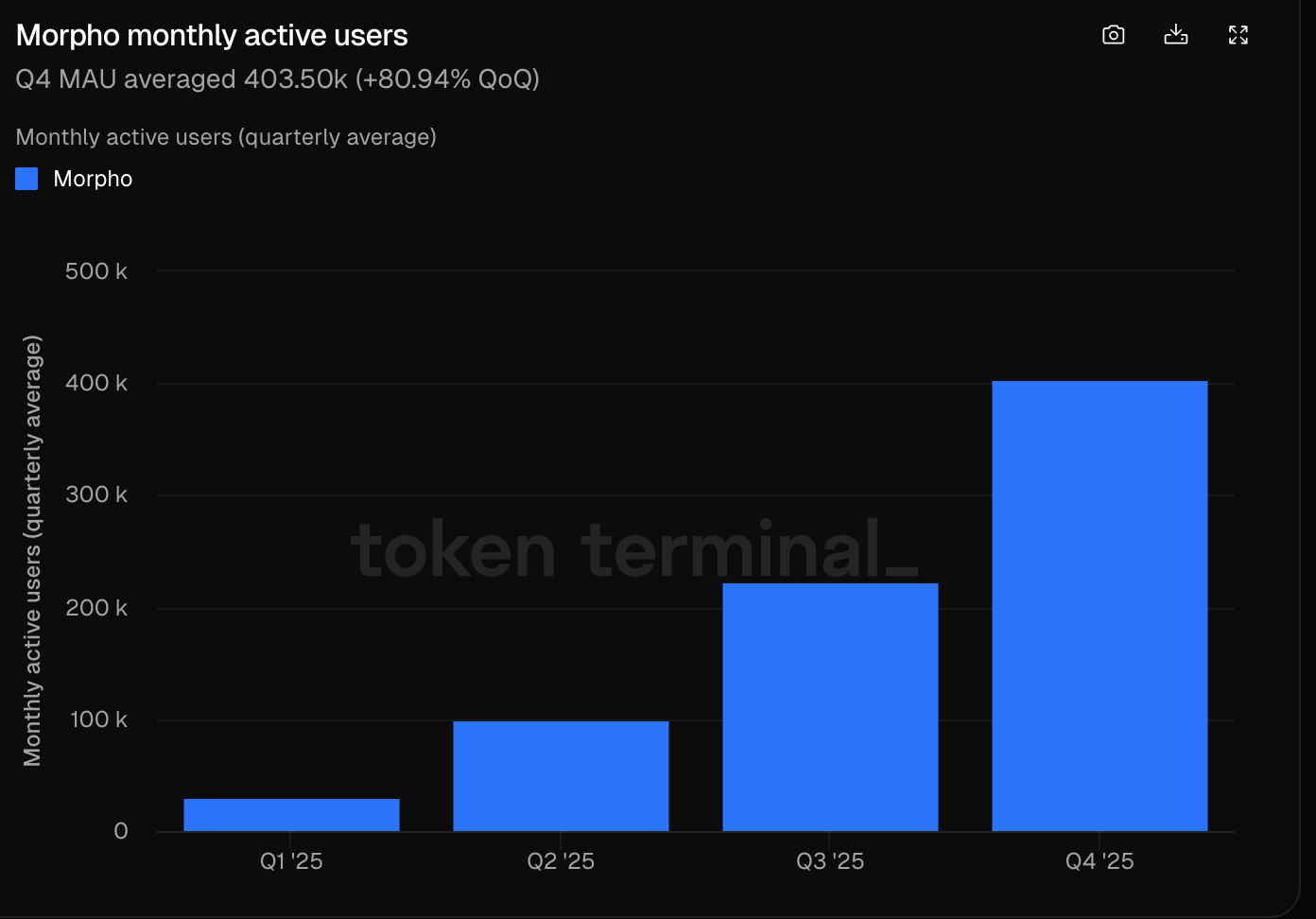
Although Morpho's current TVL and active loan size still lag behind Aave's, its user growth rate has made it one of the most aggressive "dark horses" in the lending sector. Especially against the backdrop of the entire DeFi sector generally under pressure and experiencing阵痛 in 2025, Morpho's performance can be considered achieving counter-trend high growth,足以证明 its product model has withstood market tests. Protocols that can continuously attract funds and users during bear markets often possess stronger爆发力 in the next cycle.
Institutional Variable: When Traditional Capital Starts Betting

Good fundamental data performance only proves that the protocol has a solid foundation, but the bigger catalyst that truly changes the market cap curve is the entry of traditional financial giants.

On February 13, Wall Street asset management giant Apollo Global Management signed a重磅 cooperation agreement with the Morpho Association, the non-profit organization behind Morpho. Specifically,strong> Apollo plans to gradually acquire up to 90 million MORPHO tokens over the next 48 months, equivalent to approximately 9% of Morpho's total supply. At the current price of $1.8, this is worth about $162 million.

From a trading perspective alone, this will bring sustained buying demand for MORPHO. But if you know Apollo, you'll understand that this is more like its strategic penetration into DeFi.

Apollo manages assets close to $940 billion, and its private credit business is known for pursuing high yields. The on-chain world can provide opportunities for leverage amplification and global instant liquidity. Since 2024, it has begun testing the waters in the crypto industry, with RWA as its main battlefield. It partnered with Securitize to tokenize its diversified credit strategy into ACRED, which now reached a scale of $130 million.
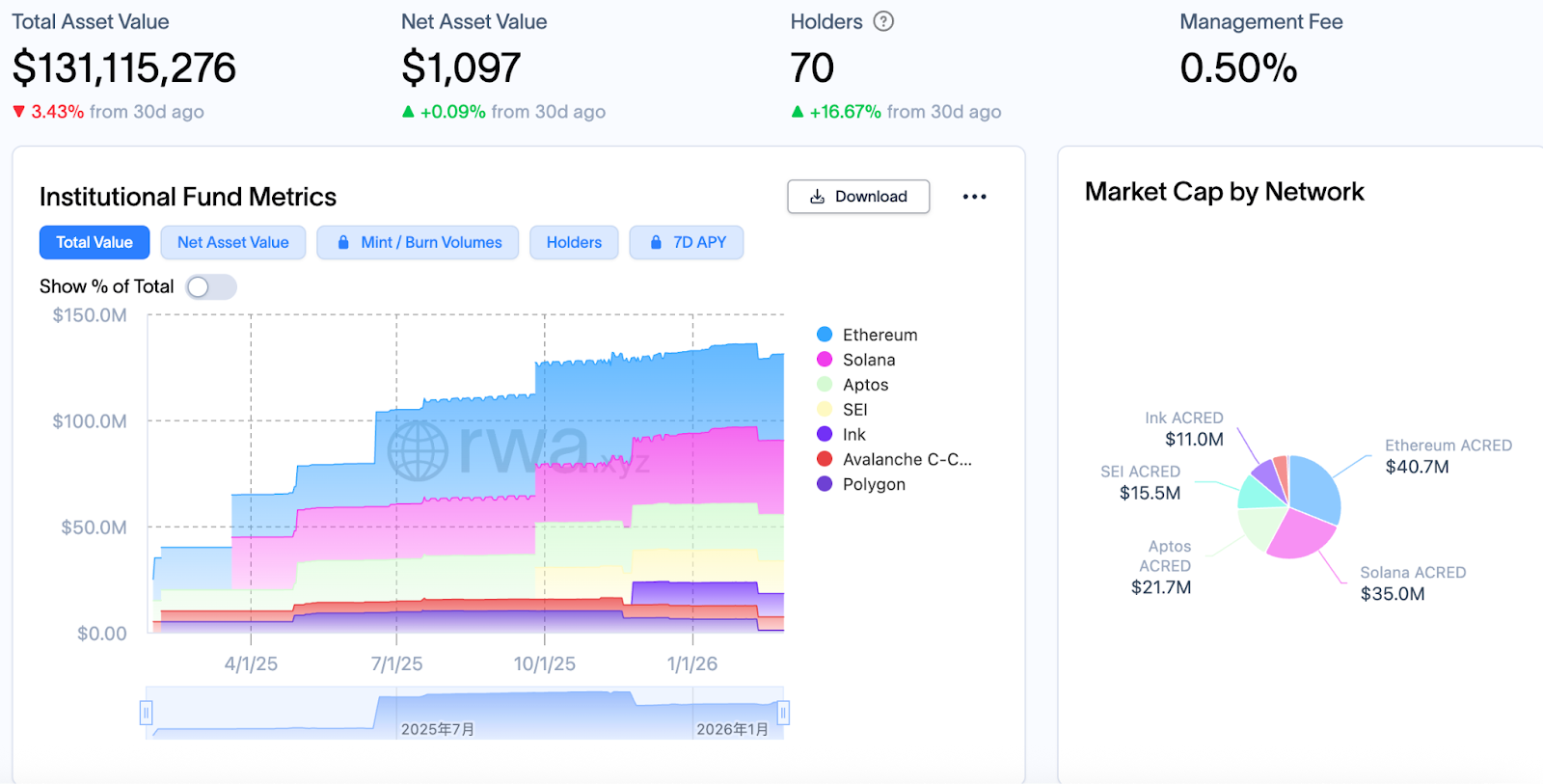
However, the core challenge after onboarding RWA has never been issuance but liquidity release. Assets can be tokenized, but without efficient lending markets and leverage environments, their yield potential is difficult to unleash. From Apollo's布局, it is not unreasonable to speculate that it likely intends to use Morpho's lending markets to amplify the yield of its credit products. Because Morpho's modular lending structure provides a天然适配场景 for RWA—isolated markets, independent risk parameters, and customizable leverage environments. These mechanisms are far more attractive to institutions than parameter games under unified governance.

This speculation is not without basis, because although Morpho is highly permissionless, key parameter options still need to be expanded through Morpho DAO governance. If Apollo holds a significant amount of MORPHO tokens, it will gain corresponding voting power and may promote the addition of RWA-friendly parameters. If Apollo's intentions materialize as推测, Morpho's modular design could attract more institutional funds, accelerating inflows and making it key infrastructure for amplifying institutional credit products on-chain. This institutional-level endorsement would not only strengthen Morpho's competitive advantage but also narrow the gap with Aave—especially when Aave is deeply mired in internal governance issues.

Conclusion

Aave's governance crisis may continue to drag down its market cap and liquidity in the short term, while Morpho, leveraging its product structural advantages and institutional catalysts, is quietly rewriting the competitive landscape of the lending sector. However, whether Morpho can truly shake Aave's throne still depends on its continued TVL追赶 and more TradFi players joining the fray. But至少 for now, the power transition for the "second-generation lending leader" has already begun.

Risk提示: MORPHO tokens will undergo a large unlock in March, belonging to the Morpho DAO, Morpho Association reserve, and core contributors. Short-term liquidity impact requires attention.


Related Questions

QWhat is the main reason for the recent governance controversy within Aave?

AThe controversy stems from founder Stani's proposal for a $51 million 'Aave Will Win' funding framework, which ignited existing tensions over fund allocation and transparency, particularly after an audit report accused Labs of low fund utilization and lack of disclosure after receiving approximately $86 million from the DAO.

QHow does Morpho's governance model differ from Aave's approach?

AMorpho uses a modular, market-driven model where independent risk managers (curators) set parameters for isolated markets, reducing governance friction. In contrast, Aave relies on global DAO voting for all risk parameter adjustments, which can lead to decision-making bottlenecks.

QWhat significant partnership has contributed to Morpho's recent growth and potential?

AApollo Global Management signed an agreement to acquire up to 90 million MORPHO tokens (approx. 9% of supply) over 48 months, valued around $162 million at current prices, signaling major institutional backing and potential integration for RWA yield strategies.

QWhat key metric demonstrates Morpho's strong user growth despite market conditions?

AMorpho's quarterly active addresses grew from around 30,000 in Q1 to 400,000 by Q4, showing robust organic user expansion even during a period of general DeFi market pressure.

QWhat is a potential short-term risk for MORPHO token investors mentioned in the article?

AThe MORPHO token faces a significant unlocking event in March, with releases to the Morpho DAO, Morpho Association treasury, and core contributors, which could create short-term liquidity pressure on the price.

Related Reads

Ten-Thousand-Word Analysis: From $10 to $290, MRVL Wins the Entire AI Era by 'Not Making GPUs'

Marvell Technology's stock price surged from under $10 in 2016 to a record $290 in June 2026, fueled not by making GPUs, but by dominating AI infrastructure connectivity. This analysis argues the market misvalues MRVL as merely a smaller Broadcom in custom AI chips, overlooking its true, unique position. Marvell's core strength lies in enabling high-speed data flow for AI clusters through three interconnected businesses. First, it holds a commanding ~70% market share in high-speed optical DSPs (essential for data center light modules), a deep-moat business with accelerating growth. Second, its custom AI chip design business serves hyperscalers like AWS, Microsoft, and Google, with a significant revenue pipeline despite lower margins. Third, stable cash flows come from Ethernet switch chips and enterprise storage controllers. Together, they form a full-stack "AI data movement" platform. CEO Matt Murphy's transformative leadership since 2016, involving strategic divestments, key acquisitions (like Inphi for optical DSPs), and securing long-term agreements with major cloud providers, repositioned the company. A pivotal $2 billion strategic investment from NVIDIA in 2026 underscored Marvell's critical role in the AI ecosystem, particularly through collaborations like NVLink Fusion. While Marvell faces risks—including client concentration (losing the Amazon Trainium3 design), lower-margin business mix, competitive threats, insider selling, and complex supply chains—its fundamentals remain strong. The optical interconnect moat is widening with the acquisition of Celestial AI (photonics fabric), and financial metrics show accelerating revenue growth and operating leverage. With a PEG ratio suggesting undervaluation relative to its growth, the thesis is that the market undervalues Marvell's monopolistic position in AI "plumbing" while overemphasizing its competitive custom chip segment. The story transcends investing, symbolizing how in any complex system—from the internet to AI—the value of "connection" ultimately surpasses that of individual "nodes."

marsbit17m ago

Ten-Thousand-Word Analysis: From $10 to $290, MRVL Wins the Entire AI Era by 'Not Making GPUs'

marsbit17m ago

AI Relay Stations Spark Heated Debate on Zhihu: Behind Cheap Tokens, What Are Users Really Worried About?

A discussion on Zhihu about "AI relay stations" shifted the niche developer topic of "cheap tokens" into broader user awareness. Users moved beyond simply questioning the legitimacy of these services to focus on practical concerns: Where do cheap tokens truly come from? Is the model being accessed the real one? Can relay stations see prompts, code, and API keys? For occasional users, are the risks worth it? The core debate centered less on price and more on trust. A primary worry is model authenticity—the risk of "model swapping," where users paying for a premium model might be routed to a cheaper one, creating an information asymmetry. Others argued that cost comparisons matter; while cheaper than official pay-as-you-go APIs, relay stations may not be the lowest-cost option versus subscriptions, domestic models, or free tiers, making user needs assessment crucial. Speculation about token sources ranged from legitimate bulk discounts to gray-area methods like account sharing or exploiting regional pricing. This opacity makes risk assessment difficult for users. Data security emerged as a critical concern, especially for enterprise use. When processing sensitive information like code, contracts, or client data, the inability to verify a relay station's data handling, retention, or access policies poses significant compliance and confidentiality risks. The evolving consensus suggests relay stations can be used cautiously for low-sensitivity, disposable tasks (e.g., summarizing public info, simple translation). However, they should not be the default for sensitive, professional, or production workflows involving proprietary data, Agents, or automated systems. Recommendations include avoiding large prepayments, not relying on a single service, using test prompts to monitor quality, anonymizing data where possible, and keeping official channels as backups. Ultimately, the discussion framed tokens not just as a billing unit but as a measure of real cost encompassing price, model integrity, data security, and service stability. The popularity of relay stations highlights user demand for affordable access, but the debate underscores a key trade-off: the savings from cheap tokens may come at the price of trust, transparency, and control over one's data and AI experience.

marsbit47m ago

AI Relay Stations Spark Heated Debate on Zhihu: Behind Cheap Tokens, What Are Users Really Worried About?

marsbit47m ago

In-Depth Research Report on TradFi: The Convergence Wave of Crypto and Traditional Finance

In 2026, the crypto industry is undergoing a profound infrastructure-level transformation—TradFi assets are migrating on-chain at an unprecedented pace. According to CoinGecko's Q1 2026 report, the total value locked (TVL) of tokenized real-world assets (RWA) has surpassed $31 billion, a nearly 4x increase from $7.8 billion at the beginning of 2025, with the sector’s aggregate market capitalization reaching $19.3 billion. Among these, the market cap of tokenized stocks surged from $2 million to $486 million, with Q1 spot trading volume reaching $15.1 billion—a single quarter already surpassing the entire second half of 2025. RWA perpetual contract Q1 trading volume reached a staggering $524.8 billion, far exceeding the $313 billion for all of 2025. Meanwhile, BlackRock's BUIDL fund has reached $2.3 billion in scale and has filed for two new tokenized funds, signaling that the world's largest asset manager's tokenization strategy is evolving from pilot to product suite expansion. HTX, as a core participant in the crypto exchange sector, officially launched TradFi perpetual futures products including NVDA, AAPL, MSFT, META, and SPY in 2026, enabling crypto users to gain 24/7 trading access to core U.S. equities. Boston Consulting Group predicts that global tokenized asset scale could reach $16 trillion by 2030, while McKinsey offers a conservative estimate of approximately $2 trillion. The on-chain migration of TradFi assets is no longer a "future narrative" but a structural transformation unfolding in real time, as crypto exchanges evolve from single crypto asset trading platforms toward "multi-asset-class trading infrastructure."

HTX Learn49m ago

In-Depth Research Report on TradFi: The Convergence Wave of Crypto and Traditional Finance

HTX Learn49m ago

Trading

Spot
Futures
活动图片