A16z – 2026 might be the year when blockchain becomes ‘just the plumbing’

ambcryptoPublished on 2026-01-02Last updated on 2026-01-02

Abstract

A16z's 2026 outlook predicts blockchain will become invisible "plumbing" that powers the modern digital world, rather than a consumer-facing technology. This shift will be driven by three key trends. First, the rise of an AI agent economy will require blockchain-based identity systems (KYA - Know Your Agent) for autonomous agents to transact securely. Second, finance will evolve from simple asset tokenization to full on-chain origination of synthetic and programmable credit products, making the internet itself the bank. Finally, privacy, enabled by Zero-Knowledge Proofs, will become the critical competitive advantage for institutional adoption, as public transparency becomes a liability. Ultimately, crypto's success will be measured by its seamless integration into a faster, more private, and autonomous internet.

For years, the promise of blockchain has been just around the corner. However, according to a16z crypto’s latest outlook for 2026, the corner has finally been turned.

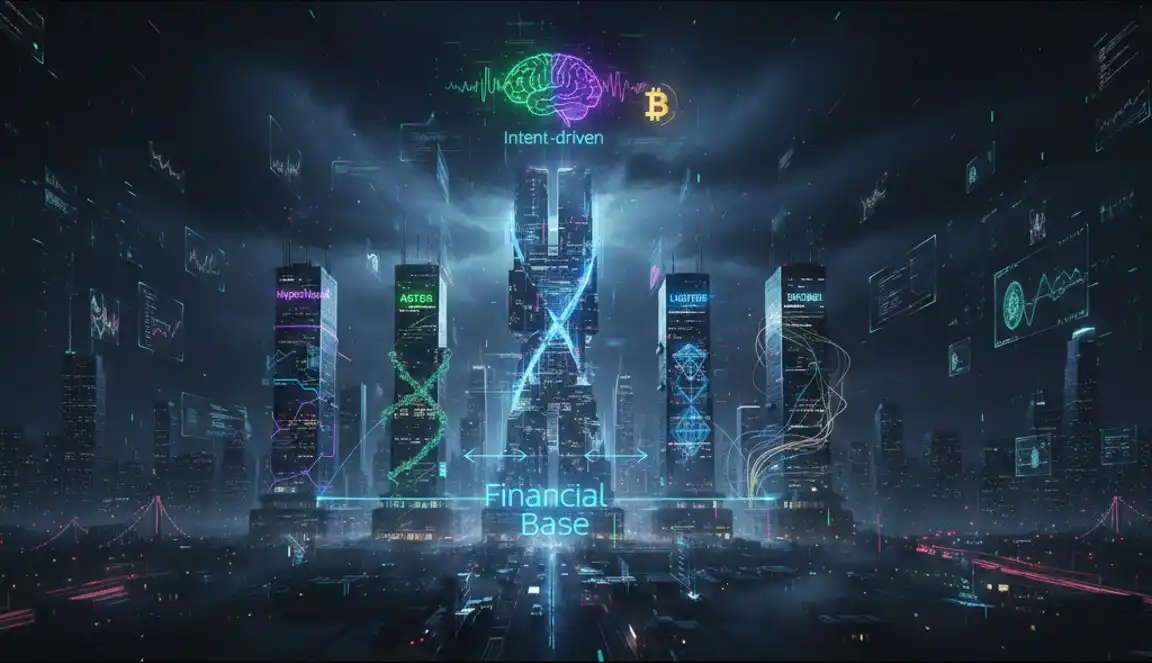
We are moving into an era where the most successful crypto applications won’t feel like crypto at all. They will simply be the plumbing that makes the modern world work. That’s what the report says.

Here are the three foundational shifts that will define the landscape in 2026.

Rise of the agentic economy

Topping the list is the birth of the AI Agent economy.

As autonomous agents begin to handle our grocery shopping, SaaS subscriptions, and professional workflows, they face a wall – They lack identity and bank accounts.

According to A16z’s latest prediction, we can expect the emergence of KYAs (Know Your Agents).

Just as humans have credit scores and passports, agents will use cryptographically signed credentials to transact. This would allow a merchant to know that an agent is authorized by a specific principal and operates within defined legal and financial constraints.

Without blockchain-based identity, the AI revolution hits a dead end. With it, agents would become full-scale economic actors.

From tokenization to origination

While 2024 and 2025 were about “tokenizing” existing Real-World Assets (RWAs) like T-bills, 2026 will be about on-chain origination.

The report suggested that narrow banking, simply holding safe, liquid assets on a chain, is just the starting point. The real breakthrough occurs when credit infrastructure moves on-chain.

We will see the rise of synthetic financial products and programmable credit that offer lower operational costs and greater composability than traditional finance.

In this world, the internet becomes the bank, providing wealth management and sophisticated investment tools to anyone with a smartphone.

Privacy as the ultimate competitive moat

Finally, for a decade, the transparency of blockchains was touted as a feature. By 2026, it will become a bug for institutional adoption.

According to A16z, privacy will be the most important moat in crypto.

As global finance migrates to the blockchain, institutions cannot afford to have their strategies and sensitive data exposed on public ledgers. This creates a privacy lock-in effect. Bridging tokens between chains is easy, but bridging secrets is hard.

The networks that successfully implement Zero-Knowledge Proofs (ZKPs) and Secrets-as-a-Service will likely win the majority of the market share. Especially since users will be reluctant to leave a secure, private environment.

What’s more?

By 2026, crypto’s success will be measured by its invisibility.

Whether it’s stablecoins settling $46 trillion in volume (surpassing Visa), or prediction markets becoming the primary way we price the future, the crypto part of the equation is receding into the background. What remains is a faster, more private, and more autonomous internet.

This is interesting. Especially since a recent report by AMBCrypto found that crypto underperformed this year as gold and equities rallied, with Bitcoin [BTC] dropping by nearly 20%. Despite broader risk assets holding up.

Even so, some analysts believe money is already circling back to crypto. On the contrary, historical midterm-year patterns suggest 2026 could still be a stress point.

With LTHs steady, capital hesitant, and price unmoved, Bitcoin’s next move depends on a structural shift rather than sentiment alone.


Final Thoughts

  • Technology is shifting from consumer-facing hype to invisible, indispensable plumbing for digital life.
  • Most successful crypto platforms will be frictionless, silent, and embedded deep inside everyday applications.


Related Questions

QAccording to a16z's outlook, what will define the most successful crypto applications by 2026?

AThe most successful crypto applications won't feel like crypto at all and will simply be the invisible plumbing that makes the modern world work.

QWhat is the 'KYA' concept mentioned in the report and what problem does it solve?

AKYA stands for 'Know Your Agents.' It solves the problem of AI agents lacking identity and bank accounts by providing them with cryptographically signed credentials to transact, allowing them to become full-scale economic actors.

QWhat key shift is predicted for on-chain finance in 2026, moving beyond the trends of 2024-2025?

AThe shift will be from 'tokenizing' existing Real-World Assets (RWAs) to 'on-chain origination,' which involves moving credit infrastructure on-chain to create synthetic financial products and programmable credit.

QWhy does the a16z report suggest that blockchain transparency will become a 'bug' rather than a feature by 2026?

AFor institutional adoption, the transparency of public blockchains becomes a problem because institutions cannot afford to have their strategies and sensitive financial data exposed on public ledgers, creating a need for privacy solutions.

QWhat technologies does the report identify as crucial for winning market share in the future crypto landscape?

AThe networks that successfully implement Zero-Knowledge Proofs (ZKPs) and Secrets-as-a-Service will likely win the majority of the market share by providing a secure, private environment that users are reluctant to leave.

Related Reads

How Many Tokens Away Is Yang Zhilin from the 'Moon Chasing the Light'?

The article explores the intense competition between two leading Chinese AI companies, DeepSeek and Kimi (Moon Dark Side), and the mounting pressure on Yang Zhilin, the founder of Kimi. While DeepSeek re-emerged after 15 months of silence with its powerful V4 model—boasting 1.6 trillion parameters and low-cost, long-context capabilities—Kimi has been focusing on long-context processing and multi-agent systems with its K2.6 model. Yang faces a threefold challenge: technological rivalry, commercialization pressure, and investor expectations. Despite Kimi’s high valuation (reaching $18 billion), its revenue heavily relies on a single product with low paid conversion rates, while DeepSeek’s strategic silence and open-source influence have strengthened its market position and valuation prospects, now targeting over $20 billion. Both companies reflect broader trends in China’s AI ecosystem: Kimi aims for global influence through open-source contributions and agent-based advancements, while DeepSeek prioritizes foundational innovation and hardware independence, notably shifting to Huawei’s chips. Their competition is seen as vital for China’s AI progress, with the gap between top Chinese and U.S. models narrowing to just 2.7% on the Elo rating scale. Ultimately, the article argues that this rivalry, though anxiety-inducing for leaders like Zhilin, is essential for driving innovation and solidifying China’s role in the global AI landscape.

marsbit2h ago

How Many Tokens Away Is Yang Zhilin from the 'Moon Chasing the Light'?

marsbit2h ago

TechFlow Intelligence Bureau: ChatGPT Helps Amateur Mathematician Crack 60-Year-Old Problem, CFTC Sues New York Regulator Over Coinbase and Gemini

An amateur mathematician, with the assistance of ChatGPT, has solved a combinatorial mathematics puzzle originally proposed by Hungarian mathematician Paul Erdős in the 1960s. This marks another milestone in AI-aided mathematical research, demonstrating the evolving capabilities of large language models in formal reasoning. In other AI developments, OpenAI introduced a new privacy filter tool for enterprise API usage, automatically screening sensitive data. Meanwhile, the Qwen3.6-27B model achieved 100 tokens per second on a single RTX 5090 GPU using quantization, significantly lowering the cost barrier for local AI deployment. In crypto and Web3, the U.S. CFTC sued New York’s financial regulator, challenging its oversight of Coinbase and Gemini—a first-of-its-kind federal-state regulatory clash. Following a vulnerability, KelpDAO and major DeFi protocols established a recovery fund. Tether froze $344 million in assets linked to Iran’s central bank upon U.S. Treasury request, highlighting the centralized control risks in stablecoins. Separately, Litecoin underwent a 3-hour chain reorganization to undo a privacy-layer exploit. In the U.S., former President Trump invoked the Defense Production Act to address power grid bottlenecks affecting AI data centers and dismissed the entire National Science Board, raising concerns over research independence. A retail trader gained 250% on a $600k Intel options bet amid AI-related speculation. Xiaomi announced its first performance electric vehicle, targeting rivals like Tesla. Meanwhile, iPhone users reported devices automatically reinstalling a hidden app daily, suspected to be MDM-related. A Chinese securities report noted that A-share institutional crowding has reached its second-longest streak since 2007, signaling high valuations and potential style rotation. The day’s developments reflect a dual narrative: AI is enabling unprecedented individual breakthroughs, while centralized power structures—whether governmental or corporate—are becoming more assertive, underscoring that decentralization is as much a political-economic challenge as a technical one.

marsbit3h ago

TechFlow Intelligence Bureau: ChatGPT Helps Amateur Mathematician Crack 60-Year-Old Problem, CFTC Sues New York Regulator Over Coinbase and Gemini

marsbit3h ago

Trading

Spot
Futures
活动图片