A Must-Read for Tax Residents: Do I Need to Pay Taxes on Crypto Asset Profits?

marsbitPublished on 2026-01-22Last updated on 2026-01-22

Abstract

Chinese tax residents are required to declare and pay taxes on profits from cryptocurrency transactions, regardless of whether the transactions occur on anonymous wallets or decentralized exchanges (DEXs). According to Chinese tax laws, income from the sale of crypto assets is classified as "property transfer income" and is taxed at a flat rate of 20%. Key points include: - A Chinese tax resident is defined as someone with a domicile in China or who resides in the country for 183 days or more within a tax year. - Despite the perceived privacy of decentralized platforms, tax authorities can trace transactions through banking channels, international information exchange mechanisms like CRS, and enhanced surveillance systems such as "Golden Tax Phase IV." - Failure to declare such income may result in back taxes, late payment fees (0.05% per day), fines ranging from ¥2,000 to ¥10,000, or even criminal charges in severe cases. - Recommendations include maintaining detailed transaction records, using official channels to declare income, preserving proof of transactions, and consulting tax professionals for compliance and planning.

Original Authors: Xu Qian, Jin Weilin

Introduction

In recent years, more and more people have earned considerable income through crypto asset trading, but many are still wondering: Do I need to pay taxes on money earned in anonymous wallets or on decentralized exchanges?

To put it directly: If you are a Chinese tax resident, in principle, you should declare and pay taxes to the Chinese tax authorities according to the law on income from crypto assets obtained through any channel.
How is a "Chinese Tax Resident" Defined?

According to the "Personal Income Tax Law of the People's Republic of China", an individual who meets any of the following conditions is considered a Chinese tax resident:

1. Has a domicile in China

Domicile: Refers to an individual who habitually resides in China due to household registration, family, main economic interests, or other reasons.

If your household registration (hukou) or family's center of gravity is in China, or your main life, work, and economic ties are in China, you may still be recognized as a tax resident even if you are often overseas.

2. Has resided in China for an aggregate of 183 days or more within a tax year

This is a clear time-based criterion. Even if you are a foreign national, as long as you reside in China for an aggregate of 183 days or more within one year, you are considered a Chinese tax resident.

Mankun Reminder:

Whether you are recognized as a tax resident due to "domicile" or "length of residence", once you meet the criteria, you need to declare and pay taxes to China on your worldwide income (including domestic and foreign income) according to the law.

Why Do Crypto Asset Profits Also Require Tax Payment?

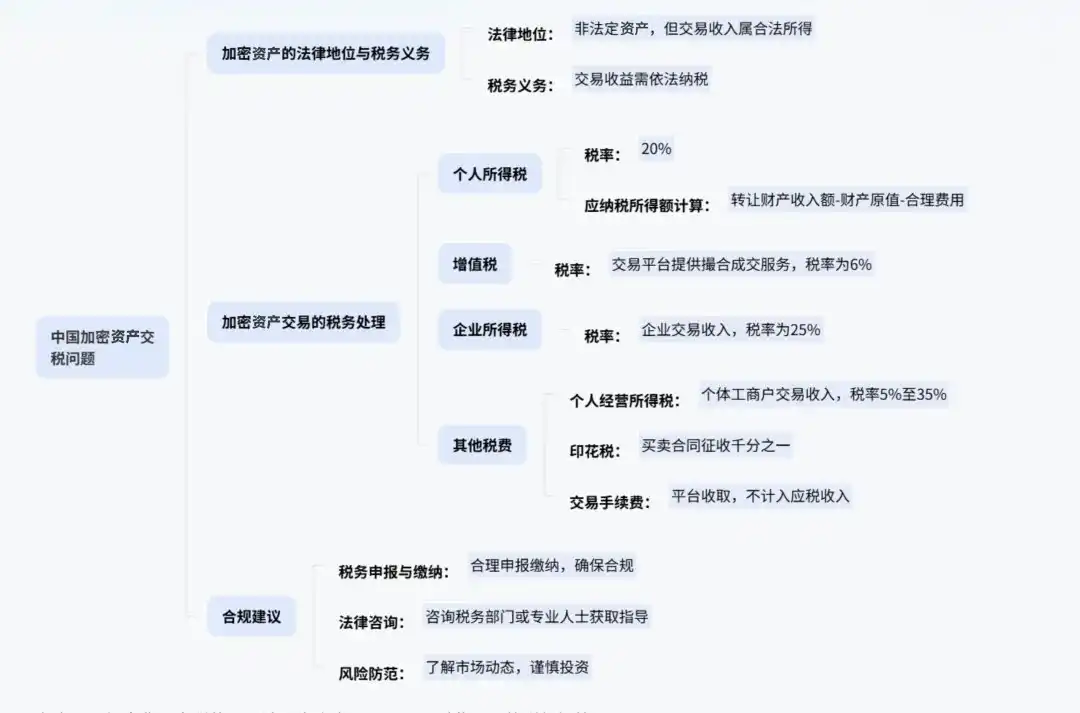
Many people believe that since crypto assets are restricted domestically, the related profits are also "tax-free". This is a common misconception. Taxation focuses on whether you have income, not whether that income comes from an encouraged industry.

1. What is the nature of crypto assets?

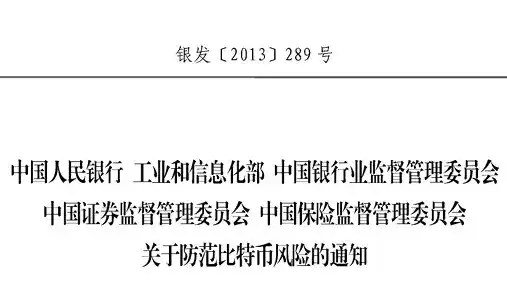
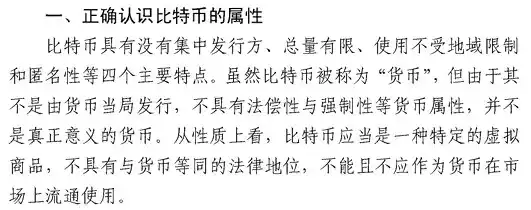
According to the "Notice on Preventing Bitcoin Risks" (Yin Fa [2013] No. 289) issued by the People's Bank of China and four other ministries, the "Announcement on Preventing Risks from Token Offering Financing" issued by the PBOC and six other ministries on September 4, 2017, and the "Notice on Further Preventing and Dealing with Virtual Currency Trading Speculation Risks" issued by the PBOC and nine other ministries on September 24, 2021, virtual currencies cannot be circulated as currency, but their property attributes as a "virtual commodity" are not denied. That is, the law recognizes them as tradable property.
2. What are the corresponding tax regulations?

The "Reply of the State Administration of Taxation on the Levy of Personal Income Tax on Income Obtained by Individuals Buying and Selling Virtual Currency Online" (Guo Shui Han [2008] No. 818) clearly states: Income obtained by individuals from buying and selling virtual currency online belongs to "income from the transfer of property" and shall be subject to personal income tax according to the law.
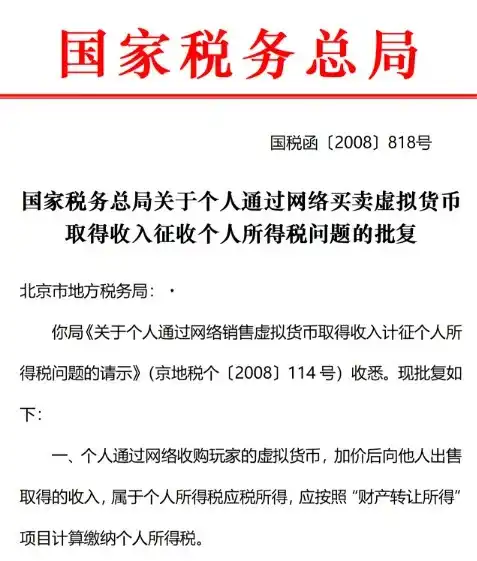
3. Conclusion and Tax Rate

Therefore, regardless of which crypto asset you trade, as long as the transaction generates profit, this portion of the income is considered "income from the transfer of property" and should be subject to personal income tax at a rate of 20% according to the law.

In short: Taxation does not distinguish by industry; it only looks at income. Profits from crypto asset trading are considered income from property transfer and require declaration and payment of 20% personal income tax.

Do I Need to Declare Profits from Anonymous Wallets and DEX Trades?

Some investors believe that using decentralized wallets (like MetaMask) or trading on decentralized exchanges (like Uniswap) is anonymous and therefore untraceable by tax authorities. However, in the current regulatory and technological environment, this thinking carries significant risks.

1. The fund repatriation stage can still be traced

The vast majority of investors ultimately convert their crypto assets into fiat currency through OTC or compliant platforms and transfer it into domestic bank accounts.

Once funds enter the banking system, they fall under the purview of tax authorities. Transactions that are large in amount or high in frequency can easily trigger bank risk control systems, subsequently drawing attention from tax departments.

2. International tax information exchange mechanisms are now routine

China has joined the CRS (Common Reporting Standard) for the Automatic Exchange of Financial Account Information in Tax Matters, achieving automatic tax information exchange with over a hundred countries worldwide. If you have an account with an overseas exchange or bank, the relevant account information has likely already been exchanged back with the Chinese tax authorities.

3. "Golden Tax Project Phase IV" has strengthened data supervision capabilities

The "Golden Tax Phase IV" system utilizes big data, AI, and other technologies to achieve data linkage between tax, banking, customs, industry and commerce, and other departments. The system can automatically compare declared personal income with actual consumption and asset situations. Once a significant discrepancy is found, it triggers a tax warning.

Therefore, even if the trading activity occurs on-chain or overseas, as long as the final profits enter your name or are used for your living expenses in some form, there is a risk of being discovered by the tax authorities and being required to pay back taxes.

What Are the Consequences of Not Declaring Crypto Asset Income?

If the tax authorities discover that you have not declared income from overseas crypto assets, you may face the following legal consequences:

1. Back Taxes and Late Payment Surcharges

The tax authorities will order you to pay the taxes that should have been paid but were not, and, according to Article 32 of the "Law of the People's Republic of China on the Administration of Tax Collection", a late payment surcharge of 0.05% per day (approximately 18.25% annualized) will be added. The longer the time, the larger the accumulated amount.

2. Facing Tax Penalties

If deemed as "failure to file a tax return", a fine of up to RMB 2,000 may be imposed; if the circumstances are more severe, a fine between RMB 2,000 and RMB 10,000 may be imposed.

If deemed as "tax evasion" (refusing to declare or making false declarations after being notified), a fine of 50% to 5 times the amount of tax evaded or not paid will be imposed.

3. Possible Criminal Liability

If the amount of tax evaded is relatively large and accounts for more than 10% of the tax payable, and payment is still not made after the tax authorities have legally issued a recovery notice, it may constitute the crime of tax evasion, leading to criminal liability.

Mankun Reminder:

Not declaring crypto asset income may seem "hidden", but it actually carries multiple risks, from high late payment surcharges and substantial fines to potential criminal liability. We recommend proactive compliance and reporting to avoid subsequent legal and financial risks.

Mankun's Recommendations

If you have earned income from trading crypto assets, especially if funds have already been repatriated to domestic accounts, Mankun Law Firm recommends that you:

1. Proactively organize your transaction records

It is advisable to try to organize a clear transaction history, including the time, quantity, and price of purchases and sales, and focus on retaining proof that can demonstrate the "cost" of the assets, such as bank transfer records, exchange transaction details, on-chain transaction hashes, etc.

The more complete the cost documentation, the more accurate the calculation of taxable income, and the more reasonable the tax burden.

2. Consider proactive declaration or self-review

  • If you have not yet received notice from the tax authorities, you can declare through the "Personal Income Tax" APP or on the Natural Person Electronic Tax Bureau website.
  • According to regulations, the declaration should be submitted to the competent tax authority in the location of your employing unit; if you are not employed, you can file with the tax authority in your place of household registration, place of habitual residence, or place of main source of income.
  • If you have already received reminders from the tax authorities via text message, phone call, etc., please cooperate actively, truthfully explain the source of funds, and prepare relevant supporting materials such as transaction records.

3. Retain all transaction vouchers

Develop the habit of long-term retention of transaction screenshots, wallet addresses, transfer records, exchange statements, and other materials. These are not only the basis for calculating taxes but also key evidence for explaining and proving the authenticity of transactions during tax inspections.

4. Plan reasonably within compliance boundaries

If your trading is frequent and involves large amounts, you might consider tax planning within the legal boundaries, such as managing assets through compliant structures or legally applying tax treaties. It is recommended to consult professional tax lawyers or accountants during this process to ensure the plan is sound and feasible.

Conclusion

In today's world intertwined with the digital economy and globalization, tax compliance has become a required course for every investor. Although the world of crypto assets has a "decentralized" flavor, tax obligations do not disappear because of it.

Proactively understanding regulations, truthfully declaring income, and properly retaining vouchers are not only a respect for the law but also long-term protection for your asset and credit security.

If you have questions or need assistance regarding crypto asset taxation, you can seek professional support early to ensure steady progress on a compliant track.


Related Questions

QWho is considered a tax resident in China according to the article?

AAccording to the Personal Income Tax Law of China, an individual is considered a tax resident if they either 1) have a domicile in China (due to household registration, family, or main economic interests), or 2) have resided in China for a cumulative total of 183 days or more within a single tax year.

QHow are profits from cryptocurrency assets classified for tax purposes in China?

AProfits from cryptocurrency transactions are classified as 'property transfer income' and are subject to a 20% personal income tax, as stipulated in the official tax document Guo Shui Han [2008] No. 818.

QWhat are the potential consequences of not declaring cryptocurrency investment income in China?

AConsequences include being required to pay back taxes plus a late payment fee of 0.05% per day, facing fines ranging from under ¥2,000 to up to five times the amount of tax evaded, and potentially facing criminal charges for tax evasion if the amount is large and constitutes over 10% of the total tax payable.

QWhy does the article state that trading on anonymous wallets or DEXs does not avoid tax obligations?

ABecause funds are typically converted to fiat currency and enter the domestic banking system, which is monitored. China's participation in the CRS allows for international information exchange, and the 'Golden Tax Project Phase IV' uses big data to cross-reference income declarations with spending and assets, creating a high risk of detection.

QWhat practical advice does the article give to someone who has made profits from crypto assets?

AThe advice is to: 1) Proactively organize clear transaction records (time, quantity, price, and proof of cost); 2) Consider making a voluntary declaration via the 'Personal Income Tax' app or tax bureau website; 3) Keep all transaction proof long-term; and 4) Seek professional tax or legal advice for complex situations to ensure compliance.

Related Reads

KOL's Perspective: Why Is SOL Set to Rise from This Point?

**Summary: Why SOL is Positioned for Growth at This Level** The article argues that SOL is poised for an upward move from its current price point, citing several key factors. Primarily, SOL has just broken out of a 4-month consolidation phase. This breakout signals a return of risk appetite to the broader crypto market, as SOL is seen as a key indicator of overall crypto health. The token's ownership has reportedly shifted from short-term traders and tourists to long-term accumulators, leading to low volume. Any meaningful increase in trading activity could thus trigger significant upward momentum. Fundamental strengths include strong institutional adoption, integration with DeFi and RWAs (Real-World Assets), and the potential benefits from the Clarity Act. Despite its high volatility—having dropped 70% from its all-time high but still up 12x from its bear market low—SOL is highlighted as one of the few tokens from the last cycle to reach new highs. It boasts a robust ecosystem of applications, users, and protocols. Future catalysts include the expected influx of AI developers following the Miami Accelerate conference, which focused on AI on Solana. Furthermore, Solana is positioned as the premier chain for memecoin activity, a trend expected to continue and drive network usage and fees. The article concludes that recent price action reflects a healthy transfer to long-term holders, setting the stage for growth.

marsbit45m ago

KOL's Perspective: Why Is SOL Set to Rise from This Point?

marsbit45m ago

Those Pre-Bitcoin PoW Protocols Have Recently Been Reimplemented

This article details a recent surge in replicating pre-Bitcoin Proof-of-Work (PoW) protocols, specifically focusing on Hal Finney's 2004 RPOW (Reusable Proofs of Work). Within five days in May 2026, multiple independent builders in the Bitcoin/cypherpunk community launched projects inspired by this early electronic cash proposal. The initiative began with Fred Krueger's `rpow2.com`, a centralized but auditable system that replaced RPOW's original IBM 4758 hardware with Ed25519 signatures. Initially a faithful replica, it later adopted Bitcoin-like features (21M supply cap, difficulty adjustment) and a controversial 5.24% founder allocation. This sparked rapid forks, including `rpow4.com` which incorporated full Bitcoin parameters, a prediction market (`rpowmarket.com`), and a DEX (`rpow2swap.com`). Concurrently, Mike In Space created a prototype of Wei Dai's 1998 b-money proposal (`b-money.replit.app`), pushing the historical exploration even further back. The article contrasts these centralized, server-dependent experiments with Bitcoin's core innovation of decentralized, trustless consensus. It also highlights a parallel development: the `HASH` project on Ethereum, which uses smart contract hooks to enable a purely fair-launch, browser-mineable PoW token with 0% allocations to team or VCs. The collective activity is framed as a meme-driven, educational exploration of cypherpunk history rather than a serious financial movement, with all projects heavily disclaiming any investment value.

marsbit50m ago

Those Pre-Bitcoin PoW Protocols Have Recently Been Reimplemented

marsbit50m ago

South Korean Exchanges 'Battle' Regulators, Challenging the Boundaries of Enforcement and Legislation

South Korea's cryptocurrency industry is engaged in a rare, direct confrontation with regulators. The Financial Intelligence Unit (FIU), the primary anti-money laundering (AML) watchdog, has recently imposed heavy penalties on major exchanges like Upbit and Bithumb for alleged violations involving unregistered overseas VASPs and AML procedures. However, exchanges are now actively challenging these actions in court and through industry associations. In a significant shift, the Seoul Administrative Court ruled in favor of Upbit's operator, Dunamu, overturning part of an FIU-ordered business suspension. The court found the FIU's penalty criteria and justification insufficiently clear. Similarly, the court suspended the enforcement of a six-month business suspension against Bithumb pending a final ruling, citing potential irreversible harm to the exchange. Beyond legal battles, the industry is contesting proposed legislative amendments. The Digital Asset eXchange Alliance (DAXA) strongly opposes a draft rule that would mandate Suspicious Transaction Reports (STRs) for all crypto transfers over 10 million KRW (~$6,800). DAXA argues this "poison pill" clause violates legal principles and would overwhelm the STR system, increasing reports from 63,000 to an estimated 5.45 million annually for major exchanges, thereby crippling effective AML monitoring. This conflict highlights a structural tension in South Korea's crypto governance: comprehensive digital asset laws are still developing, while regulators rely heavily on AML enforcement. The industry's move from passive compliance to active legal and legislative challenges signifies a new phase, pressing for clearer rules and more proportionate enforcement. While short-term disputes may intensify, this clash could ultimately lead to a more mature and sustainable regulatory framework for South Korea's vibrant crypto market.

marsbit1h ago

South Korean Exchanges 'Battle' Regulators, Challenging the Boundaries of Enforcement and Legislation

marsbit1h ago

After 50x Storage Surge, Justin Sun Always Looks to the Next Decade

Sun Yuchen, known for his controversial stunts like a $30 million lunch with Warren Buffett (canceled due to a kidney stone) and eating a $6.2 million duct-taped banana, is often overshadowed by a significant fact: his decade-long track record of spotting major investment trends. In 2016, he famously advised young people to invest in Bitcoin, Nvidia, Tesla, and Tencent instead of buying property. A hypothetical $20,000 investment in Nvidia and Tesla from that list would now be worth over 50 million RMB. His latest major call was on November 6, 2025, predicting a "50x storage opportunity" tied to the AI boom, which materialized with Sandisk's stock surging nearly 50-fold by 2026. Looking ahead, Sun now focuses on the next frontier: Physical AI. He identifies four key areas: 1. **Embodied AI/Robotics**: He sees this reaching its "iPhone moment," with companies like UBTech and Galaxy General leading in commercialization. 2. **Drones**: Viewed as the first commercially viable form of Physical AI, revolutionizing sectors from warfare (e.g., AeroVironment's Switchblade) to logistics. 3. **Spatial Computing**: Beyond VR, it's about AI understanding physical space, a foundational technology for robotics and autonomous systems, exemplified by Apple's Vision Pro. 4. **Space Exploration**: After a 2025 suborbital flight with Blue Origin, Sun advocates for space as the ultimate frontier, discussing blockchain's potential role in space asset management and data transactions. His investment philosophy involves betting on entire, inevitable trends rather than single companies. For robotics, he sees Tesla (the body/manufacturer) and Nvidia (the brain/AI platform) as complementary plays. In defense drones, he highlights companies making tanks obsolete (AeroVironment) and those augmenting fighter jets (Kratos). For space, he participated in Blue Origin's flight and anticipates SpaceX's potential IPO to redefine the sector's valuation. Sun Yuchen's vision frames the next two decades not as a revolution in information flow (like the internet), but in the fundamental operation of the physical world through AI-powered robots, autonomous systems, and spatial intelligence, ultimately extending human and AI activity into space. While many still focus on conventional assets, he continues to look toward the next technological horizon.

marsbit2h ago

After 50x Storage Surge, Justin Sun Always Looks to the Next Decade

marsbit2h ago

Trading

Spot
Futures
活动图片