12.12 Today's Market: Why the Rise? BTC\SOL\ETH\BNB\ZEC\PIEVERSE\Bee Dog\Hakimi Operation Analysis

金色财经Published on 2025-12-12Last updated on 2025-12-12

? In the past 24 hours, 98,736 people were liquidated globally, with a total liquidation amount of $257 million. The largest single liquidation occurred on Hyperliquid - BTC-USD, worth $4.6389 million.
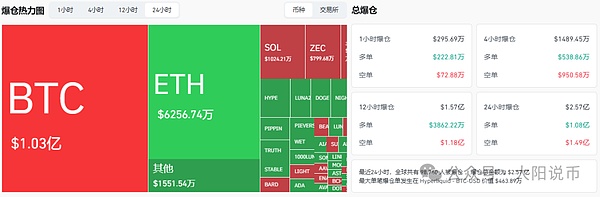
? Short-term positive factors exhausted? Who is buying the dip below 90,000?

Data shows that although the turnover rate has decreased compared to before, it is still high. The trading in the last 24 hours was mainly by short-term investors, betting on whether the Fed would send dovish signals tonight.

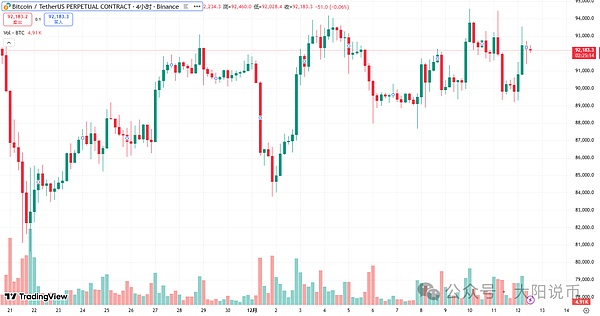
As it turned out, Powell's speech was not more dovish. The market believes that the short-term positive factors have ended, and we may now face the negative impact of interest rate hikes. Therefore, those who bought the dip below 90,000 in the past few days became the main force of the turnover.

However, looking at the持仓 structure, it remains very stable. Even though the price has dropped several times, those trapped at high levels and early long-term holders基本上都没动, still patiently观望.
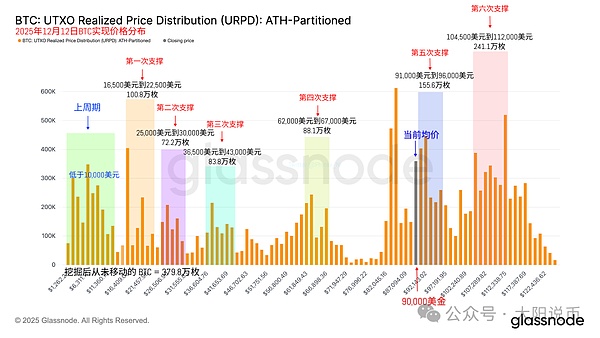
Most people will buy and invest recklessly whenever they have U (USDT), resulting in反复折腾 throughout the entire bear market. In the end, it might be better to just hold BTC and ETH all along. Even if you get trapped, at least they can lead you back to new asset highs. But most people, after折腾 through a bear market, see their principal dwindle, making it very difficult to return to previous asset highs.

If you don't understand or are unsure about the direction, remember to follow me?

✅ Today's Market Analysis:

BTC

Bitcoin today focuses on whether it can return to the 90500-90200 support zone, which is a potential entry opportunity. If a deep pullback occurs, please pay special attention to the 88600 level. The first target for next week's rebound is to break the previous high of 94000, with the 95200 resistance level as the first profit-taking target for long positions.
SOL

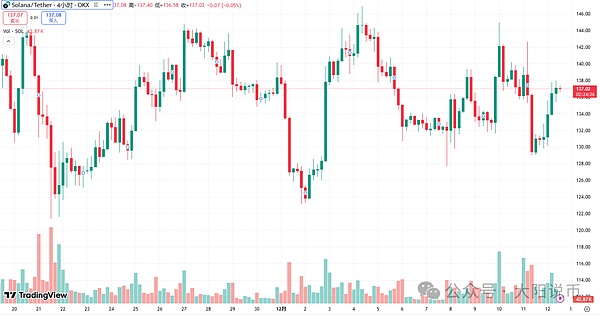
SOL was受阻 near the 137.7 resistance level提示 yesterday. Current support can continue to be watched around 132, observing if another entry opportunity appears. If a pinning (sharp spike) occurs, watch the 127.5 level. Short-term resistance is at 141; a break above could target 144.3.
ETH

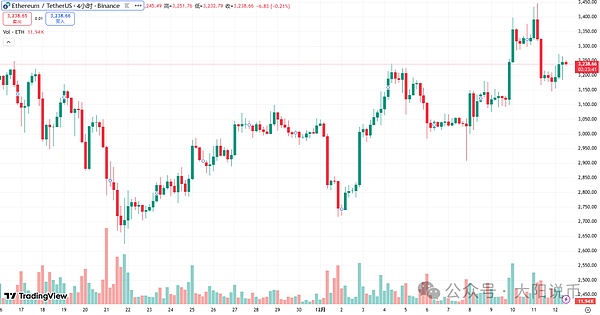
Ethereum stopped falling near the 3130 support zone yesterday, missing it by about 10 points. Today's trend is relatively weak. Downside support focuses on the 3125-3110 range, with a pinning observation level at 3060. Upside resistance is at 3388. If effectively broken, next week's rebound target could be 3485.
BNB

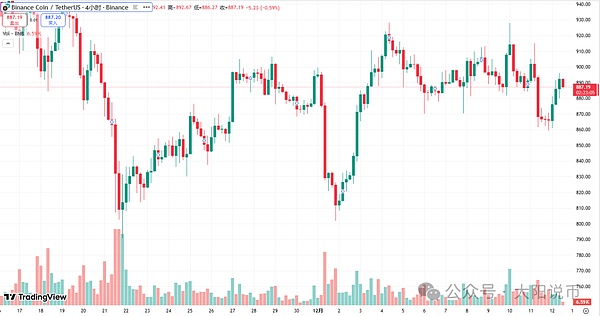
Today, please focus on the 881 level. As long as the 4-hour level does not break below this level, the bullish trend can still be maintained. Upside resistance can be watched at 894, 905, and 915附近. If the 4-hour level breaks below 881, this round of上涨行情 may end, potentially entering a deep correction. Downside support can be watched at 872, 860, and 845附近.
? How to safely eat the whole bull? How to switch to主流币 that haven't risen after BTC starts!

For the current market, I am not obsessed with划分 bull and bear markets. The crypto market is no longer the size it used to be, especially BTC. Unless a global crisis breaks out, it is difficult to see an extreme bear market with collective institutional withdrawal.

The core logic is:真正的收益 are often accumulated during bear markets (through continuous DCA or holding) and realized in bull markets; most losses are caused by盲目追高 in bull markets, only彻底暴露 during bear markets.

Therefore, my strategy is: Long-term hold BTC as a ballast, waiting for the bull market to start. The行情通常 starts with BTC leading, then spreads to主流币. You can take some profits after BTC rises and rotate into主流币 that haven't started yet, capturing轮动机会. This avoids the huge risks of山寨币 in bear markets while safely participating in山寨行情 using BTC profits. Even if you make a mistake, it won't hurt your principal.

In short, Focus less on prediction, more on response. Focus on the long term, ignore short-term fluctuations, accumulate筹码 during lows, and prepare for the next cycle.

? Don't want to内卷? Buy the dip? Choose these coins for a comeback!

My $蜜蜂狗 (Bee Dog) is back to around 1 million! The community of this meme coin really can hold on. After the official airdrop to KOLs, the market was so bad it dropped to over 100k, but the community remained active and confident, pulling it back in half a month!
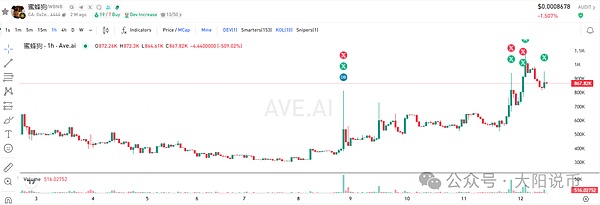
If you don't want to内卷 (get caught in intense competition) with车头 (leaders) on BSC and want something steadier for long-term profit, just buy the dip on WEB2 meme coins with spontaneous consensus like $哈基米 (Hakimi), $恶俗企鹅 (Vulgar Penguin), $蜜蜂狗 (Bee Dog).

As long as these types of coins have been popular before and haven't died out, they will basically fluctuate with the market. They have clear bottoms, consolidate for a long time, and have super sufficient entry time. You just need patience (look at least at the daily chart). Short-term收益 are not high, suitable for brothers who hold long-term!

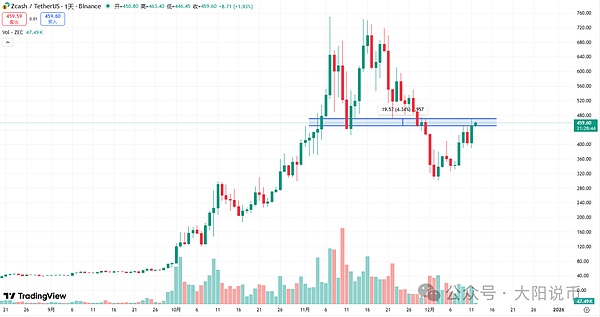
$ZEC

ZEC's technical pattern is clear. The key resistance zone is around 450-470. I personally judge the probability of a breakout is relatively high. If successful, the upside target could be above 500. Is anyone willing to be my counterparty? Dare to short at this resistance zone now?
$PIEVERSE

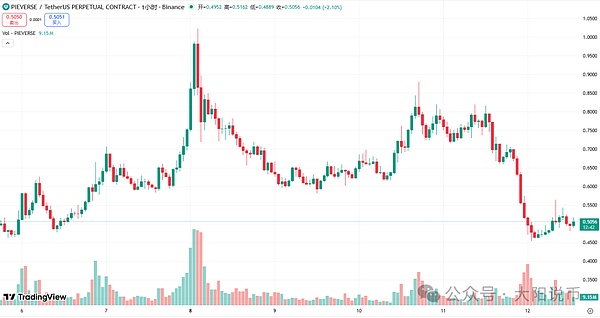
Pieverse's airdrop unlocks tomorrow. There will absolutely be no shortage of selling pressure; the price has already digested it提前. I guess there's quite a bit of hedging too. Will it爆空军 (squeeze shorts) like MMT did before? I'm going in with a small long position first, first target 0.6!

Related Reads

GitHub Empire on the Brink of Collapse: Source Code Leak, 18-Year Veteran Leaves, Microsoft Loses 1.5 Billion Developers

GitHub is facing an unprecedented crisis, marked by a massive exodus of developers and severe operational failures. The tipping point came when Mitchell Hashimoto, creator of Ghostty and an 18-year GitHub user, publicly severed ties, citing persistent platform outages that made serious work impossible. This departure highlights a broader pattern of user frustration. The platform's instability has drawn complaints from major corporate clients like Citibank and Intel, forcing Microsoft to issue substantial service credits. A critical incident last month saw an accidentally triggered, unreleased feature cause widespread repository rollbacks, erasing recent code changes and pushing enterprises to migrate. Security has catastrophically breached. In May 2026, hackers infiltrated over 3,800 of GitHub's internal repositories via a poisoned VS Code extension installed by a developer, leading to the attempted sale of core source code for $50,000. This follows the discovery of a critical zero-day vulnerability in March that threatened access to millions of repositories. Internally, GitHub's autonomy has collapsed. After the resignation of CEO Thomas Dohmke in mid-2025, Microsoft eliminated the CEO role, folding GitHub into its CoreAI division under the unpopular leadership of Jay Parikh. This triggered a talent drain, with key executives and engineers leaving. A disruptive migration of GitHub's infrastructure to Azure servers, pushed by CTO Vladimir Fedorov, is blamed for the recurring outages. Competitively, GitHub Copilot is under "existential threat" from superior AI coding tools like Cursor (now owned by SpaceX) and Claude Code, which offer more advanced contextual coding and automation. Ironically, Microsoft's own engineers reportedly preferred Claude Code, forcing management to revoke licenses. Financially, GitHub is a loss leader. Despite Copilot surpassing 4.7 million paid users and $3 billion in annual revenue, the AI inference costs for free services massively outstrip subscription income, hurting Microsoft's cloud margins. The recent shift from a flat fee to a pay-as-you-go model for Copilot has further alienated developers. The core question for Microsoft is whether a centralized code repository remains essential in the AI agent era. The erosion of trust, developer culture, and platform reliability threatens the very ecosystem Microsoft spent decades building.

marsbit22m ago

GitHub Empire on the Brink of Collapse: Source Code Leak, 18-Year Veteran Leaves, Microsoft Loses 1.5 Billion Developers

marsbit22m ago

SEC Promotes Tokenized Stocks, Is the Traditional Finance Industry Starting to Worry?

The U.S. Securities and Exchange Commission (SEC) is preparing to formally release an "innovation exemption" framework this week. This framework would allow third parties to tokenize U.S. stocks like Apple and Tesla without approval from the listed companies. The move, rooted in a deregulatory vision proposed by pro-crypto commissioners earlier this year, could accelerate the migration of traditional stock markets to blockchain. This development poses a structural threat of "fragmentation" to traditional finance. Core concerns are liquidity fragmentation—where trading volume disperses across multiple blockchains and platforms, leading to price disparities and reduced market efficiency—and revenue fragmentation—where trading fees and intermediary income shift away from domestic exchanges to overseas or competing platforms. The report compares the traditional stock market to a monopolistic "supermarket." Tokenization enables countless "street stalls" to operate outside this system, threatening the exchange's dominance, diluting liquidity for large orders, and slicing into revenue streams. Evidence of this capital fragmentation is already emerging. On the same day the SEC signaled the framework, decentralized platform Hyperliquid saw its RWA (real-world asset) open interest hit a record $2.6 billion, driven by demand for 24/7 on-chain trading of traditional assets. Traditional institutions face a dilemma: either collaborate to build tokenization infrastructure proactively or lobby regulators to block innovation. Regulators must balance controlling the pace of innovation with preventing domestic revenue from being captured by offshore platforms. Key future battles will revolve around defining shareholder rights for tokenized assets and regulating platforms that have grown in regulatory gray areas. In the digital asset era, inaction risks the permanent loss of long-held fee monopolies and financial leadership as capital continues to disperse.

marsbit39m ago

SEC Promotes Tokenized Stocks, Is the Traditional Finance Industry Starting to Worry?

marsbit39m ago

A Comprehensive Analysis of On-Chain Pre-IPO: Why is the Pricing Power of SpaceX and OpenAI Moving On-Chain?

This podcast episode explores the rise of on-chain pre-IPO price discovery and trading, focusing on companies like SpaceX, OpenAI, and Anthropic. Key trends include the recent launch of a SpaceX pre-IPO perpetual contract on Hyperliquid, the secondary market trading of AI company shares, and a new partnership between Nasdaq Private Market and Polymarket. Dio Casares explains why AI companies like OpenAI and Anthropic actively deny the legitimacy of secondary trades. Primary reasons are to protect their primary funding rounds (as secondary trades don't provide cash to the company) and to avoid complex legal and administrative responsibilities associated with settling these transactions. He argues that on-chain **derivatives** (like perpetuals) are a more viable solution than **tokenized spot markets**, as they better navigate U.S. regulatory holding period requirements, provide effective hedging, and avoid antagonizing the companies themselves by competing with their primary raises. The discussion covers the risks and methods of gaining pre-IPO exposure, from direct investments and SPVs to riskier, layered structures that can lead to legal complications and settlement issues. Casares also maps the landscape of key players, differentiating between traditional secondary brokers (like Forge, Hiive, and Setter) and on-chain derivatives protocols (like Trade.xyz/Ventuals on Hyperliquid) and tokenization platforms (often on Solana). He positions Patagon as a facilitator for access to private market deals but clarifies it avoids on-chain tokenization to maintain good relations with portfolio companies. Looking ahead, the convergence of a historic IPO pipeline (with potential trillion-dollar valuations), the 24/7 nature of crypto markets, and the strategic use of pre-market perpetuals as a "loss leader" suggest continued growth and competition in the on-chain pre-IPO space.

marsbit55m ago

A Comprehensive Analysis of On-Chain Pre-IPO: Why is the Pricing Power of SpaceX and OpenAI Moving On-Chain?

marsbit55m ago

Token Packages Are Here, Are Telecom Operators in a Hurry?

Major Chinese telecom operators are launching token-based AI computing packages, sparking public debate and highlighting a strategic shift amid slowing traditional revenue growth. In May, Shanghai Telecom introduced token plans (e.g., 9.9 RMB for 10 million tokens), quickly followed by nationwide offerings from China Telecom, China Mobile, and China Unicom. While priced higher than major AI firms like DeepSeek, these packages allow users to access multiple AI models via API using their phone bills, similar to purchasing universal mobile data. The move reflects operators' anxiety as traditional voice, SMS, and data services stagnate. With revenue growth hitting multi-year lows in 2025, AI and computing power represent a critical new frontier. However, current C端 offerings, such as AI photo editing or virtual pets, are seen as non-essential and highlight operators' role as "pipes" or integrators rather than creators of compelling AI products. Beyond consumer packages, operators aim to become key infrastructure players in China’s national computing power network. They position themselves as the "power grid" delivering AI算力, leveraging their vast network of base stations to ensure low-latency, reliable coverage, especially for applications like autonomous driving. This infrastructure role, coupled with unified national调度, could make算力 a ubiquitous utility, driving new consumption scenarios even if mass adoption of token packages remains uncertain.

marsbit59m ago

Token Packages Are Here, Are Telecom Operators in a Hurry?

marsbit59m ago

Trading

Spot
Futures

Hot Articles

What is $BITCOIN

DIGITAL GOLD ($BITCOIN): A Comprehensive Analysis Introduction to DIGITAL GOLD ($BITCOIN) DIGITAL GOLD ($BITCOIN) is a blockchain-based project operating on the Solana network, which aims to combine the characteristics of traditional precious metals with the innovation of decentralized technologies. While it shares a name with Bitcoin, often referred to as “digital gold” due to its perception as a store of value, DIGITAL GOLD is a separate token designed to create a unique ecosystem within the Web3 landscape. Its goal is to position itself as a viable alternative digital asset, although specifics regarding its applications and functionalities are still developing. What is DIGITAL GOLD ($BITCOIN)? DIGITAL GOLD ($BITCOIN) is a cryptocurrency token explicitly designed for use on the Solana blockchain. In contrast to Bitcoin, which provides a widely recognized value storage role, this token appears to focus on broader applications and characteristics. Notable aspects include: Blockchain Infrastructure: The token is built on the Solana blockchain, known for its capacity to handle high-speed and low-cost transactions. Supply Dynamics: DIGITAL GOLD has a maximum supply capped at 100 quadrillion tokens (100P $BITCOIN), although details regarding its circulating supply are currently undisclosed. Utility: While precise functionalities are not explicitly outlined, there are indications that the token could be utilized for various applications, potentially involving decentralized applications (dApps) or asset tokenization strategies. Who is the Creator of DIGITAL GOLD ($BITCOIN)? At present, the identity of the creators and development team behind DIGITAL GOLD ($BITCOIN) remains unknown. This situation is typical among many innovative projects within the blockchain space, particularly those aligning with decentralized finance and meme coin phenomena. While such anonymity may foster a community-driven culture, it intensifies concerns about governance and accountability. Who are the Investors of DIGITAL GOLD ($BITCOIN)? The available information indicates that DIGITAL GOLD ($BITCOIN) does not have any known institutional backers or prominent venture capital investments. The project seems to operate on a peer-to-peer model focused on community support and adoption rather than traditional funding routes. Its activity and liquidity are primarily situated on decentralized exchanges (DEXs), such as PumpSwap, rather than established centralized trading platforms, further highlighting its grassroots approach. How DIGITAL GOLD ($BITCOIN) Works The operational mechanics of DIGITAL GOLD ($BITCOIN) can be elaborated on based on its blockchain design and network attributes: Consensus Mechanism: By leveraging Solana’s unique proof-of-history (PoH) combined with a proof-of-stake (PoS) model, the project ensures efficient transaction validation contributing to the network's high performance. Tokenomics: While specific deflationary mechanisms have not been extensively detailed, the vast maximum token supply implies that it may cater to microtransactions or niche use cases that are still to be defined. Interoperability: There exists the potential for integration with Solana’s broader ecosystem, including various decentralized finance (DeFi) platforms. However, the details regarding specific integrations remain unspecified. Timeline of Key Events Here is a timeline that highlights significant milestones concerning DIGITAL GOLD ($BITCOIN): 2023: The initial deployment of the token occurs on the Solana blockchain, marked by its contract address. 2024: DIGITAL GOLD gains visibility as it becomes available for trading on decentralized exchanges like PumpSwap, allowing users to trade it against SOL. 2025: The project witnesses sporadic trading activity and potential interest in community-led engagements, although no noteworthy partnerships or technical advancements have been documented as of yet. Critical Analysis Strengths Scalability: The underlying Solana infrastructure supports high transaction volumes, which could enhance the utility of $BITCOIN in various transaction scenarios. Accessibility: The potential low trading price per token could attract retail investors, facilitating wider participation due to fractional ownership opportunities. Risks Lack of Transparency: The absence of publicly known backers, developers, or an audit process may yield skepticism regarding the project's sustainability and trustworthiness. Market Volatility: The trading activity is heavily reliant on speculative behavior, which can result in significant price volatility and uncertainty for investors. Conclusion DIGITAL GOLD ($BITCOIN) emerges as an intriguing yet ambiguous project within the rapidly evolving Solana ecosystem. While it attempts to leverage the “digital gold” narrative, its departure from Bitcoin's established role as a store of value underscores the need for a clearer differentiation of its intended utility and governance structure. Future acceptance and adoption will likely depend on addressing the current opacity and defining its operational and economic strategies more explicitly. Note: This report encompasses synthesised information available as of October 2023, and developments may have transpired beyond the research period.

363 Total ViewsPublished 2025.05.13Updated 2025.05.13

What is $BITCOIN

Discussions

Welcome to the HTX Community. Here, you can stay informed about the latest platform developments and gain access to professional market insights. Users' opinions on the price of BTC (BTC) are presented below.

活动图片