What's Going On with Gigadevice? Major Shareholder Cashes Out 44 Billion, Then Announces 20 Billion Buyback

marsbitPublished on 2026-07-30Last updated on 2026-07-30

Abstract

Gigadevice Innovation, a leading Chinese memory chip company, has executed a controversial financial maneuver. The company's controlling shareholder and chairman, Zhu Yiming, sold approximately 44 billion RMB worth of his shares between early May and mid-June 2026, capitalizing on a soaring stock price that peaked at 846.66 RMB on June 29th. Following a subsequent stock crash—plummeting to around 350 RMB in 22 trading days and erasing over 330 billion RMB in market value—Zhu announced a combined "market rescue" plan on July 29th. This plan includes his personal commitment to buy back at least 1 billion RMB in shares and a company proposal to repurchase 1 to 2 billion RMB worth of stock. This sequence of high-selling followed by a low-buying plan has confused and unsettled many of the company's 240,000 retail investors. The stock's dramatic decline was attributed to several factors: the successful IPO of its sister company, Changxin Technologies, which ended Gigadevice's status as a primary investment proxy for the domestic memory sector; a Morgan Stanley report warning of a potential peak in the memory chip cycle; and a severe loss of market confidence triggered by the chairman's massive sell-off. While the sell-off was procedurally compliant, its timing has been criticized. The company's fundamentals appear strong, with preliminary H1 2026 results showing revenue up 177% year-on-year to 11.5 billion RMB and net profit skyrocketing 1099% to 6.9 billion RMB, driven by a boom...

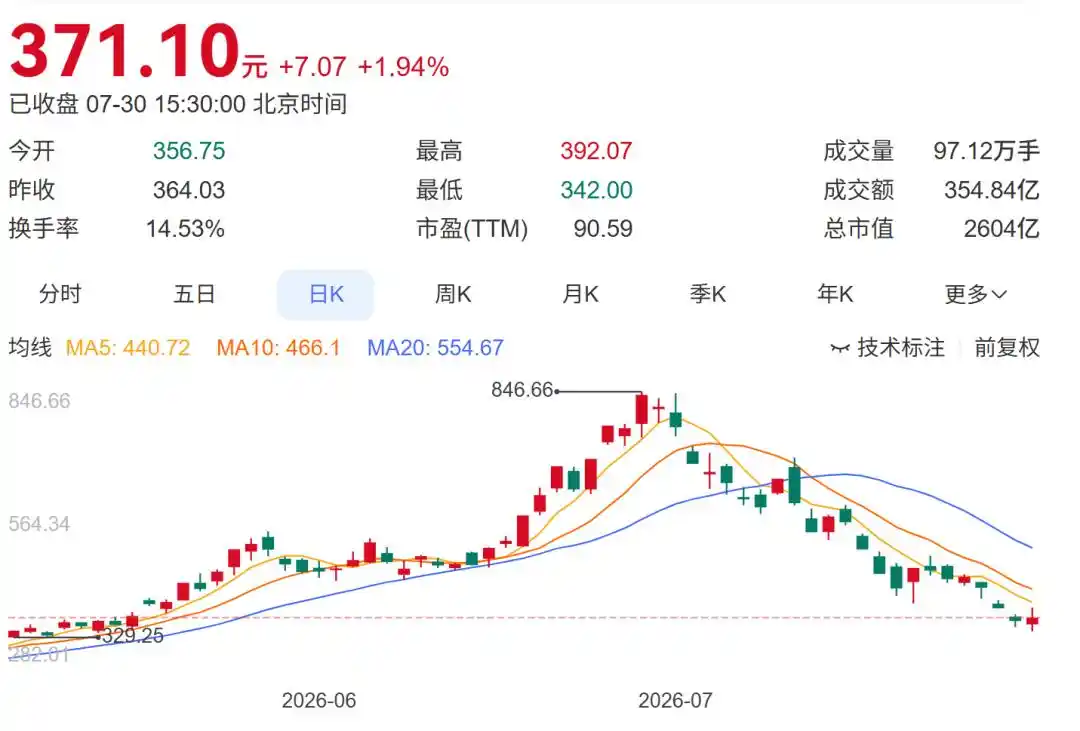
​ The "Memory Top Dog" trading at 846 yuan a month ago has now dropped to around 350 yuan.

In just 22 trading days, its market value evaporated by over 330 billion yuan.
This isn't a tragedy for some st-stock; it's the story of Gigadevice, the top player in A-share memory chips.

What's even more shocking is that the company's actual controller, Zhu Yiming, cashed out 4.4 billion yuan first, and then immediately rolled out a market-rescue plan of "no less than 1 billion yuan in personal share purchase + a maximum 2 billion yuan company buyback."

Selling with the left hand, buying with the right. After this combination of moves, 240,000 shareholders were completely bewildered.

A "Buy Low, Sell High" Strategy Timed to the Day

Let's clarify the timeline first.

On April 8, 2026, Gigadevice disclosed a reduction plan, with Zhu Yiming planning to sell up to 11.21 million shares.

From May 6 to June 12, Zhu Yiming sold a total of 11.1106 million shares through block trades and centralized bidding, accounting for 1.58% of the company's total shares. The selling price ranged from 339.44 yuan to 538.90 yuan per share, with total proceeds of approximately 4.4 billion yuan.

After the reduction, Zhu Yiming's direct shareholding dropped from 6.53% to 4.94%, ceasing to be a major shareholder with over 5%. However, together with persons acting in concert, including Hong Kong Win Fortune Limited, he still holds a combined 6.8% stake.

On June 29, Gigadevice's stock price hit an all-time high of 846.66 yuan intraday.

On July 1, it fell 5.27%, marking the beginning of a sharp decline.

On July 27, CXMT (Changxin Memory Technologies Inc.) debuted on the STAR Market, soaring 465% on its first day. On the same day, Gigadevice's stock price hit a daily limit down.

On July 29, the stock closed at 364.03 yuan. That night, Zhu Yiming released four announcements in a row: informing of the reduction completion, a plan for a personal purchase of no less than 1 billion yuan, a proposal for a company buyback of 1-2 billion yuan, and a pledge not to sell shares within the next 12 months.

The reduction was completed on June 12, and the stock price peaked on June 29. The timing is more precise than an alarm clock.

Why the drop? Three reasons, each more painful than the last.

First, the listing of CXMT destroyed the "shadow stock" logic. Gigadevice had been labeled by the market as a "CXMT shadow stock." Both companies were founded by Zhu Yiming, and Gigadevice holds 1.62% of CXMT's shares post-listing.

Before CXMT's listing, funds could only bet on the domestic memory chip sector through Gigadevice. On July 27, when CXMT officially listed, the main player arrived, and the shadow lost its value. On that day, CXMT saw a turnover of 141.1 billion yuan with a turnover rate of 66.4%, the fund rotation effect was plain to see.

Second, a report from Morgan Stanley triggered market concerns. The latest Morgan Stanley report warned that the AI-driven semiconductor memory boom is approaching an inflection point, with memory contract prices expected to peak in Q4.

The momentum for upward revisions in memory profits has weakened significantly, with the net profit upgrade rate falling from a peak of 92% to 77%. Gigadevice's products are concentrated in highly cyclical segments like NOR Flash and niche DRAM; when the cycle turns, it will be the first to get hit.

Third, the 4.4 billion yuan share sale shattered market confidence. Net profit soared 1099%, so the fundamentals are fine. The problem is, even the boss offloaded his holdings near the peak to the market. What are retail investors supposed to think?

Was the Share Sale Compliant?

From a regulatory standpoint, this round of share sales is flawless. The plan was disclosed on April 8, executed from May 6 to June 12, with prices ranging from 339 yuan to 538 yuan, all within the planned range. Post-sale disclosures were made as required; all procedures were legal and compliant.

But compliance does not equate to reasonableness.

A chairman cashes out 4.4 billion yuan at a sensitive moment just before the stock price peaks, then proposes a "buyback + personal purchase" plan after the price halves. The market isn't stupid. Right after the announcement, on July 30, Gigadevice's stock fell another 5%, hitting a new low since May 15 intraday.

The "rescue" plan not only failed to rescue the market but made it even more nervous.

Blockbuster Earnings, But How Solid Are They?

Objectively speaking, Gigadevice's performance is indeed dazzling. For the first half of 2026, revenue is estimated at 11.5 billion yuan, up 177% year-on-year; net profit attributable to shareholders is 6.9 billion yuan, up 1099% year-on-year. For the full year 2025, revenue was only 9.2 billion yuan, with net profit of 1.648 billion yuan. In half a year, it made over seven times the profit of the previous full year.
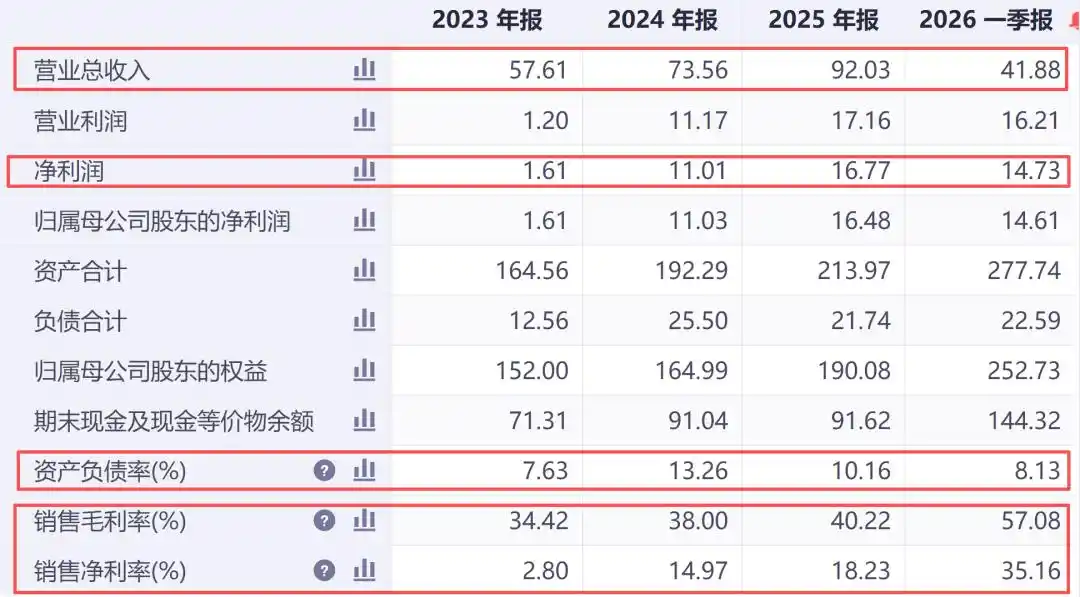
But upon closer look, of the 6.9 billion yuan net profit, 2.05 billion yuan was non-recurring gains and losses, mainly from the fair value increase of securities investments. Excluding this, the net profit was 4.85 billion yuan, up 791% year-on-year.
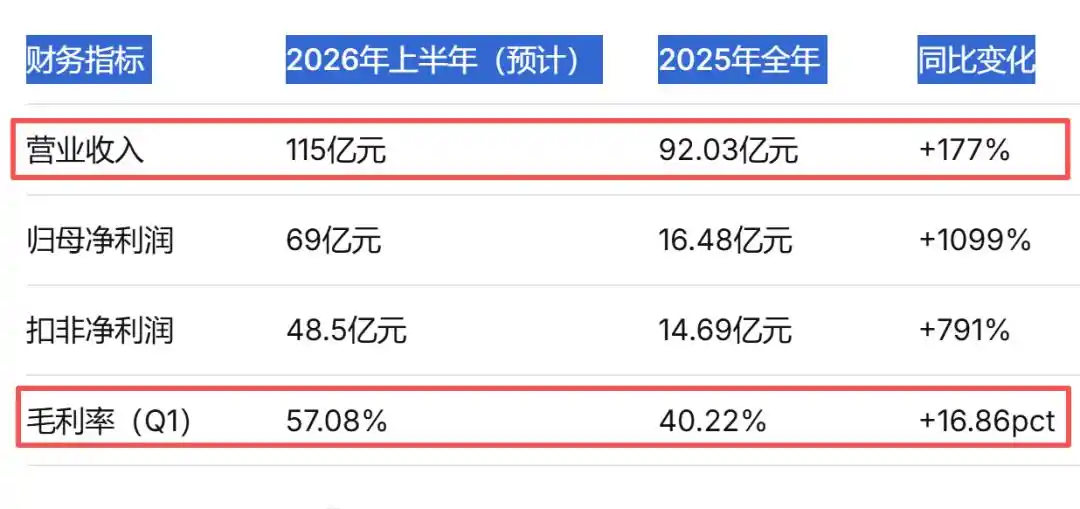
Source: Company Announcement

First-quarter gross margin was 57.08%, up 12 percentage points quarter-on-quarter. Memory chips saw both volume and price increases, MCU demand was strong—the main business is indeed booming.

But the question is, how long can this boom last? Memory is a typical, strongly cyclical industry. The company itself warned of risks in its earnings forecast: The industry is extremely cyclical, and future performance faces the risk of decline.

Vast industry space, but not everyone can get a piece of the pie

Bocom International estimates the global specialized memory market will grow from $13.6 billion in 2024 to $40.3 billion in 2026. Overseas giants like Samsung and SK Hynix continue to withdraw capacity from niche DRAM and SLC NAND, opening a substitution window for Gigadevice.

Deep cooperation with CXMT is the core support for its DRAM business. Related party procurement quotas for 2026 were significantly raised from 1.182 billion yuan to 5.711 billion yuan. Bocom International initiated coverage with a "Buy" rating, with an A-share target price of 798 yuan; HSBC Global Research gave a target price of 936 HKD.

But the flip side is: The fabless model ties its production capacity lifeblood to foundries, making it vulnerable to being "designed out" during chip shortage cycles. The sibling relationship with CXMT also brings ongoing controversy over related-party transactions and potential competition.

A Few Hard Truths

First, this is not the first time, nor will it be the last. The playbook of "sell high, shout buy low" has been acted out too many times in the A-share market. Every time, they claim it's "based on confidence in the company's long-term value," but actions speak louder—they secure profits first.

Second, 4.4 billion vs. 2 billion (plus 1 billion) — math doesn't lie. He cashed out 4.4 billion and is now promising a 1 billion personal purchase and a 2 billion company buyback. That's a net cash-out of 1.4 billion. What's more, the personal purchase can only start after December 13 because Chinese law prohibits directors from buying company shares within six months of selling. This six-month window happens to be when the stock price is most vulnerable.

Third, the 240,000 shareholders became the counterparty. The boss offloaded shares to the market at a high point. Now, with the price halved, he wants the market to believe "I'm genuinely optimistic." Trust is easily broken but hard to rebuild.

That said, Gigadevice's fundamentals aren't bad. The domestic substitution trend for memory chips is strong, and the company indeed has competitiveness in NOR Flash and niche DRAM. If the memory cycle still has some runway left, Gigadevice below 400 yuan might not be without value.

But the prerequisite is that you must be clear: Are you investing in a chip company, or are you footing the bill for someone else's share sale?

This article is from the WeChat public account "Investment Banking Circle," author: Investment Banking Jun


Related Questions

QWhat is the core controversy surrounding the actions of Gigadevice's (兆易创新) controlling shareholder, Zhu Yiming, as described in the article?

AThe core controversy is that Zhu Yiming, the controlling shareholder, executed a major sell-off of his shares, cashing out 4.4 billion RMB just before the stock price peaked. Shortly after the stock price plunged (falling from over 846 RMB to around 350 RMB), he then announced plans for a personal buyback of at least 1 billion RMB and a company stock repurchase plan of up to 2 billion RMB. This sequence of 'selling high and then buying low' has severely damaged market confidence, making shareholders feel they were left 'holding the bag.'

QAccording to the article, what are the three main reasons cited for the sharp decline in Gigadevice's stock price in July 2026?

AThe three main reasons are: 1) The collapse of the 'shadow stock' logic: Changxin Technology's IPO diverted investment away from Gigadevice, which was previously seen as a proxy for investing in the domestic memory chip sector. 2) A Morgan Stanley report warning that the AI-driven memory chip boom is nearing an inflection point, with contract prices expected to peak in Q4, raising concerns about the cyclical downturn. 3) The loss of market confidence due to Zhu Yiming's 4.4 billion RMB sell-off, signaling a lack of faith from the insider even during strong performance.

QDespite the negative sentiment, what are some positive fundamentals and growth drivers mentioned for Gigadevice?

APositive fundamentals include: explosive financial performance with H1 2026 revenue up 177% year-on-year and net profit up 1099%; strong core business growth in NOR Flash and niche DRAM driven by volume and price increases; the global trend of domestic substitution in memory chips; and major international players exiting niche DRAM and SLC NAND capacity, creating a window of opportunity for Gigadevice. Its deep partnership with Changxin Technology is also cited as a key support for its DRAM business.

QWhat critical risk does the article highlight regarding the sustainability of Gigadevice's impressive earnings growth?

AThe article highlights the highly cyclical nature of the memory chip industry as the critical risk. It points out that the company's own performance forecast warns of future earnings volatility due to this strong industry cycle. The sharp profit growth, while impressive, is seen as potentially temporary, with a significant risk of decline once the current industry upcycle reverses, especially for its core NOR Flash and niche DRAM products.

QWhat is the key mathematical discrepancy the article points out between the shareholder's sell-off and the proposed buyback plans?

AThe key discrepancy is the net cash flow: Zhu Yiming cashed out 4.4 billion RMB from his sell-off. The proposed rescue plan involves him personally buying back at least 1 billion RMB and the company repurchasing up to 2 billion RMB worth of shares. This results in a net cash outflow from the market of 1.4 billion RMB (4.4B - 1B - 2B). Furthermore, the article notes his personal buyback cannot start until six months after the sell-off due to regulatory rules, creating a vulnerable period for the stock price.

Related Reads

Expect news tomorrow: this time the Bank of Japan will announce its interest rate decision! What impact will this have on Bitcoin?

A day before the Bank of Japan's (BOJ) interest rate decision announcement, the Japanese yen surged nearly 3% against the US dollar. The sharp move in the currency market fueled speculation that the Japanese government may have intervened again to support the yen. The USD/JPY pair fell over 400 pips to 158.5, its steepest daily drop since Japan's currency intervention earlier this year. Market participants suspect the rapid, strong yen appreciation could be due to direct foreign currency sales by Japanese authorities, though the Ministry of Finance has made no official statement. The yen had previously fallen to its weakest level against the dollar in nearly 40 years. In late April and May, the government intervened with roughly 9.6 trillion yen to prevent the USD/JPY from rising sustainably above 160, but the yen faced renewed selling pressure afterward. Investors are now focused on the BOJ's rate decision and its signals on future monetary policy. Potential hawkish signals from the BOJ are seen as a factor that could support further yen strength. A sharp yen appreciation could create short-term selling pressure on Bitcoin by increasing the risk of unwinding carry trades, where investors borrow low-yielding yen to invest in Bitcoin and other risky assets. This pressure could intensify if the BOJ takes a hawkish stance or raises interest rates.

cryptonews.ru4m ago

Expect news tomorrow: this time the Bank of Japan will announce its interest rate decision! What impact will this have on Bitcoin?

cryptonews.ru4m ago

Bernstein Reveals Details of Core Scientific's $14 Billion Deal with AMD

Analysts from Bernstein revealed details of a deal between Core Scientific and AMD with a potential total value of over $14 billion. According to the report, initial contracts for 530 MW of capacity could generate this revenue over 15 years, with AMD acting as a credit guarantor for part of the bitcoin miner's infrastructure. The partnership, announced on July 28, has the potential to allocate up to 2.5 GW of data center capacity for AI. Bernstein broke down the 530 MW into 377 MW of direct triple-net lease for AMD and 152 MW for an unnamed cloud provider backed by AMD's credit. This structure is seen as lowering financing costs and counterparty risk. AMD also received warrants to buy 30 million Core Scientific shares at $23.47 each, which vest upon reaching the 2.5 GW target. Average annual revenue from the deal is estimated at around $0.9 billion, or about $1.8 million per megawatt, which is 5-25% below recent AI hosting deals by other miners. However, the 377 MW triple-net lease for AMD carries a margin close to 100%. Core Scientific expects capital expenditures for the deal to be $11-12 million per MW, totaling about $6 billion. Bernstein views this partnership as a new phase in the transformation of former bitcoin miners into AI infrastructure operators, with AI chipmakers like AMD now acting as direct anchor tenants. Recent similar deals include Hut 8 allocating 704 MW to a tenant believed to be Nvidia, and AMD reserving 200 MW with Riot Platforms. Core Scientific also paid Block $41.9 million to terminate a mining chip supply contract as part of its accelerated diversification into AI.

cryptonews.ru1h ago

Bernstein Reveals Details of Core Scientific's $14 Billion Deal with AMD

cryptonews.ru1h ago

Trading

Spot
活动图片