Author: Ashrith Rao
Compiled by: Saoirse, Foresight News
Domestic borrowing costs in Japan have reached their highest level since 1996. On the same morning, the 30-year government bond yield hit 4.185%, and the 10-year bond yield stood at 2.945%.
This marks a significant shift in the landscape for a country that has long relied on negative interest rates to combat deflation.
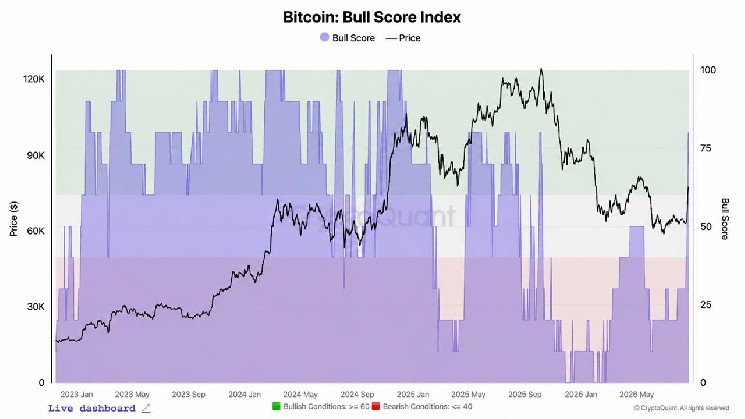
Meanwhile, Bitcoin surged 22% over the past week, breaking above $80,000 for the first time since May. The core contradiction explored in this article is: while the Japanese bond market experiences intense volatility, the crypto market appears relatively resilient.
The Underlying Logic of the Carry Trade
For years, the yen carry trade has been a major force driving global risk asset markets. Investors borrowed inexpensive yen, converted it into dollars, and then purchased various assets with higher returns.
According to the Bank for International Settlements, offshore non-bank institutions hold approximately $250 billion in yen-denominated loans; broader estimates put this figure at around $500 billion. This massive leverage was built on a core premise: Japanese interest rates would remain near zero for an extended period. The current reality has overturned this old assumption.
In June, the Bank of Japan raised its policy rate to 1.0%, the highest level in 31 years.
The market widely expects another rate hike at the policy meeting on September 17-18. The unique monetary environment that Japan has maintained for the past three decades is unraveling. The 2.88% yield on the 10-year government bond is not just a cold number. If the yen appreciates rapidly, carry trade positions could turn from profit to loss in an instant.
Praneet Shah of Goldman Sachs stated: "A mere shift in the exchange rate can completely wipe out the annualized return of the entire position."
This scenario played out in August 2024: affected by yen appreciation, Bitcoin fell from around $64,600 to $49,000 on August 5th. The Tokyo Stock Price Index (TOPIX) plummeted 12% in a single trading day.
But the situation is now different.
This month, the yen has given back more than half of the gains from the currency intervention and is currently in a weakening phase, trading around 159 against the US dollar. A weaker yen would enhance the appeal of the carry trade again, making the Bank of Japan's subsequent policy actions regarding the yen highly worth watching.
Debt Cliff
At the end of June, Japan's government debt reached a record high of 1,346 trillion yen (equivalent to $9.1 trillion). The Japanese government expects the debt level to climb to 1,492 trillion yen by the end of this fiscal year. Prime Minister Sanae Takaichi announced that the consumption tax will be reduced to 1% for a two-year period starting April 2027, creating an additional fiscal gap of 5 trillion yen.
This creates a difficult dilemma: Japan needs higher interest rates to stabilize the yen and curb inflation; but raising rates would significantly increase the interest burden on its massive debt.
The Bank of Japan announced that starting April 2027, it will slow the pace of its balance sheet reduction, indicating a policy priority of ensuring market stability rather than pursuing rapid monetary policy normalization. Even so, the bond market has clearly shown a lack of confidence.
Japan sold part of its US Treasury holdings to fund its currency intervention in August. Its holdings decreased by $26.4 billion in June, bringing the total to $1.117 trillion. This was the largest single-month reduction among global nations, directly pushing the yield on the US 10-year Treasury note to 4.74%.
The debt pressure is not unique to Japan; it reflects a broader global trend of debt adjustment, with one source of the contradiction lying in the United States.
Bitcoin's Decoupling Illusion
In the face of all this macro turbulence, Bitcoin remains almost unaffected, with its price holding firmly above $78,700. This resilience challenges the traditional "risk-on/risk-off" logic. The key question is: Is this a genuine market decoupling, or a brief illusion before the storm arrives?
The pessimistic scenario is clear: If the Bank of Japan raises rates significantly and the yen strengthens, the concentrated unwinding of carry trades could trigger a global deleveraging of risk assets.
The correlation between Bitcoin and Japanese stocks during the August 2024 sell-off is sufficient proof that Bitcoin cannot remain isolated. Furthermore, rising yields in Japan increase the returns on interest-bearing assets, potentially making Bitcoin, which itself does not generate interest, less attractive in comparison.
The optimistic scenario offers another possibility. If the yen continues to depreciate, Bitcoin could become an attractive safe-haven option in the eyes of Japanese investors.
This is not purely theoretical. Ray Dalio believes Japan's debt situation supports the allocation value of Bitcoin, suggesting a small allocation to Bitcoin alongside a 10-15% allocation to gold.
Participation by Japanese institutions is also steadily increasing. For example, Laser Digital, the crypto subsidiary of Nomura, received Japan's first new crypto exchange license in four years. Nomura's survey shows that 79% of respondents plan to invest in Bitcoin within the next three years.
Japan's revised Financial Instruments and Exchange Act has reclassified crypto assets as financial products, which is expected to pave the way for spot crypto ETFs by 2027, along with separate tax rules. The Japan Exchange Group could list crypto spot ETFs as early as 2027.
While the regulatory framework becomes clearer, macro-level pressures are also accumulating.
The September Policy Shift Window
The next Bank of Japan policy meeting is scheduled for September 17-18. Most institutions predict the rate will be raised to 1.25%.
The bond market may fully price in this expectation, but Bitcoin may not fully digest it. What truly warrants vigilance is not the act of raising rates itself, but the central bank's signaling regarding future policy constraints.
If the Bank of Japan signals that 1% is merely a transitional step towards a 2% interest rate, the yen will likely strengthen rapidly, leading to large-scale unwinding of carry trades. Conversely, if its stance reflects concerns about debt sustainability limiting the scope for rate hikes, the yen could weaken further, and Bitcoin could benefit from a weaker dollar and domestic Japanese buying.
The 1996 yield level should be seen as a risk warning signal, not a market driver. What truly dominates the market is the direction of the yen's movement, not a specific exchange rate number. Currently, the yen is depreciating and Bitcoin is rising. If the September Bank of Japan meeting alters the market's prevailing expectations, this correlation could abruptly reverse.
The current mainstream market pricing assumes Japan's debt issues will evolve slowly, without a sudden crash. Bitcoin investors are not sitting idle waiting for a carry trade reversal; they are already trading on expectations of a weaker yen and sustained institutional inflows.
This logic has the potential to hold, but it still needs to be viewed cautiously in light of Japan's historical interest rate patterns. For the first time in thirty years, the 30-year bond yield is approaching 4%, an event that will undoubtedly have profound market implications.