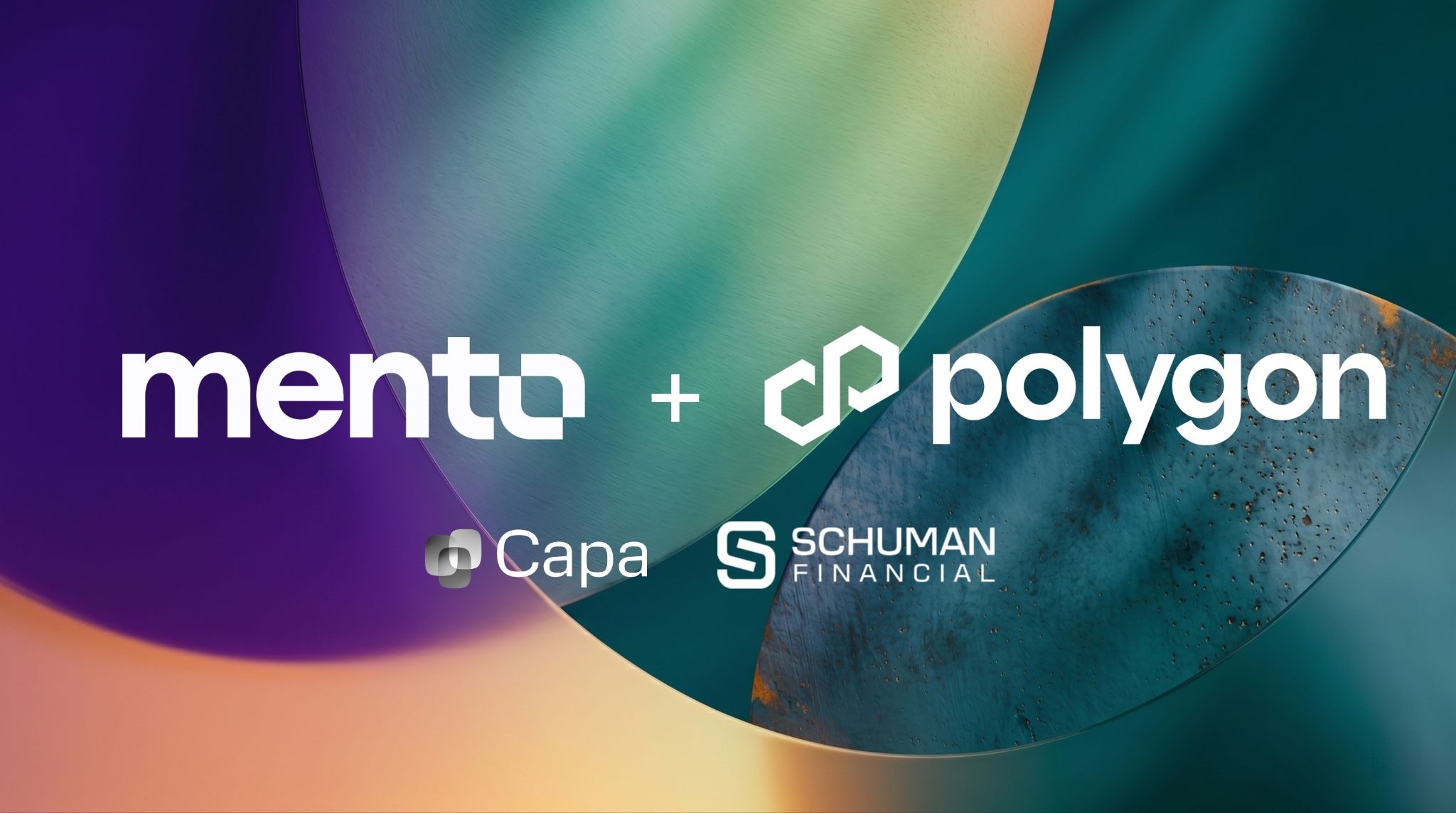
Mento brings its FX Protocol to Polygon

cointelegraphPublished on 2026-07-27Last updated on 2026-07-27

Abstract

Mento Protocol, a leading decentralized FX infrastructure, has deployed on Polygon, bringing its stablecoin markets to the network. The launch, starting with a USDm/EURm trading pair, provides the foreign exchange layer needed to connect the growing non-USD stablecoin activity on Polygon with predictable, onchain FX liquidity. This expands Polygon's ecosystem beyond dollar-only liquidity. The deployment is supported by liquidity partner Capa and integrates EURØP, a MiCA-regulated euro token from Schuman Financial, as a reserve asset for EURm. Mento's Fixed Price Market Maker design uses trusted price oracles to offer predictable, reference-rate execution across currencies, aiming to make non-USD stablecoins more usable for cross-border payments and other applications. Executives from Mento Labs, Polygon Labs, Capa, and Schuman Financial emphasized that this infrastructure is crucial for scaling reliable, multi-currency stablecoin payments and connecting local-currency markets onchain.

Berlin, Germany, July 27, 2026 – Mento Protocol (Mento), the leading decentralized FX infrastructure that processed USD 18.5B in trading volume in 2025, has been deployed on Polygon. The launch brings Mento stablecoin markets to one of crypto’s leading stablecoin ecosystems, starting with the USDm/EURm pool as the first FX trading pair. The EUR/USD pair accounts for ~USD 2T of the USD 9.5T traded daily across global FX markets, making it the single deepest currency pair in the world.

Stablecoin activity remains largely concentrated in USD-denominated assets. This is shifting. Polygon has become one of the leading networks where local-currency stablecoin markets are finding real payment scale, with more than USD 11.1B in lifetime non-USD stablecoin transfer volume and over 43% of non-USD stablecoin transfers across major blockchains.
The deployment of the Mento Protocol adds the FX layer needed to connect those markets on Polygon. The launch enables predictable onchain FX liquidity between USD-denominated and non-USD-denominated stablecoins, expanding Polygon’s stablecoin ecosystem beyond dollar-only liquidity.

“Mento’s mission is to make non-USD stablecoins usable across markets by providing the FX infrastructure that lets them move reliably.” said Bogdan-Radu Dumitru, CEO at Mento Labs. “Polygon is a natural frontier ecosystem for that infrastructure, given the scale of local-currency stablecoin activity already happening on the network and their investment in its growth.”

“Non-USD stablecoins are already moving at scale on Polygon, and FX infrastructure is what lets that activity grow into something payments businesses can actually rely on,” said Marc Boiron, CEO of Polygon Labs. “Mento brings that layer to the ecosystem, connecting the local-currency stablecoin markets we’ve been building toward with the reliable execution those markets need to function. This is exactly the kind of infrastructure the Polygon Open Money Stack is designed to support.”

The Polygon deployment is supported by Capa, a LATAM-focused financial infrastructure provider that powers cross-border FX and payments, as a day-one liquidity partner. Together, Mento and Capa are bringing supported dollar-euro FX liquidity to Polygon from launch, providing access to a more complete stablecoin market structure beyond dollar-only liquidity.

“Non-USD stablecoin markets don’t grow on infrastructure alone, they need deep liquidity. We’re backing the Mento Protocol on Polygon from day one because we believe onchain FX for non-dollar currencies is where real cross-border value moves next.” Jonathan Herrera, Head of Ecosystems at Capa.

Mento Protocol is also adding EURØP as a reserve asset for EURm, a MiCA-regulated euro token from Schuman Financial, bringing regulated euro liquidity onchain.

“The Euro is the world’s second most-used currency, yet EUR-denominated stablecoins represent only around 1% of the stablecoin market. The Mento Protocol is the necessary infrastructure to make that change. Adding EURØP as a reserve asset for EURm brings a MiCA-regulated euro token into onchain FX markets,” said Eduardo Morrison, Chief Business Officer at Schuman Financial.

Mento Protocol’s Fixed Price Market Maker (FPMM) design is built to provide real-world reference rates via trusted price feed oracles, enabling predictable execution across currencies without relying on volatile AMM curves. This model gives applications access to onchain FX markets with features of traditional FX markets: predictable reference-rate pricing and reliable execution, with liquidity that is programmable and composable.

Mento’s stablecoin infrastructure is built for a world where stablecoins are not limited to USD. It offers the FX layer for non-USD stablecoin markets, supporting trading across 15 currencies. With Polygon, Mento continues its cross-chain expansion beyond Celo and Monad.

About Mento

The Mento Protocol is the leading decentralized FX infrastructure for institutions and individuals, enabling developers and institutions to launch, trade, and settle global currencies onchain with institutional-grade reliability. The Mento Protocol provides programmable FX via transparent liquidity and real-world pricing from trusted oracles, supporting use cases such as cross-border payments, treasury operations, and institutional settlement through an expanding set of stablecoins and a transparent, multicurrency platform. Mento Labs is the core development team behind the Mento Protocol, focused on advancing global onchain FX.

About Capa

Capa is a financial infrastructure that connects Latin America to the global financial system through a single API and dashboard. The platform enables seamless cross border payments by handling local pay ins and pay outs, instant conversion between local currencies and stablecoins, and access to deep liquidity, all with full regulatory compliance and cost efficient settlement. www.capa.fi

About Polygon Labs

Polygon Labs is a global blockchain payments company building and operating infrastructure to move money instantly, reliably, and at internet scale, with the mission to move all money onchain. It is building the Polygon Open Money Stack, an open and integrated stack of services and technologies to instantly and reliably move money anywhere, and put it to work. Its infrastructure has facilitated trillions of dollars in onchain value transfer and supported millions of transactions daily for some of the globe’s largest banks, fintechs, enterprises, and consumer applications. To learn more, visit www.polygon.technology

About Schuman Financial

Schuman Financial is a leading euro stablecoin issuer and payments company. We provide the solutions, technologies and infrastructure for rebuilding euro-denominated financial services on-chain. Our core product is EURØP, a euro-denominated stablecoin issued by our French-licensed subsidiary regulated by Banque de France. Thanks to our best-in-class technology platform and EMI license, we are the only company that can offer free and instant cross-border payments anywhere in the world. www.schuman.io

Related Questions

QWhat is the Mento Protocol and what key feature does its deployment on Polygon introduce?

AThe Mento Protocol is the leading decentralized foreign exchange (FX) infrastructure. Its deployment on Polygon introduces an FX layer that enables predictable onchain FX liquidity between USD-denominated and non-USD-denominated stablecoins, starting with the USDm/EURm pool.

QAccording to the article, why is the Polygon network a significant environment for the Mento Protocol?

APolygon is a significant environment because it has become a leading network for local-currency stablecoin activity, with over USD 11.1B in lifetime non-USD stablecoin transfer volume. It represents a natural frontier for Mento's infrastructure to connect and grow these existing markets.

QWho are the key partners mentioned as supporting the launch of Mento on Polygon, and what roles do they play?

AThe key partners are Capa and Schuman Financial. Capa is a day-one liquidity partner providing cross-border FX and payments infrastructure. Schuman Financial provides EURØP, a MiCA-regulated euro token, which is added as a reserve asset for EURm, bringing regulated euro liquidity onchain.

QHow does the design of the Mento Protocol's Fixed Price Market Maker (FPMM) differ from traditional Automated Market Makers (AMMs)?

AThe FPMM design uses trusted price feed oracles to provide real-world reference rates, enabling predictable execution across currencies. This avoids relying on volatile AMM curves, offering features of traditional FX markets like predictable pricing and reliable execution, while maintaining programmability and composability.

QWhat broader mission or vision for the stablecoin market is highlighted by the CEOs of Mento Labs and Polygon Labs in the article?

AThe vision is to move beyond a stablecoin ecosystem limited to USD. The mission is to make non-USD stablecoins usable and reliable for cross-border payments and business activity by providing the essential FX infrastructure, thereby supporting a more complete, global onchain money system.

Related Reads

This Strategy Earned Hefei One Trillion Yuan

This article analyzes the "Hefei Model" that enabled a municipal state-owned investment to generate paper profits exceeding one trillion yuan through the 2026 IPO of ChangXin Memory Technologies (CXMT). It argues against framing this success as a "lucky gamble," instead presenting it as the result of a deliberate institutional system designed to enable long-term industrial investment. The system comprises three core components. First, a **quantified risk-tolerance mechanism**, including a 40% loss allowance for venture funds and a clear "duty-fulfilled exemption" list, decouples project failure from personal career risk for decision-makers, allowing them to focus on industrial potential rather than personal liability. Second, **strategic investment in critical supply chain gaps**: Hefei doesn't just invest in "good" projects, but targets "missing" links essential for its key industries (appliances, displays, cars). The investment in CXMT aimed to fill the critical DRAM memory chip gap, subsequently attracting over 450 upstream and downstream firms and creating a full semiconductor cluster. Third, **institutional authorization for counter-cyclical investment**: Protected by the risk-tolerance framework, Hefei supported CXMT with increased investment during the 2023 global memory industry downturn, enabling it to scale production and capitalize on the 2025 AI-driven demand surge. The article concludes that the true lesson is not the specific investment but building the institutional infrastructure—quantified risk tolerance, deep industry chain analysis, and counter-cyclical mandates—that makes such long-term, strategic bets possible. It notes the final challenge is perfecting the exit mechanism to complete the investment cycle and transform paper gains into sustainable fiscal returns and reinvestment capacity.

marsbit11m ago

This Strategy Earned Hefei One Trillion Yuan

marsbit11m ago

Silicon Valley VC's On-the-Ground Observations of Chinese Entrepreneurship: A Harsher Capital Environment Breeding Fiercer Companies

A Silicon Valley VC's on-the-ground observations of China's startup ecosystem reveal a harsher capital environment forging more aggressive and execution-driven companies. Unlike Silicon Valley's patient capital focused on long-term growth, China's venture landscape is characterized by intense pressure for exits. Startups often face "equity in name, debt in reality" terms with strict timelines and personal founder liability, pushing IPO as the nearly mandatory exit path due to a virtually non-existent M&A market. This high-stakes system, while potentially fostering short-termism, cultivates extreme cost discipline, rapid execution, and formidable commercialization skills—traits evident as these companies expand overseas. The funding ecosystem comprises three main pools: local RMB funds (often government-backed with economic development mandates), domestic USD funds (more founder-friendly, like Sequoia China), and dwindling direct foreign capital. Financial Advisors (FAs) play a crucial intermediary role, packaging deals and navigating China's opaque, relationship-based business networks where platforms like LinkedIn haven't taken root. Underpinning it all is significant state influence through industrial policy, directing capital and incentives toward strategic sectors like semiconductors and AI. The result is a distinct, parallel innovation model—less forgiving than Silicon Valley's, but capable of concentrating resources, accelerating iteration, and producing fiercely competitive companies in targeted industries.

marsbit17m ago

Silicon Valley VC's On-the-Ground Observations of Chinese Entrepreneurship: A Harsher Capital Environment Breeding Fiercer Companies

marsbit17m ago

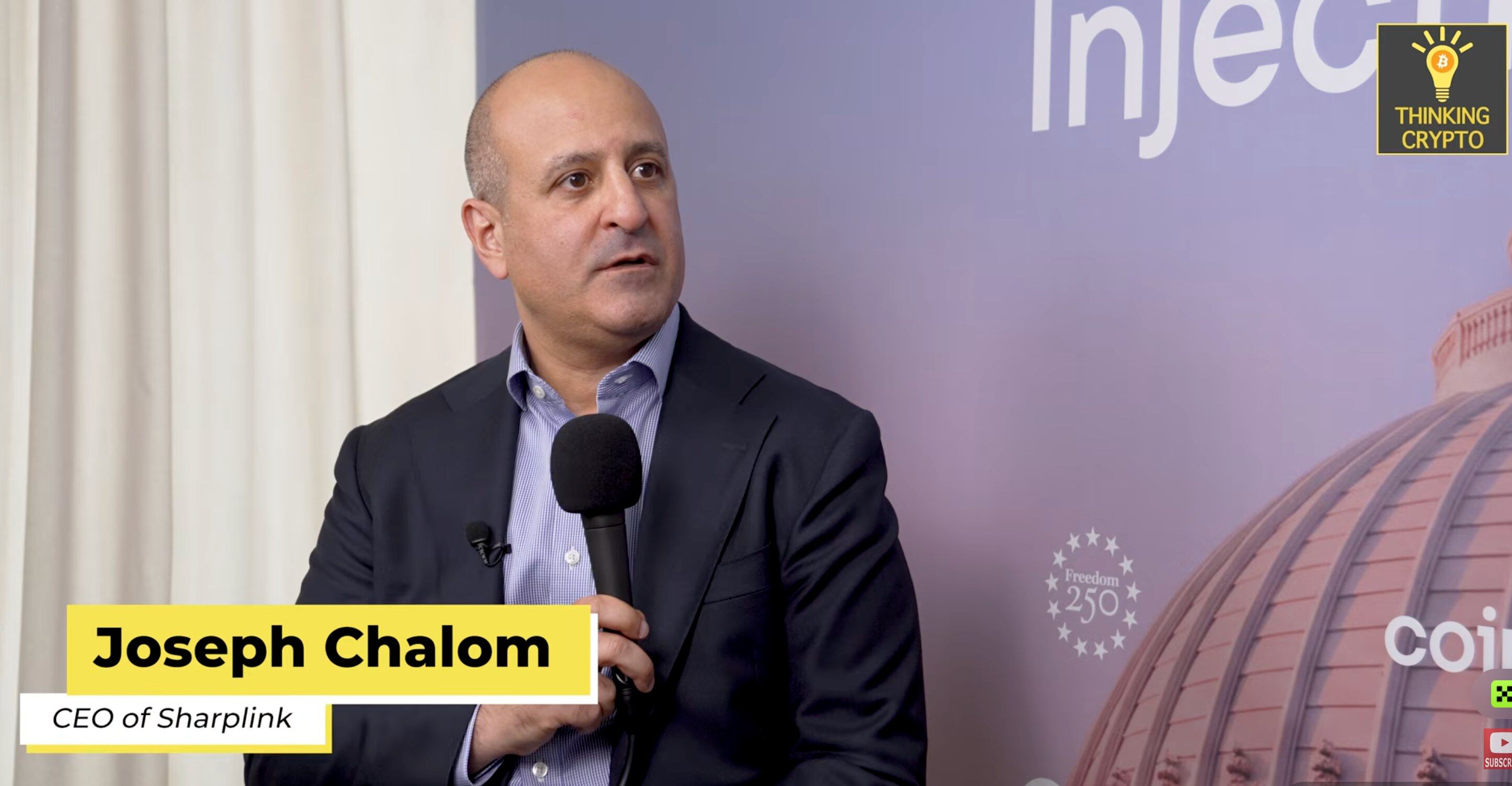
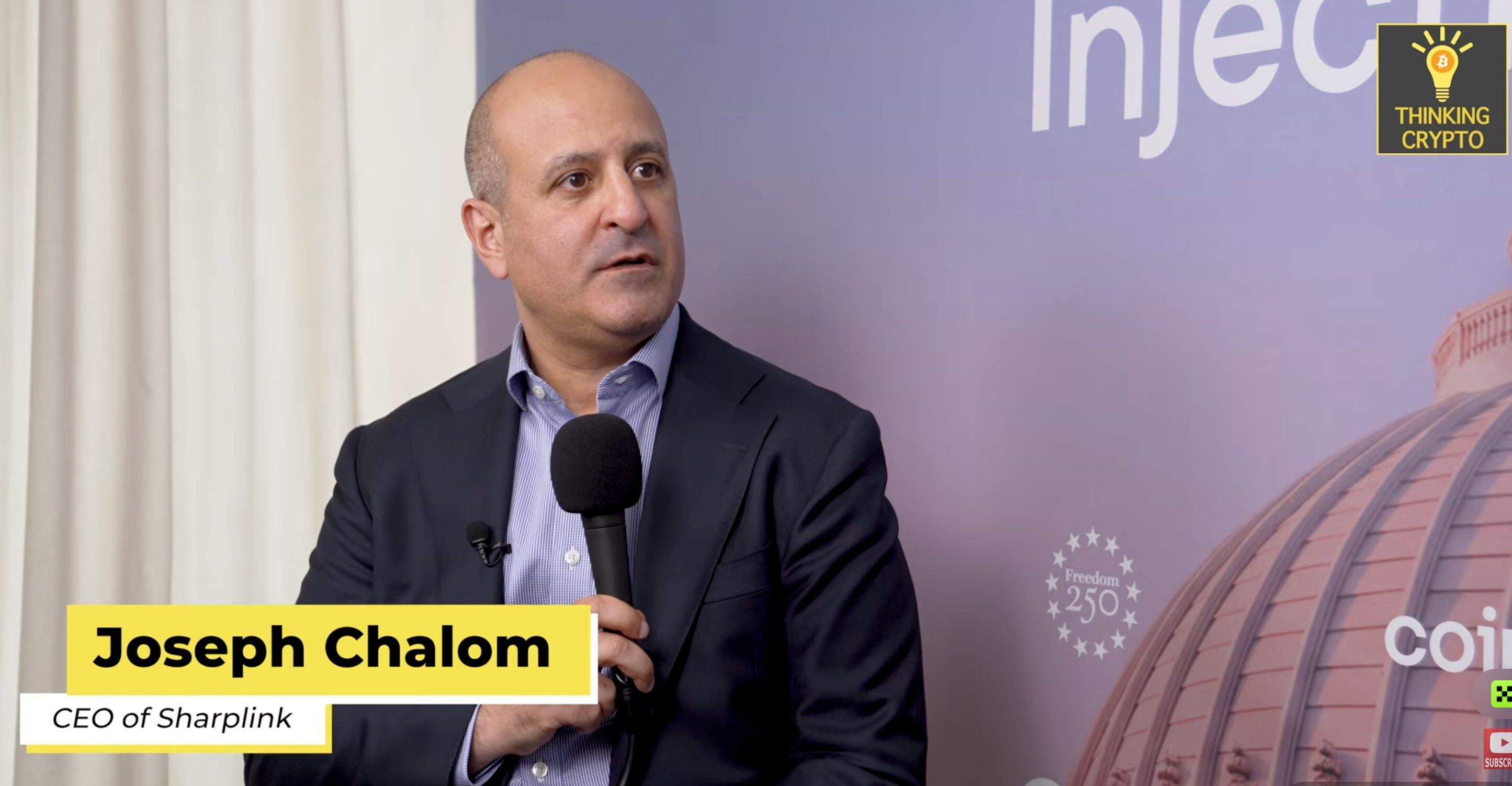
SharpLink's Helm: Buying Only, Never Selling, Making ETH Generate Profits Through the Cold Winter

SharpLink co-CEO Joseph Chalom shares his bullish outlook on Ethereum during the recent "Injective Summit 2026." Despite prevailing negative market sentiment, Chalom argues that fundamentals and data tell a different story: Ethereum dominates with over 50% of stablecoin transaction volume, nearly 60% of tokenized real-world assets (RWA), and remains the uncontested leader in DeFi. He attributes the communication gap and lack of confidence partly to the Ethereum Foundation's restructuring. In response, SharpLink, alongside ConsenSys and Bitmain, is funding three key spin-off teams from the Foundation: ETH Labs (for institutional-scale scalability), Ethereum Institutional (for business development and marketing), and EthSystems (for next-gen privacy and compliance solutions). Chalom emphasizes these are critical for accelerating institutional adoption. Regarding SharpLink's strategy, Chalom details a conservative, yield-focused approach. The firm holds 886,725 ETH, acquired with zero leverage or debt. They generate revenue by staking ETH and strategically deploying capital into DeFi protocols via a dedicated fund, aiming for returns above the native staking yield. This contrasts with some Bitcoin-focused firms that have become net sellers. On the broader institutional adoption of tokenization, Chalom sees current progress as just the beginning. He breaks it down into layers: stablecoins as the currency/value layer, tokenized assets as the exposure layer, and DeFi as the execution layer. He predicts regulatory clarity, like the potential Clarity Act, will be a major catalyst. A key future inflection point will be when fiduciary managers prefer tokenized, 24/7 tradable digital assets over traditional "analog" versions due to their programmability and instant settlement. In conclusion, Chalom positions SharpLink not just as an ETH accumulator and yield generator, but as an active "ecosystem steward," funding essential development and marketing initiatives to support Ethereum's long-term growth, which he believes is directly aligned with shareholder interests.

Odaily星球日报17m ago

SharpLink's Helm: Buying Only, Never Selling, Making ETH Generate Profits Through the Cold Winter

Odaily星球日报17m ago

Ten European Banks Launch Blockchain Initiative RL1

On July 28, 2026, ten European financial institutions launched the Regulated Layer One (RL1) initiative. This open, neutral, and compliance-focused blockchain network is specialized for institutional digital asset operations. The founding members include ABN AMRO, Cecabank, Chartered Investment, Crédit Mutuel Alliance Fédérale, DekaBank, DZ BANK, LBBW, Natixis CIB, SC Ventures, and Seturion, formed as a European cooperative society (SCE) and led by Henning Voelkel, former head of SWIAT. The network is open to new participants, with NatWest currently in discussions to join. RL1 is built on the SWIAT blockchain, which will remain its software and services provider. The underlying SWIAT network, operational for three years, has processed 50 transactions totaling €700 million. The initiative is described as a collective European effort to create a foundation for a shared, openly and trustworthily managed distributed ledger. Its primary goal is to overcome fragmentation in the regulated financial sector by establishing a neutral, participant-owned, pan-European DLT infrastructure for tokenized assets, digital money, and next-generation financial services. The move responds to growing EU demand for scalable real-world asset (RWA) infrastructure, evidenced by projects like Pontes and Appia. This launch aligns with broader sector growth expectations, including Standard Chartered's forecast for DeFi and RWA market capitalization to reach $2 trillion.

cryptonews.ru23m ago

Ten European Banks Launch Blockchain Initiative RL1

cryptonews.ru23m ago

Trading

Spot
活动图片