Pakistan Legislation: How Does South Asia's 'Crossroads' Anchor the Future of Digital Assets with Compliance?

marsbitPublished on 2026-03-12Last updated on 2026-03-12

Abstract

Pakistan has passed the Virtual Asset Act and established the Pakistan Virtual Assets Regulatory Authority (PVARA), marking a shift from an unregulated environment to a formal regulatory framework for digital assets. The law defines virtual assets as a regulated asset class and mandates licensing for exchanges, custodians, and token issuers. PVARA will coordinate with anti-money laundering, tax, and national security agencies, integrating digital assets into the broader financial and security governance system. Situated at a geopolitical crossroads, Pakistan’s approach contrasts with its neighbors: Afghanistan’s regulatory vacuum, Iran’s state instrumentalization of crypto under sanctions, and the Gulf’s emerging compliance hubs like the UAE and Saudi Arabia. By adopting clear regulations, Pakistan aims to align with international standards and facilitate future cross-border cooperation with Gulf financial centers. The new regime signals increased compliance costs but reduced long-term uncertainty, potentially attracting institutional investment. It reflects a strategic effort to position Pakistan as an active rule-maker in regional digital economy dynamics, balancing prohibition and laissez-faire policies with a structured, compliant middle path.

Recently, the Pakistani parliament officially passed the "Virtual Asset Act" and established a national-level regulatory agency—the Pakistan Virtual Assets Regulatory Authority (PVARA). This marks Pakistan's departure from the gray area of the digital asset field, beginning to respond to the rapid advancement of technology and the undercurrents of capital with a structured legal framework and institutions.

However, the significance of this choice extends far beyond domestic legitimization and regulation. Considering its unique geopolitical environment—bordering Afghanistan to the northwest, Iran to the west, and the Arabian Sea to the south—Pakistan's path to digital asset regulation stands at a crossroads of three distinct institutional and developmental models.

Domestic 'Legitimization': From Unregulated Growth to Rule-Based Order?

The core domestic significance of the "Virtual Asset Act" and the establishment of PVARA lies in "institutionalization."

On one hand, virtual assets are explicitly defined in law as a regulated asset class, shedding the gray labels of "illegal securities" or "gambling tools." On the other hand, through PVARA's centralized oversight, all core activities—including exchanges, custodial services, wallet providers, and token issuance—must be brought under a licensing system and compliance requirements.

This shift from "unregulated growth" to "licenses available and rules to follow" is a direct response to past risks such as platform collapses and rampant money laundering.

More importantly, PVARA is tasked with collaborating with anti-money laundering, taxation, national security, and other departments. This means virtual asset regulation is no longer an isolated technical issue but is embedded within the broader framework of national financial and security governance.

External Benchmarking: Strategic Choices Under the Geopolitical 'Three Gates'

To understand Pakistan's choice, it must be placed in contrast with its surrounding geopolitics:

1. Northwest (Afghanistan): The 'Pre-Modern' Zone of Regulatory Vacuum

Afghanistan's financial system is fragile, with limited formal banking network coverage. Crypto assets exist among the populace as "alternative funding channels." Due to political turmoil and sanctions, the country lacks developed specialized legislation for digital assets, leaving regulation in a de facto vacuum.

Compared to Pakistan's path of "legislation—agency establishment—licensing," Afghanistan remains in the "pre-regulatory era," where digital assets easily become channels for illicit fund flows.

2. West (Iran): 'Instrumentalization by the State' Under Sanction Pressures

Under high-pressure sanctions, Iran recognized the value of crypto assets in cross-border settlements and evading sanctions relatively early. Its policies once revolved around controlled mining and import payments.

However, its logic leans more towards using crypto as a "state tool" to counter external pressure, rather than building a comprehensive legal system oriented towards markets and investor protection. Pakistan's path emphasizes creating a compliant ecosystem that can connect with international standards.

3. South (Arabian Sea): The Gateway to the Gulf's 'Compliance Hub'

Through the Arabian Sea, Pakistan is closely connected to Gulf financial centers like the UAE (Dubai, Abu Dhabi) and Saudi Arabia. The latter are actively building global crypto compliance hubs featuring licensing, sandboxes, and financial free zones.

On one end is a capital and technology-rich region, on the other is a South Asian gateway with huge demographic dividends and market potential. By establishing clear rules through PVARA, Pakistan is laying the institutional groundwork for future compliance mutual recognition and business synergy with the Gulf region.

Standing at this "triple crossroads," if Pakistan had remained in ambiguity or prohibition, it would not only struggle to prevent cross-border risks but also lose its voice in the regional digital economy. Choosing legislation and agency establishment is an active strategy of "external benchmarking and internal rule-making": referencing international standards and regional financial center frameworks externally, while building a regulatory system adapted to its national conditions internally.

Rising Compliance Costs, Enhanced Long-Term Certainty

For the industry and investors, Pakistan's shift sends three clear signals:

  • The Era of Hard Constraints Arrives: Operating in Pakistan in the future will require adherence to a整套 (whole set) of hard constraints like licensing access, capital requirements, customer asset segregation, proof of reserves, and information disclosure.
  • Risk Appetite Shift: Compared to regions with weak regulation like Afghanistan, compliance costs in Pakistan will rise significantly, but long-term policy uncertainty and operational risks will decrease substantially. This is more conducive to attracting institutional capital and long-term projects seeking stability.
  • Potential for Regional Linkage: With clear laws and a regulatory agency, Pakistan will possess the advantage of rule-based alignment when exploring cross-border businesses in areas like digital asset payments and trade finance with the Gulf region, potentially opening new growth spaces.

At a time when the global crypto landscape is undergoing intense fragmentation, a major nation of 240 million people, located at the confluence of South Asia and West Asia, has chosen a law and a national agency to anchor itself with new coordinates.

Conclusion

Against the backdrop of a great global crypto regulatory split, Pakistan did not choose extreme prohibition nor complete laissez-faire. Instead, through the "Virtual Asset Act" and PVARA, it is attempting to chart a middle path of institutionalization and compliance.

This choice is not only an upgrade of its domestic financial regulation but also a significant repositioning on the chessboard of geo-economics. Between the regulatory vacuum to the northwest, the instrumentalized usage to the west, and the compliance hub to the south, Pakistan is trying to transform itself from a market that "passively receives technology and capital inflows" into a player that "actively designs rules and participates in building the regional ecosystem."

As sovereign capital begins to enter, the jungle law of the crypto world is being replaced by the chess game of geopolitics. And Pakistan has just made its深思熟虑 (deliberate) move on the board.

*This content is for reference only and does not constitute any investment advice. The market carries risks, and investment requires caution.

Related Questions

QWhat is the name of the main regulatory body established by Pakistan's new Virtual Asset Act?

AThe main regulatory body is called the Pakistan Virtual Assets Regulatory Authority (PVARA).

QAccording to the article, how does Pakistan's regulatory approach for virtual assets differ from that of its neighbor, Iran?

AIran's approach is more focused on using crypto as a 'national tool' to circumvent sanctions and for cross-border settlements, while Pakistan's path emphasizes building a compliant ecosystem that can interface with international standards and protect investors.

QWhat are the three distinct geopolitical regions or models that Pakistan's digital asset regulatory path is situated between?

APakistan is at a crossroads between three models: the regulatory vacuum in Afghanistan to the northwest, the state-instrumentalized approach in Iran to the west, and the compliant hub model of Gulf financial centers (like the UAE and Saudi Arabia) to the south across the Arabian Sea.

QWhat are two key domestic benefits of the Virtual Asset Act and the establishment of PVARA for Pakistan?

ATwo key domestic benefits are: 1) Virtual assets are legally recognized as a regulated asset class, moving them out of a gray area. 2) All core activities (exchanges, custody, token issuance) must be licensed and comply with regulations, which is a direct response to past risks like platform failures and money laundering.

QWhat long-term advantage does the article suggest Pakistan gains by establishing clear rules through PVARA in relation to the Gulf region?

ABy establishing clear rules, Pakistan is laying the institutional groundwork for future compliance mutual recognition and business synergy with the Gulf region, potentially opening up new growth spaces in areas like digital asset payments and trade finance.

Related Reads

Zhejiang University Research Team Proposes New Approach: Teaching AI How the Human Brain Understands the World

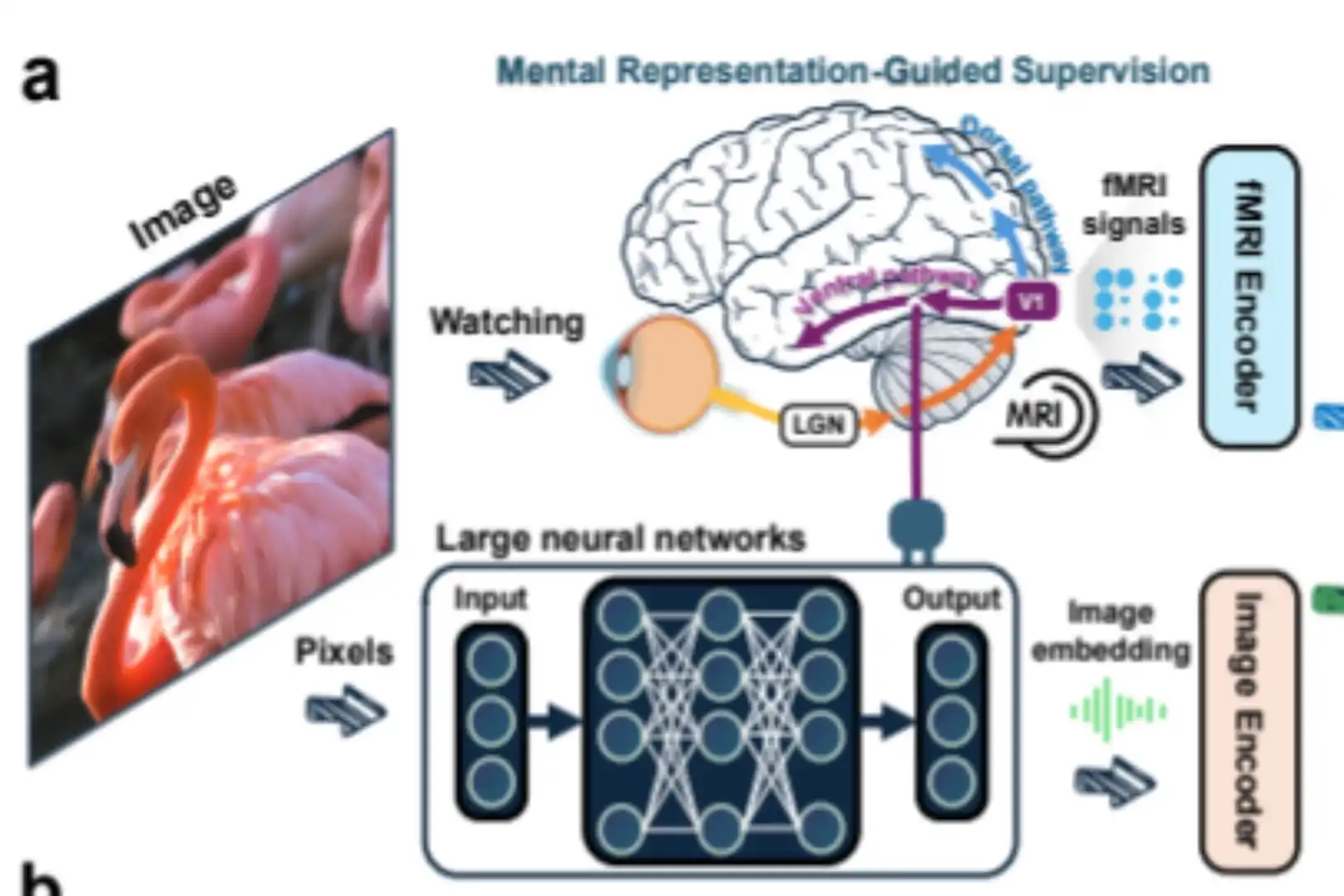
A research team from Zhejiang University published a paper in *Nature Communications* challenging the prevailing notion that larger AI models inherently think more like humans. They found that while model performance on recognizing concrete concepts improved as parameters increased (from 74.94% to 85.87%), performance on abstract concept tasks slightly declined (from 54.37% to 52.82%) in models like SimCLR, CLIP, and DINOv2. The key difference lies in how concepts are organized. Humans naturally form hierarchical categories (e.g., grouping a swan and an owl into "birds"), enabling them to apply past knowledge to new situations. Models, however, rely heavily on statistical patterns in data and struggle to form stable, abstract categories. The team proposed a novel solution: using human brain signals (recorded when viewing images) to supervise and guide the model's internal organization of concepts. This method, termed transferring "human conceptual structures," helped the model learn a brain-like categorical system. In experiments, the model showed improved few-shot learning and generalization, with a 20.5% average improvement on a task requiring abstract categorization like distinguishing living vs. non-living things, even outperforming much larger models. This research shifts the focus from simply scaling model size ("bigger is better") to designing smarter internal structures ("structured is smarter"). It highlights a new pathway for developing AI that possesses more human-like abstract reasoning and adaptive learning capabilities.

marsbit27m ago

Zhejiang University Research Team Proposes New Approach: Teaching AI How the Human Brain Understands the World

marsbit27m ago

Dialogue with Bloomberg ETF Analyst: Why Bitcoin ETF Holders Did Not Sell During the 50% Plunge

In a recent interview on Coin Stories, Bloomberg Intelligence Senior ETF Analyst James Seyffart discussed the resilience of Bitcoin ETF holders, who largely held their positions despite a 50% price drop, contrary to expectations of panic selling. Seyffart noted that while there was a $9 billion outflow from Bitcoin ETFs starting October 10, it was minor compared to the $250-300 billion inflows prior, and outflows have since reversed by $20-25 billion. He attributed this "diamond hands" behavior to educated investors who understand Bitcoin’s volatility and typically allocate only a small portion (e.g., 1-5%) of their portfolios, leading to rebalancing rather than selling during dips. The conversation also covered the entry of major institutions like Morgan Stanley, which is launching its own Bitcoin ETF, leveraging its vast client assets. Seyffart highlighted the growing efficiency of ETFs, with physical redemptions now allowed, potentially enabling direct Bitcoin transfers to holders in the future. However, he expressed concern over the concentration of Bitcoin custody with Coinbase. Additionally, Seyffart discussed the inverse flow trends between Bitcoin and Gold ETFs recently, with Bitcoin acting more like a risk-on growth asset. He remains optimistic about Bitcoin ETFs eventually surpassing Gold ETFs in size due to Bitcoin’s diverse use cases. Finally, he emphasized the importance of diversification in the current volatile market, where traditional hedges have largely failed, and cash.

marsbit1h ago

Dialogue with Bloomberg ETF Analyst: Why Bitcoin ETF Holders Did Not Sell During the 50% Plunge

marsbit1h ago

Who Cannot Be Distilled into a Skill?

"This article explores the concerning trend of AI systems distilling human workers into replaceable 'skills,' using the viral 'Colleague.skill' phenomenon as a key example. It argues that the most diligent employees—those who meticulously document their work, write detailed analyses, and transparently share decision-making logic—are paradoxically the most vulnerable to being replaced. Their high-quality 'context' (communication records, documents, and decision trails) becomes the perfect fuel for AI agents, extracted from corporate platforms like Feishu and DingTalk. The piece warns of a deeper ethical crisis: the reduction of human relationships to functional APIs, as seen in derivatives like 'Ex.skill' or 'Boss.skill,' which reduce complex individuals to mere utilities. This reflects a shift from Martin Buber's 'I-Thou' relationship (seeing others as whole beings) to an 'I-It' dynamic (seeing them as tools). While AI can capture explicit knowledge (written documents, replies), it fails to capture tacit knowledge—the intuition, experience, and unspoken insights that define human expertise. However, a greater danger emerges when AI-generated content, based on distilled human data, is used to train future models, leading to 'model collapse' and homogenized, mediocre outputs—a process likened to 'electronic patina' degrading information over time. The article concludes by noting a small but symbolic resistance, such as the 'anti-distill' tool that generates meaningless text to protect valuable knowledge. Ultimately, it suggests that while AI can capture a static snapshot of a person, humans remain 'fluid algorithms' capable of continuous growth and adaptation, leaving their AI shadows behind."

marsbit1h ago

Who Cannot Be Distilled into a Skill?

marsbit1h ago

Trading

Spot
Futures
活动图片