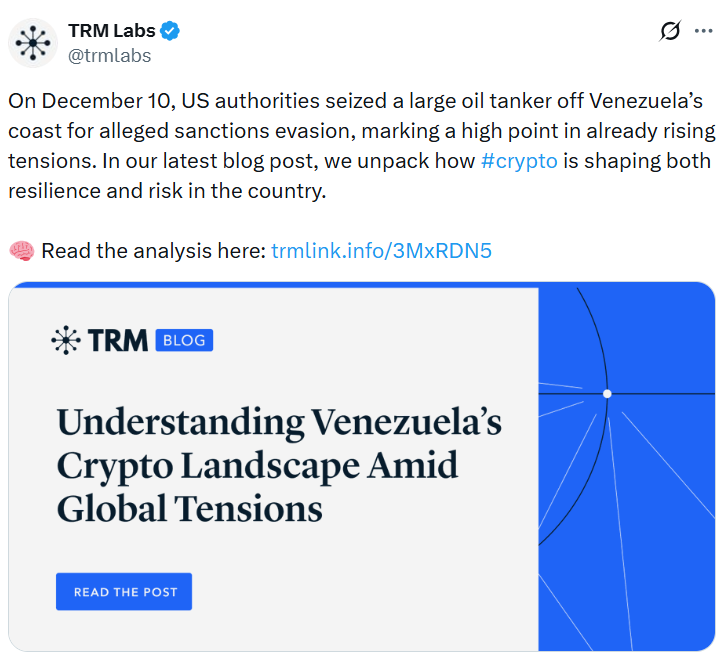
Venezuelans are already heavily reliant on blockchain technology for banking after suffering through a decade of economic pressures; however, usage is likely to keep growing if conditions worsen in the South American country, blockchain intelligence firm TRM Labs says.
As regional and geopolitical tensions continue to rise, driven in part by US-Venezuela tensions, the TRM Labs team predicted in a report on Thursday that macroeconomic instability and the bolívar’s continued devaluation will likely sustain demand for stablecoins as both a store of value and a medium of exchange.
At the same time, regulatory ambiguity and continued uncertainty surrounding the country’s crypto regulator, SUNACRIP’s, authority and enforcement capacity, and eroding trust in traditional banking infrastructure could prolong the population’s dependence and drive more usage.
“Absent a material shift in Venezuela’s macroeconomic conditions or the emergence of cohesive regulatory oversight, the role of digital assets — particularly stablecoins — is poised to expand.”
Venezuela is 18th globally for crypto adoption, the Chainalysis 2025 Crypto Adoption Index report found, but its rank increased to 9th when adjusted for population size.
Peer-to-peer transactions a key service for Venezuelans
Peer-to-peer (P2P), transfers made from one person to another through an intermediary, along with USDT (USDT) to-fiat conversions, have emerged as key services Venezuelans are using in the absence of reliable domestic banking channels, according to TRM Labs.
The blockchain intelligence firm tracked Venezuelan IP addresses and found that more than 38% of site visits were to a lone global platform that offers P2P trading functionality, which underscores its “role in facilitating crypto access in Venezuela’s low-banking environment.”
“A significant share of crypto-to-fiat activity is facilitated through platforms supporting informal settlement rails — even amid reports of intermittent service disruptions.”
Related: Venezuela blocks Binance, X amid presidential election dispute
“Local platforms also play a key role, particularly those offering mobile wallets and bank integrations suited to domestic users,” the team added.
Venezuela’s crypto industry created out of desperate necessity
Venezuela’s crypto ecosystem is ultimately the product of nearly a decade of economic collapse, international sanctions pressure, and state experimentation with digital financial alternatives, the TRM Labs team said.
Stablecoins, especially USDT, play a central role in household and commercial transactions in Venezuela, and despite compliance and sanction evasion concerns, stablecoins remain “overwhelmingly driven by necessity rather than speculation or criminal intent.”
“For most Venezuelans, stablecoins now operate as a substitute for retail banking — facilitating payroll, family remittances, vendor payments, and cross-border purchases in the absence of consistent domestic financial services.”
Magazine: Quantum attacking Bitcoin would be a waste of time: Kevin O’Leary