Cango Releases Q1 Financial Report: Total Revenue of $102 Million, Business Expands into AI Computing Infrastructure

marsbitPublished on 2026-06-01Last updated on 2026-06-01

Abstract

Cango Releases Q1 2026 Financial Results: Total Revenue of $102 Million, Business Expands into AI Compute Infrastructure Bitcoin mining company Cango reported unaudited financial results for Q1 2026. While bitcoin mining remains its core revenue driver, the company is strategically expanding into energy and AI compute infrastructure. **Key Financial & Operational Highlights:** * **Revenue & Performance:** Total revenue for the quarter was $102 million, with $98.4 million coming from bitcoin mining. However, the company reported a net loss of $261.1 million, primarily attributed to non-cash impacts like bitcoin price declines leading to miner impairments and fair value losses on its bitcoin holdings. Notably, long-term debt was significantly reduced to $30.6 million from $557.6 million at the end of 2025. * **Mining Operations:** Cango's total hash rate was 37.01 EH/s. It mined 1,266 bitcoin during the quarter and reduced its average cash cost per bitcoin by 9.0% quarter-over-quarter to $76,928, demonstrating improved operational efficiency. * **AI Business Expansion:** The company introduced EcoHash, a new commercial platform. This initiative leverages Cango's existing expertise in energy management and high-density computing to provide infrastructure for AI workloads, starting with GPU compute leasing. Management emphasized executing a disciplined strategy to strengthen the core mining business while advancing AI infrastructure through EcoHash. They highlighted pro...

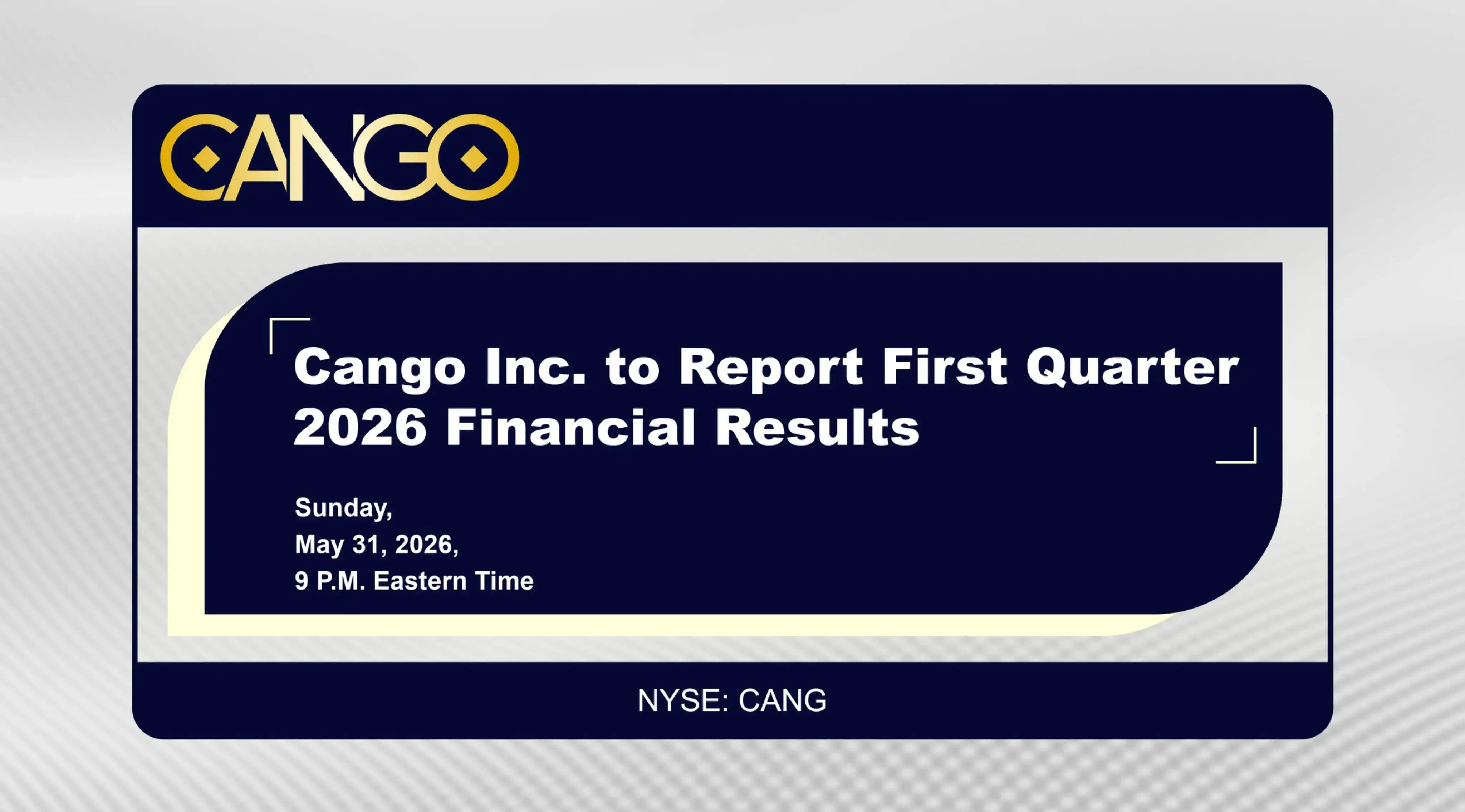
Today, Bitcoin mining company Cango released its unaudited financial results for the first quarter of 2026. The company is currently leveraging its global operational capabilities to extend its business from Bitcoin mining into the fields of energy and AI computing infrastructure.

2026 First Quarter Financial and Operational Highlights

  • Financial Performance: In the first quarter of 2026, the company achieved total revenue of $102 million, with Bitcoin mining contributing $98.4 million, constituting the primary source of revenue for the quarter. The company recorded a net loss of $261.1 million during the reporting period. This loss was primarily attributed to non-cash items, including impairment charges on mining rigs due to the decline in Bitcoin market price and losses arising from the fair value change of Bitcoin holdings. As of March 31, 2026, the company's long-term debt decreased to $30.6 million, compared to $557.6 million as of December 31, 2025. At the end of the quarter, the company held 1,026 Bitcoin as digital asset reserves.
  • Mining Operations and Costs: The company continued to enhance operational efficiency while maintaining a more prudent operational scale. During the reporting period, the company's total hash rate was 37.01 EH/s, consisting of 27.98 EH/s from self-operated mining and 9.02 EH/s from leased hash rate. In the first quarter, the company mined a total of 1,266 Bitcoin. Benefiting from optimized mining rig portfolio and cost management, the company's average cash cost per Bitcoin decreased by 9.0% quarter-on-quarter compared to Q4 2025, dropping to $76,928, reflecting the company's ongoing efforts to improve mining operational efficiency.
  • AI Business Expansion: The company is leveraging its existing infrastructure capabilities to expand its business from Bitcoin mining into AI computing services. This quarter, Cango launched a new commercial platform, EcoHash, planning to repurpose its experience in energy management and high-density computing to provide infrastructure support for AI computing demands. The company is currently advancing pilot deployments of modular, containerized computing units. This project follows a phased approach, initially focusing on GPU hash rate leasing, with plans to gradually expand into a global AI computing network.

Cango's CEO, Paul Yu, stated, "The company is executing a steady and disciplined strategy, continuing to solidify the foundation of our Bitcoin mining business on one hand, while advancing the layout of AI infrastructure through EcoHash on the other. Over the past few months, the company has seen positive progress, including the continued reduction in costs driven by our mining rig upgrade strategy and stable operations of our global mining business. Meanwhile, the EcoHash project is progressing steadily, with related pilot deployments proceeding as planned. Leveraging our global energy network and operational experience, Cango is well-positioned to further enhance operational efficiency, seize emerging opportunities in the AI computing sector, and drive long-term, sustainable value growth."

Furthermore, Cango's CFO, Simon Tang, stated, "Despite a challenging operating environment in the first quarter affected by industry adjustments and non-cash items, the company has made substantial progress in optimizing its cost structure and strengthening its balance sheet. The company has reduced its long-term debt and continues to drive down mining cash costs through rigorous execution of our operational strategy. Looking ahead, the company will remain focused on enhancing cash flow resilience, maintaining financial flexibility, and supporting the transition towards a more efficient and diversified infrastructure platform."

2026 First Quarter Continuing Operations Financial Results

Revenue

In the first quarter of 2026, the company's total revenue was $102 million, with Bitcoin mining revenue at $98.4 million. Compared to the fourth quarter of 2025, the company's total revenue decreased by approximately 43%, primarily due to the company's proactive reduction in operational hash rate scale. During this process, the company phased out older, less efficient S19 series mining rigs and converted a portion of its hash rate into leased hash rate.

Operating Costs and Expenses

In the first quarter of 2026, the company's total operating costs and expenses were $356.4 million. These costs were primarily related to the company's Bitcoin mining business, recognition of mining rig impairment losses, losses from disposal of mining rigs, and losses from the fair value change of Bitcoin-collateralized receivables.

  • Cost of revenue (excluding depreciation presented separately below) was $99.6 million, lower than the $155.3 million in Q4 2025, mainly due to reduced electricity and hosting fees following the reduction in hash rate scale;
  • Depreciation expense was $29.4 million;
  • General and administrative expenses, including related party fees, totaled $7.2 million;
  • Mining rig impairment loss was $49.0 million;
  • Loss on disposal of mining rigs was $20.3 million;
  • Loss from the fair value change of Bitcoin-collateralized receivables was $151.8 million, lower than the $171.4 million in Q4 2025. This non-cash loss was primarily impacted by the decline in Bitcoin price during the quarter.

Operating Loss

In the first quarter of 2026, the company's operating loss was $254.4 million, compared to an operating loss of $26.9 million in the same period of 2025. The expanded loss was primarily due to the decline in Bitcoin price.

Net Loss from Continuing Operations

In the first quarter of 2026, the company's net loss from continuing operations was $261.1 million, compared to a net loss of $28.3 million in the same period of 2025.

Adjusted EBITDA

In the first quarter of 2026, the company's Adjusted EBITDA loss was $154.1 million, compared to an Adjusted EBITDA loss of $1.7 million in the same period of 2025.

Balance Sheet

As of March 31, 2026, the company held:

  • Cash and cash equivalents of $7.2 million, down from $41.2 million at the end of 2025, mainly due to debt repayment and operating expenditures;
  • Bitcoin-collateralized receivables, a non-current related party item, with a net value of $68.2 million;
  • Mining rig assets, net value of $130.8 million;
  • Long-term debt (related party item) of $30.6 million, significantly reduced from $557.6 million as of December 31, 2025;

Cango stated that the significant reduction in Bitcoin-collateralized receivables and related long-term debt reflects the company's proactive efforts to deleverage during the quarter.


Related Questions

QWhat were Cango's total revenue and primary source of income for the first quarter of 2026?

ACango's total revenue for Q1 2026 was $102 million. The primary source of income was its Bitcoin mining business, which contributed $98.4 million.

QWhat is the strategic business expansion announced by Cango in the report, and what is the name of the new platform?

ACango announced an expansion from Bitcoin mining into AI computing infrastructure services. The new commercial platform is named EcoHash.

QWhat was the reported net loss for Cango in Q1 2026, and what were the main reasons for it?

ACango reported a net loss of $261.1 million in Q1 2026. The loss was primarily due to non-cash items, including impairments on mining rigs and losses from changes in the fair value of Bitcoin holdings, both driven by a decline in Bitcoin's market price.

QHow did Cango's mining hash rate and Bitcoin cash cost per coin perform in the first quarter?

ACango's total hash rate was 37.01 EH/s, comprising 27.98 EH/s from self-mining and 9.02 EH/s from hosting. The average cash cost per Bitcoin mined decreased by 9.0% quarter-over-quarter to $76,928.

QWhat significant improvement did Cango achieve in its balance sheet regarding long-term debt by the end of Q1 2026?

ACango significantly reduced its long-term debt to $30.6 million as of March 31, 2026, down from $557.6 million as of December 31, 2025, reflecting its active de-leveraging efforts.

Related Reads

From Parallel Finance to Mainstream Finance: The On-Chain Securities Era Ushers in a Historic Window

From Parallel Finance to Mainstream: The Dawn of On-Chain Securities For over a decade, the crypto industry has operated as a parallel financial system with its own currencies, markets, and assets—from Bitcoin and ICOs to DeFi, NFTs, and memecoins. Despite building a robust internal ecosystem, a wall has separated it from the traditional financial world. That barrier is now crumbling. The industry's first act was one of internal evolution: ICOs streamlined fundraising, DeFi recreated financial services on-chain, and layer-2 networks competed for scalability—all within the crypto bubble. While innovative, this cycle remained closed, with capital and users circulating internally, leading to volatile boom-bust cycles. Even Bitcoin ETFs, while attracting Wall Street capital, merely provided a channel to buy crypto assets without bridging the systems. The next, larger narrative is Real-World Assets (RWA) moving on-chain. This involves tokenizing stocks, bonds, funds, and future cash flows. Blockchain can compress the complex traditional processes of trading, settlement, clearing, and custody into a seamless, automated network operating in seconds. This shift is creating a new financial gateway: the native crypto securities broker. This entity will combine functions of an exchange, broker, bank, and custodian into a unified global financial operating system. Consequently, the next major battleground won't be the "public chain wars" focused on speed and cost, but the competition to build the financial infrastructure capable of hosting high-quality, liquid real-world assets. Access to global equities, index funds, or stakes in companies like SpaceX could erase the boundary between crypto and traditional finance, unlocking a market orders of magnitude larger than crypto's current valuation. In summary, after years of creating a separate financial world, crypto's next decade will be defined by its integration into the existing global financial system, marking the true beginning of its largest growth story.

marsbit11m ago

From Parallel Finance to Mainstream Finance: The On-Chain Securities Era Ushers in a Historic Window

marsbit11m ago

Wang Chuan: When the Neighbor Old Wang Made 30x on Memory Stocks, How to Avoid Anxiety (Part Six) - The Trap of Commoditized Goods

Wang Chuan: When the Neighbor Lao Wang Made 30x on Storage Stocks, How to Stay Anxiety-Free (Part 6) - The Trap of Commoditized Goods. This essay uses historical and current examples to analyze the cyclical and high-risk nature of the data storage industry. It begins with the 1990s rise and dramatic fall of Iomega, whose stock soared over 160x in 18 months before collapsing 97% from its peak, illustrating the fleeting success of storage "meme stocks." The core problem is that storage products, like DRAM and flash memory, are highly commoditized. This leads to extreme volatility: prices have plummeted over 80% multiple times, and company stocks often crash 95% or go bankrupt. The industry's dynamic is defined by "elastic demand facing heavy-asset, long-cycle, rigid supply." When demand spikes and supply is fixed, prices skyrocket, as seen recently with AI-driven demand for High Bandwidth Memory (HBM). Companies like Sandisk and Micron have reported massive revenue and gross margin jumps (e.g., Sandisk's gross margin rising from 22.5% to 78.3%) despite minimal increases in production volume. However, these high margins are self-defeating. They incentivize massive new capacity investments (hundreds of billions planned from 2026), with supply expected to surge by late 2027. Once new supply meets demand, prices and profits will crash, potentially leading to a scenario where "selling more results in earning less." The article debunks the safety of long-term supply agreements, comparing them to fragile non-aggression pacts easily broken when market conditions shift. It warns that when an industry is highly profitable but trades at low P/E ratios, the risk is greatest, as plummeting prices quickly erase those earnings. Multiple asymmetric risks loom, including economic recession, reduced AI spending, faster-than-expected capacity expansion (especially from Chinese firms), and technological innovations that reduce memory requirements. In conclusion, the storage sector is a cyclical trap where periods of euphoric profits are often precursors to devastating downturns, luring unprepared investors into a "wealth incinerator."

marsbit20m ago

Wang Chuan: When the Neighbor Old Wang Made 30x on Memory Stocks, How to Avoid Anxiety (Part Six) - The Trap of Commoditized Goods

marsbit20m ago

Wang Chuan: When the neighbor Lao Wang earned thirty times from investing in memory storage stocks, how can you still avoid anxiety (6) - The trap of homogeneous products

The article, "Wang Chuan: How to Remain Unanxious After Neighbor Lao Wang's Thirty-Fold Gain on Storage Stocks (Part 6) - The Trap of Commoditized Goods," analyzes the cyclical and perilous nature of the data storage industry through historical and current case studies. It begins with the example of Iomega, whose Zip drives led to a stock surge of over 160x in the mid-1990s before collapsing over 97% from its peak due to competition from cheaper CD-R technology. This pattern is characteristic of storage, where products like DRAM are highly commoditized, leading to extreme price volatility. The sector has seen prices crash over 80% multiple times, with companies often facing bankruptcy. The core dynamic is "elastic demand facing heavy-asset, long-cycle, rigid supply." High prices attract new capacity, but the long lead time means supply eventually overshoots, causing sharp price corrections. The current AI-driven boom, exemplified by surging demand for High-Bandwidth Memory (HBM), has led to skyrocketing prices and profit margins for companies like SanDisk and Micron, despite relatively flat production volumes. However, the author warns this high-margin environment is self-defeating. The high profits are already triggering massive new capacity investments (hundreds of billions starting 2026), with supply expected to ramp up by late 2027. When supply catches up, total revenue and profits may fall even as more units are sold. Long-term supply agreements offer little protection, as buyers can find ways to renegotiate if market prices drop, similar to fragile political treaties. Key risks include economic downturns, cuts in AI spending, faster-than-expected capacity expansion (especially from Chinese firms), and innovations in chip/algorithm design that reduce memory needs. A critical trap is that at the cycle's peak, storage stocks often appear cheap with low P/E ratios, luring value investors just before an impending downturn where profits evaporate. The conclusion cautions that for commoditized goods like storage, high margins inevitably destroy themselves, and the current asymmetry favors downside risk over further upside. The neighbor's dream of easy wealth from storage stocks is portrayed as a precarious illusion.

链捕手38m ago

Wang Chuan: When the neighbor Lao Wang earned thirty times from investing in memory storage stocks, how can you still avoid anxiety (6) - The trap of homogeneous products

链捕手38m ago

AI PCs Are Here, Going Toe-to-Toe with 120B Models Locally! NVIDIA Redefines the "Personal AI Computer" Foundation with RTX Spark

NVIDIA has redefined the "AI PC" standard with the launch of the RTX Spark super chip at GTC 2026. Boasting 1 petaflop (1000 TOPS) of AI performance, it dwarfs the 45-50 TOPS NPUs in current AI PCs. The SoC features a Blackwell GPU, a 20-core Arm CPU co-designed with MediaTek, and crucially, up to 128GB of unified memory shared between CPU and GPU. This architectural shift enables local execution of 120-billion-parameter large language models with million-token context windows, a massive leap from the 9B-40B models typical on current consumer hardware. Beyond AI, use cases include 12K video editing and high-fps ray-traced gaming. Key to enterprise adoption is a security collaboration with Microsoft. Windows security is upgraded, and NVIDIA's OpenShell sandbox runtime is integrated to safely contain AI agent actions. Major software support comes from Adobe, which announced a deep,底层-level rewrite of Photoshop and Premiere to leverage the unified memory for up to 2x performance gains. Six OEMs, including Dell, HP, Lenovo, and Microsoft Surface, will release RTX Spark-based轻薄本 and compact desktops this fall. However, questions remain about real-world performance,功耗, thermal management in laptops, pricing, and the actual impact of the OpenShell sandbox. The RTX Spark represents a fundamental power shift in the PC industry, moving from an x86 CPU-centric model to a GPU-centric SoC platform, but its ultimate success hinges on the upcoming product rollouts and ecosystem validation.

marsbit52m ago

AI PCs Are Here, Going Toe-to-Toe with 120B Models Locally! NVIDIA Redefines the "Personal AI Computer" Foundation with RTX Spark

marsbit52m ago

Trading

Spot
Futures

Hot Articles

What is $BITCOIN

DIGITAL GOLD ($BITCOIN): A Comprehensive Analysis Introduction to DIGITAL GOLD ($BITCOIN) DIGITAL GOLD ($BITCOIN) is a blockchain-based project operating on the Solana network, which aims to combine the characteristics of traditional precious metals with the innovation of decentralized technologies. While it shares a name with Bitcoin, often referred to as “digital gold” due to its perception as a store of value, DIGITAL GOLD is a separate token designed to create a unique ecosystem within the Web3 landscape. Its goal is to position itself as a viable alternative digital asset, although specifics regarding its applications and functionalities are still developing. What is DIGITAL GOLD ($BITCOIN)? DIGITAL GOLD ($BITCOIN) is a cryptocurrency token explicitly designed for use on the Solana blockchain. In contrast to Bitcoin, which provides a widely recognized value storage role, this token appears to focus on broader applications and characteristics. Notable aspects include: Blockchain Infrastructure: The token is built on the Solana blockchain, known for its capacity to handle high-speed and low-cost transactions. Supply Dynamics: DIGITAL GOLD has a maximum supply capped at 100 quadrillion tokens (100P $BITCOIN), although details regarding its circulating supply are currently undisclosed. Utility: While precise functionalities are not explicitly outlined, there are indications that the token could be utilized for various applications, potentially involving decentralized applications (dApps) or asset tokenization strategies. Who is the Creator of DIGITAL GOLD ($BITCOIN)? At present, the identity of the creators and development team behind DIGITAL GOLD ($BITCOIN) remains unknown. This situation is typical among many innovative projects within the blockchain space, particularly those aligning with decentralized finance and meme coin phenomena. While such anonymity may foster a community-driven culture, it intensifies concerns about governance and accountability. Who are the Investors of DIGITAL GOLD ($BITCOIN)? The available information indicates that DIGITAL GOLD ($BITCOIN) does not have any known institutional backers or prominent venture capital investments. The project seems to operate on a peer-to-peer model focused on community support and adoption rather than traditional funding routes. Its activity and liquidity are primarily situated on decentralized exchanges (DEXs), such as PumpSwap, rather than established centralized trading platforms, further highlighting its grassroots approach. How DIGITAL GOLD ($BITCOIN) Works The operational mechanics of DIGITAL GOLD ($BITCOIN) can be elaborated on based on its blockchain design and network attributes: Consensus Mechanism: By leveraging Solana’s unique proof-of-history (PoH) combined with a proof-of-stake (PoS) model, the project ensures efficient transaction validation contributing to the network's high performance. Tokenomics: While specific deflationary mechanisms have not been extensively detailed, the vast maximum token supply implies that it may cater to microtransactions or niche use cases that are still to be defined. Interoperability: There exists the potential for integration with Solana’s broader ecosystem, including various decentralized finance (DeFi) platforms. However, the details regarding specific integrations remain unspecified. Timeline of Key Events Here is a timeline that highlights significant milestones concerning DIGITAL GOLD ($BITCOIN): 2023: The initial deployment of the token occurs on the Solana blockchain, marked by its contract address. 2024: DIGITAL GOLD gains visibility as it becomes available for trading on decentralized exchanges like PumpSwap, allowing users to trade it against SOL. 2025: The project witnesses sporadic trading activity and potential interest in community-led engagements, although no noteworthy partnerships or technical advancements have been documented as of yet. Critical Analysis Strengths Scalability: The underlying Solana infrastructure supports high transaction volumes, which could enhance the utility of $BITCOIN in various transaction scenarios. Accessibility: The potential low trading price per token could attract retail investors, facilitating wider participation due to fractional ownership opportunities. Risks Lack of Transparency: The absence of publicly known backers, developers, or an audit process may yield skepticism regarding the project's sustainability and trustworthiness. Market Volatility: The trading activity is heavily reliant on speculative behavior, which can result in significant price volatility and uncertainty for investors. Conclusion DIGITAL GOLD ($BITCOIN) emerges as an intriguing yet ambiguous project within the rapidly evolving Solana ecosystem. While it attempts to leverage the “digital gold” narrative, its departure from Bitcoin's established role as a store of value underscores the need for a clearer differentiation of its intended utility and governance structure. Future acceptance and adoption will likely depend on addressing the current opacity and defining its operational and economic strategies more explicitly. Note: This report encompasses synthesised information available as of October 2023, and developments may have transpired beyond the research period.

363 Total ViewsPublished 2025.05.13Updated 2025.05.13

What is $BITCOIN

Discussions

Welcome to the HTX Community. Here, you can stay informed about the latest platform developments and gain access to professional market insights. Users' opinions on the price of BTC (BTC) are presented below.

活动图片