When Crypto Assets Become Mortgage Collateral: The Triangular Dilemma of Regulation, Cost, and Tokenized Equity

marsbitPublished on 2026-08-04Last updated on 2026-08-04

Abstract

When Crypto Assets Become Mortgage Collateral: The Trilemma of Regulation, Cost, and Tokenized Rights Better, in partnership with Coinbase, has launched a mortgage solution allowing borrowers to pledge Bitcoin or USDC as collateral. This facilitates two loans: a primary, Fannie Mae-compliant mortgage and a separate private loan for the down payment, secured by the crypto assets and a second lien on the property. The product targets asset-rich but cash-poor buyers, with high collateral requirements (250% for Bitcoin, 125% for USDC) and no margin calls. The initiative has drawn significant regulatory scrutiny. Seven U.S. Senators, led by Dick Durbin and Elizabeth Warren, sent a letter to the FHFA urging a halt, arguing the high collateral ratio itself acknowledges crypto's risk and that combined loan costs could be 1.5 percentage points higher, potentially burdening taxpayers. Despite criticism and Bitcoin's price volatility, Better's CEO Vishal Garg plans to expand support to tokenized equities (e.g., Tesla, SpaceX) and envisions using retirement accounts to help family members buy homes. A core challenge for tokenized assets is clarifying the legal rights conferred by holding such tokens. To reduce costs, Better partnered with Framework Ventures, aiming to lower capital expenses by over 100 basis points and offer sub-5% rates. While the company posted a loss in Q1 2025, it reports strong demand, with a waitlist representing ~$250M in potential loans. Garg remains committe...

Author: Boaz Sobrado

Compiled by: Chopper , Foresight News

Twelve years ago, Vishal Garg personally experienced the difficulties of buying a home and has been searching for a solution ever since. "At the time, I realized I had to sell assets, pay capital gains taxes, and convert them into cash to cover the house payment. Why can't I directly pledge assets instead of having to liquidate them for cash?" the Better Home & Finance CEO said in an interview.

Even trickier was the sequence of the transaction process. "What if your offer isn't accepted after you make it? But real estate agents require you to have cash ready, or else sellers won't take your offer seriously. Buyers are forced to sell assets, pay taxes, and only then find out if their offer is accepted."

In March of this year, Better partnered with Coinbase to launch a solution. Borrowers pledge Bitcoin or USDC to obtain two loans: one is a Fannie Mae-compliant first-lien mortgage; the other is a separate private financing loan for the down payment, secured by crypto assets and accompanied by a second lien on the house. The Wall Street Journal reported the same day that Fannie Mae was accepting mortgages backed by crypto assets for the first time. In early June, a couple in their early thirties from Ann Arbor, Michigan, completed the first loan under this model. Better revealed that before the product's official launch in summer, the waitlist corresponded to a potential loan volume of about $250 million, with 41% of applicants lacking sufficient cash for a down payment.

Regarding the investors for these loan assets, Garg said, "This type of asset meets bank investment standards. Multiple banks are already in line wanting to purchase and acquire these loans, including top-tier large US banks." He believes this will become a crucial channel for integrating digital assets into the banking system.

Real Costs and Collateral Rules

The collateral ratio directly determines the target audience for the product. Pledging Bitcoin requires a 250% collateral requirement. For a down payment loan of $100,000, Bitcoin worth $250,000 is needed as collateral. For the stable USDC, the collateral requirement is 125%. This product does not have a margin call mechanism; a drop in Bitcoin price does not change the mortgage loan terms. Asset liquidation is only triggered if the borrower defaults on payments for 60 consecutive days, aligning with the standards of conventional compliant mortgages.

The design logic of this mechanism is clear, targeting homebuyers who are "asset-rich but liquidity-poor." Data from real estate research firm Redfin shows that recently, 12.7% of young homebuyers have used crypto assets to fund their down payment. Data from the National Association of Realtors indicates that by the end of 2025, the median age of first-time homebuyers will reach a historic high of 40, while the proportion of first-time buyers among all homebuyers will hit a record low of just 21%. (The Mortgage Bankers Association disputes this figure, citing federal loan data). Census data shows that in Q2 of this year, the homeownership rate for those under 35 was only 35.2%.

Lending against assets that borrowers continue to hold is not a new model. Doug Ricketts, co-founder and CEO of PayJoy, stated on the podcast "On The Margin" that smartphones can play a role similar to collateral in mortgages. "Our initial innovation was using the phone as collateral; in a sense, a smartphone is like a house in a mortgage business." PayJoy provides lending services to people in Latin America, Africa, and South Asia with thin credit files. If a user defaults, the device's functions are locked—a model commonly known as digital collateral.

Ricketts has a clear bottom line for the pricing logic of collateral: "One model for lending to low-income groups is to charge extremely high interest rates, allow many users to default, and rely on a few borrowers for high returns. But that is not PayJoy's approach." PayJoy loans only charge a one-time fixed fee, with no rolling interest accumulation, which is rare in the tech-enabled consumer credit field.

Seven Senators Call for a Halt

On April 30, seven senators sent a letter to Federal Housing Finance Agency (FHFA) Director William Pulte, naming Better and Coinbase and demanding the regulator "rescind relevant approvals and prohibit government-supported enterprises from taking on crypto asset-related risks." The letter was spearheaded by Dick Durbin and Elizabeth Warren, with co-signers including Jeff Merkley, Chris Van Hollen, Richard Blumenthal, Bernie Sanders, and Mazie Hirono.

The core argument raised by the senators is precisely the 250% collateral clause that Better touts as representing risk control robustness. The letter states: "This mechanism requires homebuyers to provide crypto assets worth up to 2.5 times the down payment amount to be eligible for a loan. This itself acknowledges that crypto assets are high-risk assets; in addition, homebuyers need to pay interest on both loans simultaneously." The senators' team estimates that the combined financing cost could be up to 1.5 percentage points higher than standard Fannie Mae mortgage rates and warns: "The high burden could prompt borrowers to simply abandon their loans, with potential losses ultimately borne by American taxpayers." They requested a response from the regulator by May 30, but the FHFA has not yet publicly responded.

Alys Cohen from the National Consumer Law Center and Corey Frayer from the Consumer Federation of America jointly published a commentary in June with a more radical view: the federal government "risks repeating the mistakes that led to the 2008 foreclosure crisis." Their conclusion is that this is not consumer financial innovation but a catalyst for disaster.

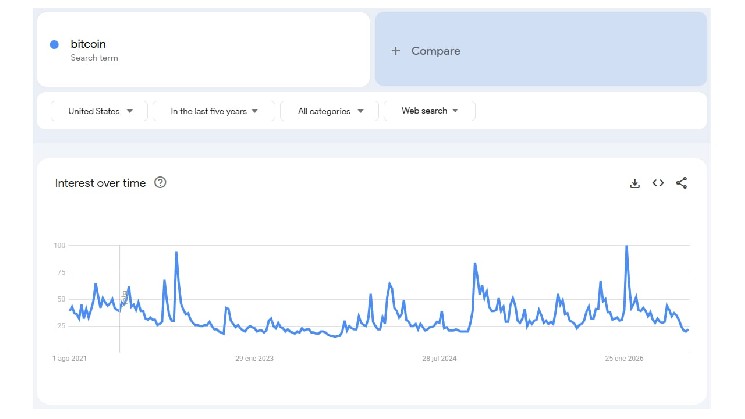
Market conditions also cast a shadow over this business. Bitcoin hit a high of around $123,000 last October, fell to around $62,800 in February this year, and hovered in the $60,000 range throughout July, just half its peak value.

Garg's Long-Term Plan

Bitcoin is just the beginning. "We currently support Bitcoin and USDC, with plans to onboard various mainstream tokenized assets in the future, including equity tokens for companies like SpaceX, Tesla, Coinbase, Better, Apple, Amazon, etc." Garg said the project would not support meme coins, only selecting liquid targets with high institutional interest, with Ethereum and Solana being the next batch.

He has a further vision: parents could pledge assets from retirement accounts to help their children buy homes, aligning with the crypto asset pension track. In the future, homebuyers could simply take photos of a property and let software handle the entire process. "An AI agent submits the home purchase application on the Better platform, automatically calculating the maximum bid. In the long run, ordinary people could hold shares in properties, flexibly swapping between different houses. The only obstacle to realizing this now is the complex transaction friction."

At the core of this vision is an assessment of young people's asset allocation trends. "Young people today lack assets that can hedge against inflation and share in the benefits of rising house prices."

The Controversy Behind Token Staking

Tokenized equity businesses face a key question with no unified answer: what legal rights does holding a token actually confer? Currently, the "tokenization of everything" sector is generally plagued by this issue. Tessera founder and CEO Chan Ahn revealed on the podcast "On The Margin" that the company launched a SpaceX tokenized product in February. He candidly discussed the business model feature: "The platform deliberately does not have a KYC process; this is not an oversight." The project's original intention is to lower the barrier to entry—the private market has long kept 99.9% of ordinary investors out through cumbersome procedures, high minimum investment thresholds, and geographic restrictions.

Kula co-founder Chris Turner made a distinction on the same podcast: the vast majority of tokenized assets only represent contractual rights to asset returns, not direct ownership of the underlying asset. Another model achieves token-as-asset, where holding the token equates to owning the underlying asset. There is an essential difference between the two. For mortgage loan underwriters, when valuing collateral, they must distinguish which type of rights they are dealing with.

Meanwhile, Better is restructuring its own financing channels. In February this year, the company partnered with Framework Ventures, planning to deploy up to $500 million in funds through the stablecoin ecosystem Sky. Framework Ventures also invested $45 million for an approximately 10% stake. Better expects this adjustment to lower capital costs by more than 100 basis points. The company stated that after tokenized financing is implemented, there is an opportunity to push customer interest rates below 5%, while industry rates are generally above 6%.

The company urgently needs to lower its cost of capital. In Q1, Better originated $1.64 billion in loans, a year-on-year increase of 89%, with revenue of $47.5 million, but still incurred a loss of about $70 million. Since 2016, the company has cumulatively originated over $110 billion in loans. In December 2021, it laid off 900 employees in a single online meeting, and Garg has faced ongoing public questioning about this incident for years.

Despite the intense pressure, his determination to bet on this sector remains undiminished. "The worst-case scenario is launching the product and having no one sign up, but that's not the reality." Speaking about the industry's prospects, he said: "We don't have to just imagine the future; it's more important to create it ourselves."


Related Questions

QWhat innovative mortgage solution did Better and Coinbase launch in March, and how does it work?

AIn March, Better, in partnership with Coinbase, launched a solution that allows borrowers to pledge cryptocurrencies like Bitcoin or USDC as collateral to obtain two loans: one is a conforming first-lien mortgage meeting Fannie Mae standards, and the other is a separate private loan for the down payment, secured by the crypto assets and with a second lien on the property. This enables asset-rich but cash-poor buyers to finance a home purchase without liquidating their crypto holdings and incurring capital gains taxes.

QWhat are the collateral requirements for using Bitcoin and USDC in Better's mortgage product, and what happens if the crypto's value declines?

AFor Bitcoin, the collateral requirement is 250%, meaning a borrower must pledge Bitcoin worth 2.5 times the down payment loan amount. For the stablecoin USDC, the requirement is 125%. The product has no margin call mechanism; a decline in Bitcoin's price does not trigger changes to the mortgage terms. Liquidation of the crypto collateral only occurs if the borrower defaults on payments for 60 consecutive days, aligning with standard conforming mortgage procedures.

QWhy did seven U.S. Senators, including Dick Durbin and Elizabeth Warren, write to the FHFA regarding Better and Coinbase's crypto-backed mortgages?

AThe seven Senators wrote to the FHFA to demand the regulator revoke approvals and prohibit Government-Sponsored Enterprises from taking on crypto-related risks. Their core argument was that the high collateral requirement (e.g., 250% for Bitcoin) itself acknowledges crypto assets as high-risk. They also argued the combined financing cost could be up to 1.5 percentage points higher than a standard Fannie Mae mortgage, potentially leading to defaults and shifting losses to U.S. taxpayers, echoing concerns similar to the 2008 foreclosure crisis.

QWhat broader vision does Better's CEO, Vishal Garg, have for the future of tokenized assets in mortgage lending?

AVishal Garg envisions expanding beyond Bitcoin and USDC to include tokenized equities of major companies like SpaceX, Tesla, and Apple. He also foresees parents using retirement account assets to help children buy homes. Ultimately, he aims for a system where AI agents handle the entire home-buying process and where individuals can own fractional shares in properties, reducing transaction friction and providing assets that hedge against inflation and capture housing market gains for younger generations.

QWhat key legal and operational challenge is highlighted for the 'tokenization of everything' trend, particularly in the context of using tokenized assets as loan collateral?

AA critical challenge is the unclear legal rights associated with holding a token. As discussed in the context of tokenized equity, there is a fundamental distinction between tokens that merely represent a contractual right to the asset's economic benefits and tokens that constitute direct legal ownership of the underlying asset. For mortgage underwriters valuing collateral, determining which type of right the token represents is essential, as it impacts the asset's risk profile and enforceability in case of default.

Related Reads

Analog Chips Are Picking Up

The analog chip market is showing signs of recovery, as evidenced by strong Q2 2026 earnings and guidance from major players like TI, STMicroelectronics, NXP, and onsemi. Revenue growth, improved order backlogs, and declining inventory levels across the supply chain indicate the start of a new upward cycle. Industrial markets led the recovery, followed by data centers and a notable pickup in automotive demand in Q2. The rebound is broad-based but uneven, with specific product areas like automotive analog, power management, and AI server power chains seeing tighter supply and pricing power, while consumer-focused and general-purpose segments remain competitive. A critical turning point is the normalization of inventory. After a prolonged multi-level destocking phase from OEMs to end customers, channel inventories have returned to healthy levels (e.g., NXP at 11 weeks). This has triggered restocking, particularly in automotive, and is now being supplemented by genuine end-demand from new system designs. AI is emerging as a key growth driver, creating new demand in two areas: 1) high-power data center infrastructure (power conversion, thermal management, signal integrity for GPUs, and optical modules) and 2) "Physical AI" in automotive, robotics, and industrial equipment (sensors, motor drivers, power management). This provides a growth vector less dependent on traditional consumer cycles. While some price increase notices have been issued, the revenue impact in Q3 is expected to be minimal, with volume driving growth. The recovery's sustainability will depend on the strength of underlying end-demand now taking over from inventory replenishment.

marsbit3m ago

Analog Chips Are Picking Up

marsbit3m ago

From 'Speculative Asset' to 'Next-Generation Financial Backbone': Is Crypto Evolving into a New TradFi World?

From "Speculative Asset" to "Next-Generation Financial Infrastructure": Is Crypto Evolving a New TradFi World? The crypto industry has long been dominated by the question: "What's the next asset to rise?" However, since 2026, a confluence of developments across different sectors suggests a fundamental shift. Crypto's capabilities in issuance, custody, trading, payment, and settlement are evolving beyond serving crypto assets themselves and are beginning to serve broader financial activities and the machine economy. A new layer of infrastructure is emerging beneath the speculative market. This transformation is driven by several key components reaching maturity and beginning to interconnect: 1. **Stablecoins as Programmable Money Interfaces:** Evolving from a tool for crypto trading, stablecoins are becoming a programmable form of money that applications can directly integrate and call like an API, facilitating global, 24/7 payments and settlements. 2. **RWA (Real-World Assets) as Programmable Objects:** Tokenization is moving beyond simple asset mapping. Initiatives like DTCC and Nasdaq are working to connect tokenized securities with real-world ownership, custody, and legal rights, allowing blockchain to host parts of traditional asset lifecycles. 3. **Prediction Markets for Price Discovery:** These markets aggregate dispersed information into real-time probability prices for future events, providing a price discovery layer that traditional finance often lacks. 4. **AI Agents as Economic Actors:** AI agents capable of autonomous decision-making are becoming new economic participants. Their need for frequent, low-value, automated payments is a natural fit for stablecoins and low-cost blockchains. Together, these elements form the early layers of a potential next-generation financial infrastructure: asset issuance/mapping, 24/7 payment/settlement, continuous trading/price discovery, and identity/permission management. The regulatory conversation is also shifting from whether crypto should exist to defining rules for its operation. However, the journey from a functional system to a reliable, widely-trusted infrastructure is long. Critical challenges remain, including establishing legal finality for on-chain actions, defining liability boundaries for AI agents, overcoming liquidity fragmentation, ensuring privacy for institutional use, and building the complex credit and risk management frameworks inherent to traditional finance. In summary, while speculation remains, crypto is undeniably building foundational capabilities beneath it. The most significant trend of 2026 is not a single breakout sector, but the convergence of previously independent pieces—programmable assets and money, continuous markets, autonomous software agents, and clearer regulation—into a more coherent system for real-world financial activity.

marsbit8m ago

From 'Speculative Asset' to 'Next-Generation Financial Backbone': Is Crypto Evolving into a New TradFi World?

marsbit8m ago

NEAR Co-Founder Proposes Creation of Protocol Sovereign Fund

NEAR co-founder Ilya Polosukhin has proposed creating a sovereign protocol fund to support ecosystem development through targeted funding. The fund aims to improve the project's sustainability, moving away from the current model where most L1 blockchains, including NEAR, pay for network security via token inflation, diluting non-staking holders. Inspired by sovereign wealth funds in countries like Singapore and Norway, the NEAR fund would use protocol revenue and treasury assets to generate yield, covering security costs and other public goods, ultimately aiming to lower inflation and potentially transition to a fixed token supply model. The initial phase would involve allocating around 30 million NEAR (approximately $50 million) to the fund. It would use protocol revenue to buy back NEAR and invest in yield-generating protocols. Profits would fund ecosystem initiatives like validator support and MPC provider payments. Unlike traditional sovereign funds holding fiat assets, this fund would primarily hold NEAR tokens, introducing additional risk that Polosukhin believes can be mitigated through diversified yield strategies. Token holders could participate in the fund's returns via the existing House of Stake delegation mechanism. The launch is planned to be gradual, with checkpoints to verify the model's effectiveness before allocating more capital. Polosukhin has opened the proposal for a two-week community discussion, emphasizing that final parameters will be determined by stakeholders, including validators and token holders.

cryptonews.ru11m ago

NEAR Co-Founder Proposes Creation of Protocol Sovereign Fund

cryptonews.ru11m ago

Trading

Spot
活动图片