SUI rebounds amid $17M accumulation – $2.20 breakout hinges on…

ambcryptoPublished on 2025-12-13Last updated on 2025-12-13

Abstract

SUI has rebounded, with over $17 million worth of tokens withdrawn from exchanges in the past week, signaling strong accumulation. The price increase is driven by its inclusion in the Bitwise 10 Crypto Index ETF, ongoing accumulation, and bullish trader sentiment. At the time of writing, SUI was trading at $1.64, up 6.35%, though trading volume declined by 22% to $831 million, indicating some market caution. Derivatives data shows a strong bias toward long positions, with key liquidation levels at $1.512 (lower) and $1.694 (upper). If SUI closes above $1.75, it could rally 26% toward $2.20. The ADX reading of 26.68 confirms strong directional momentum.

Derivatives data from CoinGlass shows that more than $17.17 million worth of Sui [SUI] was withdrawn from exchanges over the past week, signaling strong accumulation.

This trend suggests that current conditions may present an attractive buying opportunity.

What is the key level in SUI?

The major liquidation map shows that traders are currently focusing on $1.512 as the lower level and $1.694 as the upper level.

Bullish sentiment around SUI is heating up, boosted by its recent inclusion in the Bitwise 10 Crypto Index ETF (BITW), ongoing accumulation, rising bullish bets from traders, and the broader market recovery.

At press time, the altcoin was trading at $1.64, up 6.35%, while market participation has dropped compared to the previous day.

According to data from crypto price tracker CoinMarketCap, SUI’s 24-hour trading volume has declined by 22% to $831 million.

Despite the price rise, the drop in trading volume indicates that market participants are exercising caution amid broader market trends and ongoing volatility.

SUI’s inclusion in Bitwise’s BITW ETF

The main driver of SUI’s recent surge is its addition to the Bitwise 10 Crypto Index ETF (BITW), which started trading on the NYSE Aeca on the 10th of December 2025.

BITW’s latest update shows a 0.24% allocation to SUI, equal to $2.4 million at launch, creating fresh demand for the token.

Strong traders and investors demand

Another factor driving SUI’s upside momentum is the combination of massive accumulation and heavy long‐position bets, as shown on the derivatives platform CoinGlass.

According to CoinGlass, traders are leaning strongly toward long positions. The market was over‐leveraged, at the time of writing, with $1.512 marked as the lower level and $1.694 as the upper level.

At these price points, traders have built $17.63 million in long leveraged positions compared to $5.72 million in short positions. This imbalance highlights strong intraday bullish sentiment and reinforces confidence in the ongoing rally.

In addition to trader activity, long‐term holders are showing confidence in the asset. CoinGlass’s SUI Spot Inflow/Outflow metric reveals that, over the past week, about $17.17 million worth of SUI has left exchanges.

This outflow, as of press time, points to potential accumulation.

SUI price action and upcoming levels

AMBCrypto’s technical analysis on the daily chart shows that SUI’s recent gains have brought it back to a key support level of $1.60.

Based on current price action and historical patterns, if the altcoin maintains its upward momentum and closes a daily candle above $1.75, it could see another price jump of 26%, potentially reaching $2.20.

At press time, SUI’s Average Directional Index (ADX) stood at 26.68, above the key threshold of 25, indicating strong directional momentum.


Final Thoughts

  • SUI’s strong accumulation, ETF inclusion, and bullish positioning highlight growing confidence despite cautious trading volume.
  • A daily close above $1.75 could trigger a 26% rally, targeting the $2.20 resistance zone.
Related Reads

SEC Promotes Tokenized Stocks, Is the Traditional Finance Industry Starting to Worry?

The U.S. Securities and Exchange Commission (SEC) is preparing to formally release an "innovation exemption" framework this week. This framework would allow third parties to tokenize U.S. stocks like Apple and Tesla without approval from the listed companies. The move, rooted in a deregulatory vision proposed by pro-crypto commissioners earlier this year, could accelerate the migration of traditional stock markets to blockchain. This development poses a structural threat of "fragmentation" to traditional finance. Core concerns are liquidity fragmentation—where trading volume disperses across multiple blockchains and platforms, leading to price disparities and reduced market efficiency—and revenue fragmentation—where trading fees and intermediary income shift away from domestic exchanges to overseas or competing platforms. The report compares the traditional stock market to a monopolistic "supermarket." Tokenization enables countless "street stalls" to operate outside this system, threatening the exchange's dominance, diluting liquidity for large orders, and slicing into revenue streams. Evidence of this capital fragmentation is already emerging. On the same day the SEC signaled the framework, decentralized platform Hyperliquid saw its RWA (real-world asset) open interest hit a record $2.6 billion, driven by demand for 24/7 on-chain trading of traditional assets. Traditional institutions face a dilemma: either collaborate to build tokenization infrastructure proactively or lobby regulators to block innovation. Regulators must balance controlling the pace of innovation with preventing domestic revenue from being captured by offshore platforms. Key future battles will revolve around defining shareholder rights for tokenized assets and regulating platforms that have grown in regulatory gray areas. In the digital asset era, inaction risks the permanent loss of long-held fee monopolies and financial leadership as capital continues to disperse.

marsbit13m ago

SEC Promotes Tokenized Stocks, Is the Traditional Finance Industry Starting to Worry?

marsbit13m ago

A Comprehensive Analysis of On-Chain Pre-IPO: Why is the Pricing Power of SpaceX and OpenAI Moving On-Chain?

This podcast episode explores the rise of on-chain pre-IPO price discovery and trading, focusing on companies like SpaceX, OpenAI, and Anthropic. Key trends include the recent launch of a SpaceX pre-IPO perpetual contract on Hyperliquid, the secondary market trading of AI company shares, and a new partnership between Nasdaq Private Market and Polymarket. Dio Casares explains why AI companies like OpenAI and Anthropic actively deny the legitimacy of secondary trades. Primary reasons are to protect their primary funding rounds (as secondary trades don't provide cash to the company) and to avoid complex legal and administrative responsibilities associated with settling these transactions. He argues that on-chain **derivatives** (like perpetuals) are a more viable solution than **tokenized spot markets**, as they better navigate U.S. regulatory holding period requirements, provide effective hedging, and avoid antagonizing the companies themselves by competing with their primary raises. The discussion covers the risks and methods of gaining pre-IPO exposure, from direct investments and SPVs to riskier, layered structures that can lead to legal complications and settlement issues. Casares also maps the landscape of key players, differentiating between traditional secondary brokers (like Forge, Hiive, and Setter) and on-chain derivatives protocols (like Trade.xyz/Ventuals on Hyperliquid) and tokenization platforms (often on Solana). He positions Patagon as a facilitator for access to private market deals but clarifies it avoids on-chain tokenization to maintain good relations with portfolio companies. Looking ahead, the convergence of a historic IPO pipeline (with potential trillion-dollar valuations), the 24/7 nature of crypto markets, and the strategic use of pre-market perpetuals as a "loss leader" suggest continued growth and competition in the on-chain pre-IPO space.

marsbit29m ago

A Comprehensive Analysis of On-Chain Pre-IPO: Why is the Pricing Power of SpaceX and OpenAI Moving On-Chain?

marsbit29m ago

Token Packages Are Here, Are Telecom Operators in a Hurry?

Major Chinese telecom operators are launching token-based AI computing packages, sparking public debate and highlighting a strategic shift amid slowing traditional revenue growth. In May, Shanghai Telecom introduced token plans (e.g., 9.9 RMB for 10 million tokens), quickly followed by nationwide offerings from China Telecom, China Mobile, and China Unicom. While priced higher than major AI firms like DeepSeek, these packages allow users to access multiple AI models via API using their phone bills, similar to purchasing universal mobile data. The move reflects operators' anxiety as traditional voice, SMS, and data services stagnate. With revenue growth hitting multi-year lows in 2025, AI and computing power represent a critical new frontier. However, current C端 offerings, such as AI photo editing or virtual pets, are seen as non-essential and highlight operators' role as "pipes" or integrators rather than creators of compelling AI products. Beyond consumer packages, operators aim to become key infrastructure players in China’s national computing power network. They position themselves as the "power grid" delivering AI算力, leveraging their vast network of base stations to ensure low-latency, reliable coverage, especially for applications like autonomous driving. This infrastructure role, coupled with unified national调度, could make算力 a ubiquitous utility, driving new consumption scenarios even if mass adoption of token packages remains uncertain.

marsbit34m ago

Token Packages Are Here, Are Telecom Operators in a Hurry?

marsbit34m ago

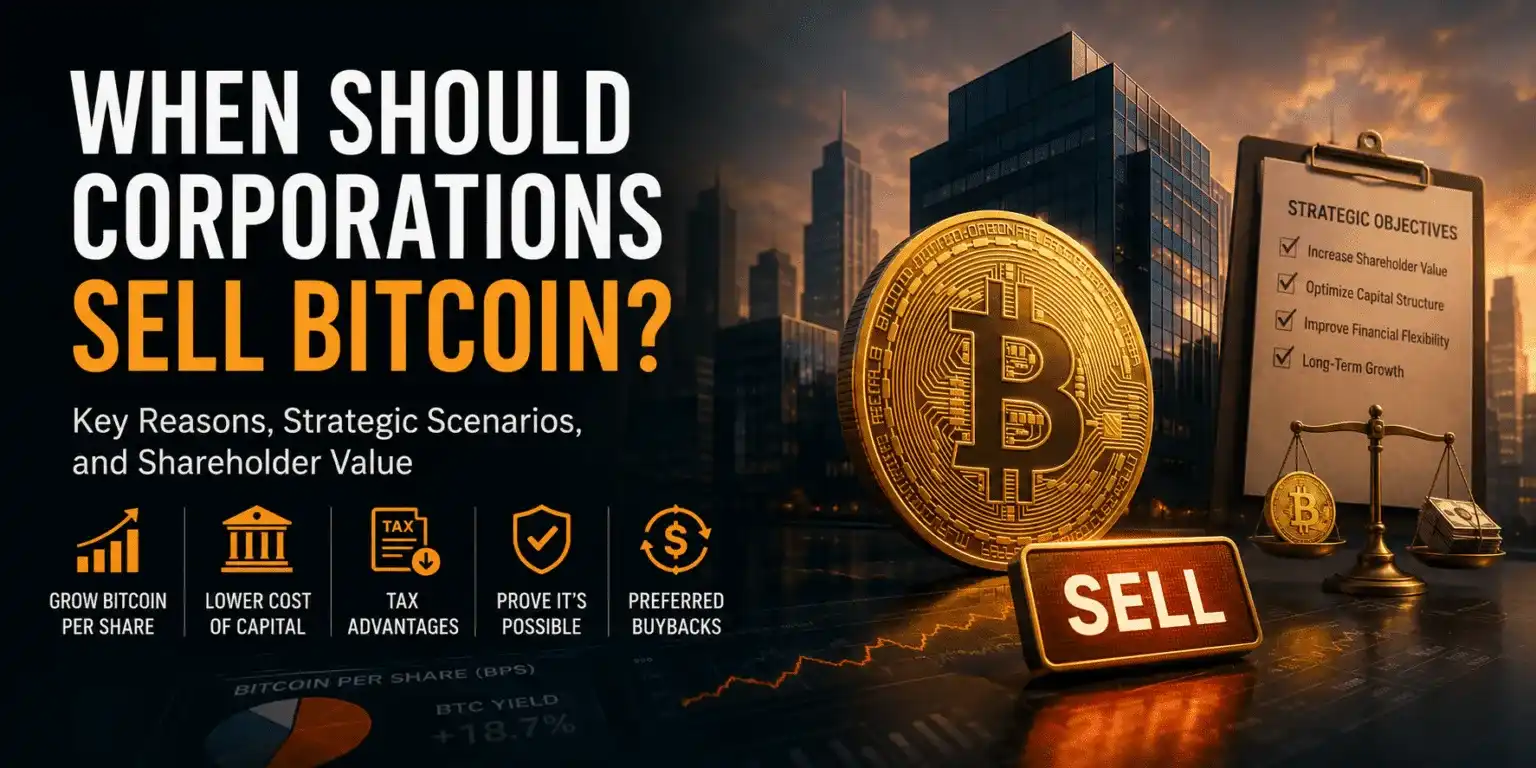
The Five Value Logics Behind Enterprises Selling Bitcoin

"Five Value Logics Behind Corporate Bitcoin Sell-offs" Recent news of Strategy company considering selling part of its bitcoin holdings to meet operational goals sparked market discussions, challenging its previous "never sell" stance. While long-term holding aligns with crypto investment philosophy, selling bitcoin can be a rational corporate decision aimed at maximizing shareholder value, unlike personal sales for life improvements. For instance, in Q1 2026, miners sold 25,376 BTC to fund a pivot into AI, deeming it a higher-return investment. For treasury-holding firms like Strategy, selling bitcoin can create value through five key logics: 1. **Increasing Bitcoin Per Share:** The core metric is bitcoin per share. If a company's stock trades below its bitcoin asset value, selling BTC to buy back shares can increase this ratio, as the reduction in shares outstanding outweighs the BTC sold. Similarly, using BTC proceeds to cover fixed costs like dividends during stock undervaluation minimizes the dilution of bitcoin per share. 2. **Optimizing Capital Structure & Lowering Financing Costs:** Credit ratings significantly influence financing costs. Rating agencies like S&P value cash reserves. By selling bitcoin to boost cash, companies can meet capital market expectations, secure better ratings, and issue debt at lower costs. Reducing debt through BTC sales also improves the appeal of preferred stock. Lower interest rates compound over time, boosting profits. 3. **Legitimate Tax Planning:** The US currently has no wash-sale rules for bitcoin. Companies can sell to realize a book loss, immediately repurchase at a lower cost basis, and use the loss to offset taxes—a strategy Strategy used in 2022's bear market. This can be combined with stock buybacks or debt repayment for multiple benefits. 4. **Dispelling Market FUD (Fear, Uncertainty, Doubt):** Negative narratives claim large corporate BTC sales could crash the market or invalidate the treasury model. A controlled sale (e.g., 50,000 BTC) without causing major market or stock price volatility could debunk such myths, helping the market accept bitcoin as a corporate asset. This reason is the most subjective of the five. 5. **Buying Back Preferred Stock at a Discount:** This lesser-known strategy involves repurchasing a company's own floating-rate preferred stock when it trades significantly below its par value. For example, if a $100-par security like STRC trades at $82, selling bitcoin to buy it back yields an $18 per-share, tax-free profit. Price drops may occur due to leveraged trading cascades, unrelated to BTC's price. Repurchasing avoids future increased dividend costs. In conclusion, corporate bitcoin sales should not be automatically viewed as bearish. In many scenarios, they protect the interests of the company and its shareholders. Bitcoin's monetary properties offer flexible capital allocation; using the asset rationally unlocks its maximum value.

marsbit34m ago

The Five Value Logics Behind Enterprises Selling Bitcoin

marsbit34m ago

I Tested with $10,000: Zero Wear, 8% APY, and Earn Points (Full Tutorial + Screenshots Included)

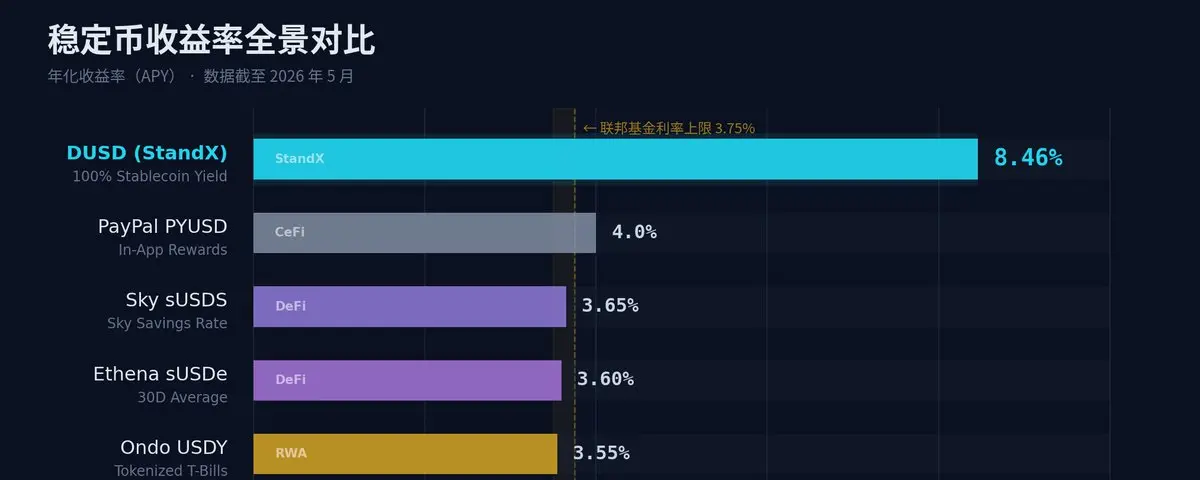
**Title:** My $10,000 Real-World Test: Zero Wear-and-Tear, ~8% APY, Plus Earning Points (Full Guide + Screenshots Included) **Summary:** This article details a personal experiment with $10,000 on the StandX platform to verify its advertised ~8% APY for its stablecoin, DUSD, while earning trading points. The author created two accounts, each depositing $5,000 worth of DUSD, and used StandX's unique "Block Trade" feature to open perfectly offsetting long and short BTC positions (2x leverage each). This neutralized directional market risk. **Key Results (Over 8 Days):** * **Total Profit:** $16.91 (~7.8% annualized). * **Zero Net Directional P&L:** BTC price movements canceled out. * **Zero Wear-and-Tear:** No losses from fees, slippage, or gas from frequent trading. * **Points Earned:** 380+ trading points. **Source of the ~8.46% APY:** The yield is composed of three layers, all paid in DUSD (real USD value, not governance tokens): 1. **DUSD Base (~1.27%):** Derived from funding rates (similar to Ethena's USDe). 2. **SIP-2 Position Boost (~2.27%):** A protocol revenue-sharing mechanism. Users providing liquidity (via open positions) earn a share of platform trading fees. Leverage acts as a multiplier on this yield. 3. **SIP-3 Universal Fee Share (~4.92%):** A portion of all platform trading fees is distributed to *every* DUSD holder, regardless of whether they trade. **Sustainability Claim:** The author argues this yield is more sustainable than pure funding-rate models (e.g., Ethena) because over 7% of it comes from transaction fees (SIP-2 + SIP-3), which are less dependent on market cycles. **Step-by-Step Strategy:** A concise 3-step guide is provided for replicating the zero-risk strategy using two wallets and StandX's Block Trade to create matched long/short positions. **Risk Disclosures:** The article notes standard DeFi risks: smart contract vulnerability and yield fluctuation (Base yield varies with funding rates; SIP-2/3 yields depend on platform trading volume). **Author's Note:** The author discloses their role in Growth at StandX. The piece is presented as personal testing and analysis, not investment advice.

链捕手1h ago

I Tested with $10,000: Zero Wear, 8% APY, and Earn Points (Full Tutorial + Screenshots Included)

链捕手1h ago

Trading

Spot
Futures

Hot Articles

What is DOGE M

Doge Matrix ($doge m): The New Breed of Community-Driven Cryptocurrency Introduction In the ever-evolving landscape of cryptocurrency, new projects constantly emerge, each aiming to capture the interest of investors and enthusiasts alike. One of the latest entrants to this domain is Doge Matrix, represented by the ticker symbol $doge m. This project has attracted attention thanks to its roots in the popular meme culture surrounding Dogecoin, establishing its place within the web3 space. This article aims to provide a comprehensive analysis of Doge Matrix, covering its overview, creator, investors, functionality, timeline, and notable aspects. What is Doge Matrix ($doge m)? Doge Matrix is a community-driven cryptocurrency project that seemingly builds upon the widespread appeal of Dogecoin, a digital currency known for its Shiba Inu mascot and its meme origins. While the overarching objectives of Doge Matrix are not extensively defined, it is characterised by a commitment to harnessing community involvement and support. Unlike traditional cryptocurrencies that often emphasise utility or intrinsic value through underlying technologies, Doge Matrix positions itself within a space that embraces the cultural phenomenon of cryptocurrencies, particularly appealing to those who resonate with the ethos of meme-based assets. Drawing on the strengths of the Dogecoin community, Doge Matrix operates as part of a broader ecosystem, inviting participation and engagement from users who share an interest in cryptocurrency and the digital landscape. Who is the Creator of Doge Matrix ($doge m)? The identity of the creator of Doge Matrix remains unknown. This lack of transparency is not an uncommon occurrence in the cryptocurrency space, where some projects are launched without revealing the identities of their founders. The absence of information regarding the founding team can raise questions among potential investors about the project’s accountability and direction. Who are the Investors of Doge Matrix ($doge m)? As it stands, there is no publicly available information detailing the investors or investment foundations that back Doge Matrix. The project appears to rely primarily on community support rather than institutional investment. This model aligns with the community-driven nature of the initiative, fostering an environment where the direction of the project is shaped by its participants rather than being dictated by a select few financial backers. How Does Doge Matrix ($doge m) Work? The specifics regarding the operational mechanisms of Doge Matrix are somewhat vague, reflecting a broader trend of projects in the meme coin space where innovative functionalities are not always clearly articulated. Nonetheless, Doge Matrix seems designed to tap into the existing cryptocurrency ecosystem by encouraging user participation while tapping into the familiar cultural references associated with Dogecoin. Its potentially unique characteristics derive from community interactions rather than technological advancements, emphasising shared experiences and collaboration among token holders. While the exact innovations have not been explicitly outlined, the project appears to create a space where community members can engage, share ideas, and propel the project's potential forward. Timeline of Doge Matrix ($doge m) Reflecting on the project’s timeline reveals notable events that have defined its journey thus far: November 25, 2024: Doge Matrix reached its all-time high value, marking a significant milestone in its early history. January 1, 2025: Conversely, Doge Matrix hit its all-time low value, illustrating the volatility often associated with cryptocurrencies, especially in the early stages of a project's lifecycle. Ongoing: The project continues to be actively traded and supported by its community, although specific future milestones or objectives have yet to be disclosed. Key Points About Doge Matrix ($doge m) Community Focus At the heart of Doge Matrix is a commitment to community engagement. The project thrives on the premise of collaboration and shared objectives among its members, emphasising the importance of collective effort. Unlike centralised projects that often have a defined leadership structure, Doge Matrix at present showcases a more fluid approach to governance, where every community member's voice matters. Volatility The cryptocurrency market is notorious for its volatility, and Doge Matrix is no exception. Its price history reflects significant fluctuations between high and low values, which is typical of many new cryptocurrencies but underscores the risks associated with investment in emerging tokens. Lack of Detailed Information One of the most striking features about Doge Matrix is the scarcity of detailed information regarding its technological underpinnings and operational mechanisms. This ambiguity necessitates that potential investors conduct thorough due diligence before engaging with the project. Conclusion In summary, Doge Matrix ($doge m) illustrates a new wave of cryptocurrency projects that lean heavily on community engagement and cultural relevance. While lacking in certain specifics—such as clear leadership, defined objectives, and detailed functionality—the project has managed to generate interest within the crypto community, leveraging the established appeal of meme culture. As with any investment in the cryptocurrency space, understanding the inherent risks and conducting comprehensive research is essential for potential participants. Doge Matrix stands as a reminder of the dynamic, sometimes unpredictable nature of the crypto industry, marked by constant evolution and enthusiasm for community-driven initiatives.

469 Total ViewsPublished 2025.02.03Updated 2025.02.03

What is DOGE M

What is $M

Understanding Mantis ($M): A New Era in Cross-Chain Interoperability In the continually evolving landscape of Web3 and cryptocurrency, new projects strive to offer innovative solutions aimed at enhancing the user experience and expanding functional possibilities within the decentralised financial ecosystem. One such project garnering attention is Mantis ($M), a pioneering protocol founded on the principles of cross-chain interoperability and intent-based settlements. This article delves into the essential aspects of Mantis, including its core functionality, creators, investment backing, innovative features, and critical milestones. What is Mantis ($M)? Mantis is described as a multi-domain intent settlement protocol that simplifies cross-chain interactions, enabling users to execute complex financial transactions across various blockchain platforms seamlessly. The protocol operates through three primary layers: Intent Expression: Users can articulate their transaction goals using natural language facilitated by the DISE LLM, an advanced AI language model. For instance, a user might express a desire to swap Ethereum (ETH) for Solana (SOL) with a specific slippage tolerance of 1%. Execution: This layer employs a network of solvers that compete to fulfil user intents. Transactions are executed using mechanisms such as Coincidence of Wants (CoWs) and Order Flow Auctions (OFAs), which ensure that user demands are met optimally. Settlement: Leveraging the Inter-Blockchain Communication (IBC) protocol, Mantis enables atomic cross-chain transactions, allowing users to operate across various supported chains, including Ethereum, Solana, and Cosmos. Mantis is engineered to introduce native yield generation for idle assets, employing cryptographic proofs to maintain the integrity of transactions throughout the entire process. Creators & Development Team Mantis was conceived by the Composable Foundation, a research-driven organisation notable for its emphasis on blockchain interoperability solutions. This foundation collaborates with esteemed academic institutions, including Harvard University and the University of Lisbon, contributing to extensive research and development efforts that inform Mantis's architecture and functionality. The Composable Foundation’s commitment to fostering innovation in the blockchain space positions Mantis as a robust solution for the growing demand for interoperability among multiple blockchain networks. Investors & Backing While specific details about individual investors have not been publicly disclosed, Mantis enjoys substantial backing from various entities, including: Ecosystem grants from IBC-enabled chains, which support the protocol's growth and integration within decentralised finance ecosystems. Strategic partnerships with infrastructure providers that enhance Mantis's network capabilities and deployment strategies. Funding through the Composable Foundation's treasury, ensuring sustained financial support for ongoing development and operational costs. These collaborative efforts reflect a consensus among stakeholders about the importance of enhancing cross-chain functionality and the potential utility of Mantis's infrastructural innovations. Key Innovations Mantis sets itself apart through several pioneering innovations that enhance its functionality and utility: Chain-Agnostic Intents: Users can initiate transactions from any supported chain while settling on another. This flexibility empowers users, driving increased interaction among different platforms. AI-Powered Interface: The integration of DISE LLM allows users to conduct complex DeFi operations using natural language, thereby simplifying interactions and making blockchain technology accessible to a broader audience. Cross-Domain MEV Capture: Mantis creates an internal market for maximal extractable value (MEV) through competitions among solvers. This innovative approach allows for greater efficiency and value extraction in complex transactions. Modular Settlement Layer: The protocol supports various verification methods, including zero-knowledge proofs and optimistic rollups, providing a versatile framework that can adapt to emerging blockchain technologies. Historical Timeline Mantis's development is marked by several critical milestones that chart its trajectory and growth: | Year | Milestone | |————|————————————————————————-| | 2022 | Initial concept development within the Composable Foundation's research division. | | Q3 2024 | Launch of the testnet with bridging capabilities between Solana and Ethereum. | | Q1 2025 | Anticipated Token Generation Event (TGE) alongside the mainnet launch. | | Q2 2025 | Expected integration of DISE LLM and expansion of cross-chain capabilities. | | 2025 H2 | Planned support for over 15 chains through further IBC upgrades. | This timeline outlines Mantis's evolution, from conceptual discussions to active implementation and future growth phases. Ecosystem Growth Strategy Mantis's strategy for ecosystem growth includes several initiatives designed to encourage user participation and developer engagement: Credits System: Users can earn protocol credits by providing liquidity and engaging in referral programmes. These credits are redeemable for incentives in the future, fostering a robust user community. Modular Software Development Kit (SDK): This toolkit empowers developers to create applications based on intent-driven models utilising Mantis's infrastructure, thus promoting innovation within its ecosystem. Governance Model: As the protocol matures, $M token holders will have a voice in protocol governance, allowing them to vote on proposed upgrades and changes, thereby enhancing community engagement and decentralisation. Mantis represents a significant advancement in the realm of cross-chain architecture. By seamlessly integrating advanced AI algorithms with a robust settlement framework, Mantis seeks to tackle the problems of fragmentation within multi-chain ecosystems. Its innovative approach prioritises improved user experiences while adhering to the foundational principles of decentralisation and security, setting a new standard for the future interoperability of blockchain technologies. As Mantis continues its journey of growth and implementation, it promises to be a project to watch closely in the competitive landscape of Web3 and decentralised finance. With its focus on crossing boundaries and elevating user engagement, Mantis is poised to be an integral part of the future developments in the cryptocurrency space.

41 Total ViewsPublished 2025.03.18Updated 2025.03.18

What is $M

Discussions

Welcome to the HTX Community. Here, you can stay informed about the latest platform developments and gain access to professional market insights. Users' opinions on the price of M (M) are presented below.

活动图片