Author: Raoul Pal, Founder of Real Vision
Compiled by: Chopper, Foresight News
I bet you have a wallet on your phone that you haven't opened since 2021, with some leftover scraps from some long-dead liquidity mining pool.
If that's you, you're not alone. That's the first impression most people have of DeFi: five different apps, three chains, a seed phrase written on a scrap of paper lost in a drawer somewhere...
DeFi was supposed to replace banks, that was the promise. What you actually got was a part-time job with a spreadsheet, gas fees that sometimes cost more than the yield they promised, and a lingering, low-grade fear of your own phone.
But what if it was never built for you?
Like everyone else, I used to think the total addressable market for crypto was eight billion people. I've had to abandon that assumption entirely... The target is no longer just the population of the world.
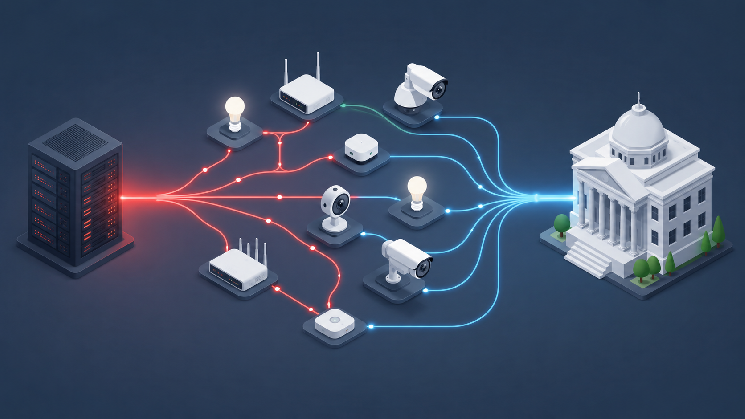
Because I now see very clearly where this road leads. An agent economy is coming: billions of AI agents doing real economic work, trading with each other at machine speed, constantly. And that economy won't run through the Bank of England. It will run on-chain.
You Can't Slow It Down
The first thing to understand about the agent economy is this: it's not optional.
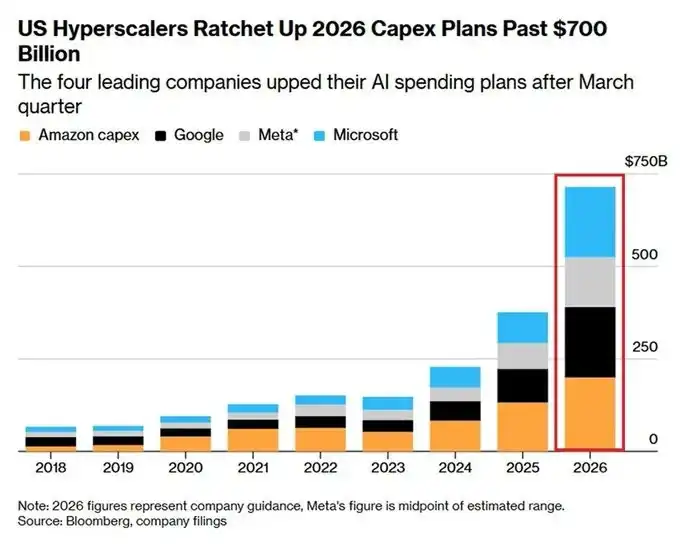
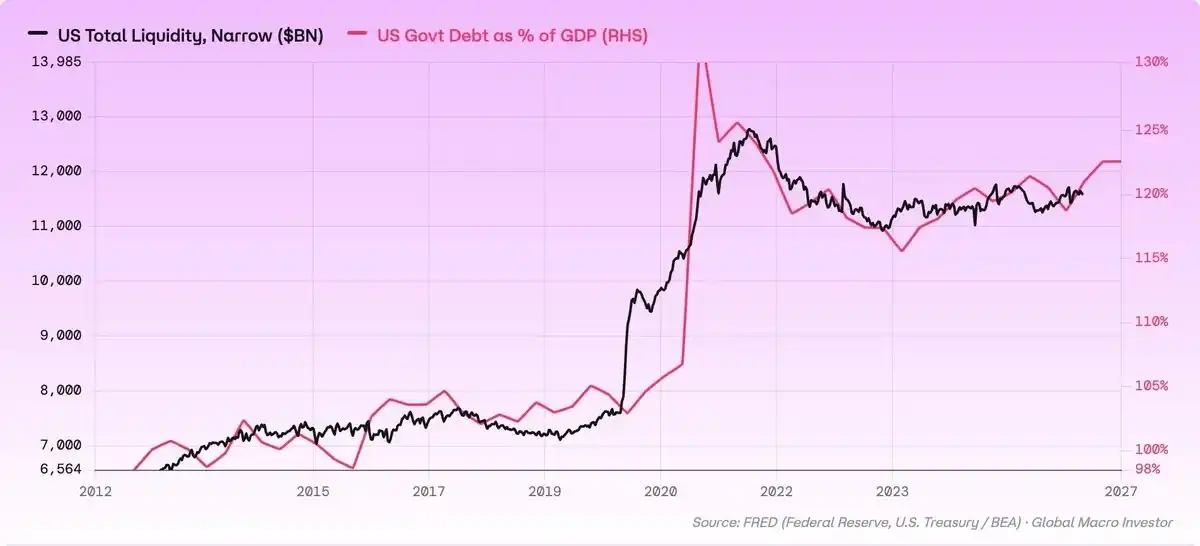
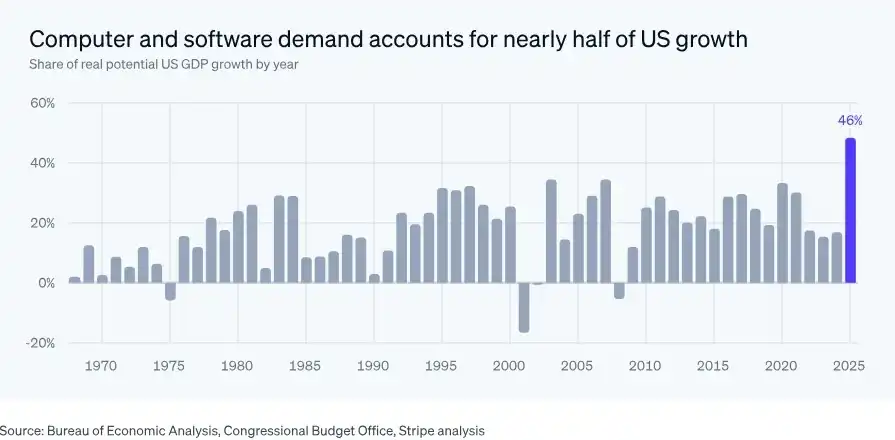
The largest companies on Earth are pouring hundreds of billions a year into AI compute, and the two superpowers behind them treat this race as an existential one. America can't slow down because China won't; China can't because America won't. Underneath that race is the reason I laid out in my book "Everything Code": developed nations are aging and in debt, the workforce is shrinking, and the growth their debts rely on can't be produced by human hands anymore. We don't just want these agents. We need them, hundreds of millions, then billions of them, doing real economic work.
So, this wave is coming, regardless of what people think. The only question is: what does it run on? In finance, the ratio of non-human to human identities is already 96 to 1, and those are just the clumsy service bots... the ancestors of what's coming. Stripe wrote in its annual letter this February that agents will likely soon handle most internet commerce, and we will need rails that can support a million, maybe a billion transactions per second. It is a fact that our existing financial plumbing cannot carry the economy that is coming.
Read the Job Description
So, what role does DeFi play here? Back to that wallet you don't open anymore. For a decade, everyone has judged DeFi as a consumer product and given it a failing grade because we all assumed by default: its operator was supposed to be you. Now, look again at what this thing actually requires of its operator.
You need to monitor positions across multiple protocols 24/7 because the market never closes. Rebalance in seconds when markets move. Execute multi-step operations across lending markets, exchanges, and hedging venues simultaneously. Never panic in a drawdown, never get greedy in a pump, never sleep, never fat-finger a number at 3 AM.
No human on Earth fits that description, and that's not a character flaw. We evolved to run from lions, not manage collateral ratios all night. That's why I've said for years: in volatile assets, leverage is your enemy; for 99% of people, a spot position and a long time horizon is enough.
But give that same job description to an agent, and it ceases to be a job at all. Continuous monitoring, instant rebalancing, emotionless execution, no need for sleep... that's just what software does. In my March "Global Macro Investor" newsletter, I put it bluntly: "DeFi isn't for humans to farm yield. It's agent treasury infrastructure: borrowing, swapping, and hedging at machine speed, with zero human touchpoints."
To be clear, no one sat down ten years ago and designed DeFi specifically for machines. The builders thought they were building for humans. But look at what the system demands of its operator; it might as well have been built for machines.
Because what an agent needs is the mirror image of everything that makes DeFi miserable for you. It has no business hours, so a market that never closes isn't a burden, it's foundational. It can't hold a bank account because no bank will open one for a piece of software and settle fractions of a cent in 300 milliseconds. What it needs is capital with no gatekeepers and no waiting.
Everything Will Be Rebuilt
So, what does that reality actually look like? I think every single financial function we run today will be rebuilt on-chain with agents embedded in it. The cleanest way to see all this is through the most boring function of all: treasury.
Give an agent the job of handling payments for a company. To do that job well, it must hold funds; and once it holds funds with a profit motive, it runs into the oldest problem in finance: what do I do with my cash balance? So it will necessarily put that capital to work. It will lend out money sitting idle. It will borrow when it needs funds for a better opportunity. It will swap between tokens it receives and hedge against losses it can't afford.
Where will all that activity happen? Not at a bank, and not at anything that looks like a bank. This is precisely where the "decentralized" in DeFi stops being ideology and becomes an engineering necessity. These agents will trade at speeds no human intermediary could supervise... no compliance officer can approve a million counterparties per second, no clearinghouse can spend two days settling a position that existed for a fifth of a second. The only structure that can work is smart contracts: rules written in code, executed exactly as written. Permissionless, never closing.
Machines Have No Habits
There's another detail because it tells you where the value ultimately settles. Humans pick a chain and stay, out of habit, community, circles. An agent will pick nothing. It will route every single operation to the fastest, cheapest rail in that exact moment. That constant pressure will drive fees across the entire system toward zero.
Fees trending toward zero is only bad news if you think of a blockchain as a business selling transactions. It isn't. It's infrastructure competing to host activity, and the winning blockchain will be used almost for free while settling more value than anything in financial history.
An Economy That Runs Without Us
Now pull the lens all the way out, because this is no longer a crypto story. It's an economic story.
I think within years, the majority of economic transactions on Earth will be invisible to humans. It's not secret... it just happens between machines, at machine speed, at a scale we can't participate in.
The problem is, every single economic model we have assumes an economy that runs at human speed: value accumulated over quarters and careers, destroyed in crashes slow enough to watch on television. Now, capital can be raised at machine speed, deployed into opportunities that exist for milliseconds, operated by participants that never stop trading. Value is created and destroyed faster than any human can comprehend. GDP could jump 30% in a month. We don't even know what that means. It breaks the entire economic formula.
This is what I call the "singularity moment," the point at which the economy begins to change at a pace humans can't adapt to. Everything in this article is a step toward it, and the rails being laid right now are where it happens.
What This Means for You
I think, mostly, relief. You can retire from that 2 AM job. You were never supposed to be the operator of this machine, any more than you were supposed to manually route your own emails. That wallet you don't open isn't evidence of technological failure; it's evidence that the wrong species was at the controls.
And the way to participate was never to out-yield the robots. This is the same conclusion I keep reaching from every direction: value settles in the base layer where all this activity settles. When billions of agent treasuries are borrowing, swapping, and hedging, day and night, every second, the network that hosts that activity becomes one of the most valuable assets on Earth, and a piece of it is available to anyone with a phone.
I won't tell you which chain will win, or when the inflection point comes. I've been in this market for thirteen years and have had the arrogance of prediction beaten out of me. What I will give you is a framework: stop judging DeFi by whether it's useful to you, and start looking at who it was actually built for. Because they are already operating, mostly where you can't see.
You don't have to work at machine speed. You just have to own the infrastructure the machines need to run.