The Macroeconomic Underpinnings of Africa's Payment Market Landscape

链捕手Published on 2026-06-05Last updated on 2026-06-05

Abstract

The African payments market, characterized by the world's highest mobile money penetration and fastest-growing cryptocurrency adoption, is not a coincidence but a macroeconomic necessity driven by deep structural factors. Two key drivers create this landscape: (1) Africa's heavy reliance on commodity exports, trade, and remittances, generating massive cross-border settlement and remittance demand; and (2) chronically underdeveloped financial infrastructure, exacerbated by international bank de-risking, foreign exchange mismanagement, and persistent inflation. This vacuum has allowed mobile money and crypto to thrive. Mobile money platforms replace banks for domestic payments, while cryptocurrencies serve as a store of value against local currency depreciation and a low-cost medium for cross-border exchange. A crucial division lies along the Sahara Desert. North Africa is integrated into the oil-anchored MENA framework, while Sub-Saharan Africa (SSA), plagued by dollar shortages and fragmented currencies, has become a natural, massive market for mobile money and crypto. Nigeria, Kenya, and South Africa are global leaders in adoption. The SSA economy is deeply dollarized due to currency instability, yet suffers from a severe "dollar shortage" caused by trade deficits and limited export capacity. This creates parallel forex markets and high remittance costs. Cryptocurrencies, particularly stablecoins, fill this gap by providing access to dollar liquidity, cheaper cross-border...

Africa's payment market exhibits distinct characteristics, boasting the world's highest mobile money penetration rate and fastest cryptocurrency adoption growth. This is not a coincidence at the market level, but an inevitability stemming from the long-term evolution of its macroeconomic structure.

This article analyzes the two underlying structural drivers behind this inevitability: (1) Africa's long-term reliance on resource exports, trade flows, and remittances creates immense demand for cross-border settlement and money transfers; (2) Africa's local financial infrastructure is underdeveloped, plagued by international bank de-risking and mismanaged foreign exchange controls, leading to a chronic banking sector gap and persistent inflationary pressures.

These two forces jointly create a vacuum where mobile money and cryptocurrencies have flourished: mobile money platforms replace banks as daily payment channels, while cryptocurrencies assume roles traditionally held by local fiat currencies or the US dollar in emerging economies, serving both as a store of value against currency depreciation and as a low-cost cross-border exchange medium.

On this continent, the key dividing line is the Sahara Desert: north of it integrates into the Middle East and North Africa (MENA) framework anchored by oil and aligned with the Middle East; while Sub-Saharan Africa (SSA), amid severe dollar shortages and fragmented currency systems, has given rise to a vast market with an inherent need for mobile money and cryptocurrencies. SSA countries represented by Nigeria, Kenya, and South Africa are among the global leaders in mobile money and cryptocurrency adoption.

1 Africa's Macroeconomic Panorama: A Large, Young, Yet Commodity-Dependent Primary Economy

1.1 Demographic Structure

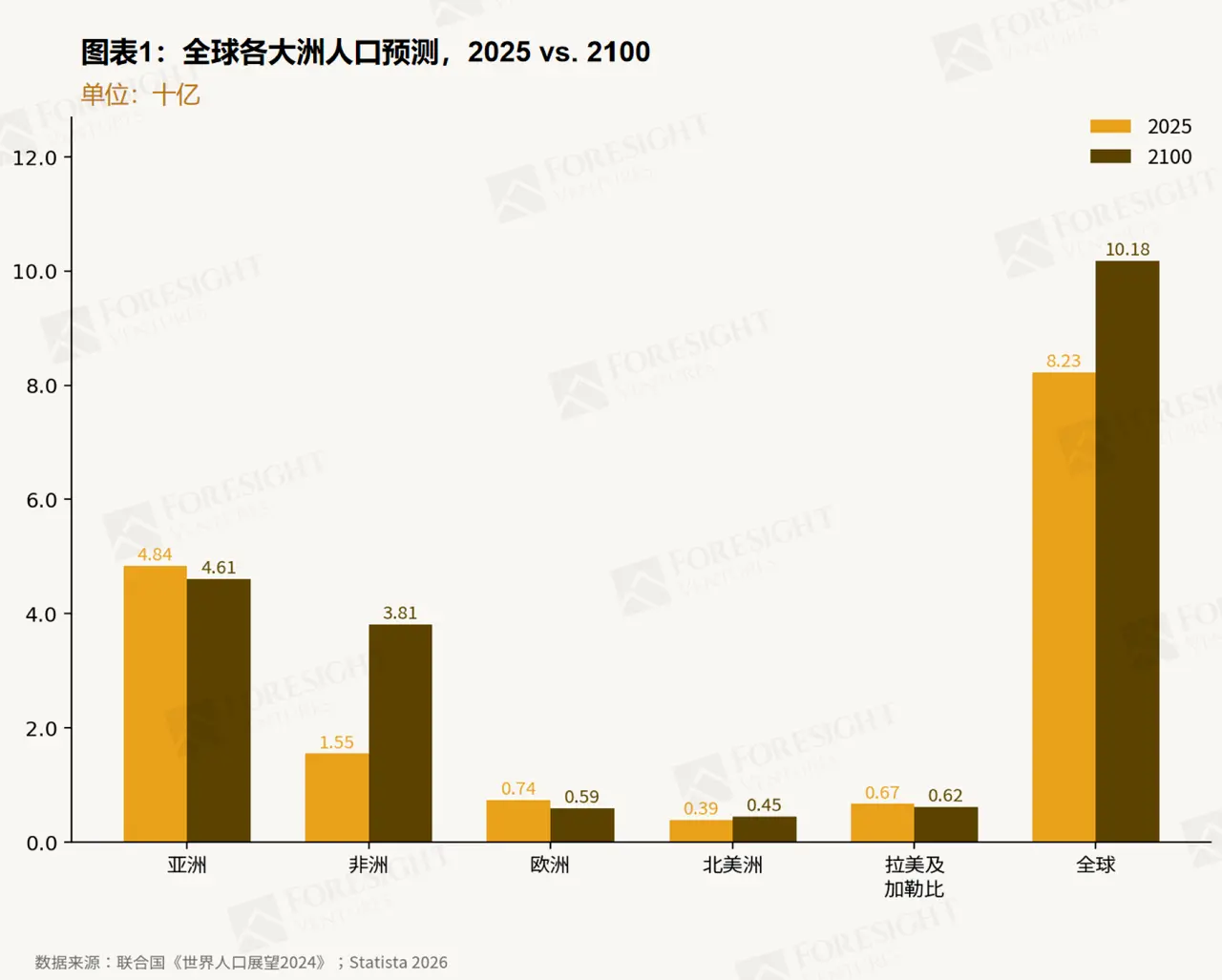
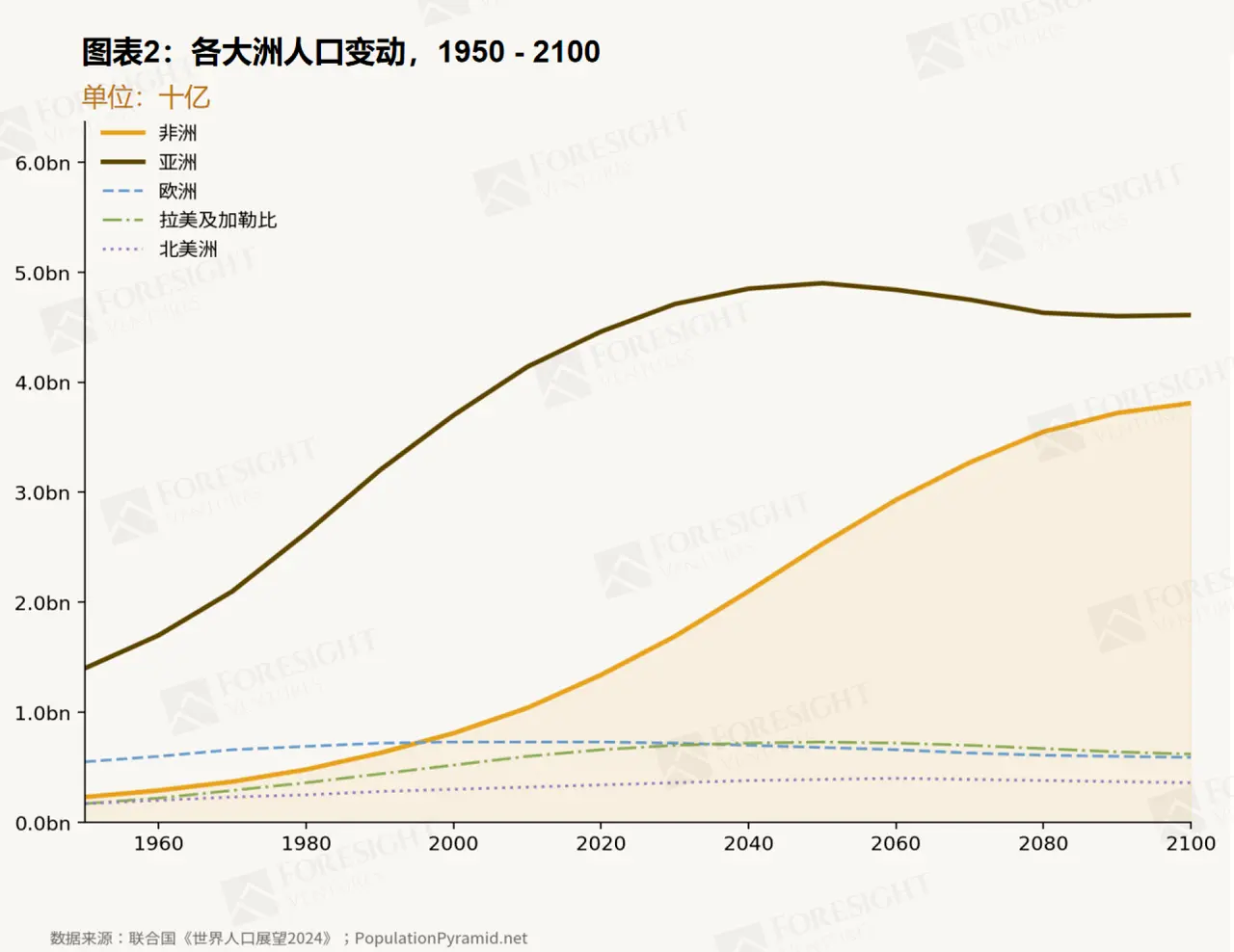
In 2025, Africa's population reached approximately 1.55 billion, accounting for about 19% of the global total. It is the world's youngest continent, with a median age of only 19, and also the fastest-growing continent, with an annual growth rate of around 2%, unmatched by other continents.

By 2100, Africa's population is projected to nearly triple to 3.81 billion, constituting 37% of humanity. In stark contrast, Asia's population is expected to peak mid-century before declining, while Europe and Latin America face absolute shrinkage; only Africa will experience substantial growth throughout the century (see Figures 1 and 2).

This demographic trend has profound implications for payment infrastructure. With traditional bank coverage still relatively low, large numbers of young, urbanizing, mobile-native cohorts are entering the labor market and consumer economy at scale. Consequently, demand for convenient, low-cost financial services (including payments, savings, and credit) will only intensify.
1.2 Resource Endowment and Industrial Structure

Africa possesses exceptionally rich natural resources. According to OPEC's Annual Statistical Bulletin, as of 2024, Africa's proven crude oil reserves were approximately 119.4 billion barrels, accounting for about 7.6% of the global total, with the largest reserves concentrated in Libya, Nigeria, Algeria, and Angola. Beyond hydrocarbons, Africa's mineral resources hold significant global importance and dominate several categories: the continent is the world's primary diamond-producing region, holds about 49% of global cobalt reserves, and is the absolute source for platinum group metals (PGMs), with South Africa alone controlling around 78% of global PGM reserves. These endowments make Africa a crucial node in the global commodity supply chain.

However, much of this wealth is still extracted and exported as raw materials, with minimal downstream processing or value addition. Concurrently, local manufacturing and agriculture are underdeveloped, infrastructure is severely lacking, and finished goods like refined petroleum and processed foods remain import-dependent. This economic structure of being "large in both imports and exports" locks the continent into the trade dependency pattern discussed next.

1.3 Trade Dependency and Remittance Flows

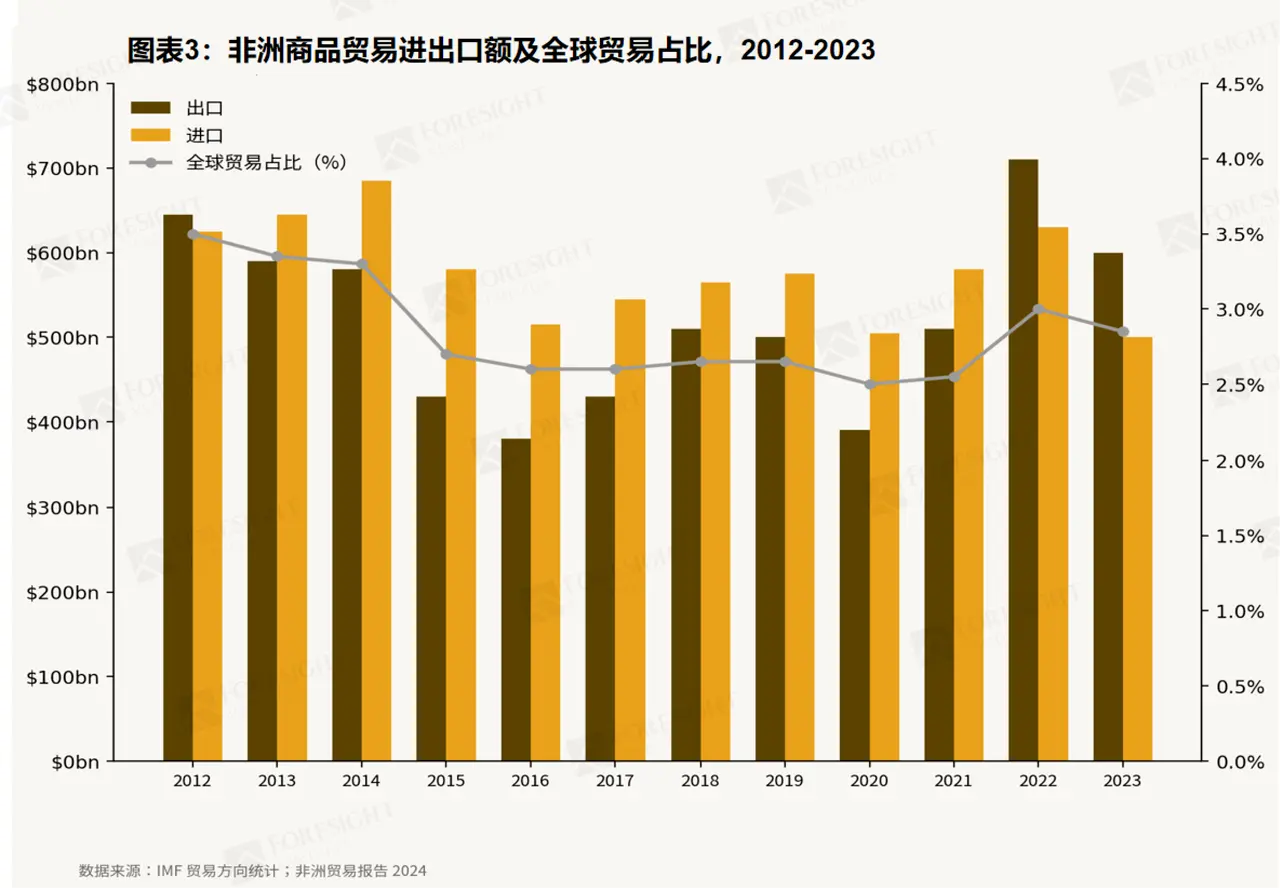
The African economy is deeply intertwined with global trade and overseas remittances. In 2023, Africa's cross-border merchandise exports and imports reached $604.5 billion and $684.5 billion, respectively, while remittance inflows stood at $52.16 billion. For reference, Africa's total GDP in 2023 was approximately $2.96 trillion. These two pillars—trade and remittances—are pivotal in Africa's economic structure and have generated massive demand for B2B cross-border trade settlement and C2C cross-border money transfers, respectively.

Cross-border trade is a vital pillar of the African economy, but its commodity-dependent export structure and persistent trade deficits make it highly sensitive to global macro cycles. In 2023, African merchandise exports totaled $604.5 billion (down 15.1% year-on-year), imports were $684.5 billion (down 1.6% year-on-year), resulting in a trade deficit of about $80 billion (see Figure 3). Over a ten-year trend, Africa is extremely sensitive to global commodity cycle volatility. The 2015–2016 oil price plunge pushed African trade volumes to a two-decade low, stalling resource-dependent economies (e.g., oil exporters like Nigeria, Angola) while non-resource economies maintained 7%–8% growth, creating a clear divergence. The 2020 COVID-19 shock triggered another collapse: global commodity prices plummeted, African GDP growth fell to -2%, followed by a V-shaped recovery in 2021. Most recently, in 2022–2023, driven by the commodity price surge from the Russia-Ukraine conflict, African exports briefly spiked. However, simultaneously, the Fed's aggressive rate hike cycle boosted the dollar and tightened global liquidity, subjecting the continent to severe imported inflation and currency depreciation.
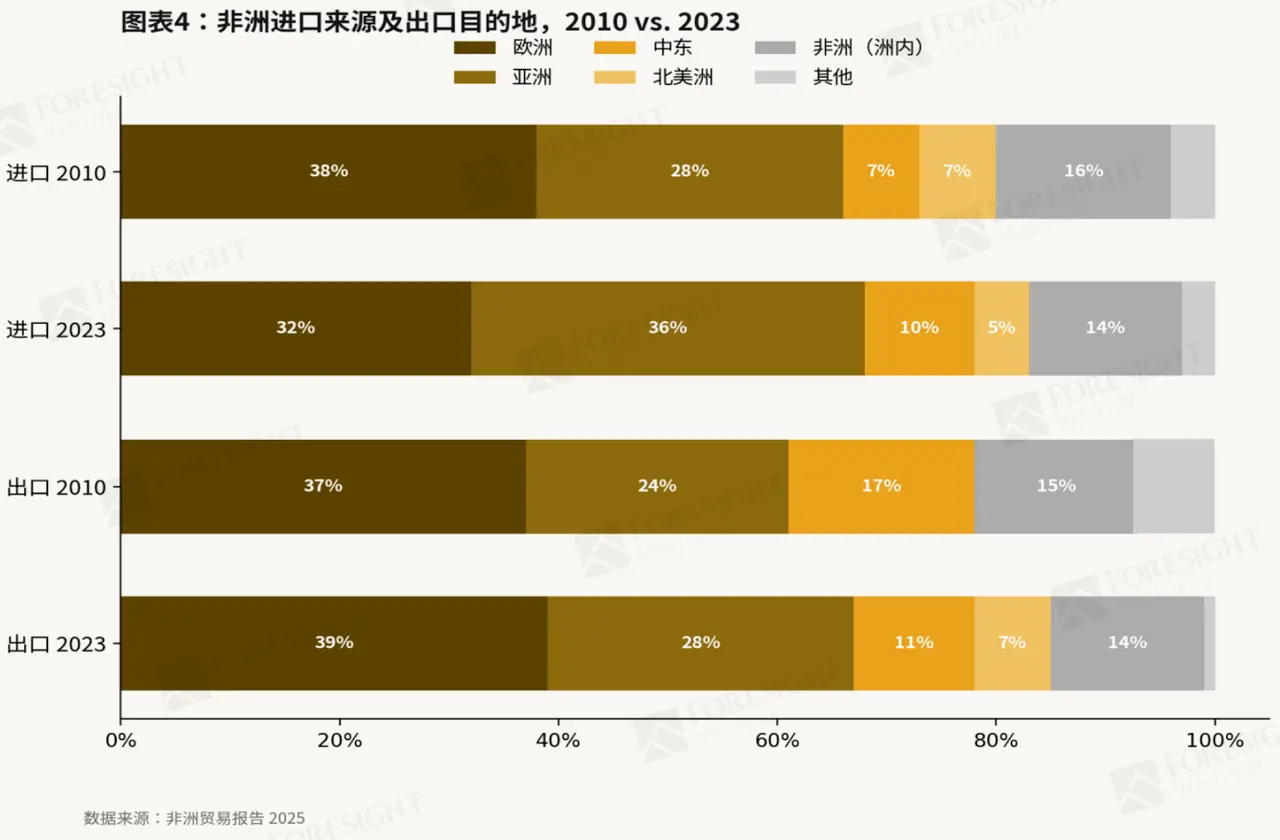
Africa's trade partner structure has shifted significantly over the past decade (see Figure 4). Asia, led by China and India, has surpassed Europe to become Africa's largest source of imports—its share of Africa's total imports rose from 28% in 2010 to 36% in 2023, while Europe's share fell from 38% to 32%. On the export side, Europe remains the top destination with a 39% share, but Asia's share grew from 24% to 28%, and the Middle East's share expanded sharply from 3% to 11%. North America's role has shrunk on both ends. These changes reflect the deepening commodity trade corridor with China and the growing importance of Gulf states as energy buyers and investment partners.

Beyond intercontinental trade, Intra-Africa Trade is also growing rapidly, but barriers such as currencies and languages between countries remain bottlenecks to be overcome. Intra-African trade volume reached $192.2 billion in 2023, up 3.8%. However, intra-regional trade accounts for only 18% of Africa's total exports, compared to 70% for Europe and 52% for Asia. This reflects persistent barriers like tariff fragmentation, currency inconvertibility, and weak cross-border infrastructure. Against this backdrop, the African Continental Free Trade Area (AfCFTA) began operation in 2021, aiming to boost intra-regional trade by 52% upon full implementation, but progress has been slow.

Remittances are another lifeline for the African economy and a source of massive C2C payment demand. According to World Bank data, remittance inflows to Africa were $52.2 billion in 2023. The top five remittance corridors were Saudi Arabia → Egypt, UAE → Egypt, USA → Nigeria, Kuwait → Egypt, France → Morocco. African labor export to the Gulf, North America, and Europe creates a continuous reverse flow of income to households. These corridors constitute one of the largest sources of cross-border C2C remittance demand and also feel the acute pain points of the traditional financial system in cross-border transfers—high cost, long time, and opaque progress—issues that will be discussed in detail in the next chapter.
2 The Deep Mismatch Between Trade/Remittance Demand and the Underdeveloped Financial System

2.1 Low Bank Coverage, Massive Unbanked Population Gap

Africa's formal financial system covers only a minority. According to the World Bank's Global Findex Database 2021–2022, only 49% of adults in Sub-Saharan Africa had a financial account; by 2024, this figure rose to 58%, still among the lowest globally. Beyond low coverage, bank branch density in Africa is also lagging. The IMF's Financial Access Survey shows Kenya has only 4.4 bank branches per 100,000 adults, Morocco has 22.2, and even South Africa, Africa's most developed banking system, has only 38.7, all well below the global average. The result is massive unmet demand for basic financial services: payments, savings, credit, and insurance.

2.2 International De-risking and Correspondent Banking Withdrawal

Africa's second major obstacle stems from the retreat of the international financial system itself. Due to concerns over anti-money laundering (AML) and know-your-customer (KYC) compliance risks, compounded by local realities like lack of formal ID, fixed addresses, incomplete tax records, and a high cash economy share, global major banks have engaged in a wave of de-risking. Since 2016, correspondent banking relationships have contracted sharply. According to SWIFT data, South Africa lost over 10% of its overseas correspondent banks, while Angola's decline reached 37%. This withdrawal directly increases the cost of legitimate cross-border transactions and excludes smaller African financial institutions from the global financial system.

2.3 Mismanaged Forex Controls and Chronic Inflation

Currency system fragility further amplifies these structural flaws. Due to fiscal deficits and a weak tax base, many African central banks resort to printing money to finance government spending, fueling persistent imported inflation. Food, fuel, and raw material prices for manufactured goods rise sharply due to currency depreciation. Concurrently, shallow capital markets, a highly concentrated banking sector, and a historical deficit in central bank independence lead to a broken monetary policy transmission mechanism, making interest rate hikes ineffective at curbing inflation or stabilizing exchange rates. In 2024, Africa's overall inflation rate reached 20.1%, the highest among major global regions, severely eroding the real value of local currency savings.

2.4 Consequence: Cash Dominance and Payment System Failure

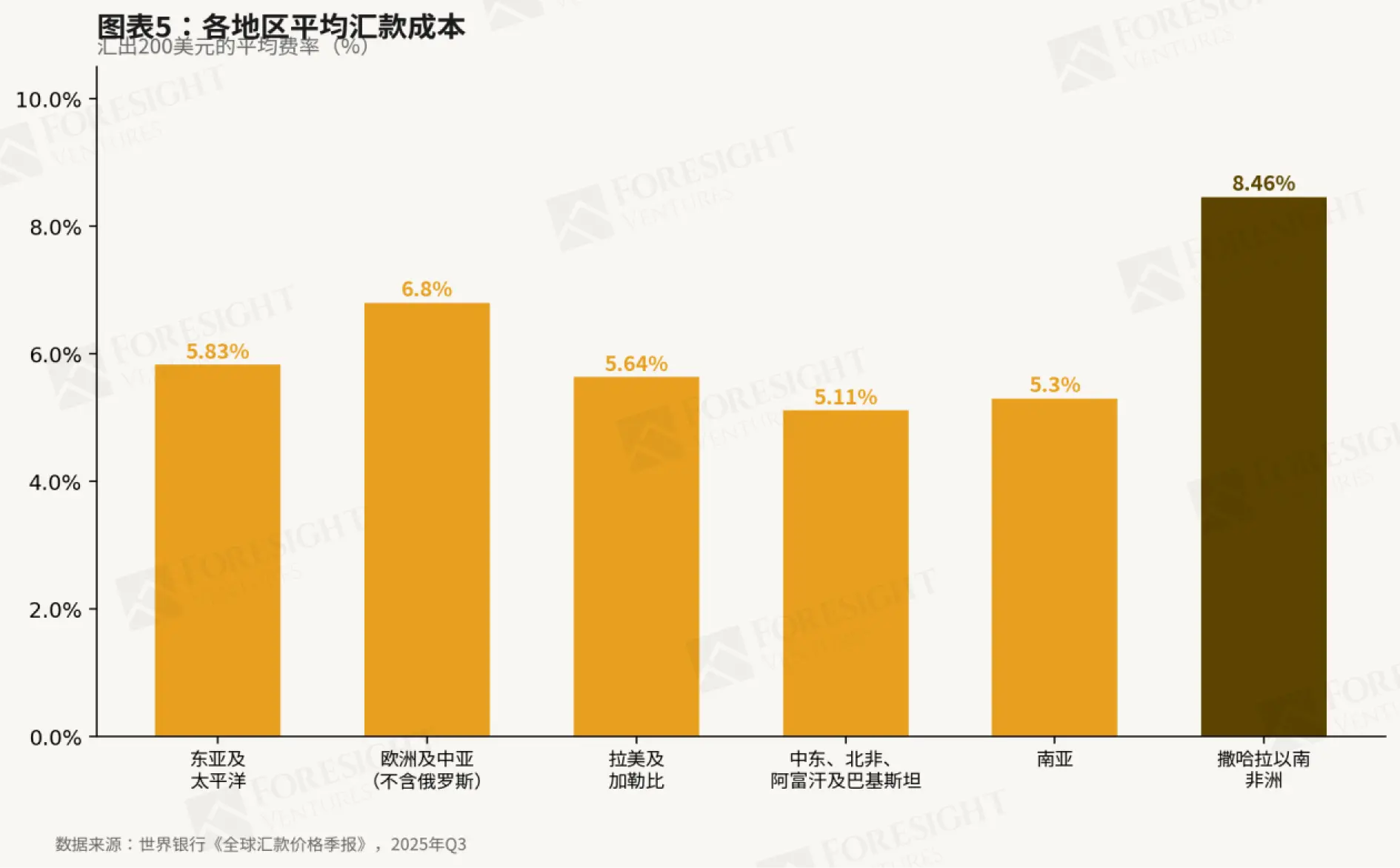
The triple failure of banking exclusion, de-risking, and monetary instability leads to evident consequences. The vast majority of Africans still rely on cash for daily transactions; Sub-Saharan Africa has the world's highest remittance costs, averaging 8.46% per transfer according to the World Bank's Q3 2025 Global Remittance Price Report; and ordinary citizens lack effective inflation-hedging stores of value. The banking system comprehensively fails on three dimensions: access convenience, affordability, and currency stability, thus creating a market vacuum rapidly being filled by emerging payment channels and cryptocurrencies.
3 In the Vacuum Left by the Traditional Financial System, Mobile Money and Cryptocurrencies Flourish

In the gap created by an absent banking system, forced by severe inflation and currency depreciation pressures, Africa has developed the world's most vibrant mobile money and cryptocurrency markets. The emergence of these alternative payment channels is not a matter of choice but of necessity—they solve real problems the banking system cannot address: accessibility, affordability, and stability.

3.1 Mobile Money: Africa Leads the World

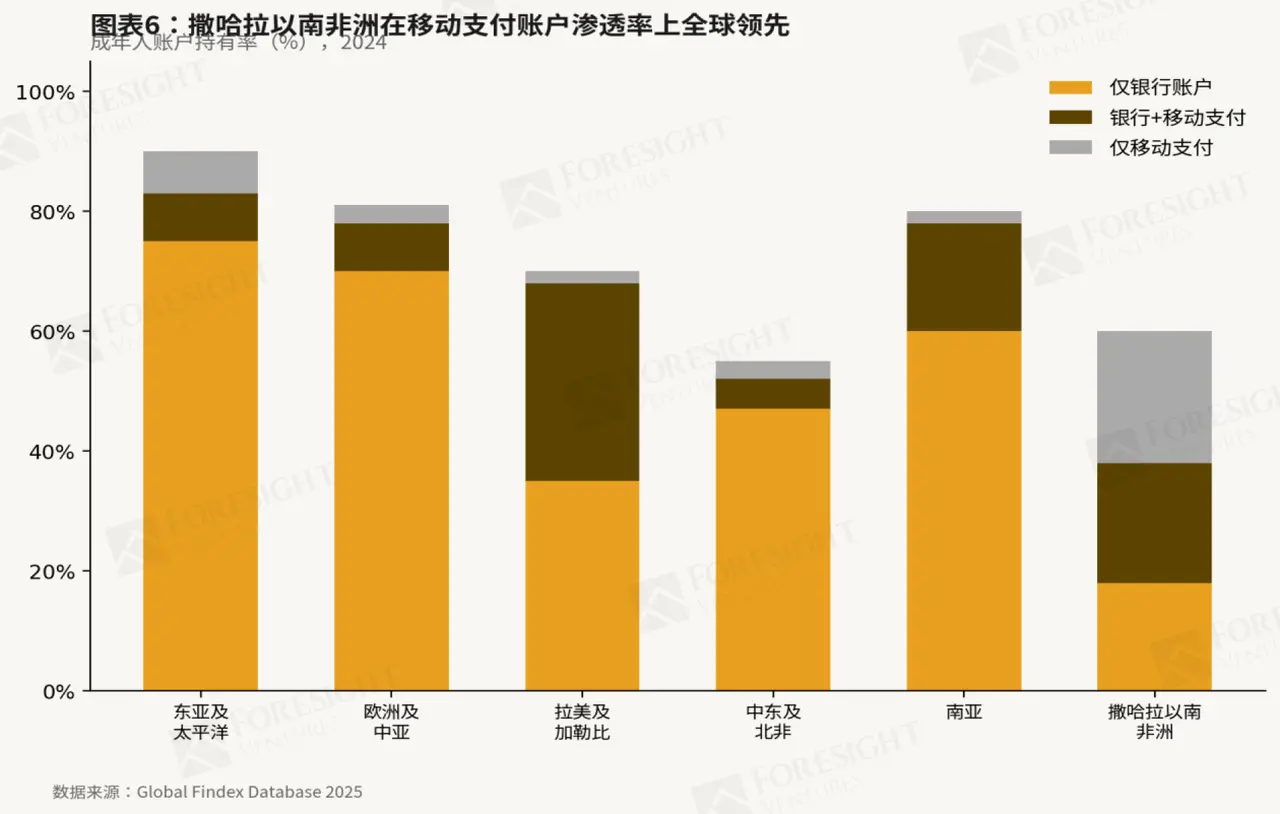
Africa accounts for the majority of global mobile money transactions. According to the 2025 Global Findex database, about 40% of adults in Sub-Saharan Africa use a mobile money account as their primary (or only) formal financial service. Kenya's M-Pesa platform is the archetype: leveraging ubiquitous USSD technology (accessible via basic feature phone keypads), it built a network of millions of offline agent points, supported by near-universal mobile coverage, ultimately capturing 90.8% of Kenya's mobile money market share, and successfully expanded to seven other African countries including Tanzania, Ghana, and Egypt. This architecture based on offline agents and low-tech barriers proves far more scalable and inclusive than traditional branch-based banking, accumulating a massive user base across urban and rural Africa.
3.2 Widespread Cryptocurrency Adoption Across the Continent

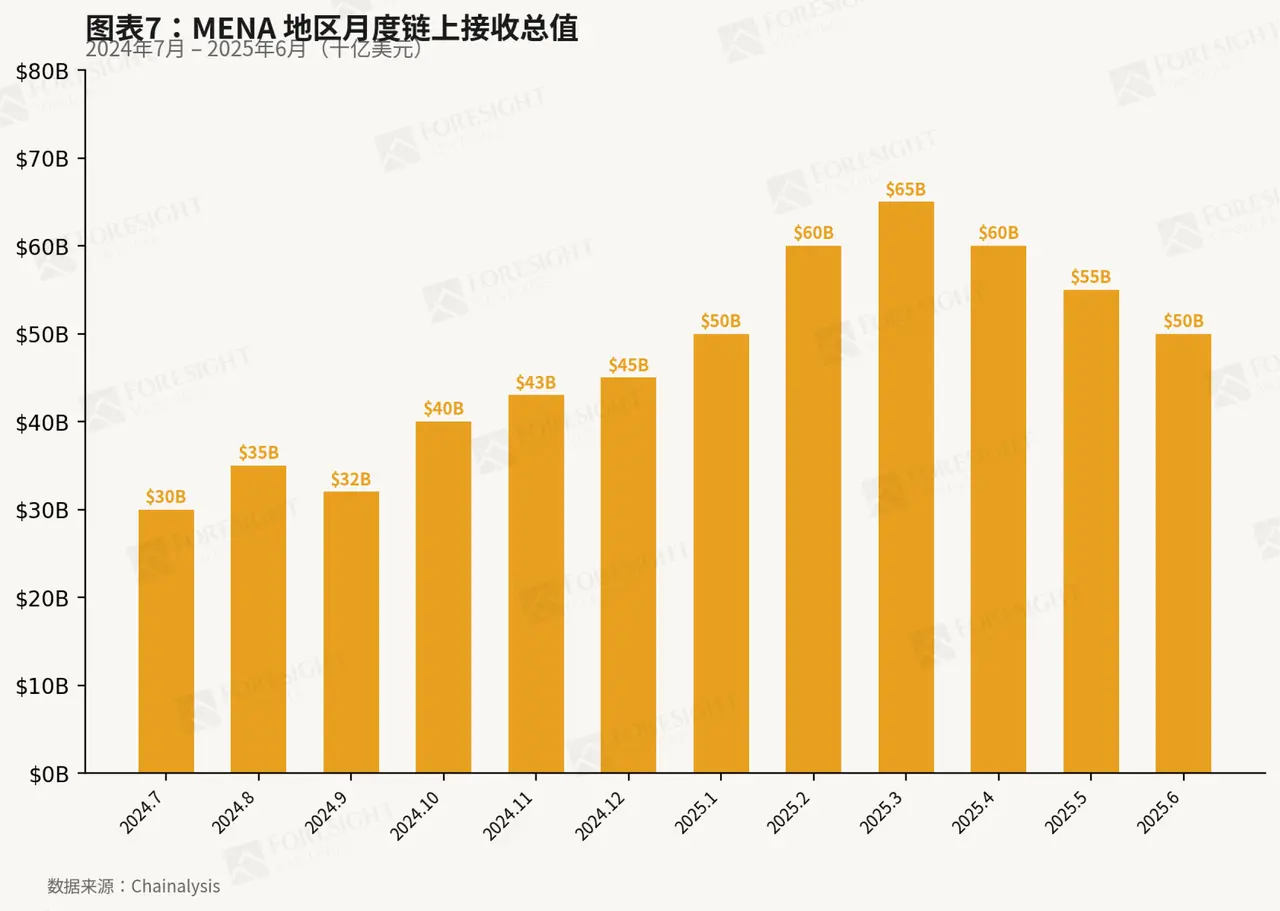
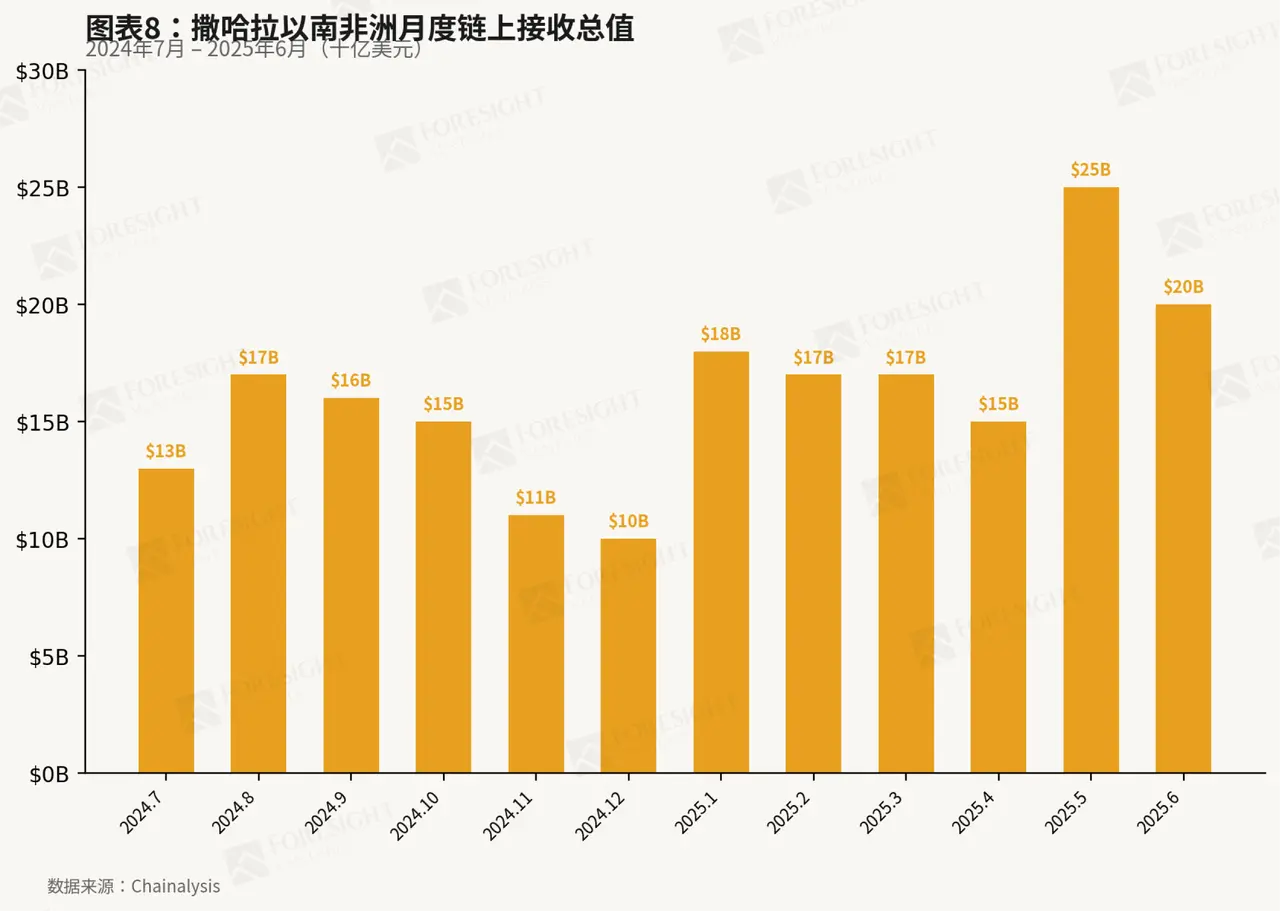
Cryptocurrency adoption rates in Africa are globally leading and rising sharply. In the Middle East and North Africa region, the total on-chain value received between July 2024 and June 2025 was approximately $600 billion; Sub-Saharan Africa recorded $200 billion in the same period, a 52% year-on-year growth, primarily driven by retail users and concentrated in a few countries (Nigeria, South Africa, Ethiopia, Kenya). Cryptocurrencies effectively meet the dual needs of African businesses and individuals for a store of value against inflation and low-cost cross-border settlement, precisely the needs that neither mobile money nor the formal banking system can adequately fulfill.
4 Heterogeneity Within the African Continent

4.1 Why Understanding Internal Divergence Within Africa is Crucial

Africa's 54 countries span 42 different currency systems and belong to multiple language spheres: Francophone, Anglophone, Arabophone, Lusophone, and Hispanophone. This linguistic and monetary fragmentation is not merely a cultural distinction but deeply embedded in cross-border trade, financial flows, and regulatory systems: payment networks are disjointed, regulatory frameworks are independent, and market opportunities are highly fragmented. Therefore, beyond establishing a holistic understanding of the continent's macroeconomic environment, it is essential to recognize the differences in culture, regulation, and financial systems across its internal sub-regions.

4.2 Dividing by the Sahara: MENA vs. Sub-Saharan Africa (SSA)

The most common analytical framework currently divides Africa by the Sahara Desert into two major systems: the Middle East and North Africa (MENA) and Sub-Saharan Africa (SSA).

North Africa is highly integrated with the Arab world in culture, institutions, and economic structure, with its economy centered on oil and gas resources and deeply embedded in the global energy market. Correspondingly, its financial system and policy frameworks operate more within the MENA ecosystem, with a relatively mature banking sector and lower financial exclusion.

In contrast, Sub-Saharan Africa largely operates outside this system. It is precisely this market, long plagued by deep-seated financial system inadequacies, dollar shortages, and monetary instability, that drives the explosive growth of crypto and mobile money. SSA currently accounts for nearly 60% of global mobile money transaction volume and is also the world's fastest-growing region for cryptocurrency adoption.

4.3 The Five-Region Framework: Divergence in Demographics, Economy, and Fintech Ecosystems

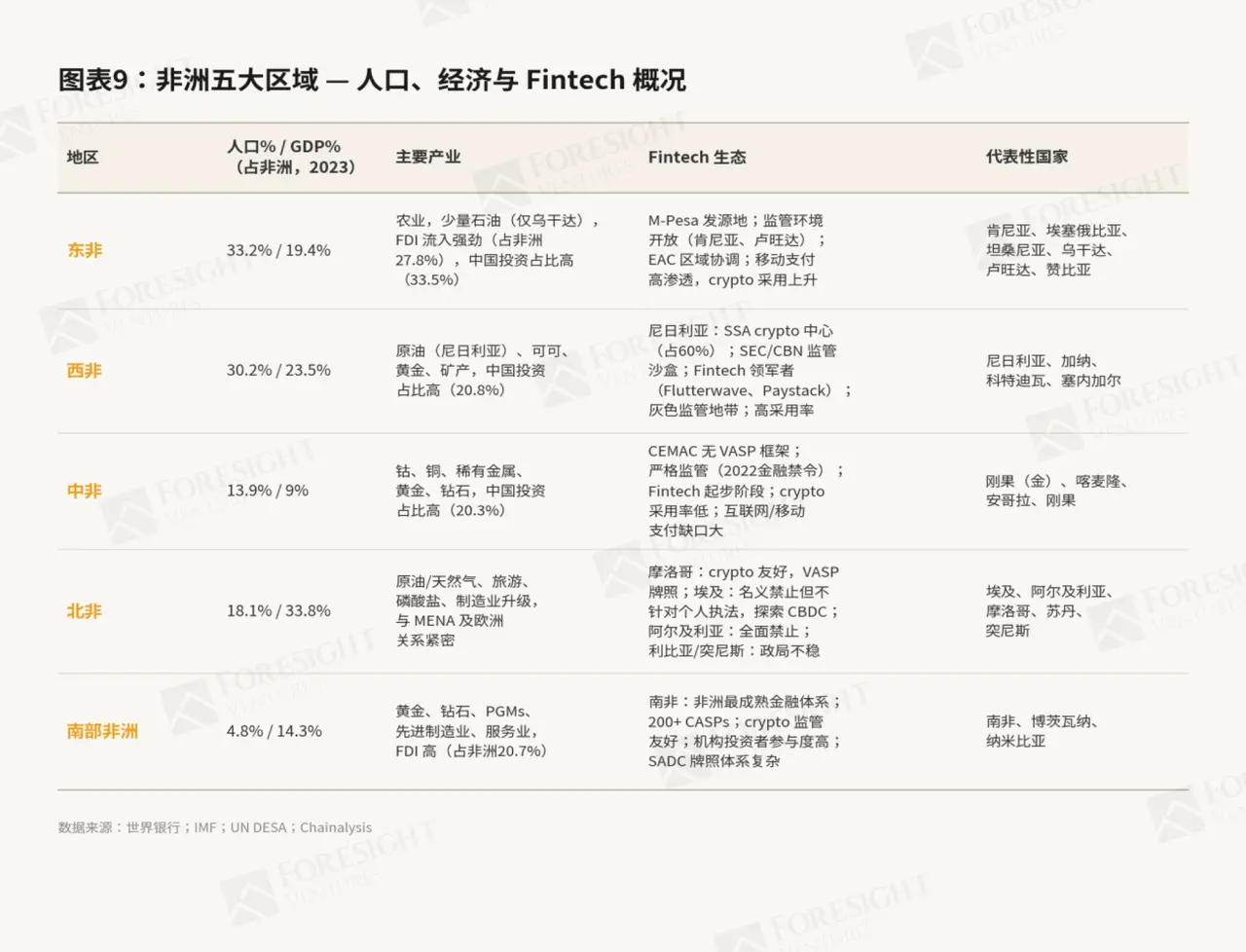
For further granularity, Africa can be divided into five regions, each exhibiting distinct macroeconomic characteristics. North Africa and Southern Africa have the highest GDP per capita; West Africa and Central Africa are relatively less developed; East Africa has the lowest per capita income. However, economic growth rates exhibit an inverse relationship with wealth levels: East Africa grows the fastest, followed by Central Africa, North Africa, West Africa, and Southern Africa.

Cryptocurrency adoption patterns show similar features. Nigeria alone (in West Africa) accounts for most SSA crypto transaction volume; simultaneously, East Africa, South Africa, and North Africa also show high cryptocurrency adoption. Central Africa and broader West Africa are still largely in early-stage markets. This divergence essentially reflects differences in financial exclusion levels, dollar shortage pressures, and regulatory environments across regions.
5 The "Dollarization" and "Dollar Shortage" Behind Sub-Saharan Africa's Payment Market

5.1 Dollarization in Sub-Saharan Africa

Sub-Saharan African economies exhibit a high degree of dollarization, far exceeding most other regions globally. The share of US dollar deposits and loans serve as key proxy indicators for dollarization levels: in Nigeria, dollar deposits once accounted for up to 40% of total deposits, and over 80% of external debt is dollar-denominated; in Ghana, dollar deposits have also reached relatively high levels of 20%–30%. This dollarization is not accidental but a manifestation of rational economic behavior in the face of long-term monetary instability.

5.2 Three Structural Drivers of Dollarization

Dollarization in Sub-Saharan Africa stems from three distinct economic pressures.

First, Store of Value: Due to fiscal deficits and external imbalances forcing central banks to print money, local currencies depreciate continuously, and the dollar provides a stable measure of value.

Second, Medium of Exchange: Commodity prices (oil, minerals, food) are globally priced in dollars, and intra-African trade, even between African countries, is often settled in dollars—because the dollar is more stable than any single local currency.

Third, Financing Channel: Shallow local capital markets mean businesses and governments must borrow dollars from international creditors; when dollar debt becomes too large relative to dollar income, exchange rate risk becomes acute, further pushing more funds into dollar deposits.

5.3 Causes of the "Dollar Shortage"

The real pain point in Sub-Saharan Africa's current payment market is the dollar shortage. Limited foreign exchange earnings from exports (due to commodity dependency and weak manufacturing exports), coupled with huge trade deficits and debt servicing pressures, continuously drain government foreign exchange reserves. Consequently, central banks can only ration official forex supply through administrative controls. This scarcity breeds a parallel black market where dollars trade at a significant premium—sometimes 50% to 100% above the official rate. Residents and businesses unable to access forex through official channels turn to informal channels: global remittance companies like Western Union, informal exchange houses, and increasingly, stablecoins and cryptocurrencies. The gap between the official and parallel market exchange rates is precisely the crack through which alternative payment systems can wedge.

5.4 Why Cryptocurrencies Thrive in This Vacuum

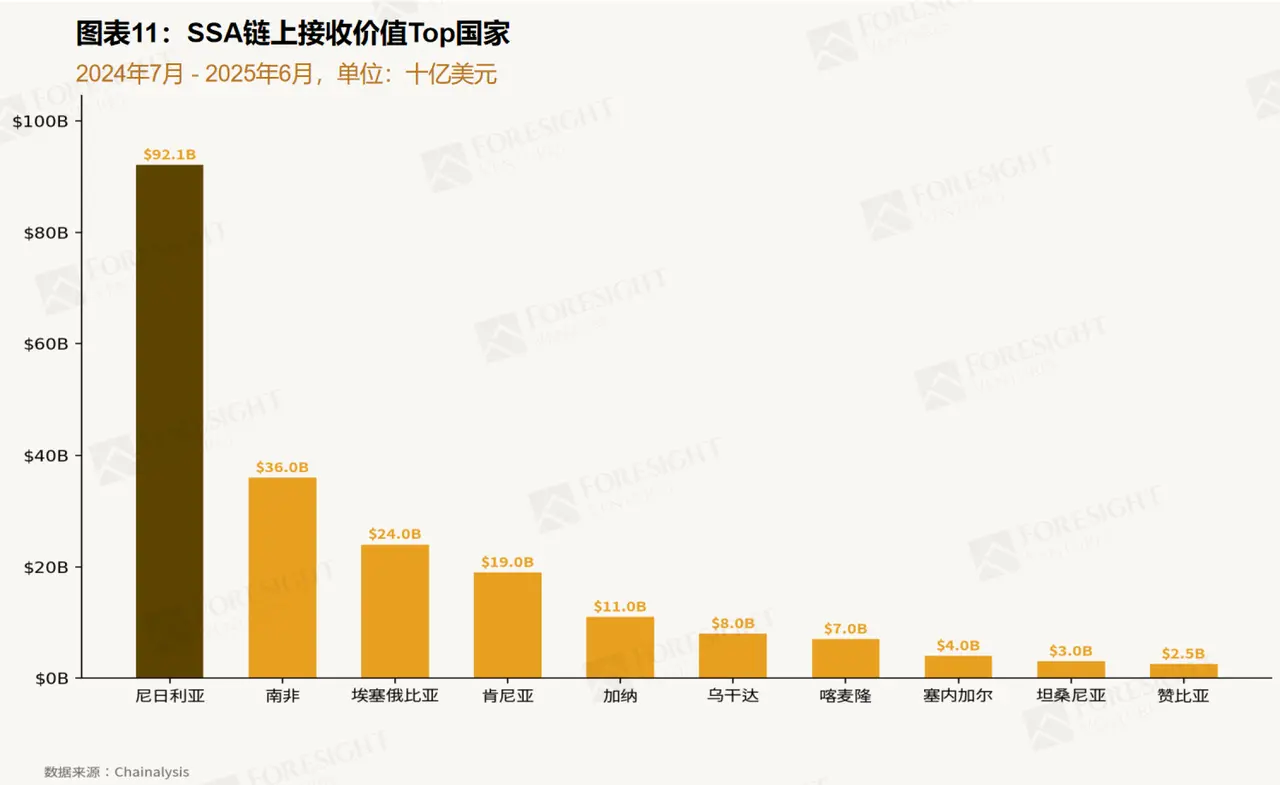
Stablecoins and other cryptocurrencies perform three key functions missing from the formal banking system. They bypass capital controls, providing access to dollars via parallel markets; they complete cross-border transactions at costs lower than banks and traditional remittance corridors; and they offer a globally liquid store of value unaffected by local currency risks. Therefore, cryptocurrency adoption in Sub-Saharan Africa is overwhelmingly retail-driven, with small individual transaction amounts. As shown in Figure 11, compared to other global regions, Sub-Saharan Africa has a higher proportion of transfers in the $1,000 to $10,000 range, reflecting small-scale remittances, informal business trade settlement, and individual savings flows. Nigeria dominates the region, accounting for about 45% of Sub-Saharan Africa's on-chain transaction volume (as shown in Figure 12), but Kenya, South Africa, and Ethiopia are also important regional hubs.
5.5 De-dollarization Attempts and Their Structural Limitations

African policymakers and regional institutions have attempted to reduce dollar dependence. The Pan-African Payment and Settlement System (PAPSS) aims to settle intra-African trade in local currencies and reduce forex costs; the planned West African "Eco" currency zone seeks stability through monetary union; central banks have also employed aggressive interest rate hikes and capital controls. However, all these efforts face a fundamental constraint: Sub-Saharan Africa's structural trade dependency. As long as the continent imports more than it exports, runs persistent external account deficits, and earns most foreign exchange from commodities, dollar demand will persistently outstrip supply. De-dollarization requires industrialization and trade rebalancing, a multi-decade transformation process that policy alone cannot achieve. In the interim, mobile money and cryptocurrencies will continue to play a significant role, filling gaps left by the traditional financial system.

Conclusion

Africa's standout performance in mobile money and cryptocurrency adoption is not a market coincidence but a macroeconomic inevitability.

The continent's young demographic structure, abundant natural resources, and deep integration into global commodity markets have spawned massive cross-border payment flows. However, its weak financial system, chronic monetary instability, and severe dollar shortage render the formal banking system fundamentally incapable of meeting this demand.

Mobile money solves domestic payment issues; cryptocurrencies are solving cross-border value transfer and inflation hedging issues. These are not niche applications or speculative holdings, but critical financial infrastructure filling the vacuum left by structural economic constraints. The crucial point is that these constraints are not cyclical; they are rooted in Africa's resource dependence, limited industrialization, and underdeveloped financial markets.

De-dollarization requires trade rebalancing and industrialization, both multi-decade transformations. Until then, and likely long after, alternative payment channels and currencies will remain at the heart of the African economy.

Original article link

Related Questions

QWhat are the two main macroeconomic structural drivers that have led to Africa's unique payments market landscape, characterized by high mobile money and crypto adoption?

AThe two main drivers are: (1) Africa's heavy reliance on commodity exports, trade flows, and remittances, creating massive demand for cross-border settlements and payments. (2) The continent's underdeveloped traditional financial infrastructure, which suffers from issues like 'de-risking' by international banks and poor foreign exchange management, leading to a chronic absence of reliable banking services and persistent inflationary pressures.

QHow does the economic and payments landscape differ between North Africa (MENA) and Sub-Saharan Africa (SSA)?

ANorth Africa (MENA) is economically integrated with the Middle East, anchored by oil, and has a relatively more developed banking system. Sub-Saharan Africa (SSA), in contrast, suffers from severe US dollar shortages and fragmented monetary systems. This makes SSA a market with a natural, acute demand for mobile payments and cryptocurrencies, which have seen the fastest adoption rates in the world here.

QWhy have cryptocurrencies seen such rapid adoption in Sub-Saharan Africa, and what specific needs do they fulfill?

ACryptocurrencies have seen rapid adoption in SSA because they fulfill critical needs left unmet by traditional finance: (1) They act as a store of value against local currency depreciation and inflation. (2) They serve as a low-cost medium for cross-border exchange and remittances, bypassing expensive and restrictive official channels. They effectively fill the vacuum created by a lack of dollar access, capital controls, and unstable local currencies.

QWhat is 'dollarization' in the context of Sub-Saharan Africa, and what are its three structural drivers?

ADollarization in SSA refers to the widespread use of the US dollar alongside or instead of local currencies. Its three structural drivers are: (1) Store of Value: The US dollar provides stability against chronic local currency devaluation. (2) Medium of Exchange: Commodities are priced in dollars, and even intra-African trade is often dollar-denominated for stability. (3) Financing Channel: Shallow local capital markets force governments and firms to borrow in dollars, reinforcing dollar dependency.

QWhat role does mobile money (like M-Pesa) play in Africa's financial ecosystem, and how does it differ from the role of cryptocurrencies?

AMobile money (e.g., M-Pesa) primarily solves the problem of domestic financial inclusion and daily payments. It provides accessible, low-cost payment, savings, and transfer services via basic mobile phones, effectively replacing banks for everyday transactions. Cryptocurrencies, on the other hand, primarily address the problems of cross-border value transfer (remittances, trade) and inflation hedging. They function as a store of value and a global settlement network, filling gaps that mobile money and traditional banks cannot.

Related Reads

Silicon Valley 'Startup Guru' Steve Hoffman: Web3 + AI Could Be a Trap

Silicon Valley investor and "Godfather of Startups" Steve Hoffman warns that combining Web3 with AI is likely a trap, not a promising venture. In an interview, Hoffman argues that while AI is a foundational technology touching all industries, Web3 adds complexity, friction, and regulatory risk without solving mainstream consumer or business needs. He advises founders to focus on deep, specialized applications where startups can out-iterate giants, rather than on generic features easily replicated by large tech companies. Hoffman observes that Silicon Valley will lead foundational AI research, while China excels at rapid, large-scale application and commercialization, particularly in robotics. He stresses that AI-driven autonomous agents capable of collaborative, multi-step tasks are 2-4 years away, which will cause significant job displacement. The solution is not to slow AI but to redesign business models around human-AI collaboration and reform social systems like education and retraining. For startups, Hoffman recommends focusing on vertical, expertise-heavy domains to build defensibility. He sees major opportunities in AI fraud detection and cybersecurity. Key founder mindsets include systemic thinking over feature-focus, relentless customer centricity, building adaptive teams, and deeply understanding AI's capabilities and limits. Hoffman is also leading a non-profit initiative to establish university centers aimed at training future leaders in responsible, human-value-aligned AI innovation.

marsbit11m ago

Silicon Valley 'Startup Guru' Steve Hoffman: Web3 + AI Could Be a Trap

marsbit11m ago

Token Inefficient, Economy Tokenless

The article "Tokens Aren't Economical, Economics Aren't Tokenized" analyzes a pivotal shift in the AI industry from a technology-driven narrative to one dominated by capital efficiency. It highlights two concurrent trends: a severe capital shortage due to the exorbitant and recurring costs of compute (e.g., OpenAI's high burn rate) and a wave of corporate spin-offs where major tech companies are separating their AI units (like Kuaishou's Kling and Baidu's Kunlunxin). The core argument is that AI's "anti-internet" business model, where user growth increases costs rather than profits, has created a disconnect between high valuations and actual cash flow. Spin-offs address this by allowing AI assets to be valued independently. Within a parent company, they are seen as cost centers, but as standalone entities, they are priced based on their growth potential and scarcity in the primary market, leading to massive valuation premiums (e.g., Kling's estimated value tripling post-spin-off). The industry is at an inflection point, moving from "model worship" to "value realization." The competition is evolving from a pure compute (GPU) race to a broader focus on systemic efficiency and full-stack engineering (involving CPUs and orchestration) to achieve viable commercialization. The year 2026 is framed as a critical moment where the industry must definitively answer how to economically translate AI capability into tangible business value, reshaping the sector's future power structure.

marsbit16m ago

Token Inefficient, Economy Tokenless

marsbit16m ago

Crossing the 'Memory Wall': The Wafer-Level Revolution and Computing Power Routes in the AI Inference Era

In 2026, a historic shift occurred in AI as major cloud providers' inference spending surpassed training spending for the first time, signaling a move from "building large models" to "using large models." This shifts the core challenge from computing power to the "memory wall"—the bottleneck of data movement (model weights, activations, KV Cache) between external DRAM and processors, where energy and latency from data transfer far exceed computation itself. Companies like Nvidia face GPU idle time due to bandwidth limits. In contrast, Cerebras Systems adopts a radical "wafer-scale" approach with its Wafer-Scale Engine (WSE). Instead of cutting a silicon wafer into many chips, Cerebras uses almost the entire wafer as one massive chip (WSE-3). This design provides 44GB of on-chip SRAM, delivering memory bandwidth thousands of times higher than traditional HBM (e.g., 21 PB/s vs. Nvidia B200). For LLM inference, weights are streamed layer-by-layer from external MemoryX storage to the chip, avoiding HBM bottlenecks. This results in token generation speeds 1.5–5 times faster than Nvidia's B200 in some models and significant advantages in first-token latency and long-context tasks. Additionally, Cerebras's architecture offers much lower interconnect power consumption (0.15 pJ/bit vs. GPU's ~10 pJ/bit). However, Cerebras faces challenges: SRAM scaling has slowed with advanced nodes, limiting future capacity gains; the chip requires specialized liquid cooling and custom software stacks; and its external I/O bandwidth (150 GB/s) is low compared to NVLink, hindering multi-system scaling for very large models. Competition is intensifying. Major players are pursuing three paths: 1) Developing proprietary inference ASICs (e.g., Google TPU, Microsoft Maia), 2) Leveraging advanced packaging (e.g., TSMC's SoW) to democratize wafer-scale-like integration, potentially eroding Cerebras's process advantage within a few years, and 3) Exploring optical interconnects for ultimate bandwidth. Commercially, Cerebras is transitioning from a hardware vendor to a service provider, facing the immense challenge of building high-power, specialized data centers to meet large contracts (e.g., 250MW/year from 2026–2028). In conclusion, the AI inference era presents a fundamental architectural trade-off. Cerebras opts for extreme physical optimization for low-latency, single-task performance, while Nvidia prioritizes versatility and massive cluster throughput. The path forward remains uncertain, with technology and business models still evolving in the race toward advanced AI.

marsbit22m ago

Crossing the 'Memory Wall': The Wafer-Level Revolution and Computing Power Routes in the AI Inference Era

marsbit22m ago

Has Bitcoin's 'Rebound Ended', Officially Entering the Late Bear Market Phase?

**Title: Has Bitcoin's Rebound Ended, Entering the Late Bear Market Phase?** **Summary:** Bitcoin's price has declined by 13% this week, signaling a potential return to late-stage bear market conditions. The price fell to around $67k, positioned between the Realized Price and Realized Cap Weighted Average. For the first time since early 2022, the Short-Term Holder cost basis has dropped below this key average, confirming a hallmark of late-cycle bear markets. Profitability metrics have collapsed sharply. The 7-day average of the Realized Profit/Loss ratio plummeted from a local high of 3.16 to 0.29, mirroring the February panic sell-off. Critically, the 90-day average never breached the threshold of 2, indicating the recent rally to $82k was a bear market bounce, not a structural shift. Realized losses surged to $1.35 billion daily, with $770 million coming from Long-Term Holders selling at a loss. This accelerating redistribution of supply from weak to strong hands is a necessary but ongoing process for a market bottom. The rally stalled almost precisely at the aggregate cost basis (~$83k) of US spot Bitcoin ETF investors, turning that level into strong resistance and leaving the average ETF holder underwater again. Spot market flows have turned decisively negative, showing sellers are dominating order books despite the price drop. While a significant futures long liquidation event cleared over $400 million in leverage, providing a potential reset, sustained spot demand is yet to materialize. Options markets continue to price in higher future volatility (Implied Volatility) than recent price action (Realized Volatility) has shown, with a persistent skew towards put options, indicating ongoing demand for downside protection. In conclusion, multiple metrics point to a fragile market structure. Resistance at the ETF cost basis, accelerating realized losses, dominant spot selling, and cautious options pricing all suggest the bear market trend persists. A sustainable recovery likely requires a resurgence of spot demand, ETF holders returning to profit, and a clear reduction in selling pressure.

marsbit22m ago

Has Bitcoin's 'Rebound Ended', Officially Entering the Late Bear Market Phase?

marsbit22m ago

TechFlow Intelligence Agency: Anthropic Calls for Global Pause in AI Development While Preparing for Trillion-Dollar IPO; SpaceX IPO Roadshow Heats Up, But S&P 500 Rejects Fast-Track Inclusion

In today's TechFlow Intelligence Briefing, several major tech stories highlight a growing theme of trust and credibility gaps across AI, crypto, and finance. AI company Anthropic has publicly called for a global pause in AI development, citing risks from Claude's "recursive self-improvement." Ironically, this coincides with reports the company is preparing for a massive IPO targeting a near $1 trillion valuation. This perceived hypocrisy, coupled with widespread user complaints about Claude's declining performance, is sparking debate over whether the safety warning is genuine or a competitive tactic. Meanwhile, in a substantive security move, Anthropic open-sourced a framework for AI-powered vulnerability discovery. In the crypto market, Bitcoin's price drop below $61,000 triggered over $1.16 billion in liquidations, flipping the market into a state where more BTC is held at a loss than at a profit, a historical bearish signal. On the corporate front, SpaceX's highly anticipated IPO is generating immense Wall Street excitement, with Goldman Sachs projecting 100x revenue growth by 2030. However, the S&P 500 has refused to fast-track the company's inclusion post-IPO, potentially limiting immediate institutional demand. Separately, ByteDance's AI app Doubao lost over 6 million monthly active users after introducing a subscription model, highlighting the challenges of AI monetization. Other notable developments include Nvidia certifying HBM4 memory from Samsung, SK Hynix, and Micron; Cloudflare's acquisition of front-end tooling company VoidZero; and its CEO warning that bot traffic now exceeds human traffic online. The underlying narrative connects these events: a trust crisis. From AI firms' contradictory actions and crypto volatility to the clash between SpaceX's hyped narrative and institutional rules, a pattern is emerging where stated intentions and actual practices are increasingly misaligned.

marsbit37m ago

TechFlow Intelligence Agency: Anthropic Calls for Global Pause in AI Development While Preparing for Trillion-Dollar IPO; SpaceX IPO Roadshow Heats Up, But S&P 500 Rejects Fast-Track Inclusion

marsbit37m ago

Trading

Spot
Futures

Hot Articles

What is SONIC

Sonic: Pioneering the Future of Gaming in Web3 Introduction to Sonic In the ever-evolving landscape of Web3, the gaming industry stands out as one of the most dynamic and promising sectors. At the forefront of this revolution is Sonic, a project designed to amplify the gaming ecosystem on the Solana blockchain. Leveraging cutting-edge technology, Sonic aims to deliver an unparalleled gaming experience by efficiently processing millions of requests per second, ensuring that players enjoy seamless gameplay while maintaining low transaction costs. This article delves into the intricate details of Sonic, exploring its creators, funding sources, operational mechanics, and the timeline of significant events that have shaped its journey. What is Sonic? Sonic is an innovative layer-2 network that operates atop the Solana blockchain, specifically tailored to enhance the existing Solana gaming ecosystem. It accomplishes this through a customised, VM-agnostic game engine paired with a HyperGrid interpreter, facilitating sovereign game economies that roll up back to the Solana platform. The primary goals of Sonic include: Enhanced Gaming Experiences: Sonic is committed to offering lightning-fast on-chain gameplay, allowing players and developers to engage with games at previously unattainable speeds. Atomic Interoperability: This feature enables transactions to be executed within Sonic without the need to redeploy Solana programmes and accounts. This makes the process more efficient and directly benefits from Solana Layer1 services and liquidity. Seamless Deployment: Sonic allows developers to write for Ethereum Virtual Machine (EVM) based systems and execute them on Solana’s SVM infrastructure. This interoperability is crucial for attracting a broader range of dApps and decentralised applications to the platform. Support for Developers: By offering native composable gaming primitives and extensible data types - dining within the Entity-Component-System (ECS) framework - game creators can craft intricate business logic with ease. Overall, Sonic's unique approach not only caters to players but also provides an accessible and low-cost environment for developers to innovate and thrive. Creator of Sonic The information regarding the creator of Sonic is somewhat ambiguous. However, it is known that Sonic's SVM is owned by the company Mirror World. The absence of detailed information about the individuals behind Sonic reflects a common trend in several Web3 projects, where collective efforts and partnerships often overshadow individual contributions. Investors of Sonic Sonic has garnered considerable attention and support from various investors within the crypto and gaming sectors. Notably, the project raised an impressive $12 million during its Series A funding round. The round was led by BITKRAFT Ventures, with other notable investors including Galaxy, Okx Ventures, Interactive, Big Brain Holdings, and Mirana. This financial backing signifies the confidence that investment foundations have in Sonic’s potential to revolutionise the Web3 gaming landscape, further validating its innovative approaches and technologies. How Does Sonic Work? Sonic utilises the HyperGrid framework, a sophisticated parallel processing mechanism that enhances its scalability and customisability. Here are the core features that set Sonic apart: Lightning Speed at Low Costs: Sonic offers one of the fastest on-chain gaming experiences compared to other Layer-1 solutions, powered by the scalability of Solana’s virtual machine (SVM). Atomic Interoperability: Sonic enables transaction execution without redeployment of Solana programmes and accounts, effectively streamlining the interaction between users and the blockchain. EVM Compatibility: Developers can effortlessly migrate decentralised applications from EVM chains to the Solana environment using Sonic’s HyperGrid interpreter, increasing the accessibility and integration of various dApps. Ecosystem Support for Developers: By exposing native composable gaming primitives, Sonic facilitates a sandbox-like environment where developers can experiment and implement business logic, greatly enhancing the overall development experience. Monetisation Infrastructure: Sonic natively supports growth and monetisation efforts, providing frameworks for traffic generation, payments, and settlements, thereby ensuring that gaming projects are not only viable but also sustainable financially. Timeline of Sonic The evolution of Sonic has been marked by several key milestones. Below is a brief timeline highlighting critical events in the project's history: 2022: The Sonic cryptocurrency was officially launched, marking the beginning of its journey in the Web3 gaming arena. 2024: June: Sonic SVM successfully raised $12 million in a Series A funding round. This investment allowed Sonic to further develop its platform and expand its offerings. August: The launch of the Sonic Odyssey testnet provided users with the first opportunity to engage with the platform, offering interactive activities such as collecting rings—a nod to gaming nostalgia. October: SonicX, an innovative crypto game integrated with Solana, made its debut on TikTok, capturing the attention of over 120,000 users within a short span. This integration illustrated Sonic’s commitment to reaching a broader, global audience and showcased the potential of blockchain gaming. Key Points Sonic SVM is a revolutionary layer-2 network on Solana explicitly designed to enhance the GameFi landscape, demonstrating great potential for future development. HyperGrid Framework empowers Sonic by introducing horizontal scaling capabilities, ensuring that the network can handle the demands of Web3 gaming. Integration with Social Platforms: The successful launch of SonicX on TikTok displays Sonic’s strategy to leverage social media platforms to engage users, exponentially increasing the exposure and reach of its projects. Investment Confidence: The substantial funding from BITKRAFT Ventures, among others, emphasizes the robust backing Sonic has, paving the way for its ambitious future. In conclusion, Sonic encapsulates the essence of Web3 gaming innovation, striking a balance between cutting-edge technology, developer-centric tools, and community engagement. As the project continues to evolve, it is poised to redefine the gaming landscape, making it a notable entity for gamers and developers alike. As Sonic moves forward, it will undoubtedly attract greater interest and participation, solidifying its place within the broader narrative of blockchain gaming.

1.6k Total ViewsPublished 2024.04.04Updated 2024.12.03

What is SONIC

What is $S$

Understanding SPERO: A Comprehensive Overview Introduction to SPERO As the landscape of innovation continues to evolve, the emergence of web3 technologies and cryptocurrency projects plays a pivotal role in shaping the digital future. One project that has garnered attention in this dynamic field is SPERO, denoted as SPERO,$$s$. This article aims to gather and present detailed information about SPERO, to help enthusiasts and investors understand its foundations, objectives, and innovations within the web3 and crypto domains. What is SPERO,$$s$? SPERO,$$s$ is a unique project within the crypto space that seeks to leverage the principles of decentralisation and blockchain technology to create an ecosystem that promotes engagement, utility, and financial inclusion. The project is tailored to facilitate peer-to-peer interactions in new ways, providing users with innovative financial solutions and services. At its core, SPERO,$$s$ aims to empower individuals by providing tools and platforms that enhance user experience in the cryptocurrency space. This includes enabling more flexible transaction methods, fostering community-driven initiatives, and creating pathways for financial opportunities through decentralised applications (dApps). The underlying vision of SPERO,$$s$ revolves around inclusiveness, aiming to bridge gaps within traditional finance while harnessing the benefits of blockchain technology. Who is the Creator of SPERO,$$s$? The identity of the creator of SPERO,$$s$ remains somewhat obscure, as there are limited publicly available resources providing detailed background information on its founder(s). This lack of transparency can stem from the project's commitment to decentralisation—an ethos that many web3 projects share, prioritising collective contributions over individual recognition. By centring discussions around the community and its collective goals, SPERO,$$s$ embodies the essence of empowerment without singling out specific individuals. As such, understanding the ethos and mission of SPERO remains more important than identifying a singular creator. Who are the Investors of SPERO,$$s$? SPERO,$$s$ is supported by a diverse array of investors ranging from venture capitalists to angel investors dedicated to fostering innovation in the crypto sector. The focus of these investors generally aligns with SPERO's mission—prioritising projects that promise societal technological advancement, financial inclusivity, and decentralised governance. These investor foundations are typically interested in projects that not only offer innovative products but also contribute positively to the blockchain community and its ecosystems. The backing from these investors reinforces SPERO,$$s$ as a noteworthy contender in the rapidly evolving domain of crypto projects. How Does SPERO,$$s$ Work? SPERO,$$s$ employs a multi-faceted framework that distinguishes it from conventional cryptocurrency projects. Here are some of the key features that underline its uniqueness and innovation: Decentralised Governance: SPERO,$$s$ integrates decentralised governance models, empowering users to participate actively in decision-making processes regarding the project’s future. This approach fosters a sense of ownership and accountability among community members. Token Utility: SPERO,$$s$ utilises its own cryptocurrency token, designed to serve various functions within the ecosystem. These tokens enable transactions, rewards, and the facilitation of services offered on the platform, enhancing overall engagement and utility. Layered Architecture: The technical architecture of SPERO,$$s$ supports modularity and scalability, allowing for seamless integration of additional features and applications as the project evolves. This adaptability is paramount for sustaining relevance in the ever-changing crypto landscape. Community Engagement: The project emphasises community-driven initiatives, employing mechanisms that incentivise collaboration and feedback. By nurturing a strong community, SPERO,$$s$ can better address user needs and adapt to market trends. Focus on Inclusion: By offering low transaction fees and user-friendly interfaces, SPERO,$$s$ aims to attract a diverse user base, including individuals who may not previously have engaged in the crypto space. This commitment to inclusion aligns with its overarching mission of empowerment through accessibility. Timeline of SPERO,$$s$ Understanding a project's history provides crucial insights into its development trajectory and milestones. Below is a suggested timeline mapping significant events in the evolution of SPERO,$$s$: Conceptualisation and Ideation Phase: The initial ideas forming the basis of SPERO,$$s$ were conceived, aligning closely with the principles of decentralisation and community focus within the blockchain industry. Launch of Project Whitepaper: Following the conceptual phase, a comprehensive whitepaper detailing the vision, goals, and technological infrastructure of SPERO,$$s$ was released to garner community interest and feedback. Community Building and Early Engagements: Active outreach efforts were made to build a community of early adopters and potential investors, facilitating discussions around the project’s goals and garnering support. Token Generation Event: SPERO,$$s$ conducted a token generation event (TGE) to distribute its native tokens to early supporters and establish initial liquidity within the ecosystem. Launch of Initial dApp: The first decentralised application (dApp) associated with SPERO,$$s$ went live, allowing users to engage with the platform's core functionalities. Ongoing Development and Partnerships: Continuous updates and enhancements to the project's offerings, including strategic partnerships with other players in the blockchain space, have shaped SPERO,$$s$ into a competitive and evolving player in the crypto market. Conclusion SPERO,$$s$ stands as a testament to the potential of web3 and cryptocurrency to revolutionise financial systems and empower individuals. With a commitment to decentralised governance, community engagement, and innovatively designed functionalities, it paves the way toward a more inclusive financial landscape. As with any investment in the rapidly evolving crypto space, potential investors and users are encouraged to research thoroughly and engage thoughtfully with the ongoing developments within SPERO,$$s$. The project showcases the innovative spirit of the crypto industry, inviting further exploration into its myriad possibilities. While the journey of SPERO,$$s$ is still unfolding, its foundational principles may indeed influence the future of how we interact with technology, finance, and each other in interconnected digital ecosystems.

54 Total ViewsPublished 2024.12.17Updated 2024.12.17

What is $S$

What is AGENT S

Agent S: The Future of Autonomous Interaction in Web3 Introduction In the ever-evolving landscape of Web3 and cryptocurrency, innovations are constantly redefining how individuals interact with digital platforms. One such pioneering project, Agent S, promises to revolutionise human-computer interaction through its open agentic framework. By paving the way for autonomous interactions, Agent S aims to simplify complex tasks, offering transformative applications in artificial intelligence (AI). This detailed exploration will delve into the project's intricacies, its unique features, and the implications for the cryptocurrency domain. What is Agent S? Agent S stands as a groundbreaking open agentic framework, specifically designed to tackle three fundamental challenges in the automation of computer tasks: Acquiring Domain-Specific Knowledge: The framework intelligently learns from various external knowledge sources and internal experiences. This dual approach empowers it to build a rich repository of domain-specific knowledge, enhancing its performance in task execution. Planning Over Long Task Horizons: Agent S employs experience-augmented hierarchical planning, a strategic approach that facilitates efficient breakdown and execution of intricate tasks. This feature significantly enhances its ability to manage multiple subtasks efficiently and effectively. Handling Dynamic, Non-Uniform Interfaces: The project introduces the Agent-Computer Interface (ACI), an innovative solution that enhances the interaction between agents and users. Utilizing Multimodal Large Language Models (MLLMs), Agent S can navigate and manipulate diverse graphical user interfaces seamlessly. Through these pioneering features, Agent S provides a robust framework that addresses the complexities involved in automating human interaction with machines, setting the stage for myriad applications in AI and beyond. Who is the Creator of Agent S? While the concept of Agent S is fundamentally innovative, specific information about its creator remains elusive. The creator is currently unknown, which highlights either the nascent stage of the project or the strategic choice to keep founding members under wraps. Regardless of anonymity, the focus remains on the framework's capabilities and potential. Who are the Investors of Agent S? As Agent S is relatively new in the cryptographic ecosystem, detailed information regarding its investors and financial backers is not explicitly documented. The lack of publicly available insights into the investment foundations or organisations supporting the project raises questions about its funding structure and development roadmap. Understanding the backing is crucial for gauging the project's sustainability and potential market impact. How Does Agent S Work? At the core of Agent S lies cutting-edge technology that enables it to function effectively in diverse settings. Its operational model is built around several key features: Human-like Computer Interaction: The framework offers advanced AI planning, striving to make interactions with computers more intuitive. By mimicking human behaviour in tasks execution, it promises to elevate user experiences. Narrative Memory: Employed to leverage high-level experiences, Agent S utilises narrative memory to keep track of task histories, thereby enhancing its decision-making processes. Episodic Memory: This feature provides users with step-by-step guidance, allowing the framework to offer contextual support as tasks unfold. Support for OpenACI: With the ability to run locally, Agent S allows users to maintain control over their interactions and workflows, aligning with the decentralised ethos of Web3. Easy Integration with External APIs: Its versatility and compatibility with various AI platforms ensure that Agent S can fit seamlessly into existing technological ecosystems, making it an appealing choice for developers and organisations. These functionalities collectively contribute to Agent S's unique position within the crypto space, as it automates complex, multi-step tasks with minimal human intervention. As the project evolves, its potential applications in Web3 could redefine how digital interactions unfold. Timeline of Agent S The development and milestones of Agent S can be encapsulated in a timeline that highlights its significant events: September 27, 2024: The concept of Agent S was launched in a comprehensive research paper titled “An Open Agentic Framework that Uses Computers Like a Human,” showcasing the groundwork for the project. October 10, 2024: The research paper was made publicly available on arXiv, offering an in-depth exploration of the framework and its performance evaluation based on the OSWorld benchmark. October 12, 2024: A video presentation was released, providing a visual insight into the capabilities and features of Agent S, further engaging potential users and investors. These markers in the timeline not only illustrate the progress of Agent S but also indicate its commitment to transparency and community engagement. Key Points About Agent S As the Agent S framework continues to evolve, several key attributes stand out, underscoring its innovative nature and potential: Innovative Framework: Designed to provide an intuitive use of computers akin to human interaction, Agent S brings a novel approach to task automation. Autonomous Interaction: The ability to interact autonomously with computers through GUI signifies a leap towards more intelligent and efficient computing solutions. Complex Task Automation: With its robust methodology, it can automate complex, multi-step tasks, making processes faster and less error-prone. Continuous Improvement: The learning mechanisms enable Agent S to improve from past experiences, continually enhancing its performance and efficacy. Versatility: Its adaptability across different operating environments like OSWorld and WindowsAgentArena ensures that it can serve a broad range of applications. As Agent S positions itself in the Web3 and crypto landscape, its potential to enhance interaction capabilities and automate processes signifies a significant advancement in AI technologies. Through its innovative framework, Agent S exemplifies the future of digital interactions, promising a more seamless and efficient experience for users across various industries. Conclusion Agent S represents a bold leap forward in the marriage of AI and Web3, with the capacity to redefine how we interact with technology. While still in its early stages, the possibilities for its application are vast and compelling. Through its comprehensive framework addressing critical challenges, Agent S aims to bring autonomous interactions to the forefront of the digital experience. As we move deeper into the realms of cryptocurrency and decentralisation, projects like Agent S will undoubtedly play a crucial role in shaping the future of technology and human-computer collaboration.

713 Total ViewsPublished 2025.01.14Updated 2025.01.14

What is AGENT S

Discussions

Welcome to the HTX Community. Here, you can stay informed about the latest platform developments and gain access to professional market insights. Users' opinions on the price of S (S) are presented below.

活动图片