SpaceX’s $75 Billion IPO Looms Over Bitcoin— Is A Liquidity Drain Coming?

bitcoinistPublished on 2026-06-10Last updated on 2026-06-10

Abstract

SpaceX's upcoming $75 billion IPO could draw significant capital away from Bitcoin and the wider cryptocurrency market, according to analysts and industry executives. The IPO's substantial retail allocation may prompt investors to reallocate funds from high-risk assets like crypto towards the equity offering. Market observers note that Bitcoin has already lost some appeal, facing competition from sectors like AI and dealing with billions in ETF outflows. With more major IPOs expected and a cautious interest rate outlook, the crypto market may struggle to find strong supportive catalysts in the near term.

Bitcoin (BTC) and the wider cryptocurrency market could face additional selling pressure this week as Elon Musk’s SpaceX gears up for a $75 billion initial public offering (IPO), with the event expected to drain some of the liquidity that has supported the market’s leading crypto above $60,000.

Analysts Warn Crypto Could Feel The Hit

According to Reuters, the rocket maker has reserved as much as 30% of the initial public offering, or $22.5 billion worth of shares, specifically for retail investors.

Analysts and crypto executives cited in the report said this setup can encourage a shift in how investors manage their cash, effectively rotating funds away from higher-risk assets such as Bitcoin.

Spencer Hallarn, global head of over-the-counter trading at GSR, a crypto trading firm and liquidity provider, put it plainly: “Crypto is a funding currency for a lot of this,” adding that the IPO requires $75 billion that “has got to come from somewhere.”

He argued that an IPO tied to “one of the biggest names in tech” would be likely to pull capital out of crypto, at least at the start, because both markets compete for the same kind of speculative spending.

Thomas Puech, CEO of INDIGO, another crypto trading firm, offered a similar view, stating that AI has become the “sexier” trade compared with Bitcoin and crypto, and that investor attention is leaning toward AI-related opportunities rather than crypto.

Market analysts also highlighted that Bitcoin itself has lost some of its appeal for investors, which may compound the effect of the SpaceX story.

David Morrison, senior market analyst at Trade Nation, said in a research note that “Bitcoin has lost its luster and novelty for many investors,” and that the hype around SpaceX is not helping.

IPO Pipeline And Rate-Fear Cloud Bitcoin Outlook

According to Sui Chung, CEO of CF Benchmarks, which provides the index for several crypto exchange-traded funds (ETFs), outflows from these funds surged to more than $2 billion in May.

This has already taken its toll on Bitcoin and the wider crypto market, with BTC currently trading at around $62,136 — about 50% below its all-time high of $126,000, according to CoinGecko data.

Chung said the money leaving crypto is likely going toward equities, though he cautioned that it cannot be assumed it will flow directly into SpaceX. Still, he indicated that at least some of the capital is being redirected into the broader equity market.

With additional high-profile IPOs expected later and more cautious expectations building around interest rates, the report argues that crypto may struggle to recover quickly. Hallarn suggested it is difficult to see meaningful tailwinds soon, adding that the environment does not look particularly supportive.

The 1-D chart shows BTC’s recovery above $62,000 after crashing to its lowest level since 2024 last week. Source: BTCUSDT on TradingView.com

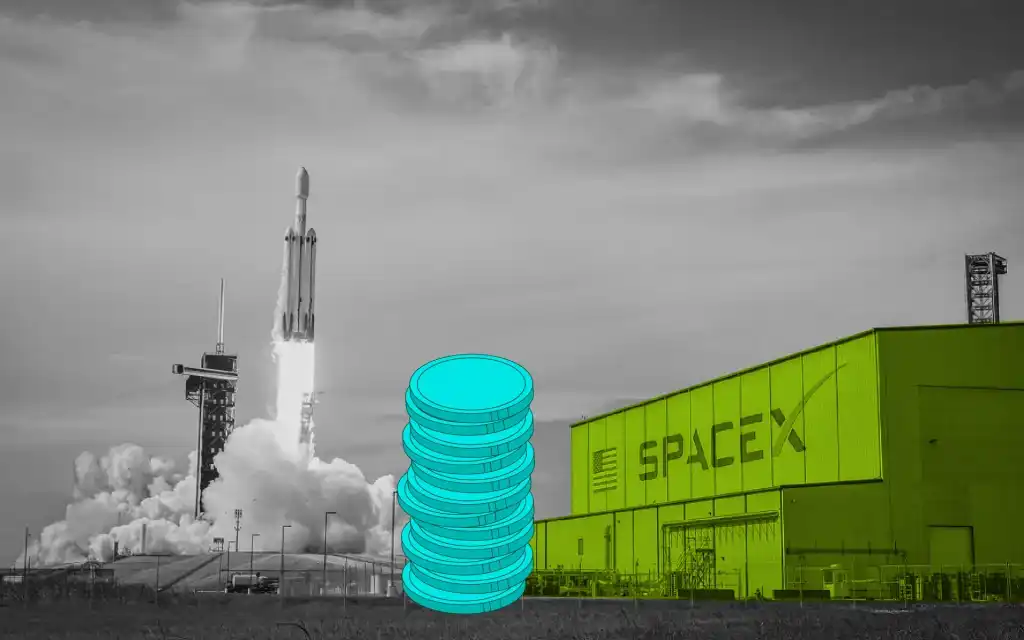
Featured image created with OpenArt; chart from TradingView.com

Related Questions

QWhat is the main concern raised in the article about SpaceX's upcoming IPO and the Bitcoin market?

AThe main concern is that SpaceX's $75 billion IPO could drain liquidity from the cryptocurrency market, potentially putting additional selling pressure on Bitcoin as investors rotate funds away from higher-risk assets like crypto to participate in the IPO.

QAccording to the analysts cited, why might the SpaceX IPO specifically attract capital away from cryptocurrencies?

AAnalysts argue that the SpaceX IPO, tied to "one of the biggest names in tech," competes for the same kind of speculative investment dollars as crypto. It's seen as a major event likely to pull capital from crypto, at least initially, because both markets appeal to similar investor appetites for high-growth opportunities.

QBesides the SpaceX IPO, what other factor does the article mention as contributing to Bitcoin's challenging outlook?

AThe article mentions that cautious expectations around future interest rates and a pipeline of other high-profile IPOs expected later are also factors that may hinder crypto's quick recovery, creating an unsupportive environment.

QWhat evidence does the article provide that money is already flowing out of the crypto market?

AThe article cites Sui Chung, CEO of CF Benchmarks, who noted that outflows from crypto exchange-traded funds (ETFs) surged to more than $2 billion in May. Additionally, Bitcoin's price was trading around $62,136, which is about 50% below its all-time high.

QAccording to Thomas Puech of INDIGO, how has investor focus shifted relative to Bitcoin and crypto?

AThomas Puech stated that Artificial Intelligence (AI) has become the "sexier" trade compared to Bitcoin and crypto, and that investor attention is leaning more toward AI-related opportunities rather than cryptocurrencies.

Related Reads

CFTC Proposes New Rules for Prediction Markets, Redefining Which Events and Who Can Participate

The U.S. Commodity Futures Trading Commission (CFTC) has proposed new rules to establish a regulatory framework for prediction markets, aiming to define which event contracts can be traded and who can participate. The 267-page proposal seeks to amend regulations to create a structured review process for "event contracts." The core goal is to determine whether contracts involving sensitive topics like terrorism, assassination, war, or illegal activities are contrary to the "public interest." The CFTC's approach is not an outright ban but a case-by-case assessment, focusing on whether a contract predicts harmful acts themselves or merely their commercial or risk-related impacts. The proposal suggests that most mainstream sports prediction markets—based on final scores, winners, or season outcomes—may be permissible as they provide price discovery and informational value. However, markets on easily manipulated granular events (e.g., player injuries, specific referee calls) or those encouraging harm/cheating would face stricter scrutiny. A primary regulatory target is insider trading and market manipulation, where individuals with non-public knowledge or influence over an event's outcome could unfairly profit. Recent alleged incidents involving military personnel, former politicians, and corporate insiders highlight this risk. The move clarifies federal oversight but does not end the debate. State regulators and gambling associations argue that many prediction markets, especially on sports, constitute gambling and should fall under state, not federal, jurisdiction. This sets up a potential conflict over regulatory authority. Overall, the CFTC's proposal signals a shift for prediction markets from rapid, less-regulated expansion toward a more institutionalized, rules-based model resembling traditional financial markets. Growth will increasingly depend on demonstrating market fairness, transparent settlement, and controlled risks.

Odaily星球日报2m ago

CFTC Proposes New Rules for Prediction Markets, Redefining Which Events and Who Can Participate

Odaily星球日报2m ago

U.S. Stock Market Trend: Dow Plunges Below 50,000 Points, Strongest Earnings Can't Save Oracle

U.S. stocks fell sharply on Wednesday, June 10th, with the Dow Jones Industrial Average dropping 1.87% to close below the 50,000 point mark. The sell-off was driven by a dual shock: hotter-than-expected inflation data and a significant escalation in U.S.-Iran military conflict, which pushed the VIX fear index above 20. While the May CPI matched expectations, afternoon news of retaliatory strikes between the U.S. and Iran triggered a broad market retreat, particularly hitting industrial and tech sectors. The prospect of renewed inflationary pressure from rising oil prices has fully priced in a Fed rate hike by December, shifting the monetary policy narrative. Concurrently, the AI investment theme faced a severe reality check. Super Micro Computer's stock plummeted nearly 28% after announcing a major fundraising plan to fulfill orders, highlighting the massive capital demands of the AI infrastructure build-out. This was underscored by Oracle's post-market reaction: despite posting a strong quarterly earnings beat and a massive $850 billion increase in remaining performance obligations (RPO), its stock fell due to negative free cash flow and a new $40 billion financing plan for data centers. The market's pivot towards defensive plays like Coca-Cola and TJX Companies, which hit record highs, signals a shift from growth to safety. Analysts view the downturn as a convergence of an "AI credit cycle"—where the market questions the funding for massive capital expenditures—and a "geopolitical inflation cycle." While a technical rebound is possible, the structural change is that AI giants are now funding growth through significant equity and debt, forcing a re-pricing of risk and valuation anchors.

marsbit52m ago

U.S. Stock Market Trend: Dow Plunges Below 50,000 Points, Strongest Earnings Can't Save Oracle

marsbit52m ago

Trading

Spot
Futures

Hot Articles

What is $BITCOIN

DIGITAL GOLD ($BITCOIN): A Comprehensive Analysis Introduction to DIGITAL GOLD ($BITCOIN) DIGITAL GOLD ($BITCOIN) is a blockchain-based project operating on the Solana network, which aims to combine the characteristics of traditional precious metals with the innovation of decentralized technologies. While it shares a name with Bitcoin, often referred to as “digital gold” due to its perception as a store of value, DIGITAL GOLD is a separate token designed to create a unique ecosystem within the Web3 landscape. Its goal is to position itself as a viable alternative digital asset, although specifics regarding its applications and functionalities are still developing. What is DIGITAL GOLD ($BITCOIN)? DIGITAL GOLD ($BITCOIN) is a cryptocurrency token explicitly designed for use on the Solana blockchain. In contrast to Bitcoin, which provides a widely recognized value storage role, this token appears to focus on broader applications and characteristics. Notable aspects include: Blockchain Infrastructure: The token is built on the Solana blockchain, known for its capacity to handle high-speed and low-cost transactions. Supply Dynamics: DIGITAL GOLD has a maximum supply capped at 100 quadrillion tokens (100P $BITCOIN), although details regarding its circulating supply are currently undisclosed. Utility: While precise functionalities are not explicitly outlined, there are indications that the token could be utilized for various applications, potentially involving decentralized applications (dApps) or asset tokenization strategies. Who is the Creator of DIGITAL GOLD ($BITCOIN)? At present, the identity of the creators and development team behind DIGITAL GOLD ($BITCOIN) remains unknown. This situation is typical among many innovative projects within the blockchain space, particularly those aligning with decentralized finance and meme coin phenomena. While such anonymity may foster a community-driven culture, it intensifies concerns about governance and accountability. Who are the Investors of DIGITAL GOLD ($BITCOIN)? The available information indicates that DIGITAL GOLD ($BITCOIN) does not have any known institutional backers or prominent venture capital investments. The project seems to operate on a peer-to-peer model focused on community support and adoption rather than traditional funding routes. Its activity and liquidity are primarily situated on decentralized exchanges (DEXs), such as PumpSwap, rather than established centralized trading platforms, further highlighting its grassroots approach. How DIGITAL GOLD ($BITCOIN) Works The operational mechanics of DIGITAL GOLD ($BITCOIN) can be elaborated on based on its blockchain design and network attributes: Consensus Mechanism: By leveraging Solana’s unique proof-of-history (PoH) combined with a proof-of-stake (PoS) model, the project ensures efficient transaction validation contributing to the network's high performance. Tokenomics: While specific deflationary mechanisms have not been extensively detailed, the vast maximum token supply implies that it may cater to microtransactions or niche use cases that are still to be defined. Interoperability: There exists the potential for integration with Solana’s broader ecosystem, including various decentralized finance (DeFi) platforms. However, the details regarding specific integrations remain unspecified. Timeline of Key Events Here is a timeline that highlights significant milestones concerning DIGITAL GOLD ($BITCOIN): 2023: The initial deployment of the token occurs on the Solana blockchain, marked by its contract address. 2024: DIGITAL GOLD gains visibility as it becomes available for trading on decentralized exchanges like PumpSwap, allowing users to trade it against SOL. 2025: The project witnesses sporadic trading activity and potential interest in community-led engagements, although no noteworthy partnerships or technical advancements have been documented as of yet. Critical Analysis Strengths Scalability: The underlying Solana infrastructure supports high transaction volumes, which could enhance the utility of $BITCOIN in various transaction scenarios. Accessibility: The potential low trading price per token could attract retail investors, facilitating wider participation due to fractional ownership opportunities. Risks Lack of Transparency: The absence of publicly known backers, developers, or an audit process may yield skepticism regarding the project's sustainability and trustworthiness. Market Volatility: The trading activity is heavily reliant on speculative behavior, which can result in significant price volatility and uncertainty for investors. Conclusion DIGITAL GOLD ($BITCOIN) emerges as an intriguing yet ambiguous project within the rapidly evolving Solana ecosystem. While it attempts to leverage the “digital gold” narrative, its departure from Bitcoin's established role as a store of value underscores the need for a clearer differentiation of its intended utility and governance structure. Future acceptance and adoption will likely depend on addressing the current opacity and defining its operational and economic strategies more explicitly. Note: This report encompasses synthesised information available as of October 2023, and developments may have transpired beyond the research period.

363 Total ViewsPublished 2025.05.13Updated 2025.05.13

What is $BITCOIN

Discussions

Welcome to the HTX Community. Here, you can stay informed about the latest platform developments and gain access to professional market insights. Users' opinions on the price of BTC (BTC) are presented below.

活动图片