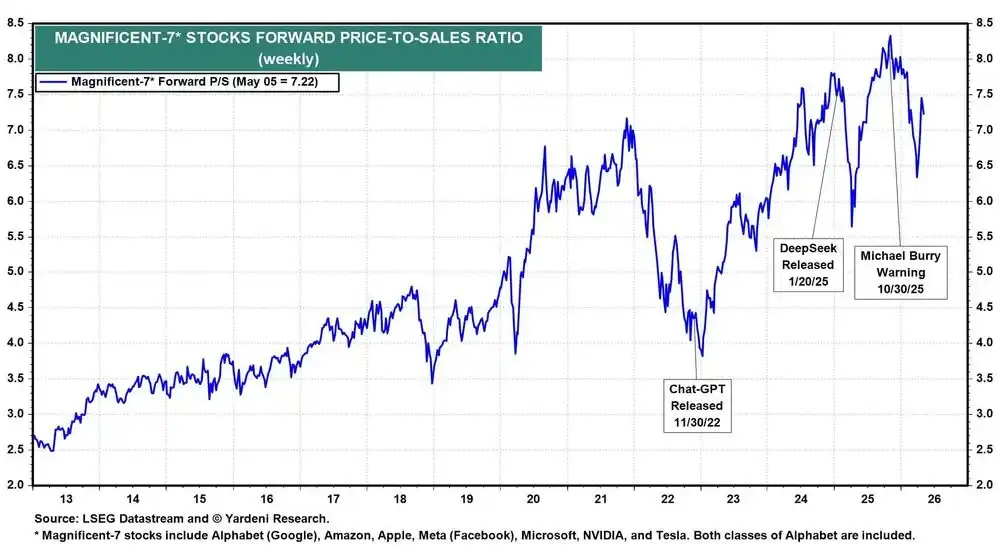
Since ChatGPT ignited the artificial intelligence wave at the end of 2022, the market's investment logic for AI has consistently revolved around the "Magnificent Seven," especially those "hyperscale" companies dominating cloud computing infrastructure. However, the debut of China's DeepSeek in early 2025 and the subsequent intense debate over the effectiveness of AI capital expenditures are quietly altering this landscape. Investors are beginning to realize that the real "gold rush" may not be confined to those giants, but lies deeper within the industrial chain that provides them with "shovels" and "tools."
From Doubts of an "Arms Race" to Validation by Performance
In the second half of last year, concerns about the return on investment for AI once permeated the market. Prominent investor Michael Burry publicly warned that the massive AI capital expenditures by hyperscale companies might not generate expected profits for various reasons, heightening fears of an AI bubble. At that time, the stock prices of the "Magnificent Seven" were under pressure, and market sentiment turned cautious.
But the earnings season this April provided a strong rebuttal. The cloud computing revenues of hyperscale companies continued to exceed expectations, and robust demand for "computing power" seemed to be justifying all the previous massive investments. In my professional experience, I have observed that shifts in market sentiment often occur after the release of key data. This time was no exception; the "hard data" from earnings quickly quelled the debate over whether capital expenditures were excessive.
The "Certainty" Dividend of Capital Expenditures: The Explosion of the Semiconductor Industry Chain
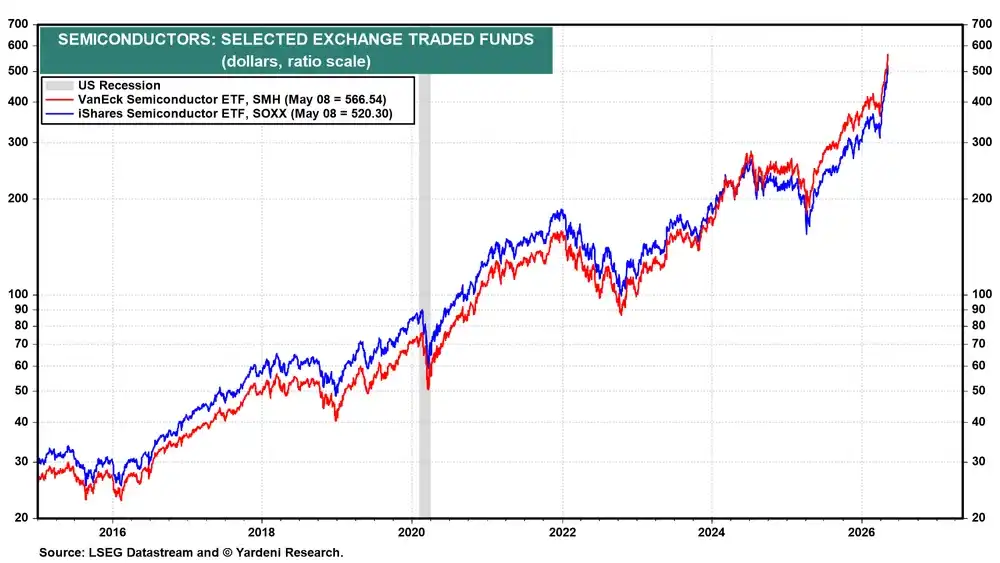
Although discussions continue about whether AI capital expenditures will ultimately bring huge profits to the hyperscale companies themselves, a more deterministic logic has emerged: Regardless of who the ultimate winner in AI applications might be, this massive capital expenditure will first translate into strong demand for semiconductors and AI-related components.
This judgment directly contributed to semiconductor-related ETFs hitting record highs in April. From a professional perspective, this is a classic "pick-and-shovel" logic—when a gold rush begins, those selling the shovels are often the first and most certain to reap profits.
Memory Chips: The Real Bottleneck in AI Training
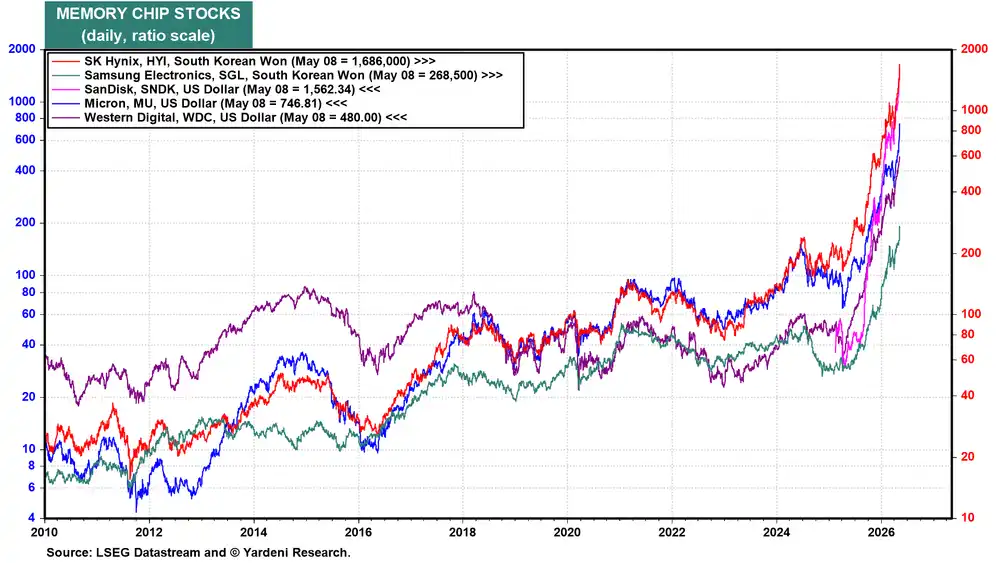
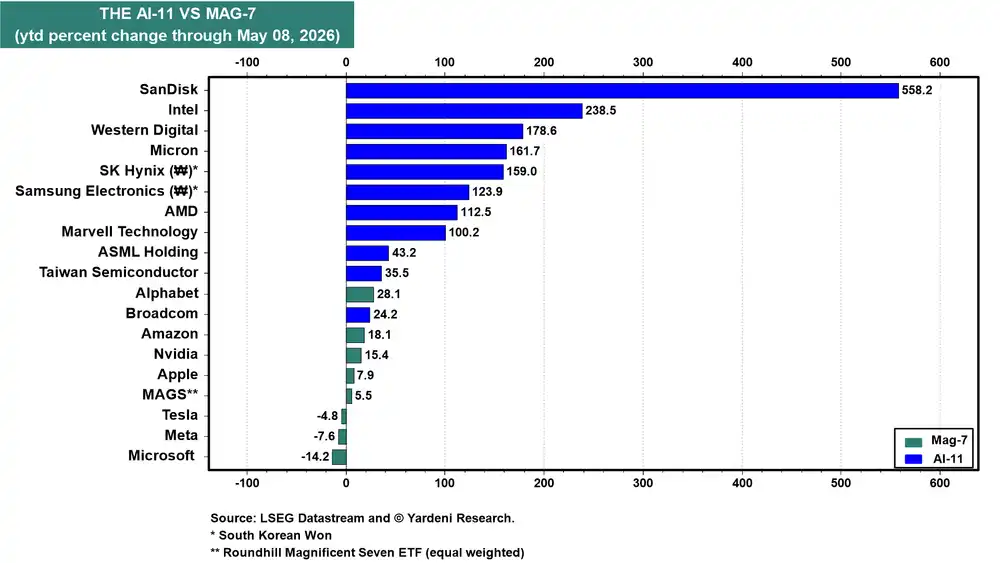
In this semiconductor rally, memory chip companies have performed exceptionally well. Memory giants from the US and South Korea—SK Hynix, Samsung, SanDisk, Micron Technology, and Western Digital—all saw their stock prices surge significantly. I wrote in March that High Bandwidth Memory (HBM) is the real "bottleneck" in the AI training process. As long as the demand for AI computing power continues to outpace supply, the growth momentum of these companies will be hard to shake.
Photonics and the Broader Semiconductor Ecosystem
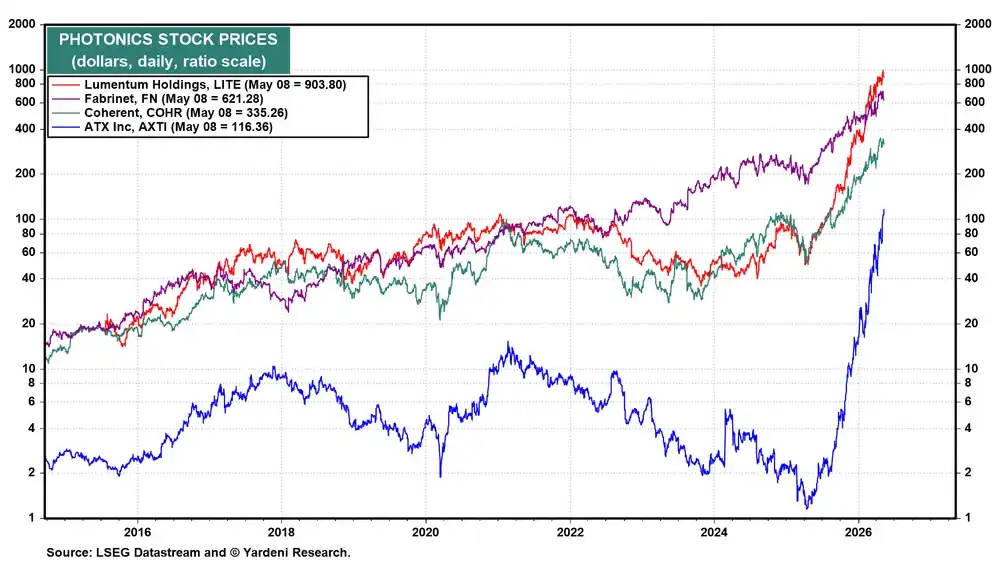
In addition to memory chips, photonics companies have also performed strongly. Photonics interconnect technology plays a key role in high-speed data transmission within AI data centers, and its importance is being repriced by the market.
Investors have clearly concluded that AI investment opportunities are by no means limited to the "Magnificent Seven." So far this year, almost every stock in the "AI-11" semiconductor group we track has outperformed every member of the "Magnificent Seven" except for Broadcom.
Deciphering the "AI-11" Supply Chain: Where Every Dollar Flows
Understanding the next opportunity in AI investment hinges on seeing how capital flows through this supply chain. Below is the "AI-11" core segments I have summarized:
1. Foundry & Lithography (TSMC, ASML)
TSMC provides foundry services for all leading logic chips, serving as the undisputed cornerstone of the industry. ASML monopolizes the supply of Extreme Ultraviolet (EUV) lithography equipment, the essential "chokepoint" for manufacturing cutting-edge chips.
2. Logic & Custom Chips (AMD, Broadcom, Intel)
AMD is rapidly gaining market share in the AI inference space. Broadcom is the core partner for hyperscale companies in custom ASIC chips and holds a dominant position in networking chips. Marvell complements the landscape in custom chips, networking, and optical connectivity. Intel is telling a "foundry comeback" story and benefits from CPU demand driven by the AI server cycle.
3. Memory Chips (Micron, SK Hynix, Samsung)
These three giants supply the real "hard currency" of AI training—High Bandwidth Memory. SK Hynix currently holds a leading position in the global HBM market.
4. Enterprise NAND & Storage (SanDisk, Western Digital)
SanDisk has become a pure-play beneficiary of enterprise NAND flash and solid-state drives (SSDs). Western Digital provides complementary high-capacity Hard Disk Drives (HDDs).
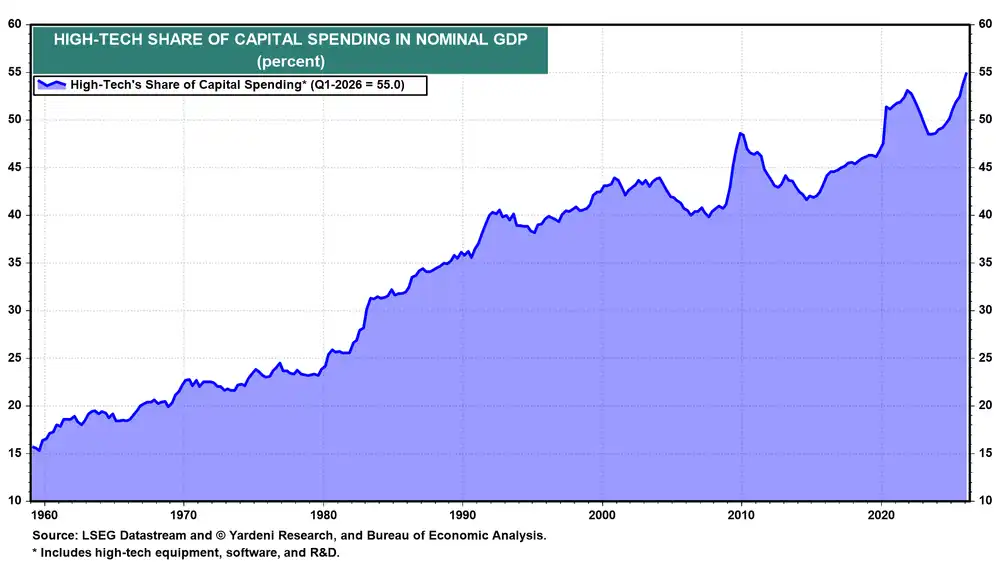
Every dollar of hyperscale AI infrastructure capital expenditure must flow through this complete supply chain before reaching the server racks. This explains why the technology sector now accounts for a record 55% of U.S. corporate capital expenditures.
The Dominance of the "Magnificent Seven" Remains, but Marginal Growth Is Shifting
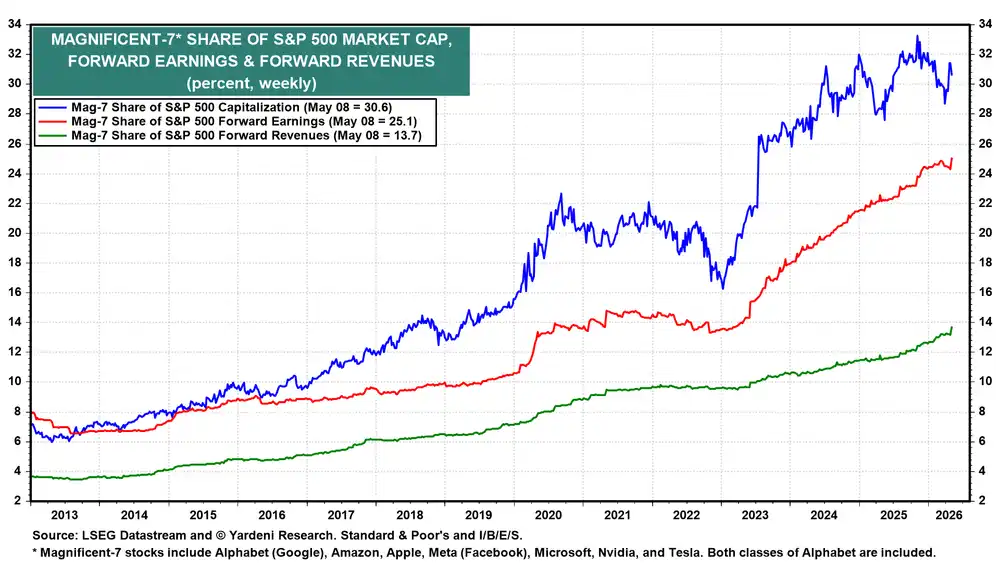
It is undeniable that the "Magnificent Seven" still hold a dominant position in the S&P 500 index. They collectively account for 30.6% of the index's market capitalization, 25.1% of its forward earnings, and 13.7% of its forward revenue. The strong fundamentals represented by this label persist.
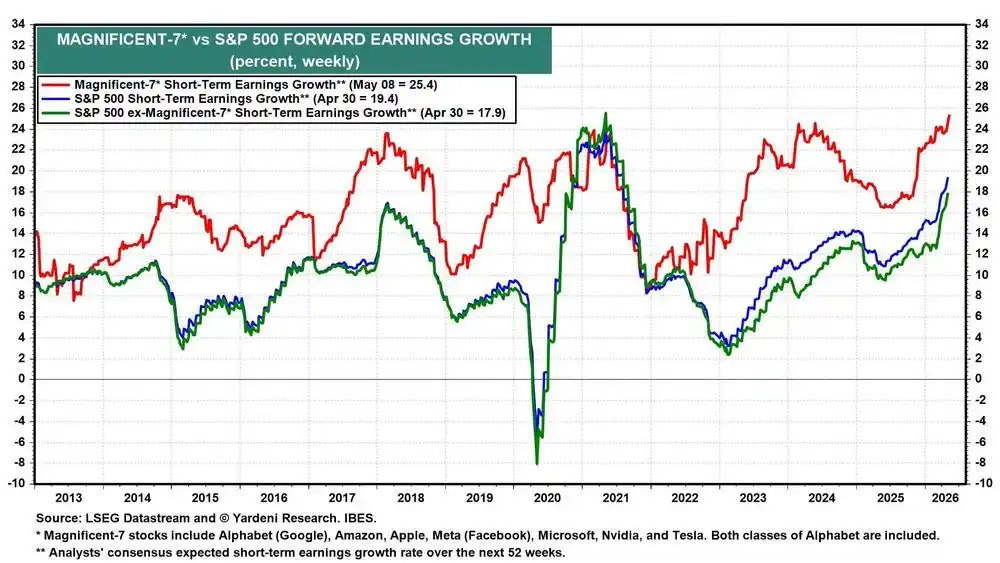
However, a marginal change is underway. The current forward earnings growth rate for the "Magnificent Seven" is 25.4%, while it is 17.9% for the S&P 500 excluding the "Magnificent Seven" (the "S&P 493"). This gap has narrowed significantly compared to a year ago. The "S&P 493" is catching up in this growth race. The premium once accorded to the "Magnificent Seven" due to the scarcity of their earnings growth is becoming less pronounced as growth becomes more widespread.
In my view, the market has fully priced in the dominance of the "Magnificent Seven." The marginal funds that investors are focusing on are now shifting towards areas that can extend the AI narrative beyond the initial seven companies.
Conclusion: From "Betting on Winners" to "Investing in Certainty"
Reviewing the evolution of AI investment logic in this cycle, we can clearly see a main theme: shifting from the initial "betting on which giant will win" to "investing in the most certain links of the industrial chain." The certainty of AI capital expenditures has brought unprecedented prosperity to the semiconductor supply chain. For investors, understanding this shift from the "demand side" to the "supply side" may be key to grasping AI investment opportunities in the coming years. Of course, any investment decision needs to be made in consideration of one's own risk tolerance. Uncertainty always exists in the market, but understanding the industrial logic is the first step towards making an informed judgment.