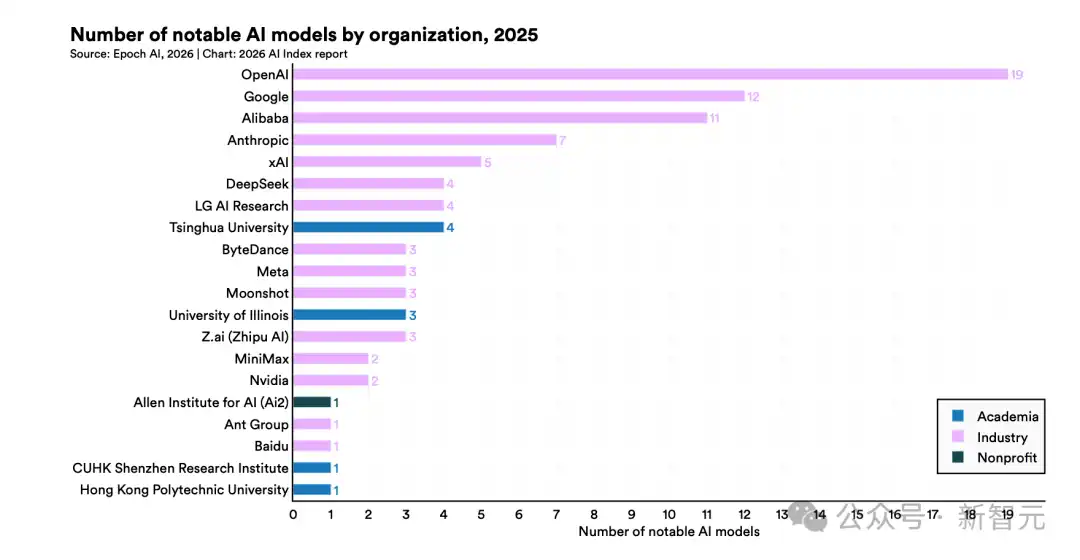
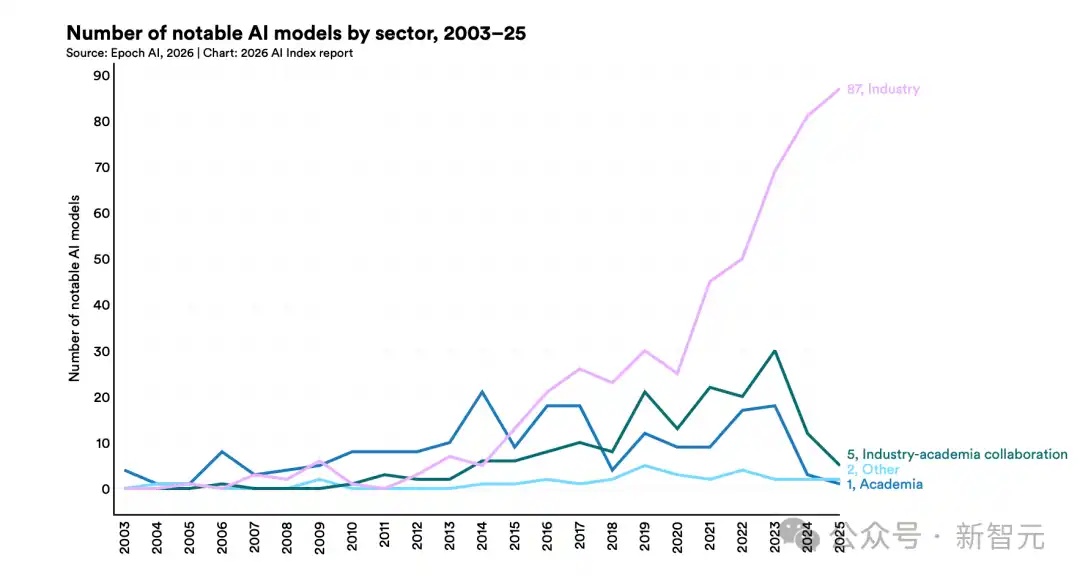
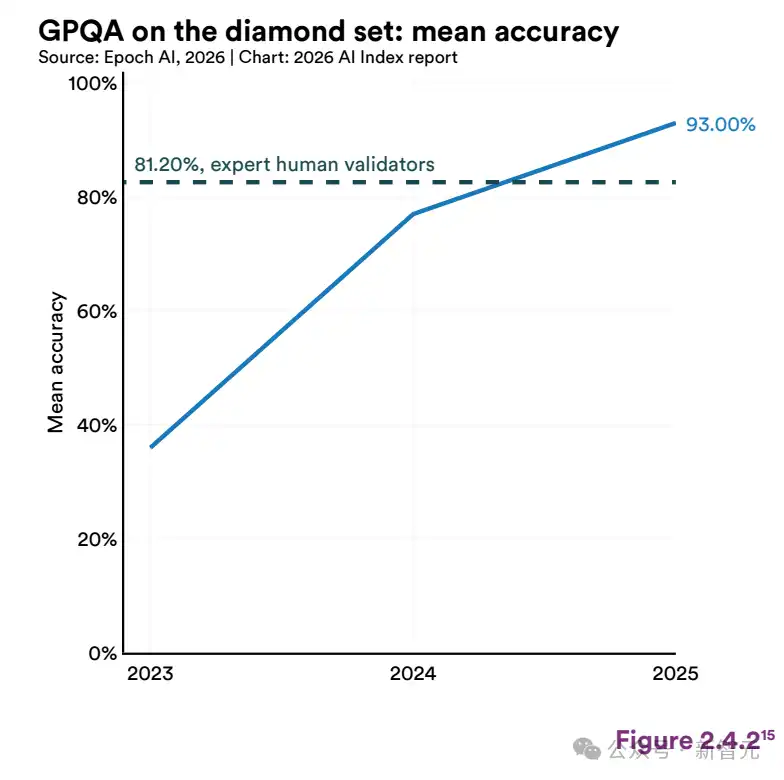
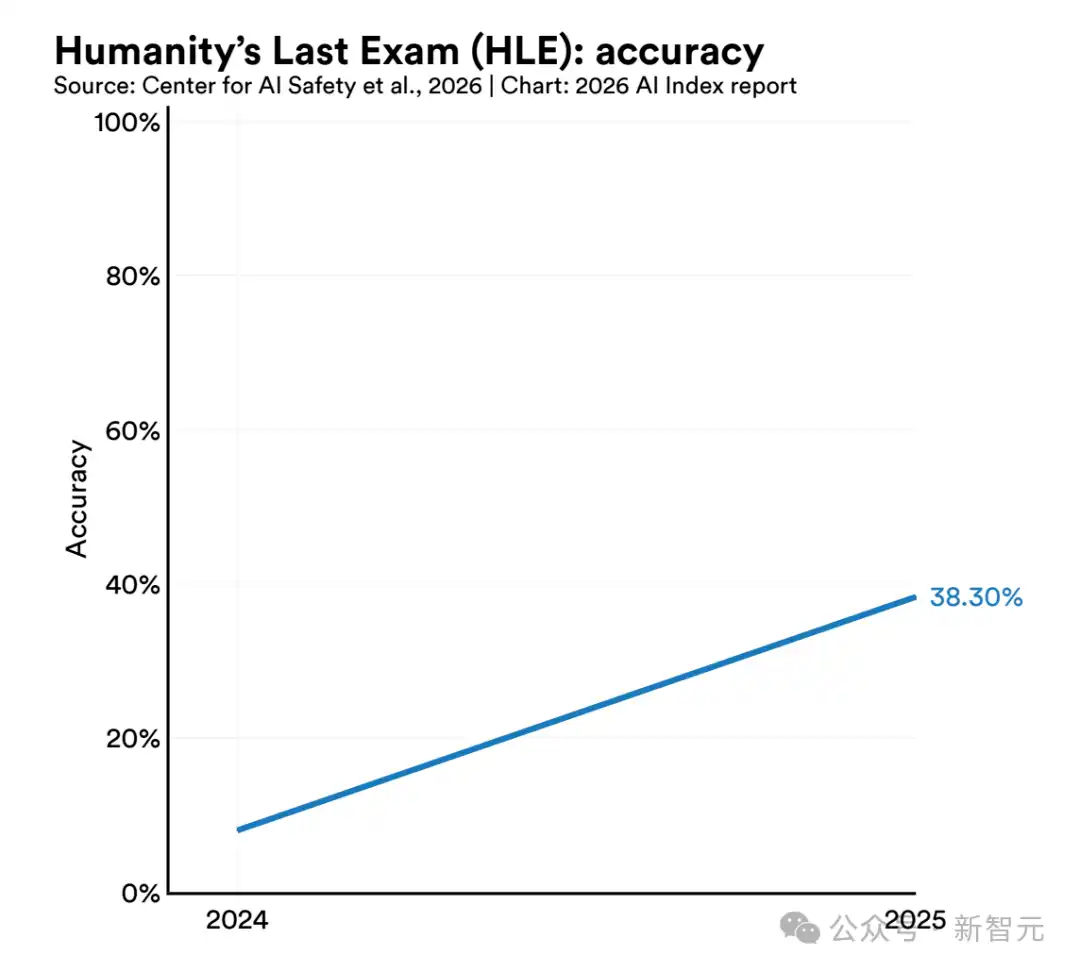
| |
|
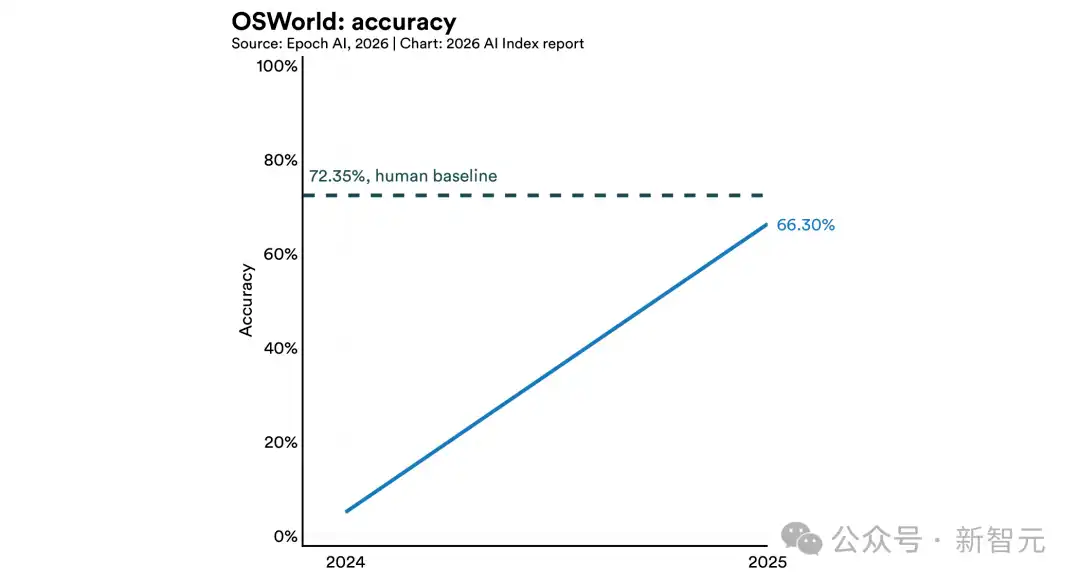
Also, in agent tasks, in the OSWorld test, frontier AI strength (66.3%) is approaching the human baseline.
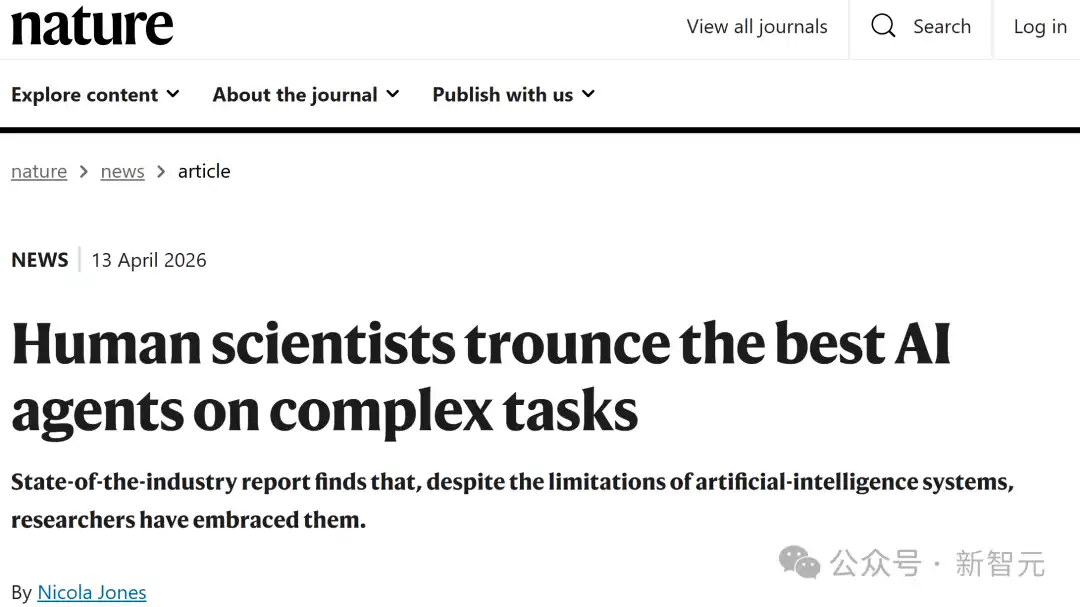
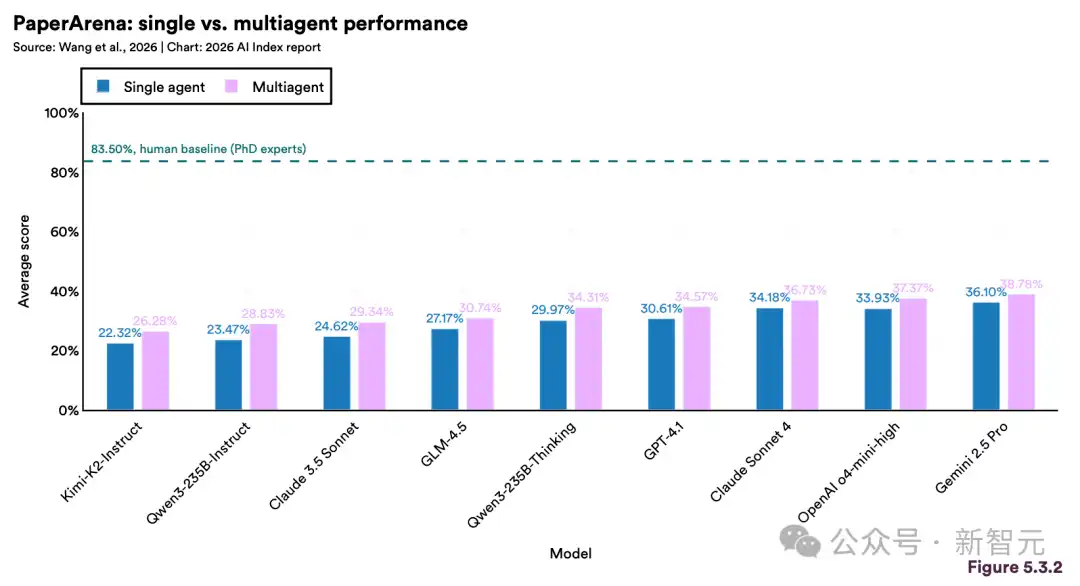
However, in the PaperArena test专门评估科研逻辑, the strongest AI-powered Agent scored only 39%, half the capability of a PhD student.
But this unevenness doesn't stop companies from integrating AI into production lines.
Another number from the AI Index is that the global enterprise AI adoption rate has reached 88%. Ninety percent of companies have integrated AI into some workflow.
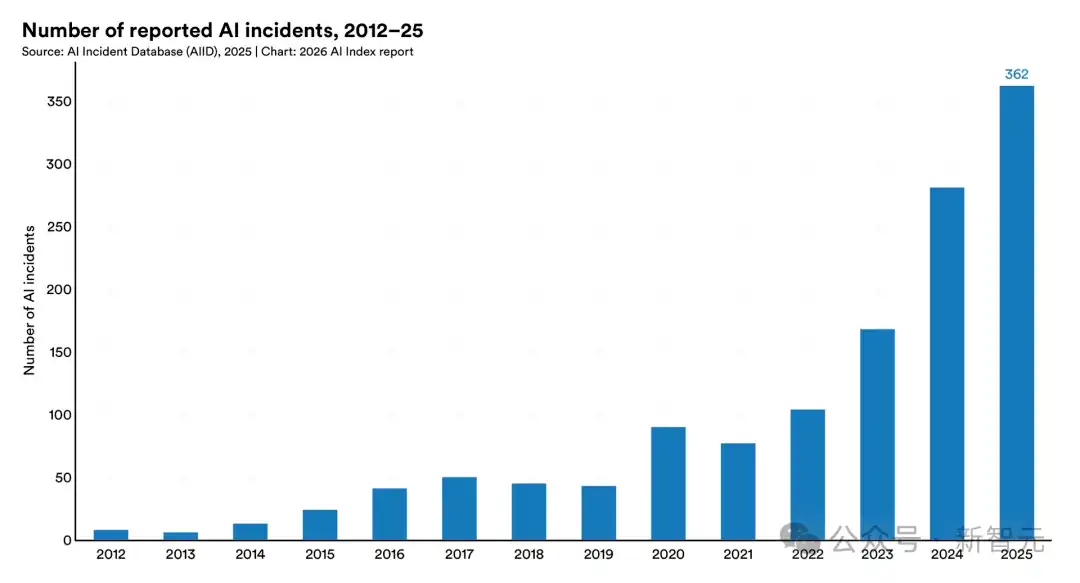
The cost is rising simultaneously. Recorded AI-related incidents increased from 233 in 2024 to 362.
Money is Accelerating: $581.7 Billion Poured into AI
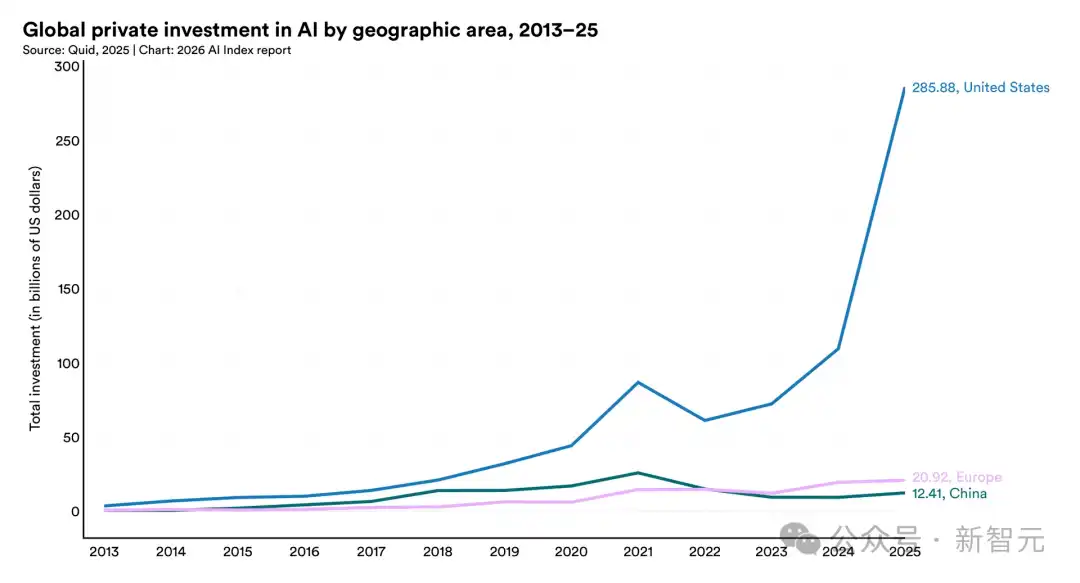
Global corporate AI investment in 2025 reached $581.7 billion, a year-on-year increase of 130%.其中, private investment was $344.7 billion, up 127.5% year-on-year.
Both curves almost doubled.
By country, the US is in a league of its own. US private AI investment in 2025 was $285.9 billion. And it added 1,953 AI startups in one year, also more than 10 times the number of the second-ranked country.
Money is accelerating into the US. But another core US resource is moving in the opposite direction.
People are Flowing Out: AI Researchers Entering the US Fell 89%
There's a set of numbers that makes one pause.
From 2017 to now, the number of AI researchers and developers entering the US has fallen by 89%.
More critically, this decline is accelerating. In the past year alone, the drop was 80%.
The US still has the highest density of AI researchers globally, but the inflow tap is tightening.
The curves of money and people are starting to反向. This is a situation not seen in the past decade.
Computing Power Rose 30-Fold in 3 Years, Lifelines in One Company's Hands
The AI capability curve is accelerating, but the computing power curve behind it is running even faster.
From 2021 to now, global AI computing power has increased 30-fold. Over the past three years, it has tripled every year.
This curve is supported by a few companies.
NVIDIA's GPUs alone account for over 60% of the world's AI computing power. Amazon and Google rank second and third with their own chips, but combined they are far behind NVIDIA.
And almost all these chips come from one foundry, TSMC. The steeper the computing power curve, the narrower the lifeline.
Meanwhile, the cost is also increasing.
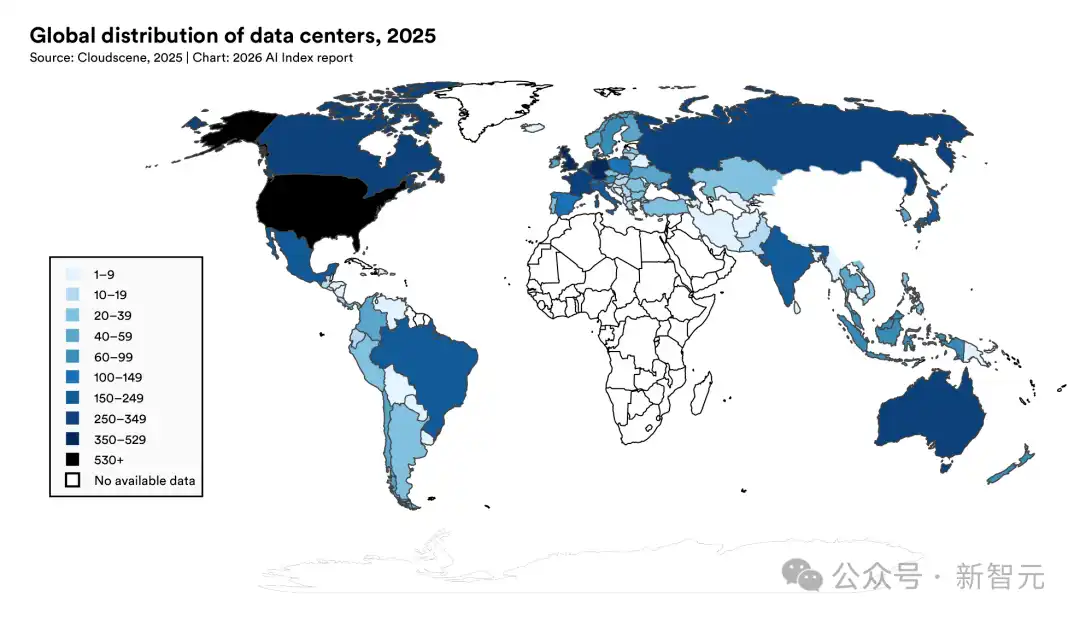
The total power of global AI data centers has reached 29.6 GW, equivalent to New York State's entire peak electricity demand. The estimated carbon emission for one training run of xAI Grok 4 is 72,816 tons of CO2 equivalent, equal to the tailpipe emissions of 17,000 cars driving for a year.
Where data centers are built, where electricity comes from, where chips are produced—these three questions have become the most headache-inducing issues on every AI company CEO's desk this year.
Generative AI Penetrated 53% in Three Years, Chinese Workplace Usage Exceeds 80%
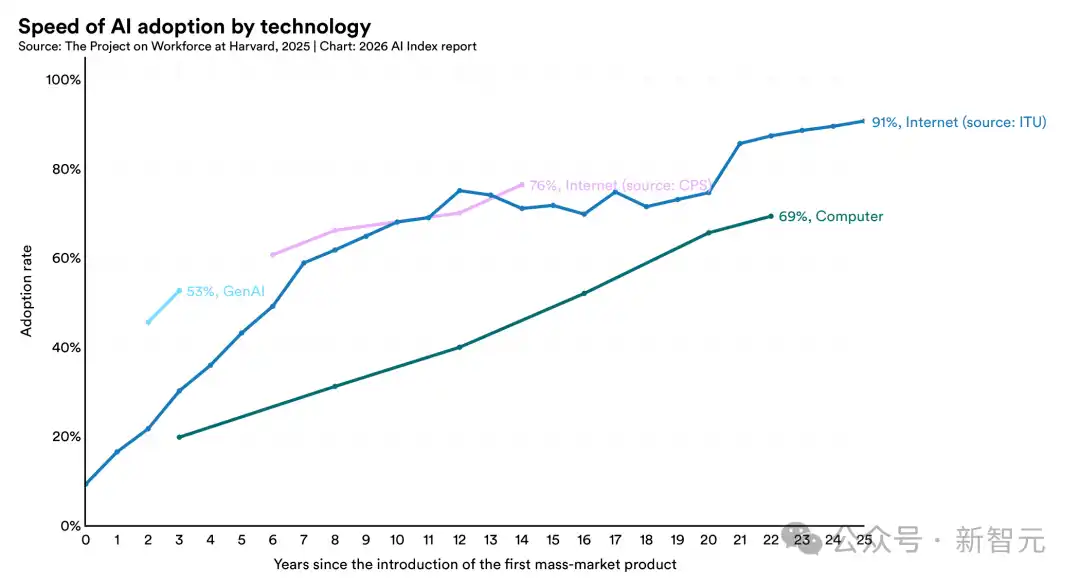
Generative AI reached a global population penetration rate of 53% within three years.
This speed is faster than personal computers, faster than the internet.
But penetration speed is highly correlated with country. Singapore 61%, UAE 54%, both ahead of the US. The US ranks only 24th among the surveyed countries, with a penetration rate of 28.3%.
If we change the dimension from consumers to the workplace, the contrast is greater.
Another set of data in the report shows that in 2025, 58% of employees globally had already started using AI regularly at work. But in five countries—China, India, Nigeria, UAE, Saudi Arabia—this proportion exceeded 80%.
China's workplace AI penetration rate is already more than 20 percentage points higher than the global average.
Even more interesting is consumer value.
AI Index estimates that by early 2026, generative AI tools create $172 billion in value annually for US consumers. From 2025 to 2026, the median value per user tripled.
The vast majority of users are still using the free version.
Entry-Level Positions Sharply Reduced, 22-25 Year-Old Dev Jobs Slashed 20%
The part of the entire AI Index that might be most沉默 for Chinese readers is probably the section on youth employment.
The number of employed software developers aged 22 to 25 has fallen by about 20% since 2024.
During the same period, older peer groups actually grew.
Not just development roles. Other high-AI-exposure industries like customer service are also showing the same pattern.
More worrying are the results of corporate surveys. Respondent executives generally expect future layoffs to be larger than in the past few months.
This isn't about the macro unemployment rate; it's about entry-level positions being precisely cut off.
If the first job is gone, the entire career ladder loses a rung. The long-term impact of this is something no one can calculate yet.
AI is Rewriting the Way Science is Done
If the employment section is cold, the science section is hot.
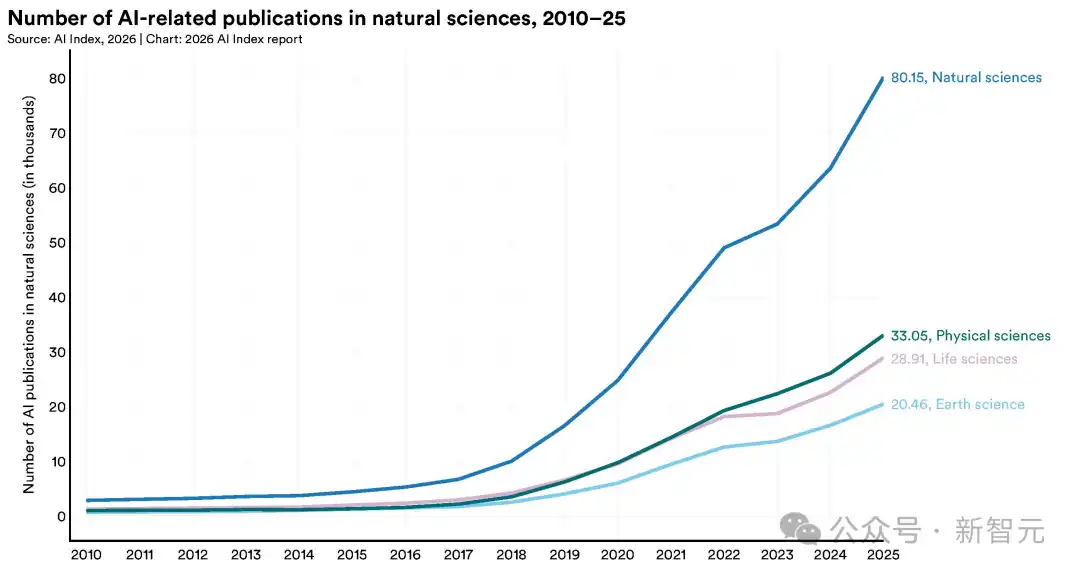
AI-related papers in natural sciences, physical sciences, and life sciences grew by 26% to 28% year-on-year in 2025.
Specifically in application, this year for the first time an AI completely ran an end-to-end weather forecasting process. From raw meteorological observation data directly outputting final forecasts for temperature, wind speed, humidity, with no traditional numerical models介入.
AI is moving from "helping you write papers" "helping you calculate numbers" to "making discoveries itself".
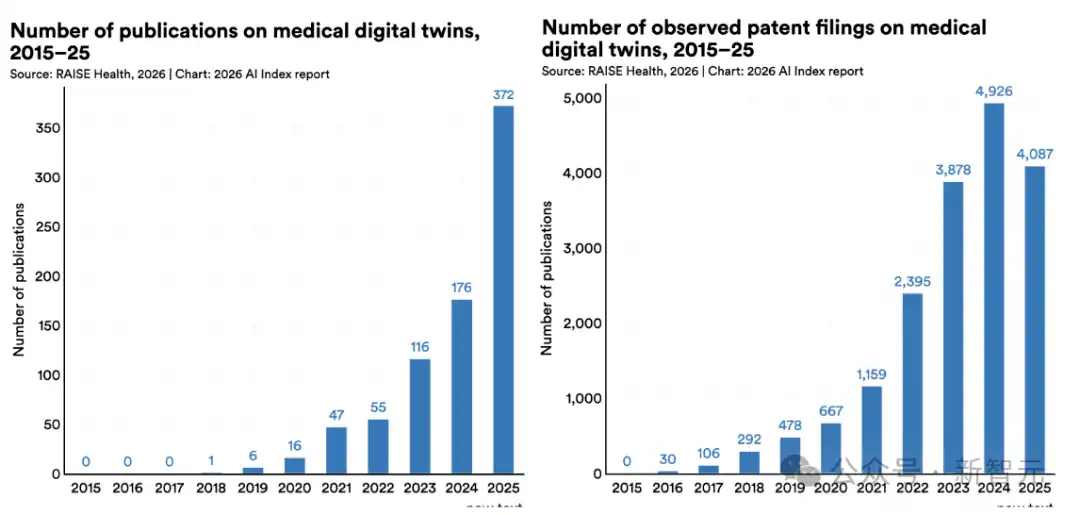
It's the same in hospitals. In 2025, many hospitals began deploying AI tools that can automatically generate clinical records from consultation dialogues. Doctors in multiple hospital systems reported that time spent writing medical records was reduced by up to 83%, with significant decreases in burnout.
But the same index pours cold water on medical AI. A review of over 500 clinical AI studies found that nearly half relied on exam-style datasets, and only 5% used real clinical data.
AI can reduce doctors' typing time, that's certain. AI's clinical value on real patients currently has many question marks.
Self-Learning Wave Explodes Globally, Formal Education Has Fallen Behind
Formal education can't keep up with AI.
4/5 of US high school and college students now use AI to complete school assignments. But only half of secondary schools have AI usage policies, and only 6% of teachers think these policies are clear.
Students are running ahead, teachers are still in place, rules haven't appeared yet.
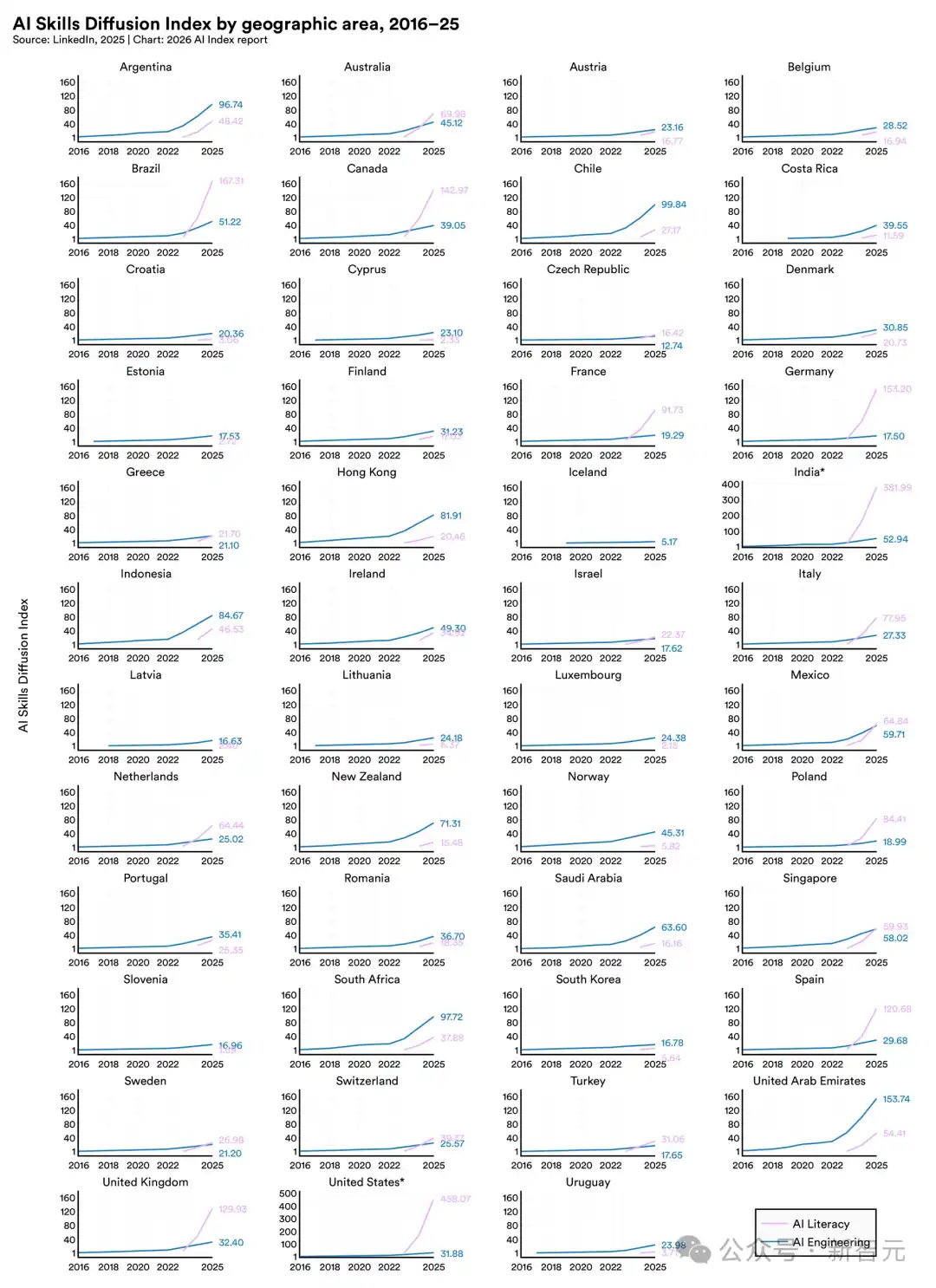
While formal education falls behind, the self-learning wave is exploding globally. It says the three countries with the fastest growth in learning AI engineering skills are the UAE, Chile, and South Africa.
Not the US, not Europe.
The steepest part of the skill curve is growing in places no one is looking.
Strongest Models Become the Most Opaque, Experts and Public are分裂
The strongest models are becoming the most opaque models.
The Foundation Model Transparency Index's average score fell from 58 last year to 40 this year. The AI Index directly点名, Google, Anthropic, OpenAI have all stopped公开 the training data scale and training duration of their latest models.
Of the 95 most representative models released last year, 80 did not公开 training code.
Public sentiment has also become more complex.
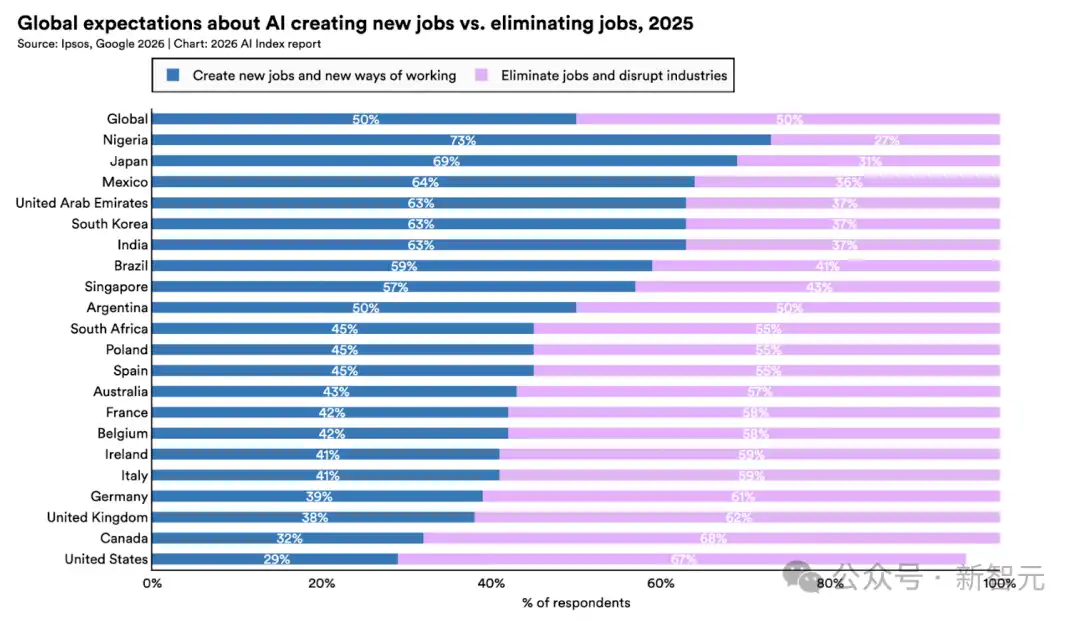
Globally, the proportion believing AI's benefits outweigh the risks rose from 52% to 59%. But during the same period, the proportion feeling nervous about AI rose from 50% to 52%.
Both directions are growing simultaneously.
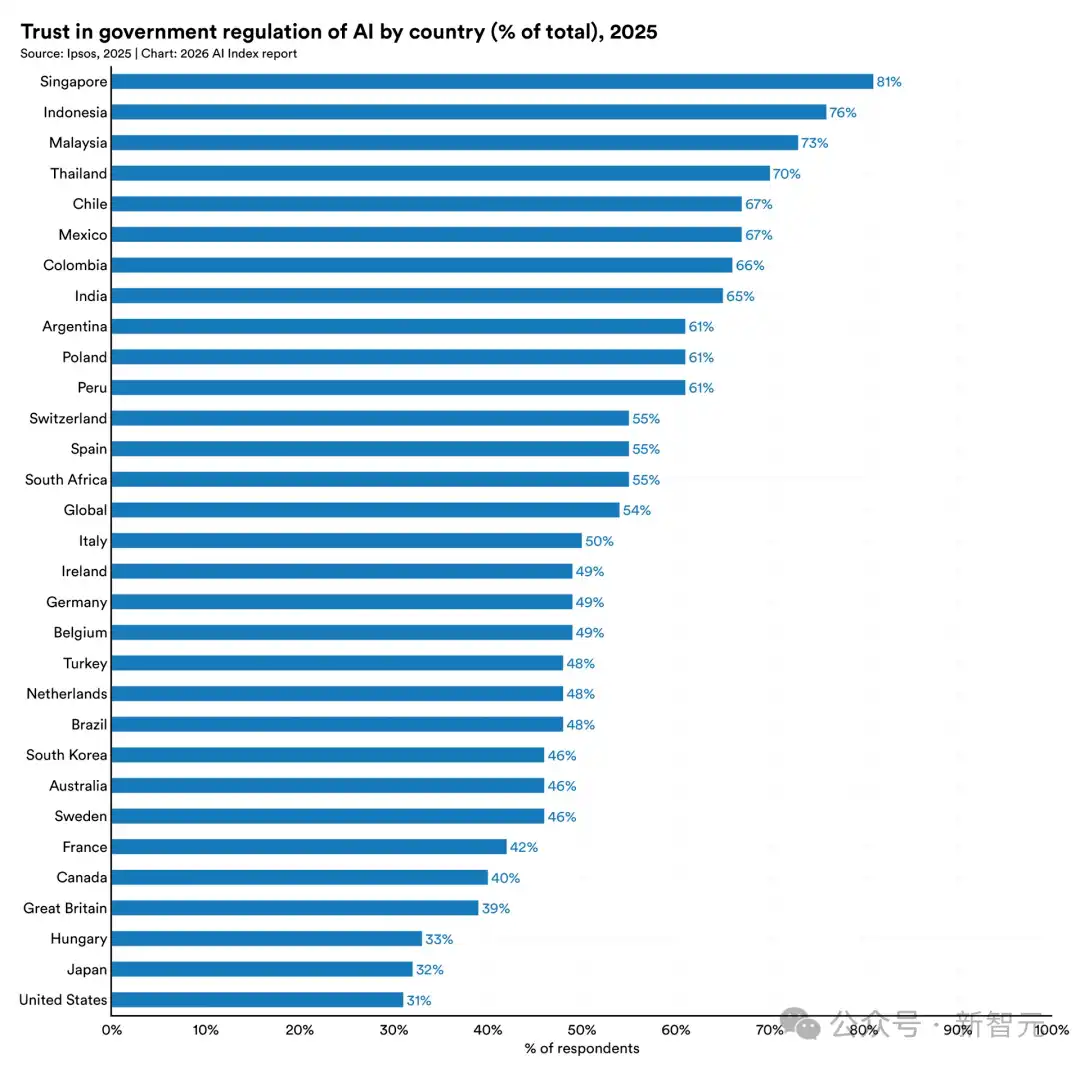
The most分裂 is the US. Only 33% of Americans think AI will make their jobs better, the global average is 40%. Americans' trust in their own government to regulate AI is the lowest among surveyed countries, 31%.
Singaporeans' trust in their government to regulate AI is 81%.
After the recent incident at Sam Altman's house was袭击, Silicon Valley insiders were "surprised to find" that ordinary people in the Instagram comments were not sympathetic, some even felt "it should be more intense".
They didn't realize things had gotten this bad.
The Pew and Ipsos data cited in the report show that the perception gap between experts and the public on the impact of AI on employment, healthcare, economy, etc.,普遍 exceeds 30 percentage points, with the largest gap reaching 50 percentage points.
On one side, the curves in the lab are soaring; on the other, ordinary people's unease is accumulating.
There is no bridge in between.
In Conclusion
The 423-page report has hundreds of charts, but it really only draws one picture.
The horizontal axis is time, the vertical axis is capability.
The model capability curve is flying, the computing power curve is flying, the investment curve is flying, the adoption rate curve is flying. Everything else is stagnating or moving downward.
This is the entire content of the 2026 AI Index.
AI is accelerating. Everything else is decoupling.
If you are in this industry, the question to ask now is not "what will the future be like", but "which curve are you standing on".
Related Questions
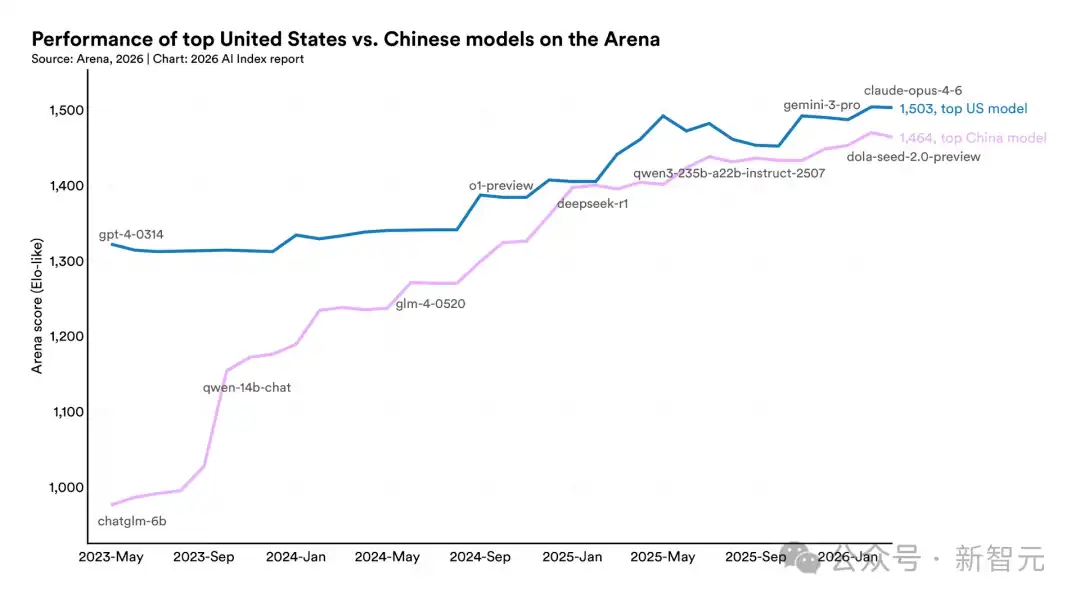
QWhat is the performance gap between the top AI models of the US and China according to the Stanford AI Index Report 2026?
AThe performance gap between the top AI models of the US and China has narrowed to just 2.7%.
QWhich Chinese institutions or companies are ranked in the global top 10 for AI models?
AAlibaba, DeepSeek, Tsinghua University, and ByteDance are the Chinese institutions and companies ranked in the global top 10.
QWhat percentage of the world's top AI models in the past year came from industry rather than academia?
AOver 90% of the world's top AI models in the past year came from industry, not academia or government labs.
QWhat significant negative impact on employment is highlighted in the report, particularly for a specific age group?
AEmployment for software developers aged 22-25 has decreased by approximately 20% since 2024, as entry-level positions are being disproportionately affected.
QWhat is the term used in the report to describe the uneven and inconsistent development of AI capabilities?
AThe term used to describe the uneven development of AI capabilities is 'jagged frontier' (锯齿前沿).
Related Reads
Not a Price Hike, but a Supply Cut? Oil Prices Have Crossed the Tipping Point
The global oil market has passed a critical point, shifting the focus from price increases to potential physical supply shortages. The core issue is a time mismatch: even if the Strait of Hormuz reopens, shipping disruptions have already caused significant delays, which will continue to deplete onshore crude inventories for weeks.
Refinery behavior acts as an amplifier. Reduced runs in Asia and Europe don’t reflect weaker demand but instead shrink product inventories, raising fuel prices and refining margins, which in turn encourages higher runs—creating a self-reinforcing cycle.
If the Strait remains closed beyond April, traditional pricing models may fail. The market could face an unprecedented physical shortfall of 11-13 million barrels per day—roughly four times historical disruption levels. In such a scenario, price becomes an inadequate balancing tool. The only way to rebalance the market would be policy-driven demand destruction, similar to COVID-era lockdowns.
Current prices around $95/barrel are insufficient to balance the market. Key signals to watch include inventory levels, policy announcements, and the pace of involuntary demand contraction. Geopolitically, the situation appears likely to worsen before improving, with little room for compromise between the US and Iran.
marsbit27m ago

marsbit27m ago
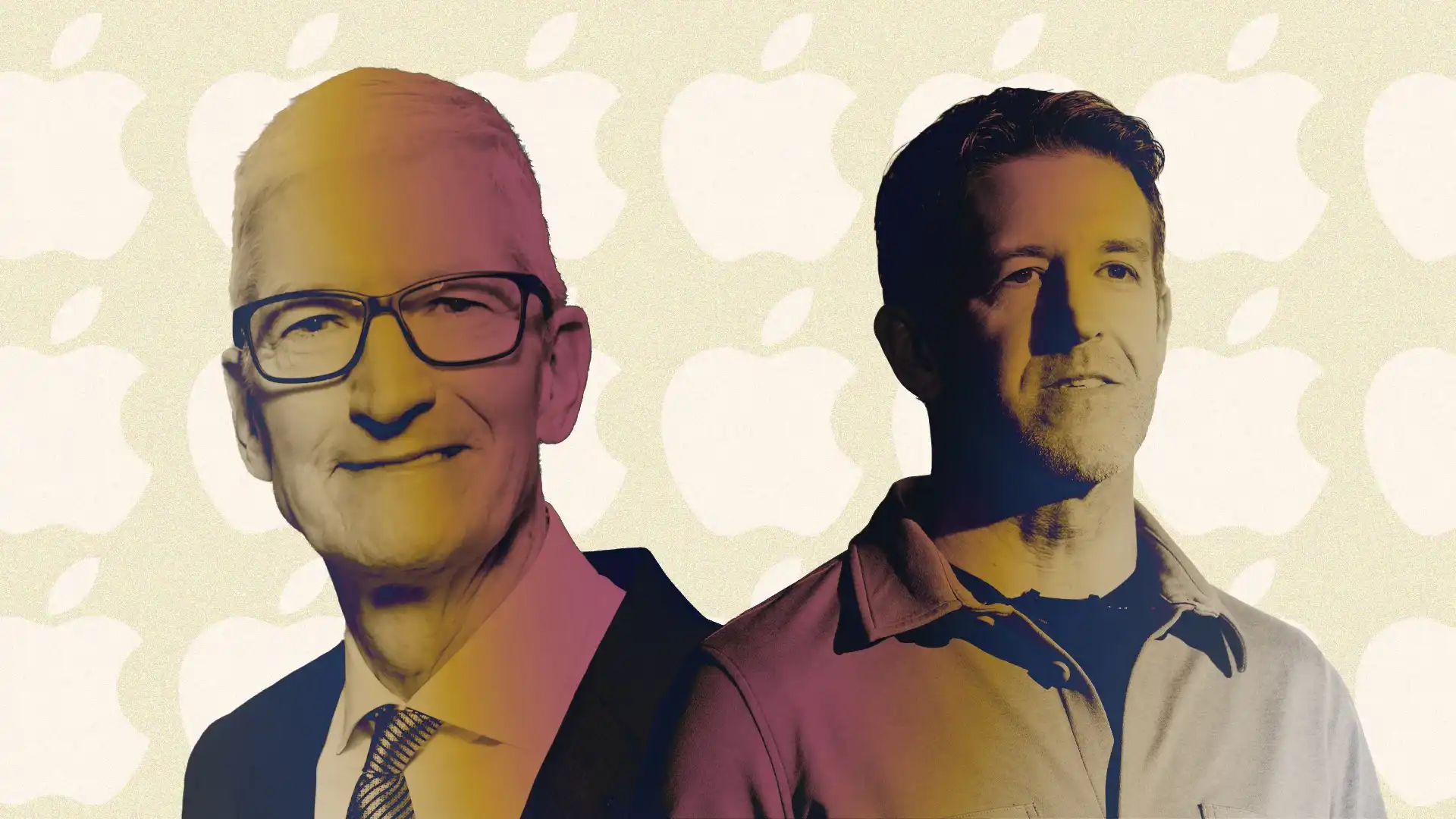
A New CEO Who Has Worked Exclusively with Hardware for 25 Years Takes Over Apple, Valued at 4 Trillion
Apple, the world's most valuable tech firm, has appointed John Ternus as its new CEO, effective September 1, replacing Tim Cook who transitions to executive chairman. Ternus, a 51-year-old mechanical engineer with 25-year tenure at Apple, previously served as senior vice president of hardware engineering. Known for his low public profile and lack of social media presence, he played key roles in developing products like the iPad, AirPods, and led Apple’s transition from Intel to in-house silicon chips.
Ternus takes over a company valued at $4 trillion, with Cook having multiplied Apple’s revenue and built a $100 billion services business. However, he inherits significant challenges: Apple’s AI efforts, including the delayed Siri revamp powered by Google’s Gemini, remain unproven, and the company is preparing to launch its first foldable iPhone amid supply constraints. While Ternus’s hardware expertise positions him well for product-driven innovation, his lack of software/AI experience raises questions about Apple’s competitiveness in the AI era. The company’s structure has been adjusted to support him, with Cook remaining in an advisory role. Ternus’s engineer-led approach—emphasizing humility and collaboration—may prove vital in navigating Apple’s next chapter.
marsbit56m ago
marsbit56m ago
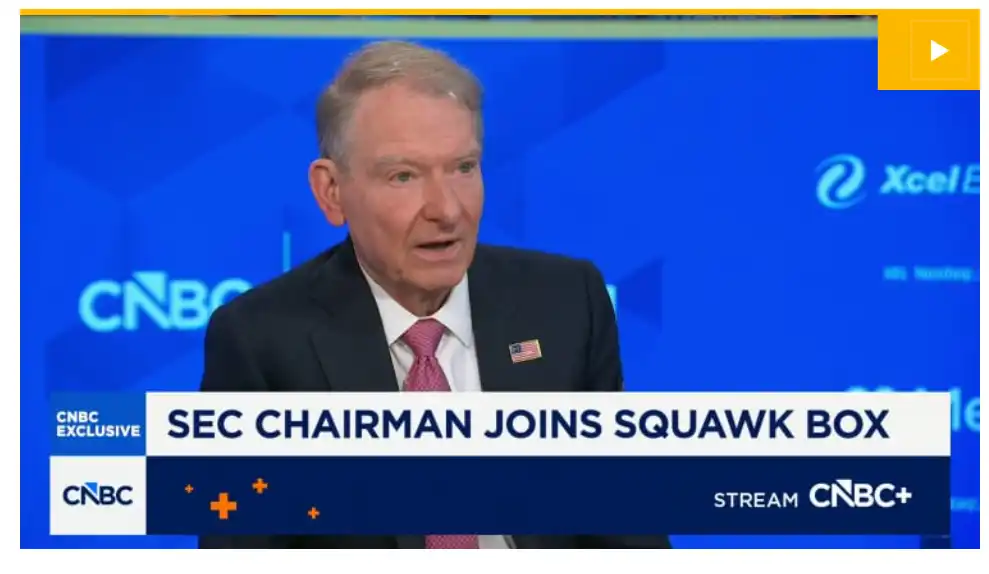
Atkins' First Year at the Helm of the SEC: A Comprehensive Shift in Crypto Regulation
Paul Atkins marked his one-year anniversary as Chair of the U.S. Securities and Exchange Commission (SEC) on April 21, 2025, overseeing a significant shift in the agency’s approach to cryptocurrency regulation. Under his leadership, the SEC dropped multiple enforcement actions against crypto firms, approved several crypto-linked ETFs, and issued guidance clarifying that most cryptocurrencies are not considered securities under federal law. The SEC also signed a memorandum with the CFTC to improve regulatory coordination.
These actions reversed the aggressive enforcement stance of his predecessor, Gary Gensler, and aligned with Trump administration promises to support the crypto industry. However, Atkins has faced criticism from Democratic lawmakers, including Senator Elizabeth Warren, who raised concerns over potential conflicts of interest, particularly regarding dropped cases linked to Trump-affiliated companies. While regulatory clarity has improved, the SEC still awaits congressional action to formally define its jurisdiction over digital assets.
marsbit1h ago
marsbit1h ago
a16z: 5 Ways Blockchain Can Help AI Agent Infrastructure
Blockchain technology provides critical infrastructure for AI agents by addressing five key challenges: 1) Non-human identity: AI agents lack standardized, portable identity systems. Blockchain enables verifiable, cross-platform agent identities (like "Know Your Agent" frameworks) through cryptographic credentials and on-chain registries. 2) AI governance: When AI systems execute decisions, blockchain ensures transparency and prevents centralized control by recording actions on-chain and enabling auditable execution logs. 3) Payments: Stablecoins and crypto payments (e.g., x402, MPP) serve as default settlement layers for agent-to-agent commerce, enabling frictionless, programmable transactions for "headless" AI-native businesses. 4) Trust and verification: As AI scales, blockchain provides cryptographic proof of origin and auditable histories, making verification—not intelligence—the scarce resource. 5) User control: Crypto-native tools (e.g., delegation toolkits, intent-based architectures) allow users to set boundaries and maintain oversight over autonomous agents, minimizing blind trust. Together, blockchain and AI can create an economic infrastructure built on transparency, accountability, and user sovereignty.
marsbit1h ago

marsbit1h ago
Hot Articles
Sonic: Pioneering the Future of Gaming in Web3 Introduction to Sonic In the ever-evolving landscape of Web3, the gaming industry stands out as one of the most dynamic and promising sectors. At the forefront of this revolution is Sonic, a project designed to amplify the gaming ecosystem on the Solana blockchain. Leveraging cutting-edge technology, Sonic aims to deliver an unparalleled gaming experience by efficiently processing millions of requests per second, ensuring that players enjoy seamless gameplay while maintaining low transaction costs. This article delves into the intricate details of Sonic, exploring its creators, funding sources, operational mechanics, and the timeline of significant events that have shaped its journey. What is Sonic? Sonic is an innovative layer-2 network that operates atop the Solana blockchain, specifically tailored to enhance the existing Solana gaming ecosystem. It accomplishes this through a customised, VM-agnostic game engine paired with a HyperGrid interpreter, facilitating sovereign game economies that roll up back to the Solana platform. The primary goals of Sonic include: Enhanced Gaming Experiences: Sonic is committed to offering lightning-fast on-chain gameplay, allowing players and developers to engage with games at previously unattainable speeds. Atomic Interoperability: This feature enables transactions to be executed within Sonic without the need to redeploy Solana programmes and accounts. This makes the process more efficient and directly benefits from Solana Layer1 services and liquidity. Seamless Deployment: Sonic allows developers to write for Ethereum Virtual Machine (EVM) based systems and execute them on Solana’s SVM infrastructure. This interoperability is crucial for attracting a broader range of dApps and decentralised applications to the platform. Support for Developers: By offering native composable gaming primitives and extensible data types - dining within the Entity-Component-System (ECS) framework - game creators can craft intricate business logic with ease. Overall, Sonic's unique approach not only caters to players but also provides an accessible and low-cost environment for developers to innovate and thrive. Creator of Sonic The information regarding the creator of Sonic is somewhat ambiguous. However, it is known that Sonic's SVM is owned by the company Mirror World. The absence of detailed information about the individuals behind Sonic reflects a common trend in several Web3 projects, where collective efforts and partnerships often overshadow individual contributions. Investors of Sonic Sonic has garnered considerable attention and support from various investors within the crypto and gaming sectors. Notably, the project raised an impressive $12 million during its Series A funding round. The round was led by BITKRAFT Ventures, with other notable investors including Galaxy, Okx Ventures, Interactive, Big Brain Holdings, and Mirana. This financial backing signifies the confidence that investment foundations have in Sonic’s potential to revolutionise the Web3 gaming landscape, further validating its innovative approaches and technologies. How Does Sonic Work? Sonic utilises the HyperGrid framework, a sophisticated parallel processing mechanism that enhances its scalability and customisability. Here are the core features that set Sonic apart: Lightning Speed at Low Costs: Sonic offers one of the fastest on-chain gaming experiences compared to other Layer-1 solutions, powered by the scalability of Solana’s virtual machine (SVM). Atomic Interoperability: Sonic enables transaction execution without redeployment of Solana programmes and accounts, effectively streamlining the interaction between users and the blockchain. EVM Compatibility: Developers can effortlessly migrate decentralised applications from EVM chains to the Solana environment using Sonic’s HyperGrid interpreter, increasing the accessibility and integration of various dApps. Ecosystem Support for Developers: By exposing native composable gaming primitives, Sonic facilitates a sandbox-like environment where developers can experiment and implement business logic, greatly enhancing the overall development experience. Monetisation Infrastructure: Sonic natively supports growth and monetisation efforts, providing frameworks for traffic generation, payments, and settlements, thereby ensuring that gaming projects are not only viable but also sustainable financially. Timeline of Sonic The evolution of Sonic has been marked by several key milestones. Below is a brief timeline highlighting critical events in the project's history: 2022: The Sonic cryptocurrency was officially launched, marking the beginning of its journey in the Web3 gaming arena. 2024: June: Sonic SVM successfully raised $12 million in a Series A funding round. This investment allowed Sonic to further develop its platform and expand its offerings. August: The launch of the Sonic Odyssey testnet provided users with the first opportunity to engage with the platform, offering interactive activities such as collecting rings—a nod to gaming nostalgia. October: SonicX, an innovative crypto game integrated with Solana, made its debut on TikTok, capturing the attention of over 120,000 users within a short span. This integration illustrated Sonic’s commitment to reaching a broader, global audience and showcased the potential of blockchain gaming. Key Points Sonic SVM is a revolutionary layer-2 network on Solana explicitly designed to enhance the GameFi landscape, demonstrating great potential for future development. HyperGrid Framework empowers Sonic by introducing horizontal scaling capabilities, ensuring that the network can handle the demands of Web3 gaming. Integration with Social Platforms: The successful launch of SonicX on TikTok displays Sonic’s strategy to leverage social media platforms to engage users, exponentially increasing the exposure and reach of its projects. Investment Confidence: The substantial funding from BITKRAFT Ventures, among others, emphasizes the robust backing Sonic has, paving the way for its ambitious future. In conclusion, Sonic encapsulates the essence of Web3 gaming innovation, striking a balance between cutting-edge technology, developer-centric tools, and community engagement. As the project continues to evolve, it is poised to redefine the gaming landscape, making it a notable entity for gamers and developers alike. As Sonic moves forward, it will undoubtedly attract greater interest and participation, solidifying its place within the broader narrative of blockchain gaming.
1.1k Total ViewsPublished 2024.04.04Updated 2024.12.03

Understanding SPERO: A Comprehensive Overview Introduction to SPERO As the landscape of innovation continues to evolve, the emergence of web3 technologies and cryptocurrency projects plays a pivotal role in shaping the digital future. One project that has garnered attention in this dynamic field is SPERO, denoted as SPERO,$$s$. This article aims to gather and present detailed information about SPERO, to help enthusiasts and investors understand its foundations, objectives, and innovations within the web3 and crypto domains. What is SPERO,$$s$? SPERO,$$s$ is a unique project within the crypto space that seeks to leverage the principles of decentralisation and blockchain technology to create an ecosystem that promotes engagement, utility, and financial inclusion. The project is tailored to facilitate peer-to-peer interactions in new ways, providing users with innovative financial solutions and services. At its core, SPERO,$$s$ aims to empower individuals by providing tools and platforms that enhance user experience in the cryptocurrency space. This includes enabling more flexible transaction methods, fostering community-driven initiatives, and creating pathways for financial opportunities through decentralised applications (dApps). The underlying vision of SPERO,$$s$ revolves around inclusiveness, aiming to bridge gaps within traditional finance while harnessing the benefits of blockchain technology. Who is the Creator of SPERO,$$s$? The identity of the creator of SPERO,$$s$ remains somewhat obscure, as there are limited publicly available resources providing detailed background information on its founder(s). This lack of transparency can stem from the project's commitment to decentralisation—an ethos that many web3 projects share, prioritising collective contributions over individual recognition. By centring discussions around the community and its collective goals, SPERO,$$s$ embodies the essence of empowerment without singling out specific individuals. As such, understanding the ethos and mission of SPERO remains more important than identifying a singular creator. Who are the Investors of SPERO,$$s$? SPERO,$$s$ is supported by a diverse array of investors ranging from venture capitalists to angel investors dedicated to fostering innovation in the crypto sector. The focus of these investors generally aligns with SPERO's mission—prioritising projects that promise societal technological advancement, financial inclusivity, and decentralised governance. These investor foundations are typically interested in projects that not only offer innovative products but also contribute positively to the blockchain community and its ecosystems. The backing from these investors reinforces SPERO,$$s$ as a noteworthy contender in the rapidly evolving domain of crypto projects. How Does SPERO,$$s$ Work? SPERO,$$s$ employs a multi-faceted framework that distinguishes it from conventional cryptocurrency projects. Here are some of the key features that underline its uniqueness and innovation: Decentralised Governance: SPERO,$$s$ integrates decentralised governance models, empowering users to participate actively in decision-making processes regarding the project’s future. This approach fosters a sense of ownership and accountability among community members. Token Utility: SPERO,$$s$ utilises its own cryptocurrency token, designed to serve various functions within the ecosystem. These tokens enable transactions, rewards, and the facilitation of services offered on the platform, enhancing overall engagement and utility. Layered Architecture: The technical architecture of SPERO,$$s$ supports modularity and scalability, allowing for seamless integration of additional features and applications as the project evolves. This adaptability is paramount for sustaining relevance in the ever-changing crypto landscape. Community Engagement: The project emphasises community-driven initiatives, employing mechanisms that incentivise collaboration and feedback. By nurturing a strong community, SPERO,$$s$ can better address user needs and adapt to market trends. Focus on Inclusion: By offering low transaction fees and user-friendly interfaces, SPERO,$$s$ aims to attract a diverse user base, including individuals who may not previously have engaged in the crypto space. This commitment to inclusion aligns with its overarching mission of empowerment through accessibility. Timeline of SPERO,$$s$ Understanding a project's history provides crucial insights into its development trajectory and milestones. Below is a suggested timeline mapping significant events in the evolution of SPERO,$$s$: Conceptualisation and Ideation Phase: The initial ideas forming the basis of SPERO,$$s$ were conceived, aligning closely with the principles of decentralisation and community focus within the blockchain industry. Launch of Project Whitepaper: Following the conceptual phase, a comprehensive whitepaper detailing the vision, goals, and technological infrastructure of SPERO,$$s$ was released to garner community interest and feedback. Community Building and Early Engagements: Active outreach efforts were made to build a community of early adopters and potential investors, facilitating discussions around the project’s goals and garnering support. Token Generation Event: SPERO,$$s$ conducted a token generation event (TGE) to distribute its native tokens to early supporters and establish initial liquidity within the ecosystem. Launch of Initial dApp: The first decentralised application (dApp) associated with SPERO,$$s$ went live, allowing users to engage with the platform's core functionalities. Ongoing Development and Partnerships: Continuous updates and enhancements to the project's offerings, including strategic partnerships with other players in the blockchain space, have shaped SPERO,$$s$ into a competitive and evolving player in the crypto market. Conclusion SPERO,$$s$ stands as a testament to the potential of web3 and cryptocurrency to revolutionise financial systems and empower individuals. With a commitment to decentralised governance, community engagement, and innovatively designed functionalities, it paves the way toward a more inclusive financial landscape. As with any investment in the rapidly evolving crypto space, potential investors and users are encouraged to research thoroughly and engage thoughtfully with the ongoing developments within SPERO,$$s$. The project showcases the innovative spirit of the crypto industry, inviting further exploration into its myriad possibilities. While the journey of SPERO,$$s$ is still unfolding, its foundational principles may indeed influence the future of how we interact with technology, finance, and each other in interconnected digital ecosystems.
54 Total ViewsPublished 2024.12.17Updated 2024.12.17
Agent S: The Future of Autonomous Interaction in Web3 Introduction In the ever-evolving landscape of Web3 and cryptocurrency, innovations are constantly redefining how individuals interact with digital platforms. One such pioneering project, Agent S, promises to revolutionise human-computer interaction through its open agentic framework. By paving the way for autonomous interactions, Agent S aims to simplify complex tasks, offering transformative applications in artificial intelligence (AI). This detailed exploration will delve into the project's intricacies, its unique features, and the implications for the cryptocurrency domain. What is Agent S? Agent S stands as a groundbreaking open agentic framework, specifically designed to tackle three fundamental challenges in the automation of computer tasks: Acquiring Domain-Specific Knowledge: The framework intelligently learns from various external knowledge sources and internal experiences. This dual approach empowers it to build a rich repository of domain-specific knowledge, enhancing its performance in task execution. Planning Over Long Task Horizons: Agent S employs experience-augmented hierarchical planning, a strategic approach that facilitates efficient breakdown and execution of intricate tasks. This feature significantly enhances its ability to manage multiple subtasks efficiently and effectively. Handling Dynamic, Non-Uniform Interfaces: The project introduces the Agent-Computer Interface (ACI), an innovative solution that enhances the interaction between agents and users. Utilizing Multimodal Large Language Models (MLLMs), Agent S can navigate and manipulate diverse graphical user interfaces seamlessly. Through these pioneering features, Agent S provides a robust framework that addresses the complexities involved in automating human interaction with machines, setting the stage for myriad applications in AI and beyond. Who is the Creator of Agent S? While the concept of Agent S is fundamentally innovative, specific information about its creator remains elusive. The creator is currently unknown, which highlights either the nascent stage of the project or the strategic choice to keep founding members under wraps. Regardless of anonymity, the focus remains on the framework's capabilities and potential. Who are the Investors of Agent S? As Agent S is relatively new in the cryptographic ecosystem, detailed information regarding its investors and financial backers is not explicitly documented. The lack of publicly available insights into the investment foundations or organisations supporting the project raises questions about its funding structure and development roadmap. Understanding the backing is crucial for gauging the project's sustainability and potential market impact. How Does Agent S Work? At the core of Agent S lies cutting-edge technology that enables it to function effectively in diverse settings. Its operational model is built around several key features: Human-like Computer Interaction: The framework offers advanced AI planning, striving to make interactions with computers more intuitive. By mimicking human behaviour in tasks execution, it promises to elevate user experiences. Narrative Memory: Employed to leverage high-level experiences, Agent S utilises narrative memory to keep track of task histories, thereby enhancing its decision-making processes. Episodic Memory: This feature provides users with step-by-step guidance, allowing the framework to offer contextual support as tasks unfold. Support for OpenACI: With the ability to run locally, Agent S allows users to maintain control over their interactions and workflows, aligning with the decentralised ethos of Web3. Easy Integration with External APIs: Its versatility and compatibility with various AI platforms ensure that Agent S can fit seamlessly into existing technological ecosystems, making it an appealing choice for developers and organisations. These functionalities collectively contribute to Agent S's unique position within the crypto space, as it automates complex, multi-step tasks with minimal human intervention. As the project evolves, its potential applications in Web3 could redefine how digital interactions unfold. Timeline of Agent S The development and milestones of Agent S can be encapsulated in a timeline that highlights its significant events: September 27, 2024: The concept of Agent S was launched in a comprehensive research paper titled “An Open Agentic Framework that Uses Computers Like a Human,” showcasing the groundwork for the project. October 10, 2024: The research paper was made publicly available on arXiv, offering an in-depth exploration of the framework and its performance evaluation based on the OSWorld benchmark. October 12, 2024: A video presentation was released, providing a visual insight into the capabilities and features of Agent S, further engaging potential users and investors. These markers in the timeline not only illustrate the progress of Agent S but also indicate its commitment to transparency and community engagement. Key Points About Agent S As the Agent S framework continues to evolve, several key attributes stand out, underscoring its innovative nature and potential: Innovative Framework: Designed to provide an intuitive use of computers akin to human interaction, Agent S brings a novel approach to task automation. Autonomous Interaction: The ability to interact autonomously with computers through GUI signifies a leap towards more intelligent and efficient computing solutions. Complex Task Automation: With its robust methodology, it can automate complex, multi-step tasks, making processes faster and less error-prone. Continuous Improvement: The learning mechanisms enable Agent S to improve from past experiences, continually enhancing its performance and efficacy. Versatility: Its adaptability across different operating environments like OSWorld and WindowsAgentArena ensures that it can serve a broad range of applications. As Agent S positions itself in the Web3 and crypto landscape, its potential to enhance interaction capabilities and automate processes signifies a significant advancement in AI technologies. Through its innovative framework, Agent S exemplifies the future of digital interactions, promising a more seamless and efficient experience for users across various industries. Conclusion Agent S represents a bold leap forward in the marriage of AI and Web3, with the capacity to redefine how we interact with technology. While still in its early stages, the possibilities for its application are vast and compelling. Through its comprehensive framework addressing critical challenges, Agent S aims to bring autonomous interactions to the forefront of the digital experience. As we move deeper into the realms of cryptocurrency and decentralisation, projects like Agent S will undoubtedly play a crucial role in shaping the future of technology and human-computer collaboration.
540 Total ViewsPublished 2025.01.14Updated 2025.01.14