SOL Drops to $97: How ETF Inflows, Governance Voting, and $6.26B Open Interest Impact Future Price?

Published on 2026-08-26Last updated on 2026-08-26

Abstract

SOL retreated to around $96.99 after briefly topping $100, yet it still shows a seven-day gain of nearly 26%. Spot ETF inflows, a single-week transaction volume of 1.31 billion, and governance votes provide support, while $6.26 billion in futures open interest and predominantly long positions increase short-term liquidation risks.

Solana (SOL) briefly returned to $100 on August 25th before retreating to around $96.99 on August 26th. At the time of writing, SOL's weekly gain remains at 25.87%, with a 24-hour drop of 0.55% and a 1-hour drop of 0.7%.

The recent rally has been primarily driven by three factors: strong inflows into U.S. SOL spot ETFs, record-breaking network activity, and an ongoing validator governance vote that could alter future issuance and fee structures. However, long positions in the derivatives market are becoming increasingly crowded. If the $100 to $103 resistance zone continues to suppress buyers, the magnitude of any correction could be amplified by leverage.

Market Data Overview

At the time of writing, SOL is trading around $96.99 with a market cap of approximately $56.58 billion, a 24-hour trading volume of about $7 billion, ranking 7th by market capitalization. The circulating supply is around 583.38 million tokens, the total supply is about 632.86 million, and the fully diluted valuation is approximately $60.96 billion.

The high trading volume indicates that SOL remains one of the most actively traded large-cap crypto assets. The short-term pullback suggests profit-taking and position adjustments following a rapid intra-week rise.

Strong Inflows into SOL Spot ETFs

The most prominent catalyst for this round of price action is the demand for U.S. SOL spot ETFs. On August 24th, related products saw a combined net inflow of approximately $33.49 million, with a total daily trading volume of around $166.83 million, reportedly reaching recent highs.

Specifically, Bitwise BSOL saw a net inflow of about $25 million, Fidelity FSOL about $4.84 million, and Grayscale GSOL about $3.66 million. U.S. SOL spot ETFs have recorded cumulative net inflows of about $1.22 billion, marking five consecutive days of inflows as of August 24th. Additional reports indicated that the Bitwise product had a daily trading volume of approximately $108 million that day.

The figures of $166.83 million and $108 million are not contradictory: the former refers to the total trading volume for the entire SOL spot ETF market, while the latter pertains only to the Bitwise product. ETFs have brought potential demand for SOL beyond native crypto traders, but one or two high-volume days are insufficient to confirm that a long-term trend has been established.

Governance Vote Could Alter Issuance and Fee Structures

Solana's first formal validator governance vote was still ongoing from August 24th to 25th, scheduled to close at the end of epoch 1023. Three proposals were involved: ratifying the 'Solana Constitution,' increasing the annual inflation decrease rate from 15% to 30%, and splitting transaction fees into inclusion fees and resource fees, with the resource fee portion being burned.

Early data on August 25th indicated participation rates of about 16.71% for SGP-0002 and 13.53% for SGP-0003, reportedly still below the one-third participation threshold required at the time. Final results have not yet been announced.

If approved, SGP-0002 is projected to reduce future SOL issuance by approximately 18.9 million tokens; SGP-0003 could potentially increase daily burns from around 650 tokens to between 7,500 and 9,000 tokens. These remain proposed effects and are not yet enacted policies.

Faster inflation decline and increased burns could improve SOL's long-term supply structure but would also impact validator rewards, network economics, and user costs. Therefore, the voting outcome is not solely a positive development.

Network Activity Maintains Record Levels

Solana processed approximately 1.31 billion transactions from August 17th to 23rd, setting a new weekly record and marking the fourth consecutive week exceeding 1 billion transactions. Related statistics also showed that Solana's on-chain spot trading volume has surpassed that of Bybit, Coinbase, and Kraken for nine consecutive weeks, trailing only Binance.

DeFiLlama's real-time data at the time showed Solana DeFi TVL at about $5.69 billion, 24-hour DEX volume at approximately $3.02 billion, active addresses around 2.7 million, 24-hour transaction count of about 109 million, and a stablecoin market cap of roughly $15.94 billion.

The x402 payment protocol reportedly processed $3.3 million in USDC payments initiated by AI agents via Solana within a week. The protocol utilizes the HTTP 402 standard to facilitate payments for APIs and digital resources between machines, providing Solana with new use cases beyond trading and DeFi. However, the report did not disclose specific applications, making it premature to conclude that AI payments have reached a mature scale.

Crowded Derivatives Longs Increase Correction Risk

As of August 26th, SOL futures open interest (OI) increased by 20.33% over seven days, rising to approximately $6.26 billion, representing an addition of about $1.06 billion in new open positions. The average OI for the same period was about $5.92 billion, reaching a weekly high of $6.73 billion.

In the past 24 hours, SOL futures liquidations amounted to approximately $16.91 million, with long liquidations at $14.44 million (85.4%) and short liquidations at $2.46 million. Seven-day total liquidations were about $279.03 million, with the largest single liquidation on August 22nd reaching roughly $61.66 million.

Perpetual swap funding rates remain positive, with the latest 8-hour rate around 0.0029%, equivalent to an annualized rate of about 3.14%. This indicates a bullish market bias but not yet at extreme crowding levels.

Binance account data shows approximately 66.9% of accounts are long and 33.1% are short, resulting in a long/short ratio of about 2.02. If SOL breaks through resistance, short covering could provide additional momentum; if support fails, the greater number of longs could trigger further forced selling.

The $100 to $103 Zone is a Short-Term Threshold

The market widely regards the $98 to $103 range as an immediate resistance zone. Upside targets cluster around $105-$109 and $112-$117. Downside levels are first seen at $93-$95, followed by $80-$85.

ETF inflows, network records, and governance reforms maintain a constructive medium-term fundamental backdrop. However, SOL has not yet confirmed a sustained position above the $100-$103 level. A more reliable breakout signal would involve price consistently closing above $103, supported by continued ETF inflows and enhanced spot activity, rather than being driven solely by futures leverage.
Related Reads

a16z Deep Dive: Stop Chasing the 'AI Smell', Here's a Practical Guide to Writing with AI

"Don't Obsess Over AI Detection: A Practical Guide to Writing Alongside AI" by Steph Zinn (a16z Crypto) This guide moves beyond the flawed premise that AI-generated text can be easily spotted by a set of "tells" and that these features automatically mean poor quality. Instead, it focuses on how writers and founders can use LLMs effectively by understanding, controlling, and editing the common stylistic tendencies of AI-assisted prose. The article breaks down AI writing "tells" into four key dimensions: **1. Rhetorical Features (Insight-Shaped Writing):** AI often produces semantically empty, "corporate-sounding" filler language—vague profundities, hedging phrases, excessive parallelism, and summary statements. The advice is to ruthlessly edit these out, using prompts to make language more specific and direct. **2. Voice Features (The Alexa Voice):** Default AI writing relies on a narrow, fungible vocabulary of low-friction, abstract words and cliché phrases that lack personality. While this generic voice is acceptable for support docs or mass communications, founders should preserve their unique voice for impactful writing. Use LLMs to identify and replace jargon, aiming for concrete, distinctive word choices. **3. Structural Features (Form Without Function):** AI tends towards over-structured text with excessive subheadings, lists, roadmaps, and the rigid "three-point" framework. While clear structure is good for readability and SEO, it shouldn't force ideas into unnatural containers. Choose a structure that serves the format and purpose, borrowing from effective examples. **4. Punctuation Features (Dash Panic):** The overuse of em dashes and colons has become a hallmark, but writers shouldn't avoid useful punctuation just to seem "human." The key is avoiding repetitive, distracting patterns. Use punctuation that is grammatically correct and supports the flow of your argument. The core argument is that many so-called AI flaws are just amplified versions of existing bad writing habits. The goal isn't to eliminate AI's role but to use it as a tool while maintaining editorial control. The final question shouldn't be "Can this be detected as AI?" but "Does this writing effectively do its job?"

marsbit5m ago

a16z Deep Dive: Stop Chasing the 'AI Smell', Here's a Practical Guide to Writing with AI

marsbit5m ago

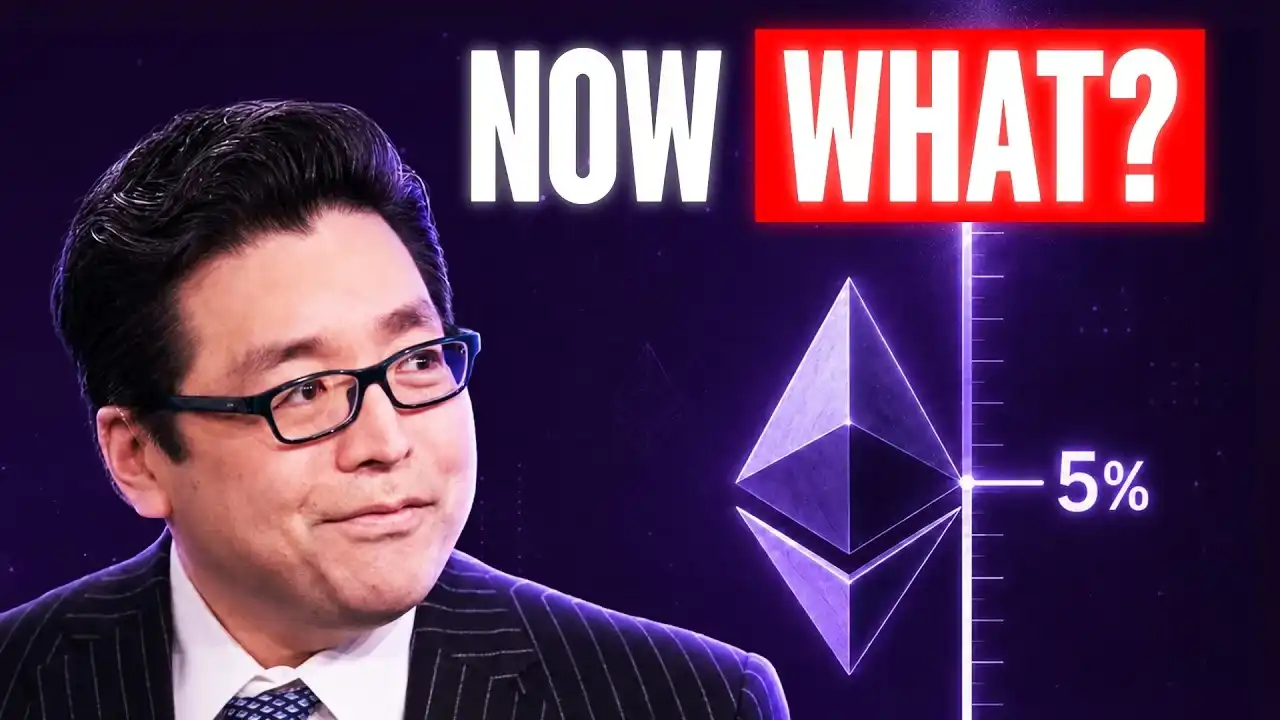
Podcast Notes | Conversation with Tom Lee: Bitmine Acquiring Nearly 5% of Total ETH Supply Is Not the End Goal, ETH Price Target Set at $10,000

In a podcast interview, Tom Lee, Chairman of BitMine Immersion Technologies, discusses the company's strategy to accumulate nearly 5% of the total Ethereum supply within 14 months, using equity financing and avoiding debt. BitMine has consistently purchased ETH for over 60 consecutive weeks, with recent weeks combining buybacks with purchases. The company's substantial ETH holdings generate approximately $300 million in annual staking rewards, covering operational costs like the dividends for its 9.5% perpetual preferred stock (BMNP). Lee positions ETH as a store-of-value asset, likening it to stocks or land, rather than a pure cash-flow instrument. Looking ahead, Lee suggests BitMine may continue buying beyond the 5% target if institutional adoption grows. He outlines a bullish price target for ETH: surpassing $5,000 in a new crypto bull cycle and potentially exceeding $10,000 within 1-2 years, driven by Wall Street tokenization and AI-related demand. The discussion also covers BitMine's evolution into an ecosystem player, funding Ethereum Foundation spin-offs and developing its Maven staking platform. Lee acknowledges his significant financial interests are tied to ETH's price and BitMine's performance. The interview provides a framework for evaluating ETH as a long-term asset, emphasizing staking yield sustainability and future institutional demand, while noting the uncertainties surrounding macro cycles and real-world adoption.

marsbit6m ago

Podcast Notes | Conversation with Tom Lee: Bitmine Acquiring Nearly 5% of Total ETH Supply Is Not the End Goal, ETH Price Target Set at $10,000

marsbit6m ago

Pricing Risk Assets in 8 Hours: Tonight's PCE to Set the Discount Rate, Nvidia to Test Earnings Tomorrow Morning

"Pricing Risk Assets in 8 Hours: PCE to Set the Discount Rate Tonight, NVIDIA to Test Profits Tomorrow Morning" Risk asset prices hinge on two variables: the numerator (earnings expectations) and the denominator (the discount rate). Both will be recalibrated within eight hours. First, at 20:30 Beijing time, the US Bureau of Economic Analysis releases July PCE inflation data and the second estimate of Q2 GDP. Consensus expects mild core PCE growth, but a surge in key PPI components poses an upside risk. A hotter-than-expected print could push Treasury yields and the dollar higher, threatening the recent rally in Bitcoin (BTC) above $80K, which was fueled by falling yields. A benign reading would support risk assets. Market sentiment is already "greedy" (Fear & Greed Index at 74), making it vulnerable to disappointment. Second, around 04:20, NVIDIA reports its Q2 FY27 earnings. While consensus revenue of ~$91.85B slightly exceeds company guidance, the market has priced in a beat. The key will be the magnitude of the beat and, crucially, the Q3 guidance. As a bellwether for tech and AI narratives, NVIDIA's results will significantly impact overall risk appetite and AI-related crypto tokens. The combination creates four scenarios: 1) Benign PCE & strong NVIDIA guidance confirms the bullish trend. 2) Hot PCE & strong NVIDIA leads to conflicted signals and likely volatility for BTC. 3) Benign PCE & weak NVIDIA guidance pressures tech but offers some macro support for BTC. 4) Hot PCE & weak NVIDIA guidance presents a "double whammy," risking a sharp pullback in BTC toward the $75K-$76K support zone. The outcomes will set the tone for markets ahead of the upcoming Jackson Hole symposium.

marsbit39m ago

Pricing Risk Assets in 8 Hours: Tonight's PCE to Set the Discount Rate, Nvidia to Test Earnings Tomorrow Morning

marsbit39m ago

Trading

Spot
活动图片