According to a new report from Chainalysis, potentially taxable on-chain crypto activity globally reached at least $457 billion in 2025, while international reporting rules may only cover a portion of it.
The United States accounted for an estimated $112.6 billion of the total, and North America led all regions with $134.6 billion, followed by the European Union with $125.1 billion.
The estimates include realized gains, income from activities such as mining, staking, and lending, as well as payments denominated in cryptocurrency, across the six largest blockchains, but do not account for trading and other activity within centralized exchanges.
Chainalysis stated that transactions falling under the OECD's Crypto-Asset Reporting Framework (CARF) cover only 14% of the taxable on-chain activity it identified. The remaining 86% includes activity on decentralized exchanges, peer-to-peer transfers, on-chain sources of income, and payments.
Developed by the OECD in 2022, CARF requires covered crypto service providers to report customer transaction data to tax authorities.
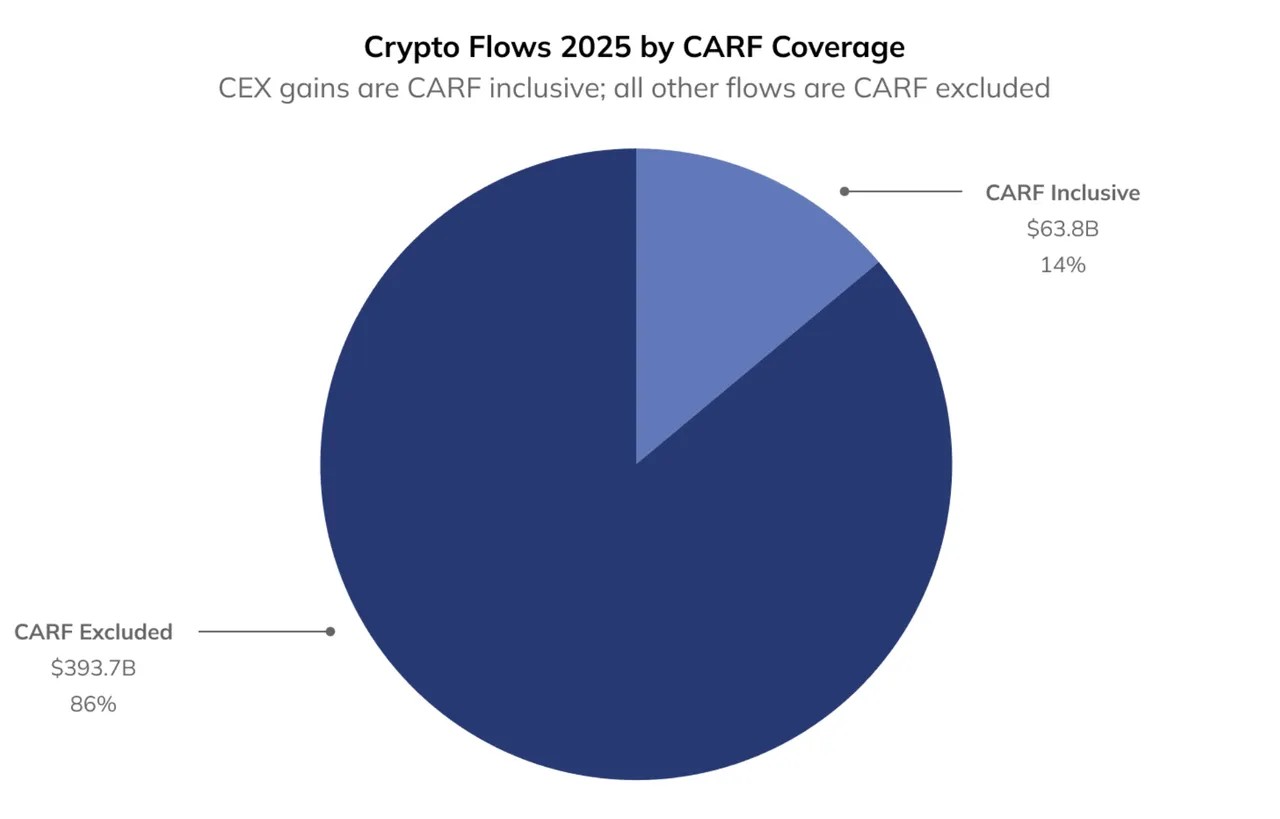
CARF covers only 14% of potentially taxable on-chain crypto activity.
Source: Chainalysis
Related: Chainalysis Sues U.S. Over $95M ICE Contract With TRM Labs
Limitations of CARF for Reporting On-Chain Activity Taxes
Data collection under CARF began on January 1, 2026, in 48 jurisdictions, including the United Kingdom and the European Union, and requires covered crypto platforms to collect additional information about customers and their tax residency.
Under CARF, covered crypto service providers collect information about customers and their tax residency and report transaction data to national tax authorities, which can then exchange this information across borders.
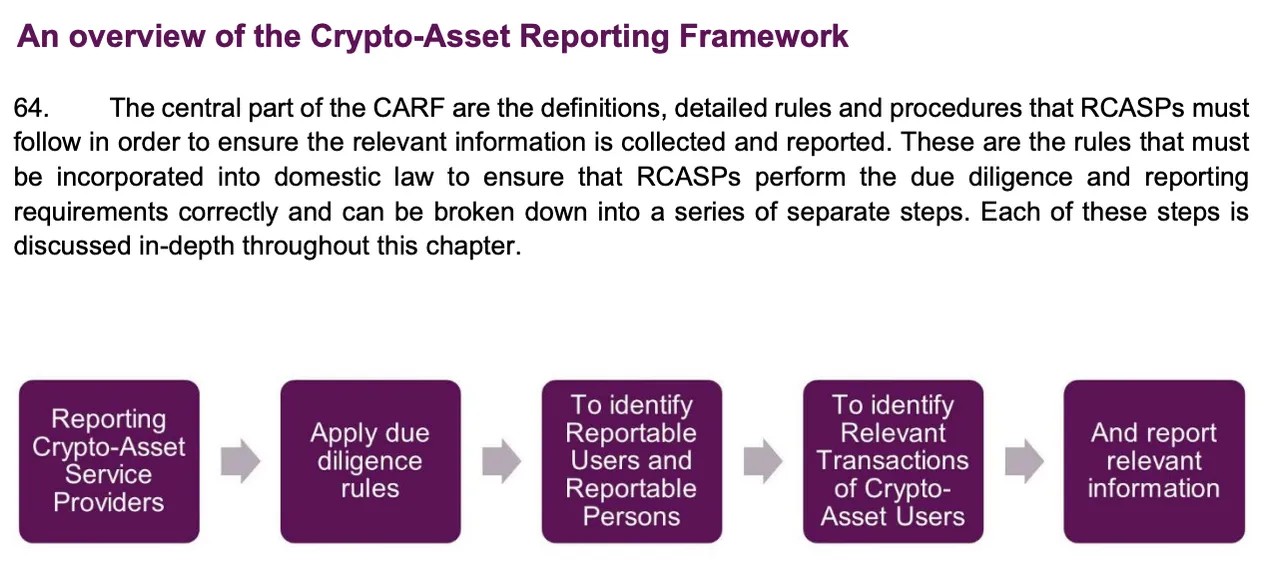
The CARF Framework. Source: OECD
CARF's focus on crypto intermediaries also helps explain the gaps highlighted by Chainalysis. Colby Mangles, a former OECD advisor involved in drafting CARF, told Cointelegraph in January that the framework was designed with intermediaries in mind—those that facilitate crypto transactions as a business.
A significant portion of decentralized finance therefore remains outside the reporting perimeter, as there may be no centralized operator or custodial relationship on which to impose reporting obligations.
This may change as regulators develop rules for decentralized platforms. Mangles stated that tax authorities are monitoring developments in anti-money laundering regulation, including attempts to define when DeFi platforms or their operators should be considered regulated crypto service providers.
Magazine: Proposed SEC crypto rules likely won't spark a new ICO boom
end-content