上线一月,香港加密ETF表现如何?反映出哪些市场信号?

Odaily星球日报Published on 2023-01-18Last updated on 2023-01-18

Abstract

解析数据,比较香港ETF与加拿大ETF。

去年 12 月 16 日,两支加密资产交易所交易基金(ETF)获准在香港交易所上市交易,标志着港府在成为亚洲加密新中心的道路上迈出了重要一步。转眼间,一个月已经过去,香港加密 ETF 的表现如何?

去年上线的两支 ETF,皆由南方东英资产管理有限公司推出,主要追踪芝加哥商品交易所(CME)中比特币以及以太坊期货价格,因此被称为期货 ETF,代码分别是 3066 以及 3068 。而 1 月 13 日,三星资产管理公司也在港交所上线了一只同样追踪 CME 比特币期货的 ETF,代码: 03135 。因此,目前香港共有三支加密货币期货 ETF。

Odaily观察发现,南方东英的两支 ETF 在上线当日,皆出现较高的溢价(成交价高于资产净值),分别是 6.01% (以太坊 ETF)以及 4.02% (比特币 ETF);后续由于加密市场影响,价格短时下跌,基本与资产净值保持持平。

到了今年年后,加密市场反弹,比特币以及以太坊现货分别上涨 27.6% 以及 30.2% ,两只期货 ETF 市场价格也随之上升,分别是 29.2% 以及 32.9% ,涨幅均超过现货表现。(注:行情看涨,期货价格高于现货价格,称为期货升水。)两支 ETF 的成交量也有所增加,但都没有超过去年的前值:比特币期货 ETF 日交易量前值是 210 万(12 月 30 日), 2023 年日交易量最高 182.2 万;以太坊期货 ETF 日交易量前值是 166.1 万(12 月 20 日), 2023 年日交易量最高 99 万

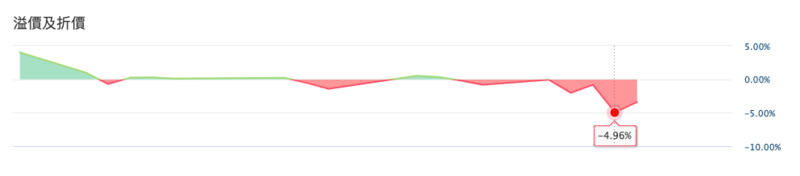
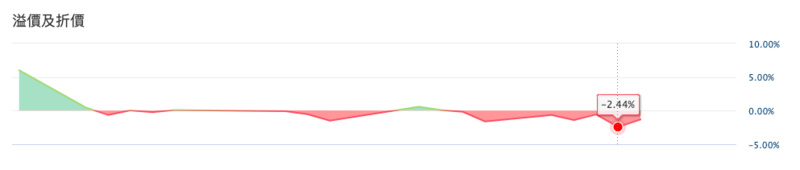
更关键的是,在上涨行情下,两支 ETF 居然出现折价的情况,比特币期货 ETF 最高折价 4.96% ,以太坊期货 ETF 最高折价 2.44% ,这意味着早期投资人可能正在加速抛售退出。具体折价、溢价走势如下所示:(红色区域为折价,绿色为溢价)

(比特币 ETF)

(以太坊 ETF)

对比其他加密货币 ETF,可以发现这种趋势并不具有共性:灰度比特币信托(GBTC)净值折价率从年初的 45.1% 下降至 38.8% ;以太坊信托(ETHE)净值折价率从年初的 59.3% 下降至 51% ;而加拿大的两只加密货币 ETF(BTCC、BTCQ)则都是出现溢价,特别是 BTCQ 正溢价一度上涨超过 10% 。

另外,香港的 ETF 在国际市场的竞争力并不强,发行已经一个月了,但其资产规模并没有大规模增长。一方面是受限于加密市场整体表现不佳,但另一方面也与其自身机制设计有关。

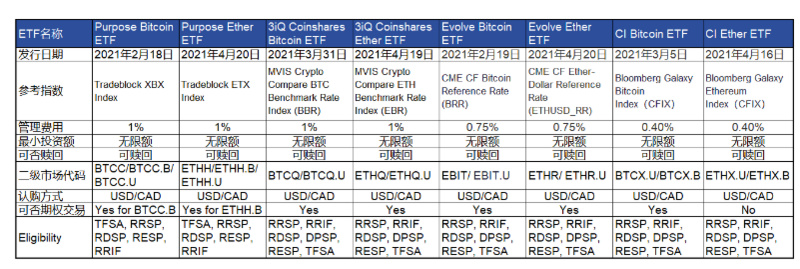
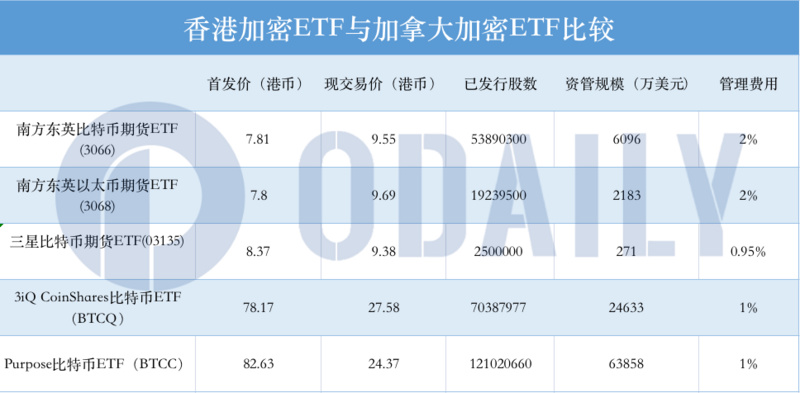
管理费用是直接影响投资者的选择的一个重要因素。南方东英的两支 ETF 管理费用都是 2% ,与灰度一致,而加拿大的加密 ETF 产品费用都比这两者要低,只有 1 % 管理费用。另外,从知名度来说,灰度是全球知名加密信托基金,有着丰富的经验,而 3 iQ 和 CoinShares 也在加密货币领域打响了自己的品牌,因此加密投资者对于这几家机构更加熟悉。对比之下,南方东英很难获得全球投资者的关注与青睐。

(加拿大其他加密 ETF 一览)

不过,新上线的三星 ETF,似乎吸取了教训,主动将管理费用下调至 0.95% ;并且三星在全球的品牌影响力也更大。从这点来说,三星比特币 ETF 也许会后来居上,资管规模超过南方东英。三星公司也表示,如果条件允许,未来会考虑在香港启动基于现货比特币 ETF。

目前,港府还在积极探索更多的加密实践,比如香港证监会提议批准部分“高流动性”加密货币进行零售交易。有关香港加密新动向,Odaily星球日报也将持续关注。

Related Reads

How Blockchain Fills the Identity, Payment, and Trust Gaps for AI Agents?

AI Agents are rapidly evolving into autonomous economic participants, but they face critical gaps in identity, payment, and trust infrastructure. They currently lack standardized ways to prove who they are, what they are authorized to do, and how they should be compensated across different environments. Blockchain technology is emerging as a solution to these challenges by providing a neutral coordination layer. Public ledgers offer auditable credentials, wallets enable portable identities, and stablecoins serve as a programmable settlement layer. A key bottleneck is the absence of a universal identity standard for non-human entities—akin to "Know Your Agent" (KYA)—which would allow Agents to operate with verifiable, cryptographically signed credentials. Without this, Agents remain fragmented and face barriers to interoperability. Additionally, as AI systems take on governance roles, there is a risk that centralized control over models could undermine decentralized governance in practice. Cryptographic guarantees on training data, prompts, and behavior logs are essential to ensure Agents act in users' interests. Stablecoins and crypto-native payment rails are becoming the default for Agent-to-Agent commerce, enabling seamless, low-cost transactions for AI-native services. These systems support permissionless, programmable payments without traditional merchant onboarding. Finally, as AI scales, human oversight becomes impractical. Trust must be built into system architecture through verifiable provenance, on-chain attestations, and decentralized identity systems. The future of Agent economies depends on cryptographically enforced accountability, allowing users to delegate tasks with clearly defined constraints and transparent operation logs.

marsbit52m ago

How Blockchain Fills the Identity, Payment, and Trust Gaps for AI Agents?

marsbit52m ago

Six Years Since DeFi Summer, How Will the Decentralized Financial Revolution Continue?

In 2026, the DeFi sector faces a severe trust crisis following a series of high-profile security breaches, including a $292 million theft from KelpDAO’s rsETH, a $2.85 million exploit at Drift Protocol due to permission vulnerabilities, and a $14.9 million lending failure at Venus Protocol. These incidents triggered a withdrawal of approximately $10 billion from DeFi over a single weekend, highlighting systemic risks beyond smart contract flaws—such as governance, cross-chain complexity, and operational weaknesses. Despite these challenges, on-chain finance continues to grow, with capital shifting toward safer, regulated products. Stablecoins like USDT ($185B) and USDC ($78B) have reached a combined market cap of $263 billion, while tokenized U.S. Treasuries surged to $10.93 billion. Visa’s growing USDC settlement volume, now annualized at $3.5 billion, signals increasing institutional adoption of compliant blockchain-based financial infrastructure. The competition for the future of on-chain finance is intensifying. While native DeFi struggles with trust and capital outflows, regulated products—stablecoins, tokenized assets, and ETFs—are gaining dominance by offering programmable, 24/7 settlement without high DeFi risks. Over 80 crypto projects shut down in Q1 2026, reflecting dwindling patience for speculative ventures. The core challenge for open DeFi is to rebuild trust and demonstrate irreplaceable value—or risk ceding its role as the primary entry point to on-chain finance.

marsbit1h ago

Six Years Since DeFi Summer, How Will the Decentralized Financial Revolution Continue?

marsbit1h ago

Trading

Spot
Futures

Hot Articles

What is $BITCOIN

DIGITAL GOLD ($BITCOIN): A Comprehensive Analysis Introduction to DIGITAL GOLD ($BITCOIN) DIGITAL GOLD ($BITCOIN) is a blockchain-based project operating on the Solana network, which aims to combine the characteristics of traditional precious metals with the innovation of decentralized technologies. While it shares a name with Bitcoin, often referred to as “digital gold” due to its perception as a store of value, DIGITAL GOLD is a separate token designed to create a unique ecosystem within the Web3 landscape. Its goal is to position itself as a viable alternative digital asset, although specifics regarding its applications and functionalities are still developing. What is DIGITAL GOLD ($BITCOIN)? DIGITAL GOLD ($BITCOIN) is a cryptocurrency token explicitly designed for use on the Solana blockchain. In contrast to Bitcoin, which provides a widely recognized value storage role, this token appears to focus on broader applications and characteristics. Notable aspects include: Blockchain Infrastructure: The token is built on the Solana blockchain, known for its capacity to handle high-speed and low-cost transactions. Supply Dynamics: DIGITAL GOLD has a maximum supply capped at 100 quadrillion tokens (100P $BITCOIN), although details regarding its circulating supply are currently undisclosed. Utility: While precise functionalities are not explicitly outlined, there are indications that the token could be utilized for various applications, potentially involving decentralized applications (dApps) or asset tokenization strategies. Who is the Creator of DIGITAL GOLD ($BITCOIN)? At present, the identity of the creators and development team behind DIGITAL GOLD ($BITCOIN) remains unknown. This situation is typical among many innovative projects within the blockchain space, particularly those aligning with decentralized finance and meme coin phenomena. While such anonymity may foster a community-driven culture, it intensifies concerns about governance and accountability. Who are the Investors of DIGITAL GOLD ($BITCOIN)? The available information indicates that DIGITAL GOLD ($BITCOIN) does not have any known institutional backers or prominent venture capital investments. The project seems to operate on a peer-to-peer model focused on community support and adoption rather than traditional funding routes. Its activity and liquidity are primarily situated on decentralized exchanges (DEXs), such as PumpSwap, rather than established centralized trading platforms, further highlighting its grassroots approach. How DIGITAL GOLD ($BITCOIN) Works The operational mechanics of DIGITAL GOLD ($BITCOIN) can be elaborated on based on its blockchain design and network attributes: Consensus Mechanism: By leveraging Solana’s unique proof-of-history (PoH) combined with a proof-of-stake (PoS) model, the project ensures efficient transaction validation contributing to the network's high performance. Tokenomics: While specific deflationary mechanisms have not been extensively detailed, the vast maximum token supply implies that it may cater to microtransactions or niche use cases that are still to be defined. Interoperability: There exists the potential for integration with Solana’s broader ecosystem, including various decentralized finance (DeFi) platforms. However, the details regarding specific integrations remain unspecified. Timeline of Key Events Here is a timeline that highlights significant milestones concerning DIGITAL GOLD ($BITCOIN): 2023: The initial deployment of the token occurs on the Solana blockchain, marked by its contract address. 2024: DIGITAL GOLD gains visibility as it becomes available for trading on decentralized exchanges like PumpSwap, allowing users to trade it against SOL. 2025: The project witnesses sporadic trading activity and potential interest in community-led engagements, although no noteworthy partnerships or technical advancements have been documented as of yet. Critical Analysis Strengths Scalability: The underlying Solana infrastructure supports high transaction volumes, which could enhance the utility of $BITCOIN in various transaction scenarios. Accessibility: The potential low trading price per token could attract retail investors, facilitating wider participation due to fractional ownership opportunities. Risks Lack of Transparency: The absence of publicly known backers, developers, or an audit process may yield skepticism regarding the project's sustainability and trustworthiness. Market Volatility: The trading activity is heavily reliant on speculative behavior, which can result in significant price volatility and uncertainty for investors. Conclusion DIGITAL GOLD ($BITCOIN) emerges as an intriguing yet ambiguous project within the rapidly evolving Solana ecosystem. While it attempts to leverage the “digital gold” narrative, its departure from Bitcoin's established role as a store of value underscores the need for a clearer differentiation of its intended utility and governance structure. Future acceptance and adoption will likely depend on addressing the current opacity and defining its operational and economic strategies more explicitly. Note: This report encompasses synthesised information available as of October 2023, and developments may have transpired beyond the research period.

363 Total ViewsPublished 2025.05.13Updated 2025.05.13
What is $BITCOIN

Discussions

Welcome to the HTX Community. Here, you can stay informed about the latest platform developments and gain access to professional market insights. Users' opinions on the price of BTC (BTC) are presented below.

活动图片