[Featured Rearch]Key Crypto Moments from 2022

mediumPublished on 2022-12-26Last updated on 2022-12-26

Abstract

While events like the collapse of FTX have taken their toll, cryptocurrency has bounced back from worse, and we feel confident that it can again.

This year we witnessed what happens when the crypto community comes together to help the people of Ukraine, the world’s first auction of NFT art, and the unraveling of the FTX fallout. Take a look back at a few notable events in 2022 through the lens of our investigative solutions, Reactor and Storyline.

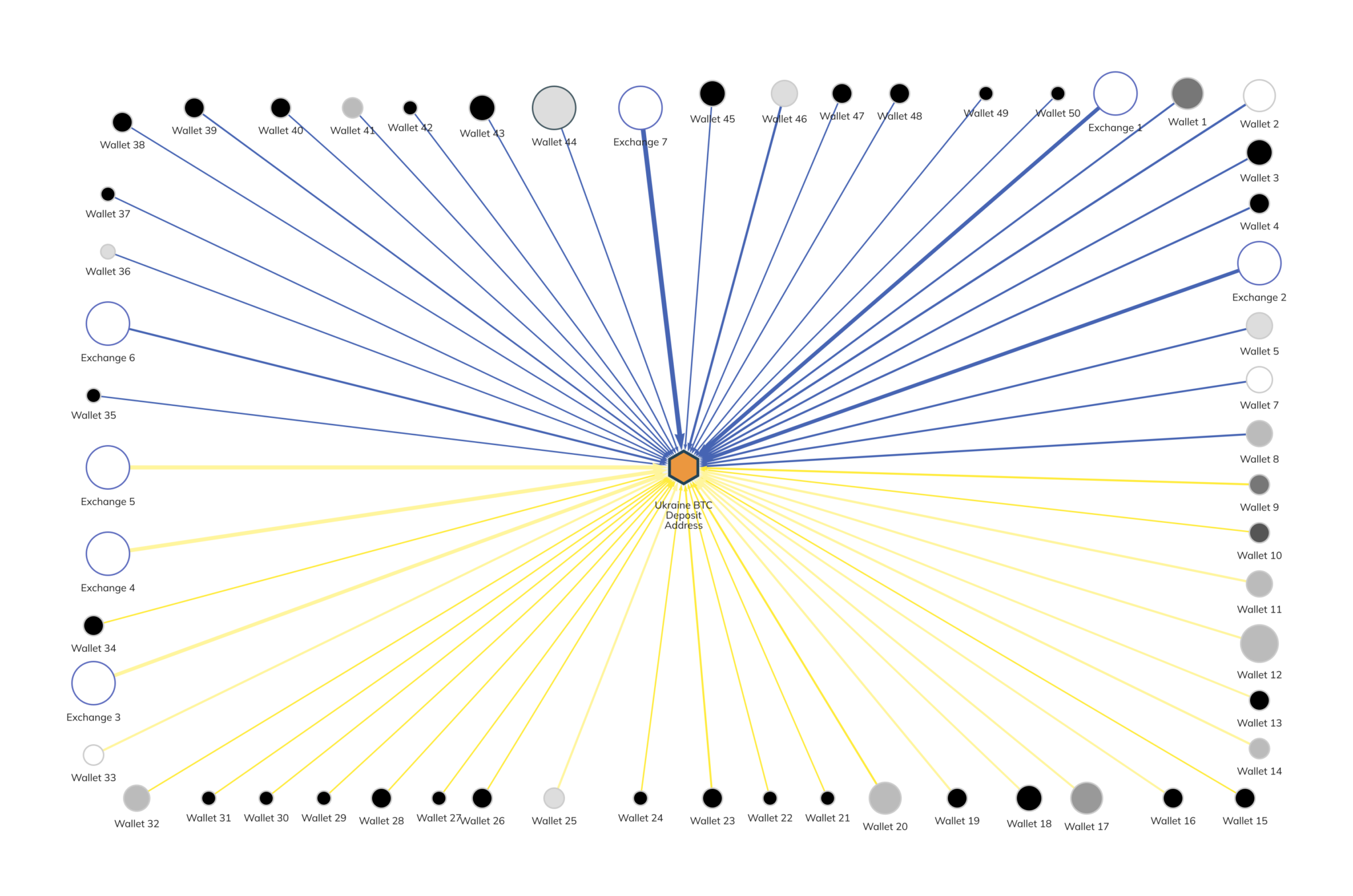
1. Cryptocurrency brings close to $100 million in aid to Ukraine

When the war first began, the Ukrainian government turned to crypto for fundraising and defense efforts. This Chainalysis Reactor graph shows millions pouring in from many exchanges and personal wallets into the donation funds.
2. UST loses its peg to the U.S. dollar, wiping out LUNA and losing billions

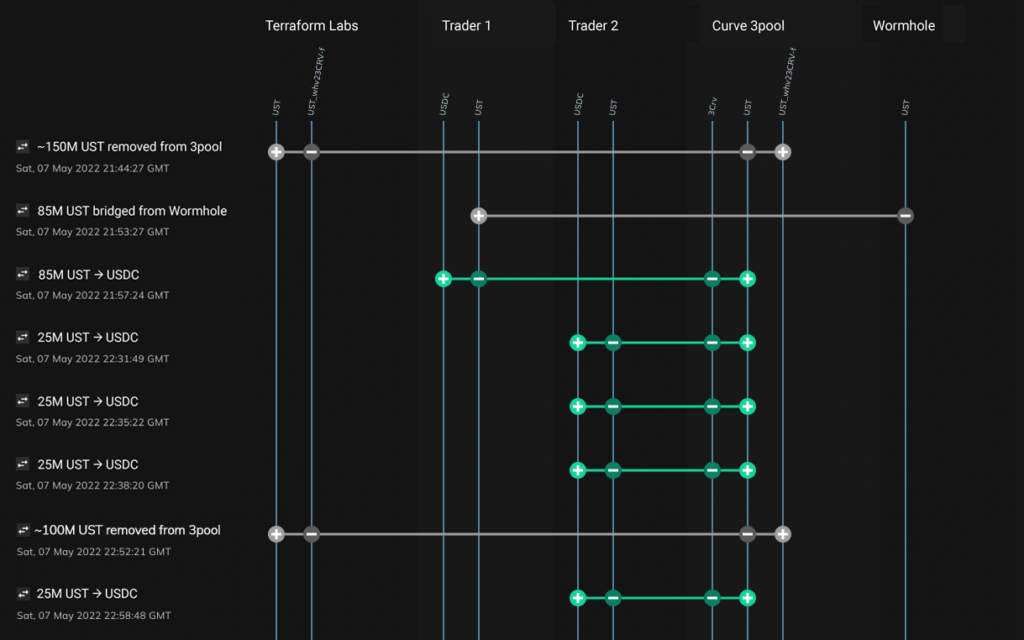
On the night of May 7th, Terraform Labs withdrew 150 million UST from 3pool, a decentralized stablecoin exchange, as part of a planned, public effort to move these funds to another pool. Minutes later, two traders used the pool to swap $185M in UST for USDC, knocking UST off its USD peg and kicking off the collapse of the algorithmic stablecoin.
3. Christie’s launches an on-chain platform for NFT art

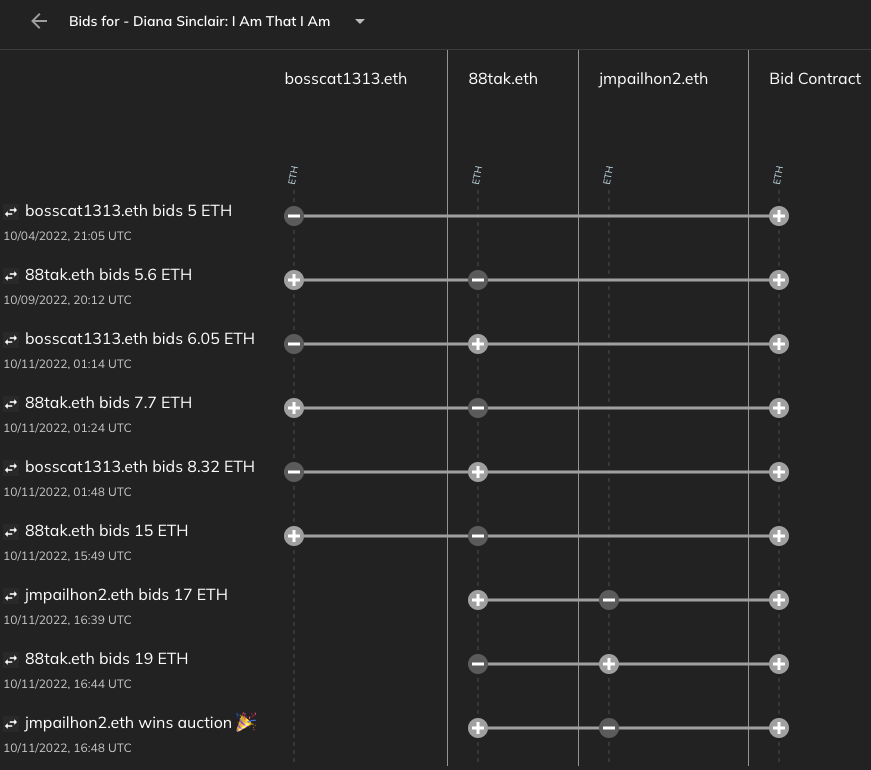
The platform’s inaugural sale took place September 28 and included nine NFTs by artist Diana Sinclair in a collection titled “Phases.” Here’s a look at one of the sales on-chain via Chainalysis Storyline.
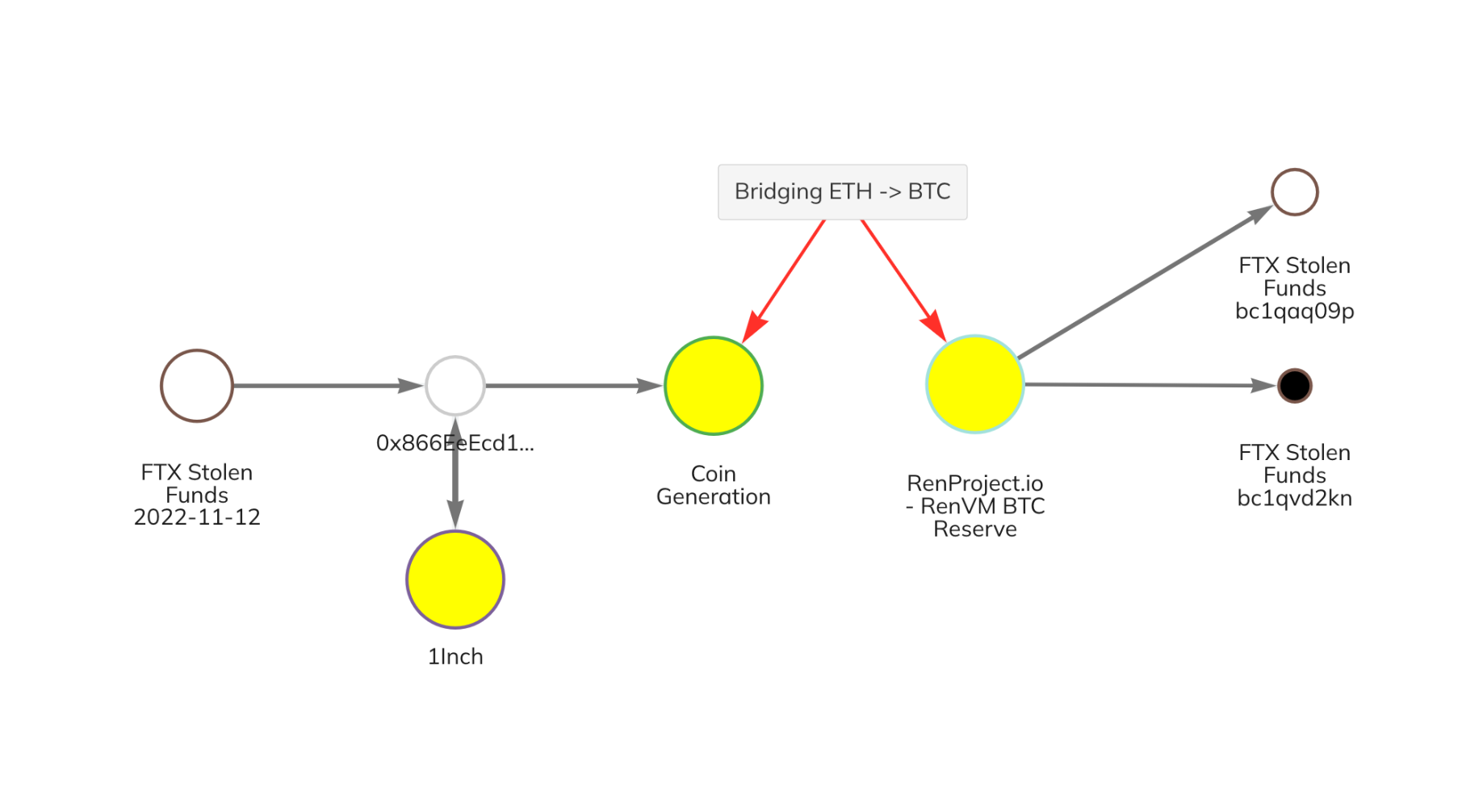
4. In the immediate aftermath of the collapse of FTX, approximately $400M was stolen.

The funds were bridged from ETH to BTC, likely to be mixed prior to a cash-out attempt. You can see the movements in Chainalysis Reactor.
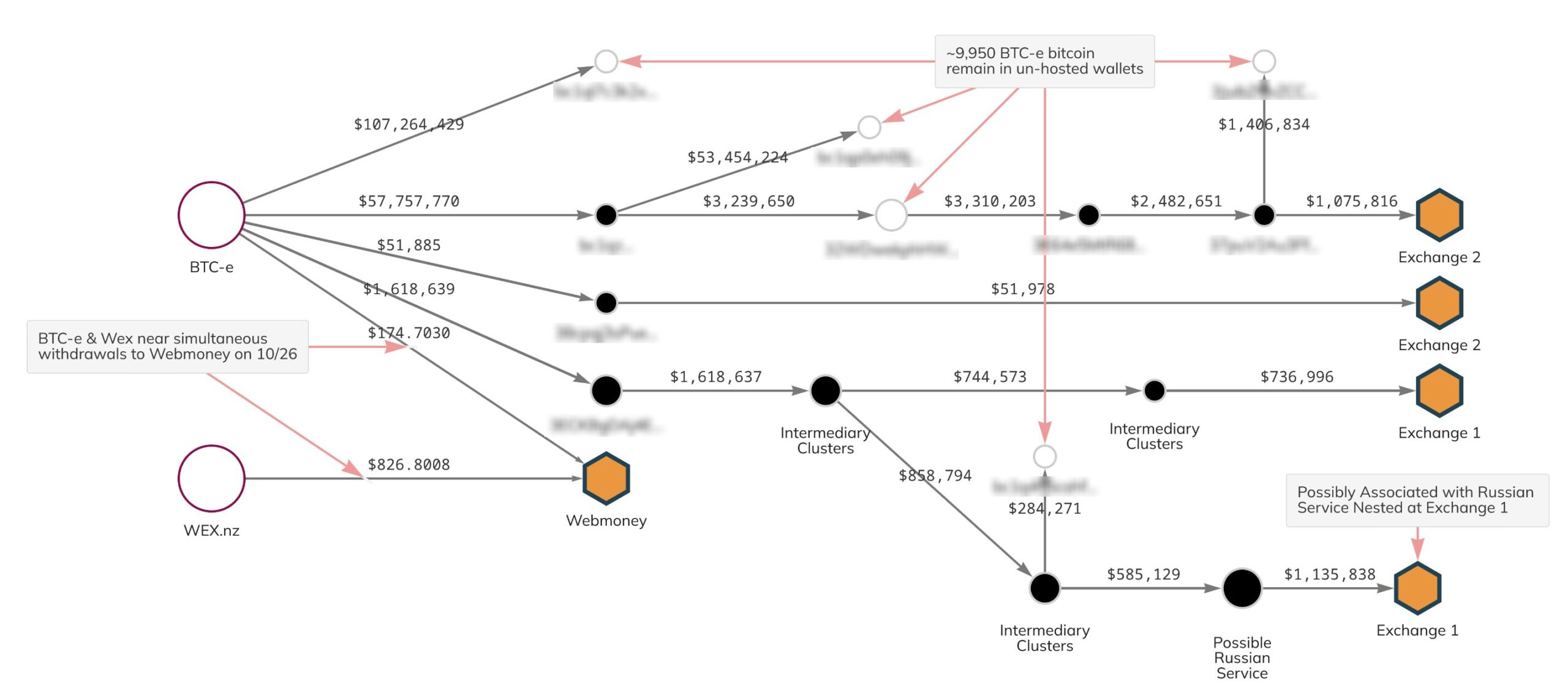
5. BTC-e Sends $165 Million Worth of Bitcoin to Personal Wallets, Exchanges, and Other Services

This marks the largest withdrawal by BTC-e’s controllers since April 2018. For background, BTC-e was a Russia-focused cryptocurrency exchange that U.S. authorities shut down in 2017.
Wrapping up 2022

2022 was clearly a significant year for the industry. While events like the collapse of FTX have taken their toll, cryptocurrency has bounced back from worse, and we feel confident that it can again. We also can’t forget the positives of the last year — new players like Christie’s have embraced crypto, and even more importantly, we saw the community leverage crypto’s unique value adds to bring aid to Ukraine. As the year comes to a close, Chainalysis is prepared to support our customers and the industry with whatever 2023 brings.

Related Reads

IOSG Founder: Ethereum Doesn't Need Another Leap of Technical Faith, It Needs a Musk-style Compromise

Jocy, founder of IOSG Ventures, argues that Ethereum does not need renewed technological faith but a "Musk-like compromise." The recent formation of ETHLabs—funded by major ETH holders like BitMine and Lubin—highlights a market-driven move to fill a gap left by the Ethereum Foundation (EF), signaling a loss of confidence in its decentralized, hands-off approach. The core critique contrasts Vitalik Buterin's (V) idealistic, technology-first vision with Elon Musk's pragmatic, business-driven execution. The author asserts Ethereum's current shortage is not another technical roadmap but a clear, real-world application narrative and a leader willing to engage directly with commercial realities—like Musk. Internal issues are emphasized, citing EF's management problems and talent drain. While the new decentralized model with independent nodes like ETHLabs addresses the single foundation's limitations, it risks fragmentation without cohesive direction. True cohesion, the author suggests, must come from a shared, compelling narrative around ETH's value, not just from aligned financial interests. Independence claims for new entities are seen as aspirational, needing years of transparency to build trust. The ultimate threat is not competitors like Solana, but the broader shift of attention and talent toward AI. Ethereum has a limited window—12 to 18 months—to recapture focus by delivering tangible, real-world applications. The conclusion urges V to shift from abstract ideals to grounded, pragmatic leadership. The time for this crucial pivot is running out.

marsbit45m ago

IOSG Founder: Ethereum Doesn't Need Another Leap of Technical Faith, It Needs a Musk-style Compromise

marsbit45m ago

Google Starts Selling TPUs, Big Tech Aims to Produce "Low-Cost Tokens" with AI Chips

Google has begun selling its proprietary TPU chips and AI computing hardware directly to third-party data centers and clients, marking a strategic shift. Previously only accessible via cloud rentals, TPUs are specialized processors designed for the matrix and tensor operations central to AI models. By combining thousands into supercomputing clusters managed by CPUs, Google achieves high-efficiency AI processing. This move enables Google’s Gemini AI to offer competitive token pricing, challenging rivals like OpenAI. It also signals a broader industry trend where AI compute is becoming a commoditized resource like electricity. While NVIDIA remains dominant with its CUDA ecosystem and high-performance GPUs, the focus is shifting from raw power to cost efficiency and system integration. Google’s approach mirrors NVIDIA’s by selling an entire ecosystem—hardware, software, and data center expertise—rather than just chips. This threatens NVIDIA’s grip on the mid-range inference market, where lower-cost, efficient solutions are increasingly demanded. Similarly, cloud providers like Huawei Cloud and Alibaba Cloud in China are developing their own AI chip ecosystems (e.g., Ascend, Zhenwu), packaging chips, clusters, and tools into full-stack solutions. They aim to reduce token costs and capture market share through integrated systems. In summary, the AI infrastructure race is evolving from a competition for the strongest chips to a contest for the most efficient and cost-effective systems. Google’s TPU sales highlight this transition, emphasizing that future success lies in delivering affordable, scalable AI compute as a foundational service.

marsbit1h ago

Google Starts Selling TPUs, Big Tech Aims to Produce "Low-Cost Tokens" with AI Chips

marsbit1h ago

Trading

Spot
Futures
活动图片