80% of Oil Revenue Settled in USDT, Stablecoin Becomes Venezuela's 'Second Dollar'

比推Published on 2026-01-13Last updated on 2026-01-13

Abstract

Summary: Venezuela's state oil company PDVSA now uses Tether's USDT stablecoin to settle approximately 80% of its oil export revenue, a strategic shift to circumvent U.S. sanctions. This move has cemented USDT's role as a "second dollar" in the country's economy. While it serves as a critical financial lifeline for citizens grappling with hyperinflation and the collapse of the bolivar, it also functions as a tool for the government to bypass traditional banking systems. The dual-use nature of stablecoins is highlighted: they provide essential stability for everyday transactions and remittances for the populace, yet simultaneously enable sanctioned entities to evade financial oversight. Despite the recent arrest of former President Nicolás Maduro, the pervasive use of USDT is expected to continue due to Venezuela's ongoing economic instability.

Author: Vicky Ge Huang, the Wall Street Journal

Compiled by: Peggy, BlockBeats

Original title: 80% of Oil Revenue Settled in Stablecoin, Venezuela Turns USDT into a Second Dollar


Editor's Note: From the "stablecoin of outlaws" to attempting to enter the U.S. compliant market, the role of USDT in Venezuela reveals the most real and contradictory aspect of stablecoins: they serve both as a settlement tool for oil exports to bypass sanctions and the traditional banking system, and as a financial lifeline for ordinary people to sustain their lives amid the collapse of the bolivar and capital controls.

When nearly 80% of a country's oil revenue is taken over by stablecoins, and even the elderly pay property fees with USDT, this is not only an extreme example of crypto penetrating the real economy but also a reminder that the core controversy of stablecoins has never been just about "how well they work," but rather their inherent "dual use": becoming a lifeline where institutions fail, and an escape route in regulatory vacuums.

Below is the original text:
Nicolás Maduro has, in a way, contributed to USDT becoming the world's most dominant stablecoin. And now, as the former Venezuelan leader is held in a Brooklyn prison, the central role of this cryptocurrency in Venezuela's economy is once again in the spotlight.

For Venezuela's state-owned oil company, USDT has become a crucial tool to evade sanctions and is used as a payment currency for settling oil transactions. At the same time, Tether provides a financial "lifeline" for ordinary Venezuelans amid the ongoing devaluation of the national currency, the bolivar. Like most major stablecoins, USDT maintains a 1:1 peg to the U.S. dollar.

According to crypto industry analysts, Maduro's arrest and removal as Venezuela's president may not necessarily weaken USDT's presence in the country—after all, hyperinflation remains a long-term challenge. Meanwhile, the financial ties between Tether and Venezuela also place the cryptocurrency company in a critical position: it could become a key ally for U.S. authorities as they attempt to trace the whereabouts of funds allegedly embezzled by the Maduro regime.

Adam Zarazinski, CEO of crypto intelligence firm Inca Digital, stated: "The use of cryptocurrency in Venezuela will continue and is likely to expand in the short term. For ordinary users, it is a self-help mechanism to cope with economic failure and institutional collapse. But the same governance failures also create space for evading sanctions—if there is no credible improvement in governance, this outcome will not change."

Maduro pleaded not guilty to drug trafficking charges in his arraignment in U.S. federal court last week.

This new phase comes as cryptocurrency company Tether and its token—once stigmatized as the "stablecoin of choice for outlaws"—are seeking acceptance in the U.S. market. Last year, legislation was passed to pave the way for broader use of stablecoins, and Tether announced plans to launch a stablecoin open to U.S. investors. If realized, this would put it on a level playing field with competitors like Circle Internet Group and Paxos. Otherwise, Tether risks being marginalized in the U.S. market.

Just last week, U.S. Energy Secretary Chris Wright stated that the U.S. would indefinitely sell blocked Venezuelan oil. He said the proceeds from the sales would be deposited into accounts controlled by the U.S. government and eventually transferred to the Latin American country to "benefit the Venezuelan people." A senior Trump administration official also told The Wall Street Journal that the government is selectively rolling back some sanctions to allow crude oil and petroleum products to be transported and sold to global markets.

Faced with escalating U.S. sanctions in 2020, Venezuela's state-owned oil company Petroleos de Venezuela (PdVSA) began requiring payments in USDT to bypass the traditional banking system. Oil export revenues are settled either by directly transferring USDT to a wallet address or by converting cash proceeds into USDT through intermediaries.

This shift has been "transformative" for the country's oil economy. Venezuelan local economist Asdrúbal Oliveros recently stated in a podcast that, according to one estimate, nearly 80% of Venezuela's oil revenue is received in the form of stablecoins like USDT.

Subsequently, Tether cooperated with U.S. authorities to freeze dozens of wallets identified as being involved in Venezuelan oil trade. A Tether spokesperson did not respond to requests for comment.

Soon after the sanctions took effect, Tether, with the ticker USDT, also became a viable alternative currency for many Venezuelans. They use this stablecoin for cross-border remittances, savings preservation, and daily payments.

Tether CEO Paolo Ardoino said at a recent crypto industry conference: "Over the past 10 years, the Venezuelan bolivar has depreciated by 99.8% against the U.S. dollar, the Turkish lira by 80%, and the Argentine peso by about 94.5%. This simple chart alone is enough to explain why USDT has succeeded."

Mauricio Di Bartolomeo, a crypto entrepreneur born and raised in Venezuela, said that two months ago, his 71-year-old aunt called him because she needed to buy some USDT to pay her apartment's homeowners association fee.

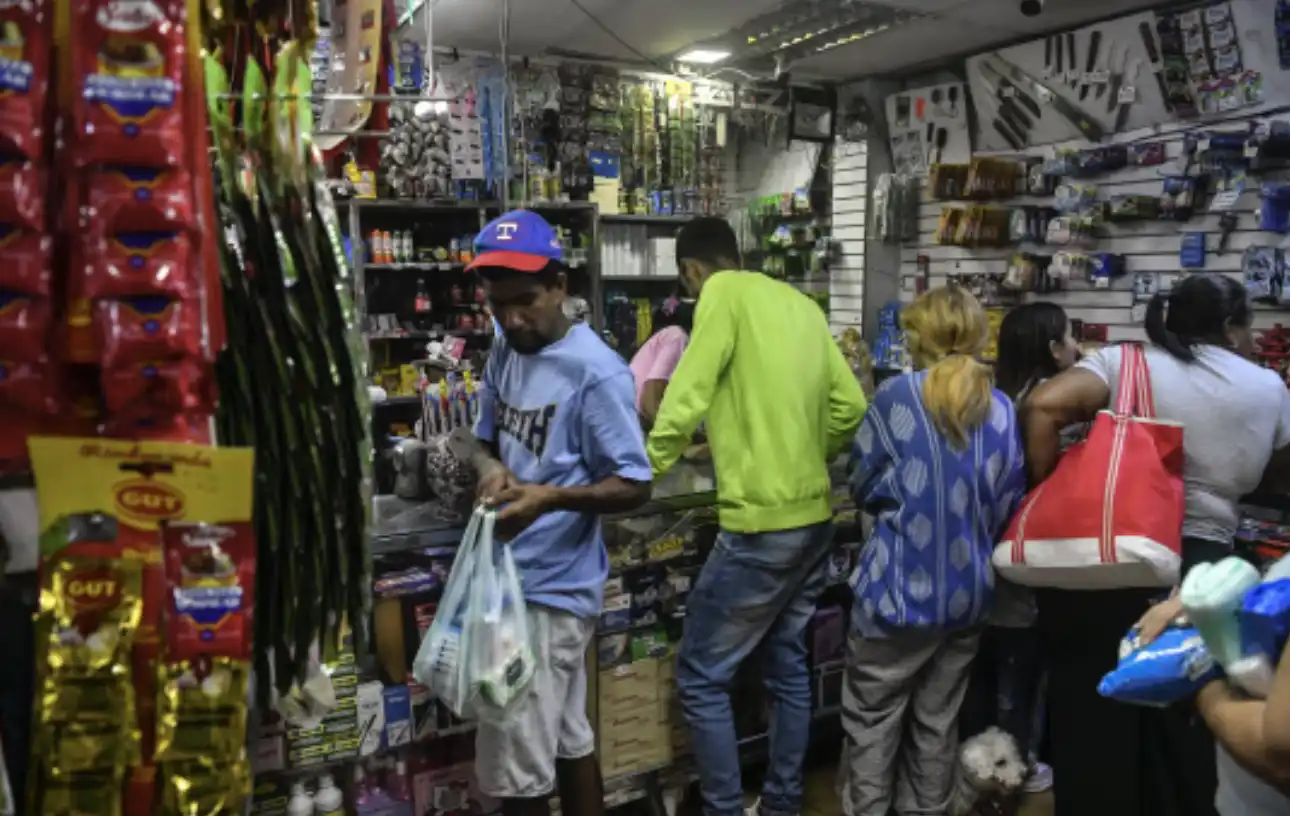
"You pay the gardener, you pay for a haircut—everything is paid this way. Basically, you can use USDT for anything," said Di Bartolomeo, co-founder of crypto lending platform Ledn. "The penetration of stablecoins in Venezuela is so deep that even without regulated, compliant channels to buy and sell stablecoins, people still choose stablecoins over the local banking system."

Researchers say it was almost inevitable that USDT would play a major role in Venezuela—due to a lack of trust in the country's banking system and strict capital controls that limit access to physical dollars. A prime example: the Venezuelan government attempted to launch an oil-backed cryptocurrency called Petro in 2018, but it failed due to lack of public trust and international recognition.

Ari Redbord, global head of policy at blockchain analytics firm TRM Labs, said: "The issue is not with USDT itself, but with the inherent 'dual-use' reality of stablecoins." TRM Labs has partnered with Tether to track the use of stablecoins on the Tron blockchain in illegal activities. "They can be a lifeline for ordinary people and also serve as a tool to evade sanctions under pressure."



Original link: https://www.bitpush.news/articles/7602350

Related Questions

QWhat percentage of Venezuela's oil revenue is settled using USDT, according to the article?

ANearly 80% of Venezuela's oil revenue is settled using USDT and other stablecoins.

QWhy has USDT become a crucial tool for Venezuela's state oil company, PDVSA?

AUSDT has become a crucial tool for PDVSA to circumvent international sanctions and bypass the traditional banking system for settling oil transactions.

QWhat dual role does USDT play in the Venezuelan economy, as described in the article?

AUSDT serves a dual role: it acts as a financial lifeline for ordinary citizens coping with hyperinflation and capital controls, while also being used as a tool to evade sanctions for oil exports.

QWhat was the outcome of the Venezuelan government's attempt to launch its own oil-backed cryptocurrency, the Petro?

AThe government's attempt to launch the Petro failed due to a lack of public trust and international recognition.

QHow is Tether, the company behind USDT, attempting to gain legitimacy in the US market?

ATether is attempting to gain legitimacy in the US market by announcing plans to launch a stablecoin that will be open to US investors, following new legislation that paves the way for wider stablecoin use.

Related Reads

Annual Salary of Millions Competing for Electricians, Meta Rushes to Open Its Own Technical School

The AI boom is facing an unexpected bottleneck: a severe shortage of skilled construction workers and electricians. As tech giants like Meta, OpenAI, and Alphabet race to build massive data centers—such as OpenAI's $16 billion "Stargate" project—they are hitting a critical labor wall. The U.S. needs an estimated 130,000 more electricians, 240,000 construction workers, and 150,000 supervisors by 2030 for AI infrastructure alone, but tens of thousands of electrician jobs go unfilled each year. While AI companies offer high premiums, with electricians earning up to $280,000 annually, worker scarcity still causes massive losses—delays on a single project can cost $14.2 million per month. The complexity of building AI data centers, which require immense power (equivalent to powering hundreds of thousands of homes), sophisticated electrical systems, and advanced liquid cooling solutions, demands highly skilled technicians who are in short supply. To combat this, companies are investing heavily in training. Meta has committed $115 million to a free training school offering tuition, housing, and stipends, targeting 5,000 new workers. OpenAI is partnering with unions to secure skilled labor. These efforts are paying off, with a significant rise in Gen Z interest in trade schools over college. However, the power demands are staggering. AI data centers are driving a rapid surge in electricity consumption, projected to account for up to 12% of U.S. power use by 2028 and raising costs for consumers. Furthermore, the construction boom is project-based, leading to a potential future glut of trained workers once building peaks, which could depress wages industry-wide. The race for AI supremacy now depends as much on skilled hands as on advanced chips.

marsbit10m ago

Annual Salary of Millions Competing for Electricians, Meta Rushes to Open Its Own Technical School

marsbit10m ago

OpenAI No Longer Sells Its Most Expensive Model for Profit

OpenAI is shifting its business strategy away from promoting its most expensive, flagship models for every task. Recent price cuts—80% for GPT-5.6 Luna and 20% for Terra—signal a deeper change: the company now actively advises users that many tasks don't require the most powerful model. Instead, OpenAI recommends a tiered approach: use the high-end GPT-5.6 Sol for complex planning and analysis, then delegate execution to cheaper models like Luna. This mirrors moves by Anthropic, which recently launched Claude Opus 5 at half the price of its top model, Fable 5. Both companies are de-emphasizing flagship models as primary revenue drivers, using them instead for brand prestige and technological showcases. The industry is entering a "mass-market" phase, similar to automotive, where high-volume, cost-effective models handle daily operations and drive scale. OpenAI's price reductions are partly enabled by AI models themselves optimizing underlying code and infrastructure, creating a self-reinforcing cycle of efficiency gains and cost reduction. Competition is shifting from "who is smartest" to "who offers the best value." The goal is no longer selling individual models but fostering widespread API adoption and ecosystem lock-in. By making AI calls cheap and ubiquitous, companies like OpenAI aim to become the indispensable, utility-like infrastructure powering automated workflows—the "water and electricity" of software, quietly embedded everywhere.

marsbit10m ago

OpenAI No Longer Sells Its Most Expensive Model for Profit

marsbit10m ago

Will the Fed Definitely Raise Interest Rates in September? How Will Crypto and U.S. Stocks Withstand the Pressure?

The market's expectation for a September Fed rate hike surged dramatically in early August, jumping from under 50% to over 80% within a week. This shift followed a contentious July FOMC meeting, where a 9-3 vote to hold rates revealed growing dissent from hawkish members advocating for an immediate hike to combat persistent inflation. The primary catalyst for this repricing is rising oil prices, driven by renewed geopolitical tensions around the Strait of Hormuz, which threaten global supply. Energy costs directly influence inflation metrics, making the upcoming July CPI report (due August 12th) a critical data point. If it shows inflation reaccelerating, the probability of a September hike will solidify. For Bitcoin and crypto assets, this is typically bearish news. Bitcoin continues to behave as a high-beta, liquidity-sensitive risk asset. A rate hike raises the opportunity cost of holding non-yielding assets and could drive capital toward money markets, pressuring crypto prices in the short term. However, historical patterns suggest that if a hike is perceived as the end of a tightening cycle rather than the start, any negative price impact may be brief. U.S. stocks, particularly crypto-linked equities like Coinbase and growth-oriented tech stocks, are also vulnerable. Higher rates increase discount rates in valuation models, putting pressure on high-multiple companies. This coincides with a pivotal tech earnings season where investor focus has shifted from massive AI capital expenditure to tangible revenue and cash flow generation. Companies with negative cash flow and weak growth narratives could face heightened volatility if borrowing costs rise in September. In summary, a September Fed hike has evolved into a mainstream market scenario. Key factors to watch are oil prices, the July CPI report, and Fed communications, which will determine the final decision and its impact on volatile crypto and equity markets.

marsbit20m ago

Will the Fed Definitely Raise Interest Rates in September? How Will Crypto and U.S. Stocks Withstand the Pressure?

marsbit20m ago

Trading

Spot
活动图片



