80% of Oil Revenue Settled in Stablecoins, Venezuela Turns USDT into a Second Dollar

marsbitPublished on 2026-01-13Last updated on 2026-01-13

Abstract

Venezuela is increasingly using USDT, a dollar-pegged stablecoin, to settle up to 80% of its oil export revenue, as the country seeks to bypass U.S. sanctions and a collapsing traditional banking system. At the same time, USDT has become a financial lifeline for ordinary Venezuelans grappling with hyperinflation of the bolivar and strict capital controls. They use it for remittances, savings, and daily transactions—from paying building fees to haircuts. While Tether, the issuer of USDT, has cooperated with U.S. authorities to freeze wallets linked to sanctioned oil trade, the stablecoin’s role reflects a broader reality: it serves both as a tool for evading financial controls and as a critical means of survival in an economy with broken institutions. The situation underscores the dual nature of stablecoins—operating in regulatory gray zones while providing essential services where traditional systems fail.

Editor's Note: From 'the stablecoin of outlaws' to attempting to enter the U.S. compliant market, the role of USDT in Venezuela reveals the most real and contradictory aspect of stablecoins: they serve both as a settlement tool for oil exports to bypass sanctions and the traditional banking system, and as a financial lifeline for ordinary people to sustain their lives amidst the collapse of the Bolivar and capital controls.

When nearly 80% of a country's oil revenue is handled by stablecoins, and even the elderly use USDT to pay property fees, this is not only an extreme example of crypto penetrating the real economy but also a reminder that the core controversy of stablecoins has never been just about 'how well they work,' but rather their inherent 'dual use': becoming a lifeline where institutions fail, and an escape route in regulatory vacuums.

The following is the original text:
Nicolás Maduro has, in a way, contributed to USDT becoming the world's most dominant stablecoin. And now, as the former Venezuelan leader is held in a Brooklyn prison, the central role of this cryptocurrency in Venezuela's economy is once again in the spotlight.

For Venezuela's state-owned oil company, USDT has become a crucial tool to evade sanctions and is used as a payment currency for settling oil transactions. At the same time, Tether provides a financial 'lifeline' for ordinary Venezuelans amid the ongoing devaluation of the national currency, the bolivar. Like most mainstream stablecoins, USDT maintains a 1:1 peg to the U.S. dollar.

According to crypto industry analysts, Maduro's arrest and removal from the presidency of Venezuela may not necessarily weaken USDT's presence in the country—after all, hyperinflation remains a long-term challenge. Meanwhile, the financial ties between Tether and Venezuela also place the cryptocurrency company in a critical position: it could become a key ally for U.S. authorities as they attempt to trace the whereabouts of funds allegedly embezzled by the Maduro regime.

Adam Zarazinski, CEO of crypto intelligence firm Inca Digital, said: 'The use of cryptocurrency in Venezuela will continue and is likely to expand in the short term. For ordinary users, it is a self-help mechanism to cope with economic failure and institutional collapse. But the same governance failures also create space for evading sanctions—if there is no credible improvement in governance, this outcome will not change.'

Last week, Maduro pleaded not guilty to drug trafficking charges in a U.S. federal court arraignment.

This new phase comes as cryptocurrency company Tether and its token—once stigmatized as the 'stablecoin of choice for outlaws'—are seeking recognition in the U.S. market. Last year, legislation was passed to pave the way for broader use of stablecoins, and Tether announced plans to launch a stablecoin open to U.S. investors. If realized, this would put it on a level playing field with competitors like Circle Internet Group and Paxos. Otherwise, Tether risks being marginalized in the U.S. market.

Just last week, U.S. Energy Secretary Chris Wright stated that the U.S. would indefinitely sell blocked Venezuelan oil. He said the proceeds from the sales would be deposited into accounts controlled by the U.S. government and eventually transferred to the Latin American country to 'benefit the Venezuelan people.' A senior Trump administration official also told The Wall Street Journal that the government is selectively rolling back some sanctions to allow crude oil and petroleum products to be shipped and sold to global markets.

Faced with escalating U.S. sanctions in 2020, Venezuela's state-owned oil company Petroleos de Venezuela (PdVSA) began requiring payments in USDT to bypass the traditional banking system. Oil export revenues were settled either by directly transferring USDT to a wallet address or by converting cash proceeds into USDT through intermediaries.

This shift has been 'transformative' for the country's oil economy. Venezuelan local economist Asdrúbal Oliveros recently stated in a podcast that, according to one estimate, nearly 80% of Venezuela's oil revenue is received in stablecoins like USDT.

Subsequently, Tether cooperated with U.S. authorities to freeze dozens of wallets identified as involved in Venezuelan oil trade. A Tether spokesperson did not respond to a request for comment.

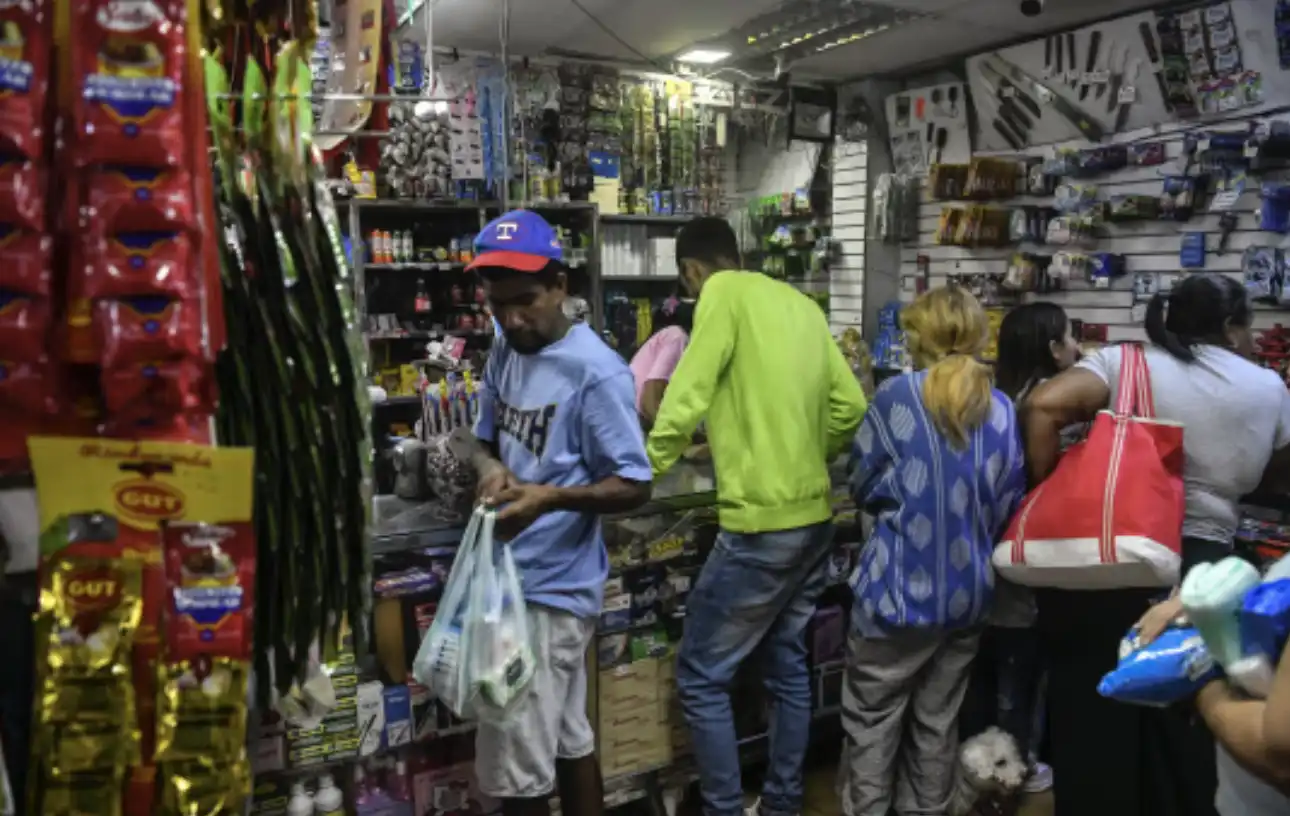
Soon after the sanctions took effect, Tether, with the ticker USDT, also became a viable alternative currency for many Venezuelans. They use this stablecoin for cross-border remittances, savings preservation, and daily payments.

Tether CEO Paolo Ardoino said at a recent crypto industry conference: 'In the past 10 years, the Venezuelan bolivar has depreciated by 99.8% against the U.S. dollar, the Turkish lira by 80%, and the Argentine peso by about 94.5%. This simple chart alone is enough to explain why USDT has been successful.'

Mauricio Di Bartolomeo, a crypto entrepreneur born and raised in Venezuela, said that two months ago, his 71-year-old aunt called him because she needed to buy some USDT to pay her apartment's homeowners association fee.

'You pay the gardener, you pay for a haircut—this is how you pay for everything. Basically, you can use USDT for anything,' said Di Bartolomeo, co-founder of crypto lending platform Ledn. 'The penetration of stablecoins in Venezuela is so deep that even without regulated, compliant channels to buy and sell stablecoins, people still choose stablecoins over the local banking system.'

Researchers say it was almost inevitable that USDT would play a major role in Venezuela—due to a lack of trust in the domestic banking system and strict capital controls that limit access to physical U.S. dollars. A prime example: the Venezuelan government attempted to launch an oil-backed cryptocurrency called Petro in 2018, but it failed due to lack of public trust and international recognition.

Ari Redbord, global head of policy at blockchain analytics firm TRM Labs, said: 'The issue is not with USDT itself, but with the inherent 'dual-use' reality of stablecoins.' TRM Labs has partnered with Tether to track the use of stablecoins on the Tron blockchain for illicit activities. 'They can be a lifeline for ordinary people and also serve as a tool to evade sanctions under pressure.'


Related Questions

QWhat percentage of Venezuela's oil revenue is now settled using stablecoins like USDT, according to the article?

ANearly 80% of Venezuela's oil revenue is settled using stablecoins like USDT.

QWhy has USDT become a 'financial lifeline' for ordinary Venezuelan citizens?

AUSDT has become a financial lifeline because it provides a stable store of value and a means for daily transactions, cross-border remittances, and savings, helping citizens cope with the hyperinflation of the bolivar and strict capital controls that limit access to physical dollars.

QWhat is the 'dual-use' nature of stablecoins as highlighted in the article?

AThe 'dual-use' nature refers to stablecoins like USDT serving both as a vital tool for ordinary people in failing economies (a lifeline) and as a means to circumvent sanctions and traditional banking systems for entities like state-owned oil companies (an escape route).

QWhat role did the Venezuelan state oil company PdVSA play in the adoption of USDT?

AFacing escalating U.S. sanctions in 2020, PdVSA began requiring payments for oil exports to be made in USDT to bypass the traditional banking system, which was a transformative change for the country's oil economy.

QHow has Tether's relationship with U.S. authorities been relevant to the situation in Venezuela?

ATether has cooperated with U.S. authorities by freezing dozens of wallets identified as being involved in Venezuelan oil trade, demonstrating its role in enforcement actions while it also seeks broader legitimacy in the U.S. market.

Related Reads

NVIDIA Begins Adding Soap to the Bubble

NVIDIA is taking on a dual role: not just as a leading chip supplier, but as a massive capital allocator across the entire AI supply chain. In 2026, the company has committed over $40 billion in investments within five months, targeting everything from optical fiber manufacturing and data center operations to foundational AI model development. This investment spree, described as a systematic "sprinkler" approach, primarily funds companies that are major buyers of NVIDIA's own GPUs. Critics, including analysts from Goldman Sachs, label this a "circular revenue" loop—comparable to a supplier financing a customer to buy more of its products. A prominent example is NVIDIA's investment in OpenAI, which is expected to generate around $13 billion in revenue for NVIDIA, much of which may be reinvested back into OpenAI. While CEO Jensen Huang dismisses the "circular financing" critique as "absurd," arguing the investments are confidence votes in long-term generational shifts, some analysts express discomfort. They note that while investments in critical supply chain components like optics are strategically sound, funding new cloud providers like CoreWeave feels like "pre-paying for your own GPUs." The strategy carries significant risks. If the AI investment cycle turns, the market may question how much demand is genuine versus artificially sustained by NVIDIA's own balance sheet. Despite posting record-breaking earnings—$215.9 billion in annual revenue and $120 billion in net profit for FY2026—NVIDIA's stock fell after its report, signaling that "beating expectations" may no longer be enough to assure investors about the duration of the AI spending boom. The article concludes that while a bubble isn't necessarily a fraud, NVIDIA's actions resemble adding soap to a bubble—making it appear more robust and durable. This creates a complex scenario requiring extreme冷静 from investors to distinguish between real structural growth and financial engineering.

marsbit10m ago

NVIDIA Begins Adding Soap to the Bubble

marsbit10m ago

Short Positions Have Been Squeezed Out: Will the Next Leg of the U.S. Stock AI Rally Continue in Seoul?

"Short Squeeze Exhausted: Will the Next Leg of the AI Rally Continue in Seoul?" A Nomura report suggests the US AI stock rally, which saw the S&P 500 rise ~16.6% in 28 days largely driven by 10 key stocks, may be pausing. The fuel from short covering, CTA fund positioning, and volatility-control strategies is nearing its limit. For the rally to continue, new momentum from retail and sentiment-driven FOMO (Fear Of Missing Out) is needed. South Korea's market provided a potential answer on the very day the report was published. The KOSPI index surged 4.32%, triggering a buy-side circuit breaker, led by massive gains in chip giants SK Hynix (+11.98%) and Samsung. This surge is characterized by retail "hynix FOMO" and overseas funds precisely buying into AI themes via chip-focused ETFs, shifting from broad Korean market ETFs. The Korean rally is a high-beta extension of the US AI capital expenditure story, as major cloud providers plan massive infrastructure spending, directly benefiting memory chip leaders. However, this linkage also implies vulnerability. The sustainability of this next leg depends on whether US tech stocks correct, the trajectory of US inflation (with upcoming CPI data key), and geopolitical tensions around the Strait of Hormuz. Seoul has emerged as the new epicenter of the AI trade, but its fate remains tied to these broader macro and market dynamics.

marsbit15m ago

Short Positions Have Been Squeezed Out: Will the Next Leg of the U.S. Stock AI Rally Continue in Seoul?

marsbit15m ago

Borrowing Money from a Hundred Years Later, Building Incomprehensible AI

Tech giants like Alphabet, Amazon, Meta, and Microsoft are undergoing a radical financial transformation due to AI. Their traditional "light-asset, high-free-cash-flow" model is being dismantled by staggering capital expenditures on AI infrastructure—data centers, GPUs, and power. Combined 2026 guidance exceeds $700 billion, a 4.5x increase from 2022, causing free cash flow to plummet (e.g., Amazon's fell 95%). To fund this, they are borrowing unprecedented sums through long-dated, multi-currency bonds (e.g., Alphabet's 100-year bond). The world's most conservative capital—pensions, insurers—is now funding Silicon Valley's most speculative bet. This shift makes these companies resemble heavy-asset industrials (railroads, utilities) rather than software firms, threatening their premium valuations. Historically, such infrastructure booms (railroads, fiber optics) followed a pattern: genuine technology, overbuilding fueled by competitive frenzy, aggressive debt financing, and a crash triggered by financial conditions—not technology failure. The infrastructure remained, but many original builders and financiers did not survive. The core gamble is a "time arbitrage": using cheap debt today to build scale and lock in customers before AI capabilities commoditize. They are betting that AI revenue will materialize before debt comes due. Their positions vary: Amazon is under immediate cash pressure; Meta's path to monetization is unclear; Alphabet has a robust core business buffer; Microsoft has the shortest path from infrastructure to revenue. The contract is set: the most risk-averse global capital has lent its time to Silicon Valley, awaiting a future that is promised but uncertain.

marsbit1h ago

Borrowing Money from a Hundred Years Later, Building Incomprehensible AI

marsbit1h ago

Trading

Spot
Futures
活动图片




