三星Q2创史上最强盈利季:净利润暴涨1299.9%超预期,AI芯片狂揽99%利润

华尔街见闻Published on 2026-07-30Last updated on 2026-07-30

Abstract

三星电子2026年Q2创史上最强单季:营收171.5万亿韩元同比暴增130%,营业利润89.49万亿韩元同比飙升1814%,利润率高达52.2%。核心引擎是半导体——DS部门独揽全公司99%利润,HBM4已完成规模量产并率先发货HBM4E样品,AI超级周期红利尽收囊中。净现金头寸167.6万亿韩元较去年近乎翻倍,ROE从5%跃升至56%。

三星电子2026年第二季度创下历史上盈利能力最强的单季。

具体来看:

营收达到171.5万亿韩元,同比大增130%,环比增长28%;

营业利润更是飙升至89.49万亿韩元,同比大幅增长1813.8%,相较去年同期的4.68万亿韩元实现跨越式增长,环比亦增长56.4%;营业利润率高达52.2%,同比增幅达到1814%。

净利润高达71.62万亿韩元,超出预估68.36万亿韩元,同比暴涨1299.9%,净利润率达41.8%。

每股收益10,849韩元,较一年前的737韩元实现了跨越式跃升,环比增加3726韩元

从上半年累计数据看,前两个季度合并营收达305.37万亿韩元,营业利润达146.73万亿韩元,分别较去年同期增长98.7%和1191.5%。
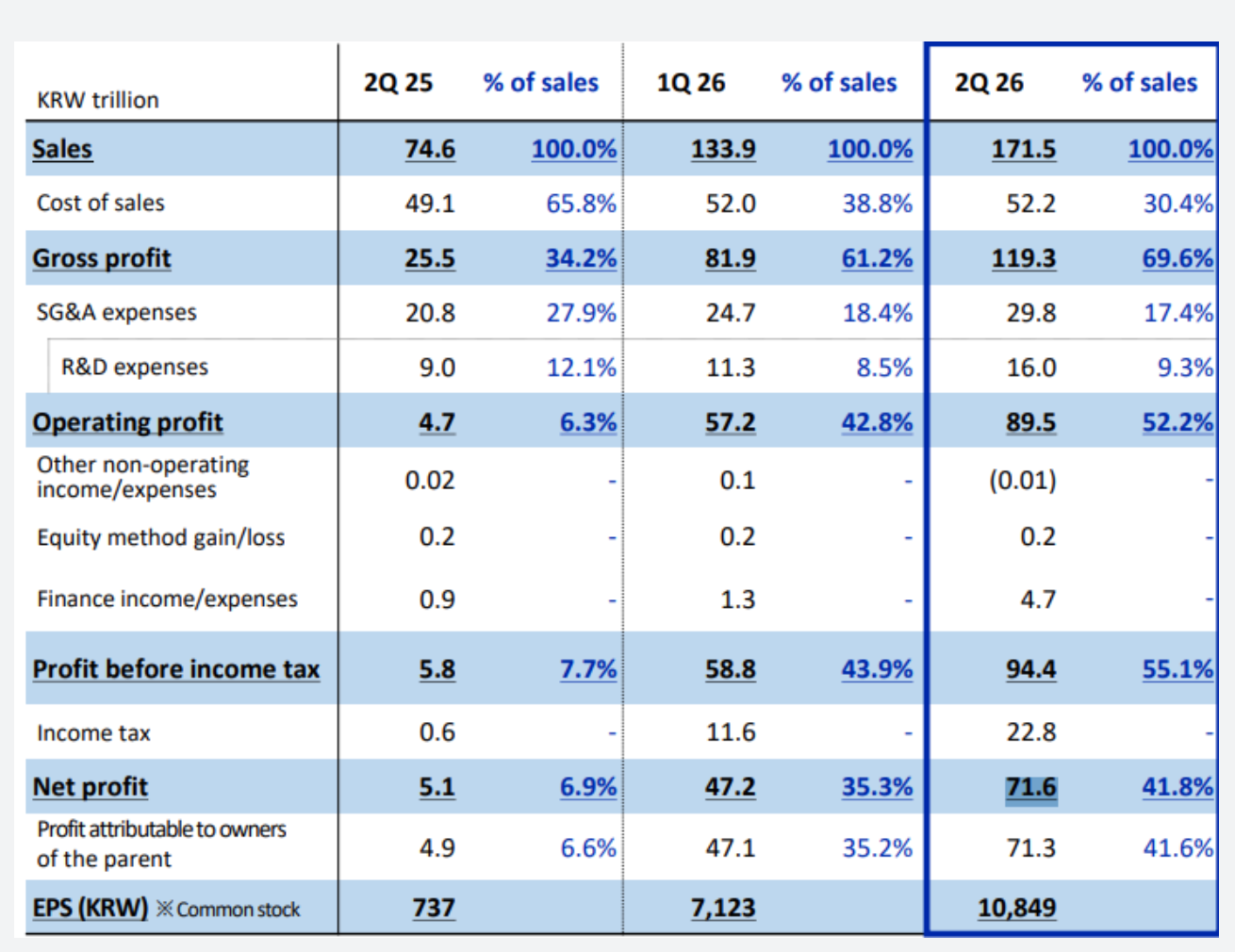
驱动这轮业绩爆发的核心引擎,毫无疑问是半导体业务。以AI服务器需求为中心,三星内存部门实现了销售额120.8万亿韩元,创下历史最高纪录,仅DS(器件解决方案)部门单季营业利润就达89.2万亿韩元,占全公司总营业利润的99%以上。与此同时,研发投入同步攀升至16万亿韩元,环比增长41%,显示出三星在技术领先地位上的持续押注。

然而,业绩结构的分化同样清晰可见。DX(器件体验)部门——涵盖手机、电视、家电——营业利润转负至-0.8万亿韩元,零部件成本上涨侵蚀了消费端业务的利润空间。整体业绩的亮丽很大程度上依赖半导体单一引擎的高速旋转。

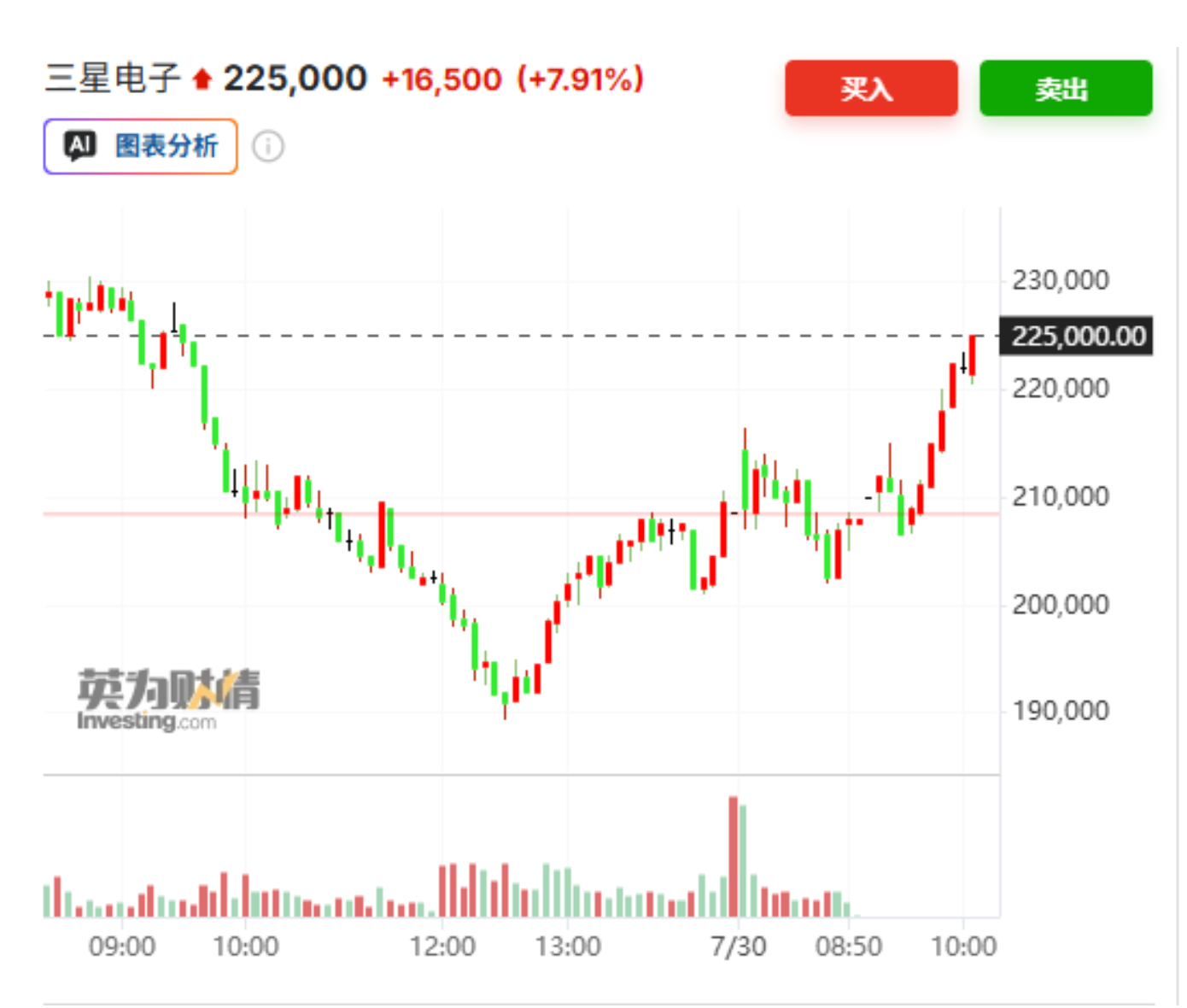
公告公布后,三星股价周四在首尔盘中一度上涨4.1%,但随后转跌1.9%,目前涨7.91%。
内存与HBM:AI浪潮下的超级周期,利润飙升250倍

内存业务是本季度最耀眼的亮点。

DS部门销售额从上季度的81.7万亿韩元跃升至127.5万亿韩元,环比增长56%;营业利润从53.7万亿韩元升至89.2万亿韩元,同比增长逾250倍,环比增长66%。DRAM与NAND均实现了历史最高出货量,服务器收入占比创下新纪录。

HBM(高带宽内存)方面,三星已完成HBM4的规模量产并向主要客户批量交货,同时完成了业界首批HBM4E样品的发货——这意味着三星在下一代AI加速器平台的竞争中率先卡位。DDR5、SOCAMM2等高附加值产品的持续放量,配合企业级SSD需求的强劲增长,使得整个内存市场依然处于供给偏紧的格局。

三星半导体部门的业绩大幅超预期,核心驱动力来自AI服务器对高带宽内存需求的爆发式增长。Counterpoint研究总监黄先生表示,三星的DRAM业务正持续扩大市场份额领先优势,"三星正利用其在存储器领域的强大地位,积极拓展其大部分业务部门的市场份额。"

展望下半年,三星预期AI基础设施资本支出维持强劲,Agentic AI的广泛落地将进一步拉动服务器DRAM与企业级SSD需求。尽管移动端和PC端需求存在阶段性软化,三星判断整体市场仍将维持供给不足状态,并计划围绕HBM4、Gen6及UFS 5.0持续巩固技术领先优势。

S.LSI与晶圆代工:双线突破,进击高端节点

系统半导体(S.LSI)部门在本季度创下上半年收入历史新高,SoC与图像传感器的强劲销售是主要拉动力。公司已成功锁定下一代旗舰SoC订单及新定制SoC设计合同,在高端移动市场的份额持续扩大。后续重点包括推动下一代旗舰SoC销售、拓展Custom SoC新业务,以及进入更多高价值领域,包括多元化图像传感器应用和Power IC业务。

晶圆代工(Foundry)业务同样呈现积极态势:HBM B-Die需求带动收入增长,来自美国客户的订单强劲,2nm HPC项目的设计合同持续推进。进入下半年,三星计划推进2nm Gen 2移动芯片的量产爬坡,4nm LPU的放量以及Base-Die出货扩大,并将目标锁定在实现两位数的营收增长,并通过先进节点与AI/HPC设计赢单推动中长期增长。

DX部门:消费端承压,成本侵蚀利润

与半导体的辉煌形成鲜明对比,DX部门在本季度录得-0.8万亿韩元的营业亏损。

移动业务(MX/NW)方面,智能手机营收为32.3万亿韩元,同比增长14%,旗舰机型与A系列的销售均表现稳健,Galaxy Z Fold8系列的发布也带来了新的增长点。但营业利润转负至-0.7万亿韩元,行业性零部件成本上涨是核心压力来源。公司正积极推进效率优化举措,并计划通过"智能眼镜"等新形态产品拓展AI体验生态。

VD/DA(影像显示与家电)部门营收为14.5万亿韩元,同比小幅增长,但营业利润接近盈亏平衡(-0.01万亿韩元)。空调需求拉动了DA部门收入,但成本压力依然构成拖累。下半年,三星计划以"Vision AI"为差异化标签,结合TV Plus内容和广告业务的扩展来提升整体盈利能力。

SDC与Harman:利润弹性改善

三星显示(SDC)在本季度呈现明显的边际改善。营收达到7.5万亿韩元,同比增长17%;营业利润从上季度的0.4万亿韩元回升至0.7万亿韩元。

高端智能手机OLED面板的旺盛需求是核心驱动力,游戏显示器市场的扩张也带动大尺寸面板业务同步受益。下半年,三星计划推进8.6G IT OLED产线的适时量产,并向平板、游戏及车载市场进一步扩大差异化产品供给。

VD/DA销售额14.5万亿韩元,环比增长2%、同比增长3%;营业利润为-0.01万亿韩元。VD由于成本增加导致环比盈利下降,但受体育赛事需求捕捉推动,收入和盈利同比增长。DA受空调需求推动收入增长,但成本压力拖累盈利。下半年,VD将依托“Vision AI”引领AI TV市场,并通过TV Plus内容多元化和广告业务扩张提升盈利;DA将扩大AI产品销售并强化渠道多元化和产品竞争力。

Harman(收购的高端音频与车载解决方案品牌)录得营收4.6万亿韩元,同比增长19%;营业利润回升至0.4万亿韩元。车载中央计算单元、便携式音频产品的旺销推动了整体表现的改善,公司后续将重点围绕高增长车载细分市场与品牌效应驱动的音频业务保持稳健增长。

资产负债表与现金流:财务实力大幅增厚

三星电子的财务状况随业绩的爆发显著改善。截至2026年6月末,总资产达759.5万亿韩元,较三个月前增长逾12万亿韩元;现金及等价物达到190万亿韩元,净现金头寸高达167.6万亿韩元,较去年同期的86.7万亿韩元近乎翻倍。

本季度经营活动现金流高达105.1万亿韩元,同样是历史最高水平,净利润对现金流的贡献已超过折旧摊销。ROE从一年前的5%跃升至56%,EBITDA利润率达到59%。

投资方面,本季度资本支出为14.1万亿韩元,三星同时斥资5.6万亿韩元回购库存股、6.2万亿韩元派发股息,显示出在强劲盈利支撑下对股东回报的持续重视。负债率维持在31%的低位,净债务/股本比为-29%,财务结构稳健。

Related Reads

Cardano Price Forecast for August 2026: Will ADA Triangle Breakout Happen Before or After the CLARITY Act Deadline?

Cardano (ADA) is trading at $0.1642, testing the apex of a symmetrical triangle pattern on the daily chart, which signals an impending directional move. Technical analysis identifies key resistance at the 20-day EMA ($0.1650) and the triangle's upper trendline. A breakout above could target the 50-day EMA at $0.1732, with a cup-and-handle pattern potentially forming. Support lies at the SuperTrend indicator ($0.1536) and the June low of $0.1386. Historically, August has been a weak month for ADA, with a median return of -12.8%. A weekly forecast outlines a volatile month influenced by the imminent August 8th deadline for the U.S. CLARITY Act vote, potential SEC regulatory action, and renewed geopolitical tensions following Iran's missile strike. Key bullish catalysts include the potential passage of the CLARITY Act and a major upgrade integrating Cardano's developer documentation and tools into AI coding assistants like Claude, which could significantly boost developer adoption. On-chain data also shows whale accumulation, a potential Wyckoff accumulation signal. The price forecast presents two scenarios: a bullish breakout above $0.1650 targeting $0.17-$0.1732 if the CLARITY Act passes and AI integration fuels momentum, or a bearish break below $0.1536 toward $0.1386 if the bill fails, seasonal weakness persists, and risk appetite diminishes.

cryptonews.ru14m ago

Cardano Price Forecast for August 2026: Will ADA Triangle Breakout Happen Before or After the CLARITY Act Deadline?

cryptonews.ru14m ago

Coinbase Vice President: The Wars Over Cryptocurrency Regulation Are Over

Coinbase's new Vice President, Ryan VanGrak, declared that regulatory wars in the cryptocurrency sector are over. Since taking office on July 9, 2026, he has shifted the company's approach from litigation and sanctions to focusing on growth and innovation. The industry can now concentrate on development rather than fighting for its right to exist. He highlighted that the Digital Asset Market Clarity Act (CLARITY Act), which aims to establish a clear federal regulatory framework dividing oversight between the SEC and CFTC, has gained significant momentum. This framework is intended to provide proper supervision, investor protection, and maintain U.S. leadership in digital assets. VanGrak's appointment marks a strategic shift from a "wartime" to a "peacetime" advisor, replacing former Chief Legal Officer Paul Grewal, who oversaw major litigation, including a dismissed 2023 SEC lawsuit. With his background at Citadel Securities and the SEC, VanGrak brings deep regulatory and institutional finance expertise as Coinbase expands beyond a simple exchange into a broader financial services provider, offering stocks, futures, prediction markets, and AI tools. For investors, bipartisan support for crypto legislation like the CLARITY Act represents a major shift from the enforcement-focused environment of 2023-2024. Lawmakers are now focused on *how* to regulate crypto, not *if* it should exist. However, risks remain, as the bill's passage is not yet guaranteed.

cryptonews.ru1h ago

Coinbase Vice President: The Wars Over Cryptocurrency Regulation Are Over

cryptonews.ru1h ago

Deep Dive into FWA: An Intriguing Experiment Turning NFTs into "On-Chain Gachapon"

A Deep Dive into FWA: The “On-Chain Gacha” Experiment for NFTs Fake World Assets (FWA), created by TokenWorks, introduces an innovative “NFT gacha machine” fully operating on-chain. Users can deposit eligible NFTs paired with ETH (called Backing) to create a Position, acting as a prize pool. Others can then pay a uniform Acquisition Price for a chance to win a random NFT from the pool. The core mechanism features a reverse probability system: Positions with lower Backing have a higher chance of being selected, serving as common prizes, while high-Backing Positions are rare “jackpots.” The acquisition price is calculated based on the harmonic mean of all Backings, keeping entry costs low. When a Position is won, the purchaser must choose: keep the NFT or accept the Standing Bid (85% of the Backing, claimable in ETH or $FWA tokens), returning the NFT to the original depositor. The protocol involves two main roles. Depositors provide liquidity (NFT + ETH), earning a share of fees from each draw, distributed equally per active Position, plus potential $FWA rewards. Purchasers pay to spin the gacha, receiving $FWA rewards for participation. A special “Crown” reward goes to the Position with the highest Backing. The $FWA token has a fixed supply and is initially obtainable only through protocol participation (depositing or purchasing), with external buying disabled early on to reduce sell pressure. Its value is supported by a built-in buy pressure: when purchasers opt for the $FWA settlement on a Standing Bid, the protocol uses the backing ETH to buy $FWA from the market. Revenue for the protocol comes from a 1% fee on each draw, a 1% settlement fee when an NFT is kept, and the 15% discount from Standing Bid settlements (currently allocated to the protocol). The design cleverly blends Uniswap-style liquidity provision, gacha mechanics, and tokenomics to create a novel, self-regulating marketplace for NFT liquidity and engagement.

marsbit1h ago

Deep Dive into FWA: An Intriguing Experiment Turning NFTs into "On-Chain Gachapon"

marsbit1h ago

Trading

Spot
活动图片