Aave 交易收入刚刚突破百万美元,但这才是你真正错过的关键信息

ambcryptoPublished on 2026-07-03Last updated on 2026-07-03

Abstract

Aave已不再仅依靠存款和借贷业务增长,还在构建新的收入来源。随着其全球美元枢纽的推出和用户活动的增加,项目正重新获得动力。 Aave DAO的交换收入自"AAVE Will Win"启动以来已突破100万美元,其中大部分收入来自以太坊,Arbitrum和其他链也有较小贡献。这为Aave提供了除借贷市场基于资产管理规模收费之外的另一个收入流。未来随着杠杆工具、交易构建器支持以及Aave Pro对V4的支持等功能的推出,这一收入基础有望持续增长。 另一方面,Aave的链上活动也大幅增加。在其V4全球美元枢纽推出期间,AAVE价格从约72美元涨至95美元,随后回落至85美元左右。然而,用户增长并未随价格回落而消退。6月30日新增AAVE地址达到1,806个,远高于春季日均约200个的通常水平,本周活跃地址也持续高于基线。 尽管AAVE价格从95-100美元区域回落至90美元以下,但在撰写本文时交易价约为87美元,并有小幅回升尝试。其RSI为58,显示涨势不再过热,仍存一定动能;CMF为正0.10,表明存在一定的买入兴趣。

Aave [AAVE] 的发展已不仅仅依靠存款和借贷活动;他们还在构建新的收入来源。随着Aave全球美元枢纽的启动以及用户活动的增加,该项目正重新获得发展动力。

Aave DAO交易收入突破百万美元大关!

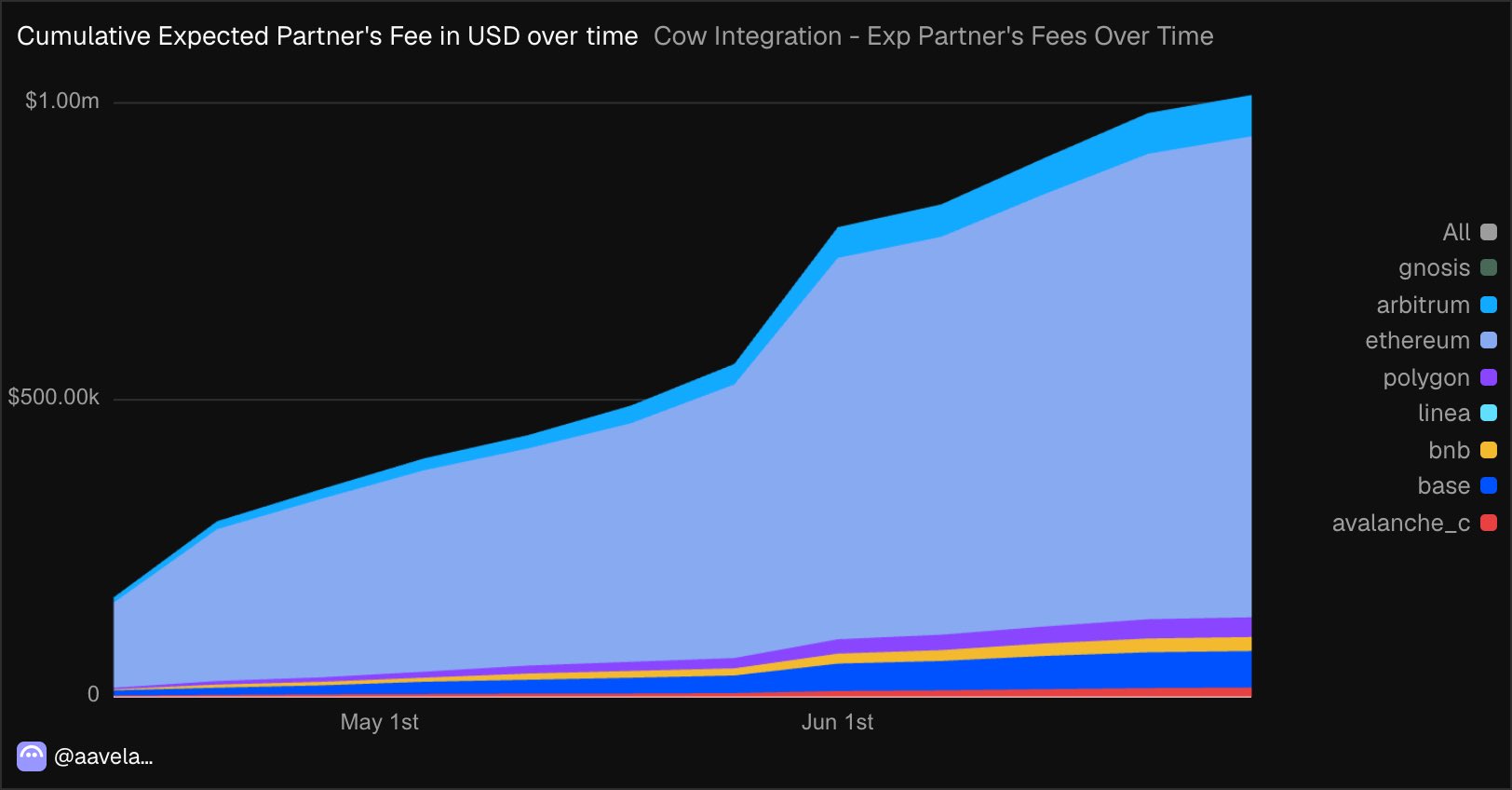
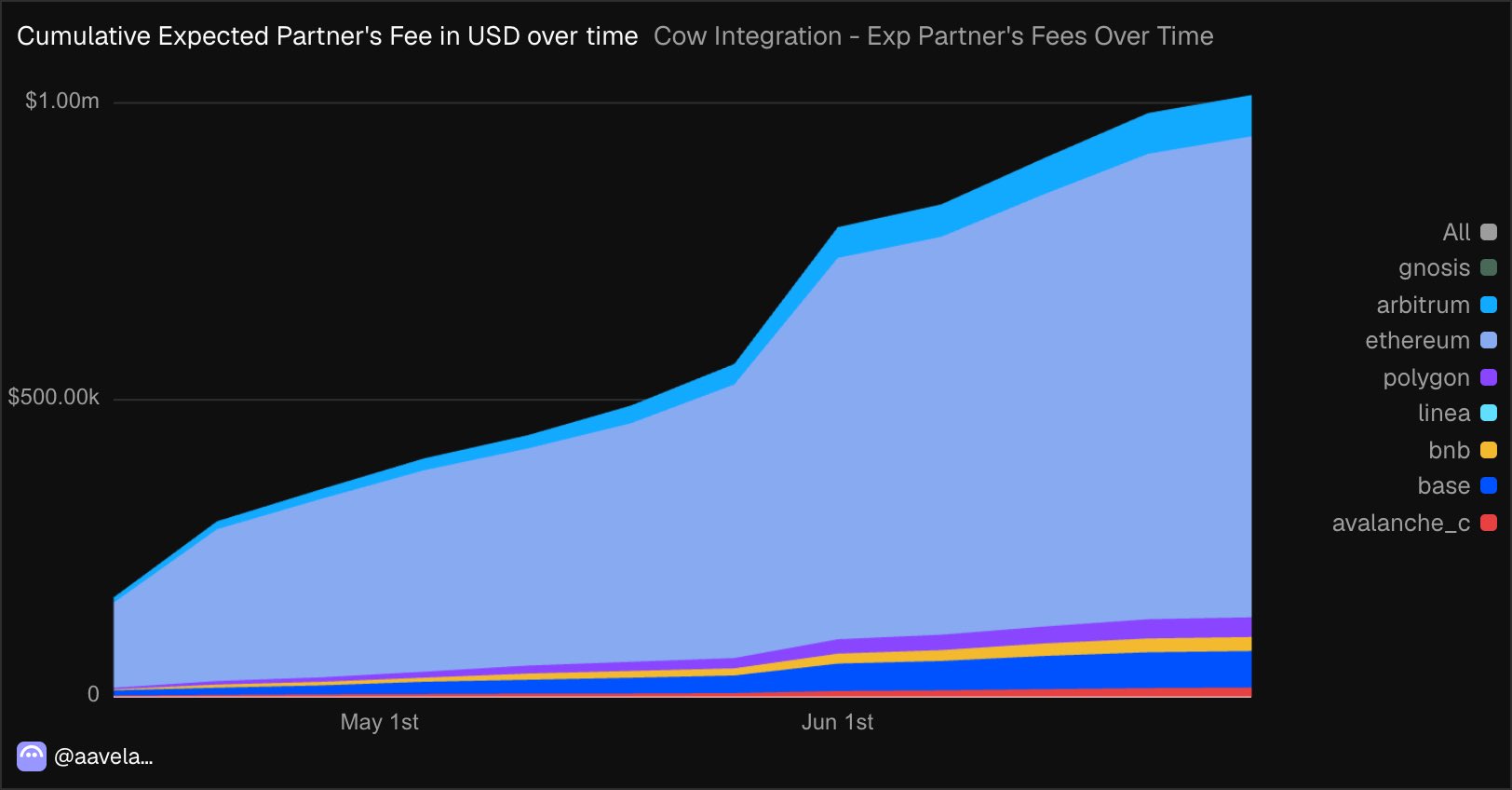
自“Aave必将胜利”活动启动以来,Aave DAO的交易收入已突破100万美元。累计预期合作伙伴费用自四月以来持续增长,六月初出现显著跃升,并在整个月份保持稳定增长态势。

来源:X

这部分收入大部分来自以太坊 [ETH],而Arbitrum [ARB] 及其他少数链也有所贡献。有趣的是,这为Aave带来了除其常规基于资产管理规模的借贷市场费用之外的另一个收入渠道。

随着更多功能计划的推进——包括杠杆工具、交易构建器支持以及在Aave Pro中支持V4——这一收入基础有望持续增长。

新增钱包增长势头强于AAVE币价

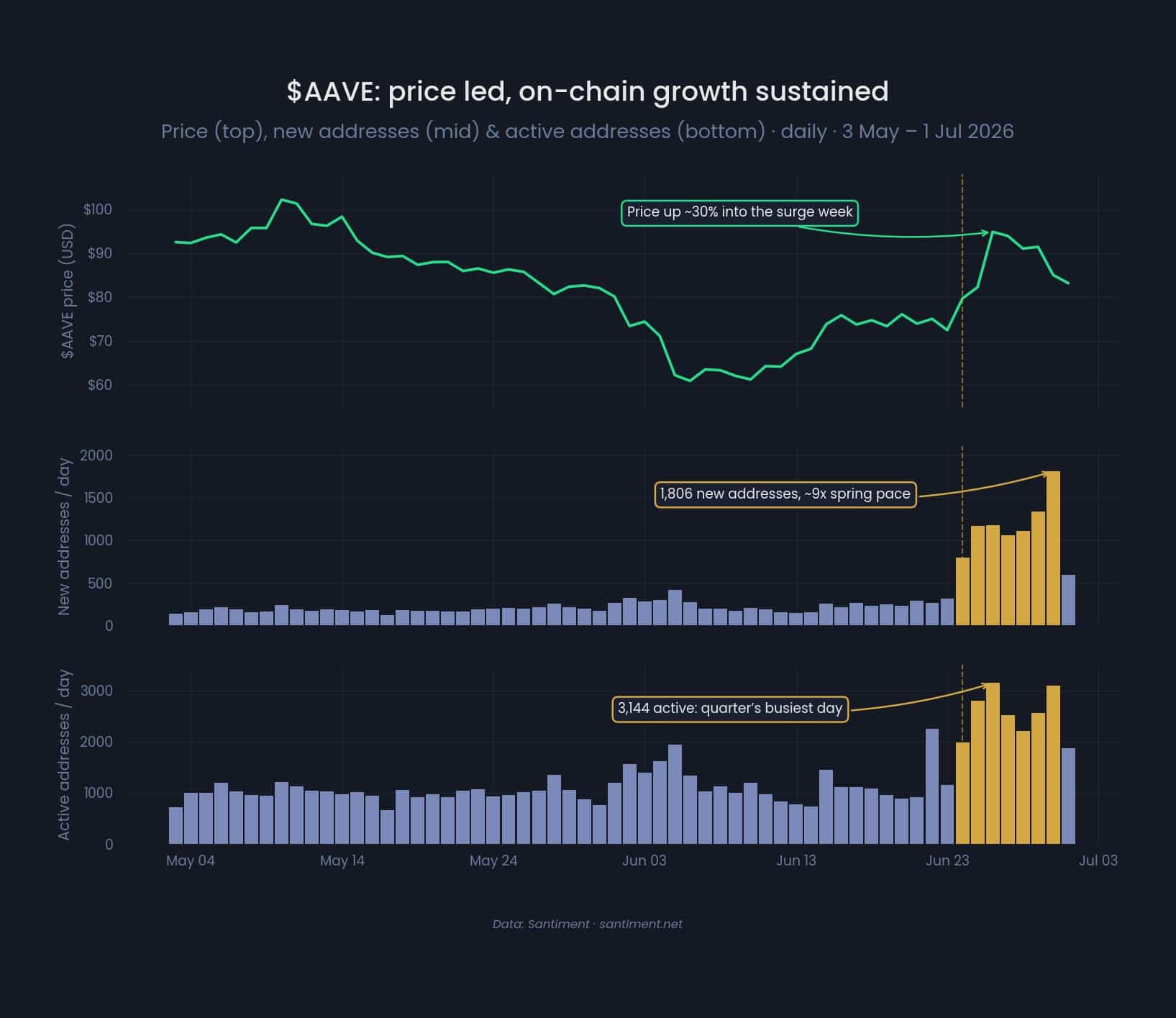
除此之外,Aave的链上活动也出现激增。在其V4全球美元枢纽推出前后,AAVE的价格从近72美元上涨至约95美元,随后回落至85美元左右。

来源:Santiment

然而,值得注意的是,用户增长并未随币价回落而消退。6月30日,新增AAVE地址达到1,806个,远高于春季通常每天约200个的水平。

本周内,新增地址增长也持续高于基线。事实上,活跃地址数最高达到3,144个,并且保持在2,200个以上。

AAVE持稳于回调区间上方

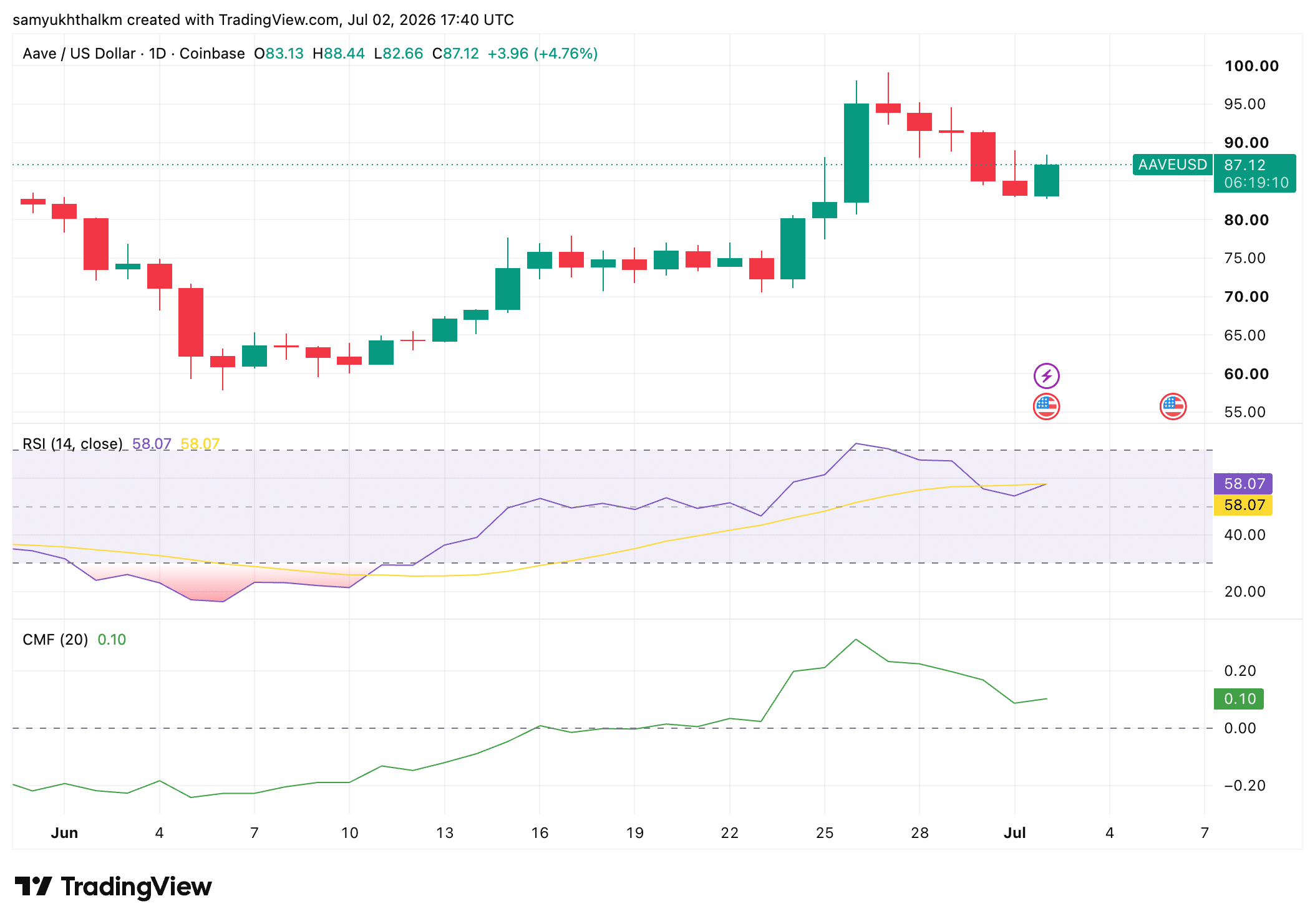
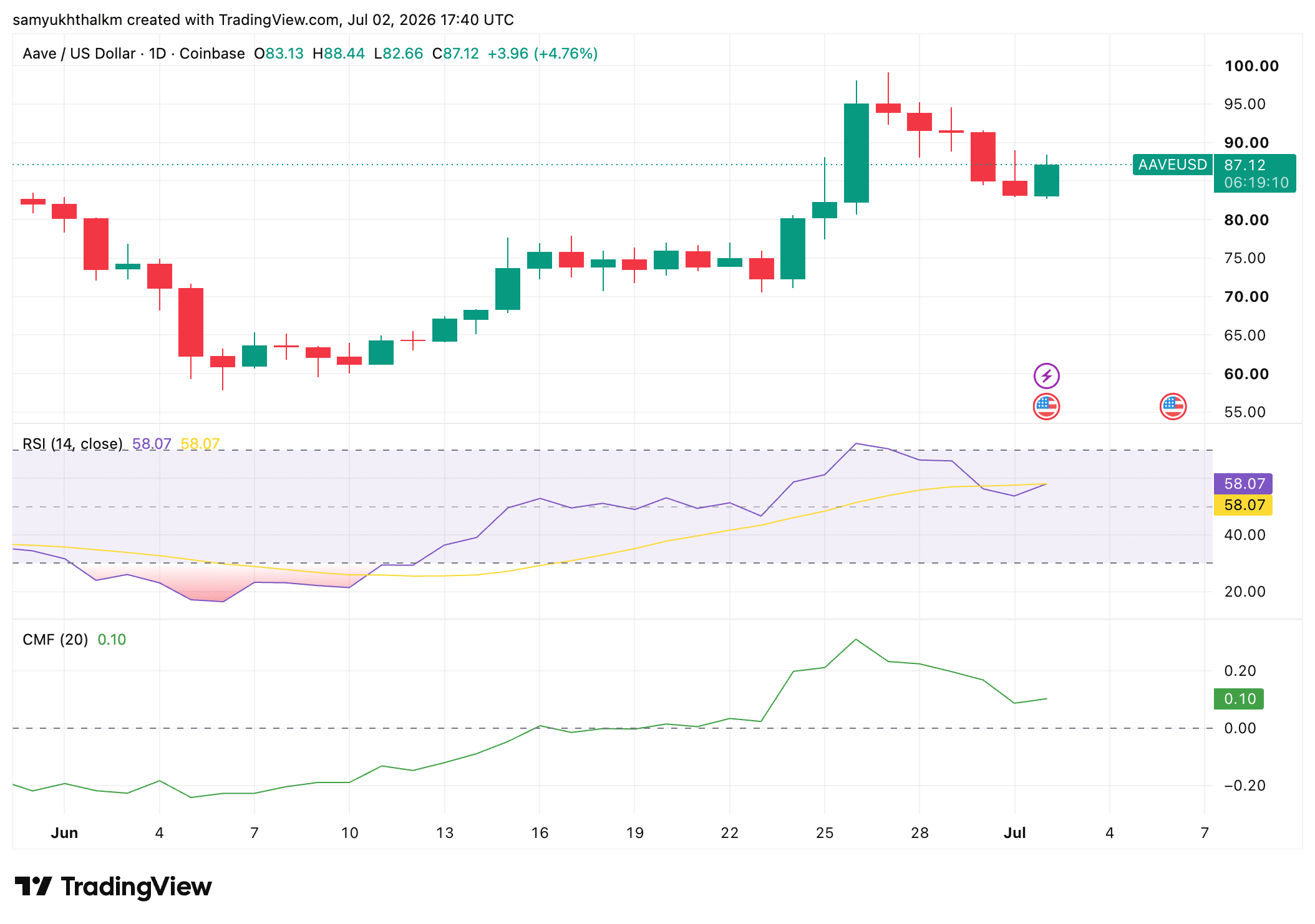
关于此轮行情,这里需要做些平衡的补充。在价格触及95-100美元区域后,AAVE在图表上回落至90美元下方。

来源:TradingView

然而,该代币也并未完全失去上涨动能。截至发稿时,其交易价格约为87美元,并出现小幅反弹尝试。

RSI指数为58,表明此轮涨势已不再过热。市场似乎仍存留一些上涨力量。CMF指标也为正值,达到0.10,显示出一定的买入兴趣。


最终总结

  • Aave DAO交易收入突破100万美元,新增一种收入模式。
  • AAVE价格在图表上显露疲态,但新增地址数也达到了1,806个。

Related Questions

QAave DAO的互换收入主要来自哪些链?

AAave DAO的互换收入主要来自以太坊(ETH)网络,此外,Arbitrum(ARB)和其他少数几条链也贡献了较小份额的收入。

Q除了借贷市场,Aave通过什么方式增加了新的收入来源?

AAave通过推出互换功能(swap revenue)增加了新的收入来源,其DAO的互换收入已超过100万美元,这为其提供了资产管理费用之外的另一重要收入模式。

QAave推出V4全球美元中心后,其原生代币AAVE的价格和用户增长表现如何?

A推出V4全球美元中心后,AAVE价格从约72美元上涨至约95美元,随后回落至85美元左右。尽管价格回调,但用户增长并未减弱,新地址数量在6月30日达到1,806个,远高于春季日均约200个的水平,并且本周活跃地址也保持在2,200至3,144的高位。

Q根据文章,有哪些未来规划的功能可能继续推动Aave的收入增长?

A文章提到,包括杠杆工具、交易构建器支持以及Aave Pro的V4支持等更多规划中的功能,可能继续推动Aave的收入基础持续增长。

Q文章发布时,AAVE代币的技术指标(如RSI和CMF)显示出怎样的市场状况?

A文章发布时,AAVE代币的相对强弱指数(RSI)为58,表明之前的上涨已不再过热;资金流量指标(CMF)为正值0.10,显示市场仍存在一定的买盘兴趣,代币在约87美元价位试图小幅回升。

Related Reads

The Biggest Political Economy Question in the AI Era: As Robots Become More Capable, How Do Humans Share the Value?

In the AI era, the most pressing political economy question is: as machines become increasingly capable, how can humanity share in the value they create? An article originally critiquing China's tech focus has sparked a deeper debate on this global challenge. Historically, industrial progress improved efficiency but still relied on human labor for wealth creation and distribution. AI is fundamentally different—it is now replacing cognitive and knowledge work. As AI and robots take over more tasks, economic growth may continue while direct human participation in value creation shrinks, creating a core tension between productivity gains and widespread income generation. The issue is not unique to China. While leading tech companies amass enormous wealth, labor's share of income is declining globally. The core problem is a broken link: technological innovation and corporate profits are not translating into sufficient consumer income and demand. Three potential paths forward are outlined: a traditional capitalist model where profits primarily go to capital owners; a state-capitalist approach with public investment in AI; and more innovative models like digital sovereign wealth funds, universal shareholding, or AI-era basic income schemes to directly distribute AI-generated value. The future competitive advantage may lie not just in technological supremacy, but in which society can build a new, inclusive distribution system for the intelligent economy. The ultimate challenge is ensuring that as AI creates value, humans have a means to obtain income and share in the resulting widespread social benefits.

marsbit8m ago

The Biggest Political Economy Question in the AI Era: As Robots Become More Capable, How Do Humans Share the Value?

marsbit8m ago

Generating Profits for Seven Consecutive Quarters, Emerging Markets Carry Trade Outperforms Everything

For the seventh consecutive quarter, dollar-funded emerging market carry trades have delivered positive returns, marking the longest winning streak since 2008. According to Bloomberg's index, this strategy has gained approximately 22% since late 2024, outperforming U.S. Treasuries, emerging market sovereign, and corporate dollar debt. The core of the trade involves borrowing low-interest currencies like the U.S. dollar, euro, or yen to invest in high-yielding emerging market assets, such as Turkish lira bonds offering over 40% returns. Returns were amplified by favorable currency moves, with the dollar weakening against most emerging market currencies and other traditional funding currencies. For instance, the trade gained 48% on the Colombian peso in the past year. A key test came in August 2024 with a historic joint U.S.-Japan currency intervention, which caused only a modest 1% dip in the carry trade risk premium as investors shifted funding from the yen to the euro and Swiss franc. Looking ahead, the primary risk is the timing of Federal Reserve policy changes. While persistent inflation allows the Fed to hold rates, a rapid rise in long-term U.S. yields could threaten the trade. Another concern is crowding, as massive inflows increase vulnerability to a sudden reversal. High interest rates in regions like Latin America and Eastern Europe, supported by external factors like Middle East tensions and energy prices, continue to sustain the opportunity. Major investors remain engaged, favoring currencies like the Mexican peso, South African rand, and Turkish lira.

marsbit23m ago

Generating Profits for Seven Consecutive Quarters, Emerging Markets Carry Trade Outperforms Everything

marsbit23m ago

Unpacking the Truth Behind On-chain Assets: Leverage, Liquidity, and Risk

The article analyzes the concept of "real-world asset" (RWA) tokenization, arguing that while tokenizing assets on-chain is a useful step, it is far from transformative on its own. The author compares it to placing a barcode on a shipping container—it enables identification but does not build the necessary market infrastructure. The core argument is that true value emerges not from tokenization, but from integrating these tokens into DeFi systems where they can be valued, financed, hedged, traded, and liquidated under stress. Key challenges identified include: 1. **Multiple Time Clocks**: A fundamental tension exists between blockchain's 24/7 settlement and the slower, business-hour-dependent processes of traditional markets, custody, and redemption. This "duration mismatch" can create dangerous liquidity gaps during crises. 2. **Liquidity Misconceptions**: True liquidity is not measured by Total Value Locked (TVL) or trading pairs, but by the ability to exit a position within a required timeframe at an acceptable price. It requires analyzing multiple exit paths and stress-testing scenarios. 3. **Leverage and Risk**: Leverage unlocks economic utility (e.g., using tokenized assets as collateral) but also introduces fragility. Risk models must account for more than asset volatility, incorporating factors like legal enforceability, oracle freshness, and market structure. Paradoxically, a "safer" asset like tokenized Treasury bonds could require a higher collateral discount than ETH due to slower, less-proven liquidation mechanisms. 4. **A Risk Graph**: RWA risk should be modeled as a network of interconnected dependencies (e.g., issuers, custodians, oracles, stablecoin pools), not a single score. Failures can propagate through this graph, turning operational issues into systemic liquidity crises. The article states that tokenized government bonds are merely an entry point, while more complex frontiers like computing power and energy assets present greater challenges and opportunities. It also examines the interplay and risks between tokenized stocks and perpetual futures contracts. The conclusion is that the future lies not in "tokenizing everything," but in building robust market layers where tokenized rights become resilient financial primitives within a programmable capital system. The token is just the barcode; the market is the machine.

marsbit47m ago
Unpacking the Truth Behind On-chain Assets: Leverage, Liquidity, and Risk

marsbit47m ago

Trading

Spot
活动图片