HTX TradFi全解:一份合约如何连接Crypto与华尔街

ambcryptoPublished on 2026-06-24Last updated on 2026-06-24

Abstract

HTX TradFi在做的事:在Crypto和华尔街之间,搭一座桥。

从一个小白的疑问开始

小张在HTX的合约页面里翻了半天,突然看到一个叫“TradFi”的标签。点进去,黄金、原油、英伟达、特斯拉……全是传统金融里耳熟能详的名字。

“这些东西不是应该在股票软件里吗?”小张挠了挠头,“怎么跑到币圈平台来了?”

这个问题背后,其实藏着一个正在发生的金融变革——Crypto和传统金融之间的墙,正在被一纸合约推倒。

HTX TradFi到底是什么?

HTX TradFi 永续合约,是以USDT结算的永续合约,用于追踪传统金融资产的价格表现。

拆开来看:

以USDT结算:不需要换美元、不需要开海外券商账户,用你钱包里熟悉的USDT就能操作

永续合约:没有到期日,想持有多久就持有多久,不会被强制交割

追踪价格:每一份价格锚定的都是美股资产的合约

它凭什么能“连接”两个世界?

HTX于2026年2月正式推出TradFi永续合约板块。这个产品的核心设计思路,可以概括为五个关键词:

USDT本位——整个交易以USDT为结算货币,Crypto用户零门槛上手

无到期日——永续合约结构,没有交割压力,不用担心“到期了怎么办”

7×24小时交易——这是TradFi永续合约与传统金融市场最本质的区别。华尔街会收盘,但Crypto用户的交易时间不会

支持杠杆——可以做多也可以做空,方向选对就能操作

不涉及实物交割——你不需要真的去提一盎司黄金回家,也不需要持有任何股票,纯粹交易价格

它和普通加密货币合约有什么不同?

操作界面几乎一模一样——设置杠杆、输入仓位、选择做多或做空、确认开仓。但底层逻辑有一个关键区别:
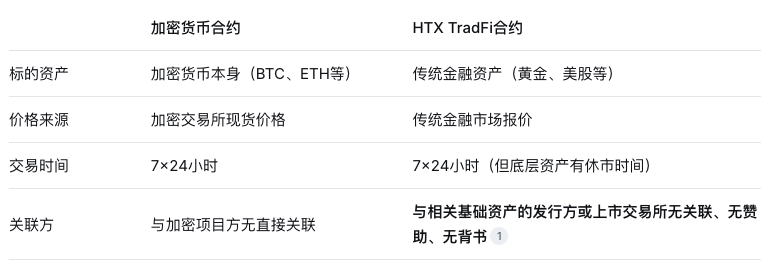
最后这一点很重要。HTX的TradFi合约不隶属于苹果公司、也不隶属于纳斯达克交易所。它只是追踪这些资产的价格,而不是这些资产的官方衍生产品。

目前能交易哪些资产?

根据公开信息,HTX TradFi专区已上线75个TradFi资产,总交易额突破10亿美元。

覆盖方向非常广泛:

贵金属:黄金(XAU)、白银等

大宗商品:原油(USOIL)等

美股科技龙头:英伟达(NVDA)、特斯拉(TSLAX)等

传统蓝筹:苹果、UBER、CSCO等

全球股指:标普500(SPX500)、纳指100等

Pre-IPO:独角兽企业上市前的合约标的

基本上,传统金融里最热门的方向,在这里都能找到对应的合约。

怎么在HTX找到并交易?

操作路径非常简单:

网页端:进入HTX合约页面,在交易对搜索栏下选择“TradFi”标签
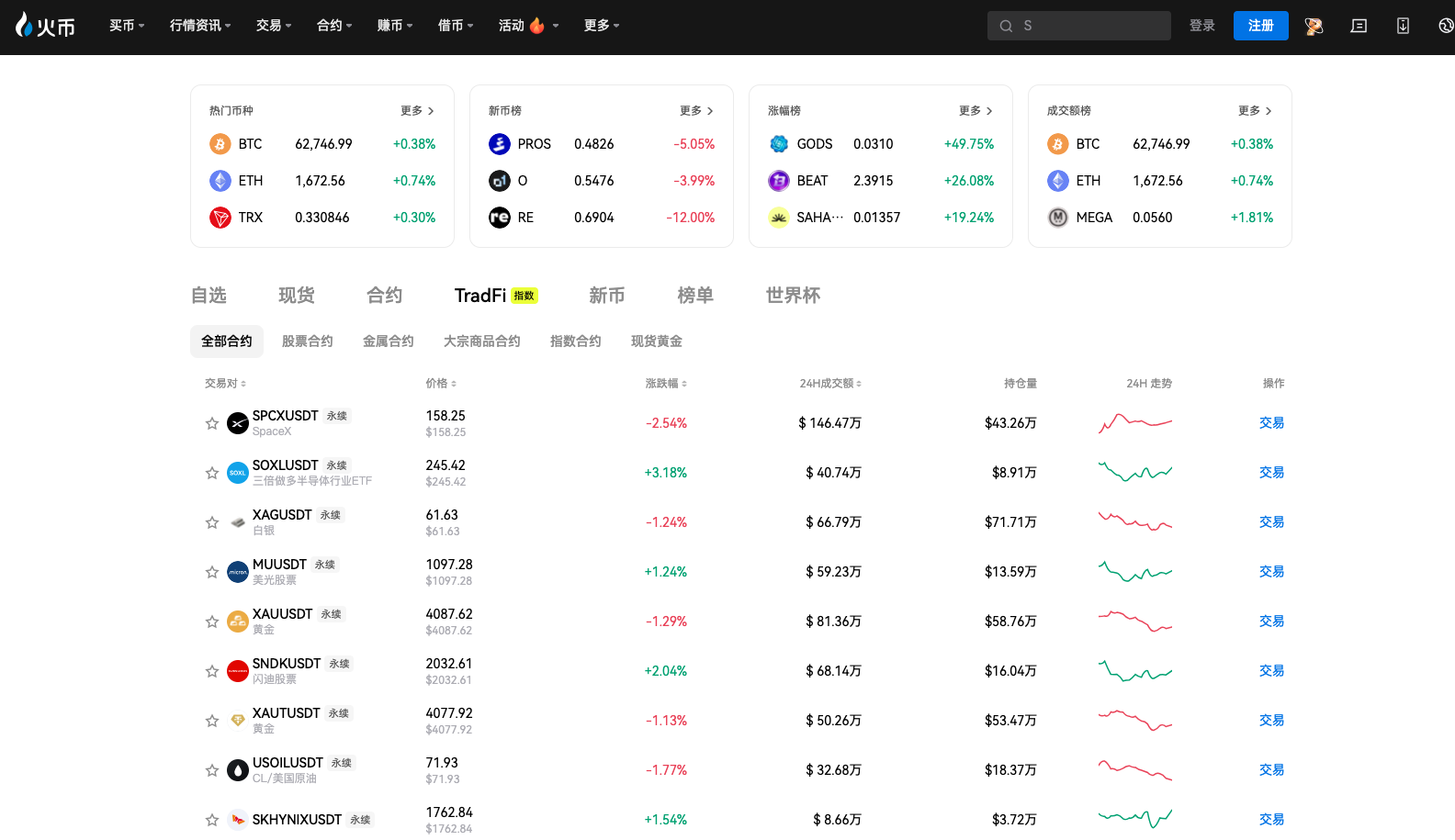
App端:前往“主页”页面,从菜单选择“TradFi”标签,找到标的之后,操作界面和你熟悉的比特币永续合约几乎一样——设置杠杆、输入仓位、选择方向、确认开仓。
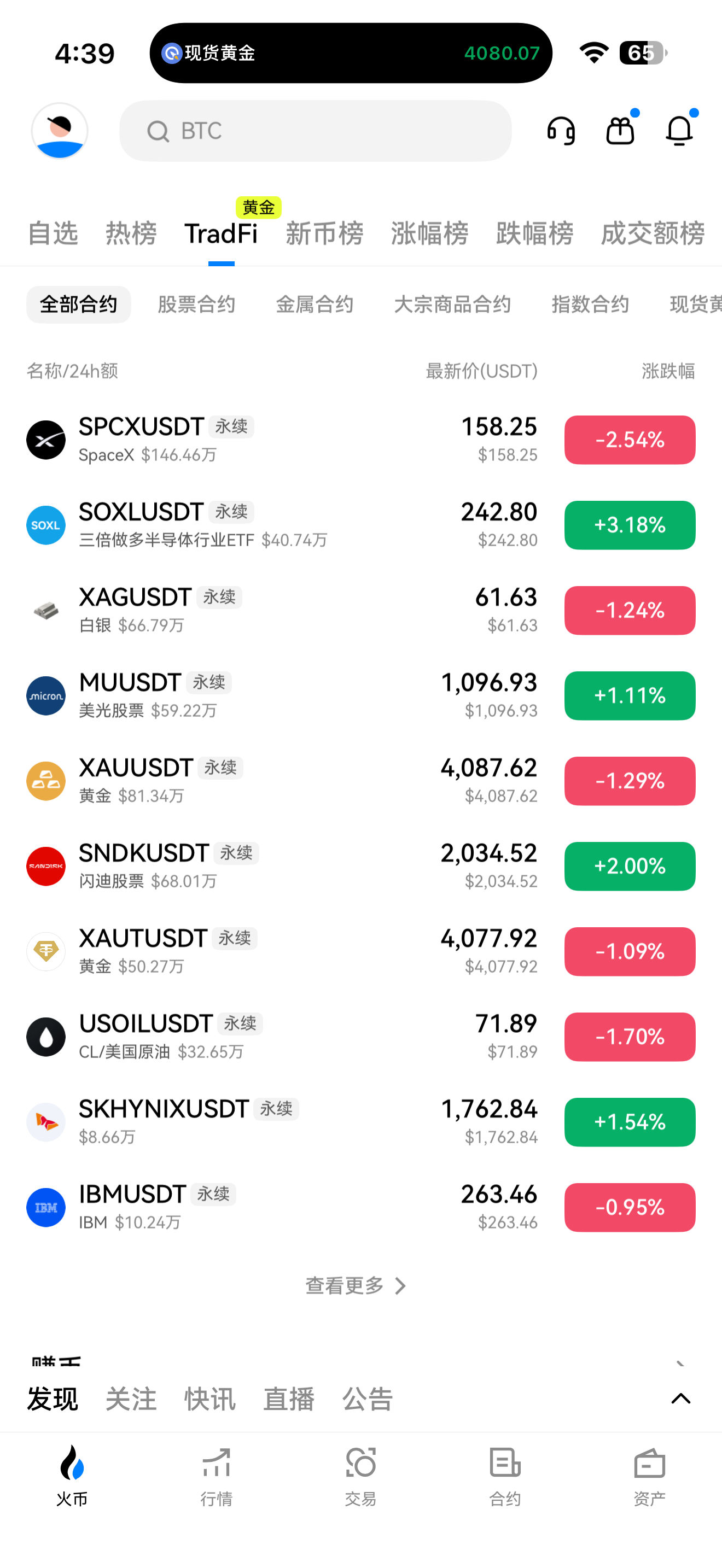
HTX TradFi的本质,是一份翻译合约——它把传统金融资产的价格,翻译成了Crypto用户能理解、能操作的语言。

以前想交易美股,得换汇、开海外券商、卡一堆流程。现在打开HTX,用USDT就能参与。以前黄金交易只在传统市场进行,现在7×24小时都能用合约跟踪它的价格。

这就是HTX TradFi在做的事——在Crypto和华尔街之间,搭一座桥。
Related Reads

IOSG Founder: Ethereum Doesn't Need Another Leap of Technical Faith, It Needs a Musk-style Compromise

Jocy, founder of IOSG Ventures, argues that Ethereum does not need renewed technological faith but a "Musk-like compromise." The recent formation of ETHLabs—funded by major ETH holders like BitMine and Lubin—highlights a market-driven move to fill a gap left by the Ethereum Foundation (EF), signaling a loss of confidence in its decentralized, hands-off approach. The core critique contrasts Vitalik Buterin's (V) idealistic, technology-first vision with Elon Musk's pragmatic, business-driven execution. The author asserts Ethereum's current shortage is not another technical roadmap but a clear, real-world application narrative and a leader willing to engage directly with commercial realities—like Musk. Internal issues are emphasized, citing EF's management problems and talent drain. While the new decentralized model with independent nodes like ETHLabs addresses the single foundation's limitations, it risks fragmentation without cohesive direction. True cohesion, the author suggests, must come from a shared, compelling narrative around ETH's value, not just from aligned financial interests. Independence claims for new entities are seen as aspirational, needing years of transparency to build trust. The ultimate threat is not competitors like Solana, but the broader shift of attention and talent toward AI. Ethereum has a limited window—12 to 18 months—to recapture focus by delivering tangible, real-world applications. The conclusion urges V to shift from abstract ideals to grounded, pragmatic leadership. The time for this crucial pivot is running out.

marsbit40m ago

IOSG Founder: Ethereum Doesn't Need Another Leap of Technical Faith, It Needs a Musk-style Compromise

marsbit40m ago

Google Starts Selling TPUs, Big Tech Aims to Produce "Low-Cost Tokens" with AI Chips

Google has begun selling its proprietary TPU chips and AI computing hardware directly to third-party data centers and clients, marking a strategic shift. Previously only accessible via cloud rentals, TPUs are specialized processors designed for the matrix and tensor operations central to AI models. By combining thousands into supercomputing clusters managed by CPUs, Google achieves high-efficiency AI processing. This move enables Google’s Gemini AI to offer competitive token pricing, challenging rivals like OpenAI. It also signals a broader industry trend where AI compute is becoming a commoditized resource like electricity. While NVIDIA remains dominant with its CUDA ecosystem and high-performance GPUs, the focus is shifting from raw power to cost efficiency and system integration. Google’s approach mirrors NVIDIA’s by selling an entire ecosystem—hardware, software, and data center expertise—rather than just chips. This threatens NVIDIA’s grip on the mid-range inference market, where lower-cost, efficient solutions are increasingly demanded. Similarly, cloud providers like Huawei Cloud and Alibaba Cloud in China are developing their own AI chip ecosystems (e.g., Ascend, Zhenwu), packaging chips, clusters, and tools into full-stack solutions. They aim to reduce token costs and capture market share through integrated systems. In summary, the AI infrastructure race is evolving from a competition for the strongest chips to a contest for the most efficient and cost-effective systems. Google’s TPU sales highlight this transition, emphasizing that future success lies in delivering affordable, scalable AI compute as a foundational service.

marsbit59m ago

Google Starts Selling TPUs, Big Tech Aims to Produce "Low-Cost Tokens" with AI Chips

marsbit59m ago

Trading

Spot
Futures
活动图片