Биткойн-ферма превращается в AI-дата-центр: выбор компании Sangha — «продать душу»

marsbitPublished on 2026-06-17Last updated on 2026-06-17

Abstract

Автор: «Сердце вычислительной мощности». В декабре 2025 года в округе Эктор, Техас, Спенсер Марр перерезал красную ленту, открыв майнинговую ферму «Genesis» для добычи биткойнов. Однако уже в июне 2026 года его компания Sangha начала рассматривать возможность продажи фермы, создания совместного предприятия или привлечения стратегического партнера. Причина не в убытках, а в высокой стоимости актива, вызванной растущим спросом со стороны индустрии искусственного интеллекта (ИИ). Ферма Genesis мощностью 19,9 МВт использует уникальную модель энергоснабжения. Она подключена напрямую («за счетчиком») к солнечной электростанции мощностью 180 МВт, принадлежащей корейской группе Hanwha. Это позволяет избежать платы за передачу по сетям общего пользования. Французский энергетический гигант TotalEnergies предоставляет услуги по поставке электроэнергии из сети для покрытия потребностей в пасмурную погоду. Благодаря этой модели стоимость электроэнергии для Genesis составляет всего около $32/МВт·ч, что значительно ниже средних тарифов в Северной Америке. Несмотря на то, что майнинг остается прибыльным, Sangha видит большую ценность в самой инфраструктуре — уже готовом, подключенном к сети объекте с долгосрочными контрактами на дешевую электроэнергию. Компания изменила соглашение о подключении к сети, увеличив потенциальную мощность объекта до 110,4 МВт, что делает его привлекательным для размещения энергоемких вычислений ИИ и HPC. Таким образом, стратегия Sangha смещается: вместо долго...

Автор: Сердце Вычислительной Мощности

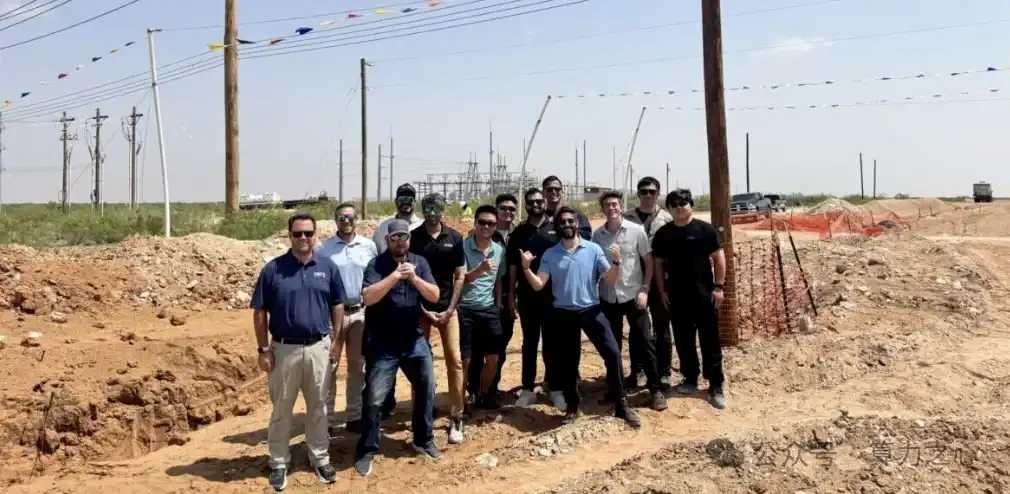
Декабрь 2025 года. В округе Эктор, штат Техас, Спенсер Марр разрезал красную ленточку.

За этой ленточкой скрывалась биткойн-ферма под названием Genesis.

Не прошло и полугода после подключения к сети, как в июне 2026 года его компания Sangha дала понять, что рассматривает варианты продажи, создания совместного предприятия или привлечения стратегического партнёра.

Не потому, что дело не идёт, а потому, что оно стало слишком ценным.

Потому что на эту ферму положила глаз индустрия искусственного интеллекта.
I. Ферма только подключилась — и уже выставлена на продажу

Ферма Genesis невелика по масштабам — 19,9 МВт.

Они не строили отдельную электростанцию, а подключились к солнечной ферме мощностью 180 МВт, принадлежащей южнокорейской группе Hanwha.

Они используют электроэнергию по схеме «прямого подключения за счётчиком», то есть электроэнергия от солнечных панелей идёт на ферму не через общую энергосеть, а по прямому кабелю.

Это экономит на тарифах за передачу и позволяет избежать перегрузок сети — два преимущества сразу.

Кроме того, французский энергетический гигант TotalEnergies предоставляет услуги розничной продажи электроэнергии, помогая им докупать её из сети, когда солнца недостаточно.

Sangha назвала эту модель «беспроигрышной для всех сторон».

Независимый производитель электроэнергии (IPP) получает дополнительную прибыль, инвесторы — недорогой биткойн, а энергосеть становится стабильнее благодаря гибкой нагрузке.

Сроки проекта также чёткие: начали строительство в мае 2025 года, подключили к сети в декабре.

Для этого Sangha создала специальную проектную компанию (SPV), позволяя инвесторам вкладываться не в криптовалюту напрямую, а в оборудование фермы и получать долю от добытого биткойна.

Однако, всего через полгода после подключения, в июне 2026 года, Sangha заявила, что рассматривает возможность продажи, создания СП или привлечения стратегического партнёра.

Сделкой занимается инвестиционный банк Marathon Capital, проект носит кодовое название Genesis, проходит в два этапа, цель — завершить сделку в четвёртом квартале.

Сооснователь Sangha Спенсер Марр не скрывает, его слова: «Мы закидываем широкую сеть», ведём переговоры с «разного рода институциональными игроками». Он также признаёт, что компания, «как и все», следит за изменениями на рынке.

Но почему ферма, которая только подключилась и приносит прибыль, может быть продана всего через полгода?

II. Дело не в майнерах, а в том проводе

Да, Genesis продают не из-за убытков.

Марр говорит, что хотя hashprice (сколько денег приносит единица хешрейта) снижается, их ферма всё ещё прибыльна.

Причина проста — у них низкая цена на электроэнергию.

С декабря 2025 года по первый квартал 2026 года их полная цена на электроэнергию составляла около $32 за МВт·ч.

Для сравнения: средняя цена на промышленную электроэнергию в Северной Америке — $60-80 за МВт·ч. У Genesis — меньше половины.

Любопытно, что Марр, с одной стороны, говорит о вере в биткойн и в hashprice, а с другой — рассматривает продажу фермы, создание СП или привлечение партнёра.

Звучит противоречиво, но на самом деле — нет.

Потому что вера в биткойн не означает веры в «непрерывное самостоятельное майнингование».

Когда AI-компании сражаются за крупные объёмы электроэнергии, готовый, подключённый к сети объект с соглашением о подключении и контрактом на дешёвую электроэнергию в их глазах — это готовое сокровище. «Сколько GPU можно туда запихнуть» — вот в чём ценность Genesis.

Не говоря уже о том, что для AI-компаний самое дорогое — это время. Подключение к электросетям, согласования по земле — на это могут уйти годы.

И Sangha действительно движется в этом направлении.

Они изменили соглашение о подключении, увеличив мощность объекта с 20 МВт до 110,4 МВт, с целью завершения к маю 2028 года.

Эти 110,4 МВт — Sangha либо сама найдёт деньги на расширение и превращение в AI-дата-центр, либо продаст «энергетический актив» на пике оценки более состоятельному покупателю.

Sangha сейчас тоже подсчитывает, что продать энергоактив на пике цены может быть выгоднее, чем расширяться самостоятельно.

Теперь, рекламируя Genesis, Sangha уже не говорит только о майнинге биткойна. Вычисления для ИИ, высокопроизводительные вычисления (HPC), гибридные стратегии — всё это есть в презентациях.

И такая история — не только у Sangha.

III. Вся майнинг-индустрия смещается в сторону ИИ

Если посмотреть на публичные майнинговые компании, тренд ещё очевиднее.

Такие компании, как Core Scientific, TeraWulf, Hut 8, либо уже получили крупные заказы на AI/HPC, либо находятся в процессе переориентации.

Общая сумма контрактов, связанных с AI/HPC, уже превысила 700 миллиардов долларов. Доля доходов от ИИ в публичных майнинговых компаниях может вырасти с 30% до 70%.

Но Sangha от них отличается.

Это не публичная компания, нет давления со стороны акционеров, не нужно отчитываться перед Уолл-стрит каждый квартал.

Она работает по проектному принципу: один SPV — один пакет активов. Продали Genesis — команда может взяться за следующий проект.

Именно эта «лёгкость» делает её привлекательной целью в глазах покупателей.

Для покупателя приобретение Genesis означает получение готового, согласованного, подключённого к сети объекта с энергоконтрактом и возможностью расширения под задачи ИИ.

Не нужно ждать три года на согласования, не нужно торговаться с энергосетями, не нужно строить подстанцию с нуля.

По правде говоря, сама стратегия Genesis оказалась рабочей.

Солнечная энергия + майнинг, цена электроэнергии снижена до $32, модель проверена. Продолжение расширения требует больших вложений, а AI-покупатели готовы платить премию.

Продажа — это понятный расчёт.

Только та «беспроигрышная для всех сторон» история, которую рассказывали инвесторам — больше прибыли для энергопроизводителя, дешёвый биткойн для инвестора, стабильность для сети — на этом этапе, возможно, сводится к одной фразе: кто больше заплатит, тот и заберёт.

Спенсер Марр когда-то говорил, что Sangha создаёт «новую модель движения капитала в биткойне».

Теперь эта «новая модель» может превратиться в «продажу энергоактивов ИИ-компаниям с последующим разделом прибыли».

Но когда лучшие энергомощности и земля начинают уходить в сторону ИИ, где же следующая линия обороны для биткойн-майнеров?

Related Questions

QПочему компания Sangha рассматривает продажу или партнерство в отношении своего майнингового объекта Genesis, несмотря на его прибыльность?

AНесмотря на прибыльность майнинга благодаря низкой стоимости электроэнергии (около $32/MWh), объект Genesis становится чрезвычайно ценным для индустрии искусственного интеллекта. У него уже есть подключение к электросети, разрешения и контракт на поставку электроэнергии, что позволяет быстро развернуть мощности для вычислений ИИ. Продажа или партнерство на пике стоимости этой «энергетической инфраструктуры» может быть более выгодной сделкой, чем дальнейшее самостоятельное расширение для майнинга.

QВ чем заключается уникальная модель электроснабжения майнингового объекта Genesis?

AGenesis использует модель «прямого подключения за счётчиком» к солнечной электростанции мощностью 180 МВт, принадлежащей корейской группе Hanwha. Электроэнергия поступает напрямую, минуя общественные сети, что позволяет избежать платы за передачу и перегрузок. Французский энергетический гигант TotalEnergies предоставляет розничные услуги по снабжению электроэнергией для покрытия потребностей, когда солнечной энергии недостаточно. Эта модель, названная Sangha «беспроигрышной», обеспечивает низкую стоимость электроэнергии.

QКак изменился фокус компании Sangha в презентации проекта Genesis потенциальным покупателям?

AВместо того чтобы фокусироваться исключительно на майнинге биткойнов, Sangha теперь представляет Genesis как готовую площадку для вычислений искусственного интеллекта (AI) и высокопроизводительных вычислений (HPC). В презентациях подчеркиваются такие преимущества, как уже существующее подключение к электросети, возможность расширения мощности до 110,4 МВт и значительная экономия времени по сравнению со строительством объекта с нуля.

QЧем стратегия Sangha отличается от стратегий публичных майнинговых компаний, таких как Core Scientific или Hut 8, в контексте перехода к ИИ?

ASangha — это частная компания, работающая по проектной модели, где каждый объект (например, Genesis) часто оформляется как отдельное юридическое лицо (SPV). Это дает гибкость: продав один актив, команда может начать новый проект. Публичные компании находятся под давлением фондового рынка и должны демонстрировать ежеквартальные результаты, поэтому их переход к ИИ часто является постепенным преобразованием существующего бизнеса, а не единовременной продажей активов.

QКакие проблемы для майнеров биткойнов могут возникнуть в связи с ростом спроса на электроэнергию со стороны индустрии ИИ?

AСтатья поднимает вопрос о будущем майнинга биткойнов, если лучшие энергетические активы и земельные участки с подключением к сети будут выкупаться компаниями, работающими в сфере ИИ, которые готовы платить премию. Это может привести к увеличению конкуренции за ресурсы и росту стоимости электроэнергии для майнеров, вынуждая их искать новые, менее развитые или более удаленные регионы для размещения своих операций.

Related Reads

Focus: Five Leading AI Stocks on Nasdaq

The report analyzes five Nasdaq-listed AI infrastructure stocks—Micron (MU), MaxLinear (MXL), AMD, Lumentum (LITE), and Vicor (VICR)—as distinct plays within the AI capital expenditure chain, rather than a single "AI trade." While all benefit from AI data center spending, they differ in their specific roles (e.g., memory, computing, optics, power, connectivity), financial resilience, and risk profiles. The author argues that the key question is not whether the AI narrative remains intact, but whether capital expenditure translates into real orders, earnings justify valuations, and portfolios can withstand high volatility. Historical data shows these stocks have significantly outperformed benchmarks but also experienced deeper drawdowns (~28% to -32%), highlighting their high-beta, high-volatility nature. An investment framework is proposed: core positions (e.g., MU, AMD) for stocks with stronger fundamental evidence; satellite positions (e.g., LITE, VICR) for high-potential, high-volatility names; and cautious observation (e.g., MXL) for smaller-cap ideas with unproven financials. The emphasis is on disciplined, phased buying during pullbacks—only when price corrections align with intact fundamentals and available risk budget—rather than emotional "buy-the-dip" strategies. Overall, AI infrastructure offers long-term potential, but success requires strict position sizing, role definition for each holding, and preparedness for significant volatility.

marsbit8m ago

Focus: Five Leading AI Stocks on Nasdaq

marsbit8m ago

Will UNI Reach $100 in Four Years? Will Standard Chartered's Prediction Come True?

TL;DR: - According to reports, Standard Chartered Bank has published a research report on Uniswap, setting a 2030 price target of $100 for the UNI token. - The bank's core logic is that the tokenization of assets will drive demand for open DeFi liquidity, and Uniswap could capture significant trading volume and fee revenue. - However, most institutional-grade tokenized products are permissioned, and the example of BlackRock's BUIDL shows that DeFi still faces significant access barriers. Standard Chartered's $100 target for UNI by 2030 is based on the hypothesis that tokenized assets will grow massively and a significant portion will flow into open DeFi markets, requiring decentralized exchange platforms like Uniswap for liquidity. The bank forecasts tokenized assets could reach $4 trillion by 2028, with up to 30% in DeFi by 2030. The key question is whether tokenized assets like treasuries and funds will trade in open, decentralized markets or remain within closed, permissioned institutional systems. This directly impacts Uniswap's potential growth. A real-world example is BlackRock's BUIDL fund, which, while using UniswapX for trading, is strictly limited to pre-approved, whitelisted institutional participants. This highlights the current trend: institutions may leverage DeFi infrastructure but maintain strict control over access and transfers. Furthermore, for UNI's value to rise significantly, Uniswap must establish a clear value-capture mechanism, such as the approved fee switch and token burn proposal. Regulatory and interoperability hurdles also persist, as noted by bodies like the Financial Stability Board. In summary, Standard Chartered's bold prediction hinges on the future flow of tokenized asset liquidity. While it signals institutional recognition of DeFi's potential, the path to $100 depends on overcoming current permissioned models and enabling truly open, cross-asset liquidity pools on platforms like Uniswap.

Foresight News12m ago

Will UNI Reach $100 in Four Years? Will Standard Chartered's Prediction Come True?

Foresight News12m ago

Odaily Editorial Team Tea Talk (June 17)

Odaily Editorial Team Casual Chat (June 17) This is an informal column sharing real-time thoughts from Odaily's editorial team on industry news, data, and events. The content is based on actual investment and observations, does not constitute investment advice, and aims to expand perspectives. Azuma shared recent operations: small-scale buys in crypto (mainly BTC) at relatively high levels, a small addition to HOOD stock, and participation in World Cup prediction markets. He also discussed Hyperliquid, noting that while its token HYPE has performed well, its high price may hinder the expansion of its HIP-3 ecosystem by making market creation cost-prohibitive, potentially limiting the platform to just one major market (trade.xyz). Suzz emphasized the importance of a calm mindset in investing, stating that markets offer perpetual opportunities. He warned against "hindsight bias," where past opportunities seem obvious, and stressed that the present always holds new chances for those with the right knowledge and temperament. Golem analyzed SpaceX's acquisition of AI tool Cursor's parent company, Anysphere, for $60 billion paid entirely in SpaceX stock. He speculated whether Musk's interests might work to keep SpaceX's trading volume and market cap high in the short term to reduce the actual equity cost of the deal, noting current high retail investor enthusiasm. Wenser shared a market outlook: cautiously bullish on BTC, monitoring SpaceX stock post-IPO for a potential rise, observing World Cup trends favoring strong teams, and noting the continued strength of Japanese and Korean stocks. He highlighted Anthropic's potential for a massive future IPO and the defensive investment logic in "picks and shovels" AI infrastructure. Qin Xiaofeng discussed trading HYPE around $56-$70, viewing the $50-$60 range as long-term support due to Hyperliquid's dominance in on-chain traditional asset trading and its substantial fee revenue used to buy back HYPE. On ETH, he noted a divide between disappointed crypto natives and bullish traditional investors like Tom Lee, personally viewing current ETH prices as undervalued.

Odaily星球日报23m ago

Odaily Editorial Team Tea Talk (June 17)

Odaily星球日报23m ago

Under the Shock of Oil Prices and Inflation, Which Country Will Be the First to Sell Off Its Gold Reserves?

The article draws a parallel between the 2003 North American blackout and the potential collapse of the global financial system, framing the US dollar and Treasury market as the world's economic "power grid." It argues that the closure of the Strait of Hormuz is creating a shockwave, starting with oil-importing emerging markets like Turkey, India, and Indonesia. As oil prices rise, these nations are forced to sell dollar-denominated assets—first US Treasuries, then potentially their gold reserves—to afford fuel. Turkey is highlighted as a key case, having sold nearly 90% of its Treasuries and begun tapping gold reserves when oil was between $70-$105/barrel. The article warns that if prices spike to $150-$160/barrel, global buffers like oil inventories and strategic reserves will be depleted. This could trigger a cascade: vulnerable nations, having exhausted assets, could face economic and political collapse (like Sri Lanka in 2022). Their forced asset sales would drive US Treasury yields higher, potentially past a critical threshold (around 5%), forcing the US to choose between a bond market crash or hyperinflation through massive money printing. Ultimately, the piece posits that the dollar's long-term decline is inevitable. The first domino to fall will likely be a fragile emerging market, signaling the start of a chain reaction that eventually threatens the core of the dollar system. The conclusion advises holding tangible assets like gold and energy, which cannot be printed, as a hedge against currency devaluation.

marsbit47m ago

Under the Shock of Oil Prices and Inflation, Which Country Will Be the First to Sell Off Its Gold Reserves?

marsbit47m ago

Trading

Spot
Futures

Hot Articles

What is SONIC

Sonic: Pioneering the Future of Gaming in Web3 Introduction to Sonic In the ever-evolving landscape of Web3, the gaming industry stands out as one of the most dynamic and promising sectors. At the forefront of this revolution is Sonic, a project designed to amplify the gaming ecosystem on the Solana blockchain. Leveraging cutting-edge technology, Sonic aims to deliver an unparalleled gaming experience by efficiently processing millions of requests per second, ensuring that players enjoy seamless gameplay while maintaining low transaction costs. This article delves into the intricate details of Sonic, exploring its creators, funding sources, operational mechanics, and the timeline of significant events that have shaped its journey. What is Sonic? Sonic is an innovative layer-2 network that operates atop the Solana blockchain, specifically tailored to enhance the existing Solana gaming ecosystem. It accomplishes this through a customised, VM-agnostic game engine paired with a HyperGrid interpreter, facilitating sovereign game economies that roll up back to the Solana platform. The primary goals of Sonic include: Enhanced Gaming Experiences: Sonic is committed to offering lightning-fast on-chain gameplay, allowing players and developers to engage with games at previously unattainable speeds. Atomic Interoperability: This feature enables transactions to be executed within Sonic without the need to redeploy Solana programmes and accounts. This makes the process more efficient and directly benefits from Solana Layer1 services and liquidity. Seamless Deployment: Sonic allows developers to write for Ethereum Virtual Machine (EVM) based systems and execute them on Solana’s SVM infrastructure. This interoperability is crucial for attracting a broader range of dApps and decentralised applications to the platform. Support for Developers: By offering native composable gaming primitives and extensible data types - dining within the Entity-Component-System (ECS) framework - game creators can craft intricate business logic with ease. Overall, Sonic's unique approach not only caters to players but also provides an accessible and low-cost environment for developers to innovate and thrive. Creator of Sonic The information regarding the creator of Sonic is somewhat ambiguous. However, it is known that Sonic's SVM is owned by the company Mirror World. The absence of detailed information about the individuals behind Sonic reflects a common trend in several Web3 projects, where collective efforts and partnerships often overshadow individual contributions. Investors of Sonic Sonic has garnered considerable attention and support from various investors within the crypto and gaming sectors. Notably, the project raised an impressive $12 million during its Series A funding round. The round was led by BITKRAFT Ventures, with other notable investors including Galaxy, Okx Ventures, Interactive, Big Brain Holdings, and Mirana. This financial backing signifies the confidence that investment foundations have in Sonic’s potential to revolutionise the Web3 gaming landscape, further validating its innovative approaches and technologies. How Does Sonic Work? Sonic utilises the HyperGrid framework, a sophisticated parallel processing mechanism that enhances its scalability and customisability. Here are the core features that set Sonic apart: Lightning Speed at Low Costs: Sonic offers one of the fastest on-chain gaming experiences compared to other Layer-1 solutions, powered by the scalability of Solana’s virtual machine (SVM). Atomic Interoperability: Sonic enables transaction execution without redeployment of Solana programmes and accounts, effectively streamlining the interaction between users and the blockchain. EVM Compatibility: Developers can effortlessly migrate decentralised applications from EVM chains to the Solana environment using Sonic’s HyperGrid interpreter, increasing the accessibility and integration of various dApps. Ecosystem Support for Developers: By exposing native composable gaming primitives, Sonic facilitates a sandbox-like environment where developers can experiment and implement business logic, greatly enhancing the overall development experience. Monetisation Infrastructure: Sonic natively supports growth and monetisation efforts, providing frameworks for traffic generation, payments, and settlements, thereby ensuring that gaming projects are not only viable but also sustainable financially. Timeline of Sonic The evolution of Sonic has been marked by several key milestones. Below is a brief timeline highlighting critical events in the project's history: 2022: The Sonic cryptocurrency was officially launched, marking the beginning of its journey in the Web3 gaming arena. 2024: June: Sonic SVM successfully raised $12 million in a Series A funding round. This investment allowed Sonic to further develop its platform and expand its offerings. August: The launch of the Sonic Odyssey testnet provided users with the first opportunity to engage with the platform, offering interactive activities such as collecting rings—a nod to gaming nostalgia. October: SonicX, an innovative crypto game integrated with Solana, made its debut on TikTok, capturing the attention of over 120,000 users within a short span. This integration illustrated Sonic’s commitment to reaching a broader, global audience and showcased the potential of blockchain gaming. Key Points Sonic SVM is a revolutionary layer-2 network on Solana explicitly designed to enhance the GameFi landscape, demonstrating great potential for future development. HyperGrid Framework empowers Sonic by introducing horizontal scaling capabilities, ensuring that the network can handle the demands of Web3 gaming. Integration with Social Platforms: The successful launch of SonicX on TikTok displays Sonic’s strategy to leverage social media platforms to engage users, exponentially increasing the exposure and reach of its projects. Investment Confidence: The substantial funding from BITKRAFT Ventures, among others, emphasizes the robust backing Sonic has, paving the way for its ambitious future. In conclusion, Sonic encapsulates the essence of Web3 gaming innovation, striking a balance between cutting-edge technology, developer-centric tools, and community engagement. As the project continues to evolve, it is poised to redefine the gaming landscape, making it a notable entity for gamers and developers alike. As Sonic moves forward, it will undoubtedly attract greater interest and participation, solidifying its place within the broader narrative of blockchain gaming.

1.7k Total ViewsPublished 2024.04.04Updated 2024.12.03

What is SONIC

What is $S$

Understanding SPERO: A Comprehensive Overview Introduction to SPERO As the landscape of innovation continues to evolve, the emergence of web3 technologies and cryptocurrency projects plays a pivotal role in shaping the digital future. One project that has garnered attention in this dynamic field is SPERO, denoted as SPERO,$$s$. This article aims to gather and present detailed information about SPERO, to help enthusiasts and investors understand its foundations, objectives, and innovations within the web3 and crypto domains. What is SPERO,$$s$? SPERO,$$s$ is a unique project within the crypto space that seeks to leverage the principles of decentralisation and blockchain technology to create an ecosystem that promotes engagement, utility, and financial inclusion. The project is tailored to facilitate peer-to-peer interactions in new ways, providing users with innovative financial solutions and services. At its core, SPERO,$$s$ aims to empower individuals by providing tools and platforms that enhance user experience in the cryptocurrency space. This includes enabling more flexible transaction methods, fostering community-driven initiatives, and creating pathways for financial opportunities through decentralised applications (dApps). The underlying vision of SPERO,$$s$ revolves around inclusiveness, aiming to bridge gaps within traditional finance while harnessing the benefits of blockchain technology. Who is the Creator of SPERO,$$s$? The identity of the creator of SPERO,$$s$ remains somewhat obscure, as there are limited publicly available resources providing detailed background information on its founder(s). This lack of transparency can stem from the project's commitment to decentralisation—an ethos that many web3 projects share, prioritising collective contributions over individual recognition. By centring discussions around the community and its collective goals, SPERO,$$s$ embodies the essence of empowerment without singling out specific individuals. As such, understanding the ethos and mission of SPERO remains more important than identifying a singular creator. Who are the Investors of SPERO,$$s$? SPERO,$$s$ is supported by a diverse array of investors ranging from venture capitalists to angel investors dedicated to fostering innovation in the crypto sector. The focus of these investors generally aligns with SPERO's mission—prioritising projects that promise societal technological advancement, financial inclusivity, and decentralised governance. These investor foundations are typically interested in projects that not only offer innovative products but also contribute positively to the blockchain community and its ecosystems. The backing from these investors reinforces SPERO,$$s$ as a noteworthy contender in the rapidly evolving domain of crypto projects. How Does SPERO,$$s$ Work? SPERO,$$s$ employs a multi-faceted framework that distinguishes it from conventional cryptocurrency projects. Here are some of the key features that underline its uniqueness and innovation: Decentralised Governance: SPERO,$$s$ integrates decentralised governance models, empowering users to participate actively in decision-making processes regarding the project’s future. This approach fosters a sense of ownership and accountability among community members. Token Utility: SPERO,$$s$ utilises its own cryptocurrency token, designed to serve various functions within the ecosystem. These tokens enable transactions, rewards, and the facilitation of services offered on the platform, enhancing overall engagement and utility. Layered Architecture: The technical architecture of SPERO,$$s$ supports modularity and scalability, allowing for seamless integration of additional features and applications as the project evolves. This adaptability is paramount for sustaining relevance in the ever-changing crypto landscape. Community Engagement: The project emphasises community-driven initiatives, employing mechanisms that incentivise collaboration and feedback. By nurturing a strong community, SPERO,$$s$ can better address user needs and adapt to market trends. Focus on Inclusion: By offering low transaction fees and user-friendly interfaces, SPERO,$$s$ aims to attract a diverse user base, including individuals who may not previously have engaged in the crypto space. This commitment to inclusion aligns with its overarching mission of empowerment through accessibility. Timeline of SPERO,$$s$ Understanding a project's history provides crucial insights into its development trajectory and milestones. Below is a suggested timeline mapping significant events in the evolution of SPERO,$$s$: Conceptualisation and Ideation Phase: The initial ideas forming the basis of SPERO,$$s$ were conceived, aligning closely with the principles of decentralisation and community focus within the blockchain industry. Launch of Project Whitepaper: Following the conceptual phase, a comprehensive whitepaper detailing the vision, goals, and technological infrastructure of SPERO,$$s$ was released to garner community interest and feedback. Community Building and Early Engagements: Active outreach efforts were made to build a community of early adopters and potential investors, facilitating discussions around the project’s goals and garnering support. Token Generation Event: SPERO,$$s$ conducted a token generation event (TGE) to distribute its native tokens to early supporters and establish initial liquidity within the ecosystem. Launch of Initial dApp: The first decentralised application (dApp) associated with SPERO,$$s$ went live, allowing users to engage with the platform's core functionalities. Ongoing Development and Partnerships: Continuous updates and enhancements to the project's offerings, including strategic partnerships with other players in the blockchain space, have shaped SPERO,$$s$ into a competitive and evolving player in the crypto market. Conclusion SPERO,$$s$ stands as a testament to the potential of web3 and cryptocurrency to revolutionise financial systems and empower individuals. With a commitment to decentralised governance, community engagement, and innovatively designed functionalities, it paves the way toward a more inclusive financial landscape. As with any investment in the rapidly evolving crypto space, potential investors and users are encouraged to research thoroughly and engage thoughtfully with the ongoing developments within SPERO,$$s$. The project showcases the innovative spirit of the crypto industry, inviting further exploration into its myriad possibilities. While the journey of SPERO,$$s$ is still unfolding, its foundational principles may indeed influence the future of how we interact with technology, finance, and each other in interconnected digital ecosystems.

58 Total ViewsPublished 2024.12.17Updated 2024.12.17

What is $S$

What is AGENT S

Agent S: The Future of Autonomous Interaction in Web3 Introduction In the ever-evolving landscape of Web3 and cryptocurrency, innovations are constantly redefining how individuals interact with digital platforms. One such pioneering project, Agent S, promises to revolutionise human-computer interaction through its open agentic framework. By paving the way for autonomous interactions, Agent S aims to simplify complex tasks, offering transformative applications in artificial intelligence (AI). This detailed exploration will delve into the project's intricacies, its unique features, and the implications for the cryptocurrency domain. What is Agent S? Agent S stands as a groundbreaking open agentic framework, specifically designed to tackle three fundamental challenges in the automation of computer tasks: Acquiring Domain-Specific Knowledge: The framework intelligently learns from various external knowledge sources and internal experiences. This dual approach empowers it to build a rich repository of domain-specific knowledge, enhancing its performance in task execution. Planning Over Long Task Horizons: Agent S employs experience-augmented hierarchical planning, a strategic approach that facilitates efficient breakdown and execution of intricate tasks. This feature significantly enhances its ability to manage multiple subtasks efficiently and effectively. Handling Dynamic, Non-Uniform Interfaces: The project introduces the Agent-Computer Interface (ACI), an innovative solution that enhances the interaction between agents and users. Utilizing Multimodal Large Language Models (MLLMs), Agent S can navigate and manipulate diverse graphical user interfaces seamlessly. Through these pioneering features, Agent S provides a robust framework that addresses the complexities involved in automating human interaction with machines, setting the stage for myriad applications in AI and beyond. Who is the Creator of Agent S? While the concept of Agent S is fundamentally innovative, specific information about its creator remains elusive. The creator is currently unknown, which highlights either the nascent stage of the project or the strategic choice to keep founding members under wraps. Regardless of anonymity, the focus remains on the framework's capabilities and potential. Who are the Investors of Agent S? As Agent S is relatively new in the cryptographic ecosystem, detailed information regarding its investors and financial backers is not explicitly documented. The lack of publicly available insights into the investment foundations or organisations supporting the project raises questions about its funding structure and development roadmap. Understanding the backing is crucial for gauging the project's sustainability and potential market impact. How Does Agent S Work? At the core of Agent S lies cutting-edge technology that enables it to function effectively in diverse settings. Its operational model is built around several key features: Human-like Computer Interaction: The framework offers advanced AI planning, striving to make interactions with computers more intuitive. By mimicking human behaviour in tasks execution, it promises to elevate user experiences. Narrative Memory: Employed to leverage high-level experiences, Agent S utilises narrative memory to keep track of task histories, thereby enhancing its decision-making processes. Episodic Memory: This feature provides users with step-by-step guidance, allowing the framework to offer contextual support as tasks unfold. Support for OpenACI: With the ability to run locally, Agent S allows users to maintain control over their interactions and workflows, aligning with the decentralised ethos of Web3. Easy Integration with External APIs: Its versatility and compatibility with various AI platforms ensure that Agent S can fit seamlessly into existing technological ecosystems, making it an appealing choice for developers and organisations. These functionalities collectively contribute to Agent S's unique position within the crypto space, as it automates complex, multi-step tasks with minimal human intervention. As the project evolves, its potential applications in Web3 could redefine how digital interactions unfold. Timeline of Agent S The development and milestones of Agent S can be encapsulated in a timeline that highlights its significant events: September 27, 2024: The concept of Agent S was launched in a comprehensive research paper titled “An Open Agentic Framework that Uses Computers Like a Human,” showcasing the groundwork for the project. October 10, 2024: The research paper was made publicly available on arXiv, offering an in-depth exploration of the framework and its performance evaluation based on the OSWorld benchmark. October 12, 2024: A video presentation was released, providing a visual insight into the capabilities and features of Agent S, further engaging potential users and investors. These markers in the timeline not only illustrate the progress of Agent S but also indicate its commitment to transparency and community engagement. Key Points About Agent S As the Agent S framework continues to evolve, several key attributes stand out, underscoring its innovative nature and potential: Innovative Framework: Designed to provide an intuitive use of computers akin to human interaction, Agent S brings a novel approach to task automation. Autonomous Interaction: The ability to interact autonomously with computers through GUI signifies a leap towards more intelligent and efficient computing solutions. Complex Task Automation: With its robust methodology, it can automate complex, multi-step tasks, making processes faster and less error-prone. Continuous Improvement: The learning mechanisms enable Agent S to improve from past experiences, continually enhancing its performance and efficacy. Versatility: Its adaptability across different operating environments like OSWorld and WindowsAgentArena ensures that it can serve a broad range of applications. As Agent S positions itself in the Web3 and crypto landscape, its potential to enhance interaction capabilities and automate processes signifies a significant advancement in AI technologies. Through its innovative framework, Agent S exemplifies the future of digital interactions, promising a more seamless and efficient experience for users across various industries. Conclusion Agent S represents a bold leap forward in the marriage of AI and Web3, with the capacity to redefine how we interact with technology. While still in its early stages, the possibilities for its application are vast and compelling. Through its comprehensive framework addressing critical challenges, Agent S aims to bring autonomous interactions to the forefront of the digital experience. As we move deeper into the realms of cryptocurrency and decentralisation, projects like Agent S will undoubtedly play a crucial role in shaping the future of technology and human-computer collaboration.

732 Total ViewsPublished 2025.01.14Updated 2025.01.14

What is AGENT S

Discussions

Welcome to the HTX Community. Here, you can stay informed about the latest platform developments and gain access to professional market insights. Users' opinions on the price of S (S) are presented below.

活动图片