数据破译BTC周期:三大见底信号齐亮,Q4或成关键转折窗口?

marsbitPublished on 2026-06-16Last updated on 2026-06-16

Abstract

比特币价格从2025年10月的历史高点126,198美元大幅回撤,于2026年6月一度跌破6万美元,跌幅超过52%,市场恐慌情绪浓厚。然而,数据分析显示当前状况可能并非末日。 首先,与过去三轮熊市(跌幅77%-86%)相比,本次52%的回调幅度相对温和。其次,根据比特币的减半周期规律,价格通常在减半后12-18个月见顶,随后经历12-14个月的熊市触底。本轮周期(2024年4月减半)的顶部出现时间符合历史规律,据此推算,市场底部可能出现在2026年10月前后。 链上数据也释放出低位信号:MVRV Z-Score已接近历史底部区间;当前市价仅比全网平均持币成本(约53,600美元)高出约9%;价格也已触及关键的200周均线(约62,200美元)支撑。 资金流向呈现“散户出、巨鲸进”的特征:现货ETF持续资金流出的同时,持有大量比特币的巨鲸地址数量创年内新高,且长期持有者控制了约78%的流通供应。 宏观面上,此前压制市场的高油价和地缘政治风险出现转机。随着美伊达成停战协议,油价回落,通胀压力有望缓解,这可能为美联储未来调整利率政策提供空间,从而改善全球风险资产的流动性环境。 综上所述,尽管市场信心极度匮乏,但多项数据和周期模型暗示,2026年第四季度可能是一个关键的潜在转折窗口。当前区域或许不再是恐慌离场的阶段,而是为长期投资者提供了一个需要耐心和纪律的分批布局机会。历史表明,每一轮底部都伴随着深刻的怀疑,而真正的机会往往孕育其中。

作者|jk

去年 10 月,BTC 冲破 12 万美元的那一晚,无数人截下行情图发在朋友圈,配文赫然写着“历史见证者”。短短八个月后,同一批人紧盯着 59,100 美元的价格,朋友圈文案换成了“还会跌吗?”。

从 126,198 美元的峰顶到 59,100 美元的低位,BTC 回撤幅度超过 52%;6 月初,加密市场恐慌与贪婪指数跌至 8,创下 2022 年以来的最低水平。

眼下进场,到底是勇敢抄底,还是被动接盘?

2018 年,人们说 BTC 终将归零;2022 年,他们说 FTX 暴雷后加密行业彻底完了;到了 2026 年,论调换成了“四年周期已经失效”“机构进场只会砸盘”“高利率时代风险资产毫无出路”。每一次,这些叙事在价格最低的时候,听起来都最不容置疑。

然而,叙事是情绪的,数据才是中性的。唯有把二者拆开,当前市场所处的位置才会变得清晰。不妨一起看看:此刻的我们,究竟站在 BTC 周期的哪一段?

52%跌幅在历史周期里是什么位置?

2025 年 10 月 6 日,BTC 触及历史最高点 126,198 美元。从那一天到 2026 年 6 月 5 日盘中最低约 59,100 美元,这次回撤峰值超过 52%。

52% 的跌幅听起来触目惊心,但对比 BTC 过去三轮完整熊市,这个数字尚在历史中值偏下的位置。2014 年熊市从顶到底跌了 86%,2018 年跌了 84%,2022 年从 69,000 美元跌至 15,479 美元,跌幅约 77%。本轮截至目前的最大回撤约为 52%,明显温和于过去三次。

也就是说,历史上跌得更深后都涨回来了。虽然这句话本身可能有点武断,但是从市场信心的角度来说,市场对当前价格的恐惧,很可能超过了基本面所对应的实际风险。

这也就是为什么大家都说,市场的信心比黄金都金贵。

四轮减半,三条几乎相同的曲线

理解当前位置,绕不开减半周期这个框架。

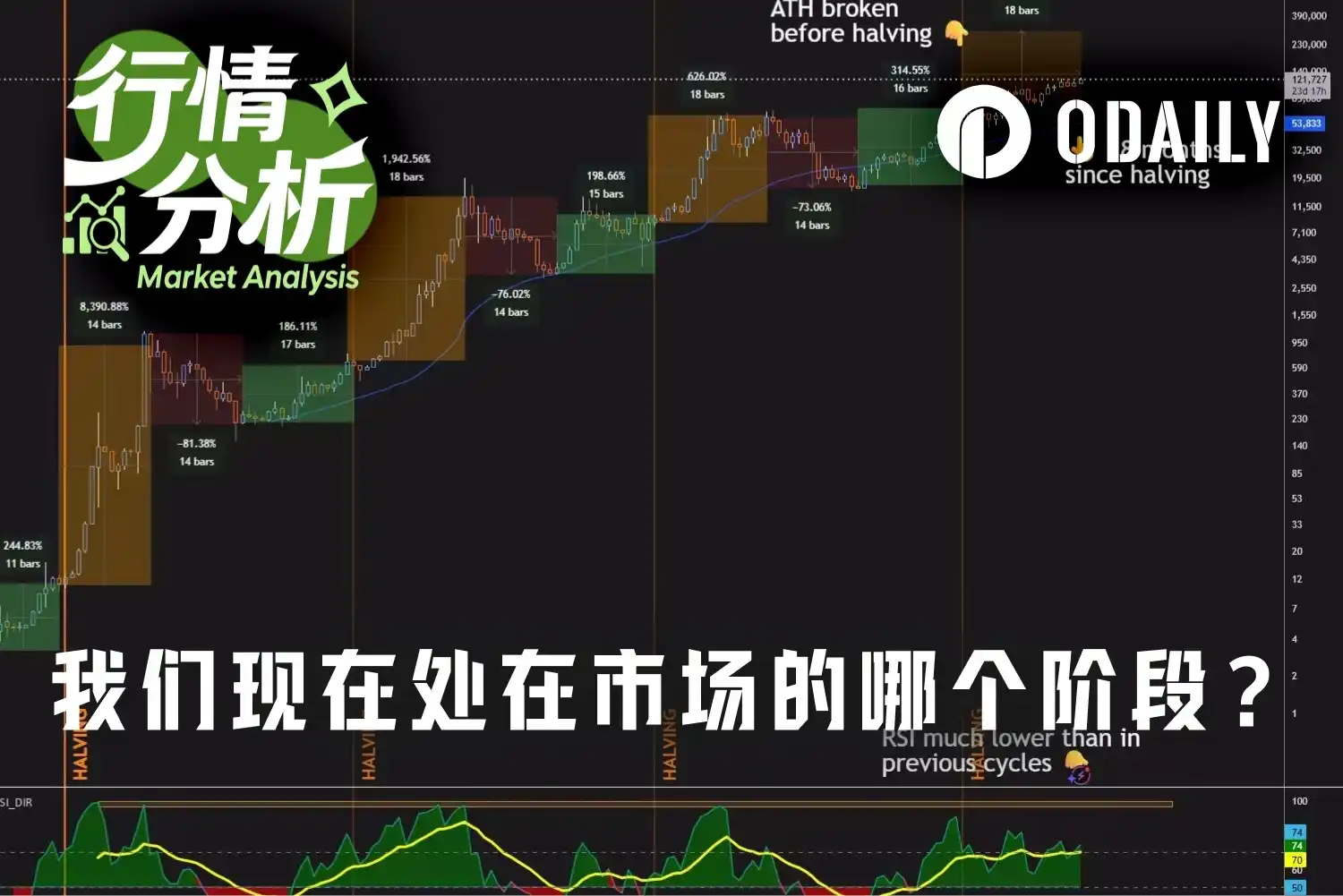
BTC 大约每四年减半一次,矿工出块奖励随之减半,新增供应收缩。围绕减半,过去三轮都走出了高度相似的牛熊节奏:减半后 12 到 18 个月见顶,顶部之后 12 到 14 个月触底,底部通常出现在下一次减半前约 17 个月

  • 第一轮,2012 年 11 月减半,当时 BTC 只有 12 美元。约 12 个月后的 2013 年 11 月,价格涨到 1,150 美元见顶。随后熊市持续约 13 个月,到 2015 年 1 月触底约 160 美元,而那个底部距离下一次减半(2016 年 7 月)还有约 18 个月。
  • 第二轮,2016 年 7 月减半,减半时约 650 美元。约 17 个月后的 2017 年 12 月,价格涨到 19,800 美元见顶。随后约 12 个月的熊市,到 2018 年 12 月触底约 3,200 美元,那个底距离下一次减半(2020 年 5 月)还有约 17 个月。
  • 第三轮,2020 年 5 月减半,减半时约 8,600 美元。约 18 个月后的 2021 年 11 月,价格涨到 69,000 美元见顶。随后约 13 个月的熊市,到 2022 年 11 月 FTX 崩盘时触底约 15,500 美元,那个底距离下一次减半(2024 年 4 月)还有约 17 个月。
  • 现在是第四轮。2024 年 4 月 19 日减半,区块奖励从 6.25 降到 3.125 BTC,减半时价格约 63,000 美元。此后约 18 个月,BTC 在 2025 年 10 月 6 日见顶 126,198 美元,完全落在历史的“12 到 18 个月见顶”窗口内。

截至 2026 年 6 月,距 2024 年减半已约 26 个月,距 2025 年 10 月顶部约 8 个月。按历史规律,顶部之后触底需要 12 到 14 个月,意味着底部窗口可能落在 2026 年 10 月前后,届时距下一次减半(2028 年 4 月)恰好约 17 个月,与前三轮几乎完全重合。
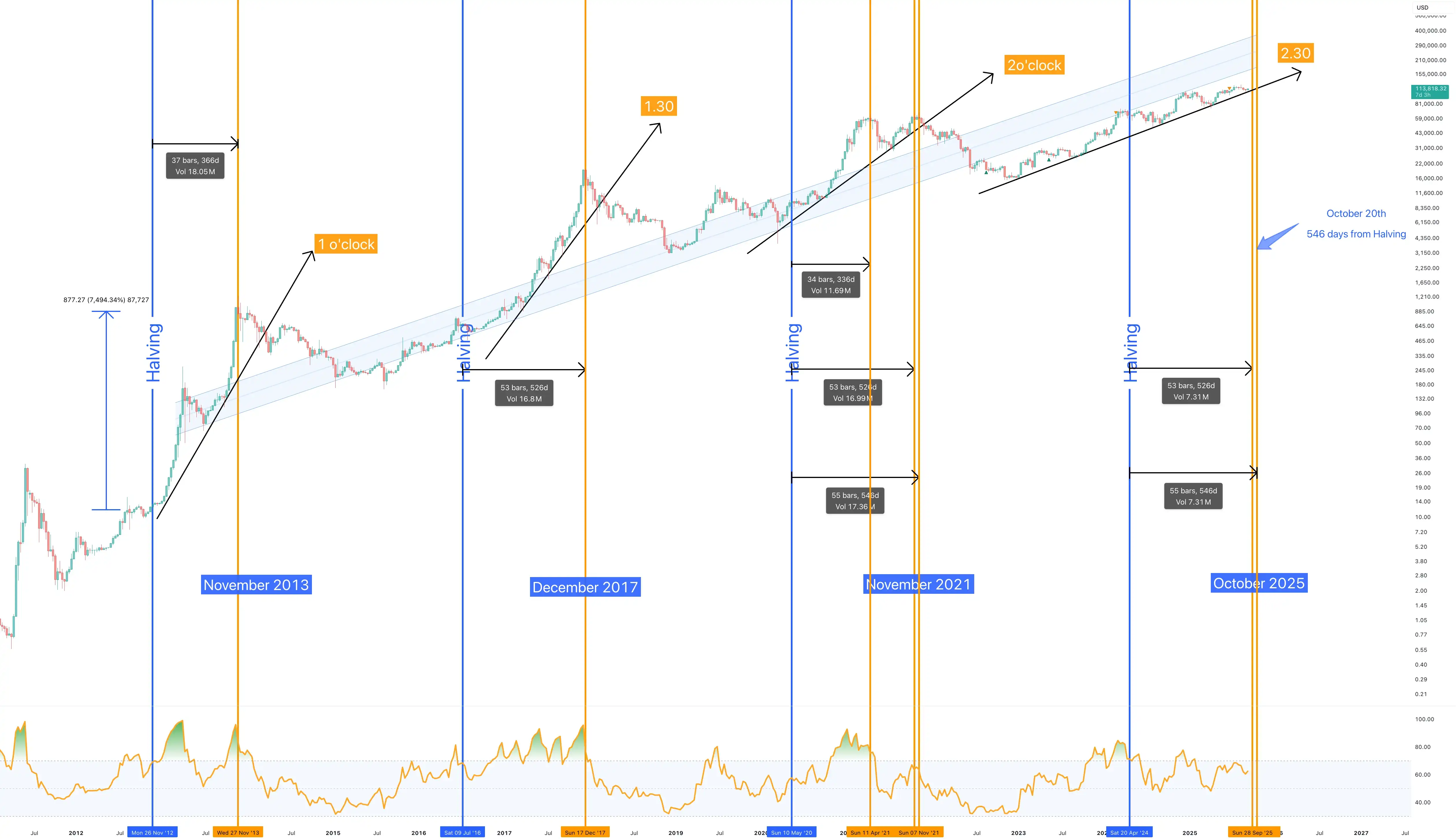
BTC 减半时间节点

站在当前时间点看,2026 年下半年更像是本轮周期中值得重新评估风险收益比的阶段,而不是简单恐慌离场的阶段。

减半后的供应收缩仍在持续,现货 ETF 和机构资金带来的长期买盘也改变了 BTC 过去单纯依赖散户情绪驱动的市场结构。如果历史周期继续发挥作用,2026 年四季度附近可能正是市场从悲观走向修复、从去杠杆走向重新积累的关键窗口。对于看好 BTC 长期价值的投资者而言,短期回调反而可能提供更具吸引力的分批布局机会。随着底部区间逐步临近,市场信心有望重新凝聚,下一轮上涨周期的基础也可能正在这个阶段悄然形成。

链上数据:三个同时亮起的低位信号

价格图表之外,链上数据提供了更底层的估值参考。

  1. 指标 1:MVRV Z-Score,这一指标衡量当前市价与全网持币者平均成本之间的偏差。历史上,Z-Score 超过 7 意味着市场高估严重,接近顶部;跌至 0 附近甚至转负,则对应深度低估区。2025 年 10 月 BTC 见顶时,Z-Score 约在 5 到 6 区间。根据 MacroMicro 6 月 9 日的数据,当前 Z-Score 约为 0.27,已接近历史底部区的边界。
  2. 指标 2:全网已实现价格,即全部流通 BTC 按最后一次链上移动价格加权计算的成本基础。CryptoQuant 研究主管 Julio Moreno 在 6 月 10 日指出,当前这一数值约为 53,600 美元。按当前市价 62,000 美元计算,市价仅高于全网成本约 9%,这个溢价是历史上极为罕见的低位。过去三轮周期,大底都在已实现价格附近或略下方形成,2022 年 11 月曾短暂跌破。
  3. 指标 3:200 周均线。这条均线代表过去近四年的平均价格,当前约在 62200 美元左右。2026 年 6 月 4 日,BTC 本轮周期首次触及这条线。2015 年、2018 年、2020 年的三次熊市大底,均精确发生在这条线附近。2022 年是唯一例外,当时价格击穿均线后在线下停留约 16 个月,最终以 FTX 崩盘收尾。
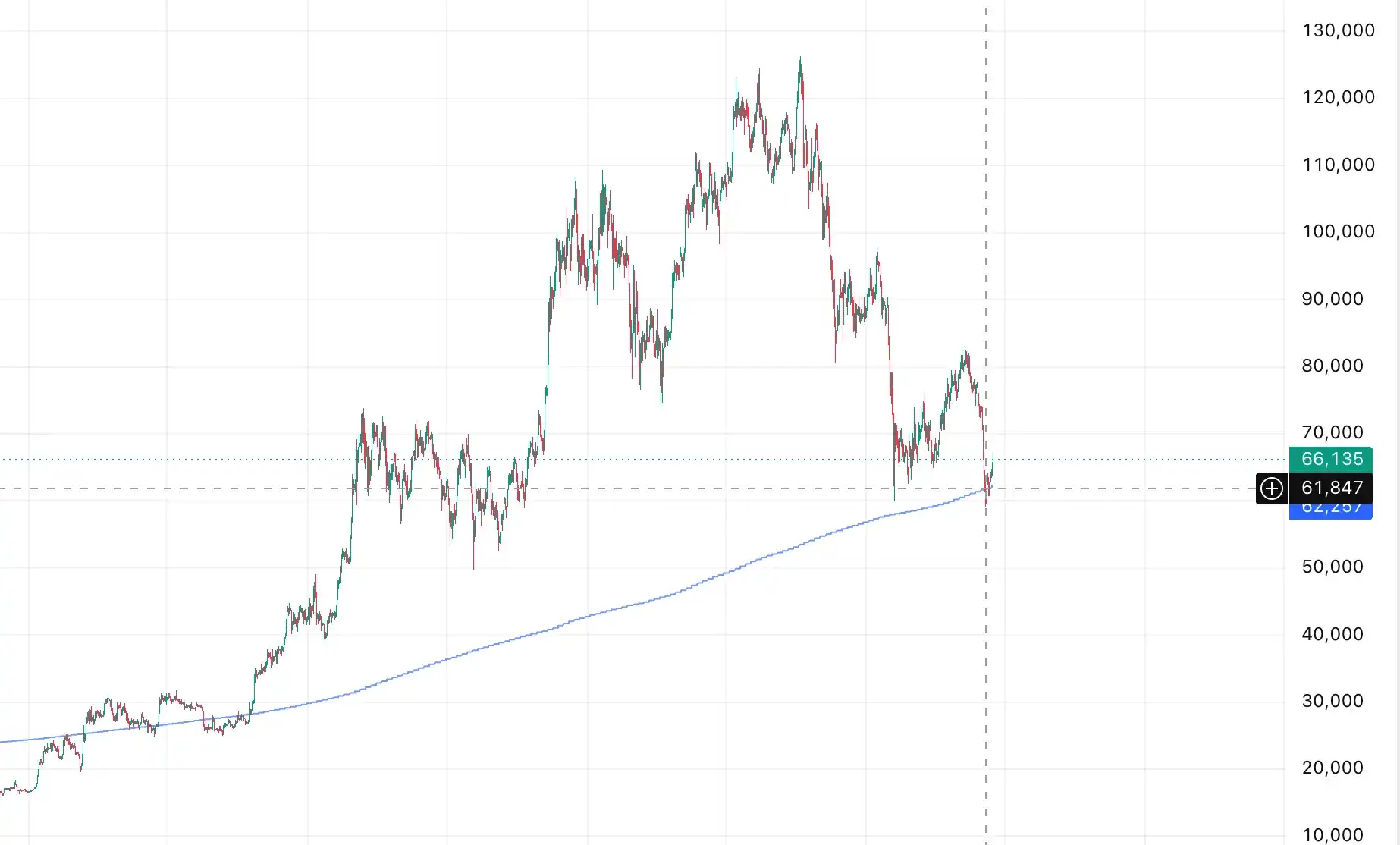
200 周均线价格。来源:TradingView

资金面:散户出,巨鲸进

估值层面的低位信号之外,资金流动的结构也出现了一些底部的特征。

ETF 层面,5 月中旬至 6 月初,美国现货 BTC ETF 连续 13 个交易日净流出,累计约 44 亿美元,约合 59,400 枚比特币,是 ETF 上线以来持续时间最长的单次流出。BlackRock 旗下 IBIT 单周流出约 9.8 亿美元,创历史最差单周记录。这反映的是短线资金和散户层面的恐慌性赎回。

与此同时,链上出现了方向相反的动作。持仓 100 枚以上的巨鲸地址数量创 2026 年新高,达到约 20,229 个,2026 年前五个月巨鲸净买入量已相当于 2025 年全年总量。Strategy 在 5 月底因支付优先股股息出售了 32 枚 BTC,四年来首次卖出,引发市场对其策略转向的担忧,但两周后,公司于 6 月 8 日以均价 65,332 美元买入 1,550 枚,总持仓升至 845,256 枚,Michael Saylor 将其描述为“加仓的好时机”。

交易所层面,过去数月各主要交易所的 BTC 余额持续下降,筹码从场内流向长期持有者和机构冷钱包。目前,持仓超过 155 天的长期持有者控制了约 78%的流通供应,为历史最高比例之一。

宏观:最大的不确定性,刚刚移除了一半

过去数月压制 BTC 的核心宏观逻辑,主要来自两条线:高利率和伊朗战争。

2026 年初,美以对伊朗发动军事打击,霍尔木兹海峡随即遭到局部封锁,IEA 将其定性为全球石油市场史上最大规模供应中断,国际油价一度飙至每桶 105 至 120 美元。通胀因此反弹,美国 5 月 CPI 升至 4.2%,远超 2%的政策目标。联邦基金利率被迫维持在 3.50%至 3.75%区间按兵不动,市场一度将 2026 年"零降息"的概率标价至约 79%,美元指数随之走强至 99 至 100 附近。高利率加避险情绪的双重压制,使全球流动性虽持续扩张,却迟迟无法流向加密市场。

但在 6 月 14 日夜间,美国总统特朗普宣布美伊协议已完成,伊朗最高国家安全委员会随即于 6 月 15 日凌晨发表声明正式确认停战谅解备忘录达成,正式签署仪式定于 6 月 19 日在瑞士举行,霍尔木兹海峡将随之重新开放。

市场反应即时且剧烈。WTI 原油当日跌超 4%至约 80.25 美元/桶,布伦特原油跌至约 83.51 美元。BTC 从协议宣布前的约 61,500 美元跳涨至 65,000 美元上方,单日涨幅超过 5%,是过去三个月内最大的单日反弹,成交量同步放大。美股三大指数期货全线大涨逾 300 点,亚洲股市同步上扬。

德意志银行在协议达成后表示,预计短期内美联储加息风险会消退,但由于通胀粘性、劳动力市场韧性以及中性利率可能高于预期,2027 年仍存在加息的可能性。美联储的情况,具体还要看新任掌舵人沃什的首秀。

结语:是底部,也是信心最缺乏的时候

当 BTC 站在 12 万美元上方时,所有人都愿意相信它还会更高;但当它跌回 6 万美元附近,链上估值、周期位置、长期持有者占比和宏观变量都开始指向底部区域时,市场反而最缺乏的就是信心。

可投资从来不是在情绪最舒服的时候完成的。历史上每一轮 BTC 大底,都伴随着“这次不一样”的质疑,也伴随着对行业、周期和资产本身的全面怀疑。区别只在于,有人把这种怀疑当成离场理由,有人把它当成重新定价风险收益比的机会。

现在的 BTC ,当然不意味着不会再跌,也不意味着这就是大底。但如果把时间拉长,把短期恐慌和长期结构分开来看,当前区域已经不再适合用“追高”来定义,而更接近一次需要耐心、纪律和信心的分批布局窗口。

市场信心是比黄金都金贵的东西。因为黄金只能抵御通胀,而信心可以穿越周期。对于仍然相信 BTC 长期价值、相信稀缺性、相信全球流动性终将回归风险资产的人来说,2026 年下半年最重要的问题也许不是“还会不会跌”,而是当市场重新相信它的时候,你是否已经在场。

你会怎么选择呢?

Related Questions

Q文章指出比特币在历史周期中,见顶后通常多久触底?

A比特币在见顶后,通常需要12到14个月的时间触底。

Q文章中提到的三大见底链上信号分别是什么?

A分别是:1. MVRV Z-Score接近历史底部区边界(约0.27);2. 市价接近全网已实现价格(溢价仅约9%);3. 价格触及或接近200周均线(约62200美元)。

Q根据减半周期规律,文章预测本轮比特币的底部窗口可能出现在何时?

A根据减半周期和历史规律,本轮比特币的底部窗口可能落在2026年10月前后。

Q文章中提到,近期压制比特币价格的两条核心宏观逻辑是什么?

A是“高利率”和“伊朗战争”(地缘政治冲突导致油价飙升和通胀反弹)。

Q文章指出,在比特币价格下跌期间,资金流动呈现什么结构特征?

A呈现“散户出,巨鲸进”的特征。即散户资金通过ETF恐慌性赎回流出,而链上巨鲸地址数量创新高并持续净买入,长期持有者控制的流通供应比例也达到历史高位。

Related Reads

2029 Finale Prediction: When Cryptocurrency Completely "Vanishes", Who Can Remain in This Financial Upheaval?

By 2029, the crypto industry will have transformed into a largely invisible but foundational layer for traditional finance. This timeline outlines the key shifts from now until then. By mid-2026, the most sought-after assets on-chain will not be traditional tokens, but synthetic perpetual contracts for private, high-growth companies (like SpaceX, OpenAI). These become primary price discovery tools, highlighting the market's craving for real-world asset value. Most altcoins enter a sustained bear market as their fundamental lack of asset-backed value is exposed. In late 2026, the "AI + Crypto" narrative largely fades as AI giants prove they don't need crypto infrastructure, except for prediction markets betting on model performance. Simultaneously, a quiet but significant wave of tokenization for institutional assets (money market funds, private credit) begins. The industry splits into a noisy speculative economy and a silent institutional one. Throughout 2027, major public blockchain foundations pivot decisively to serve institutional clients, building compliance toolkits and sales teams. However, key sectors hit growth ceilings: private perpetual contracts are legally restricted from public promotion, stable币 growth is capped by looming political uncertainty, and tokenization projects remain cautious. In 2028, following a U.S. election assumed to maintain a regulatory (not prohibitive) stance, a pivotal change occurs. After a major liquidation crisis exposes the flaws of synthetic contracts lacking a real-asset anchor, new regulations allow the *public solicitation* of private security sales (secondary market shares) to accredited investors. This creates a legitimate, direct on-ramp for retail capital into previously illiquid private equity. By 2029, the resulting bull market is driven by trading in real, innovative company shares (biotech, robotics, AI labs), not speculative tokens. "Crypto" as a distinct asset class recedes; it becomes the mundane, unseen plumbing for this new global private markets infrastructure. Tokens that survive are those capturing real cash flows from this infrastructure. Speculation persists but is marginalized. The core questions posed at the start are answered: token value is tied to legally enforceable claims on real assets, frontier tech adoption happens via private market channels, and crypto's absorption into traditional finance is marked by its becoming boring and invisible. The key validation for this entire thesis is whether, by late 2028, a legal pathway exists for ordinary accredited investors to access private assets directly.

marsbit9m ago

2029 Finale Prediction: When Cryptocurrency Completely "Vanishes", Who Can Remain in This Financial Upheaval?

marsbit9m ago

After the U.S. Banned Fable 5, Zhipu's Stock Soared 47%

On June 15, Chinese AI company Zhipu's stock surged up to 47.6% in Hong Kong, closing with a 32.82% gain. This sharp rise followed two key industry events. On June 12, Anthropic was compelled by a U.S. government export control order to suspend global access to its latest flagship models, Claude Fable 5 and Claude Mythos 5, impacting developers and businesses reliant on them. The next day, Zhipu announced it was opening access to its new open-source flagship model, GLM-5.2, for all Coding Plan users, with API and model weights (under the MIT license) to follow. The Anthropic incident highlighted a critical shift in the AI industry: beyond raw capability, the stability, continuous accessibility, and control over AI models are becoming equally vital, especially as AI integrates deeper into business workflows. Zhipu's move, emphasizing that "frontier intelligence should not belong to a few nor be subject to arbitrary revocation," positioned its open, accessible model as an alternative. GLM-5.2 focuses on "Long Horizon Tasks" with a 1M context window, aiming for consistency in complex, extended projects. Market analysts suggest this event exposes the risk of dependency on closed-source models subject to single jurisdiction policies, potentially accelerating a shift toward domestic base models and localized deployments. The investment response indicates a new valuation metric is emerging—prioritizing which companies can provide AI capabilities that are not only advanced but also reliably and sustainably accessible.

marsbit10m ago

After the U.S. Banned Fable 5, Zhipu's Stock Soared 47%

marsbit10m ago

PANews Column Registration and Article Submission Guide

"PANews Column Registration and Submission Guide" provides instructions for users to register as columnists and publish articles on the PANews platform. Key application requirements are emphasized: content should focus on in-depth analysis within Crypto, Web3, blockchain, data, and viewpoints. Content primarily for brand/product introductions will not be approved, and heavily AI-generated content will be rejected. Promotional (PR/soft) content is directed to the business channel. **Registration Process:** * **Web:** Go to the official website footer, click "Apply for Column," and register with a phone number or email (login via verification code, no password). Fill in the column name, description, upload an avatar, and submit links to previously published work. * **Mobile:** Navigate to "My" -> "Contribute & Create" and complete the form. **Article Submission Tutorial:** 1. Log in to the PANews website. 2. Access the "Creator Center" from your personal homepage. 3. Use the editor to create and publish articles. **Video Upload:** The platform supports embedding videos from third-party sites (e.g., Bilibili). Copy the embed code from the source video, use the editor's "Insert/Edit media" button, paste the code under the "Embed" tab, and adjust the display size (recommended: width 100%, height 560px). **PANews Skills (AI Agent Tool):** PANews offers an official AI Agent skill set called PANews Skills, enabling AI tools to query platform content, track trends, and publish column articles directly. It includes three main skills: 1. `panews`: For tracking daily must-read lists, popular articles, and funding news. 2. `panews-creator`: For managing columns, publishing articles, and uploading images. 3. `panews-web-viewer`: For parsing PANews webpages into Markdown. These skills are compatible with various AI Agent tools (OpenClaw, Cursor, Claude Code, ChatGPT, Gemini, etc.). To use the `panews-creator` skill, users must obtain a specific authentication value from the PANews website after logging into their columnist account.

marsbit21m ago

PANews Column Registration and Article Submission Guide

marsbit21m ago

I Built Myself an Investment Workbench Using AI

For the past two weeks, I've been immersed in Vibe Coding—using AI to write code from natural language descriptions. This process has enabled me to quickly build functional tools that address long-standing personal ideas. Previously, I had many concepts but found execution too cumbersome. Key ideas included a unified dashboard for assets across US stocks, Crypto, HK stocks, and A-shares; a real-time alert system for price movements; an investment map visualizing sector relationships; and a tool to correlate prediction market bets with news and market data. Traditional development hurdles meant these often remained unrealized. Using AI (Codex, Claude Code, and DeepSeek API), I built four initial tools: 1. A **Cross-Market Asset Dashboard** showing total assets, daily P&L, and holdings by market, with added features for alerts and sector mapping. It's deployed locally for privacy. 2. A **Prediction Market (PM) Monitor** tracking bets on events (e.g., company valuations) and correlating probability shifts with news and market movements. I categorize bets by conviction to filter noise. 3. A **Simple Operations Backend** for managing my writing workflow (topics, progress, publishing). It's cloud-deployed for mobile access. 4. A **One-Click Formatting Tool** that automates converting drafts into various platform-specific formats, saving manual effort. While these tools are basic, they represent a significant shift: AI lowers the barrier to creating personalized systems. I believe individual investors can now feasibly build core systems for: * **Asset Observation** (tracking holdings and changes) * **Signal Monitoring** (watching for key market shifts) * **Sector Mapping** (understanding network relationships within a sector) * **Performance Review** (documenting rationale and outcomes) The power of Vibe Coding is its fast feedback loop. Ideas can be implemented, tested, and iterated on rapidly, turning "want-to-do" into "done." This marks the start of my new phase, where I'll share investment thoughts, tool tests, on-chain operations, and educational Web3 content.

marsbit37m ago

I Built Myself an Investment Workbench Using AI

marsbit37m ago

Trading

Spot
Futures

Hot Articles

What is $BITCOIN

DIGITAL GOLD ($BITCOIN): A Comprehensive Analysis Introduction to DIGITAL GOLD ($BITCOIN) DIGITAL GOLD ($BITCOIN) is a blockchain-based project operating on the Solana network, which aims to combine the characteristics of traditional precious metals with the innovation of decentralized technologies. While it shares a name with Bitcoin, often referred to as “digital gold” due to its perception as a store of value, DIGITAL GOLD is a separate token designed to create a unique ecosystem within the Web3 landscape. Its goal is to position itself as a viable alternative digital asset, although specifics regarding its applications and functionalities are still developing. What is DIGITAL GOLD ($BITCOIN)? DIGITAL GOLD ($BITCOIN) is a cryptocurrency token explicitly designed for use on the Solana blockchain. In contrast to Bitcoin, which provides a widely recognized value storage role, this token appears to focus on broader applications and characteristics. Notable aspects include: Blockchain Infrastructure: The token is built on the Solana blockchain, known for its capacity to handle high-speed and low-cost transactions. Supply Dynamics: DIGITAL GOLD has a maximum supply capped at 100 quadrillion tokens (100P $BITCOIN), although details regarding its circulating supply are currently undisclosed. Utility: While precise functionalities are not explicitly outlined, there are indications that the token could be utilized for various applications, potentially involving decentralized applications (dApps) or asset tokenization strategies. Who is the Creator of DIGITAL GOLD ($BITCOIN)? At present, the identity of the creators and development team behind DIGITAL GOLD ($BITCOIN) remains unknown. This situation is typical among many innovative projects within the blockchain space, particularly those aligning with decentralized finance and meme coin phenomena. While such anonymity may foster a community-driven culture, it intensifies concerns about governance and accountability. Who are the Investors of DIGITAL GOLD ($BITCOIN)? The available information indicates that DIGITAL GOLD ($BITCOIN) does not have any known institutional backers or prominent venture capital investments. The project seems to operate on a peer-to-peer model focused on community support and adoption rather than traditional funding routes. Its activity and liquidity are primarily situated on decentralized exchanges (DEXs), such as PumpSwap, rather than established centralized trading platforms, further highlighting its grassroots approach. How DIGITAL GOLD ($BITCOIN) Works The operational mechanics of DIGITAL GOLD ($BITCOIN) can be elaborated on based on its blockchain design and network attributes: Consensus Mechanism: By leveraging Solana’s unique proof-of-history (PoH) combined with a proof-of-stake (PoS) model, the project ensures efficient transaction validation contributing to the network's high performance. Tokenomics: While specific deflationary mechanisms have not been extensively detailed, the vast maximum token supply implies that it may cater to microtransactions or niche use cases that are still to be defined. Interoperability: There exists the potential for integration with Solana’s broader ecosystem, including various decentralized finance (DeFi) platforms. However, the details regarding specific integrations remain unspecified. Timeline of Key Events Here is a timeline that highlights significant milestones concerning DIGITAL GOLD ($BITCOIN): 2023: The initial deployment of the token occurs on the Solana blockchain, marked by its contract address. 2024: DIGITAL GOLD gains visibility as it becomes available for trading on decentralized exchanges like PumpSwap, allowing users to trade it against SOL. 2025: The project witnesses sporadic trading activity and potential interest in community-led engagements, although no noteworthy partnerships or technical advancements have been documented as of yet. Critical Analysis Strengths Scalability: The underlying Solana infrastructure supports high transaction volumes, which could enhance the utility of $BITCOIN in various transaction scenarios. Accessibility: The potential low trading price per token could attract retail investors, facilitating wider participation due to fractional ownership opportunities. Risks Lack of Transparency: The absence of publicly known backers, developers, or an audit process may yield skepticism regarding the project's sustainability and trustworthiness. Market Volatility: The trading activity is heavily reliant on speculative behavior, which can result in significant price volatility and uncertainty for investors. Conclusion DIGITAL GOLD ($BITCOIN) emerges as an intriguing yet ambiguous project within the rapidly evolving Solana ecosystem. While it attempts to leverage the “digital gold” narrative, its departure from Bitcoin's established role as a store of value underscores the need for a clearer differentiation of its intended utility and governance structure. Future acceptance and adoption will likely depend on addressing the current opacity and defining its operational and economic strategies more explicitly. Note: This report encompasses synthesised information available as of October 2023, and developments may have transpired beyond the research period.

368 Total ViewsPublished 2025.05.13Updated 2025.05.13

What is $BITCOIN

Discussions

Welcome to the HTX Community. Here, you can stay informed about the latest platform developments and gain access to professional market insights. Users' opinions on the price of BTC (BTC) are presented below.

活动图片