Nvidia phát hành trái phiếu 20 tỷ USD, thêm dầu vào câu chuyện chuyển đổi của các thợ đào Bitcoin sang AI

marsbitPublished on 2026-06-16Last updated on 2026-06-16

Abstract

Bài viết nói về việc Nvidia dự kiến phát hành trái phiếu trị giá 200 tỷ USD để tài trợ cho đầu tư AI và trả nợ, phản ánh nhu cầu mạnh mẽ đối với cơ sở hạ tầng AI. Điều này có liên quan đến thị trường tiền điện tử khi nhiều thợ đào Bitcoin đang chuyển hướng sử dụng cơ sở vật chất và hợp đồng điện năng hiện có của họ để xây dựng các trung tâm dữ liệu phục vụ điện toán hiệu suất cao và AI. Các công ty như HIVE Digital, TeraWulf, Hut 8 và CleanSpark đang tái định vị mình thành nhà cung cấp năng lực tính toán. Động lực chính của sự chuyển đổi này là do lợi nhuận từ khai thác Bitcoin ngày càng bị thu hẹp, đặc biệt sau đợt giảm một nửa phần thưởng vào tháng 4/2024, cùng với chi phí vận hành cao và độ khó khai thác tăng. Môi trường khó khăn này đã khiến nhiều thợ đào phải bán dự trữ Bitcoin và tìm kiếm nguồn thu mới. Các nhà phân tích dự báo các công ty khai thác lớn sẽ ngày càng trở thành nhà cung cấp cơ sở hạ tầng AI.

Tác giả:Sam Bourgi

Biên dịch:Deep Tide TechFlow

Lời dẫn Deep Tide: Kế hoạch phát hành trái phiếu ít nhất 20 tỷ USD của Nvidia một lần nữa khẳng định mức độ nhu cầu nóng bỏng đối với cơ sở hạ tầng AI. Mối liên hệ của sự việc này với thế giới tiền mã hóa nằm ở việc một số thợ đào Bitcoin đang chuyển đổi nguồn điện và nhà xưởng nhàn rỗi của họ thành các trung tâm dữ liệu AI. Các công ty như HIVE, TeraWulf, Hut 8, CleanSpark đều đang đi theo con đường này, và áp lực thực sự đằng sau là: việc khai thác tiền mã hóa ngày càng ít sinh lời, đặc biệt khó khăn sau đợt giảm một nửa (halving) năm 2024. Bài tin ngắn này đã kết nối đường dây ngầm của ngành công nghiệp này.

Nhà sản xuất chip Nvidia được cho là cũng đã tham gia vào làn sóng phát hành trái phiếu cho AI, với kế hoạch phát hành trái phiếu trị giá 20 tỷ USD. Đợt huy động vốn này một lần nữa cho thấy nhu cầu thị trường đối với cơ sở hạ tầng AI và trung tâm dữ liệu lớn đến mức nào, và làn sóng nhu cầu này cũng mở ra một cánh cửa mới cho những thợ đào Bitcoin muốn thoát ra khỏi lĩnh vực chuyên môn tiền mã hóa của họ.

Vào thứ Hai, Bloomberg đưa tin rằng Nvidia dự định huy động ít nhất 20 tỷ USD thông qua một đợt phát hành trái phiếu nhiều kỳ hạn khác nhau, nhằm mục đích đầu tư vào các lĩnh vực liên quan đến AI và trả nợ hiện có.

Báo cáo dẫn lời nguồn tin thân cận cho biết, Nvidia có kế hoạch phát hành trái phiếu với 7 kỳ hạn khác nhau, từ 2 năm đến 30 năm. Trong đó, trái phiếu có kỳ hạn dài nhất dự kiến sẽ có lợi suất cao hơn khoảng 0,9 điểm phần trăm so với trái phiếu kho bạc Mỹ cùng kỳ hạn.

Đợt phát hành trái phiếu này cho thấy nhà đầu tư vẫn còn "cảm giác thèm ăn" đối với việc cung cấp vốn cho sự bành trướng của AI, đồng thời cũng cho thấy một trong những công ty có tiếng nói nhất trong ngành tin rằng nhu cầu về cơ sở hạ tầng AI sẽ vẫn duy trì ở mức cao.
Nguồn Cointelegraph

Nvidia là nhà cung cấp số một về GPU - linh hồn của các mô hình ngôn ngữ lớn, đang ngồi ở trung tâm của toàn bộ hệ sinh thái AI. Chip của họ được các nhà cung cấp dịch vụ đám mây quy mô lớn và nhà cung cấp dịch vụ đám mây áp dụng rộng rãi, vì vậy kế hoạch chi tiêu vốn của công ty luôn được theo dõi như một chỉ báo cho xu hướng của toàn ngành.

Làn sóng xây dựng AI không ngừng nghỉ này cũng đang mang lại lợi ích cho ngày càng nhiều thợ đào Bitcoin. Những thợ đào này bắt đầu chuyển đổi các nhà xưởng và cơ sở điện lực tiêu thụ năng lượng cao của họ thành các địa điểm tính toán hiệu suất cao và lưu trữ AI.

Các công ty như HIVE Digital, TeraWulf, Hut 8, CleanSpark, trước đây hầu như chỉ sống nhờ vào doanh thu khai thác Bitcoin, giờ đây lại tự đóng gói mình thành nhà cung cấp năng lực tính toán cho trung tâm dữ liệu, tận dụng cơ sở hạ tầng và hợp đồng điện lực sẵn có để hưởng lợi từ sự tăng trưởng nhu cầu về sức mạnh tính toán.

Việc kinh doanh khai thác, lợi nhuận vẫn đang bị bóp nghẹt

Lý do các thợ đào cố gắng chuyển hướng sang AI là vì bài toán kinh tế trong lĩnh vực chuyên môn tiền mã hóa ngày càng khó tính, đặc biệt rõ ràng sau đợt giảm một nửa vào tháng 4 năm 2024. Việc giảm một nửa phần thưởng kết hợp với độ khó khai thác và chi phí vận hành ở mức cao liên tục đã khiến biên lợi nhuận trở nên rất mỏng.

Có nhà phân tích mô tả giai đoạn này là "môi trường lợi nhuận khắc nghiệt nhất trong lịch sử". Kết quả là nhiều thợ đào bắt đầu bán một phần kho dự trữ Bitcoin, giảm đòn bẩy, và tìm kiếm nguồn thu nhập mới bên ngoài việc khai thác.

Theo dữ liệu từ TheEnergyMag, từ tháng 10 năm ngoái đến tháng 3 năm nay, các thợ đào Bitcoin đã bán tổng cộng hơn 15.000 BTC.
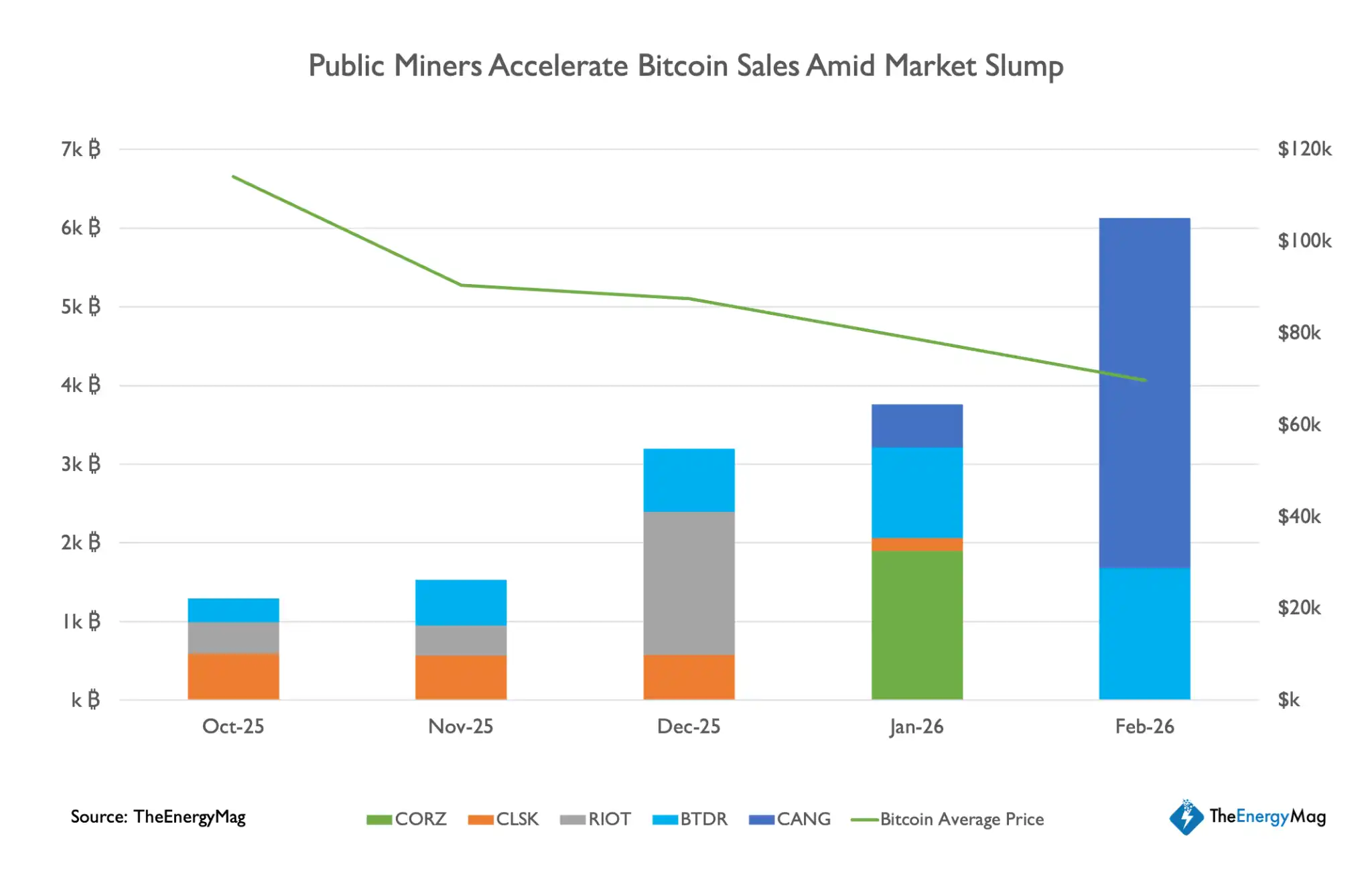
Chú thích: Kể từ khi BTC đạt đỉnh trên 126.000 USD vào tháng 10 năm ngoái, việc bán kho dự trữ của các doanh nghiệp khai thác bắt đầu tăng tốc

Nguồn TheEnergyMag

Trong bối cảnh như vậy, các nhà phân tích kỳ vọng các doanh nghiệp khai thác lớn sẽ dần trở thành nhà cung cấp cơ sở hạ tầng AI. Chẳng hạn, Bernstein gần đây đã cho biết họ tin rằng phần lớn giá trị tương lai của IREN sẽ đến từ cơ sở hạ tầng AI, với lý do là hoạt động kinh doanh AI trên đám mây của công ty này đang tăng trưởng rất nhanh.


Related Questions

QTại sao Nvidia phát hành trái phiếu 20 tỷ USD và điều này liên quan gì đến ngành AI?

ANvidia phát hành trái phiếu để huy động vốn đầu tư vào cơ sở hạ tầng AI và trả nợ hiện có. Điều này cho thấy nhu cầu về cơ sở hạ tầng và trung tâm dữ liệu AI vẫn rất cao, đồng thời củng cố xu hướng chuyển đổi từ khai thác Bitcoin sang cung cấp dịch vụ điện toán hiệu suất cao cho AI.

QNhững công ty khai thác Bitcoin nào đang chuyển hướng sang lĩnh vực AI và tại sao?

ACác công ty như HIVE Digital, TeraWulf, Hut 8 và CleanSpark đang chuyển hướng từ khai thác Bitcoin sang cung cấp cơ sở hạ tầng điện toán và dịch vụ lưu trữ AI. Lý do chính là lợi nhuận từ khai thác Bitcoin ngày càng bị thu hẹp sau đợt giảm một nửa phần thưởng (halving) vào tháng 4/2024, cùng với chi phí vận hành cao và độ khó khai thác tăng.

QSự kiện 'halving' năm 2024 đã ảnh hưởng thế nào đến ngành khai thác Bitcoin?

ASự kiện halving năm 2024 đã cắt giảm một nửa phần thưởng khối, làm giảm đáng kể doanh thu từ khai thác Bitcoin. Kết hợp với độ khó khai thác cao và chi phí vận hành lớn, điều này tạo ra môi trường lợi nhuận 'khắc nghiệt nhất từ trước đến nay', buộc nhiều thợ đào phải bán dự trữ Bitcoin, giảm đòn bẩy tài chính và tìm kiếm nguồn thu mới.

QTheo bài viết, các công ty khai thác Bitcoin đã bán bao nhiêu Bitcoin từ tháng 10 năm ngoái đến tháng 3 năm nay?

ATheo dữ liệu từ TheEnergyMag, từ tháng 10 năm ngoái đến tháng 3 năm nay, các thợ đào Bitcoin đã bán tổng cộng hơn 15.000 BTC.

QTại sao các nhà phân tích kỳ vọng các công ty khai thác Bitcoin lớn sẽ trở thành nhà cung cấp cơ sở hạ tầng AI?

ACác nhà phân tích (như Bernstein) kỳ vọng điều này vì các công ty khai thác Bitcoin sở hữu cơ sở hạ tầng hiện có (như nhà máy và hợp đồng điện năng) rất phù hợp để chuyển đổi thành trung tâm dữ liệu hiệu suất cao phục vụ AI. Ví dụ, IREN được dự đoán có giá trị chủ yếu đến từ cơ sở hạ tầng AI trong tương lai do tốc độ tăng trưởng nhanh của dịch vụ điện toán đám mây AI.

Related Reads

M&A Deals in the Crypto Market Are Unusually Active

Title: M&A Activity in Crypto Market Becomes Unusually Active A rare signal is emerging in the crypto primary market: mergers and acquisitions (M&A) are nearing half of all financing deals. According to RootData, this month, M&A cases in the crypto industry reached 10, while financing rounds numbered only 14, meaning M&A accounts for approximately 42% of primary market transactions—the highest level in history. This does not signal a sudden industry boom. Instead, the rapid rise in M&A share primarily reflects the continued downturn in the financing market. Since November 2024, monthly crypto M&A deals have remained between 10-20, while financing deals have plummeted from around 100 to about 50, possibly hitting a new low this month. For project teams, this means the traditional path of relying on narratives, token expectations, and ecosystem subsidies to maintain valuations is narrowing. For leading companies, it presents a rare window to acquire teams, licenses, technology, liquidity, and market access at lower prices, with less competition and stronger bargaining power. Key active buyers include Coinbase, Kraken, Ripple, MoonPay, Polymarket, Kaiko, Sol Strategies, GSR, Keyrock, Jupiter, Paxos, and Ondo Finance. Their M&A logic is consistent: acquiring key capabilities at lower costs during the industry downturn. This is driven by more attractive valuations, reduced time and trial-and-error costs, the acquisition of licenses and compliance resources, and the integration of industry upstream and downstream segments. Current M&A focuses are concentrated in four areas: trading infrastructure (e.g., Coinbase acquiring Deribit, Kraken acquiring NinjaTrader), payments and stablecoins (e.g., MoonPay, Ripple expanding payment networks), compliance licenses, and asset issuance/distribution (e.g., acquisitions related to RWA and token issuance platforms like Coinbase's purchases of Liquifi and Echo). The rise in M&A is altering the primary market's exit logic. It provides an alternative path to the token-dependent model, encouraging teams to build tangible products, revenue, and strategic value that can be integrated. This could inject confidence into the market, showing that asset buyers and exit possibilities still exist, albeit with a stricter focus on real utility. However, this trend also indicates the crypto industry is becoming more centralized. As asset issuance, trading, market-making, custody, payments, and data gradually consolidate in the hands of a few major players, the industry's initial emphasis on openness and anti-monopoly is being reshaped by commercial realities. Coupled with rising compliance barriers, this signals the end of the low-barrier era for crypto entrepreneurship.

链捕手12m ago

M&A Deals in the Crypto Market Are Unusually Active

链捕手12m ago

M&A Deals Are Exceptionally Active in the Crypto Market

Mergers and acquisitions (M&A) activity in the cryptocurrency primary market has reached a historic high, accounting for approximately 42% of total deals in the current month, nearly matching the number of financing rounds. This shift does not signal a new boom cycle but rather reflects a severe contraction in the venture capital funding environment. As financing dwindles, established industry giants—including major exchanges, payment firms, and infrastructure providers—are seizing the opportunity to acquire strategic assets at lower valuations. Key drivers behind the surge in M&A include depressed project valuations, the need to quickly acquire talent and technology to capture short market windows, the pursuit of crucial regulatory licenses, and the strategic expansion into adjacent business verticals such as derivatives, payments, stablecoins, and real-world asset (RWA) issuance. Major acquisitions, like Coinbase's purchase of Deribit and Kraken's acquisition of NinjaTrader, exemplify the push to expand into high-margin areas like derivatives and multi-asset trading. This trend is reshaping the industry's exit landscape, offering an alternative to token-based exits and incentivizing startups to build tangible products and revenue streams with inherent strategic value for acquisition. However, it also points toward increasing centralization, as critical functions—trading, custody, payments, compliance—become concentrated within a few large, well-capitalized platforms, potentially raising barriers to entry for new ventures.

marsbit13m ago

M&A Deals Are Exceptionally Active in the Crypto Market

marsbit13m ago

Solana Privacy Ecosystem Panorama: A Complete Privacy Stack from Compute to AI

**Title: The Solana Privacy Ecosystem: A Full-Stack View from Compute to AI** **Summary:** This article provides a comprehensive overview of the emerging privacy landscape on the Solana blockchain, characterizing it as still in early development. It identifies two primary verticals—Neobanks and Private DeFi—as key drivers, while noting gaps in tooling and user experience. The discussion centers on two main approaches to private computation: Arcium, which utilizes Multi-Party Computation (MPC) networks (Multi-Party eXecution Environments) to process encrypted data with final settlement on Solana; and Magic Block, which leverages Trusted Execution Environments (TEEs) via its Private Ephemeral Rollup (PER). Both enable confidential applications like dark pools and private DeFi with minimal code changes. Building on this infrastructure, projects are creating privacy-focused applications. Umbra, built on Arcium, offers Encrypted Token Accounts (ETAs) for private balances, transfers, and selective disclosure for compliance. Other wallets like Privacy Cash and Hush provide mixer-like functionality for SOL. For private trading, encifherio uses TEEs to encrypt swap details routed through Jupiter, while VanishTrade and Darklake focus on shielding transaction intent and liquidity routing, with Darklake introducing a "blind slippage pool" to prevent front-running. Further applications include private prediction markets (e.g., Melee Markets using Arcium's encrypted order books) and private AI. Loyal exemplifies the latter, using both Magic Block and Arcium to enable decentralized AI agents that store user data, conversations, and transactions confidentially on-chain. The article concludes by framing privacy not as a single technology but as an evolving "ultimate privacy stack," with experts like Helius's Mert envisioning a future combination of Fully Homomorphic Encryption (FHE) and Zero-Knowledge proofs (ZK). Helius Privacy itself is developing a ZK-based UTXO privacy layer for Solana.

Foresight News19m ago

Solana Privacy Ecosystem Panorama: A Complete Privacy Stack from Compute to AI

Foresight News19m ago

Trading

Spot
Futures

Hot Articles

What is $BITCOIN

DIGITAL GOLD ($BITCOIN): A Comprehensive Analysis Introduction to DIGITAL GOLD ($BITCOIN) DIGITAL GOLD ($BITCOIN) is a blockchain-based project operating on the Solana network, which aims to combine the characteristics of traditional precious metals with the innovation of decentralized technologies. While it shares a name with Bitcoin, often referred to as “digital gold” due to its perception as a store of value, DIGITAL GOLD is a separate token designed to create a unique ecosystem within the Web3 landscape. Its goal is to position itself as a viable alternative digital asset, although specifics regarding its applications and functionalities are still developing. What is DIGITAL GOLD ($BITCOIN)? DIGITAL GOLD ($BITCOIN) is a cryptocurrency token explicitly designed for use on the Solana blockchain. In contrast to Bitcoin, which provides a widely recognized value storage role, this token appears to focus on broader applications and characteristics. Notable aspects include: Blockchain Infrastructure: The token is built on the Solana blockchain, known for its capacity to handle high-speed and low-cost transactions. Supply Dynamics: DIGITAL GOLD has a maximum supply capped at 100 quadrillion tokens (100P $BITCOIN), although details regarding its circulating supply are currently undisclosed. Utility: While precise functionalities are not explicitly outlined, there are indications that the token could be utilized for various applications, potentially involving decentralized applications (dApps) or asset tokenization strategies. Who is the Creator of DIGITAL GOLD ($BITCOIN)? At present, the identity of the creators and development team behind DIGITAL GOLD ($BITCOIN) remains unknown. This situation is typical among many innovative projects within the blockchain space, particularly those aligning with decentralized finance and meme coin phenomena. While such anonymity may foster a community-driven culture, it intensifies concerns about governance and accountability. Who are the Investors of DIGITAL GOLD ($BITCOIN)? The available information indicates that DIGITAL GOLD ($BITCOIN) does not have any known institutional backers or prominent venture capital investments. The project seems to operate on a peer-to-peer model focused on community support and adoption rather than traditional funding routes. Its activity and liquidity are primarily situated on decentralized exchanges (DEXs), such as PumpSwap, rather than established centralized trading platforms, further highlighting its grassroots approach. How DIGITAL GOLD ($BITCOIN) Works The operational mechanics of DIGITAL GOLD ($BITCOIN) can be elaborated on based on its blockchain design and network attributes: Consensus Mechanism: By leveraging Solana’s unique proof-of-history (PoH) combined with a proof-of-stake (PoS) model, the project ensures efficient transaction validation contributing to the network's high performance. Tokenomics: While specific deflationary mechanisms have not been extensively detailed, the vast maximum token supply implies that it may cater to microtransactions or niche use cases that are still to be defined. Interoperability: There exists the potential for integration with Solana’s broader ecosystem, including various decentralized finance (DeFi) platforms. However, the details regarding specific integrations remain unspecified. Timeline of Key Events Here is a timeline that highlights significant milestones concerning DIGITAL GOLD ($BITCOIN): 2023: The initial deployment of the token occurs on the Solana blockchain, marked by its contract address. 2024: DIGITAL GOLD gains visibility as it becomes available for trading on decentralized exchanges like PumpSwap, allowing users to trade it against SOL. 2025: The project witnesses sporadic trading activity and potential interest in community-led engagements, although no noteworthy partnerships or technical advancements have been documented as of yet. Critical Analysis Strengths Scalability: The underlying Solana infrastructure supports high transaction volumes, which could enhance the utility of $BITCOIN in various transaction scenarios. Accessibility: The potential low trading price per token could attract retail investors, facilitating wider participation due to fractional ownership opportunities. Risks Lack of Transparency: The absence of publicly known backers, developers, or an audit process may yield skepticism regarding the project's sustainability and trustworthiness. Market Volatility: The trading activity is heavily reliant on speculative behavior, which can result in significant price volatility and uncertainty for investors. Conclusion DIGITAL GOLD ($BITCOIN) emerges as an intriguing yet ambiguous project within the rapidly evolving Solana ecosystem. While it attempts to leverage the “digital gold” narrative, its departure from Bitcoin's established role as a store of value underscores the need for a clearer differentiation of its intended utility and governance structure. Future acceptance and adoption will likely depend on addressing the current opacity and defining its operational and economic strategies more explicitly. Note: This report encompasses synthesised information available as of October 2023, and developments may have transpired beyond the research period.

374 Total ViewsPublished 2025.05.13Updated 2025.05.13

What is $BITCOIN

Discussions

Welcome to the HTX Community. Here, you can stay informed about the latest platform developments and gain access to professional market insights. Users' opinions on the price of BTC (BTC) are presented below.

活动图片