Era IA total: Alipay apuesta por el diálogo, WeChat defiende la socialización

marsbitPublished on 2026-06-15Last updated on 2026-06-15

Abstract

A mediados de 2026, Alipay anunció que sus transacciones realizadas por IA superaban los 300 millones, mientras que WeChat abrió el acceso de IA a sus mini-programas, solicitando a los desarrolladores que autorizaran la lectura del código fuente. Este contraste marca dos estrategias divergentes en la era de la IA. Alipay está probando internamente "Plan Bao", una versión que reemplaza la interfaz tradicional por una ventana de diálogo. Los usuarios pueden ordenar múltiples servicios (como pedir un taxi y comprar café) con una sola frase. La IA desglosa la tarea, opera los mini-programas correspondientes y completa el pago. Después de probar una app independiente fallida, Alipay optó por una transición suave dentro de su app principal, priorizando a sus 1000 millones de usuarios existentes. WeChat, en cambio, sigue una lógica de "parasitar" su ecosistema social. Su futuro asistente de IA no tendrá una interfaz propia, sino que funcionará dentro de chats grupales o artículos públicos, ayudando a coordinar tareas (como resumir contenido o reservar un campamento) sin alterar la dinámica social principal. Su prioridad es integrar la IA de manera invisible en las relaciones humanas. La diferencia clave radica en cómo manejan los mini-programas existentes. WeChat propone dos modos a los desarrolladores: uno "automático" que requiere acceso al código fuente, y otro "de desarrollo" que exige reformatear los servicios en Skills estandarizadas. Alipay adopta un enfoque dual: promueve...

En mayo de 2026, Alipay anunció que sus transacciones de pago con IA ya superaban los 300 millones. Un mes después, WeChat abrió a los desarrolladores el acceso a la IA para Mini Programas, generando controversia uno de sus requisitos: la autorización para que la plataforma lea el código fuente de las aplicaciones.

Entre ambos eventos hay menos de 30 días, pero detrás se esconden dos caminos que divergen desde hace más de un año. Según informó el medio LatePost, Alipay está probando internamente una versión de IA con el nombre en clave "Proyecto Bao", que no se limita a añadir un asistente, sino que permite al usuario cambiar con un clic a una interfaz completamente nueva, impulsada por el diálogo. Por su parte, el presidente de WeChat, Martin Lau, definió en la conferencia de resultados la estrategia: eventualmente integrarán un agente de IA, pero profundamente conectado con las relaciones sociales, las cuentas oficiales y los Canales de Vídeo, sin un calendario separado.

Dos plataformas con más de mil millones de usuarios y millones de Mini Programas dieron respuestas opuestas a la misma pregunta: cuando la IA puede operar servicios por el usuario, ¿debería reescribirse la entrada o esconderse?

Alipay no solo cambia la interfaz

Para entender qué está haciendo realmente Alipay, hay que ver una acción concreta del usuario.

Antes, para pedir tres lattes con poco azúcar y un taxi al aeropuerto en Alipay, el proceso estándar era: encontrar la entrada al Mini Programa de DiDi, introducir el destino, confirmar el viaje; salir, encontrar la entrada al Mini Programa de Luckin Coffee, seleccionar producto, modificar el azúcar, añadir al carrito, pagar; alternar entre los dos Mini Programas, completando cada pago por separado. Cada paso era un clic, un cambio de página, una espera.

Lo que busca el "Proyecto Bao" es comprimir toda esta secuencia en una frase. El usuario dice al cuadro de diálogo "llámame un taxi al aeropuerto y pide tres lattes con poco azúcar cerca", y la IA se encarga de todos los pasos siguientes: entender la intención, descomponer la tarea, llamar a los servicios de transporte y comida correspondientes, combinar el pedido, completar el pago. La interfaz deja de ser una fila de entradas a Mini Programas y se convierte en una ventana de chat.

Lo radical de este cambio se ve en el proceso interno de diseño de producto. Según LatePost, para definir la nueva forma de interacción, el equipo del proyecto generó más de 100 versiones de diseño. La elección final de un esquema centrado en el diálogo se basa en el juicio de que el lenguaje natural ya es la forma principal de interacción con la IA, y que la distribución de servicios debería reconstruir la entrada siguiendo esta dirección, no poner un parche de IA en el viejo marco.

Esta audacia no fue la primera opción de Alipay. En la segunda mitad de 2023, la dirección del área de negocio de Alipay inició una discusión sobre "cómo avanzar hacia la inteligencia", y la primera pregunta fue: ¿modificar la aplicación original o crear una nueva? Inicialmente, el equipo eligió lo segundo. En septiembre de 2024, en la conferencia Bund Summit, Alipay lanzó la aplicación de IA independiente "Zhixiaobao", posicionada como asistente de IA para la vida.

Zhixiaobao no tuvo éxito. Según informantes, el DAU de la aplicación independiente estaba muy por debajo del asistente integrado en la app principal. Ese asistente de diálogo, que permaneció dentro de Alipay aprovechando el tráfico de la página de inicio, mantuvo estable un DAU de varios millones, acumulando datos de interacción mucho más abundantes que la aplicación independiente.

Había además una restricción más práctica: en ese momento, Ant Group concentraba esfuerzos en la aplicación de salud "Ant Afu" y avanzaba con la IA general "Lingguang", con recursos limitados de computación y desarrollo. Hacer otra aplicación independiente no solo significaba competir por recursos con esos proyectos, sino asumir el enorme costo de migrar usuarios desde cero.

En marzo de 2025, el equipo cambió de rumbo, abandonando la insistencia en una aplicación independiente. Internamente se fue formando un juicio: servir bien a la base existente de mil millones de usuarios de Alipay, permitiéndoles acceder a servicios de IA con costo de migración cero, era más efectivo que levantar una nueva aplicación desde fuera. En diciembre de 2025, el proyecto de la versión de IA de Alipay se formalizó, con un equipo inicial proveniente del asistente inteligente integrado, al que luego se sumaron equipos de algoritmos, producto para usuarios finales (C-end) y de negocio de Mini Programas.

La ruta de producto final no fue una aplicación nativa independiente, ni un asistente embebido en la aplicación existente, sino un cambio con un clic. Tras el lanzamiento de la nueva versión, la que se abre por defecto sigue siendo el Alipay original, pero el usuario puede establecer la versión de IA como interfaz principal. Según LatePost, esta forma de avanzar "dejando margen" apunta a una frase interna llamada "cambiar el pájaro sin cambiar la jaula".

WeChat no deja que la IA se interponga entre las personas

El camino de la IA de WeChat, desde el principio, sigue otra lógica.

Las declaraciones del presidente de Tencent, Martin Lau, en la conferencia de resultados del Q3 de 2025 dejaron pocas dudas: el agente de IA que lanzará WeChat estará profundamente conectado con las relaciones sociales, las capacidades de comunicación, las cuentas oficiales y los Canales de Vídeo, siendo un Agente único. Sin un calendario agresivo, y habiendo desmentido oficialmente rumores sobre asistentes de IA en dos ocasiones.

¿Por qué WeChat no puede crear una interfaz de diálogo como Alipay? La razón no está en la capacidad técnica, sino en la naturaleza del producto. La interfaz central de WeChat es la lista de chats, la página de móvil que mil millones de personas abren con más frecuencia cada día. Cualquier intento de superponer una entrada de diálogo con IA en esta interfaz podría ser percibido por los usuarios como una interferencia en sus relaciones sociales. La página de inicio de Alipay es una entrada a servicios; convertirla en una ventana de diálogo requiere que el usuario se adapte a un nuevo hábito de operación. La página de inicio de WeChat es el diálogo entre personas; reemplazar o desplazar ese diálogo por uno con la IA toca el territorio psicológico más importante del usuario.

El esquema de WeChat se acerca más a una lógica "parásita". El asistente de IA no reemplaza ninguna interfaz; se esconde en los chats grupales, en las cuentas oficiales, como un Agente esperando ser invocado. Podemos imaginar una escena: en un chat grupal familiar, alguien reenvía un largo artículo de una cuenta oficial sobre campings familiares. Los demás miembros no necesitan abrirlo y leerlo, pueden pedir directamente en el grupo al asistente de IA que resuma los puntos clave y coordine los calendarios de los miembros para reservar el camping recomendado. El Agente digiere el contenido del artículo, llama al servicio de reserva del Mini Programa, coordina los horarios basándose en la información de agenda de varios miembros del grupo, y finalmente envía el resultado de la reserva de vuelta al chat.

Durante todo el proceso, la IA opera siempre dentro del contexto del chat grupal; el usuario sigue viendo ese grupo, esas personas, esas conversaciones. La "gestión" realizada por el Agente se incrusta en la relación social, sin crear una interfaz separada para mostrar su propia presencia.

Esta contención tiene su costo. En WeChat, los servicios existen como Mini Programas colgados de la plataforma, millones de ellos. Para que la IA complete estas tareas por el usuario, necesita entender no solo la intención del usuario, sino también la estructura de datos, la lógica de página y los flujos de interacción de estos servicios. Alipay se enfrenta al mismo problema, y sus soluciones representan la divergencia más crucial en esta carrera.

Lectura de pantalla vs. lectura de código fuente: ¿cuál solución es más difícil?

La comunidad de desarrollo de WeChat publicó en junio de 2026 la "Guía de acceso al modelo de desarrollo de IA para Mini Programas (beta)", que ofrece dos modos.

El primero es el "modo automático". El desarrollador autoriza a la plataforma a leer el código fuente del Mini Programa durante la revisión. La IA analiza el código fuente para entender la estructura de la página y la lógica de operación, controlando directamente el Mini Programa. El segundo es el "modo de desarrollo": el desarrollador encapsula su servicio según el protocolo definido por WeChat en un Skill, que contiene interfaces atómicas y componentes atómicos; la IA completa las tareas llamando a estas interfaces estandarizadas.

El esquema de Alipay es de "doble vía". Según LatePost, por un lado impulsa que los comerciantes dispuestos se conecten activamente, convirtiendo sus servicios en MCP o Skills que la IA pueda llamar directamente; por otro lado, con autorización del usuario, la IA opera mediante "lectura de pantalla" en la interfaz de los Mini Programas existentes, para ser compatible con servicios aún no adaptados.

Comparando, la diferencia central es: al adaptar los Mini Programas existentes no preparados, WeChat exige al desarrollador entregar el código fuente, mientras Alipay opta por que la IA opere por el usuario mirando la pantalla.

Según la documentación de la comunidad de desarrollo de WeChat, el "modo automático" es técnicamente una solución más completa. Tras leer el código fuente, el entendimiento de la página por parte de la IA es estructural, con rutas de operación claras y controlables, sin depender del reconocimiento visual y simulación de interfaz como la lectura de pantalla, reduciendo la probabilidad de error. Pero este esquema traslada la presión al desarrollador. El código fuente es el activo central del desarrollador del Mini Programa; entregarlo significa exponer completamente su lógica de negocio, estructura de datos y diseño de interacción a Tencent. Para las pequeñas y medianas empresas que dependen de los Mini Programas para hacer negocios, esto no es solo una preocupación de seguridad, sino un riesgo comercial: una vez que la plataforma controla completamente el flujo de servicio, ¿qué margen queda en distribución de tráfico y poder de negociación?

Si no se elige el "modo automático", el modo de desarrollo tampoco es sencillo. El desarrollador necesita reestructurar sus procesos de negocio, descomponerlos en capacidades atómicas, encapsularlos según el protocolo definido por WeChat en Skills, y pasar por un nuevo proceso de revisión. La carga de trabajo para descomponer y encapsular todo el flujo de pedido, pago, validación de cupones y puntos de membresía de un Mini Programa de restaurante podría ser una fracción significativa del desarrollo inicial. ¿Quién asume este costo? WeChat no ha ofrecido un plan de incentivos, al menos por ahora.

El esquema de lectura de pantalla de Alipay evita estos problemas. No requiere la cooperación del comerciante, no necesita cambiar código, incluso el comerciante no necesita saber que su Mini Programa está siendo operado por una IA. El usuario dice a la interfaz de diálogo "cómprame un billete de tren a Shanghai", la IA abre la interfaz del Mini Programa de 12306, identifica origen, destino, lista de trenes, botones de selección de asiento, página de confirmación de pago, simulando paso a paso las operaciones táctiles del usuario. Para los comerciantes que ya han completado la conexión MCP o Skill, la IA puede llamar directamente a las interfaces estandarizadas, con una experiencia más fluida; para la gran cantidad de servicios de larga cola aún no adaptados, la lectura de pantalla ofrece un camino de compatibilidad con el umbral más bajo.

El problema de la lectura de pantalla es directo: su estabilidad no ha sido validada a gran escala. Las interfaces de los Mini Programas varían enormemente; la carga dinámica, los anuncios emergentes, los cambios de diseño por actualizaciones de versión, todo aumenta la probabilidad de fallo en el reconocimiento de la IA. Si un botón de confirmación de pago se desplaza unos píxeles, ¿podrá la IA acertarlo? Si ocurre una operación errónea durante la lectura de pantalla, por ejemplo, confundir el monto o seleccionar mal la dirección de entrega, ¿de quién es la responsabilidad? Alipay no ha hecho públicos los términos de exención de responsabilidad y mecanismos de resolución de disputas relacionados.

La lógica de este camino es que los usuarios empiecen a usarlo. Cuando los comerciantes vean la conversión de pedidos que trae la IA, naturalmente se conectarán activamente a las interfaces estándar para optimizar la experiencia. Los usuarios finales (C-end) presionan a los negocios (B-end).

¿Qué validan las 300 millones de transacciones?

Además del producto y el ecosistema, Alipay ha hecho algo más, relacionado con cómo paga la IA.

En la conferencia del ecosistema de pagos con IA de mayo de 2026, Alipay reveló que las transacciones de pago con IA ya superaban los 300 millones, soportando el 95% de los marcos de agentes inteligentes generales, y lanzó Token Pay y la Cartera de IA. Estos dos productos son clave para entender la infraestructura de la economía de Agentes.

Token Pay resuelve el problema de pagos de montos mínimos y alta frecuencia. Cuando la IA compara precios entre dos plataformas de comida a domicilio, puede necesitar llamar a una transacción de verificación de 0.01 yuanes para confirmar que la cuenta es válida; cuando filtra la combinación óptima entre múltiples cupones, validar cada cupón es una acción de pago. Estos montos son minúsculos, pero su frecuencia es mucho mayor que la de un usuario humano. Los sistemas de pago anteriores estaban diseñados para "confirmación humana, pago humano"; Token Pay entrega esta acción al Agente.

La Cartera de IA se parece más a una tarjeta de presupuesto para el Agente. El usuario establece reglas y límites, y la IA completa los pagos autónomamente dentro de esas reglas. El CEO de Ant Group, Han Xinyi, planteó en la conferencia un juicio: en el futuro podrían haber innumerables Agentes activos en la actividad económica, y las interacciones pasarían de ser entre personas, a ser entre personas y Agentes, y entre Agentes.

El número absoluto de 300 millones no es grande dentro del volumen anual total de transacciones de Alipay, pero su significado radica en validar una cosa: los usuarios ya permiten que la IA complete por ellos el cumplimiento comercial real, no solo consultas y comparaciones de precios. Desde pedir un taxi y comida con una frase hasta que la IA pague y deduzca fondos, esta cadena tecnológica de servicio cerrado y la cadena de autorización del usuario han sido abiertas.

WeChat Pay no ha hecho público un plan concreto en esta transformación hacia la IA. WeChat Pay también cubre una enorme cantidad de usuarios, pero sus escenarios están más ligados a transferencias sociales, sobres rojos y cobros a comerciantes. La forma de la economía de Agentes podría ser diferente. Si surgirá una nueva diferencia en la infraestructura de pagos entre ambos, dependerá de si WeChat lanza capacidades de pago para Agentes similares cuando presente oficialmente su asistente de IA.

El ecosistema se está abriendo en dos direcciones

Tanto Alipay como WeChat apuntan a una entrada de servicios a través de Agentes, pero las diferencias en el camino intermedio están abriendo dos grietas de dirección distinta en el ecosistema de Mini Programas.

El esquema de lectura de pantalla de Alipay hace que muchos Mini Programas de larga cola se vuelvan pasivamente "IA-ificados". Los comerciantes no hacen nada, y los usuarios ya pueden operar sus servicios mediante IA. Esto generará dos reacciones: algunos comerciantes, al ver que los pedidos traídos por la IA aumentan, se conectarán activamente a MCP o Skills para optimizar la experiencia y competir por más distribución de tráfico; otros podrían oponerse, porque la fuente de los pedidos se vuelve difusa. Antes, cada clic del usuario dentro del Mini Programa era rastreable; ahora, en el segmento operado por lectura de pantalla de la IA, el comerciante no obtiene datos de comportamiento del usuario.

Alipay internamente evidentemente anticipó esto. Según LatePost, tras el lanzamiento de la versión de IA de Alipay, la plataforma abierta de IA para comerciantes y desarrolladores también se lanzará pronto. Esa plataforma probablemente buscará resolver: cómo permitir a los comerciantes disfrutar del incremento de pedidos que trae la IA, manteniendo a la vez visibilidad y control sobre sus flujos de servicio, alcance al usuario y distribución de ingresos.

La presión en el lado de WeChat es diferente. El umbral de autorización de código fuente filtrará a los desarrolladores en dos grupos. Los desarrolladores líderes, con equipos técnicos y poder de negociación comercial, estarán dispuestos a entregar el código fuente o invertir recursos en encapsular Skills, a cambio de una distribución prioritaria de tráfico desde el asistente de IA de WeChat. Pero la gran masa de pequeñas y medianas empresas posiblemente ni quiera entregar el código fuente ni pueda asumir el costo de encapsulación. Si, tras el lanzamiento del asistente de IA de WeChat, el tráfico efectivamente se inclina hacia los comerciantes autorizados, aquellos Mini Programas no autorizados quedarán marginados en el canal de distribución de servicios por IA. A largo plazo, el ecosistema de Mini Programas de WeChat podría concentrarse aún más en los líderes, lo que crea tensión con la narrativa de ecosistema "descentralizado" que WeChat siempre ha enfatizado.

Un problema más oculto está en los estándares técnicos. Alipay impulsa MCP, WeChat ha definido su propio protocolo MCP para Mini Programas; aunque el nombre sea el mismo, la implementación concreta no es completamente interoperable. Un comerciante de restaurantes que quiera que tanto la IA de Alipay como la de WeChat puedan llamar a su servicio de pedidos, posiblemente necesite encapsular según dos especificaciones distintas. No es un problema técnico, pero es un costo. Quien forme primero una ventaja de escala tendrá mayor poder de negociación para impulsar un estándar de facto en la industria. En el momento en que los pagos con IA de Alipay superan los 300 millones, esta ventaja está temporalmente del lado de Alipay.

Volviendo al lado del usuario, el resultado final de esta transformación podría redefinir la relación entre la persona y el móvil. Si la interfaz de diálogo de Alipay tiene éxito, la frecuencia y los escenarios en que los usuarios abren Alipay cambiarán. No se abrirá solo para pagar, sino para preguntar algo en voz alta cuando haya una necesidad. Si el Agente de WeChat tiene éxito, cambiará la forma en que los usuarios hacen cosas en los chats grupales. No habrá que salir de la interfaz de chat para buscar un servicio; todo se hará a través del Agente dentro del chat grupal.

La "batalla de los sobres rojos" de las dos plataformas en la víspera del Año Nuevo Chino de 2014 cambió en qué cuenta los usuarios guardaban su dinero. Esta vez, lo que se disputa es a quién entrega el usuario la frase "haz esto por mí".

Hace 12 años, el sobre rojo de WeChat fue llamado por Jack Ma un "ataque a Pearl Harbor". 12 años después, en el momento en que circulan rumores, ciertos o falsos, durante meses sobre la IA de WeChat, Alipay se ha adelantado y ha salido al escenario. Cuál de los dos caminos está más cerca de la necesidad real de la era de los Agentes, la respuesta no está en las presentaciones de producto, sino en cómo se vuelven a activar los millones de Mini Programas, y en la experiencia de los cientos de millones de usuarios después de decir por primera vez a su móvil esa frase de "ayúdame".

Related Questions

Q¿En qué se diferencian los enfoques de Alipay y WeChat para integrar la IA en sus plataformas según el artículo?

AAlipay adopta un enfoque radical centrado en el diálogo, permitiendo a los usuarios cambiar a una nueva interfaz impulsada por conversaciones para gestionar servicios. WeChat, por otro lado, integra la IA de forma discreta dentro de contextos existentes como chats grupales y cuentas oficiales, priorizando la preservación de las relaciones sociales sobre la creación de una interfaz de IA separada.

Q¿Qué es el 'Plan Bao' de Alipay y qué objetivo persigue?

AEl 'Plan Bao' es una versión de IA de Alipay en fase de prueba que propone una interfaz completamente nueva basada en diálogo. Su objetivo es simplificar tareas complejas, como pedir un taxi y hacer un pedido de café, permitiendo al usuario expresarlas en una sola frase, tras lo cual la IA se encarga de descomponer la solicitud, llamar a los servicios correspondientes y completar el pago, eliminando la necesidad de navegar entre múltiples mini-programas.

Q¿Qué dos métodos proporciona WeChat para que los desarrolladores adapten sus mini-programas a la IA, y cuál es la principal controversia?

AWeChat ofrece dos métodos: el 'modo automático', que requiere que los desarrolladores autoricen a la plataforma a leer el código fuente de su mini-programa, y el 'modo de desarrollo', donde los desarrolladores encapsulan sus servicios como 'Skills' siguiendo un protocolo definido. La principal controversia gira en torno al 'modo automático', ya que obliga a los desarrolladores a ceder su código fuente, lo que plantea preocupaciones sobre seguridad y control comercial.

Q¿Cómo aborda Alipay la integración de IA con mini-programas que no han sido adaptados específicamente?

AAlipay emplea un enfoque de 'doble vía' o 'doble carril'. Para los servicios que ya se han adaptado, la IA utiliza interfaces estandarizadas (MCP o Skills). Para la gran mayoría de mini-programas existentes que no han sido modificados, la IA utiliza una técnica de 'lectura de pantalla' ('screen reading'), donde simula las acciones de un usuario al interactuar con la interfaz visual de la aplicación, sin necesidad de que el desarrollador realice ningún cambio.

Q¿Qué significan las más de 300 millones de transacciones de pago realizadas por IA anunciadas por Alipay, y qué productos relacionados presentaron?

ALas más de 300 millones de transacciones de pago realizadas por IA demuestran que los usuarios ya autorizan y confían en los agentes de IA para completar transacciones comerciales reales, no solo consultas. Para facilitar esta 'economía de agentes', Alipay presentó 'Token Pay', diseñado para micropagos de alta frecuencia entre agentes, y la 'Billetera IA', que permite a los usuarios asignar un presupuesto y reglas para que los agentes realicen pagos autónomos dentro de esos límites.

Related Reads

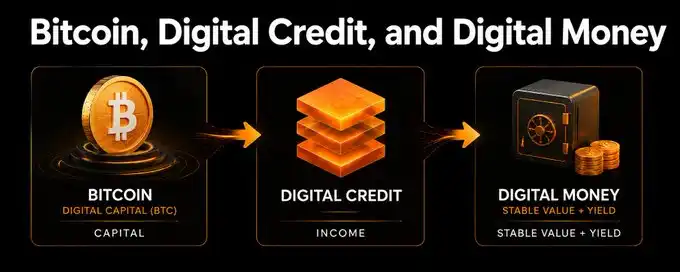
Saylor's Latest Long Read: Bitcoin is Not Money, It's Digital Capital, and Money is Built Upon It

Michael Saylor presents his "Digital Asset Stack" theory, positioning Bitcoin as the foundational layer of digital capital. He argues Bitcoin itself should remain unchanged—no staking, inflation, or protocol alterations. Instead, a five-layer financial architecture should be built atop it: Digital Capital (BTC), Digital Credit (e.g., yield instruments like STRC), Digital Currency (stable, yield-bearing instruments pegged to fiat), Digital Yield (leveraged/structured products), and Digital Equity (e.g., MSTR stock, absorbing residual volatility). Saylor asserts this stack transforms Bitcoin's high-volatility, high-energy capital into tailored products: stable currencies for payments/savings, yield instruments for income seekers, and equity for growth investors. This approach meets diverse needs—corporate treasuries, banks, retirees, emerging market users—without compromising Bitcoin's core properties (scarcity, decentralization). The "killer use case" is rebuilding global money, credit, and capital markets on Bitcoin, bridging the fiat world with a superior digital asset foundation. The system leverages traditional finance principles (risk layering, structured products) while using Bitcoin as the ultimate collateral. This expands Bitcoin's utility, drives adoption, and offers a better monetary experience: digital, yield-bearing, stable-value tools for everyday use.

marsbit5m ago

Saylor's Latest Long Read: Bitcoin is Not Money, It's Digital Capital, and Money is Built Upon It

marsbit5m ago

Can SK Hynix's Stock Double Again in This Rally?

The article discusses the highly optimistic price target of approximately $3,500 for SK Hynix stock, set by Aletheia Capital. This target is significantly above the consensus range of $2,000-$2,520 from major brokerages. The core debate is whether SK Hynix deserves a fundamental re-rating beyond its traditional cyclical discount, based on the long-term impact of AI-driven demand. The $3,500 target hinges on three key assumptions holding simultaneously until at least 2027: 1) Continued shortage and high pricing for HBM (High Bandwidth Memory), a critical component for AI chips; 2) Sustained high prices for standard DRAM, as HBM production consumes capacity and constrains general supply; and 3) Strong AI server demand generating substantial, above-expectation free cash flow. SK Hynix's leading ~58% market share in HBM and its early certification with key clients like Nvidia provide a competitive advantage, allowing it to capture significant supply chain premiums. The HBM shortage is seen not just as a niche growth driver but as a catalyst that amplifies profitability across the entire memory business by tightening overall DRAM supply. However, the article cautions that this target represents an optimistic "tail scenario." Key risks include potential supply increases from competitors (Samsung, Micron) by 2027, a possible slowdown in HBM price growth, and high capital expenditures that could erode the projected free cash flow. The divergence in analyst targets reflects the market's uncertainty over whether the current AI-driven boom will temporarily elevate earnings or permanently raise the memory industry's profit baseline.

marsbit8m ago

Can SK Hynix's Stock Double Again in This Rally?

marsbit8m ago

Has the Cryptocurrency Market Hit Bottom? Here's What Institutions Think

"Has the crypto market bottomed out? Major institutions are divided on the outlook, according to a recent analysis by Matt Hougan, Chief Investment Officer of Bitwise. Three prominent research firms published in-depth reports on the topic with differing conclusions. Galaxy Digital argues Bitcoin has not yet found its bottom, pointing to only 4 out of 13 historical bottoming indicators being met. Their analysis suggests a potential bottom range of $30,000 to $54,000. NYDIG adopts a more cautious stance, noting that while metrics are close to historical bear market lows, a classic panic-selling capitulation event is missing. They acknowledge the possibility of a bottom but consider it unlikely, citing structural changes from institutional adoption. In contrast, Standard Chartered Bank asserts the bottom is already in at around $59,000. Their revised bullish view, predicting a year-end target of $100,000, hinges on anticipated reductions in ETF selling pressure linked to events like a potential SpaceX IPO. Despite the surface-level disagreement on the exact price floor, the reports share significant common ground crucial for long-term investors. All three institutions agree that a market bottom will likely form within the current year, that current prices are closer to the bottom than to previous cycle highs, and that Bitcoin is poised for another major bull cycle in the future. The core takeaway is that while the precise bottom level remains debated, the long-term value proposition for Bitcoin remains strong and may even be strengthening. Key supportive trends include rising global debt, persistent inflation, declining trust in traditional institutions, accelerating digitization, and improving market infrastructure. Therefore, for investors with a long-term horizon, the focus should shift from pinpointing the exact bottom to recognizing that the cycle's peak is likely still ahead, making current levels an attractive entry point for substantial potential upside."

Foresight News29m ago

Has the Cryptocurrency Market Hit Bottom? Here's What Institutions Think

Foresight News29m ago

Trading

Spot
Futures

Hot Articles

What is LINON

Linde plc Tokenized Stock (Ondo): Revolutionizing Traditional Equity Access Through Blockchain Innovation The emergence of Linde plc Tokenized Stock (Ondo), represented by the ticker $LINON, signifies a monumental shift in the fusion of traditional financial structures and decentralized finance (DeFi). This innovative financial instrument showcases the tremendous potential of blockchain technology to democratize access to traditional equity markets while ensuring the security and regulatory compliance necessary for institutional-grade financial products. Through Ondo Finance's pioneering tokenization platform, $LINON provides a seamless pathway for global investors to engage with one of the world's leading industrial gas companies, Linde plc, creating a blockchain-native representation of the underlying equity. Introduction to Linde plc Tokenized Stock The landscape of financial markets is witnessing a groundbreaking transformation through the tokenization of real-world assets. Linde plc Tokenized Stock (Ondo) epitomizes this revolutionary approach by bridging the gap between conventional stock ownership and blockchain-enabled financial infrastructure. The $LINON token allows investors to gain exposure to one of the prominent industrial companies worldwide through decentralized technology. Operating within Ondo Finance's comprehensive ecosystem, $LINON symbolizes a practical application of tokenization technology that enhances accessibility, efficiency, and global connectivity in traditional financial markets. By leveraging blockchain infrastructure, this tokenized stock enables international investors to participate in U.S. equity markets, overcoming traditional barriers associated with cross-border investing. The significance of $LINON goes beyond technological innovation; it represents a fundamental shift in asset structuring, distribution, and trading in the digital age. This tokenized stock maintains all the economic benefits associated with traditional Linde plc shares while offering improved liquidity, programmable compliance features, and seamless integration with decentralized finance protocols. The development of $LINON indicates a growing acceptance of blockchain technology as a viable means for traditional finance, exemplifying how even well-established assets like Linde plc can integrate into blockchain systems. This approach preserves the core attributes that appeal to investors while introducing advanced capabilities that enhance the overall investment proposition. Project Overview and Objectives Linde plc Tokenized Stock (Ondo) encapsulates a strategic effort to democratize access to traditional equity markets through advanced blockchain technologies. The primary objective of $LINON is to provide approved global investors seamless access to the economic exposure associated with Linde plc shares, furthering an effort to create a more inclusive financial ecosystem. Beyond the digital representation of traditional assets, $LINON endeavors to eliminate barriers of geography and time zones that limit investor participation. Its design ensures that blockchain technology can elevate traditional investment vehicles without undermining the security or compliance requirements expected by investors. Key goals of the project include enhanced liquidity provision, programmable compliance mechanisms, and interoperability with other blockchain networks. Each $LINON token is fortified by actual Linde plc securities housed at U.S.-registered broker-dealers, allowing holders to reap economic advantages akin to traditional stockholders, such as dividend reinvestment. Furthermore, $LINON aims to establish new industry standards for institutional-grade tokenized securities, paving the way for traditional assets to embrace blockchain technology while remaining compliant with regulatory frameworks. By associating itself with a company as reputable as Linde plc, the project opens avenues for exploring tokenized equities catering to both conservative institutional players and daring retail investors. Project Creator and Development Team The vision for Linde plc Tokenized Stock (Ondo) comes from Nathan Allman, founder and CEO of Ondo Finance. His background in traditional finance coupled with expertise in blockchain technology positions him uniquely to navigate the complexities of asset tokenization. Allman's academic journey began at Brown University, focusing on Economics and Biology, equipping him with valuable analytical skills. His time at Goldman Sachs in the Digital Assets division strengthened his understanding of the interplay between financial institutions and emerging technologies, laying the groundwork for his later endeavors in alternative investment strategies. Under Allman's guidance, Ondo Finance has emerged as a leader in asset tokenization, launching $LINON as a flagship example of the company's larger mission towards revolutionizing traditional financial systems using blockchain technology. His commitment to leveraging blockchain for creating institutional-grade financial products has shaped the landscape of real-world asset tokenization. Investment and Funding Structure The growth of Ondo Finance, the platform powering Linde plc Tokenized Stock (Ondo), is bolstered by robust financial backing from prestigious venture capital firms and strategic investors. This strong investment foundation underpins the development of the key infrastructure essential for compliant tokenized securities like $LINON. In August 2021, Ondo Finance secured $4 million in seed funding led by a major venture capital firm, which enabled the company to commence platform development and establish the necessary regulatory processes for tokenizing real-world assets. This early investment cemented Ondo Finance's credibility within the industry. The Series A funding round followed, garnering $20 million with participation from renowned firms committed to transformative technology companies. This backing demonstrated substantial institutional confidence in Ondo Finance's vision, allowing it to hone its approach to asset tokenization through mechanisms that ensure compliance and accessibility. Noteworthy contributors, including institutional investors and experienced partners, have added significant value to Ondo Finance’s development efforts. Their involvement underscores the confidence across sectors in Ondo Finance's approach to bridging traditional finance with blockchain innovations. Technical Infrastructure and Innovation The technical architecture that underpins Linde plc Tokenized Stock (Ondo) represents a sophisticated melding of traditional finance systems and cutting-edge blockchain technology. The architecture's foundation is built on the Ethereum network, renowned for its security and programmability—both critical for intricate financial instruments. The $LINON tokenization process comprises creating a blockchain-native representation of Linde plc shares that preserves economic benefits while augmenting investor capabilities. Each token corresponds to actual shares held at U.S.-registered broker-dealers, creating a compliant custody structure that legitimizes the asset's existence and value. Automated compliance systems are integrated into the tokenization process, managing critical components such as know-your-customer (KYC) verification and anti-money laundering (AML) protocols. This incorporation of programmable compliance empowers $LINON to uphold regulatory standards essential for institutional proliferation. Cross-chain interoperability characterizes the advanced technical features of $LINON. While initially deployed on Ethereum, the framework is designed for expansion to other networks such as Solana and BNB Chain. This adaptability enhances liquidity and accessibility, allowing investors to select their preferred blockchain ecosystems. Historical Timeline and Development Crafting the history of Linde plc Tokenized Stock (Ondo) unfolds in parallel with the evolution of Ondo Finance's tokenization platform. The timeline's inception dates back to March 2021 when Nathan Allman laid the foundations for creating institutional-grade financial products on blockchain infrastructure. The initial funding round in August 2021 provided crucial resources for developing the platform and establishing partnerships necessary for effective tokenization. By January 2023, Ondo Finance launched its tokenized treasury products, establishing mechanisms that would facilitate future tokenized equities such as $LINON. A pivotal milestone arose in February 2025 when Ondo Chain—a Layer 1 blockchain designed specifically for asset tokenization—was introduced. This infrastructure enhances capabilities vital for institutional markets, demonstrating Ondo Finance's long-term commitment to tokenization. Subsequently, the launch of Ondo Global Markets in September 2025 marked the official debut of $LINON. This milestone showcased the successful transition from development to active trading, enabling investors around the world to access American financial markets seamlessly. Ongoing development plans include a targeted expansion of available tokenized assets to over 1,000 by the end of 2025, pointing to a bright future for Ondo Finance's ecosystem and its mission to broaden tokenized equity accessibility. Regulatory Compliance and Legal Framework The legal architecture governing Linde plc Tokenized Stock (Ondo) emphasizes a sophisticated approach to regulatory compliance, allowing tokenized securities to be implemented within a blockchain-based framework. The legal structure governing $LINON spans multiple jurisdictions while maintaining a robust legal footing. Compliance systems ensure that only eligible investors can access the token, enforced through automated verification that aligns with international regulations. This innovative regulatory technology promises real-time enforcement of complex requirements, considerably enhancing efficiency in operating within the regulatory landscape. The custody framework undergirding $LINON ensures that the underlying shares are securely held at U.S.-registered broker-dealers, complying with necessary regulations while delivering blockchain-driven access to investors. The token maintains its economic equivalency and security through this carefully structured custody arrangement. KYC and AML compliance systems are embedded within the smart contract architecture, ensuring integrity and adherence to regulatory practices while fostering transparency for investors. The jurisdictional restrictions mark a commitment to navigating the evolving landscape of international securities laws. Market Impact and Industry Significance The advent of Linde plc Tokenized Stock (Ondo) holds profound implications for the broader financial landscape, symbolizing a clear shift towards blockchain-enabled markets. $LINON serves as a proof-of-concept for integrating traditional companies into blockchain ecosystems, showcasing the potential benefits such as broader accessibility and improved efficiency. The market's response to $LINON indicates a growing acceptance of tokenization among institutional investors, contributing to the emergence of an expanding sector wherein traditional assets can be interconnected with blockchain innovations. The success of $LINON further solidifies market confidence, indicating an overarching shift towards recognizing asset tokenization as a transformative force in finance. Future Development and Expansion Plans The future trajectory for Linde plc Tokenized Stock (Ondo) centers around the expansion of the tokenization ecosystem and enhanced infrastructure supporting blockchain-enabled financial services. Plans for cross-chain integration usher in new opportunities for liquidity and flexibility within the investment framework, with existing capabilities poised for continuous enhancement. With the introduction of Ondo Chain, Ondo Finance aims to transition $LINON to an optimized blockchain environment specifically designed for asset tokenization. This new infrastructure heralds exciting prospects for the development of institutional-grade financial products, ensuring ongoing compatibility with contemporary investment strategies. Further integration with decentralized finance protocols signifies a commitment to empowering $LINON holders through advanced financial strategies. The anticipated expansion of available tokenized assets promises to broaden investor access, enhancing the utility and appeal of the platform. In alignment with ambitions for regulatory expansion, ongoing efforts to secure approvals for new jurisdictions will enhance investor access, further positioning $LINON at the forefront of the burgeoning tokenization market. Conclusion Linde plc Tokenized Stock (Ondo), as represented by the $LINON token, stands at the intersection of traditional finance and blockchain innovation. It embodies a transformative milestone in how financial assets are structured, distributed, and engaged within modern investment ecosystems. The technical sophistication behind $LINON, combined with its regulatory compliance framework, illustrates that asset tokenization can improve financial infrastructure rather than simply digitizing existing products. This pioneering effort not only enhances investor access to U.S. equity markets but also signifies an evolution of how traditional financial services can integrate blockchain technology. As the asset tokenization market grows exponentially, with prospects suggesting significant valuation increases, $LINON paves the way for a future where tokenized securities become standard fixtures in the financial landscape. The trajectory of $LINON will undoubtedly influence how traditional finance adapts to a transformed, blockchain-powered world.

3.2k Total ViewsPublished 2025.12.05Updated 2025.12.05

What is LINON

What is CRMON

Salesforce Tokenized Stock (Ondo): Revolutionising Traditional Equity Access Through Blockchain Innovation The emergence of Salesforce Tokenized Stock (CRMON) marks a pivotal advancement in integrating traditional financial markets with blockchain technology. This innovative approach offers investors unprecedented access to equity exposure through tokenisation. Developed by Ondo Finance, CRMON provides tokenholders with economic exposure equivalent to holding Salesforce stock (CRM) while automatically reinvesting dividends. This effectively bridges the gap between conventional equity markets and decentralised finance (DeFi). Introduction and Comprehensive Overview of Salesforce Tokenized Stock In recent years, the financial landscape has dramatically transformed due to blockchain technology, fundamentally altering how investors access and interact with traditional assets. The development of Salesforce Tokenized Stock (CRMON) is a prime example of this evolution, representing a sophisticated fusion of conventional equity markets with cutting-edge distributed ledger technology. CRMON is a tokenised version of Salesforce stock, emerging from the innovative work of Ondo Finance, a leading platform in the real-world asset tokenisation sector that positions itself as a bridge between traditional finance and decentralised systems. Designed to provide tokenholders with economic exposure that mirrors the performance of the underlying Salesforce stock, CRMON incorporates automatic dividend reinvestment mechanisms. This eliminates many traditional barriers associated with international equity investment, such as complex brokerage relationships, currency conversion challenges, and restricted trading hours. The tokenisation process reimagines stock ownership as a blockchain-native asset while maintaining its economic equivalence with the underlying security, offering enhanced portability and integration capabilities within decentralised finance ecosystems. CRMON transcends its individual utility as an investment instrument to represent a fundamental shift in how financial markets can operate in an increasingly digital world. By maintaining full backing through U.S.-registered broker-dealers and implementing robust compliance frameworks, CRMON demonstrates that tokenised securities can achieve the regulatory standards necessary for institutional adoption while delivering the technological advantages of blockchain infrastructure. Understanding Tokenized Real-World Assets and CRMON's Strategic Position Tokenised real-world assets signify one of the most significant innovations in modern finance, fundamentally reimagining how traditional securities are represented, traded, and utilised within digital ecosystems. CRMON operates as a tokenised equity instrument correlating directly with Salesforce stock while optimising accessibility and efficiency. This aligns with Ondo Finance's broader mission to democratise access to institutional-grade financial products through innovative tokenisation strategies. The tokenisation process guarantees complete economic equivalence with the underlying Salesforce equity. Each CRMON token represents a proportional claim on Salesforce stock held by qualified custodians, with dividend payments automatically reinvested to maintain continuous exposure to total return performance. This structure simplifies dividend management and ensures that tokenholders receive the full economic benefit of their equity exposure, encompassing both capital appreciation and income generation. Ondo Finance's strategy in tokenising Salesforce stock demonstrates its expertise in creating compliant, institutional-grade products that meet traditional financial markets' stringent requirements. The platform’s focus on merging regulatory compliance with blockchain benefits positions it at the forefront of decentralised finance, captivating both institutional and retail investors seeking blockchain-native solutions. The Technology and Innovation Framework Behind CRMON The technological infrastructure supporting CRMON integrates blockchain technology with traditional financial mechanisms, delivering institutional-grade security and compliance while maintaining the operational advantages of decentralised systems. Built on the Ethereum blockchain, CRMON utilises robust smart contract capabilities to ensure transparent, secure operations. The smart contract architecture incorporates layered security and compliance mechanisms, enabling automated compliance checks and real-time asset backing verification. Integration with oracle services maintains accurate pricing and dividend information, ensuring CRMON reflects the underlying Salesforce stock's accurate performance. This architecture delivers automated dividend reinvestments and other corporate actions, eliminating manual processing requirements and directly enhancing tokenholder benefits. Ondo Finance ensures CRMON's security structure includes daily third-party verification of holdings, independent collateral agents, and a multiple-layer custody system through partnerships with established financial institutions. This framework safeguards tokenholder interests against operational risks while providing robust asset backing. The user interface enhances integration capabilities, allowing seamless interaction between CRMON and various decentralised finance protocols, as well as cryptocurrency exchanges. This interoperability enables users to leverage their tokenised equity across multiple platforms, creating sophisticated investment strategies that marry traditional equity characteristics with blockchain-native innovation. Leadership and Corporate Structure of Ondo Finance The leadership team behind CRMON and Ondo Finance blends expertise from traditional finance and blockchain technology, presenting a robust combination of skills essential for successfully bridging conventional markets with decentralised finance. Nathan Allman, the founder and CEO, emerged from a distinguished financial background before establishing Ondo Finance in 2021. Allman's experience includes notable roles at major financial institutions, including significant contributions to developing cryptocurrency market services. His insights into regulatory compliance were paramount in developing products like CRMON that successfully unify traditional securities with blockchain technology. With a team of professionals boasting substantial experience in both conventional finance and blockchain sectors, Ondo Finance's leadership comprises diverse expertise that covers every aspect of tokenised asset development. Justin Schmidt serves as President and COO, contributing unique operational expertise, while Chris Tyrell brings essential compliance knowledge. Investment Landscape and Funding History The investment landscape surrounding Ondo Finance reflects significant institutional confidence in its mission to tokenise real-world assets. The company has raised substantial funds through various investment rounds, attracting leading venture capital firms and strategic investors that recognise the transformative potential of tokenised securities like CRMON. Notably, Ondo Finance completed a successful Series A funding round in 2022, led by well-known venture capital firms. This funding success validates Ondo Finance's innovative approach to creating compliant, institutional-grade tokenised products. In total, Ondo Finance has successfully secured substantial funding, raising significant capital for product development and market expansion, including a noteworthy token sale that reinforced its governance structure through the establishment of the ONDO token. The diverse composition of investors reflects broad market confidence in Ondo Finance's business model, demonstrating support from both traditional and blockchain-native organisations. Operational Mechanics and Technical Implementation The operational framework supporting CRMON exemplifies sophisticated integration of traditional financial mechanisms with blockchain technology. The technical implementation introduces multiple layers of security, compliance, and operational efficiency to meet institutional standards while enhancing accessibility. The tokenisation process begins by acquiring actual Salesforce stock through U.S.-registered broker-dealers, ensuring each CRMON token maintains direct correlation with the underlying equity performance. Smart contracts automate operational processes, including dividend reinvestment and corporate action processing, facilitating a streamlined user experience. The Minting and redemption processes allow authorised participants to manage CRMON tokens effectively. During U.S. trading hours, institutions can mint new tokens by depositing stablecoins that are used to purchase corresponding Salesforce equity. This structure maintains a tight correlation with underlying assets, enhancing liquidity and price discovery. Additionally, the infrastructure supports twenty-four-hour token transfer capabilities, providing CRMON holders with operations outside traditional market hours. This represents a significant advantage over conventional securities ownership, thus promoting integration with decentralised finance applications. Plans for cross-chain compatibility through partnerships signal further ambitions for CRMON's market reach. By expanding to other blockchain networks, Ondo Finance aims to enhance accessibility and user engagement with tokenised equity products. Timeline and Historical Development of Tokenized Equity Innovation The timeline of CRMON's development and Ondo Finance's broader tokenised capabilities demonstrates a systematic innovation process beginning with the company's founding in 2021. 2021: Ondo Finance is founded by Nathan Allman and co-founders, launching initial products focused on structured vault offerings on the Ethereum blockchain. 2022: The company completes substantial funding rounds—both equity and token sales—totaling significant capital and launching initial tokenised U.S. Treasury products. 2023-2024: Ondo Finance experiences substantial growth, establishing partnerships with major financial institutions while expanding its product offerings beyond fixed-income securities. February 2025: Ondo Global Markets is announced, marking the transition into equity tokenisation with plans for accessing over one hundred U.S. stocks and ETFs. September 2025: The official launch of Ondo Global Markets includes CRMON alongside other tokenised equity offerings, marking a significant evolution in Ondo Finance's product ecosystem. This timeline highlights the organisation's rapid growth and its capability to adapt its technological and compliance frameworks to accommodate different asset classes effectively while maintaining security and regulatory integrity. Regulatory Framework and Compliance Approach Ondo Finance's regulatory framework showcases a sophisticated compliance strategy, essential for achieving institutional adoption in the tokenised securities market. The company's strong partnerships with U.S.-registered broker-dealers promote adherence to Securities and Exchange Commission regulations and apply robust investor protections. Acquisitions, such as Oasis Pro—a registered broker-dealer—significantly enhance Ondo Finance's compliance capabilities, ensuring thorough alignment with existing regulatory structures. The company employs independent verification procedures that foster transparency, aiming for a solid performance standards reputation. Furthermore, Ondo Finance's commitment extends to international regulatory compliance, ensuring token access remains restricted to eligible investors while adhering to pertinent cross-border securities regulations. Comprehensive attention to tax implications and reporting requirements fortifies the security and compliance landscape of CRMON, ensuring that investor obligations remain manageable. Future Prospects and Market Positioning The forward-looking landscape for CRMON and Ondo Finance illustrates substantial growth opportunities driven by institutional adoption of blockchain technology and escalating demand for efficient alternatives to conventional securities ownership. Market projections indicate the tokenised asset sector could value multiple trillion dollars by 2030. With plans to scale CRMON offerings significantly and integrate it with a dedicated blockchain infrastructure—Ondo Chain—Ondo Finance aims to elevate its institutional-grade tokenised asset operations. Additionally, the development of strategic partnerships enhances distribution capabilities while establishing the company's credibility in the financial market. Furthermore, the integration of tokenised equity with decentralised finance protocols offers new potential for innovative financial products and strategies previously impossible with traditional securities. These factors underscore CRMON's positioning to effectively capture increased market share and deliver innovative solutions for international investment exposure. Conclusion Salesforce Tokenized Stock (CRMON) symbolises a transformative development within financial markets, successfully bridging traditional equity ownership with blockchain technology to create unprecedented accessibility for global investors. Through Ondo Finance's sophisticated tokenisation framework, CRMON provides complete economic exposure to Salesforce equity performance while enhancing operational advantages that exceed traditional ownership. The launch of CRMON reflects the broader evolution of financial markets towards blockchain infrastructures that maintain regulatory compliance while delivering increased efficiency. Ondo Finance's extensive approach to regulatory adherence, institutional-grade security, and technological innovation solidifies CRMON as a model for future tokenised securities, delivering access previously unattainable in conventional brokerage structures. As the tokenised asset sector continues to develop, CRMON is well-positioned to address historical inefficiencies in capital markets while providing investors with innovative solutions for accessing traditional securities. The outlook for CRMON looks exceptionally promising, supported by ambitious expansion plans, technological innovations, and strategic partnerships, thereby representing a pioneering model of modern financial infrastructure evolving through blockchain integration.

3.3k Total ViewsPublished 2025.12.05Updated 2025.12.05

What is CRMON

What is SHOPON

Shopify Tokenized Stock (Ondo): A Comprehensive Analysis of Real-World Asset Tokenization in Web3 This article delves into the Shopify Tokenized Stock (Ondo), recognised by its ticker symbol $SHOPON, exploring its implications at the intersection of traditional finance and blockchain technology. As a part of Ondo Finance's tokenized securities platform, Shopify’s tokenized stock exemplifies advancements in democratizing access to global capital markets through innovative digital assets. Introduction and Overview of Shopify Tokenized Stock (Ondo) Shopify Tokenized Stock (Ondo), or $SHOPON, portrays a pivotal innovation in the realm of tokenized securities, allowing investors to gain economic exposure akin to directly owning shares of Shopify Inc. This token, developed under the umbrella of Ondo Finance, not only provides investors with the ability to hold digital representations of the company’s stock but also integrates features such as automatic reinvestment of dividends. This advancement represents a substantial shift in the landscape of decentralized finance (DeFi), linking conventional equity markets with blockchain solutions designed to enhance accessibility, transparency, and liquidity. By eliminating geographical barriers and enabling 24/7 trading capabilities, $SHOPON is positioned as a bridge connecting traditional financial instruments and the emerging Web3 ecosystem. What is Shopify Tokenized Stock (Ondo), $SHOPON? The $SHOPON token serves as a digital manifestation of Shopify Inc.'s shares, engineered to provide a direct correlation to the underlying asset's performance. Through the utilization of blockchain technology, the token gives holders a mechanism to participate in the economic benefits associated with equity ownership, including capital appreciation and dividend distribution. The unique aspect of $SHOPON lies in its automatic dividend reinvestment mechanism, which allows returns to compound without necessitating active management by the investor. This feature inherently enhances its attractiveness as an investment vehicle, particularly for individuals seeking passive income growth alongside exposure to high-performing equities. The tokenization process is facilitated by the custody of actual Shopify shares through regulated intermediaries, ensuring that every $SHOPON token is verifiably backed by real equity. This structure empowers investors with the dual advantages of both traditional financial characteristics and the innovative benefits tied to blockchain technology. Who is the Creator of Shopify Tokenized Stock (Ondo)? The creator of Shopify Tokenized Stock (Ondo), Nathan Allman, is an experienced figure in the finance sector, formerly associated with Goldman Sachs. His rich background includes significant expertise in digital asset development, bridging the gap between traditional finance and cryptocurrencies. Allman’s educational journey, marked by studies at Brown University, provided him with a deep understanding of economics and biology, equipping him with analytical skills that inform his strategic vision. In 2021, he founded Ondo Finance, committing to developing tokenized securities that meet institutional-grade standards while leveraging blockchain's transformative capabilities. Under Allman's leadership, Ondo Finance has focused on creating compliant and innovative financial products that empower a diverse investor base. Who are the Investors of Shopify Tokenized Stock (Ondo)? The investment landscape surrounding Shopify Tokenized Stock (Ondo) is notably robust, underpinned by significant institutional support. Primarily, Pantera Capital stands out as a strategic partner through the Ondo Catalyst initiative, a $250 million commitment aimed at accelerating the development of on-chain capital markets. This partnership not only signifies institutional confidence in the potential of tokenized assets but also reinforces Ondo Finance's operational capabilities and market positioning. The funding pathways have included earlier rounds that amassed millions in seed funding and further structural investments, solidifying relationships with both venture capital firms and private investors. Moreover, the financial framework is complemented by strategic partnerships with established financial institutions and technology companies, enhancing Ondo’s infrastructure and operational expertise. How Does Shopify Tokenized Stock (Ondo), $SHOPON Work? At the core of $SHOPON's operational framework is a sophisticated system integrating traditional finance mechanisms with blockchain technology. The custody of actual Shopify shares ensures that token holders retain authentic economic exposure, safeguarding their investments in line with recognized legal structures. The smart contracts employed in managing $SHOPON handle various functions, including automatic dividend reinvestment and ownership transfer, offering instant settlement and increased liquidity, marking a significant departure from conventional trading systems plagued by multi-day settlement delays. By providing interoperability with other decentralized finance applications, $SHOPON empowers holders with potentially lucrative opportunities for advanced investment strategies, including lending and automated market making. This complex integration presents a unique value proposition, catering to both traditional and crypto-native investors. The innovative structure of $SHOPON also allows for real-time settlements and transactions documented on the blockchain, delivering unparalleled transparency and security—a major advancement over standard equity trading practices. Timeline of Shopify Tokenized Stock (Ondo) March 2021: Nathan Allman establishes Ondo Finance, initially focusing on decentralized finance yield optimization. August 2021: Completion of a $4 million seed funding round led by Pantera Capital. January 2023: Launch of initial tokenized treasury security products, laying the groundwork for future equity tokenization. July 2025: Announcement of the Ondo Catalyst initiative, a strategic investment program valued at $250 million, aimed at propelling the development of tokenization in capital markets. September 3, 2025: Launch of Ondo Global Markets featuring over 100 tokenized U.S. stocks and ETFs, including $SHOPON. Technical Implementation and Blockchain Infrastructure Shopify Tokenized Stock (Ondo) operates on a technical architectural framework that marries blockchain protocols with traditional financial custody arrangements. The ecosystem leverages Ethereum's smart contract capabilities, providing seamless transaction management while ensuring compliance with regulatory standards through established financial custodians. Central to this architecture are security measures and transparent transaction records that affirm the legitimacy of each tokenholder's economic stake. With automated features managed by intricate smart contracts, $SHOPON not only streamlines ownership transfers but also allows for the tactical reinvestment of dividends—a hallmark of modern investment strategies. Moreover, the incorporation of LayerZero technology facilitates cross-chain interoperability, making $SHOPON accessible across multiple blockchain environments while preserving its functional robustness. This forward-thinking technical design positions $SHOPON as an adaptable asset within the larger DeFi milieu. Regulatory Framework and Compliance Architecture $SHOPON's regulatory framework is built upon the meticulous navigation of existing financial regulations that govern securities. The custody arrangements for the underlying Shopify shares are managed by U.S.-regulated broker-dealers, ensuring compliance and protection for investors. By maintaining a separation between the blockchain tokenization process and traditional custody, $SHOPON adheres to legal requirements while offering innovative functionalities that challenge conventional constraints. This dual-layered compliance approach enhances investor confidence and underscores Ondo Finance's commitment to regulatory integrity. Notably, the availability of $SHOPON is tailored to international investors from regions such as Asia-Pacific, Europe, and Africa, as regulatory parameters in the U.S. and U.K. present challenges in accessing tokenized securities. Market Access and Global Distribution Strategy The distribution strategy of $SHOPON is keenly designed to optimize global access while conforming to regulatory standards. The platform aims to establish comprehensive coverage for eligible investors across multiple regions, effectively dismantling traditional barriers through the implementation of blockchain technology. Integration with various cryptocurrency wallets and exchanges also promotes user-friendliness and accessibility, establishing a streamlined experience for investors to manage their holdings. Moreover, the 24/7 trading capabilities afforded by the tokenized model allow participants to react promptly to market shifts, fundamentally transforming how global equities are accessed and traded. Technology Integration and Cross-Chain Functionality The remarkable technological underpinnings of $SHOPON propagate its multi-chain functionality, set to expand its reach beyond Ethereum to networks such as Solana and BNB Chain. Such cross-chain capabilities allow users flexibility when navigating between blockchains, concurrently leveraging distinct network attributes to optimize their trading experience. LayerZero serves as the backbone for ensuring decentralized transfers between networks while providing the requisite security and speed, quintessential for maintaining investor trust. This comprehensive interoperability illustrates $SHOPON's commitment to being a versatile, user-centric asset in the evolving investment landscape. Ecosystem Integration and DeFi Compatibility Incorporating $SHOPON into broader DeFi protocols signifies its potential beyond traditional stock ownership. Token holders can leverage their holdings for various sophisticated strategies and applications, enhancing investment returns and liquidity management. By establishing a presence in lending protocols and automated trading systems, $SHOPON effectively democratizes access to advanced financial strategies previously limited to institutional investors. Such integration contributes to a more competitive and dynamic financial landscape, where individual investors can capitalize on tools typically reserved for larger entities. Risk Management and Security Framework Security remains paramount in the operational infrastructure of $SHOPON. The tokenization framework employs multiple layers of protection—beginning with regulated custody of the underlying Shopify shares. The operational protocols establish rigorous auditing, key management, and transaction monitoring standards, thus safeguarding against potential vulnerabilities. Moreover, meticulous adherence to evolving regulatory requirements provides an extra layer of security, fortifying investor protections and institutional compliance. Market Impact and Industry Implications The introduction of Shopify Tokenized Stock (Ondo) heralds a transformative shift in how financial markets operate, emphasizing the potential of tokenized securities to reshape traditional investment paradigms. The successful integration of $SHOPON encapsulates the efficiencies inherent in blockchain technology and opens avenues for new user demographics previously barred from extensive market participation. The impact extends beyond the immediate benefits to token holders, indicating broader trends that may challenge the status quo of investment services, particularly in addressing geographic restrictions and operational costs typically associated with traditional brokerage platforms. Undeniably, $SHOPON encapsulates the potential for traditional institutions to innovate further, leveraging the increasing demand for seamless blockchain access to complement existing financial infrastructure. Future Development Roadmap and Strategic Vision As Ondo Finance looks forward, the trajectory of $SHOPON rests on ambitious goals aimed at broadening the spectrum of available tokenized assets significantly. Over the next few years, plans are in place to expand to more than 1,000 tokenized securities, further enhancing market participation and investment options for individuals worldwide. Continued integration with traditional financial actors, development of specialized institutional products, and enhancements in automated trading capabilities will ensure that $SHOPON maintains its position at the forefront of financial innovation. Regulatory collaboration will also remain a focal point, establishing a framework that not only supports the compliance requirements but also promotes a healthy environment for tokenized asset proliferation. Conclusion and Market Significance In summary, Shopify Tokenized Stock (Ondo), represented by the ticker $SHOPON, is more than merely a tokenized equity offering; it embodies the innovation possible when traditional finance collides with modern blockchain applications. With a robust technical architecture, a commitment to compliance, and a clear strategic vision, $SHOPON exemplifies the potential for tokenized assets to enhance liquidity, accessibility, and functionality in capital markets. As the global investment landscape evolves, the transformative implications of $SHOPON extend beyond individual investors to revolutionize how financial instruments are perceived, traded, and utilized within both traditional and decentralized frameworks.

3.2k Total ViewsPublished 2025.12.05Updated 2025.12.05

What is SHOPON

Discussions

Welcome to the HTX Community. Here, you can stay informed about the latest platform developments and gain access to professional market insights. Users' opinions on the price of ERA (ERA) are presented below.

活动图片