Tổng kết trên chuỗi thời gian gần đây: Sự biến động không có chủ đạo dưới tác động của thị trường chứng khoán Mỹ

marsbitPublished on 2026-06-12Last updated on 2026-06-12

Abstract

Trong bối cảnh thị trường ETH chính chậm lại, các nhà đầu tư "degen" đang quay trở lại Solana. Tuy nhiên, thị trường Solana hiện thiếu một chủ đề chính rõ ràng, có thể được mô tả là sự giằng co giữa "cạnh tranh thu hút sự chú ý" và "sự trở lại của cộng đồng". **Cạnh tranh thu hút sự chú ý (Attention PvP):** Các meme coin như $JOTCHUA và $WORLDCUP trên Solana chứng kiến biến động giá mạnh nhờ vào sự ủng hộ của người nổi tiếng, sự kiện nóng hoặc phân tích của KOL, bất chấp việc chúng có thể thiếu tính "hữu cơ" hoặc cộng đồng thực sự. Trong khi đó, các dự án tương tự trên các chain khác như $PITCH trên Base lại gặp khó khăn. Nền tảng pump.fun gần đây ra mắt tính năng "pump fun GO" cho phép tạo nhiệm vụ trả phí để thu hút sự chú ý, dẫn đến những sự việc gây tranh cãi như việc thưởng SOL cho người xăm hình token lên trán hay ăn côn trùng, khiến thị trường mang tính chất giải trí và đầu cơ cao. **Sự trở lại của cộng đồng:** Mặt khác, một số dự án dựa vào cộng đồng bền vững đang được chú ý. KOL Ansem nhấn mạnh tầm quan trọng của việc có cộng đồng gắn bó lâu dài thay vì chỉ phụ thuộc vào một người nổi tiếng. Các token như $neet (với thông điệp phản đối văn hóa làm việc quá mức), $troll, $buttcoin và $triplet được đề cao nhờ khả năng tồn tại và sự ủng hộ vững chắc từ cộng đồng. Một ví dụ điển hình là $KINS, token của game MMORPG Kintara. Dự án này xây dựng niềm tin thông qua việc cập nhật nội dung game nhất quán, tích hợp các yếu tố cộng đồng và tập trung vào trải nghiệm người chơi ...

Sau khi thị trường trên mạng chính ETH dần trầm lắng, các degen (người tham gia mạo hiểm trong crypto) lại quay trở lại hoạt động sôi nổi trên Solana. Mặc dù vậy, tình hình trên Solana rất khó để nói có một chủ đạo rõ ràng, nếu phải tóm tắt, có lẽ dùng cụm từ "giằng co giữa sự trở lại của cộng đồng và trận chiến PvP chú ý" để hình dung là phù hợp.

Trận chiến PvP chú ý

Kể từ khi Trump phát hành đồng tiền meme, thị trường tiền meme đã quen với cách chơi dựa vào người nổi tiếng kêu gọi, sự kiện nổi bật, và thi nhau ai nhanh tay hơn từ rất lâu rồi.

Mọi người đều đã quen, vì vậy ngay cả khi thanh khoản không tốt, mọi người vẫn sẽ dựa theo cách chơi này để tìm cơ hội, điều này cũng hình thành nên quán tính của cách chơi này.

$JOTCHUA, đây là một meme chú chó đã trở nên phổ biến trong cộng đồng người dùng nói tiếng Tây Ban Nha và tiếng Anh vào năm 2021. Vào ngày 24 tháng 1 năm 2021, người dùng Instagram @_kingorange đã đăng tải một tấm áp phích truyền cảm hứng với hình ảnh chú chó thô ráp là chủ thể, kèm theo dòng chữ "JOTCHUA", trong vòng ba tháng đã nhận được hơn 29 nghìn lượt thích.
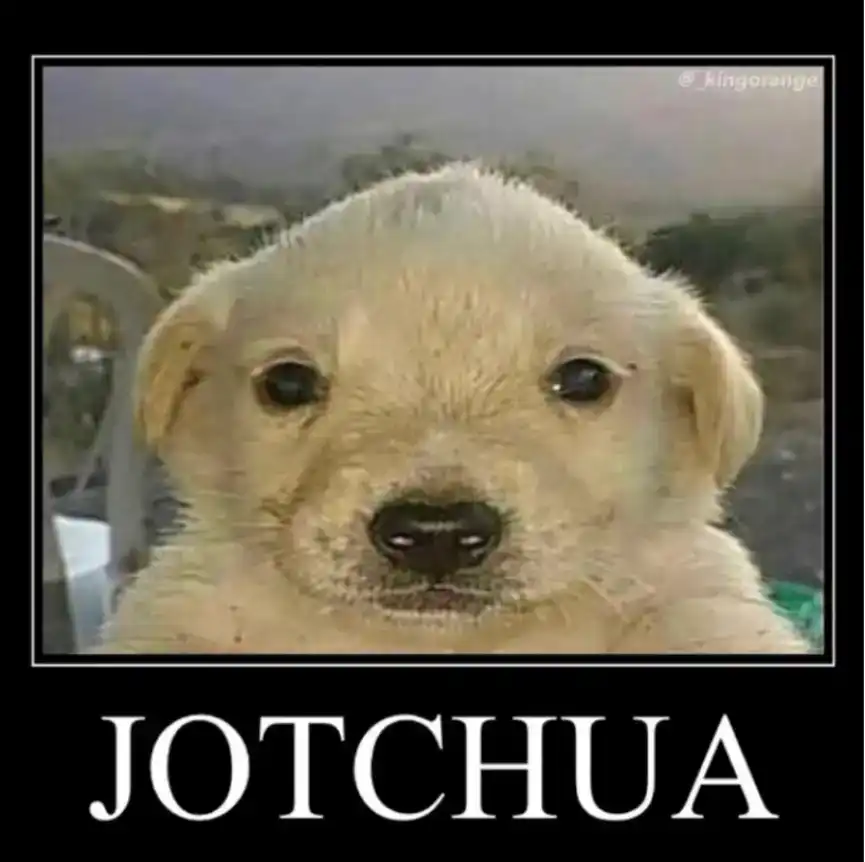
Vốn hóa thị trường của đồng tiền này từng đạt gần 9 triệu USD ở thời điểm cao nhất. Cộng đồng có nhiều tranh cãi về việc đồng tiền này có phải là "hữu cơ" hay không, bởi vì sự khởi động của đồng tiền này không xảy ra sau khi người sáng tạo meme @_kingorange nhận chủ quyền, gần như không thể nói việc "nhận chủ quyền" là nguyên nhân trực tiếp dẫn đến giá tăng.

Nhiều người chơi cho rằng đây là một lần "lập trò" nữa, hoặc là do KOL Ansem vào ngày 9 tháng 6 tuyên bố mình lần đầu tiên trở lại mua tiền meme Solana sau hơn một năm, khiến thị trường suy đoán rằng việc ông mua có liên quan đến đồng tiền này.

Cùng một khái niệm, thậm chí cùng một ticker, nhưng đồng tiền của bạn lại không tăng. $JOTCHUA trên mạng chính ETH đã được triển khai từ tháng 12 năm 2023, và có nội dung và cộng đồng liên tục, nhưng không thể so sánh với việc tìm đến người sáng tạo để nhấn nút nhận chủ quyền.

Khái niệm World Cup cũng xảy ra tình trạng tương tự. $WORLDCUP trên Solana do bonkguy mua vào và phân tích dài dòng, đã từ mức vốn hóa khoảng 5 triệu USD lên đến đỉnh điểm vượt 12 triệu USD. Trong khi đó, dự án khái niệm World Cup $PITCH trên Base đã từ mức vốn hóa cao nhất khoảng 7 triệu USD giảm xuống gần 700 nghìn USD.

Mặc dù $PITCH thực sự có vấn đề của riêng nó, chủ yếu nằm ở mặt truyền thông. Dự án này không phải không làm việc, vẫn liên tục cập nhật, nhưng dev (nhà phát triển) rất ít khi lên tiếng, tài khoản X liên tục bị khóa cho đến nay vẫn chưa giải quyết được tài khoản X mới. Nhưng phải thừa nhận rằng, không có ai kêu gọi đầu tư, các khái niệm và cách chơi tương tự nhau đã thua trong cuộc chiến giành sự chú ý.

Chức năng mới được cập nhật gần đây của pump.fun, pump fun GO, cho phép bất kỳ ai cũng có thể đăng tải nhiệm vụ có thưởng trên pump.fun.

Điều này thực sự thu hút sự chú ý của các phương tiện truyền thông chính thống, nhưng rất tiếc, lại là một hình ảnh tiêu cực tiếp cận đại chúng.

$Bountywork, đồng tiền này từng đạt vốn hóa cao nhất gần 2.5 triệu USD. Dev đứng sau nó, @ayushquantt, chủ trương liên tục đăng tải nhiệm vụ mới trên pump.fun, để tạo điểm nóng cho đồng tiền này.

Anh ta đã thực sự làm được - bằng cách treo thưởng 40 SOL, để người khác xăm hình $bountywork lên trán của họ.

Một người đàn ông Ấn Độ thực sự đã đi xăm, và tuân thủ nghiêm ngặt lỗi đánh máy của dev trong phần mô tả - bỏ sót một chữ n, viết sai ticker thành $boutywork.
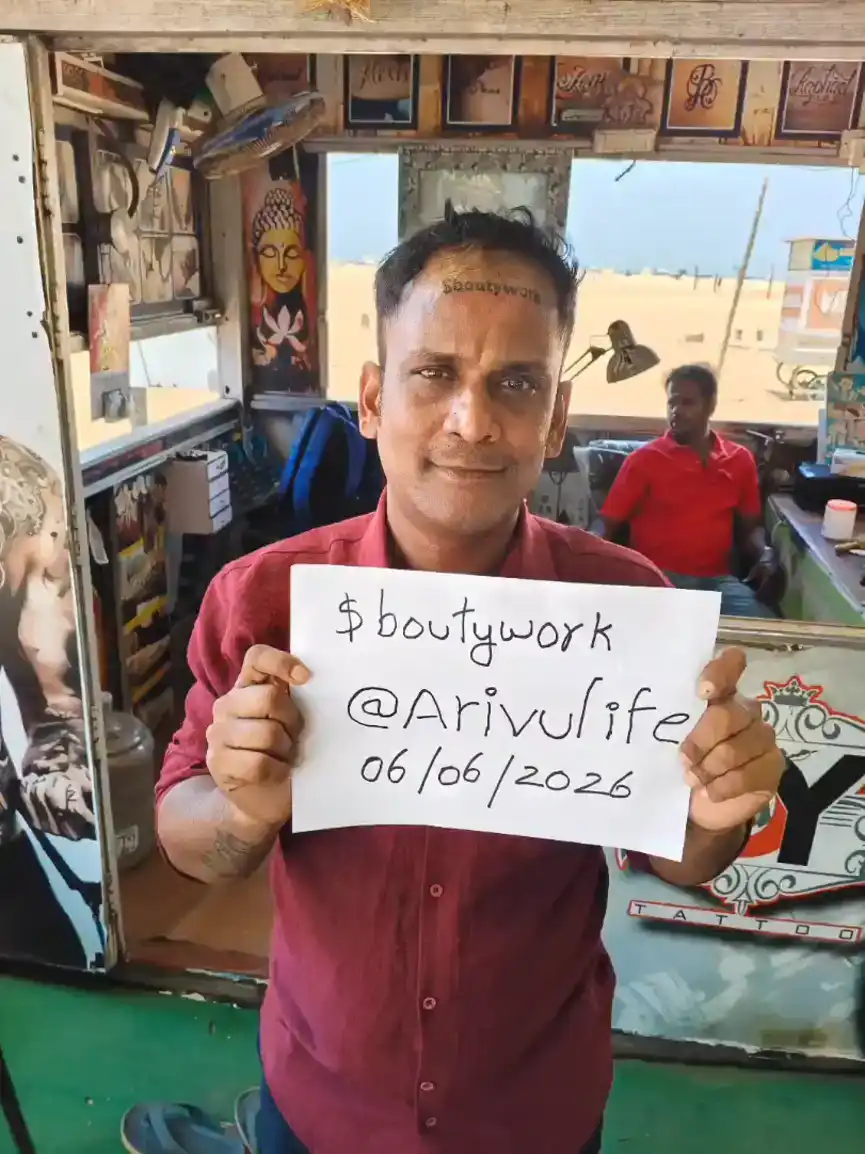
Ban đầu, yêu cầu nhận thưởng của anh ta bị từ chối, lý do là hình xăm thiếu một chữ n, dev yêu cầu anh ta sửa lại hình xăm cho đúng. Sau đó, có người đã gửi cho anh ta một $boutywork, dùng hình xăm sai làm ticker để phát hành một đồng tiền mới.

Cuối cùng, phần thưởng 40 SOL vẫn được trao cho anh ta, và doanh thu từ việc tạo ra đồng tiền mới cũng được trao cho anh ta, tổng cộng anh ta kiếm được khoảng 48 nghìn USD.

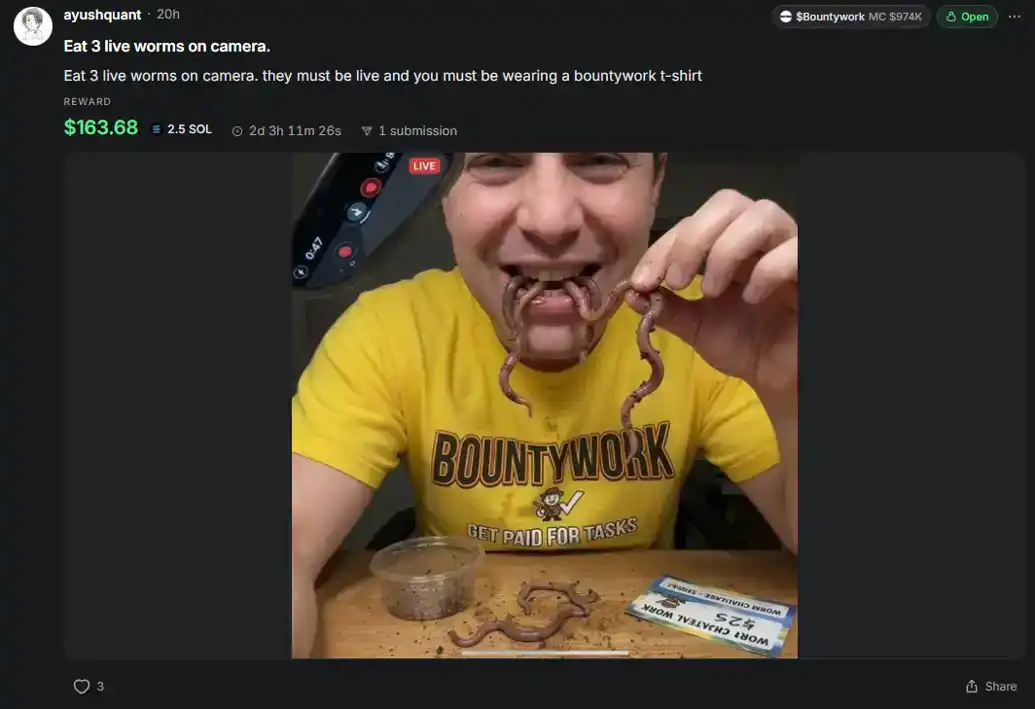
Sau đó, sức nóng của sự kiện qua đi, $boutywork đã cơ bản trở về không, dev của $Bountywork vẫn liên tục đăng tải các nhiệm vụ thưởng mới nhằm sao chép "thành công" này, ví dụ như, yêu cầu người khác mặc áo in $Bountywork, ăn 3 con sâu trước ống kính.
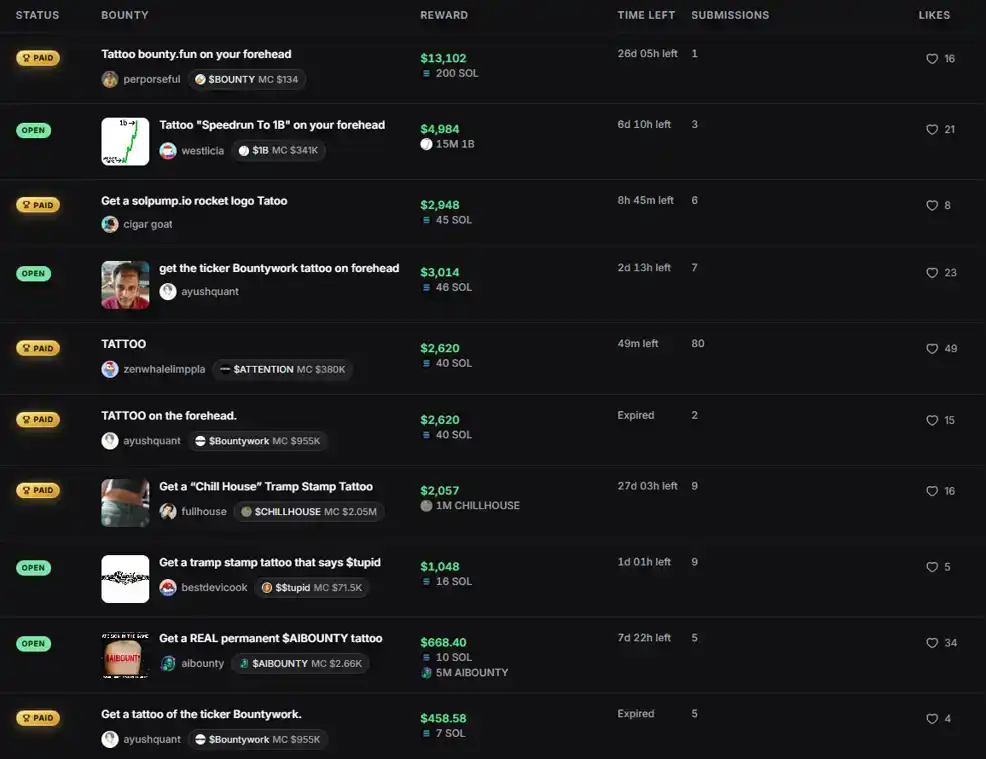
Nhiệm vụ xăm hình, trên pump.fun vẫn còn khá nhiều, đã có người xăm hình lên mặt mình để nhận được phần thưởng cao nhất lên đến 200 SOL.
Nói thật, điều này cũng chẳng khác gì những đại ca trên Kuaishou (Kwai) tặng quà để người khác ăn trứng sống hay uống rượu mạnh ngày xưa...

Sự trở lại của cộng đồng

Tiếp tục nói về tính năng mới của pump.fun. Hầu như tất cả các nhiệm vụ thưởng đều liên quan đến việc tạo ra một số điểm nóng chú ý cho các đồng tiền cụ thể, nhiệm vụ duy nhất không bị coi là trò tiêu khiển, có lẽ chỉ có nhiệm vụ thưởng này dành cho $neet - tổ chức một cuộc tụ tập của những người kháng cự công việc ở New York.
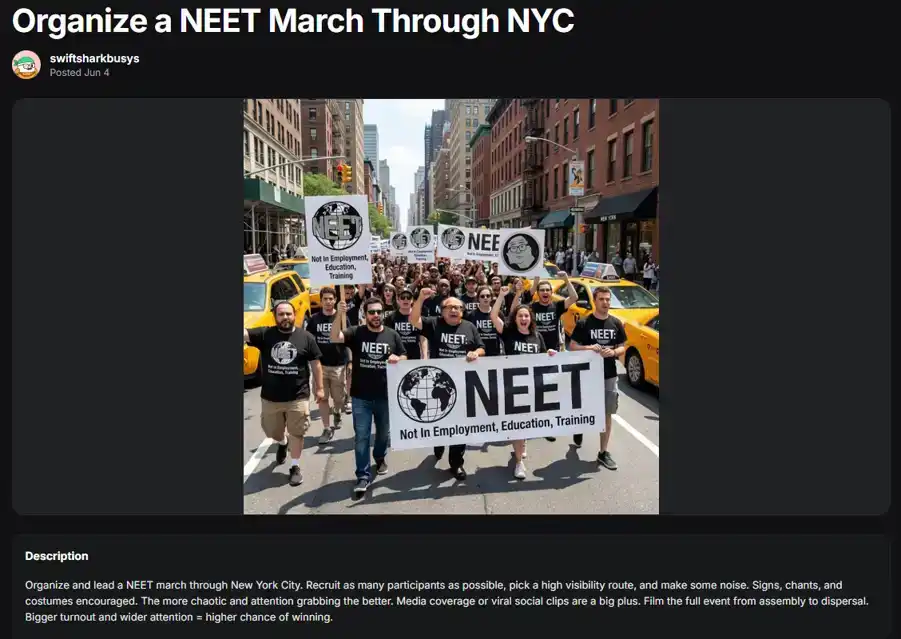
Phần thưởng của nhiệm vụ này được trả bằng $neet, trị giá phần thưởng quy đổi vượt quá 15 nghìn USD. Trước đó, cộng đồng $neet đã tự tổ chức 2 cuộc "tụ tập không làm việc" ngoại tuyến tại Mỹ, nếu nhiệm vụ thưởng này được hoàn thành, đây sẽ là lần thứ 3.

Mặc dù không biết ý định hỗ trợ tiền meme cộng đồng của pump.fun rốt cuộc là gì, nhưng tài khoản X chính thức của họ luôn xuất hiện một số bài giới thiệu về các đồng tiền cộng đồng. Mặc dù biểu hiện giá của các đồng tiền này không đồng nhất, ví dụ giá của $chillhouse đã ủ rũ từ lâu, nhưng những đồng mà pump.fun chính thức chọn ra thường cũng khá cộng đồng, khá hữu cơ.

Và hiện tại, những đồng tiền có mức độ tiếng tăm và biểu hiện giá tương đối ổn định, ngoài $neet, còn có $troll, $buttcoin và $triplet. Giới thiệu đơn giản về tình hình tồn tại và chủ đề của các đồng tiền cộng đồng này:

- $neet: Triển khai cách đây 410 ngày, vốn hóa cao nhất khoảng 51 triệu USD, vốn hóa hiện tại khoảng 27 triệu USD, sứ mệnh của cộng đồng là để nhiều người nhận thức rằng việc dành phần lớn thời gian cuộc đời cho công việc là đánh mất cuộc sống của chính mình.

- $troll: Triển khai cách đây 416 ngày, sở hữu bản quyền meme cổ điển Troll, đã được niêm yết trên Coinbase. Vốn hóa cao nhất khoảng 290 triệu USD, vốn hóa hiện tại khoảng 65 triệu USD.

- $triplet: Triển khai cách đây 107 ngày, là từ viết tắt của hình tượng "người que Tung Tung Tung Sahur" - hình tượng nổi tiếng nhất và vượt ra ngoài phạm vi cộng đồng trong "Sơn Hải Kinh kiểu Ý" nổi bật năm ngoái. Vốn hóa cao nhất khoảng 13.6 triệu USD, vốn hóa hiện tại khoảng 6.6 triệu USD.

- $buttcoin: Triển khai cách đây 153 ngày, bắt nguồn từ một trò đùa trên diễn đàn Bitcoin năm 2011, chơi chữ từ Bitcoin thành Buttcoin "đồng tiền mông". Vốn hóa cao nhất khoảng 68.6 triệu USD, vốn hóa hiện tại khoảng 27 triệu USD.

Đề cập đến những đồng tiền này và nói về sự trở lại của tiền meme cộng đồng, lại phải nhắc đến Ansem. Sau khi ông ấy đề cập việc quay lại mua meme Solana, có người đã đề nghị ông ấy trực tiếp đưa ra CA (địa chỉ hợp đồng), chỉ cần đăng lên là sẽ mua ngay 1% và mua thêm mạnh tay.
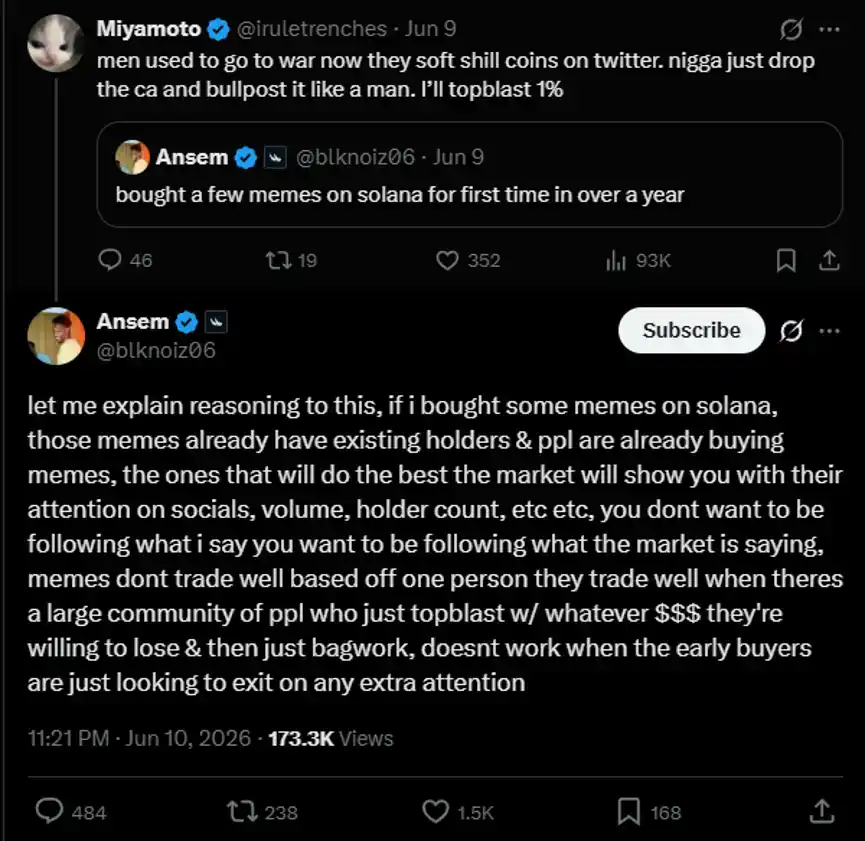
Phản hồi của Ansem đã gây ra nhiều thảo luận:

"Để tôi giải thích tại sao tôi không đưa ra CA. Nếu tôi mua một số đồng meme Solana, và những đồng tiền đó đã có những người nắm giữ tốt, thị trường sẽ thông qua các dữ liệu như biểu hiện trên mạng xã hội, khối lượng giao dịch, số lượng người nắm giữ... cho bạn biết những đồng nào là tốt. Bạn không nên nghe tôi, mà nên nghe thị trường. Tiền meme dựa vào những người nắm giữ chỉ biết chờ bán ra dựa vào tốc độ tay và lời kêu gọi sẽ không tốt, chỉ có những đồng tiền có một cộng đồng rộng lớn, đồng thời những người trong cộng đồng sẵn sàng chịu lỗ và ngày ngày tuyên truyền ý tưởng cho khoản nắm giữ của mình, mới tốt, những đồng tiền phụ thuộc vào một người nổi tiếng duy nhất sẽ không tốt."

Ngoài những đồng tiền cũ tồn tại lâu và giữ giá tương đối ổn định như trên, thực sự cũng có đồng tiền mới chạy ra theo quan điểm này của Ansem, đó là $KINS.

$KINS là đồng tiền của Kintara, và Kintara là một trò chơi trên chuỗi. Rất thú vị là, Kintara không hề kéo theo phân khúc game trên chuỗi của Solana, bởi vì bản thân nó nổi lên không phải do trò chơi tinh xảo, mà là do từng bước dùng hành động để giành được sự tin tưởng của cộng đồng một cách rất chuẩn chỉ.

Trước tiên giới thiệu đơn giản về cơ chế của $KINS. Đây là một trò chơi MMORPG có thể chơi ngay trên trình duyệt, để vào chơi ví cần có 1000 đồng $KINS, sau đó vào trong có thể chặt gỗ, đào mỏ, câu cá, mua nhà, đánh quái vật, đánh trùm và PvP.

Trong trò chơi không có tùy chọn thu phí bổ sung nào khác, chỉ có bánh xe phần thưởng, nếu không muốn mỗi ngày chỉ được quay 1 lần, người chơi có thể tiêu số $KINS trị giá 3 USD để tiếp tục quay. 50% thu nhập từ phần này được sử dụng để mua lại và tiêu hủy đồng tiền, 50% dùng để bảo trì và phát triển dự án.

Quy trình cốt lõi của trò chơi đại khái là thu thập tài nguyên -> chế tạo đạo cụ -> thách thức quái vật khó hơn, nếu người chơi thiếu tài nguyên, sẽ cần dùng đến tiền tệ "Gold" trong trò chơi để mua từ người chơi khác. Người chơi có thể bán "Gold" trong trò chơi với định giá bằng $KINS, 5% chảy vào kho bạc, 95% người chơi nhận.

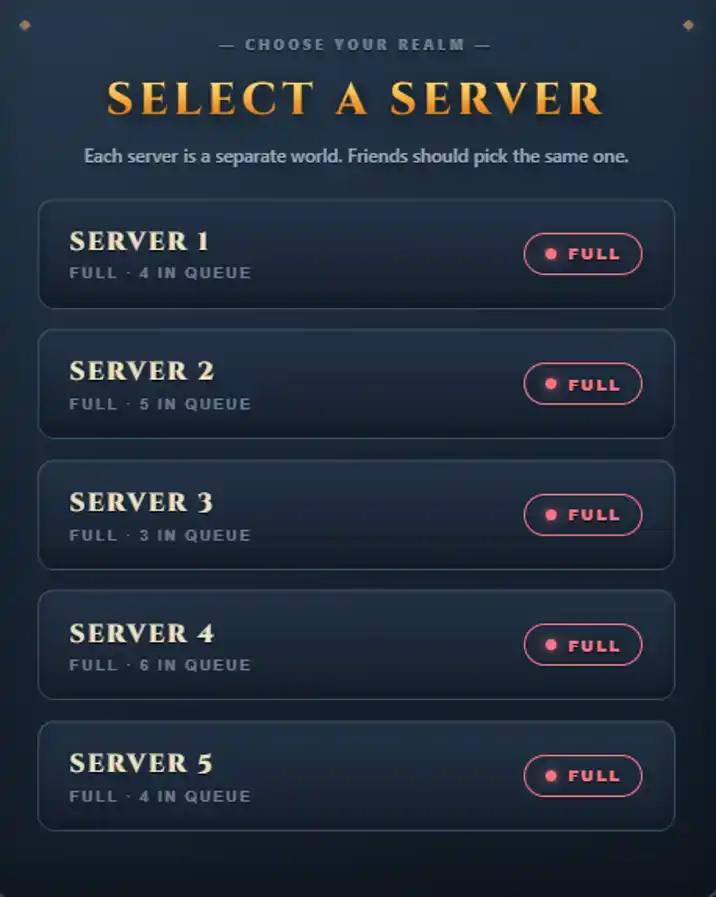
Nghe có vẻ bình thường, số liệu thực tế cũng không quá ấn tượng (cho đến nay đã mua lại 0.5% $KINS), nhưng dự án này liên tục giao hàng đã xây dựng được sự tin tưởng tốt. Cũng có thể vì thị trường quá đáng buồn, thực sự có khá nhiều người chơi nhập tâm, số người câu cá trong trò chơi mỗi ngày một tăng. Đội ngũ dự án đã tăng máy chủ lên 5 cái, nhưng vẫn phải xếp hàng...
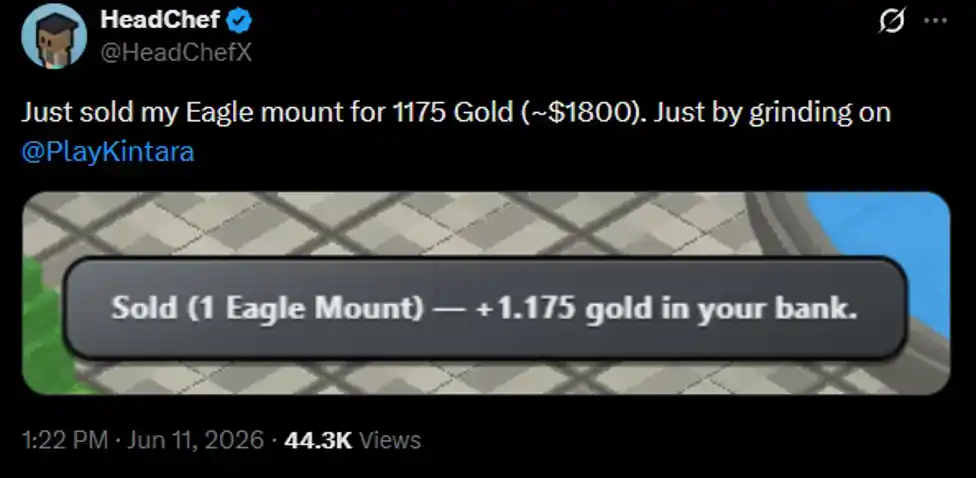
Có người chơi đã bán thành công vật cưỡi hiếm có được từ việc câu cá và thu về 1800 USD:
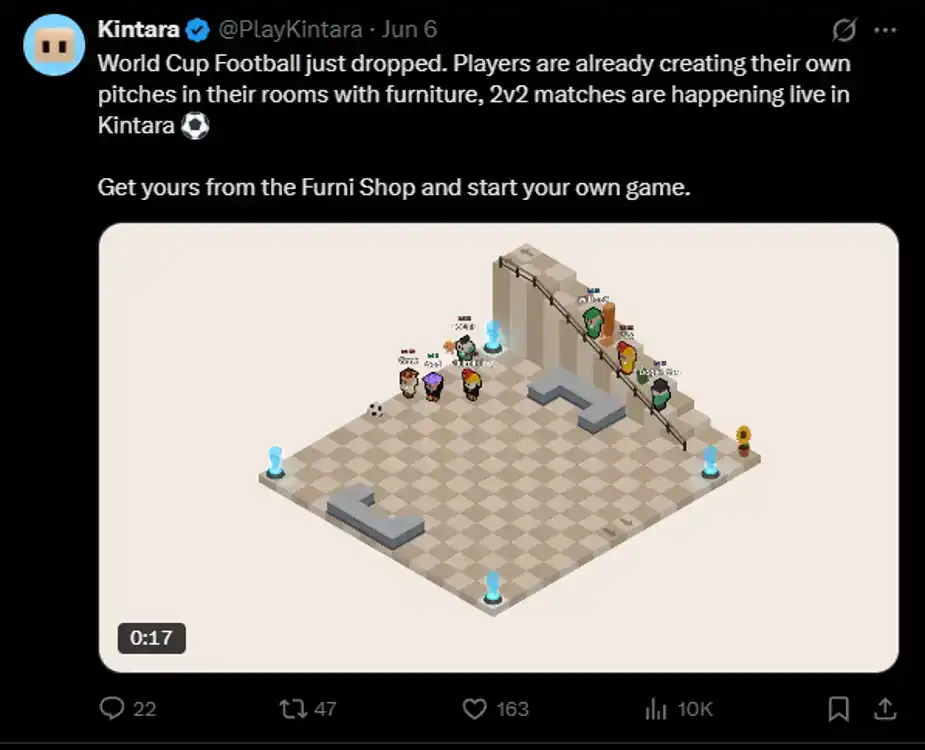
Đội ngũ dự án trò chơi này gần như "không tuyên truyền về kiếm tiền trong game", mà lại rất chú trọng "làm thế nào để xây dựng hiệu ứng mạng lưới và cảm giác thuộc về của người chơi". Ví dụ như tích hợp các đồng tiền meme cộng đồng hoặc đồng tiền nổi bật mới trên Solana vào các yếu tố trong trò chơi, ví dụ như đấu giá biệt thự trong trò chơi.

Lại ví dụ, tuyên truyền mọi người tổ chức giải đấu bóng đá chuyên đề World Cup trong nhà của mình:
Khi nó còn chưa nổi bật, chỉ có dưới 40 nghìn USD vốn hóa và 243 người nắm giữ, sự "không ai biết đến, không ai nhận ra" thời kỳ đầu này đã được ghi trên bảng thống kê ở bản đồ chính của trò chơi. Mọi người nhìn thấy Kintara kiên trì cập nhật nội dung trò chơi nhanh chóng, từ từ khiến ngày càng nhiều người yên tâm, từ từ thu hút các KOL như Gake, Ansem cũng chạy vào trò chơi trở thành một phần của người chơi.
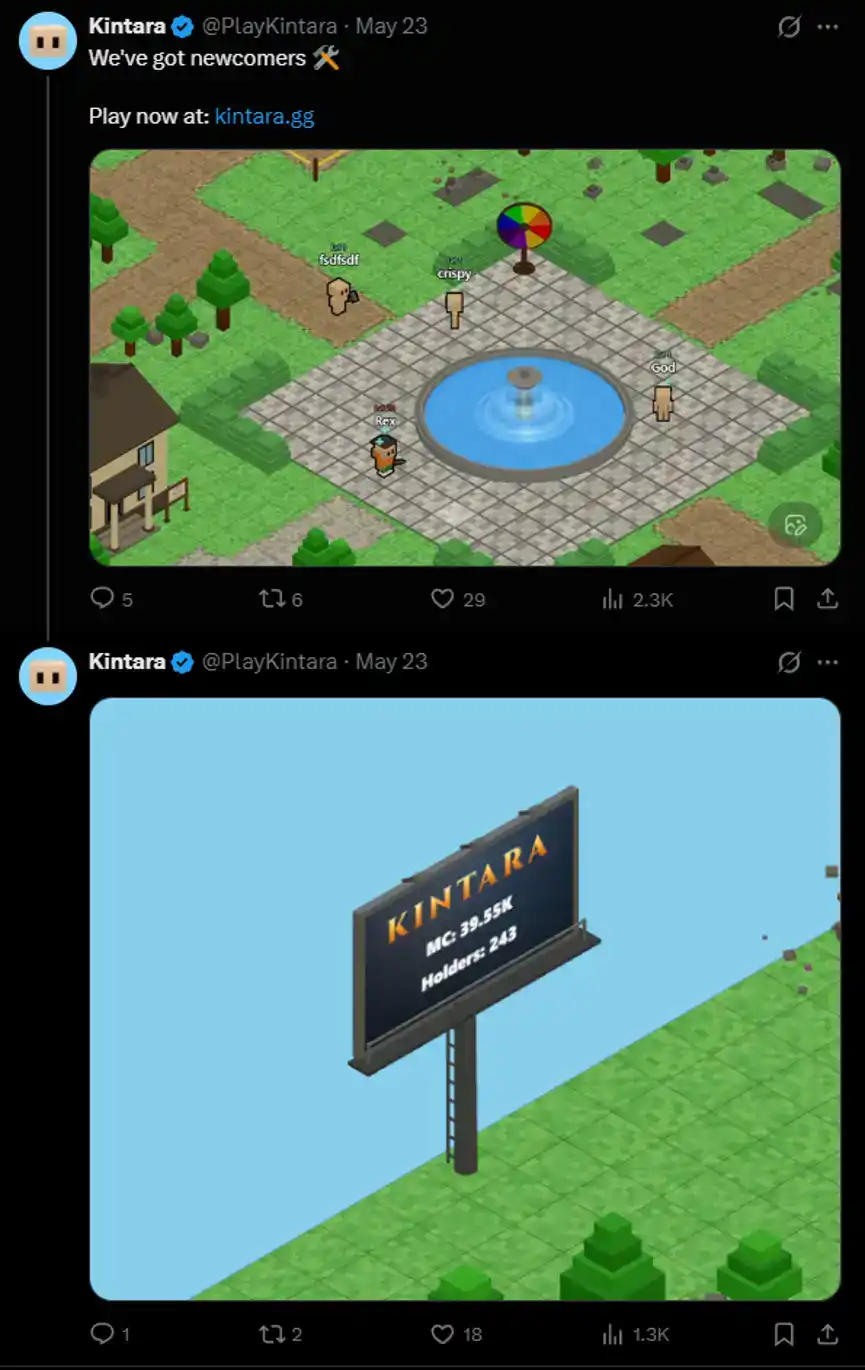
Vì vậy, không ai nói dự án kiểu này là "lập trò".

"Điều chúng ta không ngừng theo đuổi, rốt cuộc là một trò chơi tin tưởng lẫn nhau, hay là một trò chơi lừa dối lẫn nhau?"

Đây là câu hỏi mà Chiến Hào (Zhanhao) gần đây tự vấn bản thân.

Mong rằng những câu hỏi như vậy có thể tiếp tục, cuối cùng dẫn dắt đến một thị trường lành mạnh hơn.


Related Questions

QTrong bối cảnh thị trường meme coin Solana hiện tại, hai xu hướng chính nào đang giằng co nhau?

AHai xu hướng chính là 'Cuộc chiến giành sự chú ý PvP' (dựa vào KOL kêu gọi, sự kiện nóng, tốc độ) và 'Sự trở lại của cộng đồng' (dựa vào cộng đồng hữu cơ, niềm tin và hoạt động bền bỉ).

QTính năng 'pump.fun GO' mới đã dẫn đến những sự việc gây tranh cãi gì, như ví dụ về $Bountywork?

ATính năng này cho phép đặt thưởng để tạo sự chú ý. Ví dụ, $Bountywork treo thưởng 40 SOL để ai đó xăm mã token lên trán. Một người đàn ông Ấn Độ đã xăm nhưng sai chính tả (thiếu chữ 'n'), dẫn đến việc tạo ra một đồng token sai ($boutywork). Dù vậy, anh ta vẫn nhận được thưởng và kiếm được khoảng 48,000 USD, nhưng sau đó cả hai token đều gần như về 0.

QKOL Ansem đã đưa ra quan điểm gì về việc đầu tư vào meme coin và tại sao anh ấy không công khai địa chỉ hợp đồng (CA) của mình?

AAnsem cho rằng một meme coin tốt cần có cộng đồng lớn, mạnh, sẵn sàng chịu lỗ và tích cực quảng bá, chứ không phải dựa vào một KOL đơn lẻ hay những người chỉ chờ bán ra. Anh ấy không công khai CA để khuyến khích mọi người lắng nghe thị trường (biểu hiện MXH, khối lượng giao dịch, số holder) thay vì chỉ nghe theo một cá nhân.

QHãy kể tên và mô tả ngắn gọn về một số đồng meme coin dựa trên cộng đồng (community-driven) được đề cập trong bài có thời gian tồn tại lâu và tương đối ổn định.

ABài viết đề cập đến: $neet (ủng hộ lối sống không làm việc quá nhiều), $troll (sở hữu meme Troll cổ điển, niêm yết trên Coinbase), $triplet (dựa trên nhân vật 'Tung Tung Tung Sahur' nổi tiếng), và $buttcoin (xuất phát từ một trò đùa chơi chữ với Bitcoin). Các đồng này có thời gian tồn tại từ 107 đến 416 ngày và vẫn giữ được vốn hóa thị trường đáng kể.

QDự án trò chơi Kintara ($KINS) đã xây dựng niềm tin với cộng đồng như thế nào, khác với các dự án meme thông thường?

AKintara tập trung vào việc giao hàng liên tục, cập nhật nội dung game, xây dựng hiệu ứng mạng và cảm giác thuộc về cho người chơi (như tích hợp các meme coin khác, tổ chức sự kiện trong game, đấu giá nhà). Họ ít tập trung vào 'play-to-earn' mà chú trọng trải nghiệm. Sự minh bạch (như hiển thị số liệu ban đầu) và việc thu hút KOL trở thành người chơi thực thụ đã giúp xây dựng niềm tin bền vững.

Related Reads

Google TPU Shipments Revised Up by 50%

Recent industry research indicates a significant upward revision in the shipments of Google's TPU (Tensor Processing Unit) chips. Previous expectations for 2027 were set at around 10 million units, but new estimates now point to 15 million units, a 50% increase. This substantial boost directly translates to higher demand across the entire supporting supply chain. Google's TPU clusters utilize a standardized all-optical interconnect architecture. Consequently, key hardware components are deeply integrated and scaled in fixed ratios with the chips. The 15 million TPU target will drive corresponding demand increases for NPO optical engines (roughly a 1:1 match), 1.6T optical modules, OCS optical switches, high-end server power supplies, fiber optics & MPO connectors, and liquid cooling solutions. Among these, liquid cooling is highlighted as the sector experiencing the most significant transformation and offering the most stable potential for excess returns. As next-generation TPU chips reach power levels where traditional air cooling is insufficient, liquid cooling becomes essential. 2026 is forecasted as the first year of substantial adoption for Google's liquid cooling solutions. This shift, coupled with delivery and capacity bottlenecks faced by incumbent overseas manufacturers, is creating a prime window for domestic Chinese suppliers to enter and secure Google's core supply chain. The market size for Google-specific liquid cooling is projected to potentially triple from a baseline of hundreds of billions to around 300 billion units by 2028. The logic for the fiber optic sector is also being rewritten. Once considered a cyclical commodity tied to telecom operator procurement, fiber is now a strategic and scarce resource for AI Data Centers (AIDC). A severe supply-demand imbalance, driven by the long lead time for preform production (18-24 months) and surging demand from cloud giants, is supporting strong performance. Chinese fiber manufacturers are well-positioned to capture a significant share of global AIDC demand, with exports potentially reaching 200-300 million core kilometers in 2026. Overall, the investment focus within the AI computing industry is shifting from pure "chip performance speculation" towards the more certain incremental growth in computing infrastructure and its supporting ecosystem. The upward revision in Google TPU shipments, along with the potential for further doubling by 2028, is seen as solidifying performance visibility for the entire supporting supply chain over the next two years.

marsbit1h ago

Google TPU Shipments Revised Up by 50%

marsbit1h ago

What Wall Street Really Wants After the Crypto Story Recedes

The tide of speculative crypto narratives has receded, revealing Wall Street's true objective: building a controlled, yield-generating, and compliant financial pipeline on distributed ledgers. They are migrating core functions onto blockchains, not for decentralization, but for efficiency and new revenue streams. Key developments include BlackRock's BUIDL fund, a tokenized treasury fund acting as a foundational reserve asset, and the rise of Securitize, which is going public and partnering with the NYSE to build a 24/7 digital securities trading and settlement system. This signals a major shift of securities clearing to blockchain technology. To make volatile assets like Bitcoin palatable for institutional investors, firms like BlackRock and Goldman Sachs are creating "covered call" ETFs (e.g., BITA). These products systematically sell options on Bitcoin holdings, transforming price volatility into stable monthly income, effectively repackaging crypto as a yield-bearing asset. Stablecoins are being positioned not as speculative tools but as efficient payment rails. Companies like Stripe and Mastercard are integrating them for instant, low-cost merchant settlements and cross-border card payments, respectively. Critically, new legislation like the GENIUS Act shapes them as non-interest-bearing, heavily regulated extensions of the US dollar system. In summary, Wall Street is quietly constructing a parallel, blockchain-based financial infrastructure featuring tokenized traditional assets, structured crypto yields, and programmable dollar pipelines—all under its control and fully integrated with existing regulatory and credit frameworks.

marsbit1h ago

What Wall Street Really Wants After the Crypto Story Recedes

marsbit1h ago

Tying Itself to SpaceX: Cursor's $60 Billion Rise

This article recounts the rapid rise of AI-powered coding startup Cursor and its 25-year-old MIT graduate CEO, Michael Truell. Launched in 2023, Cursor achieved explosive growth, reaching over 10 billion USD in revenue by late 2025. However, its journey highlights a central dilemma for AI application companies: dependence on foundational model providers. Cursor initially relied heavily on Anthropic's models but faced an existential threat when Anthropic launched its own competing coding tool, Claude Code. In response, Cursor declared an internal emergency in early 2026 and accelerated development of its own model, Composer. To secure the immense computing power needed, Truell struck a pivotal deal with Elon Musk's SpaceX in April 2026. The collaboration grants Cursor access to SpaceX's supercomputing resources for Composer, while SpaceX's Grok model benefits from Cursor's programming data. The agreement includes a potential 600 billion USD acquisition of Cursor by SpaceX later in the year, though a substantial termination fee is in place if the deal falls through. The story explores Cursor's intense, sometimes controversial hiring practices involving lengthy unpaid "work trials," its complex partnership-turned-rivalry with Anthropic, and its high-stakes gamble to ensure independence through the SpaceX alliance. The core question remains: will Cursor evolve into a defining, independent "generational" software company, or become a key piece in a tech giant's AI arsenal?

marsbit1h ago

Tying Itself to SpaceX: Cursor's $60 Billion Rise

marsbit1h ago

Trading

Spot
Futures

Hot Articles

What is LINON

Linde plc Tokenized Stock (Ondo): Revolutionizing Traditional Equity Access Through Blockchain Innovation The emergence of Linde plc Tokenized Stock (Ondo), represented by the ticker $LINON, signifies a monumental shift in the fusion of traditional financial structures and decentralized finance (DeFi). This innovative financial instrument showcases the tremendous potential of blockchain technology to democratize access to traditional equity markets while ensuring the security and regulatory compliance necessary for institutional-grade financial products. Through Ondo Finance's pioneering tokenization platform, $LINON provides a seamless pathway for global investors to engage with one of the world's leading industrial gas companies, Linde plc, creating a blockchain-native representation of the underlying equity. Introduction to Linde plc Tokenized Stock The landscape of financial markets is witnessing a groundbreaking transformation through the tokenization of real-world assets. Linde plc Tokenized Stock (Ondo) epitomizes this revolutionary approach by bridging the gap between conventional stock ownership and blockchain-enabled financial infrastructure. The $LINON token allows investors to gain exposure to one of the prominent industrial companies worldwide through decentralized technology. Operating within Ondo Finance's comprehensive ecosystem, $LINON symbolizes a practical application of tokenization technology that enhances accessibility, efficiency, and global connectivity in traditional financial markets. By leveraging blockchain infrastructure, this tokenized stock enables international investors to participate in U.S. equity markets, overcoming traditional barriers associated with cross-border investing. The significance of $LINON goes beyond technological innovation; it represents a fundamental shift in asset structuring, distribution, and trading in the digital age. This tokenized stock maintains all the economic benefits associated with traditional Linde plc shares while offering improved liquidity, programmable compliance features, and seamless integration with decentralized finance protocols. The development of $LINON indicates a growing acceptance of blockchain technology as a viable means for traditional finance, exemplifying how even well-established assets like Linde plc can integrate into blockchain systems. This approach preserves the core attributes that appeal to investors while introducing advanced capabilities that enhance the overall investment proposition. Project Overview and Objectives Linde plc Tokenized Stock (Ondo) encapsulates a strategic effort to democratize access to traditional equity markets through advanced blockchain technologies. The primary objective of $LINON is to provide approved global investors seamless access to the economic exposure associated with Linde plc shares, furthering an effort to create a more inclusive financial ecosystem. Beyond the digital representation of traditional assets, $LINON endeavors to eliminate barriers of geography and time zones that limit investor participation. Its design ensures that blockchain technology can elevate traditional investment vehicles without undermining the security or compliance requirements expected by investors. Key goals of the project include enhanced liquidity provision, programmable compliance mechanisms, and interoperability with other blockchain networks. Each $LINON token is fortified by actual Linde plc securities housed at U.S.-registered broker-dealers, allowing holders to reap economic advantages akin to traditional stockholders, such as dividend reinvestment. Furthermore, $LINON aims to establish new industry standards for institutional-grade tokenized securities, paving the way for traditional assets to embrace blockchain technology while remaining compliant with regulatory frameworks. By associating itself with a company as reputable as Linde plc, the project opens avenues for exploring tokenized equities catering to both conservative institutional players and daring retail investors. Project Creator and Development Team The vision for Linde plc Tokenized Stock (Ondo) comes from Nathan Allman, founder and CEO of Ondo Finance. His background in traditional finance coupled with expertise in blockchain technology positions him uniquely to navigate the complexities of asset tokenization. Allman's academic journey began at Brown University, focusing on Economics and Biology, equipping him with valuable analytical skills. His time at Goldman Sachs in the Digital Assets division strengthened his understanding of the interplay between financial institutions and emerging technologies, laying the groundwork for his later endeavors in alternative investment strategies. Under Allman's guidance, Ondo Finance has emerged as a leader in asset tokenization, launching $LINON as a flagship example of the company's larger mission towards revolutionizing traditional financial systems using blockchain technology. His commitment to leveraging blockchain for creating institutional-grade financial products has shaped the landscape of real-world asset tokenization. Investment and Funding Structure The growth of Ondo Finance, the platform powering Linde plc Tokenized Stock (Ondo), is bolstered by robust financial backing from prestigious venture capital firms and strategic investors. This strong investment foundation underpins the development of the key infrastructure essential for compliant tokenized securities like $LINON. In August 2021, Ondo Finance secured $4 million in seed funding led by a major venture capital firm, which enabled the company to commence platform development and establish the necessary regulatory processes for tokenizing real-world assets. This early investment cemented Ondo Finance's credibility within the industry. The Series A funding round followed, garnering $20 million with participation from renowned firms committed to transformative technology companies. This backing demonstrated substantial institutional confidence in Ondo Finance's vision, allowing it to hone its approach to asset tokenization through mechanisms that ensure compliance and accessibility. Noteworthy contributors, including institutional investors and experienced partners, have added significant value to Ondo Finance’s development efforts. Their involvement underscores the confidence across sectors in Ondo Finance's approach to bridging traditional finance with blockchain innovations. Technical Infrastructure and Innovation The technical architecture that underpins Linde plc Tokenized Stock (Ondo) represents a sophisticated melding of traditional finance systems and cutting-edge blockchain technology. The architecture's foundation is built on the Ethereum network, renowned for its security and programmability—both critical for intricate financial instruments. The $LINON tokenization process comprises creating a blockchain-native representation of Linde plc shares that preserves economic benefits while augmenting investor capabilities. Each token corresponds to actual shares held at U.S.-registered broker-dealers, creating a compliant custody structure that legitimizes the asset's existence and value. Automated compliance systems are integrated into the tokenization process, managing critical components such as know-your-customer (KYC) verification and anti-money laundering (AML) protocols. This incorporation of programmable compliance empowers $LINON to uphold regulatory standards essential for institutional proliferation. Cross-chain interoperability characterizes the advanced technical features of $LINON. While initially deployed on Ethereum, the framework is designed for expansion to other networks such as Solana and BNB Chain. This adaptability enhances liquidity and accessibility, allowing investors to select their preferred blockchain ecosystems. Historical Timeline and Development Crafting the history of Linde plc Tokenized Stock (Ondo) unfolds in parallel with the evolution of Ondo Finance's tokenization platform. The timeline's inception dates back to March 2021 when Nathan Allman laid the foundations for creating institutional-grade financial products on blockchain infrastructure. The initial funding round in August 2021 provided crucial resources for developing the platform and establishing partnerships necessary for effective tokenization. By January 2023, Ondo Finance launched its tokenized treasury products, establishing mechanisms that would facilitate future tokenized equities such as $LINON. A pivotal milestone arose in February 2025 when Ondo Chain—a Layer 1 blockchain designed specifically for asset tokenization—was introduced. This infrastructure enhances capabilities vital for institutional markets, demonstrating Ondo Finance's long-term commitment to tokenization. Subsequently, the launch of Ondo Global Markets in September 2025 marked the official debut of $LINON. This milestone showcased the successful transition from development to active trading, enabling investors around the world to access American financial markets seamlessly. Ongoing development plans include a targeted expansion of available tokenized assets to over 1,000 by the end of 2025, pointing to a bright future for Ondo Finance's ecosystem and its mission to broaden tokenized equity accessibility. Regulatory Compliance and Legal Framework The legal architecture governing Linde plc Tokenized Stock (Ondo) emphasizes a sophisticated approach to regulatory compliance, allowing tokenized securities to be implemented within a blockchain-based framework. The legal structure governing $LINON spans multiple jurisdictions while maintaining a robust legal footing. Compliance systems ensure that only eligible investors can access the token, enforced through automated verification that aligns with international regulations. This innovative regulatory technology promises real-time enforcement of complex requirements, considerably enhancing efficiency in operating within the regulatory landscape. The custody framework undergirding $LINON ensures that the underlying shares are securely held at U.S.-registered broker-dealers, complying with necessary regulations while delivering blockchain-driven access to investors. The token maintains its economic equivalency and security through this carefully structured custody arrangement. KYC and AML compliance systems are embedded within the smart contract architecture, ensuring integrity and adherence to regulatory practices while fostering transparency for investors. The jurisdictional restrictions mark a commitment to navigating the evolving landscape of international securities laws. Market Impact and Industry Significance The advent of Linde plc Tokenized Stock (Ondo) holds profound implications for the broader financial landscape, symbolizing a clear shift towards blockchain-enabled markets. $LINON serves as a proof-of-concept for integrating traditional companies into blockchain ecosystems, showcasing the potential benefits such as broader accessibility and improved efficiency. The market's response to $LINON indicates a growing acceptance of tokenization among institutional investors, contributing to the emergence of an expanding sector wherein traditional assets can be interconnected with blockchain innovations. The success of $LINON further solidifies market confidence, indicating an overarching shift towards recognizing asset tokenization as a transformative force in finance. Future Development and Expansion Plans The future trajectory for Linde plc Tokenized Stock (Ondo) centers around the expansion of the tokenization ecosystem and enhanced infrastructure supporting blockchain-enabled financial services. Plans for cross-chain integration usher in new opportunities for liquidity and flexibility within the investment framework, with existing capabilities poised for continuous enhancement. With the introduction of Ondo Chain, Ondo Finance aims to transition $LINON to an optimized blockchain environment specifically designed for asset tokenization. This new infrastructure heralds exciting prospects for the development of institutional-grade financial products, ensuring ongoing compatibility with contemporary investment strategies. Further integration with decentralized finance protocols signifies a commitment to empowering $LINON holders through advanced financial strategies. The anticipated expansion of available tokenized assets promises to broaden investor access, enhancing the utility and appeal of the platform. In alignment with ambitions for regulatory expansion, ongoing efforts to secure approvals for new jurisdictions will enhance investor access, further positioning $LINON at the forefront of the burgeoning tokenization market. Conclusion Linde plc Tokenized Stock (Ondo), as represented by the $LINON token, stands at the intersection of traditional finance and blockchain innovation. It embodies a transformative milestone in how financial assets are structured, distributed, and engaged within modern investment ecosystems. The technical sophistication behind $LINON, combined with its regulatory compliance framework, illustrates that asset tokenization can improve financial infrastructure rather than simply digitizing existing products. This pioneering effort not only enhances investor access to U.S. equity markets but also signifies an evolution of how traditional financial services can integrate blockchain technology. As the asset tokenization market grows exponentially, with prospects suggesting significant valuation increases, $LINON paves the way for a future where tokenized securities become standard fixtures in the financial landscape. The trajectory of $LINON will undoubtedly influence how traditional finance adapts to a transformed, blockchain-powered world.

3.2k Total ViewsPublished 2025.12.05Updated 2025.12.05

What is LINON

What is CRMON

Salesforce Tokenized Stock (Ondo): Revolutionising Traditional Equity Access Through Blockchain Innovation The emergence of Salesforce Tokenized Stock (CRMON) marks a pivotal advancement in integrating traditional financial markets with blockchain technology. This innovative approach offers investors unprecedented access to equity exposure through tokenisation. Developed by Ondo Finance, CRMON provides tokenholders with economic exposure equivalent to holding Salesforce stock (CRM) while automatically reinvesting dividends. This effectively bridges the gap between conventional equity markets and decentralised finance (DeFi). Introduction and Comprehensive Overview of Salesforce Tokenized Stock In recent years, the financial landscape has dramatically transformed due to blockchain technology, fundamentally altering how investors access and interact with traditional assets. The development of Salesforce Tokenized Stock (CRMON) is a prime example of this evolution, representing a sophisticated fusion of conventional equity markets with cutting-edge distributed ledger technology. CRMON is a tokenised version of Salesforce stock, emerging from the innovative work of Ondo Finance, a leading platform in the real-world asset tokenisation sector that positions itself as a bridge between traditional finance and decentralised systems. Designed to provide tokenholders with economic exposure that mirrors the performance of the underlying Salesforce stock, CRMON incorporates automatic dividend reinvestment mechanisms. This eliminates many traditional barriers associated with international equity investment, such as complex brokerage relationships, currency conversion challenges, and restricted trading hours. The tokenisation process reimagines stock ownership as a blockchain-native asset while maintaining its economic equivalence with the underlying security, offering enhanced portability and integration capabilities within decentralised finance ecosystems. CRMON transcends its individual utility as an investment instrument to represent a fundamental shift in how financial markets can operate in an increasingly digital world. By maintaining full backing through U.S.-registered broker-dealers and implementing robust compliance frameworks, CRMON demonstrates that tokenised securities can achieve the regulatory standards necessary for institutional adoption while delivering the technological advantages of blockchain infrastructure. Understanding Tokenized Real-World Assets and CRMON's Strategic Position Tokenised real-world assets signify one of the most significant innovations in modern finance, fundamentally reimagining how traditional securities are represented, traded, and utilised within digital ecosystems. CRMON operates as a tokenised equity instrument correlating directly with Salesforce stock while optimising accessibility and efficiency. This aligns with Ondo Finance's broader mission to democratise access to institutional-grade financial products through innovative tokenisation strategies. The tokenisation process guarantees complete economic equivalence with the underlying Salesforce equity. Each CRMON token represents a proportional claim on Salesforce stock held by qualified custodians, with dividend payments automatically reinvested to maintain continuous exposure to total return performance. This structure simplifies dividend management and ensures that tokenholders receive the full economic benefit of their equity exposure, encompassing both capital appreciation and income generation. Ondo Finance's strategy in tokenising Salesforce stock demonstrates its expertise in creating compliant, institutional-grade products that meet traditional financial markets' stringent requirements. The platform’s focus on merging regulatory compliance with blockchain benefits positions it at the forefront of decentralised finance, captivating both institutional and retail investors seeking blockchain-native solutions. The Technology and Innovation Framework Behind CRMON The technological infrastructure supporting CRMON integrates blockchain technology with traditional financial mechanisms, delivering institutional-grade security and compliance while maintaining the operational advantages of decentralised systems. Built on the Ethereum blockchain, CRMON utilises robust smart contract capabilities to ensure transparent, secure operations. The smart contract architecture incorporates layered security and compliance mechanisms, enabling automated compliance checks and real-time asset backing verification. Integration with oracle services maintains accurate pricing and dividend information, ensuring CRMON reflects the underlying Salesforce stock's accurate performance. This architecture delivers automated dividend reinvestments and other corporate actions, eliminating manual processing requirements and directly enhancing tokenholder benefits. Ondo Finance ensures CRMON's security structure includes daily third-party verification of holdings, independent collateral agents, and a multiple-layer custody system through partnerships with established financial institutions. This framework safeguards tokenholder interests against operational risks while providing robust asset backing. The user interface enhances integration capabilities, allowing seamless interaction between CRMON and various decentralised finance protocols, as well as cryptocurrency exchanges. This interoperability enables users to leverage their tokenised equity across multiple platforms, creating sophisticated investment strategies that marry traditional equity characteristics with blockchain-native innovation. Leadership and Corporate Structure of Ondo Finance The leadership team behind CRMON and Ondo Finance blends expertise from traditional finance and blockchain technology, presenting a robust combination of skills essential for successfully bridging conventional markets with decentralised finance. Nathan Allman, the founder and CEO, emerged from a distinguished financial background before establishing Ondo Finance in 2021. Allman's experience includes notable roles at major financial institutions, including significant contributions to developing cryptocurrency market services. His insights into regulatory compliance were paramount in developing products like CRMON that successfully unify traditional securities with blockchain technology. With a team of professionals boasting substantial experience in both conventional finance and blockchain sectors, Ondo Finance's leadership comprises diverse expertise that covers every aspect of tokenised asset development. Justin Schmidt serves as President and COO, contributing unique operational expertise, while Chris Tyrell brings essential compliance knowledge. Investment Landscape and Funding History The investment landscape surrounding Ondo Finance reflects significant institutional confidence in its mission to tokenise real-world assets. The company has raised substantial funds through various investment rounds, attracting leading venture capital firms and strategic investors that recognise the transformative potential of tokenised securities like CRMON. Notably, Ondo Finance completed a successful Series A funding round in 2022, led by well-known venture capital firms. This funding success validates Ondo Finance's innovative approach to creating compliant, institutional-grade tokenised products. In total, Ondo Finance has successfully secured substantial funding, raising significant capital for product development and market expansion, including a noteworthy token sale that reinforced its governance structure through the establishment of the ONDO token. The diverse composition of investors reflects broad market confidence in Ondo Finance's business model, demonstrating support from both traditional and blockchain-native organisations. Operational Mechanics and Technical Implementation The operational framework supporting CRMON exemplifies sophisticated integration of traditional financial mechanisms with blockchain technology. The technical implementation introduces multiple layers of security, compliance, and operational efficiency to meet institutional standards while enhancing accessibility. The tokenisation process begins by acquiring actual Salesforce stock through U.S.-registered broker-dealers, ensuring each CRMON token maintains direct correlation with the underlying equity performance. Smart contracts automate operational processes, including dividend reinvestment and corporate action processing, facilitating a streamlined user experience. The Minting and redemption processes allow authorised participants to manage CRMON tokens effectively. During U.S. trading hours, institutions can mint new tokens by depositing stablecoins that are used to purchase corresponding Salesforce equity. This structure maintains a tight correlation with underlying assets, enhancing liquidity and price discovery. Additionally, the infrastructure supports twenty-four-hour token transfer capabilities, providing CRMON holders with operations outside traditional market hours. This represents a significant advantage over conventional securities ownership, thus promoting integration with decentralised finance applications. Plans for cross-chain compatibility through partnerships signal further ambitions for CRMON's market reach. By expanding to other blockchain networks, Ondo Finance aims to enhance accessibility and user engagement with tokenised equity products. Timeline and Historical Development of Tokenized Equity Innovation The timeline of CRMON's development and Ondo Finance's broader tokenised capabilities demonstrates a systematic innovation process beginning with the company's founding in 2021. 2021: Ondo Finance is founded by Nathan Allman and co-founders, launching initial products focused on structured vault offerings on the Ethereum blockchain. 2022: The company completes substantial funding rounds—both equity and token sales—totaling significant capital and launching initial tokenised U.S. Treasury products. 2023-2024: Ondo Finance experiences substantial growth, establishing partnerships with major financial institutions while expanding its product offerings beyond fixed-income securities. February 2025: Ondo Global Markets is announced, marking the transition into equity tokenisation with plans for accessing over one hundred U.S. stocks and ETFs. September 2025: The official launch of Ondo Global Markets includes CRMON alongside other tokenised equity offerings, marking a significant evolution in Ondo Finance's product ecosystem. This timeline highlights the organisation's rapid growth and its capability to adapt its technological and compliance frameworks to accommodate different asset classes effectively while maintaining security and regulatory integrity. Regulatory Framework and Compliance Approach Ondo Finance's regulatory framework showcases a sophisticated compliance strategy, essential for achieving institutional adoption in the tokenised securities market. The company's strong partnerships with U.S.-registered broker-dealers promote adherence to Securities and Exchange Commission regulations and apply robust investor protections. Acquisitions, such as Oasis Pro—a registered broker-dealer—significantly enhance Ondo Finance's compliance capabilities, ensuring thorough alignment with existing regulatory structures. The company employs independent verification procedures that foster transparency, aiming for a solid performance standards reputation. Furthermore, Ondo Finance's commitment extends to international regulatory compliance, ensuring token access remains restricted to eligible investors while adhering to pertinent cross-border securities regulations. Comprehensive attention to tax implications and reporting requirements fortifies the security and compliance landscape of CRMON, ensuring that investor obligations remain manageable. Future Prospects and Market Positioning The forward-looking landscape for CRMON and Ondo Finance illustrates substantial growth opportunities driven by institutional adoption of blockchain technology and escalating demand for efficient alternatives to conventional securities ownership. Market projections indicate the tokenised asset sector could value multiple trillion dollars by 2030. With plans to scale CRMON offerings significantly and integrate it with a dedicated blockchain infrastructure—Ondo Chain—Ondo Finance aims to elevate its institutional-grade tokenised asset operations. Additionally, the development of strategic partnerships enhances distribution capabilities while establishing the company's credibility in the financial market. Furthermore, the integration of tokenised equity with decentralised finance protocols offers new potential for innovative financial products and strategies previously impossible with traditional securities. These factors underscore CRMON's positioning to effectively capture increased market share and deliver innovative solutions for international investment exposure. Conclusion Salesforce Tokenized Stock (CRMON) symbolises a transformative development within financial markets, successfully bridging traditional equity ownership with blockchain technology to create unprecedented accessibility for global investors. Through Ondo Finance's sophisticated tokenisation framework, CRMON provides complete economic exposure to Salesforce equity performance while enhancing operational advantages that exceed traditional ownership. The launch of CRMON reflects the broader evolution of financial markets towards blockchain infrastructures that maintain regulatory compliance while delivering increased efficiency. Ondo Finance's extensive approach to regulatory adherence, institutional-grade security, and technological innovation solidifies CRMON as a model for future tokenised securities, delivering access previously unattainable in conventional brokerage structures. As the tokenised asset sector continues to develop, CRMON is well-positioned to address historical inefficiencies in capital markets while providing investors with innovative solutions for accessing traditional securities. The outlook for CRMON looks exceptionally promising, supported by ambitious expansion plans, technological innovations, and strategic partnerships, thereby representing a pioneering model of modern financial infrastructure evolving through blockchain integration.

3.3k Total ViewsPublished 2025.12.05Updated 2025.12.05

What is CRMON

What is SHOPON

Shopify Tokenized Stock (Ondo): A Comprehensive Analysis of Real-World Asset Tokenization in Web3 This article delves into the Shopify Tokenized Stock (Ondo), recognised by its ticker symbol $SHOPON, exploring its implications at the intersection of traditional finance and blockchain technology. As a part of Ondo Finance's tokenized securities platform, Shopify’s tokenized stock exemplifies advancements in democratizing access to global capital markets through innovative digital assets. Introduction and Overview of Shopify Tokenized Stock (Ondo) Shopify Tokenized Stock (Ondo), or $SHOPON, portrays a pivotal innovation in the realm of tokenized securities, allowing investors to gain economic exposure akin to directly owning shares of Shopify Inc. This token, developed under the umbrella of Ondo Finance, not only provides investors with the ability to hold digital representations of the company’s stock but also integrates features such as automatic reinvestment of dividends. This advancement represents a substantial shift in the landscape of decentralized finance (DeFi), linking conventional equity markets with blockchain solutions designed to enhance accessibility, transparency, and liquidity. By eliminating geographical barriers and enabling 24/7 trading capabilities, $SHOPON is positioned as a bridge connecting traditional financial instruments and the emerging Web3 ecosystem. What is Shopify Tokenized Stock (Ondo), $SHOPON? The $SHOPON token serves as a digital manifestation of Shopify Inc.'s shares, engineered to provide a direct correlation to the underlying asset's performance. Through the utilization of blockchain technology, the token gives holders a mechanism to participate in the economic benefits associated with equity ownership, including capital appreciation and dividend distribution. The unique aspect of $SHOPON lies in its automatic dividend reinvestment mechanism, which allows returns to compound without necessitating active management by the investor. This feature inherently enhances its attractiveness as an investment vehicle, particularly for individuals seeking passive income growth alongside exposure to high-performing equities. The tokenization process is facilitated by the custody of actual Shopify shares through regulated intermediaries, ensuring that every $SHOPON token is verifiably backed by real equity. This structure empowers investors with the dual advantages of both traditional financial characteristics and the innovative benefits tied to blockchain technology. Who is the Creator of Shopify Tokenized Stock (Ondo)? The creator of Shopify Tokenized Stock (Ondo), Nathan Allman, is an experienced figure in the finance sector, formerly associated with Goldman Sachs. His rich background includes significant expertise in digital asset development, bridging the gap between traditional finance and cryptocurrencies. Allman’s educational journey, marked by studies at Brown University, provided him with a deep understanding of economics and biology, equipping him with analytical skills that inform his strategic vision. In 2021, he founded Ondo Finance, committing to developing tokenized securities that meet institutional-grade standards while leveraging blockchain's transformative capabilities. Under Allman's leadership, Ondo Finance has focused on creating compliant and innovative financial products that empower a diverse investor base. Who are the Investors of Shopify Tokenized Stock (Ondo)? The investment landscape surrounding Shopify Tokenized Stock (Ondo) is notably robust, underpinned by significant institutional support. Primarily, Pantera Capital stands out as a strategic partner through the Ondo Catalyst initiative, a $250 million commitment aimed at accelerating the development of on-chain capital markets. This partnership not only signifies institutional confidence in the potential of tokenized assets but also reinforces Ondo Finance's operational capabilities and market positioning. The funding pathways have included earlier rounds that amassed millions in seed funding and further structural investments, solidifying relationships with both venture capital firms and private investors. Moreover, the financial framework is complemented by strategic partnerships with established financial institutions and technology companies, enhancing Ondo’s infrastructure and operational expertise. How Does Shopify Tokenized Stock (Ondo), $SHOPON Work? At the core of $SHOPON's operational framework is a sophisticated system integrating traditional finance mechanisms with blockchain technology. The custody of actual Shopify shares ensures that token holders retain authentic economic exposure, safeguarding their investments in line with recognized legal structures. The smart contracts employed in managing $SHOPON handle various functions, including automatic dividend reinvestment and ownership transfer, offering instant settlement and increased liquidity, marking a significant departure from conventional trading systems plagued by multi-day settlement delays. By providing interoperability with other decentralized finance applications, $SHOPON empowers holders with potentially lucrative opportunities for advanced investment strategies, including lending and automated market making. This complex integration presents a unique value proposition, catering to both traditional and crypto-native investors. The innovative structure of $SHOPON also allows for real-time settlements and transactions documented on the blockchain, delivering unparalleled transparency and security—a major advancement over standard equity trading practices. Timeline of Shopify Tokenized Stock (Ondo) March 2021: Nathan Allman establishes Ondo Finance, initially focusing on decentralized finance yield optimization. August 2021: Completion of a $4 million seed funding round led by Pantera Capital. January 2023: Launch of initial tokenized treasury security products, laying the groundwork for future equity tokenization. July 2025: Announcement of the Ondo Catalyst initiative, a strategic investment program valued at $250 million, aimed at propelling the development of tokenization in capital markets. September 3, 2025: Launch of Ondo Global Markets featuring over 100 tokenized U.S. stocks and ETFs, including $SHOPON. Technical Implementation and Blockchain Infrastructure Shopify Tokenized Stock (Ondo) operates on a technical architectural framework that marries blockchain protocols with traditional financial custody arrangements. The ecosystem leverages Ethereum's smart contract capabilities, providing seamless transaction management while ensuring compliance with regulatory standards through established financial custodians. Central to this architecture are security measures and transparent transaction records that affirm the legitimacy of each tokenholder's economic stake. With automated features managed by intricate smart contracts, $SHOPON not only streamlines ownership transfers but also allows for the tactical reinvestment of dividends—a hallmark of modern investment strategies. Moreover, the incorporation of LayerZero technology facilitates cross-chain interoperability, making $SHOPON accessible across multiple blockchain environments while preserving its functional robustness. This forward-thinking technical design positions $SHOPON as an adaptable asset within the larger DeFi milieu. Regulatory Framework and Compliance Architecture $SHOPON's regulatory framework is built upon the meticulous navigation of existing financial regulations that govern securities. The custody arrangements for the underlying Shopify shares are managed by U.S.-regulated broker-dealers, ensuring compliance and protection for investors. By maintaining a separation between the blockchain tokenization process and traditional custody, $SHOPON adheres to legal requirements while offering innovative functionalities that challenge conventional constraints. This dual-layered compliance approach enhances investor confidence and underscores Ondo Finance's commitment to regulatory integrity. Notably, the availability of $SHOPON is tailored to international investors from regions such as Asia-Pacific, Europe, and Africa, as regulatory parameters in the U.S. and U.K. present challenges in accessing tokenized securities. Market Access and Global Distribution Strategy The distribution strategy of $SHOPON is keenly designed to optimize global access while conforming to regulatory standards. The platform aims to establish comprehensive coverage for eligible investors across multiple regions, effectively dismantling traditional barriers through the implementation of blockchain technology. Integration with various cryptocurrency wallets and exchanges also promotes user-friendliness and accessibility, establishing a streamlined experience for investors to manage their holdings. Moreover, the 24/7 trading capabilities afforded by the tokenized model allow participants to react promptly to market shifts, fundamentally transforming how global equities are accessed and traded. Technology Integration and Cross-Chain Functionality The remarkable technological underpinnings of $SHOPON propagate its multi-chain functionality, set to expand its reach beyond Ethereum to networks such as Solana and BNB Chain. Such cross-chain capabilities allow users flexibility when navigating between blockchains, concurrently leveraging distinct network attributes to optimize their trading experience. LayerZero serves as the backbone for ensuring decentralized transfers between networks while providing the requisite security and speed, quintessential for maintaining investor trust. This comprehensive interoperability illustrates $SHOPON's commitment to being a versatile, user-centric asset in the evolving investment landscape. Ecosystem Integration and DeFi Compatibility Incorporating $SHOPON into broader DeFi protocols signifies its potential beyond traditional stock ownership. Token holders can leverage their holdings for various sophisticated strategies and applications, enhancing investment returns and liquidity management. By establishing a presence in lending protocols and automated trading systems, $SHOPON effectively democratizes access to advanced financial strategies previously limited to institutional investors. Such integration contributes to a more competitive and dynamic financial landscape, where individual investors can capitalize on tools typically reserved for larger entities. Risk Management and Security Framework Security remains paramount in the operational infrastructure of $SHOPON. The tokenization framework employs multiple layers of protection—beginning with regulated custody of the underlying Shopify shares. The operational protocols establish rigorous auditing, key management, and transaction monitoring standards, thus safeguarding against potential vulnerabilities. Moreover, meticulous adherence to evolving regulatory requirements provides an extra layer of security, fortifying investor protections and institutional compliance. Market Impact and Industry Implications The introduction of Shopify Tokenized Stock (Ondo) heralds a transformative shift in how financial markets operate, emphasizing the potential of tokenized securities to reshape traditional investment paradigms. The successful integration of $SHOPON encapsulates the efficiencies inherent in blockchain technology and opens avenues for new user demographics previously barred from extensive market participation. The impact extends beyond the immediate benefits to token holders, indicating broader trends that may challenge the status quo of investment services, particularly in addressing geographic restrictions and operational costs typically associated with traditional brokerage platforms. Undeniably, $SHOPON encapsulates the potential for traditional institutions to innovate further, leveraging the increasing demand for seamless blockchain access to complement existing financial infrastructure. Future Development Roadmap and Strategic Vision As Ondo Finance looks forward, the trajectory of $SHOPON rests on ambitious goals aimed at broadening the spectrum of available tokenized assets significantly. Over the next few years, plans are in place to expand to more than 1,000 tokenized securities, further enhancing market participation and investment options for individuals worldwide. Continued integration with traditional financial actors, development of specialized institutional products, and enhancements in automated trading capabilities will ensure that $SHOPON maintains its position at the forefront of financial innovation. Regulatory collaboration will also remain a focal point, establishing a framework that not only supports the compliance requirements but also promotes a healthy environment for tokenized asset proliferation. Conclusion and Market Significance In summary, Shopify Tokenized Stock (Ondo), represented by the ticker $SHOPON, is more than merely a tokenized equity offering; it embodies the innovation possible when traditional finance collides with modern blockchain applications. With a robust technical architecture, a commitment to compliance, and a clear strategic vision, $SHOPON exemplifies the potential for tokenized assets to enhance liquidity, accessibility, and functionality in capital markets. As the global investment landscape evolves, the transformative implications of $SHOPON extend beyond individual investors to revolutionize how financial instruments are perceived, traded, and utilized within both traditional and decentralized frameworks.

3.2k Total ViewsPublished 2025.12.05Updated 2025.12.05

What is SHOPON

Discussions

Welcome to the HTX Community. Here, you can stay informed about the latest platform developments and gain access to professional market insights. Users' opinions on the price of HYPE (HYPE) are presented below.

活动图片