Падение ZEC более чем на 30%: за этим стоит уязвимость «бесконечной эмиссии», которая не может быть доказана как использованная

marsbitPublished on 2026-06-05Last updated on 2026-06-05

Abstract

5 июня создатель Zcash Зуко Уилкокс опубликовал подробный отчет о безопасности. В нем раскрывается, что 29 мая исследователь Тейлор Хорнби обнаружил критическую уязвимость подделки в новейшем пуле конфиденциальности Orchard. Злоумышленник мог создавать неограниченное количество необнаруживаемых поддельных ZEC, проводя неправильно проверяемую транзакцию. Уязвимость, существовавшая с момента запуска Orchard в 2022 году, была оперативно устранена экстренным форком к 3 июня. Однако ключевая проблема осталась: из-за приватной природы Orchard невозможно криптографически доказать, использовалась ли эта уязвимость за последние четыре года. Это создало неопределенность относительно целостности предложения ZEC, что привело к падению его цены более чем на 30%. Рынок беспокоится не о будущих атаках, а о потенциально уже существующих необнаруженных поддельных монетах. Уязвимость возникла из-за недостаточно строгой математической проверки (under-constrained element) в схеме доказательства с нулевым разглашением Orchard, позволяя обойти правило сохранения активов. Zcash Foundation заявила об отсутствии доказательств использования уязвимости, но Shielded Labs, независимая группа поддержки, подчеркивает, что невозможно доказать, что поддельные ZEC никогда не создавались. Для восстановления доверия планируется развертывание нового пуля конфиденциальности с принудительной проверкой миграции активов (Turnstile Accounting). Интересно, что Тейлор Хорнби использовал для поиска уязвимости публи...

5 июня основатель Zcash Зуко Уилкокс опубликовал редкий подробный пост-разбор по вопросам безопасности.

В статье раскрывается, что исследователь безопасности Тейлор Хорнби 29 мая обнаружил серьезную уязвимость подделки в новейшем пуле конфиденциальности Zcash Orchard. Злоумышленник может сконструировать транзакцию, которая изначально не должна была пройти проверку, и генерировать внутри Orchard неограниченное количество поддельного ZEC, которое невозможно обнаружить.

Это не теоретический риск. Тейлор уже написал полную программу эксплуатации в локальной тестовой среде и фактически сгенерировал поддельный ZEC. Если бы та же программа была развернута в основной сети, злоумышленник теоретически также мог бы генерировать неограниченное количество поддельных активов в своем основном кошельке.

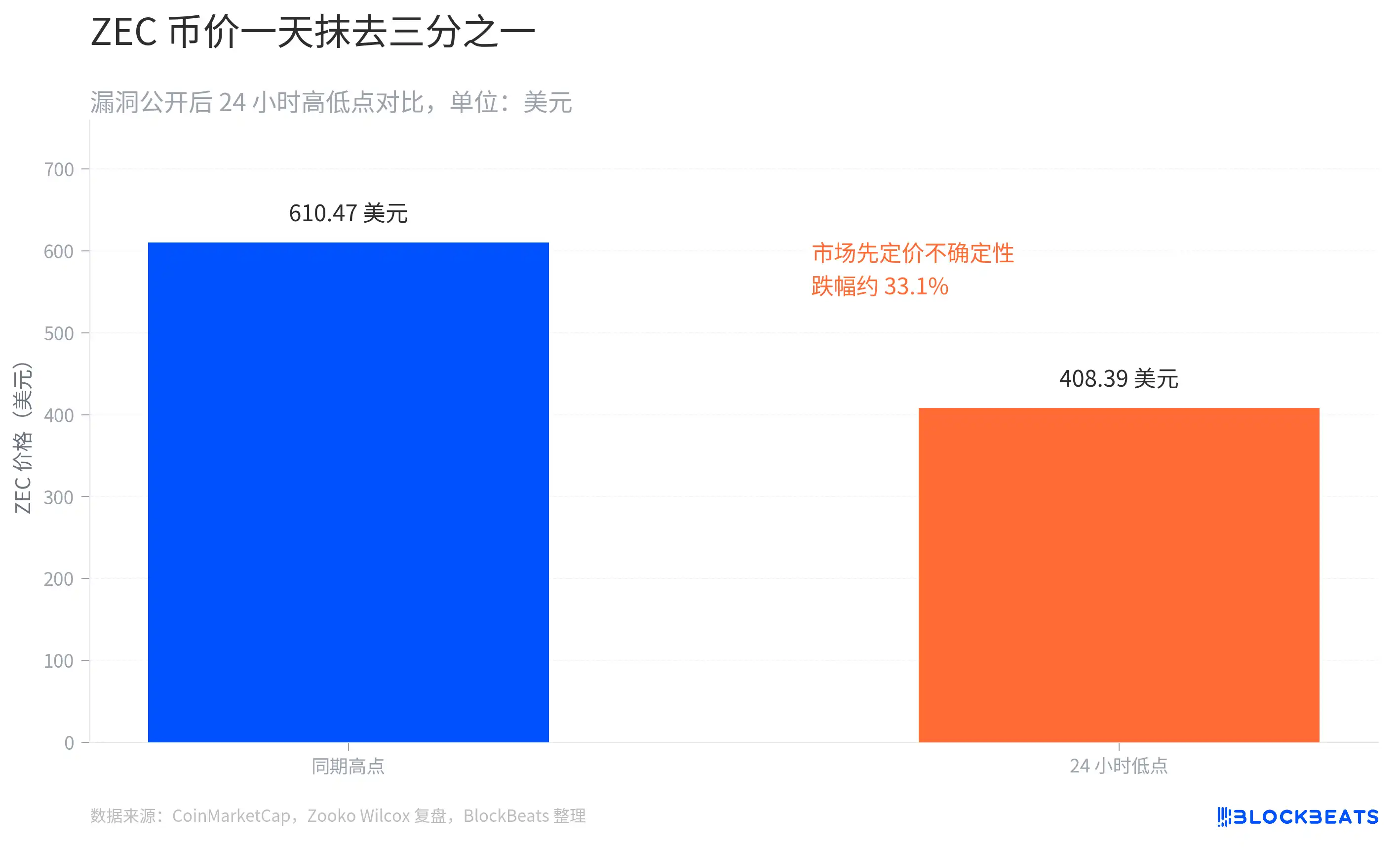
После публикации этой информации цена ZEC упала более чем на 30%. По данным CoinMarketCap, в течение 24 часов ZEC достиг минимума в 408,39 доллара, что примерно на треть ниже пика в 610,47 доллара в тот же период. К сожалению, это был один из немногих активов на крипторынке с отличным эффектом обогащения и хорошим нарративом, поддерживаемым многими авторитетными людьми, который теперь полностью разрушен этой уязвимостью.
Если смотреть только на результат, это похоже на очередную знакомую криптоаварию: обнаружена уязвимость, разработчики срочно исправляют, рынок впадает в панику.

Но настоящее затруднение в случае с Orchard заключается в том, что хотя уязвимость была исправлена, сообщество Zcash не может прямо ответить на другой, более чувствительный вопрос:

Мог ли кто-нибудь использовать эту уязвимость за последние четыре года?

Срочное исправление за четыре дня: Orchard временно приостановил работу

Orchard — это новейший протокол конфиденциальных платежей Zcash, запущенный в 2022 году, и один из основных пулов конфиденциальности, используемых Zcash в настоящее время. Пользователи могут скрывать балансы, суммы транзакций и направления движения средств, одновременно доказывая сети с помощью доказательств с нулевым разглашением, что транзакция соответствует правилам.

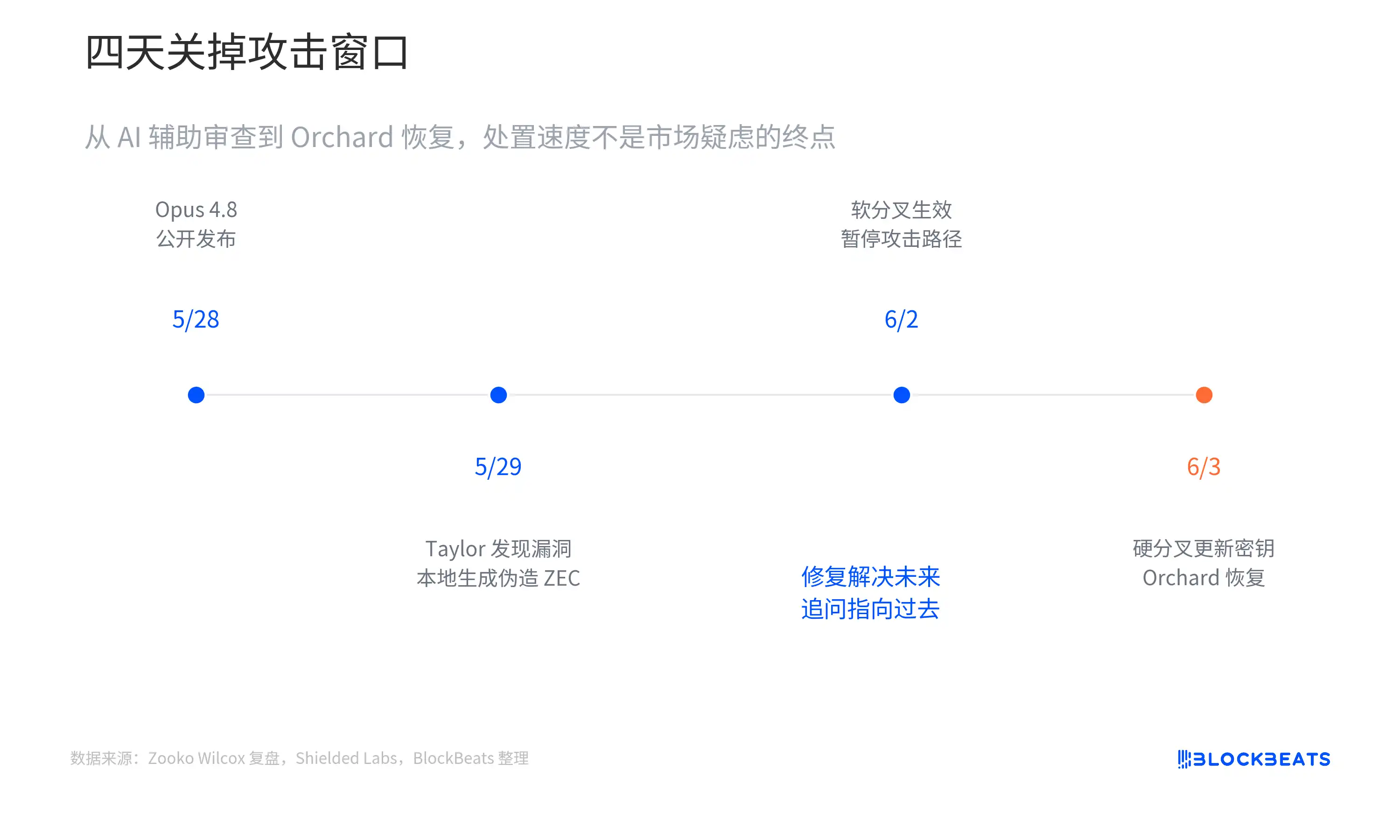
Согласно хронологии, раскрытой Зуко, Shielded Labs и сообществом Zcash, 29 мая Тейлор обнаружил аномалию при целевом аудите безопасности схемы Orchard и немедленно сообщил об уязвимости в частном порядке в Zcash Open Development Lab (ZODL). При этом Shielded Labs — это независимая организация поддержки экосистемы Zcash со штаб-квартирой в Швейцарии, работающая на пожертвования, долгое время участвующая в разработке протокола, обеспечении безопасности и устойчивости сети Zcash и не входящая в состав Zcash Foundation или ZODL.

Инженеры ZODL подтвердили реальность проблемы в течение нескольких часов после получения отчета и начали искать решение для исправления. Поскольку прямое публичное исправление кода могло раскрыть принцип уязвимости, команда сначала выбрала временное отключение Orchard: запрет на создание новых выходов Orchard, а также на расходование средств, уже находящихся в Orchard.

После координации обновлений между разработчиками, майнерами, операторами узлов, биржами и провайдерами инфраструктуры экстренный софт-форк вступил в силу 2 июня. Затем Zcash обновил верификационные ключи схемы Orchard через хард-форк и восстановил функциональность Orchard 3 июня. Прозрачные адреса и пул конфиденциальности Sapling могли продолжать работу в течение этого периода.

Весь процесс, от раскрытия уязвимости до завершения исправления, занял всего несколько дней. С точки зрения скорости реагирования на чрезвычайные ситуации, это уже довольно успешное решение.

Но рынок не успокоился после исправления уязвимости, потому что исправление решает будущее, а не прошлое.
Рынок беспокоится не о том, что атака все еще может произойти, а о том, что атака, возможно, уже произошла

Обычные инциденты безопасности обычно имеют относительно четкий масштаб ущерба. При краже из смарт-контракта можно отследить, сколько активов злоумышленник перевел; при появлении уязвимости в мосте можно подсчитать потоки средств и затронутые адреса.

Ситуация с Orchard иная.

Согласно разъяснениям Shielded Labs, эта уязвимость может быть использована для генерации неограниченного количества поддельного ZEC внутри Orchard, который невозможно обнаружить. Поскольку сам Orchard обладает свойствами конфиденциальности, внешние стороны не могут криптографическими методами точно доказать, использовал ли кто-либо этот вектор атаки до исправления уязвимости.

Это означает, что рынок столкнулся не с определенной цифрой ущерба, а с трудноизмеримой неопределенностью:

Если в прошлом действительно кто-то обнаружил и использовал уязвимость, существуют ли внутри Orchard поддельные ZEC? Если да, то каков их объем? Остаются ли эти активы в пуле конфиденциальности? Покидали ли они его когда-либо через обычные транзакции?

Что еще важнее, это окно риска появилось не 29 мая. Shielded Labs заявляет, что уязвимость существовала с момента запуска Orchard в мае 2022 года и до завершения экстренного исправления в июне 2026 года. Другими словами, проблема оставалась незамеченной почти четыре года.

Рынок действительно беспокоит не то, что произошло между 29 мая и 2 июня, а то, могло ли за последние четыре года произойти что-то ненормальное, что нельзя было наблюдать напрямую.

Это и является основной причиной падения ZEC более чем на 30%.

Рынок продает не просто уязвимость, а переоценку достоверности объема предложения.

Как упущение математического ограничения превратилось в риск «бесконечной эмиссии»

Увидев слова «уязвимость бесконечной эмиссии», первая мысль — что хакеры получили права администратора или какой-то бэкдор в протоколе.

В реальности все более фундаментально.

Безопасность Orchard зависит от схемы доказательств с нулевым разглашением (Orchard circuit). Пользователи могут скрывать конкретное содержимое транзакции, но должны доказать сети, что их транзакция соответствует правилам протокола. Самое важное из этих правил — сохранение стоимости (asset conservation): транзакция не может создавать новую стоимость из ничего.

Проще говоря, пользователь может не раскрывать, сколько ZEC у него есть или сколько ZEC он кому-то перевел, но сеть должна иметь возможность подтвердить:

Потраченные активы действительно поступили из законных входных данных.
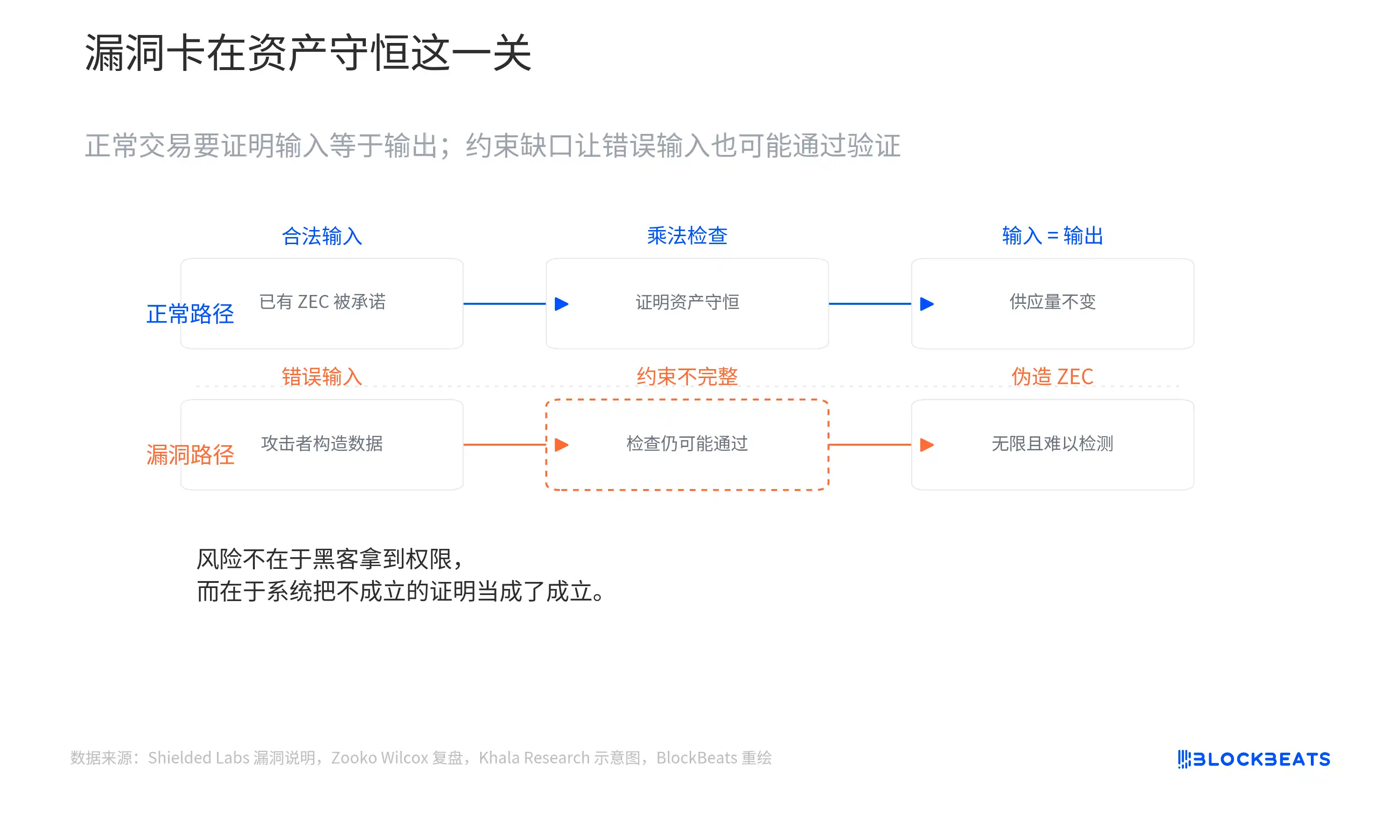
Проблема, обнаруженная Тейлором, возникла при проверке умножения на эллиптической кривой в схеме Orchard.

Shielded Labs описывает это как «under-constrained element» (недоограниченный элемент схемы). Поскольку соответствующие математические отношения не были полностью ограничены, злоумышленник может вводить произвольные ошибочные данные в процесс умножения на эллиптической кривой, но процесс проверки все равно может вернуть успешный результат.

Другими словами, злоумышленнику не нужно взламывать криптографические алгоритмы или контролировать сетевые узлы.

Им нужно лишь сконструировать набор данных, который не должен был бы быть верным, чтобы система ошибочно поверила, что транзакция по-прежнему удовлетворяет условию сохранения стоимости.

Когда это ошибочное доказательство принимается сетью, несуществующий ZEC может считаться законным активом и оставаться в Orchard.

Именно поэтому Shielded Labs использовала чрезвычайно резкую формулировку:

unlimited, undetectable counterfeit ZEC (неограниченный, необнаруживаемый поддельный ZEC)

Настоящая опасность не только в «неограниченности», но и в «невозможности обнаружения».

Между двумя формулировками существует важное различие

Zcash Foundation в своем объявлении после завершения обновления заявила, что в настоящее время нет доказательств использования уязвимости, необнаруженного несанкционированного создания стоимости, средства и конфиденциальность пользователей не затронуты. В объявлении также подчеркивается, что существующий механизм Turnstile Accounting в Zcash может отслеживать перемещение стоимости между различными пулами средств и защищать верхний предел общего предложения в 21 миллион ZEC.

В то же время Shielded Labs четко заявляет, что невозможно доказать лишь криптографическими методами, что в истории Orchard никогда не было поддельного ZEC.

Эти два утверждения кажутся противоречивыми, но на самом деле они касаются двух разных уровней проблемы.

Существующий Turnstile Accounting в Zcash можно понимать как «шлюз» между различными пулами средств. Система может подсчитывать, сколько всего законных активов поступило в Orchard, и ограничивать объем активов, которые могут покинуть Orchard.

Предположим, что в Orchard изначально было только 1 миллион законных ZEC. Тогда даже если злоумышленник подделал больше активов внутри, система не позволит выйти большему количеству активов, чем законный объем. Это позволяет избежать легкого превышения верхнего предела общего предложения всей сети Zcash.

Но этот механизм не может напрямую доказать, что внутри Orchard никогда не было поддельных монет.

Если поддельные активы все еще находятся в Orchard или постепенно заменяют реальные активы в пределах разрешенного лимита выхода, исходный статистический механизм может не дать окончательного исторического заключения.

Об этом почти старейшем криптопроекте конфиденциальности мы можем знать только, что в настоящее время нет доказательств аномальной эмиссии, но сообщество все еще не может напрямую доказать, что внутри Orchard никогда не существовало поддельных активов.

Именно этот тип риска труднее всего обработать рынку.

Проблема не в том, сколько поддельных монет уже обнаружено, а в том, что никто не может окончательно подтвердить, что поддельные монеты никогда не появлялись.

Как Zcash докажет заново, что в Orchard нет поддельных монет?

Исправление уязвимости — это только первый шаг.

Shielded Labs уже заявила, что совместно с другими разработчиками Zcash изучает новое предложение по обновлению сети. План включает развертывание нового пула конфиденциальности и принудительное применение Turnstile Accounting ко всем активам, мигрирующим из Orchard.

Это эквивалентно установке нового шлюза для миграции из Orchard.

Активы в старом Orchard, желающие перейти в новый пул конфиденциальности, должны будут пройти миграцию по проверяемым правилам. Система сможет пересчитать объем выходящих законных активов и определить, существуют ли дополнительные ZEC, которые не могут быть нормально перенесены.
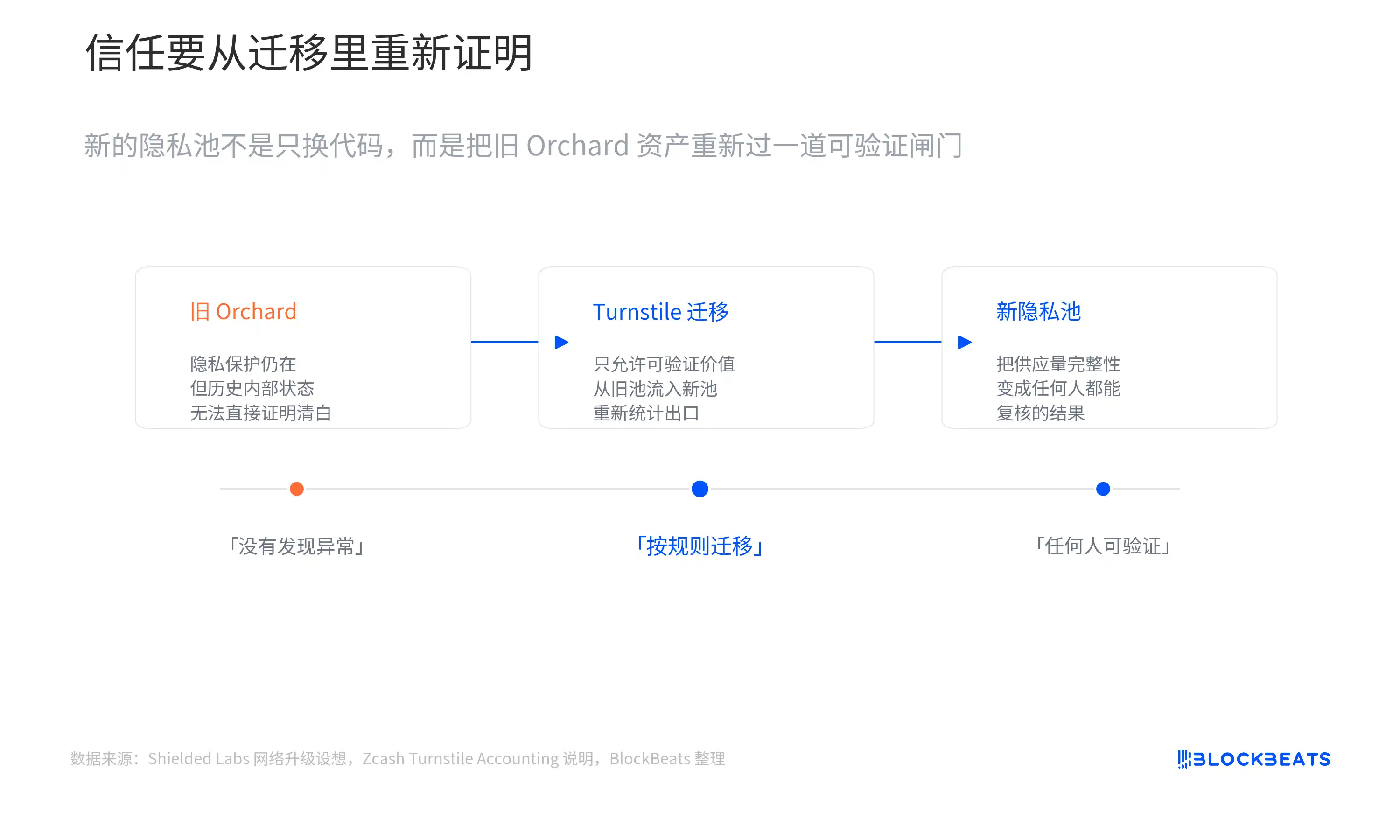
Если обновление успешно завершится, любой сможет проверить целостность предложения Zcash и далее доказать отсутствие поддельных активов в Orchard.

Значение этой схемы не только в исправлении кода, но и в восстановлении доверия рынка к Orchard.

Потому что в системе конфиденциальности доверие исходит не из «мы считаем, что атаки не было», а должно исходить из «любой может проверить, что атаки не было».

Shielded Labs сама признает, что вероятность злонамеренного использования ранее была низкой. Уязвимость оставалась скрытой годами, ее обнаружение было чрезвычайно сложным; Тейлор целенаправленно искал такие проблемы в рамках специального исследовательского проекта по безопасности; после раскрытия уязвимости экосистема быстро закрыла окно для атаки в течение нескольких дней.

Но Shielded Labs одновременно подчеркивает, что пользователи не должны полагаться лишь на субъективное суждение команды разработчиков.

Рынку нужны доказательства.

Почему уязвимость, скрывавшаяся четыре года, была обнаружена именно сейчас?

В деле Orchard есть еще одна деталь, которую рынок легко упускает из виду.

28 мая Anthropic выпустила Claude Opus 4.8.

Днем позже Тейлор обнаружил уязвимость в Orchard.

Согласно разборам Зуко и Shielded Labs, вскоре после выпуска Opus 4.8 Тейлор использовал ее для целенаправленного аудита схемы Orchard и 29 мая обнаружил проблему. Затем с помощью Opus 4.8 он написал полную программу эксплуатации, которая сгенерировала неограниченное количество необнаружимого поддельного ZEC в локальной среде.

Эта деталь заслуживает внимания не потому, что ИИ уже может самостоятельно проводить криптографический аудит.

Открытая информация не подтверждает такого преувеличенного вывода.

Сам Тейлор — опытный исследователь безопасности. Shielded Labs также упоминает, что он одновременно использовал традиционные методы исследования безопасности, индивидуальные инструментальные фреймворки на основе ИИ и специально разработанные промпты. Opus 4.8 был важным инструментом в процессе аудита, но не единственным фактором.

Что действительно примечательно, так это то, что Тейлор использовал не Claude Mythos Preview — модель от Anthropic, специально предназначенную для сценариев кибербезопасности с ограниченным доступом, а только что выпущенную публично универсальную модель Opus 4.8.

Позиционирование Anthropic для Mythos Preview — это передовая модель со значительными способностями к обнаружению и эксплуатации уязвимостей. Из-за рисков потенциального злоупотребления Anthropic не открыла эту модель напрямую для публики, а предоставила доступ через Project Glasswing отобранным партнерам.

В отличие от этого, Opus 4.8 — это универсальная модель, доступная обычным разработчикам. Anthropic в примечаниях к выпуску подчеркивает улучшения в анализе кода, выполнении сложных задач и выявлении дефектов в коде.

Это делает инцидент с Orchard сигналом, заслуживающим большего внимания:

Способность обнаруживать ценные уязвимости распространяется от небольшого количества специализированных моделей безопасности к универсальным моделям.

Универсальная модель, выпущенная публично всего за день, под руководством профессионального исследователя уже может участвовать в аудите сложной схемы доказательств с нулевым разглашением и помочь обнаружить ключевую уязвимость, скрывавшуюся почти четыре года.

Это не означает, что криптографы больше не важны.

Напротив, опыт Тейлора, выбор цели для аудита и способность проверять вывод модели остаются ключевыми во всем процессе.

Но комбинация эксперта и ИИ значительно снижает стоимость обнаружения сложных уязвимостей.

Уязвимость закрыта, но рынок все еще ждет ответа

Для Zcash самое срочное окно для атаки закрыто.

Функциональность Orchard восстановлена, схемы проверки обновлены, и в настоящее время нет доказательств злонамеренного использования уязвимости.

Но падение ZEC более чем на 30% показывает, что рынка заботит не только то, исправлен ли код.

Рынок все еще ждет более полного ответа:

Появлялись ли внутри Orchard поддельные ZEC за последние почти четыре года?

Если развертывание нового пула конфиденциальности и обновление Turnstile Accounting пройдут успешно, у сообщества наконец появится шанс доказать целостность предложения и восстановить доверие рынка.

Но до завершения этого доказательства в деле Orchard остается интрига, от которой нельзя легко отмахнуться:

Те поддельные ZEC, которые теоретически можно было создать в неограниченном количестве, действительно никогда не существовали или же они когда-то скрывались там, где никто не мог их напрямую увидеть?

Related Questions

QКакой уязвимости был подвержен Zcash и чем она опасна?

AВ протоколе конфиденциальности Orchard сети Zcash была обнаружена критическая уязвимость, связанная с некорректной реализацией проверки умножения на эллиптической кривой в схеме доказательств с нулевым разглашением (ZK-схеме). Эта уязвимость теоретически позволяла злоумышленнику создавать неограниченное количество поддельных монет ZEC внутри конфиденциального пула Orchard. Поскольку сам пул защищает конфиденциальность транзакций, факт создания таких монет невозможно было бы криптографически обнаружить извне.

QКак разработчики Zcash отреагировали на обнаружение уязвимости?

AПосле получения отчета от исследователя безопасности Тейлора Хорнби 29 мая, команда разработчиков ZODL подтвердила проблему в течение нескольких часов. Для предотвращения потенциальных атак они временно отключили пул Orchard, запретив создание новых выходов и расходование средств из него. В срочном порядке было согласовано и развернуто экстренное мягкое форковое обновление сети 2 июня, а 3 июня — хардфорк для обновления верификационных ключей схемы Orchard, после чего функциональность пула была восстановлена. Весь процесс занял несколько дней.

QПочему, несмотря на оперативное исправление, цена ZEC резко упала?

AОсновная причина падения цены ZEC более чем на 30% — это не сам факт уязвимости, а неопределенность, которую она породила. Уязвимость существовала с момента запуска Orchard в мае 2022 года. Из-за конфиденциального характера пула невозможно криптографически доказать, использовался ли этот эксплойт за прошедшие четыре года. Таким образом, рынок столкнулся с риском, который невозможно ни измерить, ни полностью опровергнуть — риском того, что в системе уже могут существовать неучтенные, поддельные ZEC. Это подрывает фундаментальное доверие к достоверности общего предложения монеты.

QКакую роль сыграл ИИ в обнаружении этой уязвимости?

AИсследователь безопасности Тейлор Хорнби использовал недавно выпущенную публичную языковую модель Anthropic Claude Opus 4.8 в качестве инструмента при целенаправленном аудите схемы Orchard. Модель помогла в анализе сложного кода схемы доказательств с нулевым разглашением. Важно отметить, что ИИ не действовал автономно: открытие стало результатом комбинации экспертных знаний исследователя, выбора цели для аудита, специализированных инструментов и правильно составленных промптов (запросов к модели). Этот случай сигнализирует о том, что возможности для обнаружения сложных уязвимостей начинают распространяться и на общедоступные модели, а не только на узкоспециализированные.

QКаковы дальнейшие планы Zcash для восстановления доверия рынка?

AДля полного восстановления доверия недостаточно просто исправить код. Разработчики, в частности Shielded Labs, работают над предложением по новому сетевому обновлению. План включает в себя развертывание нового конфиденциального пула и введение принудительного механизма Turnstile Accounting (учет по принципу турникета) для всех средств, мигрирующих из старого пула Orchard в новый. Это создаст контролируемый «шлюз», через который можно будет верифицировать, что из Orchard мигрирует только легитимный объем активов, и, следовательно, криптографически доказать, что внутри старого пула не существовало поддельных монет. Только такая публично проверяемая проверка целостности эмиссии может дать рынку окончательный ответ.

Related Reads

Near Returns to the AI Stage: Transformation into a Public Chain Due to 'Payroll Difficulties,' Agent and Privacy Emerge as New Growth Narratives

NEAR Returns to AI Origins: From Payroll Struggles to Blockchain, Now Focusing on AI Agents and Privacy NEAR Protocol's journey began not with grand blockchain ambitions, but from a practical hurdle: its AI startup founders, including Transformer paper co-author Illia Polosukhin, couldn't efficiently pay international developers in 2017. This led them to pivot and build a high-performance, scalable blockchain. After years navigating various crypto narratives like sharding and cross-chain interoperability, NEAR is now leveraging its AI roots to re-enter the AI arena. A key driver is its "NEAR Intents" layer, which abstracts complex cross-chain transactions. Users simply state their goal (e.g., swap BTC for ETH), and a solver network finds the optimal route. This system has processed over $20B in cross-chain volume, generating significant fee revenue. A major growth area is private transactions via "Confidential Intents/Swaps," which hide trade details until settlement to protect against MEV and front-running. Remarkably, private swaps recently accounted for over 40% of NEAR's transaction volume, highlighting strong demand but also potential regulatory scrutiny. With its AI-founder pedigree, NEAR is positioning itself at the intersection of blockchain, AI agents, and privacy, aiming to become infrastructure for the emerging agent economy while navigating the challenges of its rapid adoption.

marsbit37m ago

Near Returns to the AI Stage: Transformation into a Public Chain Due to 'Payroll Difficulties,' Agent and Privacy Emerge as New Growth Narratives

marsbit37m ago

From Ethereum to AI's 'CROPS': What Exactly is This Set of 'Slow Variables' That Vitalik Repeatedly Emphasizes?

In recent discussions, Vitalik Buterin has frequently emphasized the concept of "CROPS," a framework defining core values for Ethereum's development. CROPS stands for Censorship Resistance, Capture Resistance, Open Source, Privacy, and Security. Initially outlined in the Ethereum Foundation's "EF Mandate," it represents a commitment to user sovereignty, ensuring that the network resists external control, remains open, protects privacy, and prioritizes security. The relevance of CROPS extends beyond Ethereum's foundational principles, becoming crucial in the context of AI integration. As AI agents begin handling wallet operations and automated transactions, the risk increases that users may cede control over their digital assets, privacy, and intentions to centralized AI service providers. A "CROPS AI" would therefore emphasize local execution where possible, privacy-preserving remote model calls (e.g., using zero-knowledge proofs), and transparent, verifiable processes to maintain user agency. Vitalik highlights a significant convergence between "CROPS Ethereum access layer" and "CROPS AI." Both address the same fundamental challenge: how users can access powerful services—be it blockchain data via RPCs or AI models—without exposing sensitive information or relinquishing ultimate control. This intersection points toward a future digital entry point that is more private, secure, and user-controlled. Ultimately, CROPS is not merely an abstract ideal but a practical guidepost. It steers development—from protocol resilience and wallet design to AI agent safety—towards a future where users retain self-sovereignty even as digital systems grow more complex and powerful. In an era of accelerating AI adoption, these "slow variables" of censorship resistance, openness, privacy, and security may define Ethereum's enduring value.

marsbit48m ago

From Ethereum to AI's 'CROPS': What Exactly is This Set of 'Slow Variables' That Vitalik Repeatedly Emphasizes?

marsbit48m ago

Silicon Valley 'Startup Guru' Steve Hoffman: Web3 + AI Could Be a Trap

Silicon Valley investor and "Godfather of Startups" Steve Hoffman warns that combining Web3 with AI is likely a trap, not a promising venture. In an interview, Hoffman argues that while AI is a foundational technology touching all industries, Web3 adds complexity, friction, and regulatory risk without solving mainstream consumer or business needs. He advises founders to focus on deep, specialized applications where startups can out-iterate giants, rather than on generic features easily replicated by large tech companies. Hoffman observes that Silicon Valley will lead foundational AI research, while China excels at rapid, large-scale application and commercialization, particularly in robotics. He stresses that AI-driven autonomous agents capable of collaborative, multi-step tasks are 2-4 years away, which will cause significant job displacement. The solution is not to slow AI but to redesign business models around human-AI collaboration and reform social systems like education and retraining. For startups, Hoffman recommends focusing on vertical, expertise-heavy domains to build defensibility. He sees major opportunities in AI fraud detection and cybersecurity. Key founder mindsets include systemic thinking over feature-focus, relentless customer centricity, building adaptive teams, and deeply understanding AI's capabilities and limits. Hoffman is also leading a non-profit initiative to establish university centers aimed at training future leaders in responsible, human-value-aligned AI innovation.

marsbit2h ago

Silicon Valley 'Startup Guru' Steve Hoffman: Web3 + AI Could Be a Trap

marsbit2h ago

Token Inefficient, Economy Tokenless

The article "Tokens Aren't Economical, Economics Aren't Tokenized" analyzes a pivotal shift in the AI industry from a technology-driven narrative to one dominated by capital efficiency. It highlights two concurrent trends: a severe capital shortage due to the exorbitant and recurring costs of compute (e.g., OpenAI's high burn rate) and a wave of corporate spin-offs where major tech companies are separating their AI units (like Kuaishou's Kling and Baidu's Kunlunxin). The core argument is that AI's "anti-internet" business model, where user growth increases costs rather than profits, has created a disconnect between high valuations and actual cash flow. Spin-offs address this by allowing AI assets to be valued independently. Within a parent company, they are seen as cost centers, but as standalone entities, they are priced based on their growth potential and scarcity in the primary market, leading to massive valuation premiums (e.g., Kling's estimated value tripling post-spin-off). The industry is at an inflection point, moving from "model worship" to "value realization." The competition is evolving from a pure compute (GPU) race to a broader focus on systemic efficiency and full-stack engineering (involving CPUs and orchestration) to achieve viable commercialization. The year 2026 is framed as a critical moment where the industry must definitively answer how to economically translate AI capability into tangible business value, reshaping the sector's future power structure.

marsbit2h ago

Token Inefficient, Economy Tokenless

marsbit2h ago

Trading

Spot
Futures

Hot Articles

What is SONIC

Sonic: Pioneering the Future of Gaming in Web3 Introduction to Sonic In the ever-evolving landscape of Web3, the gaming industry stands out as one of the most dynamic and promising sectors. At the forefront of this revolution is Sonic, a project designed to amplify the gaming ecosystem on the Solana blockchain. Leveraging cutting-edge technology, Sonic aims to deliver an unparalleled gaming experience by efficiently processing millions of requests per second, ensuring that players enjoy seamless gameplay while maintaining low transaction costs. This article delves into the intricate details of Sonic, exploring its creators, funding sources, operational mechanics, and the timeline of significant events that have shaped its journey. What is Sonic? Sonic is an innovative layer-2 network that operates atop the Solana blockchain, specifically tailored to enhance the existing Solana gaming ecosystem. It accomplishes this through a customised, VM-agnostic game engine paired with a HyperGrid interpreter, facilitating sovereign game economies that roll up back to the Solana platform. The primary goals of Sonic include: Enhanced Gaming Experiences: Sonic is committed to offering lightning-fast on-chain gameplay, allowing players and developers to engage with games at previously unattainable speeds. Atomic Interoperability: This feature enables transactions to be executed within Sonic without the need to redeploy Solana programmes and accounts. This makes the process more efficient and directly benefits from Solana Layer1 services and liquidity. Seamless Deployment: Sonic allows developers to write for Ethereum Virtual Machine (EVM) based systems and execute them on Solana’s SVM infrastructure. This interoperability is crucial for attracting a broader range of dApps and decentralised applications to the platform. Support for Developers: By offering native composable gaming primitives and extensible data types - dining within the Entity-Component-System (ECS) framework - game creators can craft intricate business logic with ease. Overall, Sonic's unique approach not only caters to players but also provides an accessible and low-cost environment for developers to innovate and thrive. Creator of Sonic The information regarding the creator of Sonic is somewhat ambiguous. However, it is known that Sonic's SVM is owned by the company Mirror World. The absence of detailed information about the individuals behind Sonic reflects a common trend in several Web3 projects, where collective efforts and partnerships often overshadow individual contributions. Investors of Sonic Sonic has garnered considerable attention and support from various investors within the crypto and gaming sectors. Notably, the project raised an impressive $12 million during its Series A funding round. The round was led by BITKRAFT Ventures, with other notable investors including Galaxy, Okx Ventures, Interactive, Big Brain Holdings, and Mirana. This financial backing signifies the confidence that investment foundations have in Sonic’s potential to revolutionise the Web3 gaming landscape, further validating its innovative approaches and technologies. How Does Sonic Work? Sonic utilises the HyperGrid framework, a sophisticated parallel processing mechanism that enhances its scalability and customisability. Here are the core features that set Sonic apart: Lightning Speed at Low Costs: Sonic offers one of the fastest on-chain gaming experiences compared to other Layer-1 solutions, powered by the scalability of Solana’s virtual machine (SVM). Atomic Interoperability: Sonic enables transaction execution without redeployment of Solana programmes and accounts, effectively streamlining the interaction between users and the blockchain. EVM Compatibility: Developers can effortlessly migrate decentralised applications from EVM chains to the Solana environment using Sonic’s HyperGrid interpreter, increasing the accessibility and integration of various dApps. Ecosystem Support for Developers: By exposing native composable gaming primitives, Sonic facilitates a sandbox-like environment where developers can experiment and implement business logic, greatly enhancing the overall development experience. Monetisation Infrastructure: Sonic natively supports growth and monetisation efforts, providing frameworks for traffic generation, payments, and settlements, thereby ensuring that gaming projects are not only viable but also sustainable financially. Timeline of Sonic The evolution of Sonic has been marked by several key milestones. Below is a brief timeline highlighting critical events in the project's history: 2022: The Sonic cryptocurrency was officially launched, marking the beginning of its journey in the Web3 gaming arena. 2024: June: Sonic SVM successfully raised $12 million in a Series A funding round. This investment allowed Sonic to further develop its platform and expand its offerings. August: The launch of the Sonic Odyssey testnet provided users with the first opportunity to engage with the platform, offering interactive activities such as collecting rings—a nod to gaming nostalgia. October: SonicX, an innovative crypto game integrated with Solana, made its debut on TikTok, capturing the attention of over 120,000 users within a short span. This integration illustrated Sonic’s commitment to reaching a broader, global audience and showcased the potential of blockchain gaming. Key Points Sonic SVM is a revolutionary layer-2 network on Solana explicitly designed to enhance the GameFi landscape, demonstrating great potential for future development. HyperGrid Framework empowers Sonic by introducing horizontal scaling capabilities, ensuring that the network can handle the demands of Web3 gaming. Integration with Social Platforms: The successful launch of SonicX on TikTok displays Sonic’s strategy to leverage social media platforms to engage users, exponentially increasing the exposure and reach of its projects. Investment Confidence: The substantial funding from BITKRAFT Ventures, among others, emphasizes the robust backing Sonic has, paving the way for its ambitious future. In conclusion, Sonic encapsulates the essence of Web3 gaming innovation, striking a balance between cutting-edge technology, developer-centric tools, and community engagement. As the project continues to evolve, it is poised to redefine the gaming landscape, making it a notable entity for gamers and developers alike. As Sonic moves forward, it will undoubtedly attract greater interest and participation, solidifying its place within the broader narrative of blockchain gaming.

1.6k Total ViewsPublished 2024.04.04Updated 2024.12.03

What is SONIC

What is $S$

Understanding SPERO: A Comprehensive Overview Introduction to SPERO As the landscape of innovation continues to evolve, the emergence of web3 technologies and cryptocurrency projects plays a pivotal role in shaping the digital future. One project that has garnered attention in this dynamic field is SPERO, denoted as SPERO,$$s$. This article aims to gather and present detailed information about SPERO, to help enthusiasts and investors understand its foundations, objectives, and innovations within the web3 and crypto domains. What is SPERO,$$s$? SPERO,$$s$ is a unique project within the crypto space that seeks to leverage the principles of decentralisation and blockchain technology to create an ecosystem that promotes engagement, utility, and financial inclusion. The project is tailored to facilitate peer-to-peer interactions in new ways, providing users with innovative financial solutions and services. At its core, SPERO,$$s$ aims to empower individuals by providing tools and platforms that enhance user experience in the cryptocurrency space. This includes enabling more flexible transaction methods, fostering community-driven initiatives, and creating pathways for financial opportunities through decentralised applications (dApps). The underlying vision of SPERO,$$s$ revolves around inclusiveness, aiming to bridge gaps within traditional finance while harnessing the benefits of blockchain technology. Who is the Creator of SPERO,$$s$? The identity of the creator of SPERO,$$s$ remains somewhat obscure, as there are limited publicly available resources providing detailed background information on its founder(s). This lack of transparency can stem from the project's commitment to decentralisation—an ethos that many web3 projects share, prioritising collective contributions over individual recognition. By centring discussions around the community and its collective goals, SPERO,$$s$ embodies the essence of empowerment without singling out specific individuals. As such, understanding the ethos and mission of SPERO remains more important than identifying a singular creator. Who are the Investors of SPERO,$$s$? SPERO,$$s$ is supported by a diverse array of investors ranging from venture capitalists to angel investors dedicated to fostering innovation in the crypto sector. The focus of these investors generally aligns with SPERO's mission—prioritising projects that promise societal technological advancement, financial inclusivity, and decentralised governance. These investor foundations are typically interested in projects that not only offer innovative products but also contribute positively to the blockchain community and its ecosystems. The backing from these investors reinforces SPERO,$$s$ as a noteworthy contender in the rapidly evolving domain of crypto projects. How Does SPERO,$$s$ Work? SPERO,$$s$ employs a multi-faceted framework that distinguishes it from conventional cryptocurrency projects. Here are some of the key features that underline its uniqueness and innovation: Decentralised Governance: SPERO,$$s$ integrates decentralised governance models, empowering users to participate actively in decision-making processes regarding the project’s future. This approach fosters a sense of ownership and accountability among community members. Token Utility: SPERO,$$s$ utilises its own cryptocurrency token, designed to serve various functions within the ecosystem. These tokens enable transactions, rewards, and the facilitation of services offered on the platform, enhancing overall engagement and utility. Layered Architecture: The technical architecture of SPERO,$$s$ supports modularity and scalability, allowing for seamless integration of additional features and applications as the project evolves. This adaptability is paramount for sustaining relevance in the ever-changing crypto landscape. Community Engagement: The project emphasises community-driven initiatives, employing mechanisms that incentivise collaboration and feedback. By nurturing a strong community, SPERO,$$s$ can better address user needs and adapt to market trends. Focus on Inclusion: By offering low transaction fees and user-friendly interfaces, SPERO,$$s$ aims to attract a diverse user base, including individuals who may not previously have engaged in the crypto space. This commitment to inclusion aligns with its overarching mission of empowerment through accessibility. Timeline of SPERO,$$s$ Understanding a project's history provides crucial insights into its development trajectory and milestones. Below is a suggested timeline mapping significant events in the evolution of SPERO,$$s$: Conceptualisation and Ideation Phase: The initial ideas forming the basis of SPERO,$$s$ were conceived, aligning closely with the principles of decentralisation and community focus within the blockchain industry. Launch of Project Whitepaper: Following the conceptual phase, a comprehensive whitepaper detailing the vision, goals, and technological infrastructure of SPERO,$$s$ was released to garner community interest and feedback. Community Building and Early Engagements: Active outreach efforts were made to build a community of early adopters and potential investors, facilitating discussions around the project’s goals and garnering support. Token Generation Event: SPERO,$$s$ conducted a token generation event (TGE) to distribute its native tokens to early supporters and establish initial liquidity within the ecosystem. Launch of Initial dApp: The first decentralised application (dApp) associated with SPERO,$$s$ went live, allowing users to engage with the platform's core functionalities. Ongoing Development and Partnerships: Continuous updates and enhancements to the project's offerings, including strategic partnerships with other players in the blockchain space, have shaped SPERO,$$s$ into a competitive and evolving player in the crypto market. Conclusion SPERO,$$s$ stands as a testament to the potential of web3 and cryptocurrency to revolutionise financial systems and empower individuals. With a commitment to decentralised governance, community engagement, and innovatively designed functionalities, it paves the way toward a more inclusive financial landscape. As with any investment in the rapidly evolving crypto space, potential investors and users are encouraged to research thoroughly and engage thoughtfully with the ongoing developments within SPERO,$$s$. The project showcases the innovative spirit of the crypto industry, inviting further exploration into its myriad possibilities. While the journey of SPERO,$$s$ is still unfolding, its foundational principles may indeed influence the future of how we interact with technology, finance, and each other in interconnected digital ecosystems.

54 Total ViewsPublished 2024.12.17Updated 2024.12.17

What is $S$

What is AGENT S

Agent S: The Future of Autonomous Interaction in Web3 Introduction In the ever-evolving landscape of Web3 and cryptocurrency, innovations are constantly redefining how individuals interact with digital platforms. One such pioneering project, Agent S, promises to revolutionise human-computer interaction through its open agentic framework. By paving the way for autonomous interactions, Agent S aims to simplify complex tasks, offering transformative applications in artificial intelligence (AI). This detailed exploration will delve into the project's intricacies, its unique features, and the implications for the cryptocurrency domain. What is Agent S? Agent S stands as a groundbreaking open agentic framework, specifically designed to tackle three fundamental challenges in the automation of computer tasks: Acquiring Domain-Specific Knowledge: The framework intelligently learns from various external knowledge sources and internal experiences. This dual approach empowers it to build a rich repository of domain-specific knowledge, enhancing its performance in task execution. Planning Over Long Task Horizons: Agent S employs experience-augmented hierarchical planning, a strategic approach that facilitates efficient breakdown and execution of intricate tasks. This feature significantly enhances its ability to manage multiple subtasks efficiently and effectively. Handling Dynamic, Non-Uniform Interfaces: The project introduces the Agent-Computer Interface (ACI), an innovative solution that enhances the interaction between agents and users. Utilizing Multimodal Large Language Models (MLLMs), Agent S can navigate and manipulate diverse graphical user interfaces seamlessly. Through these pioneering features, Agent S provides a robust framework that addresses the complexities involved in automating human interaction with machines, setting the stage for myriad applications in AI and beyond. Who is the Creator of Agent S? While the concept of Agent S is fundamentally innovative, specific information about its creator remains elusive. The creator is currently unknown, which highlights either the nascent stage of the project or the strategic choice to keep founding members under wraps. Regardless of anonymity, the focus remains on the framework's capabilities and potential. Who are the Investors of Agent S? As Agent S is relatively new in the cryptographic ecosystem, detailed information regarding its investors and financial backers is not explicitly documented. The lack of publicly available insights into the investment foundations or organisations supporting the project raises questions about its funding structure and development roadmap. Understanding the backing is crucial for gauging the project's sustainability and potential market impact. How Does Agent S Work? At the core of Agent S lies cutting-edge technology that enables it to function effectively in diverse settings. Its operational model is built around several key features: Human-like Computer Interaction: The framework offers advanced AI planning, striving to make interactions with computers more intuitive. By mimicking human behaviour in tasks execution, it promises to elevate user experiences. Narrative Memory: Employed to leverage high-level experiences, Agent S utilises narrative memory to keep track of task histories, thereby enhancing its decision-making processes. Episodic Memory: This feature provides users with step-by-step guidance, allowing the framework to offer contextual support as tasks unfold. Support for OpenACI: With the ability to run locally, Agent S allows users to maintain control over their interactions and workflows, aligning with the decentralised ethos of Web3. Easy Integration with External APIs: Its versatility and compatibility with various AI platforms ensure that Agent S can fit seamlessly into existing technological ecosystems, making it an appealing choice for developers and organisations. These functionalities collectively contribute to Agent S's unique position within the crypto space, as it automates complex, multi-step tasks with minimal human intervention. As the project evolves, its potential applications in Web3 could redefine how digital interactions unfold. Timeline of Agent S The development and milestones of Agent S can be encapsulated in a timeline that highlights its significant events: September 27, 2024: The concept of Agent S was launched in a comprehensive research paper titled “An Open Agentic Framework that Uses Computers Like a Human,” showcasing the groundwork for the project. October 10, 2024: The research paper was made publicly available on arXiv, offering an in-depth exploration of the framework and its performance evaluation based on the OSWorld benchmark. October 12, 2024: A video presentation was released, providing a visual insight into the capabilities and features of Agent S, further engaging potential users and investors. These markers in the timeline not only illustrate the progress of Agent S but also indicate its commitment to transparency and community engagement. Key Points About Agent S As the Agent S framework continues to evolve, several key attributes stand out, underscoring its innovative nature and potential: Innovative Framework: Designed to provide an intuitive use of computers akin to human interaction, Agent S brings a novel approach to task automation. Autonomous Interaction: The ability to interact autonomously with computers through GUI signifies a leap towards more intelligent and efficient computing solutions. Complex Task Automation: With its robust methodology, it can automate complex, multi-step tasks, making processes faster and less error-prone. Continuous Improvement: The learning mechanisms enable Agent S to improve from past experiences, continually enhancing its performance and efficacy. Versatility: Its adaptability across different operating environments like OSWorld and WindowsAgentArena ensures that it can serve a broad range of applications. As Agent S positions itself in the Web3 and crypto landscape, its potential to enhance interaction capabilities and automate processes signifies a significant advancement in AI technologies. Through its innovative framework, Agent S exemplifies the future of digital interactions, promising a more seamless and efficient experience for users across various industries. Conclusion Agent S represents a bold leap forward in the marriage of AI and Web3, with the capacity to redefine how we interact with technology. While still in its early stages, the possibilities for its application are vast and compelling. Through its comprehensive framework addressing critical challenges, Agent S aims to bring autonomous interactions to the forefront of the digital experience. As we move deeper into the realms of cryptocurrency and decentralisation, projects like Agent S will undoubtedly play a crucial role in shaping the future of technology and human-computer collaboration.

713 Total ViewsPublished 2025.01.14Updated 2025.01.14

What is AGENT S

Discussions

Welcome to the HTX Community. Here, you can stay informed about the latest platform developments and gain access to professional market insights. Users' opinions on the price of S (S) are presented below.

活动图片