CEO Bit Digital: Почему я купил больше ETH

链捕手Published on 2026-05-29Last updated on 2026-05-29

Abstract

Автор, CEO Bit Digital, объясняет, почему он приобрел дополнительное количество ETH. Он подчеркивает, что его решение основано не на рыночных циклах или нарративах, а на анализе данных, выявившем неверную оценку актива. По его мнению, распространенная концепция «ETH как деньги» ошибочна, так как Ethereum, в отличие от Bitcoin, выбрал путь утилитарности, создав программируемый слой расчета, на котором активно строятся реальные финансовые продукты. Критики указывают на фрагментацию экосистемы, но автор отмечает, что институциональный капитал уже использует Ethereum как надежный расчетный слой для выпуска стейблкоинов, токенизации казначейских облигаций США и расчетов для AI-агентов. Он видит ценность Ethereum в комбинации вычислительного уровня (через WhiteFiber) и расчетного рельса (ETH), что является основой для перевода институциональных финансов в блокчейн. Автор считает, что многие ошибаются во времени, ожидая роста от розничных нарративов. Настоящим катализатором переоценки будет институциональный спрос, который активизируется по мере создания регулируемых рамок, инфраструктуры хранения и стабильного регулирования. Он рассматривает ETH как актив, генерирующий доход (приводя в пример 94,7% валовой маржи от стейкинга в первом квартале), который обеспечивает безопасность ведущей платформы смарт-контрактов, обрабатывающей триллионы долларов. Текущая цена, по его мнению, не отражает реальную ценность базовой инфраструктуры, что и является причиной для покупки и долгосрочного...

Автор:Sam Tabar

Перевод:Джэ Хуань,ChainCatcher

Я купил больше ETH.

Не из-за рыночного цикла и не из-за нарратива. Я проанализировал данные, изучил этот актив и пришел к выводу, что он недооценен. Когда я вижу ошибку в оценке, я действую.

Но это решение заслуживает не просто твита. Возникающие в связи с ним вопросы заслуживают честного обсуждения.

Рассматривать его как «валюту» — ошибка

Тезис «ETH — это валюта» представляет собой самую грандиозную перспективу будущего Ethereum. Понимаю его привлекательность. Деньги — это игра на координацию, требующая чрезвычайно мощного и устойчивого консенсуса веры, достаточно мощного для самореализации.

Биткоин участвует в этой игре, и чтобы победить, он избавился от всех остальных атрибутов.

Ethereum, напротив, выбрал практичность.

Этот выбор означает, что ETH не может выиграть игру координации валют, как это делает биткоин. Но это также означает, что Ethereum создал нечто, о чем Биткоин никогда и не помышлял: программируемый расчетный слой, на котором сегодня активно строится весь мир.

Это совершенно другой актив с другой ценностной предложением. Измерять его логикой денег и называть это провалом — все равно что оценивать железную дорогу по её пригодности в качестве качественной валюты.

Ценность уже реализована

Чаще всего я слышу критику о том, что проблемы координации между базовым уровнем Ethereum, L2, разработчиками и рынком привели к фрагментации экосистемы, лишив ETH его звёздного часа.

В этом есть доля правды. Однако институциональному капиталу не нужно, чтобы Ethereum выигрывал нарративные войны. Ему нужен надежный, проверенный в боях, программируемый расчетный слой. Стейблкоины выпускаются на Ethereum. Казначейские обязательства США токенизируются на Ethereum. Транзакции AI-агентов начинают обрабатываться на Ethereum.

Всё это не требует ожидания нарративного консенсуса. Это уже происходит.

Когда я решил строить вокруг Ethereum, моя логика была предельно простой: WhiteFiber предоставляет нам вычислительный уровень. ETH обеспечивает расчетную инфраструктуру. Вычисления и расчеты — это два ключевых элемента, необходимых для перехода институциональных финансов в ончейн.

На сегодняшний день Ethereum — единственное место, где оба эти элемента существуют и достигли масштаба одновременно.

История, возможно, всё ещё пишется. Но рельсы уже введены в эксплуатацию.

Ошибка не в ставке, а во времени

Многие, взглянув на цену ETH за последние два года, заявляют, что эта сделка завершена. Я считаю, что они ориентируются не на тот катализатор.

Переоценка стоимости никогда не произойдет из-за того, что розничные инвесторы гонятся за модными нарративами. Для актива с такой обширной базовой инфраструктурой это всегда будет хрупким фундаментом. Истинный катализатор — это институциональный спрос, и он не работает по графику крипто-твиттера.

Он сработает только тогда, когда будут готовы нормативные рамки, когда появятся реальные решения для хранения активов и когда регуляторная среда станет достаточно стабильной для подписания главного финансового директора.

Этот момент гораздо ближе, чем отражено в текущей цене.

Почему я купил

Я хочу быть предельно ясным. Я владею ETH, потому что у меня есть фидуциарная ответственность — принимать разумные решения по распределению капитала, и при той цене, по которой я купил, ETH соответствует этому стандарту.

Оставим нарративы в стороне. Суть этого актива в том, что он приносит доход. В первом квартале наша операция по стейкингу показала валовую прибыль в 94,7%. Это бизнес, а не просто видение.

Он обеспечивает безопасность ведущей в мире платформы смарт-контрактов, которая в прошлом году обработала транзакции на триллионы долларов и с каждым кварталом увеличивает институциональный объем торгов. И, по моему мнению, он торгуется со значительной скидкой по сравнению с реальной стоимостью инфраструктуры, которую он поддерживает.

Мне не нужно, чтобы ETH стал мировой резервной валютой, чтобы владеть им. Мне достаточно, чтобы он оставался таким, какой он есть, и продолжал делать то, что делает сейчас.

Этого достаточно, чтобы я купил его. И этого же достаточно, чтобы я продолжил держать его.
Related Reads

After Marvell's 32% Surge, the Chinese Chip Family Behind It Emerges

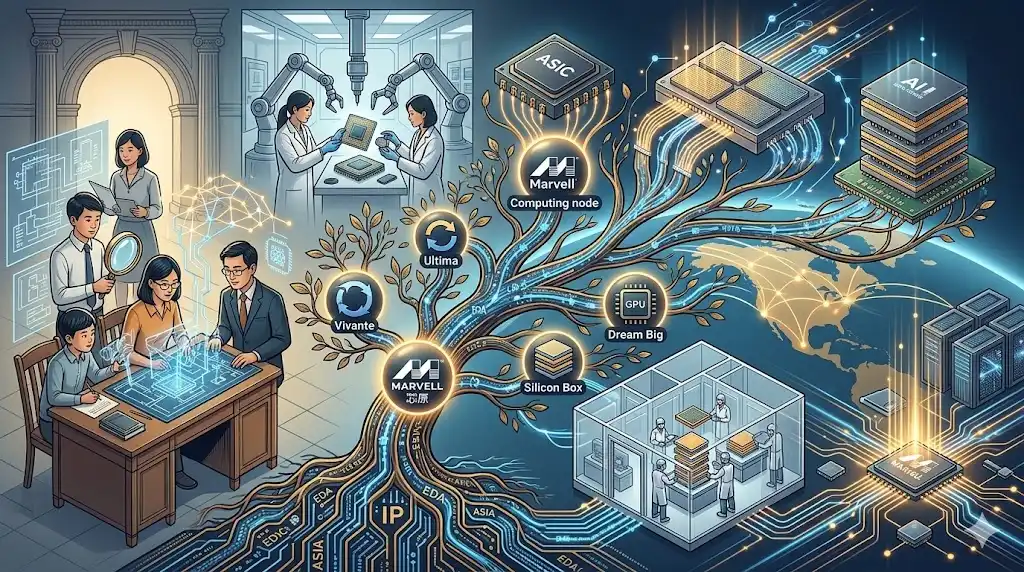
The stock price of Marvell Technology surged 32.5% on June 2nd, driven by NVIDIA CEO Jensen Huang highlighting its custom ASICs and optical interconnects as core to AI data center architecture. This event brought attention to the Chinese semiconductor family behind Marvell: the Dai siblings. The story centers on three siblings, all UC Berkeley graduates, whose three-decade entrepreneurial journey aligns with major semiconductor industry shifts. In 1995, youngest sister Dai Wei Li co-founded Marvell with her husband Sehat Sutardja and his brother, focusing on storage controllers. Eldest brother Dai Wei Min founded EDA company Ultima, later sold to Cadence, and later founded VeriSilicon (芯原) in China, becoming a leading semiconductor IP provider. Second brother Dai Wei Jin co-founded EDA firm Silicon Perspective (sold to Cadence) and GPU IP company Vivante, later acquired by VeriSilicon. The combined "Dai-Sutardja" family network extends beyond Marvell. Their ventures and investments form a comprehensive ecosystem for the post-Moore's Law, chiplet era. Key holdings include: Dream Big Semiconductor (AI SuperNICs, acquired by Arm), Alphawave (high-speed SerDes IP, acquired by Qualcomm), and Silicon Box (a chiplet advanced packaging foundry). VeriSilicon itself thrives on the AI ASIC and IP boom in China. Collectively, the family's AI infrastructure-related portfolio is estimated at over $22 billion. Their strategy represents a distinct path: building critical components for open standards and key manufacturing capacity in the chiplet era, rather than pursuing standalone AI chip dominance. While this path may not create the next NVIDIA, it has enabled repeated successful exits and sustained influence within the global semiconductor industry.

marsbit40m ago

After Marvell's 32% Surge, the Chinese Chip Family Behind It Emerges

marsbit40m ago

Microsoft is Afraid of Being Marginalized by AI Giants

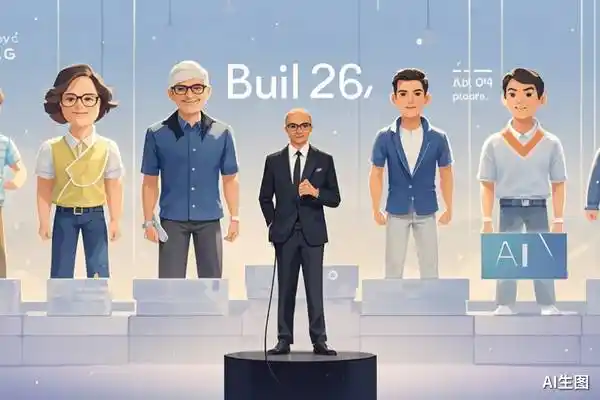
Microsoft, once the defining force of the PC era, now faces a familiar challenge in the AI age: the risk of being relegated to a profitable but invisible infrastructure provider. This anxiety was laid bare at Build 2026, where CEO Satya Nadella unveiled a major strategic pivot. The catalyst was a quiet April agreement that dissolved Microsoft's exclusive licensing and cloud-hosting deal with OpenAI, its once-vital partner. This erased Microsoft's key AI moat. With OpenAI and Anthropic defining AI applications and gaining enterprise traction—even within Microsoft's own ranks—Nadella had to answer: without exclusivity, what is Microsoft's role? The answer was a suite of seven in-house AI models, a developer-focused AI workstation (Surface RTX Spark Dev Box), and, most crucially, the Agent 365 platform for enterprise AI governance. The models, notably targeting Anthropic's strengths in coding and enterprise, signal a defensive move. However, the broader strategy is to make the models themselves less decisive. Financially, Microsoft's AI revenue is strong, driven largely by Azure running others' models. Yet its user-facing products like Copilot show weak penetration and engagement. Microsoft earns infrastructure money but lacks direct user mindshare. Nadella's core fear is being "hollowed out." As OpenAI and Anthropic prepare for IPOs and gain financial independence, they may build their own infrastructure, threatening Azure's lucrative AI revenue stream. Microsoft's window is to entrench itself deeper: not as the model creator, but as the indispensable platform for securely deploying, managing, and governing all AI models within the enterprise through Agent 365. Build 2026 revealed Microsoft's bet: in the AI era, the ultimate power lies not in any single model, but in the enterprise "operating system" that controls them. Nadella is determined to ensure Microsoft is the driver of this new era, not just a passenger.

marsbit53m ago

Microsoft is Afraid of Being Marginalized by AI Giants

marsbit53m ago

CPU, Quietly Returning to the Center of the AI Computing Power Stage

Over the past three years, AI computing power narratives have been dominated by GPUs. However, starting in 2026, this story began to shift. While training large models remains GPU-intensive, the rapid growth of inference and AI agent workloads, which require high levels of task orchestration, concurrency, and data flow management, has highlighted a renewed critical role for CPUs. These are tasks GPUs are not designed to handle. Intel's recent launch of the Xeon 6+ processor, built on its Intel 18A process and featuring up to 288 efficiency cores (E-cores), exemplifies this strategic pivot. It is positioned not as a mere companion to GPUs but as the essential "control plane" for AI infrastructure, optimized for high-density, energy-efficient, and high-throughput workloads characteristic of AI agents and inference. This "CPU resurgence" is not about CPUs outperforming GPUs in raw computation. It reflects a systemic bottleneck: as AI scales from training single models to deploying countless intelligent agents, the demand for coordination and data handling surges. Major cloud providers are also developing their own high-density ARM-based server CPUs for similar workloads. However, Intel's success with this strategy faces significant challenges. Competition includes NVIDIA's integrated CPU-GPU solutions, the expanding adoption of cloud vendors' in-house ARM CPUs, and the crucial market test of Intel's 18A manufacturing process against rivals like TSMC's N2. In conclusion, CPUs are indeed reclaiming a central, though redefined, role in AI compute—managing the complex orchestration that enables massive-scale AI deployment. While the trend is clear, which company will ultimately lead this CPU resurgence remains an open question to be decided in the data centers of 2027 and beyond.

marsbit1h ago

CPU, Quietly Returning to the Center of the AI Computing Power Stage

marsbit1h ago

Trading

Spot
Futures

Hot Articles

Discussions

Welcome to the HTX Community. Here, you can stay informed about the latest platform developments and gain access to professional market insights. Users' opinions on the price of ETH (ETH) are presented below.

活动图片