Musk "Bắt đầu lấy tiền từ ông già"

marsbitPublished on 2026-05-28Last updated on 2026-05-28

Abstract

Elon Musk đang tăng tốc trở thành tỷ phú nghìn tỷ đầu tiên thế giới nhờ vụ IPO khổng lồ sắp tới của SpaceX, với định giá ước tính lên tới 1,75-2 nghìn tỷ USD. Các nhà đầu tư ban đầu như Google, Founders Fund hưởng lợi nhuận khổng lồ, lên tới hàng trăm tỷ USD. Tuy nhiên, SpaceX vẫn là công ty đốt tiền mạnh, thua lỗ nặng và có cấu trúc quản trị tập trung quyền lực tuyệt đối vào tay Musk. Câu hỏi lớn là ai sẽ mua cổ phiếu ở mức định giá cao ngất này. Câu trả lời có thể là quỹ hưu trí Mỹ. Các chỉ số chứng khoán như Nasdaq 100 và S&P 500 đang sửa quy định để đưa SpaceX vào nhanh chóng sau IPO. Các quỹ chỉ số thụ động (ETF) quản lý hàng nghìn tỷ đô la, bao gồm tiền tiết kiệm hưu trí 401(k), sẽ buộc phải mua SpaceX theo tỷ trọng chỉ số mà không cần phân tích định giá. Điều này khiến khoản tiết kiệm hưu trí của hàng triệu người Mỹ bình thường trở thành "nhiên liệu" cho giấc mơ không gian của Musk, dẫn đến lo ngại về rủi ro. Các quỹ hưu trí lớn như CalPERS đã lên tiếng phản đối cấu trúc quản trị độc tôn của SpaceX. Vụ IPO lịch sử này có thể biến thành một "trò chơi" mà người về hưu Mỹ phải gánh rủi ro sau khi các nhà đầu tư sớm đã thu lợi khổng lồ.

Tác giả: Nancy, PANews

Trong khi lĩnh vực bộ nhớ đang bùng nổ, Micron và SK Hynix cùng phá vỡ mốc vốn hóa thị trường nghìn tỷ đô la, cá nhân Elon Musk cũng đang tăng tốc tạo ra huyền thoại tài sản cá nhân vạn tỷ đô la.

SpaceX với định giá khổng lồ đang tiến nhanh hơn đến thị trường vốn, đợt IPO siêu cấp có thể viết lại lịch sử tài sản này, đang đẩy Musk trở thành tỷ phú nghìn tỷ đầu tiên trên thế giới, đồng thời cũng giúp các đồng minh đầu thu về lợi nhuận khổng lồ gấp trăm thậm chí nghìn lần.

Tuy nhiên, câu chuyện không gian đắt đỏ nhất trong lịch sử nhân loại này, nếu muốn tiếp tục được kể, rốt cuộc vẫn cần những người mua mới. Khi các quỹ hưu trí khổng lồ sẽ "bị buộc phải mua vào", lương hưu của người Mỹ, đang trở thành nhiên liệu cho giấc mơ chinh phục không gian của Musk.
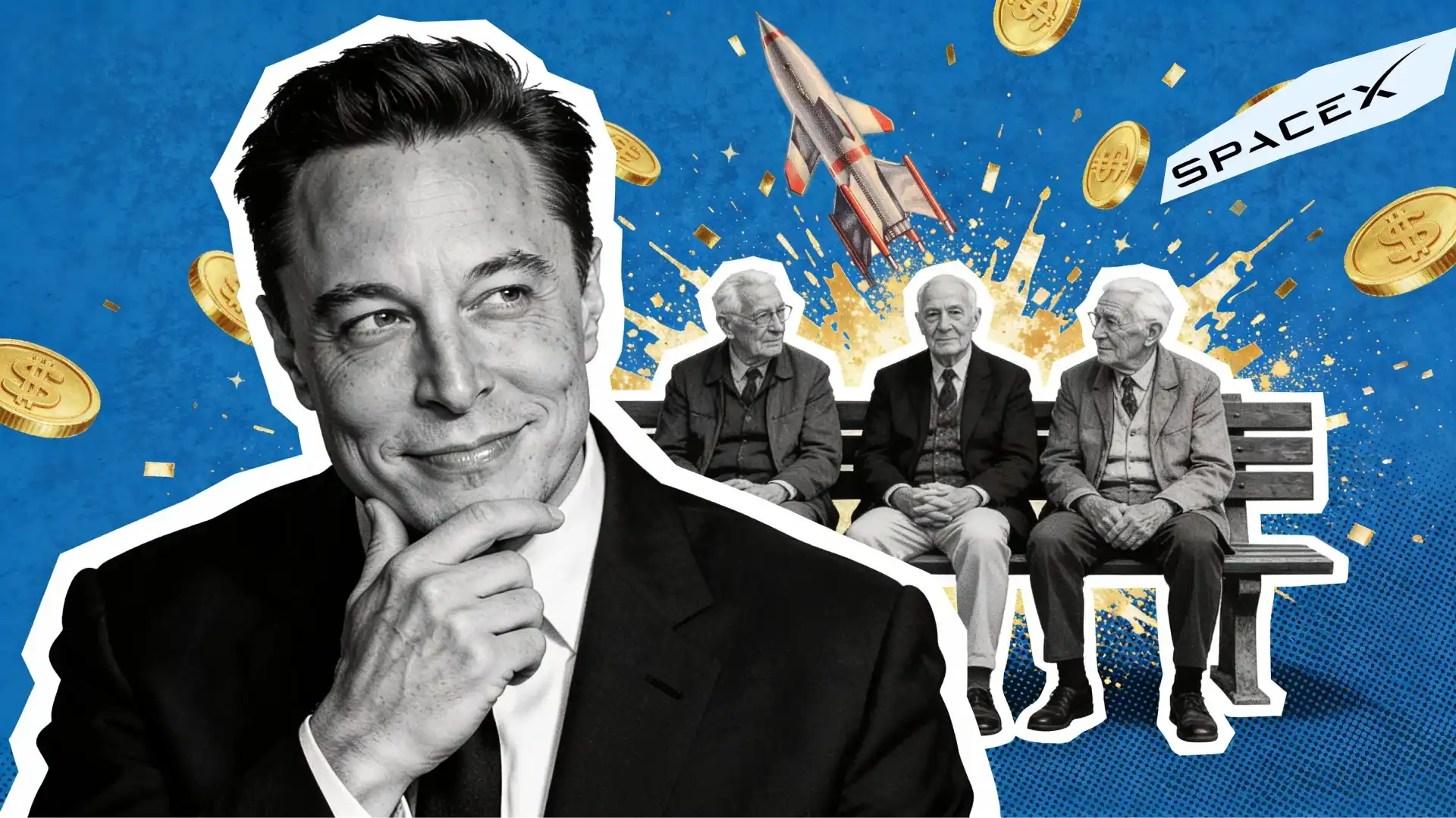
Musk, đang khiến những ông già bà lão về hưu ở Mỹ "bùng nổ tiền vàng".

Đếm ngược IPO lớn nhất lịch sử, đồng minh đầu cơ kiếm bộn

Phố Wall đã chờ SpaceX lên sàn nhiều năm rồi.

Trong mười năm qua, công ty này từ một startup chỉ định giá 27 triệu đô la, đã phát triển thành một kỳ lân siêu cấp với định giá hiện nay tiến gần 1.75 - 2 nghìn tỷ đô la, trở thành một trong những doanh nghiệp tư nhân có giá trị cao nhất toàn cầu.

Giờ đây, đợt IPO siêu cấp này cuối cùng cũng sẽ chính thức niêm yết sớm nhất vào ngày 12 tháng 6. Đây không chỉ là sự kiện IPO có quy mô lớn nhất trong lịch sử nhân loại, mà còn có nghĩa bữa tiệc tài sản bước vào thời khắc thu hoạch. Những người đi theo lâu năm của Musk, cuối cùng cũng đợi được phần thưởng hậu hĩnh.

Ví dụ, Google thông qua đầu tư giai đoạn đầu có thể trở thành người thắng lớn nhất bên ngoài. Tính đến cuối năm 2025, họ nắm giữ khoảng 6.11% cổ phần SpaceX. Khoản đầu tư chỉ 900 triệu đô la năm đó, nay giá trị tương ứng đã gần 1200 tỷ đô la; Valor Equity Partners với tư cách cổ đông quan trọng chỉ sau Musk, nắm giữ hơn 500 triệu cổ phiếu loại A của SpaceX, giá trị quyền lợi dao động trong khoảng 90 đến 140 tỷ đô la; Founders Fund của Peter Thiel thông qua nhiều vòng đầu tư bổ sung, nắm giữ khoảng 3.5% cổ phần, lợi nhuận trên sổ sách đã vượt 60 tỷ đô la; Fidelity với tư cách một trong những tổ chức chính đồng tài trợ năm 2015, giá trị cổ phần nắm giữ khoảng 35 tỷ đô la; Ngay cả Sequoia Capital tham gia tương đối muộn cũng có lợi nhuận đáng kể, dự kiến thu về hơn 20 tỷ đô la.

Còn bản thân Musk, cũng có khả năng trở thành tỷ phú nghìn tỷ đầu tiên trên thế giới.

Nhà chiến lược Michael Hartnett của Bank of America cảnh báo trong báo cáo mới nhất, một khi các đợt IPO siêu cấp như SpaceX và OpenAI thành hiện thực, tỷ trọng cổ phiếu công nghệ trong chỉ số chuẩn chứng khoán sẽ dễ dàng vượt qua khoảng 48%, vượt qua mức độ tập trung thị trường của tất cả các thời kỳ bong bóng lớn trong lịch sử như thập niên 1920 "Thời đại gầm thét", thập niên 1970 "Nifty Fifty", bong bóng Nhật Bản thập niên 1980 và bong bóng dot-com thập niên 1990.

Tuy nhiên, định giá khổng lồ như vậy, cuối cùng cần ai tiếp quản?

Để giảm áp lực bán ra sau khi lên sàn, duy trì ổn định giá cổ phiếu, SpaceX cũng đã thực hiện một số điều chỉnh. Ví dụ, cổ phần của người trong nội bộ sẽ áp dụng cơ chế mở khóa theo giai đoạn, thay vì thời gian khóa thống nhất 6 tháng thường thấy trong IPO truyền thống; Đồng thời, công ty cũng phê duyệt phương án tách cổ phiếu phổ thông 1 chia 5, nhằm hạ thấp ngưỡng tâm lý nhà đầu tư nhỏ lẻ, nâng cao tính thanh khoản. Musk còn công khai tuyên bố, bản thân sẽ không bán bất kỳ cổ phần SpaceX nào.

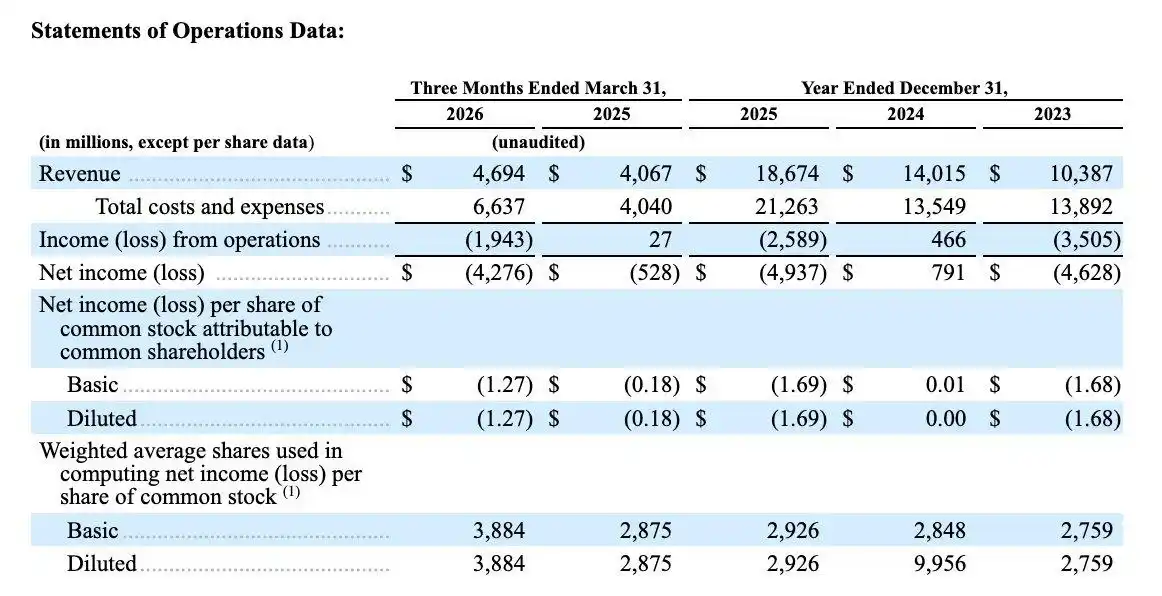
Nhưng lo ngại của thị trường không vì thế mà biến mất. Bỏ qua tính bất định của câu chuyện vĩ đại về sao Hỏa, chỉ nhìn vào dữ liệu tài chính, SpaceX vẫn là một công ty đốt tiền tốc độ cao. Bản cáo bạch cho thấy, chỉ riêng quý I năm 2026, khoản lỗ ròng của SpaceX đã gần 4.3 tỷ đô la, gần như tương đương mức lỗ cả năm trước đó. Đồng thời, Musk nắm quyền biểu quyết tuyệt đối 85%, điều này có nghĩa hội đồng quản trị hầu như không thể sa thải ông, cổ đông bên ngoài cũng hầu như không thể thúc đẩy bất kỳ quyết định kinh doanh trọng đại nào.
Ở một mức độ nào đó, SpaceX được tính là một công ty mang tính Musk hóa cao, định giá, quản trị thậm chí kỳ vọng tương lai của nó, đều gắn chặt với cá nhân Musk.

Khi tất cả nhà đầu tư ban đầu đã kiếm bộn tiền rồi, ai còn muốn mua vào ở mức cao tấm vé tàu không gian đã đắt đến mức phi lý này?

Phố Wall lát đường cao tốc chỉ số, lương hưu Mỹ thành "người tiếp quản"

Lương hưu của người Mỹ, có thể sẽ trở thành nhiên liệu tiềm năng cho giấc mơ không gian của Musk.

Phố Wall, đã bắt đầu mở đường cao tốc cho các đợt IPO siêu cấp. Ngày 1 tháng 5 năm nay, quy định mới của Nasdaq chính thức có hiệu lực, các công ty mới niêm yết nếu xếp hạng vốn hóa thị trường vào top 40 chỉ số Nasdaq 100, chỉ cần 15 ngày giao dịch là có thể được đưa vào chỉ số, trước đây thường phải chờ khoảng 3 tháng.

S&P cũng khởi động lấy ý kiến vào tháng 5, dự định rút ngắn thời gian niêm yết tối thiểu cần thiết để đưa vào từ 12 tháng xuống còn 6 tháng, và xem xét miễn trừ yêu cầu khả năng sinh lời cho các công ty siêu lớn. FTSE Russell cũng nới lỏng hạn chế, cho phép các IPO lớn có thể được đánh giá nhanh để đưa vào Russell U.S. Equity Indexes (bao gồm Russell 1000, Top 200, v.v.) vào ngày giao dịch thứ 5 sau khi niêm yết, không cần chờ đợi đánh giá theo quý.

Các chỉ số lớn của Mỹ âm thầm nới lỏng quy tắc, không nghi ngờ gì là đang lát đường chuyên dụng cho SpaceX.

Theo tiết lộ của Business Insider, SpaceX sau khi lên sàn có thể nhanh chóng được đưa vào các chỉ số chính thống và ETF, tốc độ phân bổ vốn thụ động có thể vượt xa các đợt IPO lớn trước đây, ví dụ chỉ số CRSP tương ứng với Vanguard VTI và ETF tăng trưởng VUG có thể nhanh nhất đưa SpaceX vào trong vòng 5 ngày giao dịch sau khi niêm yết; Chỉ số Nasdaq 100 mà QQQ theo dõi, nhanh nhất có thể đưa SpaceX vào sau 15 ngày giao dịch niêm yết; Chỉ số S&P 500 mà SPY theo dõi, thì có thể sau khi sửa quy tắc sẽ đưa SpaceX vào năm 2027, v.v.

Trong hệ thống hưu trí Mỹ, số lượng lớn tài khoản 401(k), quỹ hưu trí và tài khoản tiết kiệm dài hạn, đều áp dụng chiến lược đầu tư chỉ số thụ động. Các quỹ thường tự động phân bổ tài sản theo thành phần cổ phiếu chỉ số và trọng số vốn hóa thị trường của chúng.

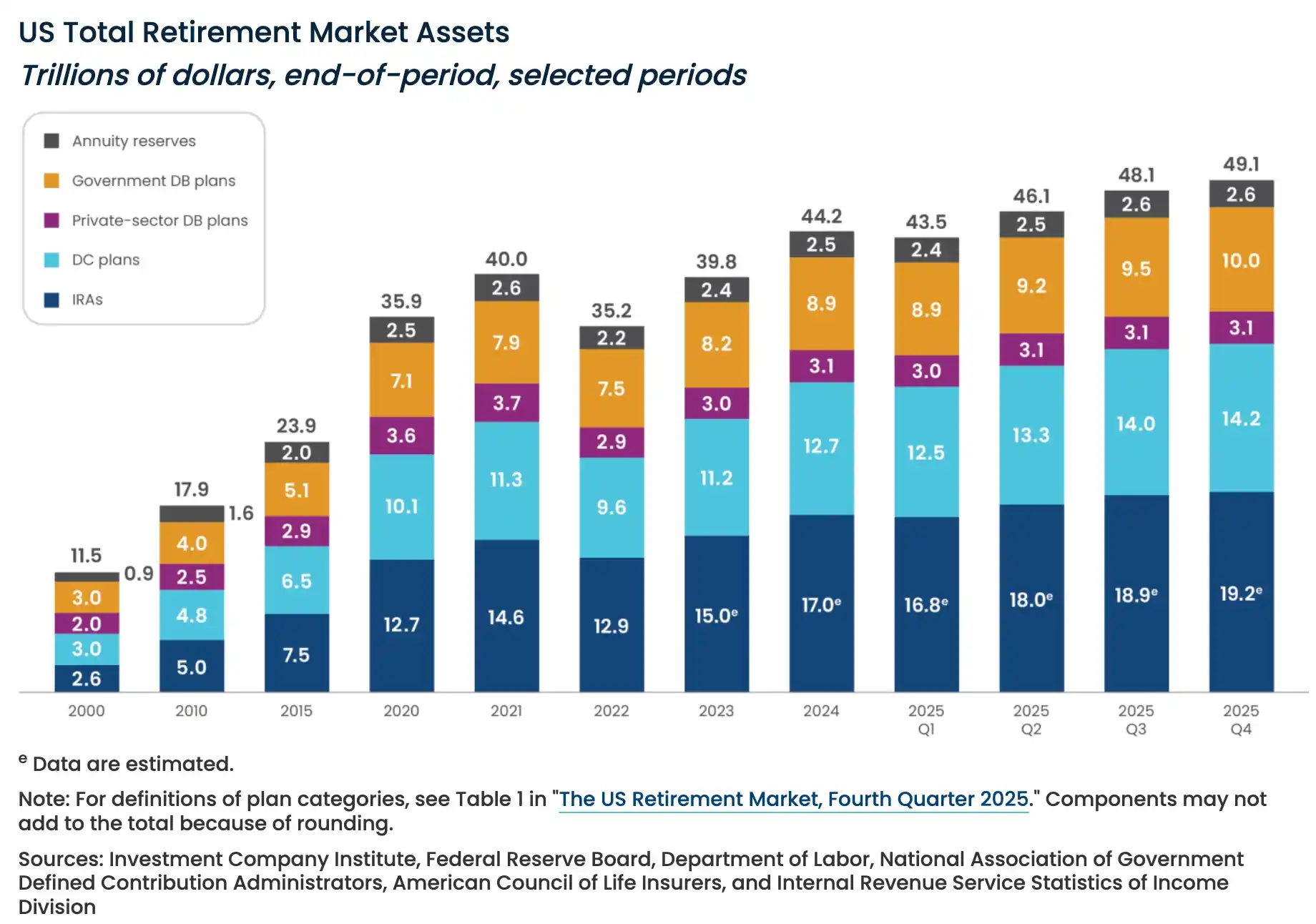
Chiến lược này bắt nguồn từ quỹ chỉ số đầu tiên dành cho nhà đầu tư phổ thông do cha đẻ quỹ chỉ số John Bogle ra mắt năm 1976, với triết lý cốt lõi là "sao chép thị trường chứ không phải đánh bại thị trường". Với mức phí quản lý cực thấp và mức độ đa dạng hóa cao, nó trở thành lựa chọn cấu hình hàng đầu cho các tài khoản hưu trí và 401(k). Tính đến nay, tổng tài sản hưu trí Mỹ đã vượt 49 nghìn tỷ đô la.
Điều này có nghĩa là, một khi SpaceX được đưa vào chỉ số, tất cả các quỹ theo dõi các chuẩn này sẽ không phân tích định giá, không đánh giá bong bóng, thậm chí không quan tâm công ty có lãi hay không, bắt buộc mua vào theo trọng số.

Tuy nhiên, trò chơi này đã gây ra sự bất mãn mạnh mẽ trong hệ thống quỹ hưu trí.

Cách đây không lâu, Liên đoàn Giáo viên Mỹ đã gửi thư đến SEC, thúc giục tăng cường giám sát việc SpaceX lên sàn, cảnh báo tiền tiết kiệm cả đời của người lao động có thể bị một công ty giống doanh nghiệp gia đình của gia tộc Musk hơn là một công ty đại chúng minh bạch kiểm soát.

Đồng thời, ba quỹ hưu trí công lớn của Mỹ quản lý tài sản trên 1 nghìn tỷ đô la (CalPERS, hệ thống hưu trí bang New York và thành phố New York) cũng liên danh gửi thư cho Musk, phản đối kịch liệt cấu trúc quản trị cực đoan của SpaceX, bao gồm quyền biểu quyết siêu cấp, quyền phủ quyết đối với việc bản thân bị miễn nhiệm CEO, và quyền được miễn tố tụng.

Họ chỉ ra, Musk đồng thời điều hành nhiều công ty như SpaceX, Tesla, xAI, Neuralink, rủi ro phân tán năng lực là rất lớn. Trong thư yêu cầu SpaceX trong bảy năm tới dần chuyển sang mô hình một cổ phiếu một phiếu bầu, thành lập hội đồng quản trị với đa số là cổ đông bên ngoài, tách biệt chức vụ CEO và Chủ tịch, và hủy bỏ quyền phủ quyết của Musk.

Trò sửa quy tắc do Phố Wall thiết kế riêng cho các đợt IPO siêu cấp này, cuối cùng đã buộc chặt tiền tiết kiệm hưu trí của hàng chục triệu người Mỹ với giấc mơ không gian vĩ đại của Musk. Sau khi các nhà đầu tư ban đầu ngồi hưởng lợi nhuận gấp trăm lần, chi phí "tiếp quản" còn lại, được chuyển sang những nhà đầu tư thụ động không có khả năng lựa chọn.

Trò chơi "bắt đầu lấy tiền từ ông già" lớn nhất lịch sử, đang mượn danh nghĩa chỉ số, chính thức mở màn.


Related Questions

QSpaceX sẽ có tác động gì đến danh mục đầu tư hưu trí của người Mỹ khi niêm yết?

AKhi SpaceX được đưa vào các chỉ số chính như Nasdaq 100 hoặc S&P 500, các quỹ chỉ số thụ động (ETF và quỹ hưu trí như 401(k)) sẽ phải mua cổ phiếu của công ty theo tỷ trọng chỉ số. Điều này có nghĩa là một phần tiền tiết kiệm hưu trí của hàng triệu người Mỹ sẽ được tự động rót vào SpaceX, bất kể định giá hay triển vọng công ty ra sao.

QTại sao các quỹ hưu trí công cộng lớn của Mỹ phản đối cấu trúc quản trị của SpaceX?

ACác quỹ hưu trí lớn như CalPERS phản đối vì cấu trúc quản trị cực đoan của SpaceX, nơi Elon Musk nắm giữ 85% quyền biểu quyết, có quyền phủ quyết việc sa thải chính mình và được miễn trừ truy tố. Họ lo ngại về rủi ro tập trung quyền lực, sự phân tán sự chú ý của Musk vào nhiều công ty, và thiếu tính minh bạch, có thể gây rủi ro cho khoản đầu tư của người lao động.

QNhà đầu tư sớm nào sẽ thu lợi nhuận lớn nhất từ đợt IPO của SpaceX?

ATheo bài viết, Google có thể là nhà đầu tư bên ngoài thu lợi lớn nhất với khoản đầu tư 9 tỷ USD ban đầu nay có giá trị gần 1.200 tỷ USD. Các nhà đầu tư sớm khác có lợi nhuận khổng lồ bao gồm Valor Equity Partners (900-1400 tỷ USD), Quỹ Founders Fund của Peter Thiel (trên 600 tỷ USD), Fidelity (khoảng 350 tỷ USD) và Sequoia Capital (trên 200 tỷ USD).

QCác sàn giao dịch chứng khoán đã thay đổi quy tắc như thế nào để tạo điều kiện cho các IPO siêu lớn như SpaceX?

ACác sàn đã nới lỏng quy tắc để đưa các công ty mới niêm yết có vốn hóa lớn vào chỉ số nhanh hơn. Ví dụ: Nasdaq rút ngắn thời gian chờ đưa vào chỉ Nasdaq 100 từ 3 tháng xuống còn 15 ngày giao dịch. S&P đang xem xét rút ngắn thời gian niêm yết tối thiểu từ 12 tháng xuống 6 tháng. FTSE Russell cho phép các IPO lớn được xem xét đưa vào chỉ số chỉ sau 5 ngày giao dịch.

QBài viết sử dụng cụm từ 'bùng nổ người già' ('崩老头') để ám chỉ điều gì?

ACụm từ 'bùng nổ người già' ('崩老头') trong bài viết ám chỉ một trò chơi hoặc kế hoạch mà trong đó, lợi nhuận khổng lồ của các nhà đầu tư sớm và giấc mơ không gian của Elon Musk có thể được tài trợ một phần bởi khoản tiền tiết kiệm hưu trí của những người Mỹ lớn tuổi (thông qua các quỹ chỉ số thụ động), những người có thể phải gánh chịu rủi ro nếu định giá cao của SpaceX sụp đổ.

Related Reads

Dalio's Latest Warning: Don't Get Carried Away by AI, Real Returns on US Stocks in the Next 5-10 Years Could Be -5% to -10%

Ray Dalio, founder of Bridgewater Associates, warns investors against excessive concentration in AI stocks. He argues the current market, dominated by a few AI giants, mirrors historical patterns where revolutionary new technologies lead to high risk, volatility, and uncertainty. While acknowledging AI's transformative potential, Dalio emphasizes that most investors fail at this stage of the cycle by over-concentrating in a handful of leading companies. He cites inherent risks: companies cannot accurately forecast investment needs or external shocks (e.g., monetary policy, geopolitics, taxes), face potential disruption from future technologies and international competition (notably from China), and experience significant price swings. Dalio's core advice is diversification, calling it his "Holy Grail of Investing." He presents a mathematical case that a well-diversified portfolio of 15-20 uncorrelated, good bets offers a superior risk-adjusted return compared to a concentrated position. Dalio also offers a cautious outlook, suggesting U.S. stocks may deliver real returns of -5% to -10% over the next 5-10 years based on valuation and bubble indicators. He concludes that in the face of high uncertainty, the prudent strategy is not to avoid betting entirely, but to avoid large, concentrated bets where one lacks sufficient informational edge. Instead, investors should build a strategically balanced, diversified portfolio.

marsbit1h ago

Dalio's Latest Warning: Don't Get Carried Away by AI, Real Returns on US Stocks in the Next 5-10 Years Could Be -5% to -10%

marsbit1h ago

Rain Valuation Approaches $20 Billion: The Battle for U-Cards Extends to Rewards Systems

Rain, a stablecoin payments infrastructure company, is shifting the competitive focus for U Cards from simple issuance to user retention and repeated usage. On June 15, Rain launched "Rain Rewards," an embedded loyalty program capability within its card-issuing infrastructure. This allows partner businesses—like fintech platforms and neobanks—to configure branded loyalty points, earning rules, redemptions, and merchant promotions directly within their card products. The system, built from the 2025 acquisition of Uptop, ensures points are only issued upon final transaction settlement, preventing liabilities from refunds. Trials, such as with Avalanche Card, reportedly boosted spending by 25% among enrolled users. Founded by Farooq Malik and Charles Yoo-Naut, Rain evolved from a tool for managing Web3 company expenses into a full-stack enterprise platform. It is a Principal Member of Visa and Mastercard, enabling partners to issue stablecoin-backed cards and wallets while leveraging traditional payment networks. Notably, the popular U Card Plasma One is issued by Rain under Visa's authority. Rain also integrates with Visa's stablecoin settlement pilot, using USDC for network settlement. Rain's rapid funding reflects growing institutional interest in stablecoin payment infrastructure. It raised a $245 million Series A in March 2025, a $58 million Series B in August 2025, and a $250 million Series C in January of this year, reaching a $19.5 billion valuation. Annualized transaction volume exceeds $3 billion, serving over 200 partners including Western Union and Nuvei. Beyond cards, Rain is expanding into programmable payments. Its June 2026 "Agent Control Layer" allows businesses to set spending rules—like merchant categories, amounts, and frequency—for AI agents before transactions occur. This positions Rain not as a single product but as an operating system for stablecoin payments, handling everything from card issuance and wallet management to rewards, on/off-ramps, and automated compliance. The goal is to enable seamless, often invisible, real-world spending of on-chain assets.

Foresight News1h ago

Rain Valuation Approaches $20 Billion: The Battle for U-Cards Extends to Rewards Systems

Foresight News1h ago

Google TPU Shipments Revised Up by 50%

Recent industry research indicates a significant upward revision in the shipments of Google's TPU (Tensor Processing Unit) chips. Previous expectations for 2027 were set at around 10 million units, but new estimates now point to 15 million units, a 50% increase. This substantial boost directly translates to higher demand across the entire supporting supply chain. Google's TPU clusters utilize a standardized all-optical interconnect architecture. Consequently, key hardware components are deeply integrated and scaled in fixed ratios with the chips. The 15 million TPU target will drive corresponding demand increases for NPO optical engines (roughly a 1:1 match), 1.6T optical modules, OCS optical switches, high-end server power supplies, fiber optics & MPO connectors, and liquid cooling solutions. Among these, liquid cooling is highlighted as the sector experiencing the most significant transformation and offering the most stable potential for excess returns. As next-generation TPU chips reach power levels where traditional air cooling is insufficient, liquid cooling becomes essential. 2026 is forecasted as the first year of substantial adoption for Google's liquid cooling solutions. This shift, coupled with delivery and capacity bottlenecks faced by incumbent overseas manufacturers, is creating a prime window for domestic Chinese suppliers to enter and secure Google's core supply chain. The market size for Google-specific liquid cooling is projected to potentially triple from a baseline of hundreds of billions to around 300 billion units by 2028. The logic for the fiber optic sector is also being rewritten. Once considered a cyclical commodity tied to telecom operator procurement, fiber is now a strategic and scarce resource for AI Data Centers (AIDC). A severe supply-demand imbalance, driven by the long lead time for preform production (18-24 months) and surging demand from cloud giants, is supporting strong performance. Chinese fiber manufacturers are well-positioned to capture a significant share of global AIDC demand, with exports potentially reaching 200-300 million core kilometers in 2026. Overall, the investment focus within the AI computing industry is shifting from pure "chip performance speculation" towards the more certain incremental growth in computing infrastructure and its supporting ecosystem. The upward revision in Google TPU shipments, along with the potential for further doubling by 2028, is seen as solidifying performance visibility for the entire supporting supply chain over the next two years.

marsbit2h ago

Google TPU Shipments Revised Up by 50%

marsbit2h ago

Trading

Spot
Futures

Hot Articles

What is SONIC

Sonic: Pioneering the Future of Gaming in Web3 Introduction to Sonic In the ever-evolving landscape of Web3, the gaming industry stands out as one of the most dynamic and promising sectors. At the forefront of this revolution is Sonic, a project designed to amplify the gaming ecosystem on the Solana blockchain. Leveraging cutting-edge technology, Sonic aims to deliver an unparalleled gaming experience by efficiently processing millions of requests per second, ensuring that players enjoy seamless gameplay while maintaining low transaction costs. This article delves into the intricate details of Sonic, exploring its creators, funding sources, operational mechanics, and the timeline of significant events that have shaped its journey. What is Sonic? Sonic is an innovative layer-2 network that operates atop the Solana blockchain, specifically tailored to enhance the existing Solana gaming ecosystem. It accomplishes this through a customised, VM-agnostic game engine paired with a HyperGrid interpreter, facilitating sovereign game economies that roll up back to the Solana platform. The primary goals of Sonic include: Enhanced Gaming Experiences: Sonic is committed to offering lightning-fast on-chain gameplay, allowing players and developers to engage with games at previously unattainable speeds. Atomic Interoperability: This feature enables transactions to be executed within Sonic without the need to redeploy Solana programmes and accounts. This makes the process more efficient and directly benefits from Solana Layer1 services and liquidity. Seamless Deployment: Sonic allows developers to write for Ethereum Virtual Machine (EVM) based systems and execute them on Solana’s SVM infrastructure. This interoperability is crucial for attracting a broader range of dApps and decentralised applications to the platform. Support for Developers: By offering native composable gaming primitives and extensible data types - dining within the Entity-Component-System (ECS) framework - game creators can craft intricate business logic with ease. Overall, Sonic's unique approach not only caters to players but also provides an accessible and low-cost environment for developers to innovate and thrive. Creator of Sonic The information regarding the creator of Sonic is somewhat ambiguous. However, it is known that Sonic's SVM is owned by the company Mirror World. The absence of detailed information about the individuals behind Sonic reflects a common trend in several Web3 projects, where collective efforts and partnerships often overshadow individual contributions. Investors of Sonic Sonic has garnered considerable attention and support from various investors within the crypto and gaming sectors. Notably, the project raised an impressive $12 million during its Series A funding round. The round was led by BITKRAFT Ventures, with other notable investors including Galaxy, Okx Ventures, Interactive, Big Brain Holdings, and Mirana. This financial backing signifies the confidence that investment foundations have in Sonic’s potential to revolutionise the Web3 gaming landscape, further validating its innovative approaches and technologies. How Does Sonic Work? Sonic utilises the HyperGrid framework, a sophisticated parallel processing mechanism that enhances its scalability and customisability. Here are the core features that set Sonic apart: Lightning Speed at Low Costs: Sonic offers one of the fastest on-chain gaming experiences compared to other Layer-1 solutions, powered by the scalability of Solana’s virtual machine (SVM). Atomic Interoperability: Sonic enables transaction execution without redeployment of Solana programmes and accounts, effectively streamlining the interaction between users and the blockchain. EVM Compatibility: Developers can effortlessly migrate decentralised applications from EVM chains to the Solana environment using Sonic’s HyperGrid interpreter, increasing the accessibility and integration of various dApps. Ecosystem Support for Developers: By exposing native composable gaming primitives, Sonic facilitates a sandbox-like environment where developers can experiment and implement business logic, greatly enhancing the overall development experience. Monetisation Infrastructure: Sonic natively supports growth and monetisation efforts, providing frameworks for traffic generation, payments, and settlements, thereby ensuring that gaming projects are not only viable but also sustainable financially. Timeline of Sonic The evolution of Sonic has been marked by several key milestones. Below is a brief timeline highlighting critical events in the project's history: 2022: The Sonic cryptocurrency was officially launched, marking the beginning of its journey in the Web3 gaming arena. 2024: June: Sonic SVM successfully raised $12 million in a Series A funding round. This investment allowed Sonic to further develop its platform and expand its offerings. August: The launch of the Sonic Odyssey testnet provided users with the first opportunity to engage with the platform, offering interactive activities such as collecting rings—a nod to gaming nostalgia. October: SonicX, an innovative crypto game integrated with Solana, made its debut on TikTok, capturing the attention of over 120,000 users within a short span. This integration illustrated Sonic’s commitment to reaching a broader, global audience and showcased the potential of blockchain gaming. Key Points Sonic SVM is a revolutionary layer-2 network on Solana explicitly designed to enhance the GameFi landscape, demonstrating great potential for future development. HyperGrid Framework empowers Sonic by introducing horizontal scaling capabilities, ensuring that the network can handle the demands of Web3 gaming. Integration with Social Platforms: The successful launch of SonicX on TikTok displays Sonic’s strategy to leverage social media platforms to engage users, exponentially increasing the exposure and reach of its projects. Investment Confidence: The substantial funding from BITKRAFT Ventures, among others, emphasizes the robust backing Sonic has, paving the way for its ambitious future. In conclusion, Sonic encapsulates the essence of Web3 gaming innovation, striking a balance between cutting-edge technology, developer-centric tools, and community engagement. As the project continues to evolve, it is poised to redefine the gaming landscape, making it a notable entity for gamers and developers alike. As Sonic moves forward, it will undoubtedly attract greater interest and participation, solidifying its place within the broader narrative of blockchain gaming.

1.7k Total ViewsPublished 2024.04.04Updated 2024.12.03

What is SONIC

What is $S$

Understanding SPERO: A Comprehensive Overview Introduction to SPERO As the landscape of innovation continues to evolve, the emergence of web3 technologies and cryptocurrency projects plays a pivotal role in shaping the digital future. One project that has garnered attention in this dynamic field is SPERO, denoted as SPERO,$$s$. This article aims to gather and present detailed information about SPERO, to help enthusiasts and investors understand its foundations, objectives, and innovations within the web3 and crypto domains. What is SPERO,$$s$? SPERO,$$s$ is a unique project within the crypto space that seeks to leverage the principles of decentralisation and blockchain technology to create an ecosystem that promotes engagement, utility, and financial inclusion. The project is tailored to facilitate peer-to-peer interactions in new ways, providing users with innovative financial solutions and services. At its core, SPERO,$$s$ aims to empower individuals by providing tools and platforms that enhance user experience in the cryptocurrency space. This includes enabling more flexible transaction methods, fostering community-driven initiatives, and creating pathways for financial opportunities through decentralised applications (dApps). The underlying vision of SPERO,$$s$ revolves around inclusiveness, aiming to bridge gaps within traditional finance while harnessing the benefits of blockchain technology. Who is the Creator of SPERO,$$s$? The identity of the creator of SPERO,$$s$ remains somewhat obscure, as there are limited publicly available resources providing detailed background information on its founder(s). This lack of transparency can stem from the project's commitment to decentralisation—an ethos that many web3 projects share, prioritising collective contributions over individual recognition. By centring discussions around the community and its collective goals, SPERO,$$s$ embodies the essence of empowerment without singling out specific individuals. As such, understanding the ethos and mission of SPERO remains more important than identifying a singular creator. Who are the Investors of SPERO,$$s$? SPERO,$$s$ is supported by a diverse array of investors ranging from venture capitalists to angel investors dedicated to fostering innovation in the crypto sector. The focus of these investors generally aligns with SPERO's mission—prioritising projects that promise societal technological advancement, financial inclusivity, and decentralised governance. These investor foundations are typically interested in projects that not only offer innovative products but also contribute positively to the blockchain community and its ecosystems. The backing from these investors reinforces SPERO,$$s$ as a noteworthy contender in the rapidly evolving domain of crypto projects. How Does SPERO,$$s$ Work? SPERO,$$s$ employs a multi-faceted framework that distinguishes it from conventional cryptocurrency projects. Here are some of the key features that underline its uniqueness and innovation: Decentralised Governance: SPERO,$$s$ integrates decentralised governance models, empowering users to participate actively in decision-making processes regarding the project’s future. This approach fosters a sense of ownership and accountability among community members. Token Utility: SPERO,$$s$ utilises its own cryptocurrency token, designed to serve various functions within the ecosystem. These tokens enable transactions, rewards, and the facilitation of services offered on the platform, enhancing overall engagement and utility. Layered Architecture: The technical architecture of SPERO,$$s$ supports modularity and scalability, allowing for seamless integration of additional features and applications as the project evolves. This adaptability is paramount for sustaining relevance in the ever-changing crypto landscape. Community Engagement: The project emphasises community-driven initiatives, employing mechanisms that incentivise collaboration and feedback. By nurturing a strong community, SPERO,$$s$ can better address user needs and adapt to market trends. Focus on Inclusion: By offering low transaction fees and user-friendly interfaces, SPERO,$$s$ aims to attract a diverse user base, including individuals who may not previously have engaged in the crypto space. This commitment to inclusion aligns with its overarching mission of empowerment through accessibility. Timeline of SPERO,$$s$ Understanding a project's history provides crucial insights into its development trajectory and milestones. Below is a suggested timeline mapping significant events in the evolution of SPERO,$$s$: Conceptualisation and Ideation Phase: The initial ideas forming the basis of SPERO,$$s$ were conceived, aligning closely with the principles of decentralisation and community focus within the blockchain industry. Launch of Project Whitepaper: Following the conceptual phase, a comprehensive whitepaper detailing the vision, goals, and technological infrastructure of SPERO,$$s$ was released to garner community interest and feedback. Community Building and Early Engagements: Active outreach efforts were made to build a community of early adopters and potential investors, facilitating discussions around the project’s goals and garnering support. Token Generation Event: SPERO,$$s$ conducted a token generation event (TGE) to distribute its native tokens to early supporters and establish initial liquidity within the ecosystem. Launch of Initial dApp: The first decentralised application (dApp) associated with SPERO,$$s$ went live, allowing users to engage with the platform's core functionalities. Ongoing Development and Partnerships: Continuous updates and enhancements to the project's offerings, including strategic partnerships with other players in the blockchain space, have shaped SPERO,$$s$ into a competitive and evolving player in the crypto market. Conclusion SPERO,$$s$ stands as a testament to the potential of web3 and cryptocurrency to revolutionise financial systems and empower individuals. With a commitment to decentralised governance, community engagement, and innovatively designed functionalities, it paves the way toward a more inclusive financial landscape. As with any investment in the rapidly evolving crypto space, potential investors and users are encouraged to research thoroughly and engage thoughtfully with the ongoing developments within SPERO,$$s$. The project showcases the innovative spirit of the crypto industry, inviting further exploration into its myriad possibilities. While the journey of SPERO,$$s$ is still unfolding, its foundational principles may indeed influence the future of how we interact with technology, finance, and each other in interconnected digital ecosystems.

58 Total ViewsPublished 2024.12.17Updated 2024.12.17

What is $S$

What is AGENT S

Agent S: The Future of Autonomous Interaction in Web3 Introduction In the ever-evolving landscape of Web3 and cryptocurrency, innovations are constantly redefining how individuals interact with digital platforms. One such pioneering project, Agent S, promises to revolutionise human-computer interaction through its open agentic framework. By paving the way for autonomous interactions, Agent S aims to simplify complex tasks, offering transformative applications in artificial intelligence (AI). This detailed exploration will delve into the project's intricacies, its unique features, and the implications for the cryptocurrency domain. What is Agent S? Agent S stands as a groundbreaking open agentic framework, specifically designed to tackle three fundamental challenges in the automation of computer tasks: Acquiring Domain-Specific Knowledge: The framework intelligently learns from various external knowledge sources and internal experiences. This dual approach empowers it to build a rich repository of domain-specific knowledge, enhancing its performance in task execution. Planning Over Long Task Horizons: Agent S employs experience-augmented hierarchical planning, a strategic approach that facilitates efficient breakdown and execution of intricate tasks. This feature significantly enhances its ability to manage multiple subtasks efficiently and effectively. Handling Dynamic, Non-Uniform Interfaces: The project introduces the Agent-Computer Interface (ACI), an innovative solution that enhances the interaction between agents and users. Utilizing Multimodal Large Language Models (MLLMs), Agent S can navigate and manipulate diverse graphical user interfaces seamlessly. Through these pioneering features, Agent S provides a robust framework that addresses the complexities involved in automating human interaction with machines, setting the stage for myriad applications in AI and beyond. Who is the Creator of Agent S? While the concept of Agent S is fundamentally innovative, specific information about its creator remains elusive. The creator is currently unknown, which highlights either the nascent stage of the project or the strategic choice to keep founding members under wraps. Regardless of anonymity, the focus remains on the framework's capabilities and potential. Who are the Investors of Agent S? As Agent S is relatively new in the cryptographic ecosystem, detailed information regarding its investors and financial backers is not explicitly documented. The lack of publicly available insights into the investment foundations or organisations supporting the project raises questions about its funding structure and development roadmap. Understanding the backing is crucial for gauging the project's sustainability and potential market impact. How Does Agent S Work? At the core of Agent S lies cutting-edge technology that enables it to function effectively in diverse settings. Its operational model is built around several key features: Human-like Computer Interaction: The framework offers advanced AI planning, striving to make interactions with computers more intuitive. By mimicking human behaviour in tasks execution, it promises to elevate user experiences. Narrative Memory: Employed to leverage high-level experiences, Agent S utilises narrative memory to keep track of task histories, thereby enhancing its decision-making processes. Episodic Memory: This feature provides users with step-by-step guidance, allowing the framework to offer contextual support as tasks unfold. Support for OpenACI: With the ability to run locally, Agent S allows users to maintain control over their interactions and workflows, aligning with the decentralised ethos of Web3. Easy Integration with External APIs: Its versatility and compatibility with various AI platforms ensure that Agent S can fit seamlessly into existing technological ecosystems, making it an appealing choice for developers and organisations. These functionalities collectively contribute to Agent S's unique position within the crypto space, as it automates complex, multi-step tasks with minimal human intervention. As the project evolves, its potential applications in Web3 could redefine how digital interactions unfold. Timeline of Agent S The development and milestones of Agent S can be encapsulated in a timeline that highlights its significant events: September 27, 2024: The concept of Agent S was launched in a comprehensive research paper titled “An Open Agentic Framework that Uses Computers Like a Human,” showcasing the groundwork for the project. October 10, 2024: The research paper was made publicly available on arXiv, offering an in-depth exploration of the framework and its performance evaluation based on the OSWorld benchmark. October 12, 2024: A video presentation was released, providing a visual insight into the capabilities and features of Agent S, further engaging potential users and investors. These markers in the timeline not only illustrate the progress of Agent S but also indicate its commitment to transparency and community engagement. Key Points About Agent S As the Agent S framework continues to evolve, several key attributes stand out, underscoring its innovative nature and potential: Innovative Framework: Designed to provide an intuitive use of computers akin to human interaction, Agent S brings a novel approach to task automation. Autonomous Interaction: The ability to interact autonomously with computers through GUI signifies a leap towards more intelligent and efficient computing solutions. Complex Task Automation: With its robust methodology, it can automate complex, multi-step tasks, making processes faster and less error-prone. Continuous Improvement: The learning mechanisms enable Agent S to improve from past experiences, continually enhancing its performance and efficacy. Versatility: Its adaptability across different operating environments like OSWorld and WindowsAgentArena ensures that it can serve a broad range of applications. As Agent S positions itself in the Web3 and crypto landscape, its potential to enhance interaction capabilities and automate processes signifies a significant advancement in AI technologies. Through its innovative framework, Agent S exemplifies the future of digital interactions, promising a more seamless and efficient experience for users across various industries. Conclusion Agent S represents a bold leap forward in the marriage of AI and Web3, with the capacity to redefine how we interact with technology. While still in its early stages, the possibilities for its application are vast and compelling. Through its comprehensive framework addressing critical challenges, Agent S aims to bring autonomous interactions to the forefront of the digital experience. As we move deeper into the realms of cryptocurrency and decentralisation, projects like Agent S will undoubtedly play a crucial role in shaping the future of technology and human-computer collaboration.

732 Total ViewsPublished 2025.01.14Updated 2025.01.14

What is AGENT S

Discussions

Welcome to the HTX Community. Here, you can stay informed about the latest platform developments and gain access to professional market insights. Users' opinions on the price of S (S) are presented below.

活动图片