Ethereum OG Ngủ Yên Với Mức Lãi 630,000% Thức Giấc Sau 10 Năm

bitcoinistPublished on 2026-05-27Last updated on 2026-05-27

Abstract

Dữ liệu chuỗi khối cho thấy một ví Ethereum cổ đại chứa 2.000 ETH, không hoạt động trong gần 11 năm, đã đột ngột "thức giấc". Ví này, được phân loại là địa chỉ tiền khai thác (pre-mine) từ đợt bán trước năm 2014, ban đầu chỉ nhận được số ETH trị giá 620 USD vào năm 2015. Sau thời gian ngủ đông kéo dài 10,8 năm, chủ ví đã thực hiện một giao dịch thử nghiệm chuyển 1 ETH, sau đó là giao dịch chuyển gần như toàn bộ số dư 1.997,9 ETH. Tính đến thời điểm hiện tại, số tiền này vẫn chưa được chuyển đến bất kỳ sàn giao dịch tập trung nào, nên chưa rõ liệu nhà đầu tư có ý định bán hay không. Với giá Ethereum hiện tại khoảng 2.130 USD, số ETH trong ví đã tăng giá trị từ 620 USD lên hơn 4,2 triệu USD, tương đương mức lãi gần 630.000%. Nguyên nhân của sự "trở lại" đột ngột này có thể là do chìa khóa ví bị thất lạc hoặc bị lãng quên trong nhiều năm và vừa được tìm thấy lại. Một kịch bản ít khả năng hơn là nhà đầu tư này thực sự là một người nắm giữ lâu dài kiên định bậc nhất.

Dữ liệu on-chain cho thấy một ví Ethereum cổ xưa chứa 2,000 ETH đã không hoạt động trong gần 11 năm đột nhiên sống dậy.

Ví Ethereum OG Đã Biến 620 Đô La Thành 4.2 Triệu Đô La

Theo dữ liệu từ dịch vụ theo dõi giao dịch tiền điện tử Whale Alert, một ví Ethereum cũ vừa phá vỡ giai đoạn ngủ đông kéo dài 10.8 năm. Địa chỉ được nhắc đến đang nắm giữ tổng cộng 2,000 ETH, trị giá 620 đô la vào năm 2015.

Chiếc ví này quá cũ đến mức Whale Alert phân loại nó là một địa chỉ pre-mine. Trong ngữ cảnh của ETH, "địa chỉ pre-mine" ám chỉ một địa chỉ đã nhận token của mình trước khi việc khai thác bắt đầu trên mạng lưới với lần ra mắt công khai vào năm 2015. Những chiếc ví như vậy được phân bổ các đồng coin này vì chúng thuộc về những người đóng góp và người tham gia sớm trong đợt bán trước năm 2014.

Thú vị là, mặc dù tham gia sớm vào loại tiền điện tử này, nhà đầu tư cụ thể này lại chưa bao giờ tham gia hoạt động nào, với giao dịch duy nhất của họ trong hơn 10 năm là khoản tiền gửi mà họ nhận được tại thời điểm genesis của blockchain.

Giờ đây, địa chỉ pre-mine đột nhiên được kích hoạt trở lại. Dưới đây là các chi tiết liên quan đến giao dịch đã phá vỡ thời kỳ ngủ đông dài của chiếc ví.
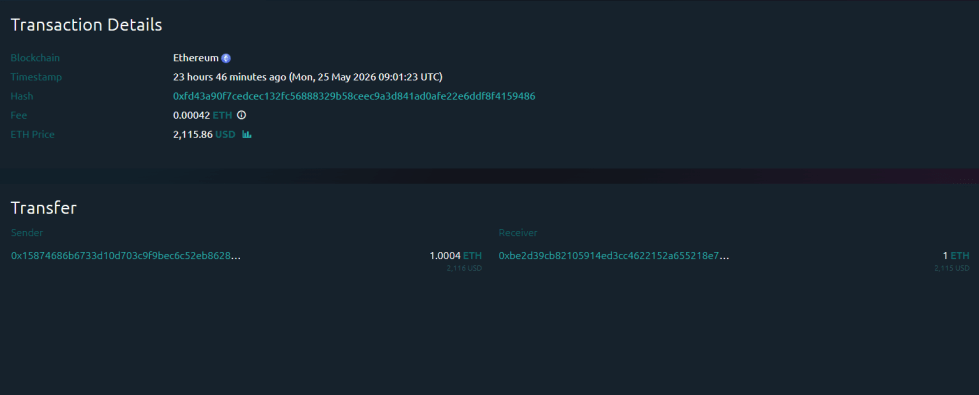
Có vẻ như nhà đầu tư đã di chuyển một lượng nhỏ với giao dịch chuyển khoản này | Nguồn: Whale Alert

Như có thể thấy, hành động di chuyển liên quan đến một khoản chỉ 1 ETH, cho thấy rằng nó có thể là một giao dịch thử nghiệm. Sau lần chuyển này, chiếc ví đã thực hiện thêm một vài giao dịch nữa, bao gồm một lần chuyển 1,997.9 ETH gần như đã làm cạn kiệt số dư của nó. Cho đến nay, những đồng coin này vẫn chưa được chuyển đến một sàn giao dịch tập trung, vì vậy khó có thể nói liệu nhà đầu tư có ý định bán chúng hay không.

Như đã đề cập trước đó, số Ethereum mà địa chỉ này nắm giữ chỉ trị giá 620 đô la vào năm 2015. Ngày nay, cùng một lượng đó chuyển đổi thành hơn 4.2 triệu đô la, tương đương với mức lãi gần 630,000%.

Lý do nào có thể đằng sau việc OG đột ngột quay trở lại? Chà, câu trả lời cho điều đó sẽ nằm ở những gì đã xảy ra với chiếc ví sau khi nó im lìm. Thông thường, những địa chỉ cũ kỹ như vậy đạt đến độ tuổi của chúng không phải nhờ việc HODL kiên định, mà là do bị mất hoặc bị lãng quên. Do đó, có khả năng địa chỉ này chỉ đơn giản là không thể truy cập được trong thời gian ngủ đông và các khóa của nó mới được tìm thấy lại gần đây.

Một kịch bản ít có khả năng hơn, nhưng không phải là không thể, là số dư Ethereum thực sự đã đạt đến độ tuổi của nó nhờ việc nắm giữ dài hạn. Nếu vậy, nhà đầu tư này sẽ là một trong những viên kim cương kiên cường nhất trong lĩnh vực tài sản kỹ thuật số.

Giá ETH

Ethereum đã giảm xuống mức 2,000 đô la vài ngày trước, nhưng đồng tiền điện tử này đã cố gắng leo lên trở lại khi giá của nó hiện đang giao dịch quanh mức 2,130 đô la.

Giá của đồng coin dường như nhìn chung đã đi theo một quỹ đạo đi ngang trong những ngày gần đây | Nguồn: ETHUSDT trên TradingView

Related Questions

QVí Ethereum cổ xưa đã mang lại lợi nhuận bao nhiêu phần trăm cho chủ sở hữu?

AVí này đã mang lại lợi nhuận gần 630,000% (630.000 phần trăm). Số ETH trị giá 620 đô la vào năm 2015 hiện có giá trị hơn 4,2 triệu đô la.

QTại sao ví Ethereum này được phân loại là 'địa chỉ pre-mine'?

ANó được phân loại là 'địa chỉ pre-mine' (địa chỉ đào trước) vì đã nhận được ETH trước khi mạng lưới Ethereum chính thức ra mắt và bắt đầu hoạt động khai thác vào năm 2015. Những ví như vậy thường thuộc về những người đóng góp sớm hoặc tham gia đợt bán trước vào năm 2014.

QGiao dịch đầu tiên sau hơn 10 năm ngủ đông của ví này là gì và có ý nghĩa gì?

AGiao dịch đầu tiên sau 10,8 năm là việc chuyển 1 ETH. Số lượng nhỏ này cho thấy đây rất có thể là một giao dịch thử nghiệm (test transaction) để kiểm tra tính khả dụng của ví và khóa riêng tư trước khi thực hiện các giao dịch lớn hơn.

QNguyên nhân có thể nào khiến chủ ví 'OG' này đột ngột hoạt động trở lại?

ANguyên nhân có thể nhất là địa chỉ ví đã bị mất hoặc bị lãng quên trong nhiều năm và chủ sở hữu vừa mới tìm lại được khóa riêng tư (private key). Một kịch bản ít khả năng hơn là chủ sở hữu thực sự đã 'hodl' (nắm giữ) số ETH này trong thời gian dài với sự kiên nhẫn phi thường.

QSố ETH từ ví cổ này đã được chuyển đến sàn giao dịch tập trung chưa và điều này cho thấy điều gì?

ATheo bài viết, số ETH này cho đến nay vẫn chưa được chuyển đến bất kỳ sàn giao dịch tập trung (CEX) nào. Điều này khiến khó có thể kết luận liệu nhà đầu tư có ý định bán chúng ngay lập tức hay không. Họ có thể chỉ đang di chuyển tài sản hoặc chuẩn bị cho một động thái khác.

Related Reads

The 'Chip' Challenge and Breakthroughs in China's Optical Industry Chain

China's Photonics Industry: Bottlenecks and Breakthroughs In the global AI race, computing chips dominate the narrative, but the underlying bottleneck increasingly defining the scale of AI clusters is light—or more specifically, optical connectivity. Optical modules, which translate electrical signals to light and vice versa, are crucial for connecting thousands of GPUs in AI data centers, preventing data congestion and ensuring efficient model training. High-speed modules (800G, 1.6T) are now standard, with performance hinging on advanced DSP (Digital Signal Processor) chips. This is where a critical dependency lies. Two US giants—Marvell and Broadcom—collectively dominate over 90% of the high-end DSP chip market. Chinese optical module leaders like Zhongji Innolight and Eoptolink rely on these chips to manufacture modules for overseas AI customers, primarily in North America. While this creates a supply chain vulnerability, complete decoupling is difficult. Marvell derives over half its revenue from Greater China, and the US firms depend on Chinese partners for chip packaging and optical components. The risk from laser chips (e.g., from Lumentum), another key component, is considered more manageable due to multiple global suppliers and faster progress in domestic alternatives from companies like YOFC and Accelink. To mitigate risks, China's industry is pursuing a multi-pronged strategy: diversifying supply chains and locking in long-term orders; fostering a domestic market ecosystem to adopt homegrown DSPs from firms like Huawei HiSilicon and CETC; accelerating R&D in high-speed DSPs and advanced packaging; and investing in next-gen technologies like silicon photonics and Co-Packaged Optics (CPO) to reduce reliance on discrete DSPs. The ultimate solution lies not in short-term博弈 but in persistent advancement of domestic high-end chip R&D and manufacturing. While challenges remain in performance, certification, and ecosystem building, China's vast domestic market and manufacturing base provide a crucial buffer, buying time for the industry to achieve greater technological independence.

marsbit2m ago

The 'Chip' Challenge and Breakthroughs in China's Optical Industry Chain

marsbit2m ago

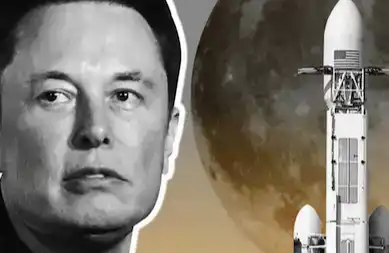
Behind SpaceX's $2 Trillion Market Cap: Why Does Musk Always Have the Next Move Planned?

On June 12th, SpaceX debuted on the Nasdaq, reaching a valuation that briefly touched $2 trillion. This marked the culmination of a 24-year journey from its founding in 2002, driven by Elon Musk's frustration at the high cost of buying rockets. The company's path was defined by early failures, with its first three Falcon 1 launches ending in explosions before a successful 2008 flight opened the era of commercial spaceflight. Key to its model was a fixed-price NASA contract, incentivizing cost reduction. SpaceX mastered rocket reusability, first achieving a Falcon 9 landing in 2015, which drastically cut launch costs. This enabled its profitable Starlink satellite internet constellation, envisioned years before reusability was proven, to create an internal market for frequent launches. Similarly, the next-generation Starship rocket was in development long before its first flight, with its business case evolving from Mars colonization to supporting the emerging concept of in-orbit data centers for AI—a story now central to its valuation. The company's recent IPO, a reversal of its long-standing "no IPO" stance, is funding this ambitious "space-based compute" vision. While major tech players like Google, Blue Origin, and others are investing heavily, significant technical and cost hurdles remain. Ultimately, SpaceX's history is one of creating its own demand: first with Starlink and now with space-based AI compute, betting that its next rocket will enable its next giant market.

marsbit4m ago

Behind SpaceX's $2 Trillion Market Cap: Why Does Musk Always Have the Next Move Planned?

marsbit4m ago

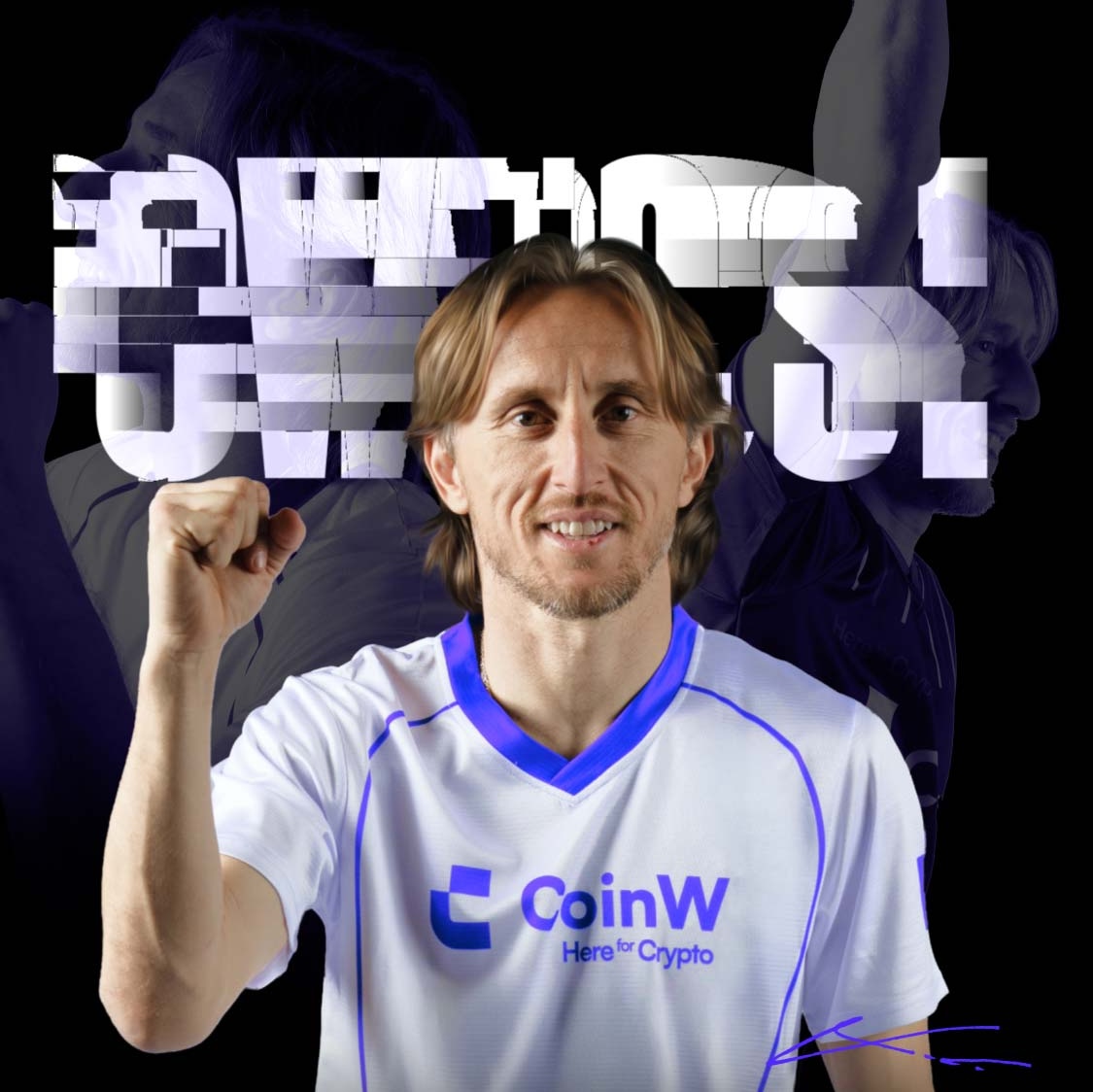
When Crypto Meets the World Cup: CoinW and Modrić's Art of "Navigating Cycles"

When Encryption Meets the World Cup: CoinW and Modrić's "Transcending Cycles" Philosophy In the context of the 2026 FIFA World Cup and its massive global audience, the crypto exchange CoinW announced football legend Luka Modrić as its global brand ambassador. This move is framed not merely as a marketing tactic, but as a strategic experiment in user profile migration. It targets mature, financially stable football fans—particularly in Europe, Southeast Asia, and Latin America—who traditionally have low crypto awareness but value trusted, time-tested authority figures like Modrić. The article draws parallels between Modrić's enduring, disciplined career—marked by consistency and success at the highest level over two decades—and CoinW's own development path. Founded in 2017 during a volatile industry period, CoinW focused on building robust infrastructure and risk management. It weathered the 2022 industry crisis without major security incidents, subsequently earning recognition like "Europe's Most Trusted Exchange" and growing to over 20 million registered users. This "long-termism" is translated into user-centric products. CoinW Academy lowers the initial knowledge barrier. Its integrated ecosystem (CoinW, GemW, DeriW, PropW) and the recent launch of a TradFi section—offering perpetual contracts on traditional assets like stocks, gold, and oil—aim to create a unified platform for diverse assets. For the World Cup, CoinW launched the "We Are The Game" campaign, collaborating with Alchemy Pay to offer zero-fee deposits and local payment options, aiming to transform spectators into participants and lower entry barriers. Ultimately, CoinW's sports partnerships and product strategy are presented as a concerted effort to build trust and accessibility for the "silent majority" still outside crypto—shifting the industry narrative toward inclusivity and long-term value.

Foresight News10m ago

When Crypto Meets the World Cup: CoinW and Modrić's Art of "Navigating Cycles"

Foresight News10m ago

A Panoramic View of the Solana Privacy Ecosystem: The Complete Privacy Stack from Computation to AI

**Solana Privacy Ecosystem: A Comprehensive Overview from Computation to AI** Solana's privacy ecosystem, while nascent, is rapidly evolving to address key challenges across multiple layers. Key figures like Helius CEO Mert acknowledge that Solana has lagged in privacy but highlight its unique potential for scalable, composable privacy protocols, potentially leveraging technologies like ZK compression without persistent rollups. The foundational layer is **Private Compute**, addressed by providers like Arcium and Magic Block. Arcium utilizes Multi-Party Computation (MPC) networks to process encrypted data off-chain with final settlement on Solana, supporting use cases like confidential payments (via its C-SPL token standard) and encrypted data analysis. Magic Block employs Trusted Execution Environments (TEEs) to create private, ephemeral rollups, offering confidentiality, scalability, and composability. Both enable private order books, dark pools, and DeFi rails. Building on this infrastructure are applications for **Private Transfers and Balances**. Umbra, built on Arcium, offers encrypted token accounts with amount, balance, and sender-receiver linkage privacy, plus compliance features. Privacy Cash uses Tornado-style shielded pools for SOL, while Hush provides private staking and trading with integrated swaps via Jupiter. To eliminate **On-Chain Trails** from everyday activities like trading, protocols like encifherio and VanishTrade are emerging. encifherio privately routes swaps through Jupiter by encrypting transaction details within TEEs. VanishTrade routes trades through shielded liquidity pools. Darklake offers a ZK-native "blind slippage" AMM and private perpetuals to hide trading intent and prevent front-running. More advanced applications include **Private Prediction Markets**. Platforms like Melee Markets use Arcium's MPC to encrypt order books, allowing participants to place hidden bets without revealing their market position until settlement. Finally, the ecosystem is expanding into **Private AI**. Loyal leverages both Magic Block and Arcium to create a decentralized protocol where user-AI interactions, queries, and preferences are encrypted on-chain, giving users ownership and control over their data while enabling private transactions and yield generation. In summary, Solana's privacy stack is developing from core compute and transfer privacy towards sophisticated applications in DeFi, prediction markets, and AI, aiming for a future where Fully Homomorphic Encryption (FHE) and Zero-Knowledge (ZK) proofs combine for a complete privacy solution.

marsbit12m ago

A Panoramic View of the Solana Privacy Ecosystem: The Complete Privacy Stack from Computation to AI

marsbit12m ago

Trading

Spot
Futures

Hot Articles

How to Buy GAIN

Welcome to HTX.com! We've made purchasing GriffinAI (GAIN) simple and convenient. Follow our step-by-step guide to embark on your crypto journey.Step 1: Create Your HTX AccountUse your email or phone number to sign up for a free account on HTX. Experience a hassle-free registration journey and unlock all features.Get My AccountStep 2: Go to Buy Crypto and Choose Your Payment MethodCredit/Debit Card: Use your Visa or Mastercard to buy GriffinAI (GAIN) instantly.Balance: Use funds from your HTX account balance to trade seamlessly.Third Parties: We've added popular payment methods such as Google Pay and Apple Pay to enhance convenience.P2P: Trade directly with other users on HTX.Over-the-Counter (OTC): We offer tailor-made services and competitive exchange rates for traders.Step 3: Store Your GriffinAI (GAIN)After purchasing your GriffinAI (GAIN), store it in your HTX account. Alternatively, you can send it elsewhere via blockchain transfer or use it to trade other cryptocurrencies.Step 4: Trade GriffinAI (GAIN)Easily trade GriffinAI (GAIN) on HTX's spot market. Simply access your account, select your trading pair, execute your trades, and monitor in real-time. We offer a user-friendly experience for both beginners and seasoned traders.

3.4k Total ViewsPublished 2025.09.24Updated 2026.06.02

How to Buy GAIN

Discussions

Welcome to the HTX Community. Here, you can stay informed about the latest platform developments and gain access to professional market insights. Users' opinions on the price of GAIN (GAIN) are presented below.

活动图片