Dari Infrastruktur Listrik ke Ekonomi Token: "Kue Tujuh Lapis" Rantai Industri AI

marsbitPublished on 2026-05-26Last updated on 2026-05-26

Abstract

Dalam dua tahun terakhir, industri AI difokuskan pada "perang model besar" dengan peningkatan parameter, biaya pelatihan, dan kluster GPU. Menjelang 2026, logika penggerak berubah: permintaan inferensi AI yang masif, didorong oleh miliaran AI Agent, akan menjadi konsumen utama komputasi. Industri bergeser dari "era model" ke "era industri Token," di mana produksi, distribusi, penjadwalan, dan konsumsi Token menjadi inti. Artikel ini mengusulkan kerangka "kue tujuh lapis" untuk ekonomi AI berbasis Token: 1. **Listrik**: Dasar energi. 2. **AIDC**: Pabrik Token. 3. **GPU**: Peralatan produksi Token. 4. **LLM**: Mesin produksi Token. 5. **Distribusi Token**: "Jaringan listrik" era AI. 6. **Optimasi & Penjadwalan Cerdas Token**: Otak era AI. 7. **AI Agent**: Terminal konsumen Token. Meski berkembang pesat, rantai ini masih terfragmentasi. Hambatan seperti ketersediaan listrik, penjadwalan yang tidak efisien, biaya inferensi tinggi, dan kurangnya kolaborasi node tepi membatasi potensi penuh. Ekosistem AI hanya akan matang dan memasuki "era adopsi massal" ketika ketujuh lapisan ini terintegrasi dan beroperasi secara sinergis, menciptakan jaringan infrastruktur cerdas global yang berkelanjutan untuk produksi, distribusi, dan konsumsi Token.

Dalam dua tahun terakhir, narasi tahap awal industri AI terutama berpusat pada "perang model besar" yang dimulai oleh berbagai perusahaan besar. Jumlah parameter berkembang dari ratusan miliar menuju triliunan, biaya pelatihan naik dari puluhan juta dolar AS menjadi ratusan juta dolar AS, kluster GPU berkembang dari ribuan kartu menjadi puluhan ribu kartu. Semua orang membahas model siapa yang lebih kuat, siapa yang lebih mendekati AGI, seolah-olah garis akhir persaingan AI ditentukan oleh performa model besar itu sendiri.

Dan sekarang, memasuki tahun 2026, logika penggerak industri AI telah berubah. Laporan terbaru JPMorgan berpendapat, yang benar-benar akan mendorong ekspansi berkelanjutan infrastruktur AI di masa depan, bukan lagi pelatihan model, melainkan permintaan inferensi AI yang masif. Yang akan mengonsumsi daya komputasi paling banyak di masa depan, tidak lagi hanya melatih model besar, melainkan miliaran AI Agent yang tersebar di seluruh dunia. Setiap panggilan, setiap interaksi, setiap eksekusi tugas, pada dasarnya mengonsumsi Token. Industri AI sedang beralih dari "zaman model", masuk ke "zaman industri Token".

Karena yang benar-benar menggerakkan dunia AI di masa depan, bukan hanya model itu sendiri, melainkan sistem produksi, distribusi, penjadwalan, dan konsumsi yang terbentuk di sekitar Token. Terutama setelah AI Agent mulai muncul dalam skala besar, bagaimana Token dihasilkan secara real-time, didistribusikan lintas wilayah, dijadwalkan secara dinamis, dan dikonsumsi secara efisien, akan menjadi masalah inti baru bagi seluruh industri AI.

Seperti yang diungkapkan Huang Renxun (Jensen Huang) baru-baru ini, AI bukanlah industri perangkat lunak yang sederhana, melainkan sistem infrastruktur seperti listrik dan internet. Dalam arsitektur "Kue Lima Lapis"-nya, industri AI dibagi menjadi lima struktur lapisan: energi, chip, infrastruktur, model, dan aplikasi. Seiring industri AI perlahan-lahan beralih dari "zaman pelatihan" ke "zaman inferensi", GoodVision AI lebih cenderung memahami seluruh rantai ekonomi industri AI sebagai "struktur kue tujuh lapis" yang berputar di sekitar Token:

Lapisan Pertama: Listrik – Fondasi Energi Zaman AI
Lapisan Kedua: AIDC – Pabrik Token
Lapisan Ketiga: GPU – Perangkat Produksi Token
Lapisan Keempat: LLM – Mesin Produksi Token
Lapisan Kelima: Distribusi Token – "Jaringan Listrik" Zaman AI
Lapisan Keenam: Optimisasi & Penjadwalan Cerdas Token – Otak Zaman AI
Lapisan Ketujuh: AI Agent – Terminal Konsumen Token

Dari energi, GPU, ke AIDC, node edge, hingga inferensi model dan penjadwalan cerdas, industri AI sedang membentuk sistem "industri Token" yang belum pernah ada sebelumnya.

Tetapi pada tahap ini, sistem ini masih jauh dari matang.

Ada yang memiliki GPU tercanggih, tetapi terbatas oleh energi; ada yang membangun AIDC yang besar, tetapi kekurangan penjadwalan yang efisien; ada yang mengembangkan AI Agent yang kuat, tetapi menghadapi biaya inferensi dan latensi yang tinggi; ada yang menguasai node edge, tetapi tidak dapat membentuk jaringan yang terkoordinasi secara terpadu. Meskipun seluruh rantai industri berkembang pesat, masih terdapat banyak celah, redundansi, dan hambatan efisiensi antar lapisan.

Dan hanya ketika ketujuh lapisan infrastruktur ini benar-benar terhubung, berkolaborasi, dan bersinergi, industri AI akan benar-benar beralih dari "zaman alat" saat ini, menuju "zaman adopsi massal" milik dunia kecerdasan.

Kue Lapis Pertama: Listrik – Energi Zaman AI

Revolusi Industri memperebutkan batubara dan minyak, era internet memperebutkan lalu lintas dan server, sedangkan era AI, perang paling mendasar kembali ke energi.

Karena AI pada akhirnya mengonsumsi listrik. Konsumsi listrik sebuah pusat data AI besar telah mendekati sebuah kota menengah. Pusat data AI (AIDC) baru yang dibangun di seluruh dunia, menghadapi masalah yang sama: GPU bisa dibeli, lahan bisa dibangun, tetapi pasokan listrik tidak bisa mengikuti, penjadwalan jaringan listrik juga tidak bisa mengikuti.

Inilah sebabnya, semakin banyak perusahaan AI mulai memperhatikan kembali infrastruktur energi. Pada GTC 2026, Huang Renxun bahkan mendefinisikan pusat data masa depan sebagai "pabrik Token". Hulu dari pabrik ini akan melahirkan industri energi super.

Di pasar Tiongkok, perusahaan-perusahaan seperti China Yangtze Power, China National Nuclear Corporation, China General Nuclear Power Group, China Three Gorges Renewables, Longyuan Power, dan Huadian New Energy, masing-masing mewakili arah inti energi seperti tenaga air, nuklir, angin, dan fotovoltaik. Di antaranya, nuklir dan tenaga air, dengan kemampuan penyediaan listrik yang stabil, menjadi sumber energi dasar terpenting untuk AIDC; sementara tenaga angin dan fotovoltaik diuntungkan oleh peningkatan permintaan industri AI akan listrik hijau dan kebutuhan ESG. Seiring dengan promosi "Computing from the East to the West" (konsep distribusi komputasi) dan pembangunan pusat data AI berskala besar, hubungan sinergis antara basis energi baru dan pusat komputasi sedang diperkuat dengan cepat.

Di pasar AS, raksasa energi tradisional seperti NextEra Energy, Dominion Energy, Duke Energy, Southern Co., dan Exelon juga diuntungkan oleh ekspansi pusat data AI. Di antaranya, NextEra adalah pemimpin listrik hijau di Amerika Utara; Dominion menguasai sumber daya transmisi inti "koridor pusat data" di Virginia Utara; Exelon, dengan kemampuan penyediaan listrik stabil dari tenaga nuklir, menjadi penerima manfaat penting dari kebutuhan "listrik stabil tinggi sepanjang waktu" di era AI. Secara keseluruhan, industri listrik global sedang berevolusi dari utilitas publik tradisional, menjadi lapisan sumber daya inti di era infrastruktur AI.
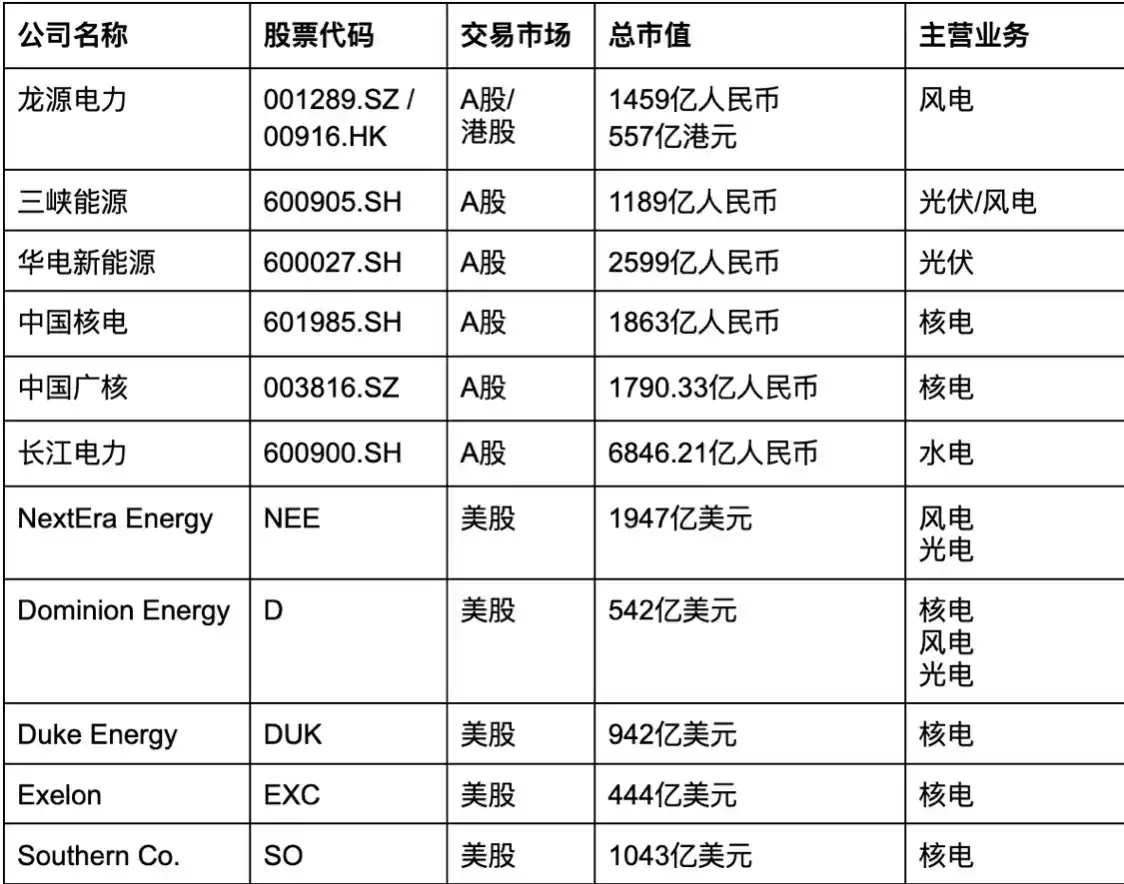
Secara keseluruhan, pola persaingan di lapisan ini sedang berubah dari "persaingan harga listrik" perusahaan energi tradisional, menjadi "persaingan hak penguncian listrik" antara pusat data AI, penyedia cloud, dan perusahaan energi di hilir. Siapa yang dapat mengunci energi jangka panjang, stabil, dan berbiaya rendah, dialah yang menguasai naga pertama produksi Token.

Kue Lapis Kedua: AIDC – Pabrik Bahan Baku Token

GPU tunggal tidak berarti, yang benar-benar penting adalah kluster berskala. Maka muncullah AIDC.

Ini seperti pabrik baja, pembangkit listrik, dan pabrik jalur perakitan di era industri, yang mengonsentrasikan ribuan GPU menjadi kemampuan produksi Token yang stabil. Tetapi masalah pabrik juga mulai muncul: siklus pembangunan AIDC tradisional seringkali memakan waktu 18 hingga 36 bulan, bahkan perlu lebih lama untuk perluasan jaringan listrik. Ketika permintaan AI tumbuh secara eksponensial, kecepatan pembangunan IDC era lama tidak dapat memenuhi ekonomi Token yang baru.

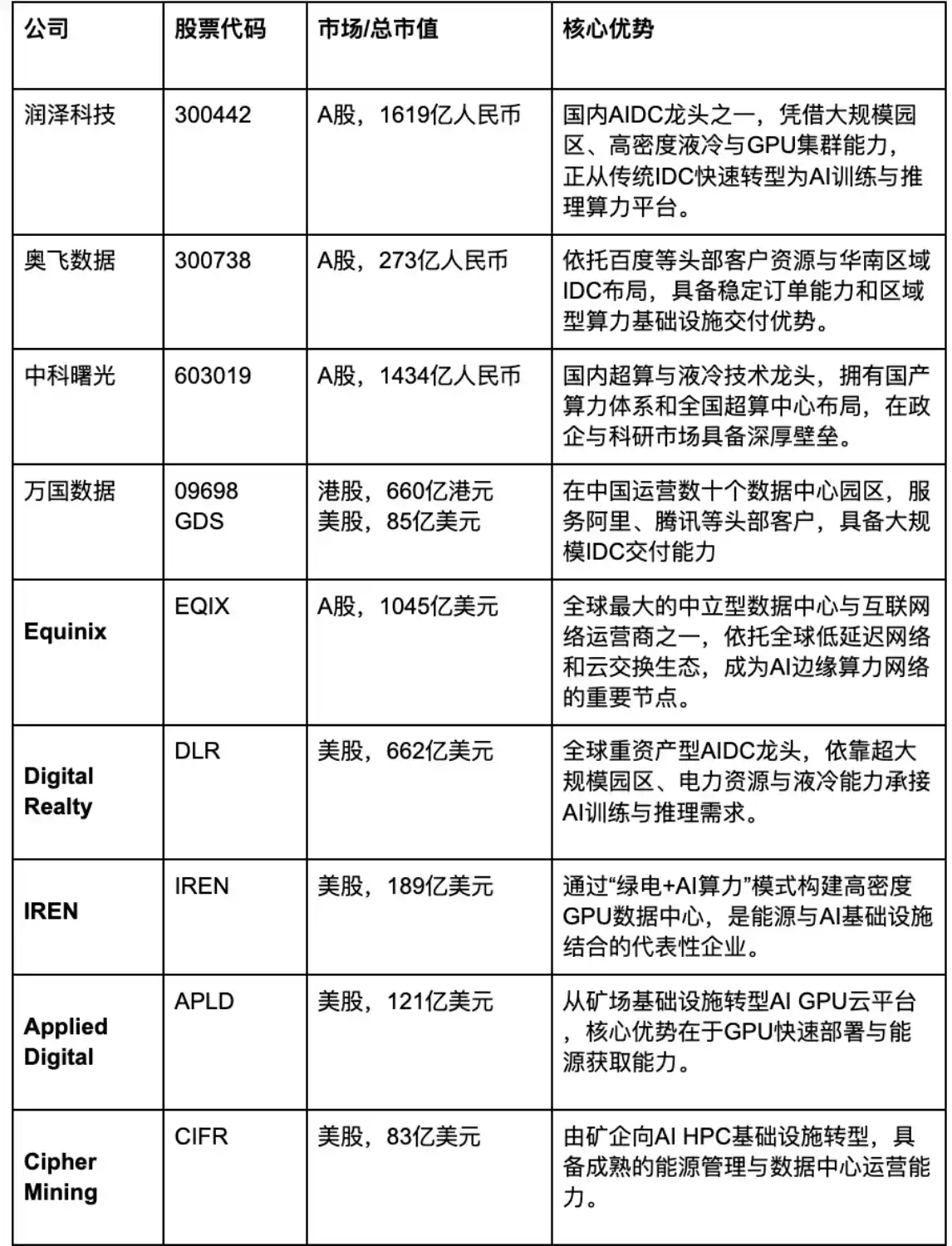
Di pasar saham AS, Equinix adalah salah satu operator pusat data terkemuka di dunia, dengan lebih dari 240 pusat data di lebih dari 30 negara. Keunggulan intinya bukan hanya jumlah ruang server, melainkan kemampuan konektivitas global dan sumber daya jaringan latensi rendah, sehingga menjadi simpul infrastruktur penting untuk penempatan daya komputasi AI.

Digital Realty, melalui PlatformDIGITAL, masuk ke infrastruktur AI, dengan pelanggan termasuk penyedia layanan cloud besar dan lembaga keuangan.

Di pasar Tiongkok, RunZe Technology adalah operator AIDC paling tipikal di pasar saham A. Bisnis utamanya telah berevolusi dari IDC tradisional menjadi pusat daya komputasi AI, dengan daya saing inti terletak pada ruang server berskala besar, sumber daya listrik, dan kemampuan operasional AIDC. Perusahaan seperti OFly Data, 21Vianet, masing-masing terus berekspansi ke arah pusat data regional, infrastruktur cloud, dan penyediaan daya komputasi AI. Sugon lebih condong ke kerjasama di bidang pemerintahan, perusahaan, dan penelitian dalam bisnis AIDC.

Sementara itu, pemain lain berasal dari "transformasi tambang". Perusahaan seperti CoreWeave, IREN, Applied Digital, Cipher Mining, sebelumnya banyak terkait dengan penambangan kripto, tetapi dengan lonjakan permintaan GPU AI, mereka dengan cepat beralih ke infrastruktur daya komputasi AI. IREN mengusung model "listrik hijau + daya komputasi AI", membangun pusat data GPU berdensitas tinggi dengan energi terbarukan. Applied Digital dan Cipher Mining juga bertransformasi dari tambang tradisional ke infrastruktur komputasi kinerja tinggi AI.
Selain itu, AI Factory yang terdesentralisasi, lebih kecil, dan modular mulai menjadi tren baru. Seperti era internet yang beralih dari mainframe ke cloud computing, daya komputasi AI perlu menyebar dari node pusat super besar ke node edge regional.

Oleh karena itu, GoodVision AI memilih jalur lain: membangun AI Factory yang lebih ringan, modular, dan dapat direplikasi dengan cepat. Dibandingkan dengan AIDC besar tradisional, GoodVision AI lebih menekankan kemampuan penempatan regional, efisiensi kluster GPU berdensitas tinggi, serta sinergi terpadu energi dan daya komputasi.

Logika intinya bukan membangun satu pusat data super besar tunggal, melainkan dengan cepat menempatkan node AI Factory di wilayah berpenduduk padat di seluruh dunia, biasanya berupa ruang server daya komputasi inferensi kecil 2-4MW. Model ini tidak hanya dapat lebih cepat mengakses sumber daya energi lokal, tetapi juga lebih cocok dengan tren permintaan inferensi AI yang menyebar ke sisi edge di masa depan.

Jika AIDC tradisional lebih menyerupai pabrik baja besar era industri, maka yang dibangun GoodVision AI lebih menyerupai "pabrik Token regional" era AI – lebih ringan, lebih fleksibel, lebih dekat dengan pengguna, dan lebih cocok untuk arah pengembangan jaringan inferensi terdistribusi global di masa depan.

Kue Lapis Ketiga: GPU – Perangkat Produksi Token

Jika listrik adalah energi, maka GPU adalah perangkat produksi. Pada tahun-tahun awal ledakan AI, GPU terutama melayani pelatihan; tetapi di masa depan, permintaan yang lebih besar berasal dari inferensi. Karena pelatihan hanya dimiliki oleh sedikit perusahaan puncak, sedangkan inferensi akan meresap ke setiap aplikasi, setiap perangkat, setiap terminal. Robot memerlukan inferensi, mengemudi otomatis memerlukan inferensi, kacamata AI memerlukan inferensi, bahkan kolaborasi antar setiap AI Agent di masa depan, juga mengonsumsi Token secara real-time.

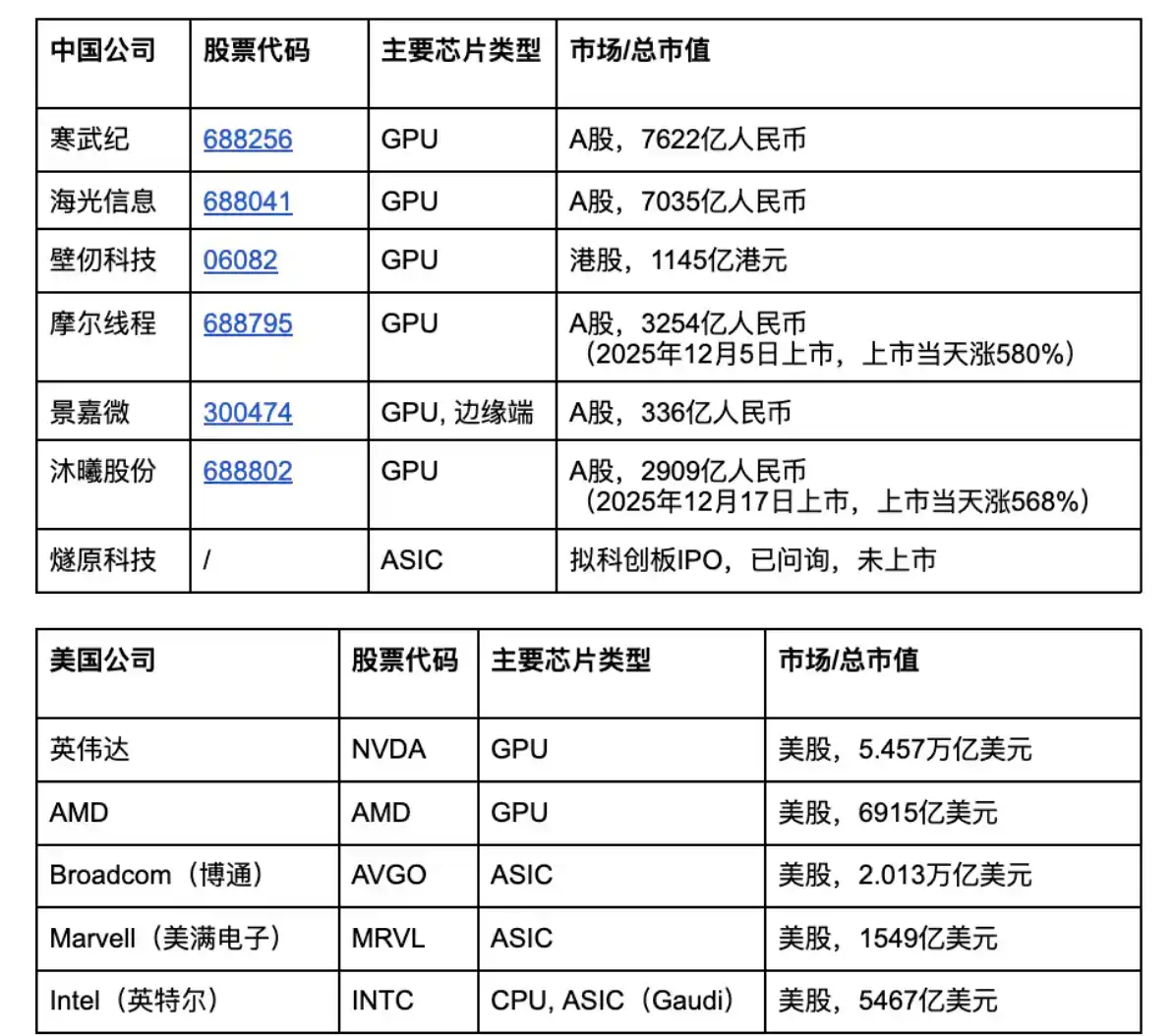
NVIDIA saat ini masih menjadi inti absolut industri chip AI global. Produk GPU seperti H100, B200, Blackwell, hampir mendefinisikan standar pelatihan dan inferensi AI global saat ini. Yang lebih penting, NVIDIA tidak hanya menjual chip, tetapi juga membangun ekosistem lengkap melalui sistem perangkat lunak dan perangkat keras seperti CUDA, TensorRT, DGX, HGX, sehingga pesaingnya tidak hanya perlu menantang kinerja GPU, tetapi juga seluruh ekosistem perangkat lunak AI.

AMD adalah pesaing GPU utama saat ini, dengan produk inti termasuk MI300X dan GPU AI lainnya. Dibandingkan NVIDIA, AMD lebih menekankan ekosistem terbuka dan platform perangkat lunak ROCm, berharap dapat menarik pengembang AI dan pelanggan perusahaan dengan cara yang lebih terbuka.

Broadcom dan Marvell mewakili jalur lain – ASIC dan interkoneksi berkecepatan tinggi. Seiring skenario inferensi AI semakin kompleks, semakin banyak perusahaan mulai mencoba chip ASIC khusus untuk mendapatkan rasio efisiensi energi yang lebih tinggi dan biaya yang lebih rendah.

Intel, melalui server CPU dan kartu akselerasi AI Gaudi, masuk ke pasar AI, berharap dapat menggunakan kembali ekosistem CPU-nya untuk berpartisipasi dalam persaingan infrastruktur AI.

Di pasar Tiongkok, Cambricon adalah salah satu perusahaan chip AI domestik yang paling representatif, mempromosikan seri chip AI Siyuan (Thinker), dan membangun kerangka kerja AI sendiri Neuware. Hygon memiliki lisensi arsitektur AMD Zen, fokus pada pasar DCU dan inferensi AI.

Perusahaan GPU domestik seperti Moore Threads, Enflame Technology, MetaX, Biren Technology, mewakili arah "pengganti domestik" chip AI Tiongkok. Mereka umumnya menekankan kompatibilitas dengan ekosistem CUDA, dan mencoba membangun kluster GPU domestik.
Dari ekosistem CUDA ke memori HBM, hingga Tensor Core, inti dari seluruh industri AI sebenarnya adalah terus meningkatkan "efisiensi menghasilkan Token per unit waktu". Pada saat yang sama, GPU serta infrastruktur di belakangnya seperti server, modul optik, pendinginan cair, switch, juga erat kaitannya dengan efisiensi produksi Token.

Hal-hal ini tidak seterang NVIDIA, OpenAI, atau perusahaan aplikasi AI, tetapi mereka menentukan apakah dunia AI benar-benar dapat beroperasi. Sama seperti Revolusi Industri yang tidak hanya membutuhkan mesin uap, tetapi juga rel kereta api, jaringan listrik, dan pelabuhan. Revolusi AI juga bukan hanya revolusi perangkat lunak. Ini adalah peningkatan rantai industri global yang mencakup energi, chip, jaringan, cloud computing, dan infrastruktur.
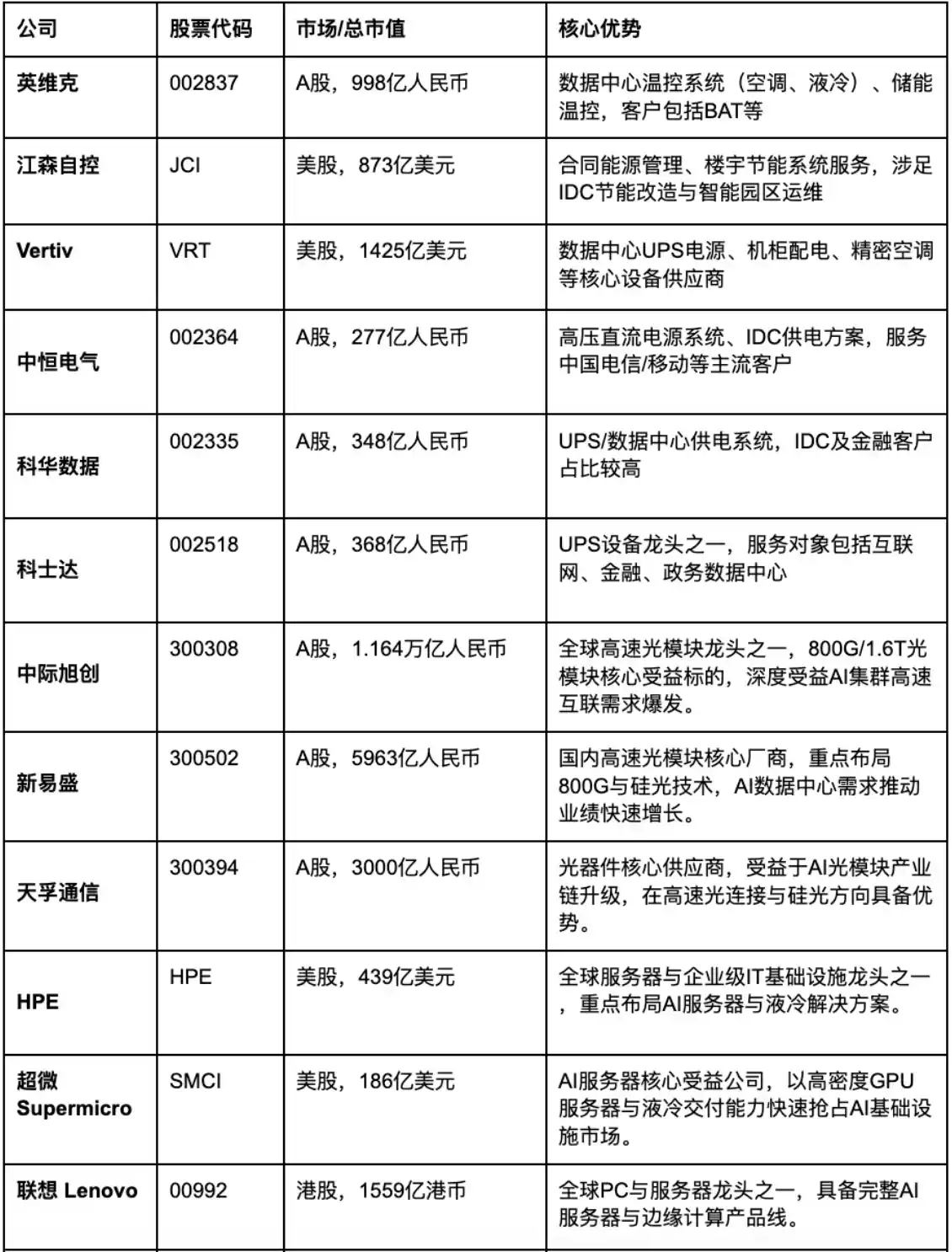
Vertiv adalah pemimpin global UPS dan manajemen daya pusat data, menyediakan sistem catu daya, distribusi daya rak, dan pendingin presisi untuk pusat data.

Envicool adalah pemimpin pendinginan cair dan sistem pengontrol suhu di pasar saham A, dengan pelanggan termasuk perusahaan internet besar seperti BAT. Seiring daya GPU semakin tinggi, pendinginan cair menjadi standar penting untuk AIDC.

Perusahaan seperti Hangzhou Sineva Electric, Kehua Data, KSTAR, memiliki posisi penting di bidang UPS, sistem catu daya, dan pasokan listrik IDC.

Dalam arah jaringan dan modul optik, perusahaan seperti InnoLight, Eoptolink, Tianfu Communications, diuntungkan oleh lonjakan permintaan komunikasi berkecepatan tinggi internal kluster AI.

Sedangkan di arah server rakitan lengkap, perusahaan seperti Dell, HPE, Supermicro, Lenovo, Inspur Information, bertanggung jawab atas perakitan dan pengiriman server AI berskala besar.

Lapisan ini meskipun tidak langsung berhadapan dengan pengguna akhir, menentukan apakah infrastruktur AI benar-benar dapat beroperasi dengan stabil. Pendinginan cair, UPS, modul optik, switch, penyimpanan energi, dan server rakitan lengkap, seperti rel kereta api, jaringan listrik, dan pelabuhan di era industri, menjadi bisnis "penjual sekop" sejati di dunia AI.

Kue Lapis Keempat: LLM – Mesin Produksi Token

LLM (Model Bahasa Besar) menentukan bagaimana Token dipahami, dihasilkan, dan diorganisir. Dua tahun terakhir, perusahaan seperti OpenAI, Anthropic, Google, Meta, xAI, DeepSeek memicu "kompetisi model besar" global. Jumlah parameter berkembang dari ratusan miliar ke triliunan, kemampuan model juga berkembang dari generasi teks, menjadi multimodal, penalaran, kode, kolaborasi Agent, dan memori jangka panjang.

Tetapi seiring industri berkembang, pasar juga mulai menyadari: yang benar-benar penting di masa depan, tidak lagi "siapa yang memiliki model terbesar", melainkan siapa yang dapat terus menjalankan model dengan biaya lebih rendah dan efisiensi lebih tinggi. Karena model itu sendiri tidak langsung menciptakan nilai, yang benar-benar menciptakan nilai adalah proses inferensi setelah model dipanggil berulang kali.

Ini juga berarti, LLM sedang berevolusi dari "menunjukkan kemampuan model" di masa lalu, menjadi "mesin produksi Token" di dunia AI.

Model sumber tertutup dan terbuka seperti OpenAI, Anthropic, Google Gemini, Meta Llama, sedang memperebutkan pintu masuk ekosistem AI masa depan; sementara pemain baru seperti DeepSeek, dengan cara biaya lebih rendah dan efisiensi inferensi lebih tinggi, mulai membentuk kembali pola persaingan industri. Persaingan di lapisan LLM sekarang, juga perlahan tidak lagi hanya mengejar persaingan jumlah parameter, standar penilaian perlahan beralih ke perbandingan beberapa dimensi:


Biaya Token
Efisiensi Inferensi
Kemampuan Konteks
Kolaborasi Multi-Agent
Memori Jangka Panjang
Kemampuan Kolaborasi Model dan Infrastruktur
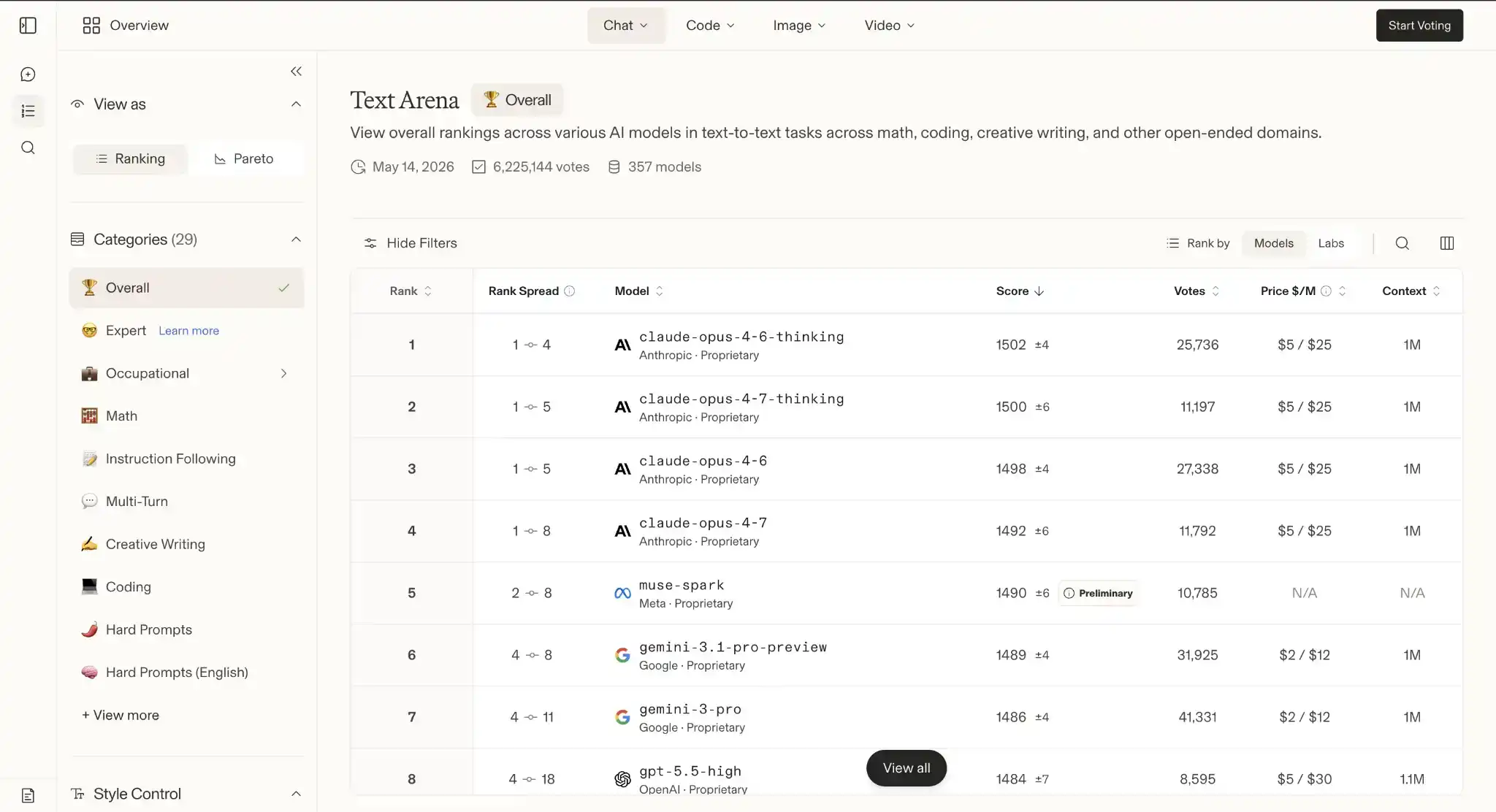
Karena yang benar-benar penting di era AI, tidak hanya seberapa "cerdas" model besar itu, tetapi apakah model dapat dijalankan secara berkelanjutan, berskala besar, dan berbiaya rendah di seluruh dunia. GoodVision AI di lapisan ini juga memiliki solusi optimasinya sendiri: melalui kerjasama dengan vendor model besar, menempatkan model besar di ruang server AI Factory, mewujudkan transisi dari bisnis penyewaan daya komputasi tradisional ke penyediaan layanan Token langsung; tidak hanya dapat meningkatkan margin keuntungan bisnis, tetapi pengalaman pengguna juga lebih ramah.

Kue Lapis Kelima: Distribusi Token – "Jaringan Listrik" Era AI

Setelah AIDC dibangun, masalah berikutnya muncul: bagaimana daya komputasi ini digunakan oleh seluruh dunia?

Maka, platform penyewaan daya komputasi mulai muncul. Mereka seperti "sistem jaringan listrik" era AI, membagi, mendistribusikan, dan menyewakan sumber daya GPU yang awalnya terpusat sesuai kebutuhan kepada pengembang, perusahaan, dan aplikasi AI.

AWS, Azure, Google Cloud, Alibaba Cloud, Tencent Cloud tetap menjadi pemain terkuat di lapisan ini. Mereka memiliki infrastruktur cloud computing terbesar di dunia, dan sedang secara bertahap memasukkan sumber daya GPU AI ke dalam sistem IaaS mereka sendiri.

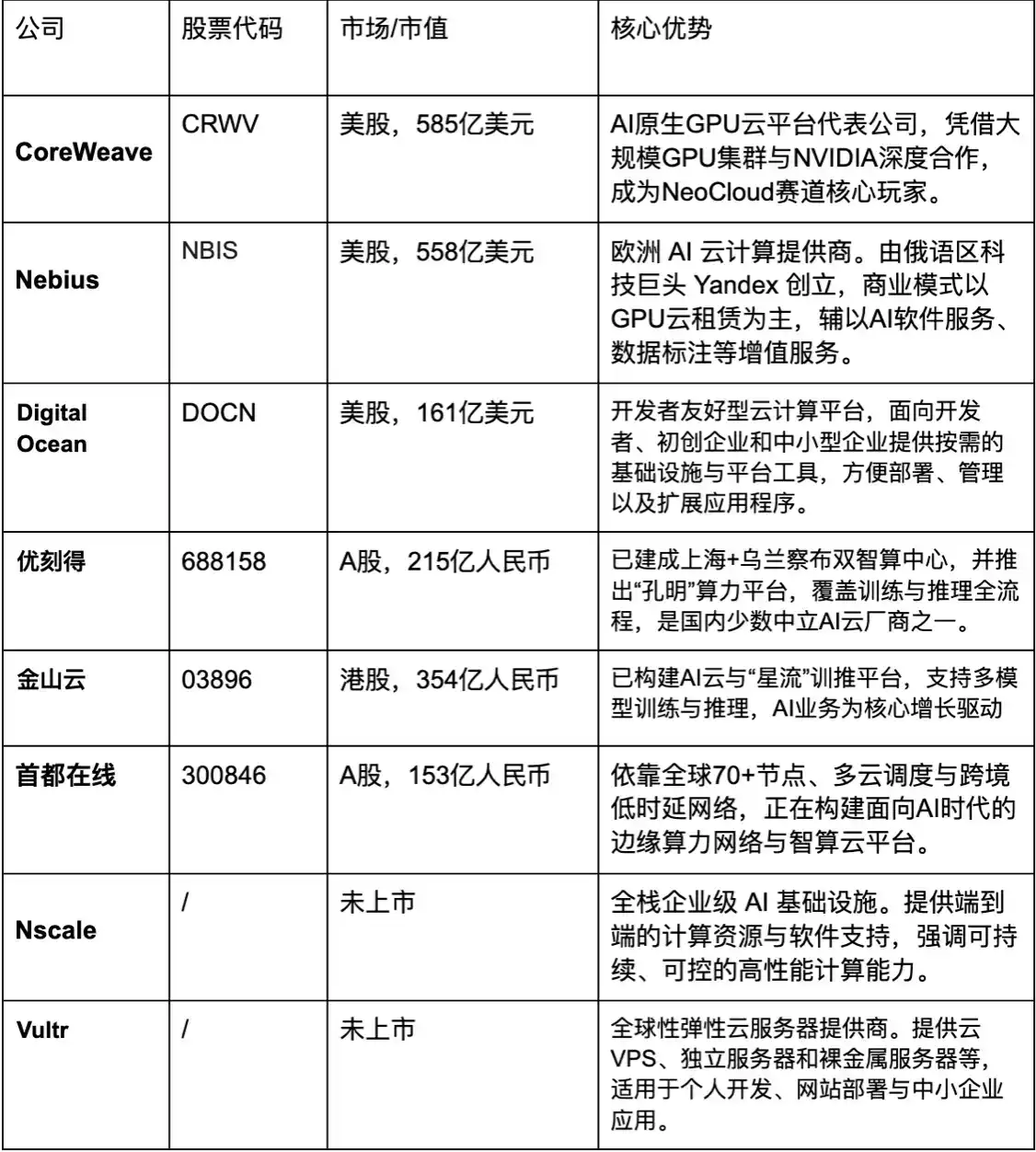
Namun pada saat yang sama, sekelompok "cloud asli AI" mulai bangkit dengan cepat. Perusahaan seperti CoreWeave, Nebius, Nscale, secara khusus membangun platform cloud GPU di sekitar kebutuhan pelatihan dan inferensi AI. Dibandingkan dengan vendor cloud tradisional, mereka lebih fleksibel, lebih fokus pada tugas AI, dan lebih ahli dalam mengoptimalkan kluster GPU.

CoreWeave saat ini adalah salah satu perusahaan paling representatif di NeoCloud. Awalnya fokus pada penambangan Ethereum, kemudian sepenuhnya beralih ke layanan cloud GPU AI, dan saat ini telah menjadi perusahaan infrastruktur AI yang didukung secara khusus oleh NVIDIA.

Platform cloud ringan seperti DigitalOcean, Vultr, menargetkan pengembang kecil dan menengah serta perusahaan startup, menekankan penyebaran cepat dan layanan GPU berbiaya rendah.

Di pasar Tiongkok, selain raksasa, perusahaan seperti UCloud, Kingsoft Cloud, 21Vianet, semuanya adalah pemasok utama di pasar cloud GPU dan penyewaan daya komputasi AI. Pola persaingan di lapisan ini sangat mirip dengan jaringan listrik awal: bagaimana mendistribusikan daya komputasi yang tersebar secara efisien.
Kue Lapis Keenam: Optimisasi & Penjadwalan Cerdas Token – Otak Era AI

Ini mungkin lapisan "kue" yang paling diremehkan tetapi paling kritis. Setelah penggunaan AI Agent meledak, semua orang menyadari, tidak semua tugas layak memanggil model besar termahal. Banyak tugas sederhana dapat diselesaikan oleh model lokal; banyak tugas real-time lebih cocok untuk inferensi edge; banyak tugas privasi bahkan tidak dapat diunggah ke cloud. Setelah masalah "apakah ada daya komputasi", muncul masalah lain, yaitu "bagaimana menggunakan daya komputasi dengan lebih cerdas".

Seiring permintaan Token tumbuh secara eksponensial, "membiarkan model yang sesuai, pada daya komputasi yang sesuai, menangani tugas yang sesuai." adalah kunci untuk menggunakan Token secara wajar dan efisien. Inilah salah satu arah yang sedang diperjuangkan GoodVision AI selain menempatkan pabrik Token AI.

Seperti sistem listrik hari ini: beberapa permintaan berasal dari jaringan listrik besar; beberapa permintaan berasal dari tenaga surya atap. Dan yang benar-benar penting, adalah lapisan tengah "sistem penjadwalan cerdas" itu.

AI di masa depan juga akan memiliki struktur yang sama: tugas sederhana diselesaikan oleh model kecil lokal, tugas kompleks memanggil model besar cloud, tugas privasi tinggi diproses di sisi edge, tugas konkurensi tinggi, dijadwalkan secara dinamis melalui hybrid cloud.

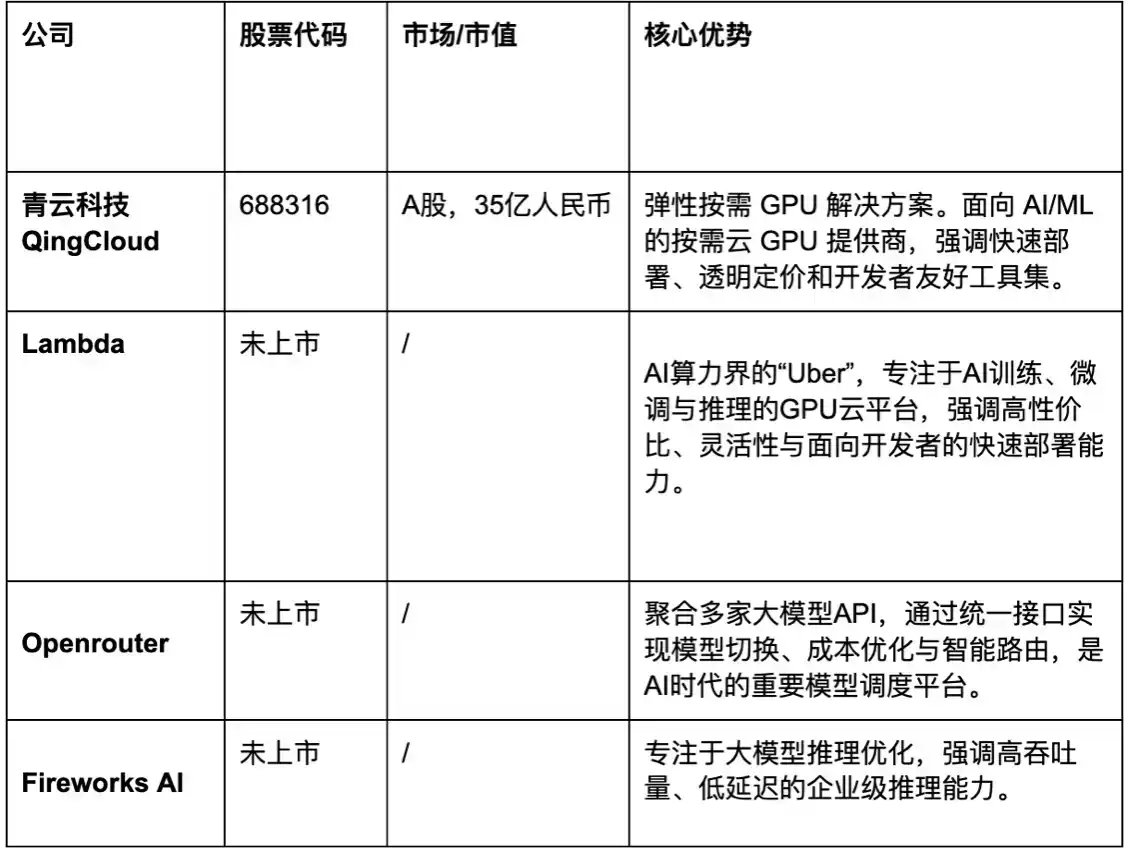
Selain GoodVision AI, perusahaan seperti QingCloud, Lambda, OpenRouter, Fireworks AI, juga adalah yang terbaik dalam optimisasi dan penjadwalan cerdas Token.

Dan lapisan "kue" ini dengan dua lapisan "kue" sebelumnya – AIDC dan penyewaan daya komputasi, memiliki pemain yang tumpang tindih tinggi. Ketika sumber daya GPU, node regional, dan skala tugas inferensi terus meluas, hanya "memiliki daya komputasi" sudah tidak cukup untuk membangun hambatan jangka panjang. Semakin banyak operator AIDC dan platform cloud GPU mulai menyadari, yang benar-benar menentukan efisiensi dan margin keuntungan di masa depan, bukan hanya jumlah GPU, melainkan bagaimana menjadwalkan model, daya komputasi, dan aliran Token secara dinamis.

Oleh karena itu, banyak platform yang awalnya menempatkan AIDC dan cloud GPU, juga mulai memperluas ke "lapisan penjadwalan cerdas". Misalnya, perusahaan di pasar Tiongkok seperti UCloud, 21Vianet, Sugon, semua sedang mencoba menggabungkan fasilitas cloud GPU mereka, sumber daya multi-cloud, dan kemampuan penjadwalan inferensi, perlahan-lahan beralih dari "menjual daya komputasi", menjadi "mengoptimalkan daya komputasi".
Kue Lapis Ketujuh: Model & Agent – Konsumen Token

Lapisan ini meskipun paling dekat dengan pengguna dan paling mudah mendapatkan lalu lintas, persaingannya juga paling ketat. Pada GTC 2026, Huang Renxun mengemukakan pandangan ini: di masa depan, setiap perusahaan akan menjadi "produsen Token dan konsumen Token".

Sebuah AI Agent, mungkin secara bersamaan memanggil banyak model, banyak alat, banyak API, dan terus melakukan inferensi, perencanaan, dan eksekusi. Ini berarti, jumlah Token yang dikonsumsi AI di masa depan akan jauh melampaui skala percakapan manusia dengan AI saat ini. Beberapa pengguna berat AI saat ini, yang membangun sendiri sistem multi-Agent konkuren dan saling memanggil, mengonsumsi 1 miliar Token per hari bukanlah hal yang luar biasa.

Di masa depan, bukan 1 miliar orang yang menggunakan AI, melainkan 10 miliar, bahkan 100 miliar AI Agent bekerja bersamaan, saling memanggil. Dan hambatan sebenarnya juga akan bergeser dari "kemampuan model", menjadi "efisiensi penjadwalan Token".

Raksasa teknologi tentu saja tidak perlu dikatakan lagi, Microsoft, Google, Meta, Amazon dll. sedang menanamkan kemampuan AI ke dalam semua produk mereka melalui sistem perkantoran, pencarian, jejaring sosial, dan layanan cloud.

Perusahaan perangkat lunak perusahaan seperti Adobe, Salesforce, ServiceNow, Palantir, dengan cepat memajukan AI Agent tingkat perusahaan dan alur kerja otomatisasi. Pada saat yang sama, Hugging Face sedang menjadi "Github" era AI. Ini bukan hanya komunitas model, tetapi juga infrastruktur penting ekosistem pengembangan AI global.

Di pasar Tiongkok, perusahaan seperti iFLYTEK, Kunlun Tech, 360 Security Technology, Kingsoft Office, SenseTime, sedang membangun tata letak di sekitar asisten AI, perkantoran AI, dan AI Agent.

Ketika "Kue Tujuh Lapis" Benar-benar Terbentuk, Dunia AI Baru Akan Benar-benar Dimulai

Industri AI hari ini, sebenarnya masih berada dalam sistem infrastruktur yang belum sepenuhnya matang.

Ada yang memiliki GPU tercanggih, tetapi terbatas oleh energi; ada yang membangun AIDC yang besar, tetapi kekurangan penjadwalan yang efisien; ada yang mengembangkan model dan Agent yang kuat, tetapi menghadapi biaya inferensi dan latensi yang tinggi; ada yang menguasai node edge, tetapi tidak dapat membentuk jaringan yang terkoordinasi secara terpadu.

Dari listrik, AIDC, GPU, ke LLM, distribusi Token, penjadwalan cerdas, dan AI Agent, seluruh rantai industri AI meskipun sedang berkembang pesat, masih terdapat banyak celah, redundansi, dan hambatan efisiensi antar lapisan.

Dan hanya ketika "kue tujuh lapis" ini benar-benar dibangun lengkap, dan mulai beroperasi secara sinergis dan efisien, industri AI akan benar-benar beralih dari "zaman alat" saat ini, masuk ke "zaman adopsi massal" milik dunia kecerdasan.

Dunia AI di masa depan, tidak lagi hanya beberapa raksasa teknologi melatih model besar, melainkan miliaran AI Agent terus online, terus berkolaborasi, terus memanggil daya komputasi dan Token. Setiap percakapan, setiap inferensi, setiap panggilan alat, setiap eksekusi tugas otomatis, di belakangnya sesuai dengan operasi sinergis energi, GPU, jaringan, sistem penjadwalan, dan node inferensi.

Dan ini juga berarti, industri AI sedang berevolusi dari "logika perangkat lunak" di masa lalu, menjadi sistem industri super yang mencakup energi, chip, cloud computing, jaringan edge, dan penjadwalan cerdas.

Sama seperti Revolusi Industri yang tidak hanya membutuhkan mesin uap, tetapi juga rel kereta api, jaringan listrik, dan pelabuhan; Revolusi Internet tidak hanya membutuhkan PC, tetapi juga serat optik, pusat data, dan cloud computing. Tanda kematangan sejati Revolusi AI, juga bukan hanya satu aplikasi populer, melainkan pembentukan "jaringan infrastruktur cerdas" yang dapat terus memproduksi, mendistribusikan, menjadwalkan, dan mengonsumsi Token secara global.

Dan ketika ketujuh lapisan infrastruktur ini akhirnya benar-benar terhubung, logika persaingan industri AI juga akan direkonstruksi sepenuhnya. Perusahaan terpenting di masa depan, mungkin tidak lagi hanya perusahaan yang memiliki model terbesar, melainkan perusahaan yang dapat menghubungkan energi, daya komputasi, jaringan, model, dan aliran Token.









Related Questions

QApa yang dimaksud dengan 'Token' dalam konteks artikel tentang AI?

ADalam konteks artikel ini, 'Token' mengacu pada unit dasar komputasi atau permintaan yang dikonsumsi oleh model AI selama melakukan proses inferensi. Setiap kali AI Agent dipanggil, berinteraksi, atau menjalankan tugas, itu akan menggunakan Token. Industri AI sedang beralih dari fokus pada pelatihan model besar ke era produksi dan konsumsi Token yang masif.

QMenurut artikel, apa tujuh lapisan 'kue' dalam ekonomi industri AI yang berpusat pada Token?

ATujuh lapisan tersebut adalah: 1. Listrik (dasar energi), 2. AIDC (Pabrik Token), 3. GPU (Peralatan produksi Token), 4. LLM (Mesin produksi Token), 5. Distribusi Token ('Jaringan listrik' era AI), 6. Optimasi dan Penjadwalan Cerdas Token (Otak era AI), 7. AI Agent (Konsumsi Token).

QMengapa listrik dianggap sebagai lapisan paling dasar dalam infrastruktur AI?

AListrik dianggap sebagai lapisan paling dasar karena AI pada akhirnya mengonsumsi listrik dalam jumlah sangat besar. Pusat data AI (AIDC) besar dapat mengonsumsi daya setara dengan kota menengah. Ketersediaan dan stabilitas pasokan listrik menjadi faktor penentu untuk menjalankan pabrik 'Token' atau kluster GPU skala besar, sehingga persaingan untuk mengamankan energi jangka panjang yang stabil dan murah menjadi sangat krusial.

QApa perbedaan utama antara AIDC tradisional dan konsep 'AI Factory' yang diusulkan oleh GoodVision AI?

AAIDC tradisional cenderung seperti pabrik baja besar di era industri—dibangun dalam skala sangat besar dengan siklus konstruksi panjang (18-36 bulan). Sebaliknya, 'AI Factory' ala GoodVision AI lebih ringan, modular, dan dapat direplikasi dengan cepat. AI Factory ini biasanya berupa node komputasi inferensi kecil (2-4MW) yang ditempatkan di dekat daerah berpenduduk padat, memungkinkan penyebaran regional yang lebih cepat, efisiensi energi yang lebih baik, dan lebih cocok untuk kebutuhan inferensi AI di masa depan yang akan terdistribusi ke sisi edge.

QMenurut artikel, mengapa lapisan 'Optimasi dan Penjadwalan Cerdas Token' sangat penting untuk masa depan AI?

ALapisan ini penting karena dengan meledaknya penggunaan AI Agent, tidak semua tugas memerlukan model AI terbesar dan termahal. Tugas sederhana dapat ditangani model lokal, tugas real-time cocok untuk inferensi edge, dan tugas sensitif privasi tidak boleh dikirim ke cloud. Lapisan penjadwalan cerdas berfungsi seperti 'otak' yang menentukan model mana, di perangkat keras mana, untuk menangani tugas apa. Ini memastikan Token digunakan secara efisien dan optimal, mengurangi biaya dan latensi, yang sangat penting untuk skala adopsi AI yang masal di masa depan.

Related Reads

Has the 'Digital Gold' Narrative for BTC Failed?

**Title: Has the "Digital Gold" Narrative for Bitcoin Failed?** The article argues that Bitcoin's "digital gold" narrative remains valid despite a recent sharp price decline (from a peak near $126k in Oct 2025 to briefly under $61k in Feb 2026). It presents a long-term investment framework based on three core points: **1. Viewing Bitcoin as an Asset:** Bitcoin is presented as a superior potential store of value compared to gold. Key arguments are its absolute scarcity (21 million cap), superior portability, and transparent auditability via its public ledger. While acknowledging its current use in early, volatile stages (~3-4% global adoption), the author draws parallels to the early, disruptive phases of the internet and e-commerce. **2. Understanding the Recent Downturn:** The current ~50% correction is framed as a predictable, consensus-driven cycle following its post-halving peak (the 2024 halving preceded the Oct 2025 high). A crucial factor is a historic "changing of hands": the influx of new institutional buyers via ETFs allowed early, low-cost holders (miners, OG believers) to take profits. The author notes that while severe, Bitcoin's historical drawdowns (e.g., 93% in 2011, 77% in 2021-22) have been progressively smaller, suggesting maturing holder structure and decreasing volatility over time. **3. The Long-Term Perspective:** The long-term thesis hinges on Bitcoin capturing a portion of gold's market value. With Bitcoin's market cap at ~$1.4 trillion (at $70k) versus gold's ~$20 trillion, significant upside potential exists if the "digital gold" narrative is partially realized. However, the author strongly cautions that short-term risks remain, the bottom is unpredictable, and high volatility is inherent. The real risk is not Bitcoin failing but poor personal position management (over-leverage, wrong capital) and a lack of deep understanding, which can force investors out during severe downturns. The conclusion uses Amazon's 95% crash post-2000 dot-com bubble and subsequent 42x recovery as an analogy. The ultimate question is not if Bitcoin's price will rise, but if an investor's strategy and conviction can withstand the volatility to see the long-term play out. The recent divergence (gold up, Bitcoin down) is posed not as a narrative failure, but as potential evidence of this ongoing, painful transition from a speculative asset to a mainstream allocation.

marsbit51m ago

Has the 'Digital Gold' Narrative for BTC Failed?

marsbit51m ago

Has BTC's 'Digital Gold' Narrative Failed?

The article discusses Bitcoin's "digital gold" narrative, its recent price drop, and long-term outlook through the perspective of "Jason". It argues the narrative is not a failure but that Bitcoin represents a superior, new asset class due to its fixed supply (21 million), portability, and auditability. The piece compares its current ~3-4% global adoption rate to early internet/e-commerce, suggesting significant growth potential. Regarding the 2025-2026 price decline (from ~$126k to briefly under $61k), the author views it as a predictable, consensus-driven sell-off within Bitcoin's ~4-year cycle post-halving, exacerbated by a major "handover" from early, low-cost holders to new institutional buyers via ETFs. A key observation is that historical peak-to-trough drawdowns have lessened over time (e.g., 93% in 2011 to ~50% in 2026), indicating maturing volatility as holder structure changes. For the long term, the author uses a simple framework: Bitcoin's total market cap (~$1.4T at $70k) is only about 7% of gold's (~$20T). Even capturing 30-50% of gold's value would imply substantial upside. However, the article strongly cautions against viewing this as investment advice, emphasizing extreme volatility and the critical importance of risk management, position sizing, and deep fundamental understanding to survive severe drawdowns. It concludes by drawing a parallel to Amazon's 95% crash in 2000 and subsequent 42x recovery, stressing that the key is surviving market cycles to realize long-term potential.

链捕手1h ago

Has BTC's 'Digital Gold' Narrative Failed?

链捕手1h ago

From Code to Cognition: A Ten-Thousand-Word Guide to the Evolution of the Robot Brain

"From Code to Cognition: The Evolution of Robot Brains" The journey of robotic intelligence has shifted dramatically from manually coded systems to AI-driven brains. For decades, robots relied on layered software stacks—perception, state estimation, planning, control—each handcrafted. While predictable, they lacked adaptability. The 2010s saw deep learning revolutionize perception (e.g., object detection) and control (via reinforcement learning), but learned skills remained narrow. The arrival of Large Language Models (LLMs) marked a turning point. LLMs acted as high-level planners, interpreting natural language instructions and generating sequences of actions for traditional robotic systems to execute. However, true integration came with Visual-Language-Action (VLA) models, which fused vision, language, and motion prediction into a single network. Pioneered by models like RT-2 and open-source projects like OpenVLA, VLAs enable robots to reason and act directly from visual input and commands. The most advanced humanoid robots now employ a "dual-brain" architecture: a slow-thinking, large VLA (System 2) for reasoning and planning, and a fast-reacting, small network (System 1) for high-frequency motion control, sometimes with an even lower-level System 0 for balance. This split balances cognition with the physics of real-time movement. Computation is split between onboard hardware (e.g., NVIDIA Jetson) for safety-critical control loops and cloud/edge servers for non-critical tasks like learning and interfaces. A crucial driver is the open-source ecosystem—models like GR00T and OpenVLA allow startups to build upon pre-trained brains and fine-tune them with their own data, accelerating development. Despite progress, current systems struggle with recovery from errors, sample inefficiency, and long-horizon tasks. This has spurred the rise of **World Models**—neural networks that predict the consequences of actions. By simulating possible futures before acting (like NVIDIA Cosmos or Meta V-JEPA), robots can plan, recover, and generalize better. This represents the next frontier: shifting intelligence from learned reactions to an internal model of physics and cause-and-effect. The field is rapidly evolving. While not yet at its "ChatGPT moment," the convergence of cheaper hardware, scalable simulation, and world models points toward robots that are increasingly capable, adaptive, and useful. The question is shifting from "what can robots do?" to "what *should* they do?"

marsbit1h ago

From Code to Cognition: A Ten-Thousand-Word Guide to the Evolution of the Robot Brain

marsbit1h ago

AI Bubble Is Bursting

The AI Bubble is Bursting: A Necessary Purge on the Path to Ubiquitous Intelligence Market volatility has reignited debates about an AI bubble, with figures like Ray Dalio pointing to high valuations. However, this parallels the dot-com bubble, which, despite its crash, laid the physical infrastructure for today's internet era. The current AI investment frenzy, with tech giants planning trillions in infrastructure spending far outstripping current AI application revenues, appears similarly imbalanced. This 'bubble' is seen as an inevitable phase for a disruptive technology, paying the "innovation tax." Critically, AI inference costs have plummeted over 99.7% since 2023, making intelligence nearly free at the margin. This hasn't reduced spending but has instead unlocked massive new demand, as seen in enterprise AI cloud expenditure tripling. This follows the Jevons Paradox: efficiency gains lead to greater total consumption. The market is now entering a cleansing phase, weeding out speculative ventures lacking real moats. The deeper shift is a move from capital expenditure (CapEx) on hardware to value creation in operational expenditure (OpEx) through AI applications that solve real industry problems. While infrastructure valuations are high, rapid earnings growth from widespread AI adoption across sectors—from manufacturing and finance to law and healthcare—may digest these valuations over time. Ultimately, this creative destruction will leave behind robust infrastructure and optimized models, cheaply powering an AI-augmented future for all industries, much as the internet became indispensable after its own bubble burst. The core productive potential remains undiminished.

链捕手1h ago

AI Bubble Is Bursting

链捕手1h ago

Trading

Spot
Futures

Hot Articles

What is LINON

Linde plc Tokenized Stock (Ondo): Revolutionizing Traditional Equity Access Through Blockchain Innovation The emergence of Linde plc Tokenized Stock (Ondo), represented by the ticker $LINON, signifies a monumental shift in the fusion of traditional financial structures and decentralized finance (DeFi). This innovative financial instrument showcases the tremendous potential of blockchain technology to democratize access to traditional equity markets while ensuring the security and regulatory compliance necessary for institutional-grade financial products. Through Ondo Finance's pioneering tokenization platform, $LINON provides a seamless pathway for global investors to engage with one of the world's leading industrial gas companies, Linde plc, creating a blockchain-native representation of the underlying equity. Introduction to Linde plc Tokenized Stock The landscape of financial markets is witnessing a groundbreaking transformation through the tokenization of real-world assets. Linde plc Tokenized Stock (Ondo) epitomizes this revolutionary approach by bridging the gap between conventional stock ownership and blockchain-enabled financial infrastructure. The $LINON token allows investors to gain exposure to one of the prominent industrial companies worldwide through decentralized technology. Operating within Ondo Finance's comprehensive ecosystem, $LINON symbolizes a practical application of tokenization technology that enhances accessibility, efficiency, and global connectivity in traditional financial markets. By leveraging blockchain infrastructure, this tokenized stock enables international investors to participate in U.S. equity markets, overcoming traditional barriers associated with cross-border investing. The significance of $LINON goes beyond technological innovation; it represents a fundamental shift in asset structuring, distribution, and trading in the digital age. This tokenized stock maintains all the economic benefits associated with traditional Linde plc shares while offering improved liquidity, programmable compliance features, and seamless integration with decentralized finance protocols. The development of $LINON indicates a growing acceptance of blockchain technology as a viable means for traditional finance, exemplifying how even well-established assets like Linde plc can integrate into blockchain systems. This approach preserves the core attributes that appeal to investors while introducing advanced capabilities that enhance the overall investment proposition. Project Overview and Objectives Linde plc Tokenized Stock (Ondo) encapsulates a strategic effort to democratize access to traditional equity markets through advanced blockchain technologies. The primary objective of $LINON is to provide approved global investors seamless access to the economic exposure associated with Linde plc shares, furthering an effort to create a more inclusive financial ecosystem. Beyond the digital representation of traditional assets, $LINON endeavors to eliminate barriers of geography and time zones that limit investor participation. Its design ensures that blockchain technology can elevate traditional investment vehicles without undermining the security or compliance requirements expected by investors. Key goals of the project include enhanced liquidity provision, programmable compliance mechanisms, and interoperability with other blockchain networks. Each $LINON token is fortified by actual Linde plc securities housed at U.S.-registered broker-dealers, allowing holders to reap economic advantages akin to traditional stockholders, such as dividend reinvestment. Furthermore, $LINON aims to establish new industry standards for institutional-grade tokenized securities, paving the way for traditional assets to embrace blockchain technology while remaining compliant with regulatory frameworks. By associating itself with a company as reputable as Linde plc, the project opens avenues for exploring tokenized equities catering to both conservative institutional players and daring retail investors. Project Creator and Development Team The vision for Linde plc Tokenized Stock (Ondo) comes from Nathan Allman, founder and CEO of Ondo Finance. His background in traditional finance coupled with expertise in blockchain technology positions him uniquely to navigate the complexities of asset tokenization. Allman's academic journey began at Brown University, focusing on Economics and Biology, equipping him with valuable analytical skills. His time at Goldman Sachs in the Digital Assets division strengthened his understanding of the interplay between financial institutions and emerging technologies, laying the groundwork for his later endeavors in alternative investment strategies. Under Allman's guidance, Ondo Finance has emerged as a leader in asset tokenization, launching $LINON as a flagship example of the company's larger mission towards revolutionizing traditional financial systems using blockchain technology. His commitment to leveraging blockchain for creating institutional-grade financial products has shaped the landscape of real-world asset tokenization. Investment and Funding Structure The growth of Ondo Finance, the platform powering Linde plc Tokenized Stock (Ondo), is bolstered by robust financial backing from prestigious venture capital firms and strategic investors. This strong investment foundation underpins the development of the key infrastructure essential for compliant tokenized securities like $LINON. In August 2021, Ondo Finance secured $4 million in seed funding led by a major venture capital firm, which enabled the company to commence platform development and establish the necessary regulatory processes for tokenizing real-world assets. This early investment cemented Ondo Finance's credibility within the industry. The Series A funding round followed, garnering $20 million with participation from renowned firms committed to transformative technology companies. This backing demonstrated substantial institutional confidence in Ondo Finance's vision, allowing it to hone its approach to asset tokenization through mechanisms that ensure compliance and accessibility. Noteworthy contributors, including institutional investors and experienced partners, have added significant value to Ondo Finance’s development efforts. Their involvement underscores the confidence across sectors in Ondo Finance's approach to bridging traditional finance with blockchain innovations. Technical Infrastructure and Innovation The technical architecture that underpins Linde plc Tokenized Stock (Ondo) represents a sophisticated melding of traditional finance systems and cutting-edge blockchain technology. The architecture's foundation is built on the Ethereum network, renowned for its security and programmability—both critical for intricate financial instruments. The $LINON tokenization process comprises creating a blockchain-native representation of Linde plc shares that preserves economic benefits while augmenting investor capabilities. Each token corresponds to actual shares held at U.S.-registered broker-dealers, creating a compliant custody structure that legitimizes the asset's existence and value. Automated compliance systems are integrated into the tokenization process, managing critical components such as know-your-customer (KYC) verification and anti-money laundering (AML) protocols. This incorporation of programmable compliance empowers $LINON to uphold regulatory standards essential for institutional proliferation. Cross-chain interoperability characterizes the advanced technical features of $LINON. While initially deployed on Ethereum, the framework is designed for expansion to other networks such as Solana and BNB Chain. This adaptability enhances liquidity and accessibility, allowing investors to select their preferred blockchain ecosystems. Historical Timeline and Development Crafting the history of Linde plc Tokenized Stock (Ondo) unfolds in parallel with the evolution of Ondo Finance's tokenization platform. The timeline's inception dates back to March 2021 when Nathan Allman laid the foundations for creating institutional-grade financial products on blockchain infrastructure. The initial funding round in August 2021 provided crucial resources for developing the platform and establishing partnerships necessary for effective tokenization. By January 2023, Ondo Finance launched its tokenized treasury products, establishing mechanisms that would facilitate future tokenized equities such as $LINON. A pivotal milestone arose in February 2025 when Ondo Chain—a Layer 1 blockchain designed specifically for asset tokenization—was introduced. This infrastructure enhances capabilities vital for institutional markets, demonstrating Ondo Finance's long-term commitment to tokenization. Subsequently, the launch of Ondo Global Markets in September 2025 marked the official debut of $LINON. This milestone showcased the successful transition from development to active trading, enabling investors around the world to access American financial markets seamlessly. Ongoing development plans include a targeted expansion of available tokenized assets to over 1,000 by the end of 2025, pointing to a bright future for Ondo Finance's ecosystem and its mission to broaden tokenized equity accessibility. Regulatory Compliance and Legal Framework The legal architecture governing Linde plc Tokenized Stock (Ondo) emphasizes a sophisticated approach to regulatory compliance, allowing tokenized securities to be implemented within a blockchain-based framework. The legal structure governing $LINON spans multiple jurisdictions while maintaining a robust legal footing. Compliance systems ensure that only eligible investors can access the token, enforced through automated verification that aligns with international regulations. This innovative regulatory technology promises real-time enforcement of complex requirements, considerably enhancing efficiency in operating within the regulatory landscape. The custody framework undergirding $LINON ensures that the underlying shares are securely held at U.S.-registered broker-dealers, complying with necessary regulations while delivering blockchain-driven access to investors. The token maintains its economic equivalency and security through this carefully structured custody arrangement. KYC and AML compliance systems are embedded within the smart contract architecture, ensuring integrity and adherence to regulatory practices while fostering transparency for investors. The jurisdictional restrictions mark a commitment to navigating the evolving landscape of international securities laws. Market Impact and Industry Significance The advent of Linde plc Tokenized Stock (Ondo) holds profound implications for the broader financial landscape, symbolizing a clear shift towards blockchain-enabled markets. $LINON serves as a proof-of-concept for integrating traditional companies into blockchain ecosystems, showcasing the potential benefits such as broader accessibility and improved efficiency. The market's response to $LINON indicates a growing acceptance of tokenization among institutional investors, contributing to the emergence of an expanding sector wherein traditional assets can be interconnected with blockchain innovations. The success of $LINON further solidifies market confidence, indicating an overarching shift towards recognizing asset tokenization as a transformative force in finance. Future Development and Expansion Plans The future trajectory for Linde plc Tokenized Stock (Ondo) centers around the expansion of the tokenization ecosystem and enhanced infrastructure supporting blockchain-enabled financial services. Plans for cross-chain integration usher in new opportunities for liquidity and flexibility within the investment framework, with existing capabilities poised for continuous enhancement. With the introduction of Ondo Chain, Ondo Finance aims to transition $LINON to an optimized blockchain environment specifically designed for asset tokenization. This new infrastructure heralds exciting prospects for the development of institutional-grade financial products, ensuring ongoing compatibility with contemporary investment strategies. Further integration with decentralized finance protocols signifies a commitment to empowering $LINON holders through advanced financial strategies. The anticipated expansion of available tokenized assets promises to broaden investor access, enhancing the utility and appeal of the platform. In alignment with ambitions for regulatory expansion, ongoing efforts to secure approvals for new jurisdictions will enhance investor access, further positioning $LINON at the forefront of the burgeoning tokenization market. Conclusion Linde plc Tokenized Stock (Ondo), as represented by the $LINON token, stands at the intersection of traditional finance and blockchain innovation. It embodies a transformative milestone in how financial assets are structured, distributed, and engaged within modern investment ecosystems. The technical sophistication behind $LINON, combined with its regulatory compliance framework, illustrates that asset tokenization can improve financial infrastructure rather than simply digitizing existing products. This pioneering effort not only enhances investor access to U.S. equity markets but also signifies an evolution of how traditional financial services can integrate blockchain technology. As the asset tokenization market grows exponentially, with prospects suggesting significant valuation increases, $LINON paves the way for a future where tokenized securities become standard fixtures in the financial landscape. The trajectory of $LINON will undoubtedly influence how traditional finance adapts to a transformed, blockchain-powered world.

3.1k Total ViewsPublished 2025.12.05Updated 2025.12.05

What is LINON

What is CRMON

Salesforce Tokenized Stock (Ondo): Revolutionising Traditional Equity Access Through Blockchain Innovation The emergence of Salesforce Tokenized Stock (CRMON) marks a pivotal advancement in integrating traditional financial markets with blockchain technology. This innovative approach offers investors unprecedented access to equity exposure through tokenisation. Developed by Ondo Finance, CRMON provides tokenholders with economic exposure equivalent to holding Salesforce stock (CRM) while automatically reinvesting dividends. This effectively bridges the gap between conventional equity markets and decentralised finance (DeFi). Introduction and Comprehensive Overview of Salesforce Tokenized Stock In recent years, the financial landscape has dramatically transformed due to blockchain technology, fundamentally altering how investors access and interact with traditional assets. The development of Salesforce Tokenized Stock (CRMON) is a prime example of this evolution, representing a sophisticated fusion of conventional equity markets with cutting-edge distributed ledger technology. CRMON is a tokenised version of Salesforce stock, emerging from the innovative work of Ondo Finance, a leading platform in the real-world asset tokenisation sector that positions itself as a bridge between traditional finance and decentralised systems. Designed to provide tokenholders with economic exposure that mirrors the performance of the underlying Salesforce stock, CRMON incorporates automatic dividend reinvestment mechanisms. This eliminates many traditional barriers associated with international equity investment, such as complex brokerage relationships, currency conversion challenges, and restricted trading hours. The tokenisation process reimagines stock ownership as a blockchain-native asset while maintaining its economic equivalence with the underlying security, offering enhanced portability and integration capabilities within decentralised finance ecosystems. CRMON transcends its individual utility as an investment instrument to represent a fundamental shift in how financial markets can operate in an increasingly digital world. By maintaining full backing through U.S.-registered broker-dealers and implementing robust compliance frameworks, CRMON demonstrates that tokenised securities can achieve the regulatory standards necessary for institutional adoption while delivering the technological advantages of blockchain infrastructure. Understanding Tokenized Real-World Assets and CRMON's Strategic Position Tokenised real-world assets signify one of the most significant innovations in modern finance, fundamentally reimagining how traditional securities are represented, traded, and utilised within digital ecosystems. CRMON operates as a tokenised equity instrument correlating directly with Salesforce stock while optimising accessibility and efficiency. This aligns with Ondo Finance's broader mission to democratise access to institutional-grade financial products through innovative tokenisation strategies. The tokenisation process guarantees complete economic equivalence with the underlying Salesforce equity. Each CRMON token represents a proportional claim on Salesforce stock held by qualified custodians, with dividend payments automatically reinvested to maintain continuous exposure to total return performance. This structure simplifies dividend management and ensures that tokenholders receive the full economic benefit of their equity exposure, encompassing both capital appreciation and income generation. Ondo Finance's strategy in tokenising Salesforce stock demonstrates its expertise in creating compliant, institutional-grade products that meet traditional financial markets' stringent requirements. The platform’s focus on merging regulatory compliance with blockchain benefits positions it at the forefront of decentralised finance, captivating both institutional and retail investors seeking blockchain-native solutions. The Technology and Innovation Framework Behind CRMON The technological infrastructure supporting CRMON integrates blockchain technology with traditional financial mechanisms, delivering institutional-grade security and compliance while maintaining the operational advantages of decentralised systems. Built on the Ethereum blockchain, CRMON utilises robust smart contract capabilities to ensure transparent, secure operations. The smart contract architecture incorporates layered security and compliance mechanisms, enabling automated compliance checks and real-time asset backing verification. Integration with oracle services maintains accurate pricing and dividend information, ensuring CRMON reflects the underlying Salesforce stock's accurate performance. This architecture delivers automated dividend reinvestments and other corporate actions, eliminating manual processing requirements and directly enhancing tokenholder benefits. Ondo Finance ensures CRMON's security structure includes daily third-party verification of holdings, independent collateral agents, and a multiple-layer custody system through partnerships with established financial institutions. This framework safeguards tokenholder interests against operational risks while providing robust asset backing. The user interface enhances integration capabilities, allowing seamless interaction between CRMON and various decentralised finance protocols, as well as cryptocurrency exchanges. This interoperability enables users to leverage their tokenised equity across multiple platforms, creating sophisticated investment strategies that marry traditional equity characteristics with blockchain-native innovation. Leadership and Corporate Structure of Ondo Finance The leadership team behind CRMON and Ondo Finance blends expertise from traditional finance and blockchain technology, presenting a robust combination of skills essential for successfully bridging conventional markets with decentralised finance. Nathan Allman, the founder and CEO, emerged from a distinguished financial background before establishing Ondo Finance in 2021. Allman's experience includes notable roles at major financial institutions, including significant contributions to developing cryptocurrency market services. His insights into regulatory compliance were paramount in developing products like CRMON that successfully unify traditional securities with blockchain technology. With a team of professionals boasting substantial experience in both conventional finance and blockchain sectors, Ondo Finance's leadership comprises diverse expertise that covers every aspect of tokenised asset development. Justin Schmidt serves as President and COO, contributing unique operational expertise, while Chris Tyrell brings essential compliance knowledge. Investment Landscape and Funding History The investment landscape surrounding Ondo Finance reflects significant institutional confidence in its mission to tokenise real-world assets. The company has raised substantial funds through various investment rounds, attracting leading venture capital firms and strategic investors that recognise the transformative potential of tokenised securities like CRMON. Notably, Ondo Finance completed a successful Series A funding round in 2022, led by well-known venture capital firms. This funding success validates Ondo Finance's innovative approach to creating compliant, institutional-grade tokenised products. In total, Ondo Finance has successfully secured substantial funding, raising significant capital for product development and market expansion, including a noteworthy token sale that reinforced its governance structure through the establishment of the ONDO token. The diverse composition of investors reflects broad market confidence in Ondo Finance's business model, demonstrating support from both traditional and blockchain-native organisations. Operational Mechanics and Technical Implementation The operational framework supporting CRMON exemplifies sophisticated integration of traditional financial mechanisms with blockchain technology. The technical implementation introduces multiple layers of security, compliance, and operational efficiency to meet institutional standards while enhancing accessibility. The tokenisation process begins by acquiring actual Salesforce stock through U.S.-registered broker-dealers, ensuring each CRMON token maintains direct correlation with the underlying equity performance. Smart contracts automate operational processes, including dividend reinvestment and corporate action processing, facilitating a streamlined user experience. The Minting and redemption processes allow authorised participants to manage CRMON tokens effectively. During U.S. trading hours, institutions can mint new tokens by depositing stablecoins that are used to purchase corresponding Salesforce equity. This structure maintains a tight correlation with underlying assets, enhancing liquidity and price discovery. Additionally, the infrastructure supports twenty-four-hour token transfer capabilities, providing CRMON holders with operations outside traditional market hours. This represents a significant advantage over conventional securities ownership, thus promoting integration with decentralised finance applications. Plans for cross-chain compatibility through partnerships signal further ambitions for CRMON's market reach. By expanding to other blockchain networks, Ondo Finance aims to enhance accessibility and user engagement with tokenised equity products. Timeline and Historical Development of Tokenized Equity Innovation The timeline of CRMON's development and Ondo Finance's broader tokenised capabilities demonstrates a systematic innovation process beginning with the company's founding in 2021. 2021: Ondo Finance is founded by Nathan Allman and co-founders, launching initial products focused on structured vault offerings on the Ethereum blockchain. 2022: The company completes substantial funding rounds—both equity and token sales—totaling significant capital and launching initial tokenised U.S. Treasury products. 2023-2024: Ondo Finance experiences substantial growth, establishing partnerships with major financial institutions while expanding its product offerings beyond fixed-income securities. February 2025: Ondo Global Markets is announced, marking the transition into equity tokenisation with plans for accessing over one hundred U.S. stocks and ETFs. September 2025: The official launch of Ondo Global Markets includes CRMON alongside other tokenised equity offerings, marking a significant evolution in Ondo Finance's product ecosystem. This timeline highlights the organisation's rapid growth and its capability to adapt its technological and compliance frameworks to accommodate different asset classes effectively while maintaining security and regulatory integrity. Regulatory Framework and Compliance Approach Ondo Finance's regulatory framework showcases a sophisticated compliance strategy, essential for achieving institutional adoption in the tokenised securities market. The company's strong partnerships with U.S.-registered broker-dealers promote adherence to Securities and Exchange Commission regulations and apply robust investor protections. Acquisitions, such as Oasis Pro—a registered broker-dealer—significantly enhance Ondo Finance's compliance capabilities, ensuring thorough alignment with existing regulatory structures. The company employs independent verification procedures that foster transparency, aiming for a solid performance standards reputation. Furthermore, Ondo Finance's commitment extends to international regulatory compliance, ensuring token access remains restricted to eligible investors while adhering to pertinent cross-border securities regulations. Comprehensive attention to tax implications and reporting requirements fortifies the security and compliance landscape of CRMON, ensuring that investor obligations remain manageable. Future Prospects and Market Positioning The forward-looking landscape for CRMON and Ondo Finance illustrates substantial growth opportunities driven by institutional adoption of blockchain technology and escalating demand for efficient alternatives to conventional securities ownership. Market projections indicate the tokenised asset sector could value multiple trillion dollars by 2030. With plans to scale CRMON offerings significantly and integrate it with a dedicated blockchain infrastructure—Ondo Chain—Ondo Finance aims to elevate its institutional-grade tokenised asset operations. Additionally, the development of strategic partnerships enhances distribution capabilities while establishing the company's credibility in the financial market. Furthermore, the integration of tokenised equity with decentralised finance protocols offers new potential for innovative financial products and strategies previously impossible with traditional securities. These factors underscore CRMON's positioning to effectively capture increased market share and deliver innovative solutions for international investment exposure. Conclusion Salesforce Tokenized Stock (CRMON) symbolises a transformative development within financial markets, successfully bridging traditional equity ownership with blockchain technology to create unprecedented accessibility for global investors. Through Ondo Finance's sophisticated tokenisation framework, CRMON provides complete economic exposure to Salesforce equity performance while enhancing operational advantages that exceed traditional ownership. The launch of CRMON reflects the broader evolution of financial markets towards blockchain infrastructures that maintain regulatory compliance while delivering increased efficiency. Ondo Finance's extensive approach to regulatory adherence, institutional-grade security, and technological innovation solidifies CRMON as a model for future tokenised securities, delivering access previously unattainable in conventional brokerage structures. As the tokenised asset sector continues to develop, CRMON is well-positioned to address historical inefficiencies in capital markets while providing investors with innovative solutions for accessing traditional securities. The outlook for CRMON looks exceptionally promising, supported by ambitious expansion plans, technological innovations, and strategic partnerships, thereby representing a pioneering model of modern financial infrastructure evolving through blockchain integration.

3.2k Total ViewsPublished 2025.12.05Updated 2025.12.05

What is CRMON

What is SHOPON

Shopify Tokenized Stock (Ondo): A Comprehensive Analysis of Real-World Asset Tokenization in Web3 This article delves into the Shopify Tokenized Stock (Ondo), recognised by its ticker symbol $SHOPON, exploring its implications at the intersection of traditional finance and blockchain technology. As a part of Ondo Finance's tokenized securities platform, Shopify’s tokenized stock exemplifies advancements in democratizing access to global capital markets through innovative digital assets. Introduction and Overview of Shopify Tokenized Stock (Ondo) Shopify Tokenized Stock (Ondo), or $SHOPON, portrays a pivotal innovation in the realm of tokenized securities, allowing investors to gain economic exposure akin to directly owning shares of Shopify Inc. This token, developed under the umbrella of Ondo Finance, not only provides investors with the ability to hold digital representations of the company’s stock but also integrates features such as automatic reinvestment of dividends. This advancement represents a substantial shift in the landscape of decentralized finance (DeFi), linking conventional equity markets with blockchain solutions designed to enhance accessibility, transparency, and liquidity. By eliminating geographical barriers and enabling 24/7 trading capabilities, $SHOPON is positioned as a bridge connecting traditional financial instruments and the emerging Web3 ecosystem. What is Shopify Tokenized Stock (Ondo), $SHOPON? The $SHOPON token serves as a digital manifestation of Shopify Inc.'s shares, engineered to provide a direct correlation to the underlying asset's performance. Through the utilization of blockchain technology, the token gives holders a mechanism to participate in the economic benefits associated with equity ownership, including capital appreciation and dividend distribution. The unique aspect of $SHOPON lies in its automatic dividend reinvestment mechanism, which allows returns to compound without necessitating active management by the investor. This feature inherently enhances its attractiveness as an investment vehicle, particularly for individuals seeking passive income growth alongside exposure to high-performing equities. The tokenization process is facilitated by the custody of actual Shopify shares through regulated intermediaries, ensuring that every $SHOPON token is verifiably backed by real equity. This structure empowers investors with the dual advantages of both traditional financial characteristics and the innovative benefits tied to blockchain technology. Who is the Creator of Shopify Tokenized Stock (Ondo)? The creator of Shopify Tokenized Stock (Ondo), Nathan Allman, is an experienced figure in the finance sector, formerly associated with Goldman Sachs. His rich background includes significant expertise in digital asset development, bridging the gap between traditional finance and cryptocurrencies. Allman’s educational journey, marked by studies at Brown University, provided him with a deep understanding of economics and biology, equipping him with analytical skills that inform his strategic vision. In 2021, he founded Ondo Finance, committing to developing tokenized securities that meet institutional-grade standards while leveraging blockchain's transformative capabilities. Under Allman's leadership, Ondo Finance has focused on creating compliant and innovative financial products that empower a diverse investor base. Who are the Investors of Shopify Tokenized Stock (Ondo)? The investment landscape surrounding Shopify Tokenized Stock (Ondo) is notably robust, underpinned by significant institutional support. Primarily, Pantera Capital stands out as a strategic partner through the Ondo Catalyst initiative, a $250 million commitment aimed at accelerating the development of on-chain capital markets. This partnership not only signifies institutional confidence in the potential of tokenized assets but also reinforces Ondo Finance's operational capabilities and market positioning. The funding pathways have included earlier rounds that amassed millions in seed funding and further structural investments, solidifying relationships with both venture capital firms and private investors. Moreover, the financial framework is complemented by strategic partnerships with established financial institutions and technology companies, enhancing Ondo’s infrastructure and operational expertise. How Does Shopify Tokenized Stock (Ondo), $SHOPON Work? At the core of $SHOPON's operational framework is a sophisticated system integrating traditional finance mechanisms with blockchain technology. The custody of actual Shopify shares ensures that token holders retain authentic economic exposure, safeguarding their investments in line with recognized legal structures. The smart contracts employed in managing $SHOPON handle various functions, including automatic dividend reinvestment and ownership transfer, offering instant settlement and increased liquidity, marking a significant departure from conventional trading systems plagued by multi-day settlement delays. By providing interoperability with other decentralized finance applications, $SHOPON empowers holders with potentially lucrative opportunities for advanced investment strategies, including lending and automated market making. This complex integration presents a unique value proposition, catering to both traditional and crypto-native investors. The innovative structure of $SHOPON also allows for real-time settlements and transactions documented on the blockchain, delivering unparalleled transparency and security—a major advancement over standard equity trading practices. Timeline of Shopify Tokenized Stock (Ondo) March 2021: Nathan Allman establishes Ondo Finance, initially focusing on decentralized finance yield optimization. August 2021: Completion of a $4 million seed funding round led by Pantera Capital. January 2023: Launch of initial tokenized treasury security products, laying the groundwork for future equity tokenization. July 2025: Announcement of the Ondo Catalyst initiative, a strategic investment program valued at $250 million, aimed at propelling the development of tokenization in capital markets. September 3, 2025: Launch of Ondo Global Markets featuring over 100 tokenized U.S. stocks and ETFs, including $SHOPON. Technical Implementation and Blockchain Infrastructure Shopify Tokenized Stock (Ondo) operates on a technical architectural framework that marries blockchain protocols with traditional financial custody arrangements. The ecosystem leverages Ethereum's smart contract capabilities, providing seamless transaction management while ensuring compliance with regulatory standards through established financial custodians. Central to this architecture are security measures and transparent transaction records that affirm the legitimacy of each tokenholder's economic stake. With automated features managed by intricate smart contracts, $SHOPON not only streamlines ownership transfers but also allows for the tactical reinvestment of dividends—a hallmark of modern investment strategies. Moreover, the incorporation of LayerZero technology facilitates cross-chain interoperability, making $SHOPON accessible across multiple blockchain environments while preserving its functional robustness. This forward-thinking technical design positions $SHOPON as an adaptable asset within the larger DeFi milieu. Regulatory Framework and Compliance Architecture $SHOPON's regulatory framework is built upon the meticulous navigation of existing financial regulations that govern securities. The custody arrangements for the underlying Shopify shares are managed by U.S.-regulated broker-dealers, ensuring compliance and protection for investors. By maintaining a separation between the blockchain tokenization process and traditional custody, $SHOPON adheres to legal requirements while offering innovative functionalities that challenge conventional constraints. This dual-layered compliance approach enhances investor confidence and underscores Ondo Finance's commitment to regulatory integrity. Notably, the availability of $SHOPON is tailored to international investors from regions such as Asia-Pacific, Europe, and Africa, as regulatory parameters in the U.S. and U.K. present challenges in accessing tokenized securities. Market Access and Global Distribution Strategy The distribution strategy of $SHOPON is keenly designed to optimize global access while conforming to regulatory standards. The platform aims to establish comprehensive coverage for eligible investors across multiple regions, effectively dismantling traditional barriers through the implementation of blockchain technology. Integration with various cryptocurrency wallets and exchanges also promotes user-friendliness and accessibility, establishing a streamlined experience for investors to manage their holdings. Moreover, the 24/7 trading capabilities afforded by the tokenized model allow participants to react promptly to market shifts, fundamentally transforming how global equities are accessed and traded. Technology Integration and Cross-Chain Functionality The remarkable technological underpinnings of $SHOPON propagate its multi-chain functionality, set to expand its reach beyond Ethereum to networks such as Solana and BNB Chain. Such cross-chain capabilities allow users flexibility when navigating between blockchains, concurrently leveraging distinct network attributes to optimize their trading experience. LayerZero serves as the backbone for ensuring decentralized transfers between networks while providing the requisite security and speed, quintessential for maintaining investor trust. This comprehensive interoperability illustrates $SHOPON's commitment to being a versatile, user-centric asset in the evolving investment landscape. Ecosystem Integration and DeFi Compatibility Incorporating $SHOPON into broader DeFi protocols signifies its potential beyond traditional stock ownership. Token holders can leverage their holdings for various sophisticated strategies and applications, enhancing investment returns and liquidity management. By establishing a presence in lending protocols and automated trading systems, $SHOPON effectively democratizes access to advanced financial strategies previously limited to institutional investors. Such integration contributes to a more competitive and dynamic financial landscape, where individual investors can capitalize on tools typically reserved for larger entities. Risk Management and Security Framework Security remains paramount in the operational infrastructure of $SHOPON. The tokenization framework employs multiple layers of protection—beginning with regulated custody of the underlying Shopify shares. The operational protocols establish rigorous auditing, key management, and transaction monitoring standards, thus safeguarding against potential vulnerabilities. Moreover, meticulous adherence to evolving regulatory requirements provides an extra layer of security, fortifying investor protections and institutional compliance. Market Impact and Industry Implications The introduction of Shopify Tokenized Stock (Ondo) heralds a transformative shift in how financial markets operate, emphasizing the potential of tokenized securities to reshape traditional investment paradigms. The successful integration of $SHOPON encapsulates the efficiencies inherent in blockchain technology and opens avenues for new user demographics previously barred from extensive market participation. The impact extends beyond the immediate benefits to token holders, indicating broader trends that may challenge the status quo of investment services, particularly in addressing geographic restrictions and operational costs typically associated with traditional brokerage platforms. Undeniably, $SHOPON encapsulates the potential for traditional institutions to innovate further, leveraging the increasing demand for seamless blockchain access to complement existing financial infrastructure. Future Development Roadmap and Strategic Vision As Ondo Finance looks forward, the trajectory of $SHOPON rests on ambitious goals aimed at broadening the spectrum of available tokenized assets significantly. Over the next few years, plans are in place to expand to more than 1,000 tokenized securities, further enhancing market participation and investment options for individuals worldwide. Continued integration with traditional financial actors, development of specialized institutional products, and enhancements in automated trading capabilities will ensure that $SHOPON maintains its position at the forefront of financial innovation. Regulatory collaboration will also remain a focal point, establishing a framework that not only supports the compliance requirements but also promotes a healthy environment for tokenized asset proliferation. Conclusion and Market Significance In summary, Shopify Tokenized Stock (Ondo), represented by the ticker $SHOPON, is more than merely a tokenized equity offering; it embodies the innovation possible when traditional finance collides with modern blockchain applications. With a robust technical architecture, a commitment to compliance, and a clear strategic vision, $SHOPON exemplifies the potential for tokenized assets to enhance liquidity, accessibility, and functionality in capital markets. As the global investment landscape evolves, the transformative implications of $SHOPON extend beyond individual investors to revolutionize how financial instruments are perceived, traded, and utilized within both traditional and decentralized frameworks.

3.2k Total ViewsPublished 2025.12.05Updated 2025.12.05

What is SHOPON

Discussions

Welcome to the HTX Community. Here, you can stay informed about the latest platform developments and gain access to professional market insights. Users' opinions on the price of LAYER (LAYER) are presented below.

活动图片