Как купить машину за биткоины в России и мире

Crypto.ruPublished on 2022-08-24Last updated on 2022-08-24

Abstract

В 2022 году большинство государств смирились с существованием криптовалют и даже разработали законы для их регулирования. В России цифровые активы приравнены к имуществу. Их можно покупать, продавать, дарить и завещать. Однако использовать монеты в качестве средства платежа нельзя. В Европе и США с этим проще. Но иногда в интернете предлагают купить машину за биткоины в России. Такая сделка может быть легальной.

В 2022 году большинство государств смирились с существованием криптовалют и даже разработали законы для их регулирования. В России цифровые активы приравнены к имуществу. Их можно покупать, продавать, дарить и завещать. Однако использовать монеты в качестве средства платежа нельзя. В Европе и США с этим проще. Но иногда в интернете предлагают купить машину за биткоины в России. Такая сделка может быть легальной.

Законодательство России о криптовалюте

Правительство РФ легализовало виртуальные монеты в конце 2020 года. С начала 2021-го Федеральный закон №259 «О цифровых финансовых активах» вступил в силу. Криптовалюты приравняли к имуществу и разрешили использовать их в рамках гражданского права. С этого момента гражданам доступны такие действия:

Эмиссия монет ― при условии, что выпуск будет реализован на оборудовании, расположенном в РФ (глава 14-я, пункт 2 ФЗ).

Покупка, продажа и иные операции с виртуальными активами ― только через лицензированных операторов обмена (глава 10-я, пункт 1 ФЗ).

В следующем пункте законодатель объяснил формат работы таких компаний. Оператором обмена цифровых активов может быть юридическое лицо (не только банк). Компания должна получить лицензию ЦБ РФ. Заявки рассматривает департамент допуска и прекращения деятельности финансовых организаций.

"Так можно ли купить машину за криптовалюту в России? Закон не вносит ясности. Получается:

●Оборот цифровых монет в России разрешен.

●Организацией купли-продажи криптовалют могут заниматься только юридические лица, соответствующие ряду требований.

●Для физических лиц виртуальные активы остаются одним из наиболее интересных инвестиционных инструментов (в этом отношении ограничений нет).

●Запрещено распространять сведения о приеме платежей в криптовалютах.

Как купить подержанную машину за биткоины

"В теории такая сделка возможна, если продавец предложит провести взаиморасчет в криптовалюте. В 2018 году такие объявления часто встречались в интернете."
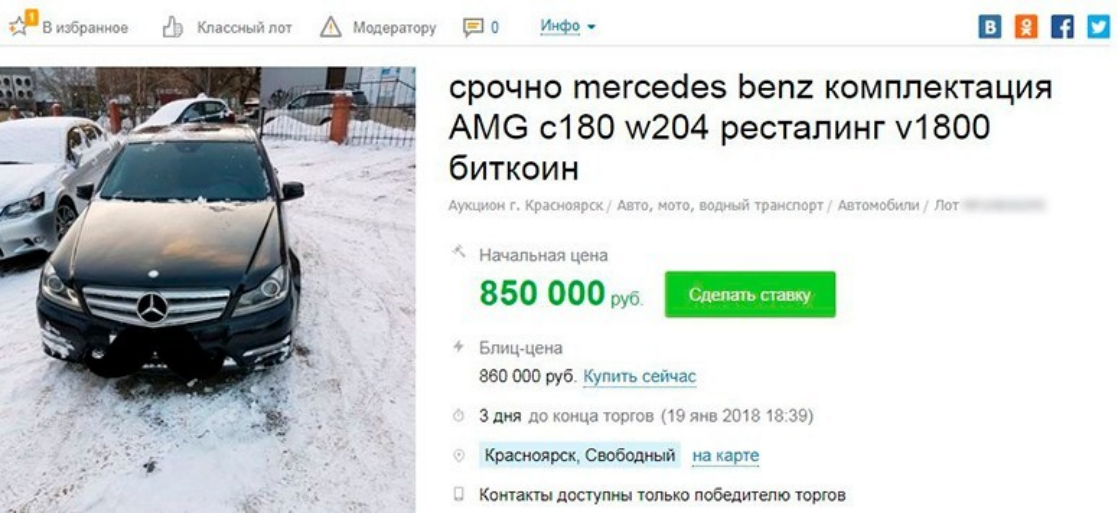
Владелец Mercedes Benz продавал авто за BTC в 2018-м

В 2022-м найти такие предложения становится труднее в силу ограничительных законодательных мер. Однако, обсуждая особенности автомобиля и его цену «у капота», покупатель может предложить продавцу оплатить часть суммы или всю ее в криптовалюте. В этом случае в договоре купли-продажи все равно будет указана фиатная единица (USD, RUB или другая). Также покупателю придется взять у продавца расписку о том, что деньги получены в полном объеме. В противном случае документально подтвердить сделку будет сложно.

Однако цифровое золото все еще не является официальным платежным средством. Сделки купли-продажи имущества за BTC между физическими лицами можно легко признать нелегитимными в судебном порядке.

Покупка у официальных дилеров

В 2017 году представители Ульяновского автомобильного завода планировали продавать грузовики и внедорожники УАЗ фермерскому кооперативу LavkaLavka за биткоины в течение 3 лет. Однако сделка не была реализована.

Мировая практика показывает: купить машину за криптовалюту можно. В 2021 году Tesla в течение месяца принимала BTC в качестве оплаты за автомобили. Позже компания отказалась от расчетов в первой криптовалюте, признав ее добычу неэкологичной. Стоит отметить, что в 2022 году на балансе предприятия остается значительный капитал в BTC и DOGE. Запас монет оценивается в $2 млрд. В июне 2022 года на сайте производителя можно заказать аксессуары для Tesla за Dogecoin.

В начале года ЦБ РФ опубликовал доклад, в котором есть призыв к запрету на выпуск и обращение цифровых монет в стране. По мнению регулятора, также важно запретить майнинг и запустить систему мониторинга инвестиций граждан в виртуальные активы на зарубежных профильных платформах.

Национальной валютой в РФ является российский рубль. Взаиморасчеты между гражданами и юридическими лицами допустимы только в RUB. Официального запрета на прием цифровых платежей нет. Также не предусмотрена ответственность за расчеты в BTC. Теоретически купить авто за биткоины в России у автодилеров можно. Такие сделки не запрещены законом, но и не поощряются. Их вероятность зависит от внутренней политики автоцентра.

Преимущества купли/продажи за BTC

"Расчеты в цифровых монетах выгодны всем сторонам сделки. Плюсы для покупателей такие:

●Быстрые и дешевые операции. В июне 2022 года комиссия в блокчейне Bitcoin составляет 0,000033 BTC ($1,35). Для перевода достаточно 2-6 подтверждений сети.

●Доступность и простота платежей. Можно перевести деньги с любого устройства в один клик.

●Надежность. Запись о транзакции сохраняется в блокчейне. Удалить ее невозможно.

"Основные различия между фиатными и цифровыми платежами представлены в таблице.
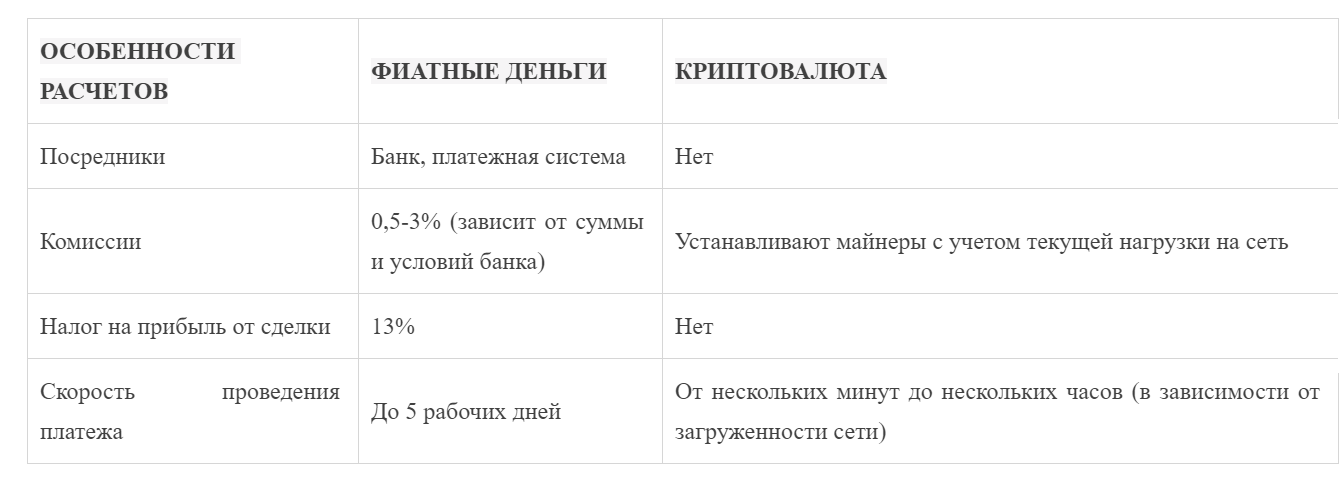
"Для продавцов преимущества цифровых расчетов состоят в следующем:

● Прием платежа из любой точки мира без посредников.

● Низкие комиссионные издержки.

● Мгновенный доступ к полученным средствам.

● Анонимность платежа и защита персональных данных.

● Не нужно платить налоги.

Как купить машину за биткоины за границей

"Западные водители с интересом относятся к предложению оплатить авто цифровыми монетами. Купить машину можно напрямую у продавца или через посредников (например, на сайте Buysellcarwithbitcoin). В каждом объявлении указана цена машины в USD и BTC. На сайте нет ограничений для пользователей из России и стран СНГ.

"В июне 2022 года купить автомобиль у официального дилера в странах ЕС или в США за биткоины нельзя. Такую сделку можно провести, связавшись с продавцом напрямую.

Актуальное предложение на сайте Buysellcarwithbitcoin

Полезные советы

В начале 2022 года купить машину за BTC в России можно в частном порядке. Сделки peer-to-peer не запрещены законом. Но официального разрешения на оплату товаров виртуальными монетами нет. В действующем законе о крипторегулировании есть еще много пробелов. Пока они остаются, использовать биткоины стоит с оглядкой. Вот на что нужно обратить внимание:

Легитимность сделки. Поправки в законодательство могут быть внесены и вступить в силу в любой момент.

Текущая ситуация в криптовалютной отрасли. Если капитализация рынка слабеет, то целесообразно продавать активы или рассматривать их в качестве средства расчета.

Надежность платежного сервиса. Если нужно отправить транзакцию через посреднический ресурс, стоит проверить его статус.

"Перед перечислением средств необходимо убедиться, что блокчейн получателя соответствует типу криптовалюты (OMNI для BTC, ETH для ERC-20). В противном случае монеты будут утеряны. Вернуть их назад не получится.


Related Reads

Preferred Stock Is Not the Trigger for Corporate Bankruptcy, MicroStrategy's Dollar Reserves Can Cover Dividend and Interest Payments Until February 2027

Preferred Shares Are Not the Catalyst for Corporate Bankruptcy; MicroStrategy's Dollar Reserves Can Cover Dividend and Interest Payments Until February 2027. This article analyzes the nature of preferred shares used by MicroStrategy (MSTR). Legally equity but economically similar to debt, these shares, including its Bitcoin-linked STR convertible preferred notes (STRC), offer fixed or floating dividends. Crucially, MicroStrategy's preferred shares lack rigid redemption clauses, meaning they are not classified as traditional debt. This eliminates principal repayment pressure and means missed dividends do not constitute default or trigger bankruptcy, creating a "self-contradictory virtuous cycle." The article clarifies that if funds are short, MicroStrategy can defer or suspend preferred share dividends (except for non-cumulative types like STRD) without immediate risk. The real potential crisis point lies with its convertible bonds. If a prolonged bear market prevents conversion, MicroStrategy might need to sell Bitcoin to repay these bonds starting from the earliest maturity in September 2027, potentially creating a downward spiral. Preferred dividend suspensions would only exacerbate market panic in such a scenario. Recent financial activity shows MicroStrategy strengthened its position through four weeks of common stock (MSTR) issuances, raising over $851 million without issuing new preferred shares. It increased its dollar reserves to approximately $1.4 billion, which is sufficient to cover all preferred share dividends and interest until around March 2027. While Bitcoin purchases slowed recently, this prioritization of cash reserves enhances the company's near-term financial safety. The analysis concludes that if the Bitcoin bear market ends by early 2025 as anticipated, MicroStrategy can resume issuing MSTR stock in a rising market to replenish reserves and manage future dividend obligations, thereby reducing the long-term pressure from its preferred share structure.

marsbit1h ago

Preferred Stock Is Not the Trigger for Corporate Bankruptcy, MicroStrategy's Dollar Reserves Can Cover Dividend and Interest Payments Until February 2027

marsbit1h ago

Giants Wage the Context War, Reconstructing AI Moats

The article "Giants Launch the Context War, Reconstructing AI's Moat" discusses how leading AI companies—OpenAI, Anthropic, and Google—are shifting their competitive focus from model size to acquiring, managing, and utilizing user context (Context). Initially, Context referred to the length of text a model could process, leading to a "arms race" for longer context windows. However, the competition has evolved through three key phases: expanding text capacity (long context windows), enabling memory across sessions, and finally, integrating AI into real user environments like browsers and desktops to capture dynamic task states. Each company is pursuing a distinct strategy. OpenAI is building Context around the ChatGPT account, turning it into a central hub that accumulates user understanding across various integrated applications and tools. Anthropic, lacking a major user base, focuses on high-value verticals like coding, empowering its Claude model to actively gather Context through GUI interaction (Computer Use) and system connections (MCP protocol). Google, with vast existing user data from products like Search and Gmail, faces the challenge of restructuring this data into actionable, AI-understandable Context for its Gemini model within its ecosystem. The core argument is that the nature of competitive advantage in AI is changing. The internet era prized network effects—connecting more users. The AI era values "individual depth": the ability to build deep, task-specific understanding of a user. This creates a new moat through 1) the compounding value of accumulated Context, 2) deep integration with user tools and permissions, and 3) the establishment of trust for complex tasks. Therefore, the battle for Context is fundamentally about capturing "task entry points" and converting existing digital ecosystems into environments where AI can effectively understand and act, rather than merely scaling user numbers.

marsbit1h ago

Giants Wage the Context War, Reconstructing AI Moats

marsbit1h ago

Foundation Steps Back, Ethlabs Steps Forward: Ethereum Undergoes Its Largest Restructuring in History

On June 23rd, the Ethereum ecosystem witnessed two major shifts, signaling a significant governance realignment. First, former Ethereum Foundation researchers established Ethlabs, a new independent non-profit. Backed by major ETH holders like Bitmine and SharpLink, Ethlabs aims to address practical needs for institutional adoption, including faster settlement, native asset issuance, cross-chain transactions, and mainnet scaling. Secondly, the Ethereum Foundation announced a major restructuring, laying off 54 employees (20% of its staff) to become a leaner entity focused on protocol governance and maintenance rather than being the primary builder. This move represents a pivotal correction. Criticisms had mounted over the Foundation's perceived slowness, lack of clear strategy, and over-reliance on Vitalik Buterin's influence. Ethlabs emerges as a more execution-oriented, "industrialized" layer focused on market adoption—bridging the gap between research and real-world use. Notably, Vitalik Buterin is absent from its list of supporters, interpreted as an intentional step to avoid excessive personal endorsement and allow the organization to build independent credibility. The Ethereum Foundation's downsizing and redefinition mark a retreat from its former central coordinating role. It now aims to share the "privilege of stewarding Ethereum" with other emerging groups like Ethlabs, the Ethereum Applications Guild, and The Ethereum Economic Zone. Analysts frame this dual shift as the Foundation ensuring Ethereum remains "correct" (credibly neutral), while Ethlabs must prove it remains "effective" (competitive and attractive for capital and adoption). This addresses community "shareholder-like anxiety" about ETH's market performance. While risks exist—such as concerns over shifting from Foundation centrality to large-holder influence—the consensus is that the greater risk for Ethereum was inaction, caught between technical idealism and organizational inertia. These steps aim to create a more multi-stakeholder, execution-driven future for the network.

链捕手9h ago

Foundation Steps Back, Ethlabs Steps Forward: Ethereum Undergoes Its Largest Restructuring in History

链捕手9h ago

Second Half of U.S. Crypto Policy: The Clarity Act Aims for 60 Votes, CFTC's "One-Person Commission" Becomes Biggest Variable

In a pivotal year for US crypto policy, the "CLARITY Act" is advancing in the Senate but faces a high hurdle, needing 60 votes to pass. Key challenges include bridging partisan divides on ethics and swaying undecided Republican senators within a tight legislative calendar of only about 40 working days. The policy "second half" involves intense negotiations on a broader framework for Web3 and DeFi, including crypto tax reforms and the Blockchain Regulatory Certainty Act. A significant uncertainty is the understaffed CFTC, operating with four commissioner vacancies, which complicates regulatory clarity. Meanwhile, the departure of key "crypto champions"—SEC Commissioner Hester Peirce and Senator Cynthia Lummis—will impact ongoing policy efforts. Industry experts are cautiously optimistic but realistic. Sara K. Weed notes that while progress is being made, CLARITY is unlikely to pass this Congress, pushing agencies like the SEC and CFTC to provide more guidance. Sulolit Mukherjee suggests meaningful crypto tax legislation is more likely to be attached to larger must-pass bills. Rashan Colbert discusses the jurisdictional debate over prediction markets, emphasizing the need for a regulatory framework that fosters their development as financial tools rather than treating them broadly as gambling. The clock is ticking, but opportunities remain for substantive progress through continued bipartisan dialogue and pragmatic efforts.

marsbit12h ago

Second Half of U.S. Crypto Policy: The Clarity Act Aims for 60 Votes, CFTC's "One-Person Commission" Becomes Biggest Variable

marsbit12h ago

Trading

Spot
Futures
活动图片