Breaking: OpenAI Undergoes Major Reorganization, President Brockman Assumes Command

marsbitPublished on 2026-05-16Last updated on 2026-05-16

Abstract

OpenAI has announced a major internal reorganization just months before its anticipated IPO. The company is merging its three flagship product lines—ChatGPT, Codex, and the API platform—into a single, unified product organization. The most significant leadership change involves co-founder and President Greg Brockman moving from a background technical role to take full, permanent control over all product strategy. This follows the indefinite medical leave of AGI Deployment CEO Fidji Simo. Additionally, ChatGPT's longtime lead, Nick Turley, has been reassigned to enterprise products, with former Instagram executive Ashley Alexander taking over consumer offerings. The consolidation, internally framed as a strategic move towards an "Agentic Future," aims to break down internal silos and create a cohesive "Super App." This planned desktop application would integrate ChatGPT's conversational abilities, Codex's coding power, and a rumored internal web browser named "Atlas" to autonomously perform complex user tasks. The reorganization occurs amid significant internal and external pressures. OpenAI has recently seen a wave of high-profile departures, including Sora co-lead Bill Peebles and other senior technical leaders, leading to concerns about a thinning executive bench. Externally, rival Anthropic recently secured funding at a staggering $900 billion valuation, surpassing OpenAI's own. Google's upcoming I/O developer conference also poses a competitive threat. Analysts sugges...

[New Zhiyuan] A seismic shift hit OpenAI overnight! Its three ace products—ChatGPT, Codex, and the API—have been urgently merged, with the president taking personal command! With rival Anthropic's valuation soaring to $900 billion, this is a life-or-death battle before OpenAI's IPO. The era of the super app is coming.

Just moments ago, another blockbuster news shook the tech world on Saturday morning.

OpenAI officially announced, without warning, the largest and most dramatic organizational restructuring in the company's history on the eve of its IPO.
ChatGPT, Codex, and the lifeblood of the developer ecosystem—the API—all three core product lines have been dismantled and merged in place into a unified product organization!
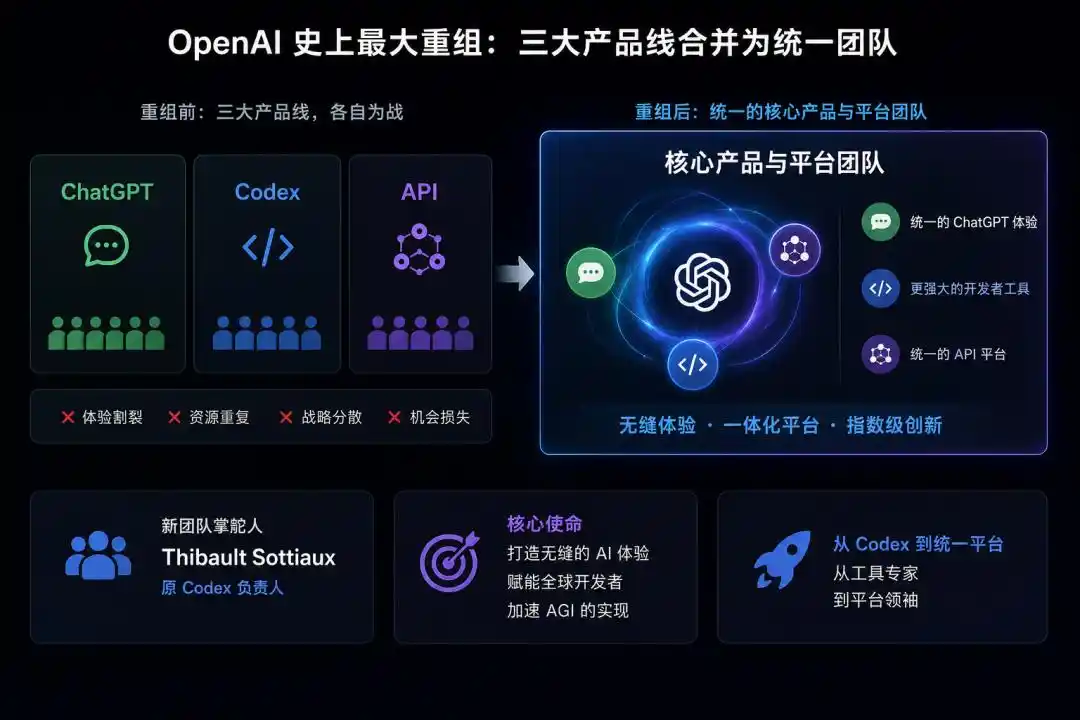
Even more shocking, Greg Brockman, OpenAI's co-founder, president, and the technical titan who once resigned in anger over Sam Altman's ousting, has formally been pushed into the spotlight to take full control of product strategy!

On the surface, this is a strategic focus by OpenAI for the Agent era.

But in essence, this is clearly a gripping "Silicon Valley Game of Thrones": the founding figure of ChatGPT has been reassigned, core executives have left one after another, and the head of AGI is on indefinite medical leave...
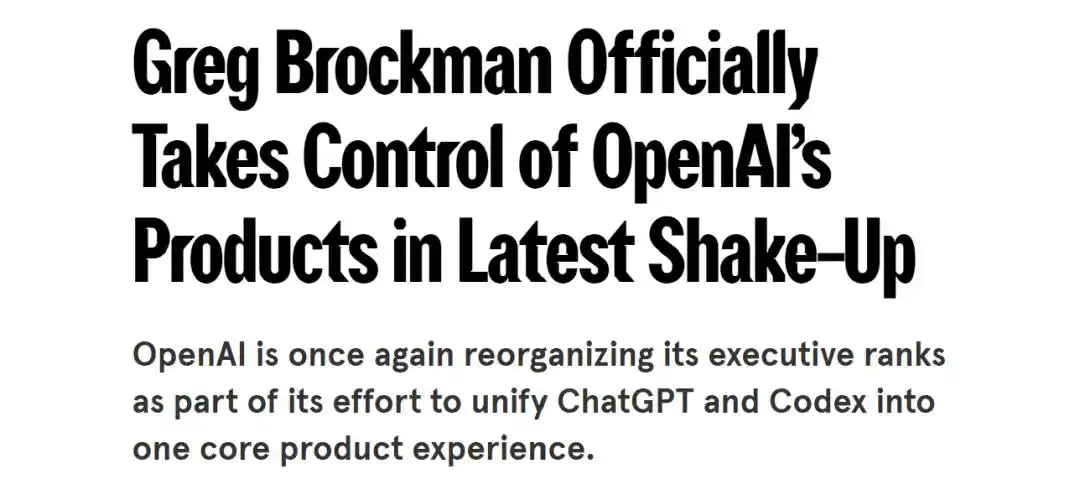
Now, OpenAI's competitors are circling like vultures.

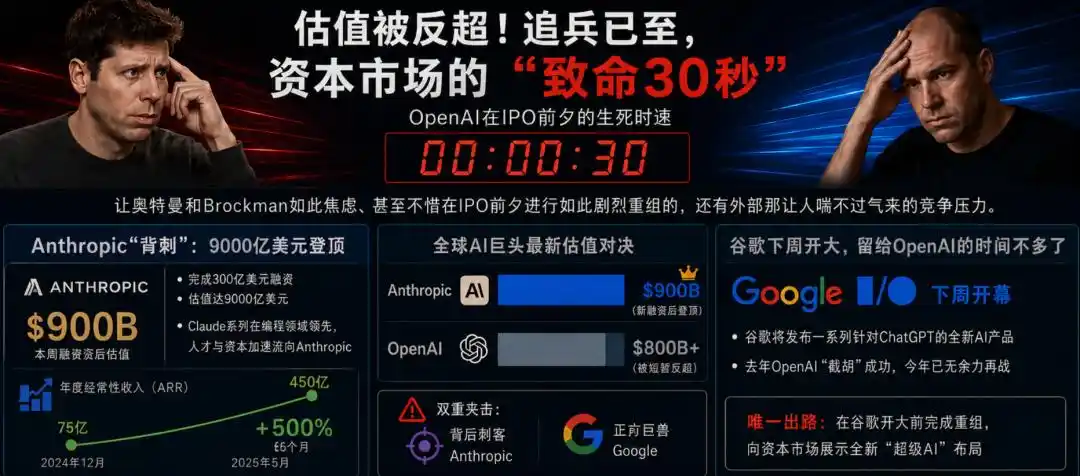
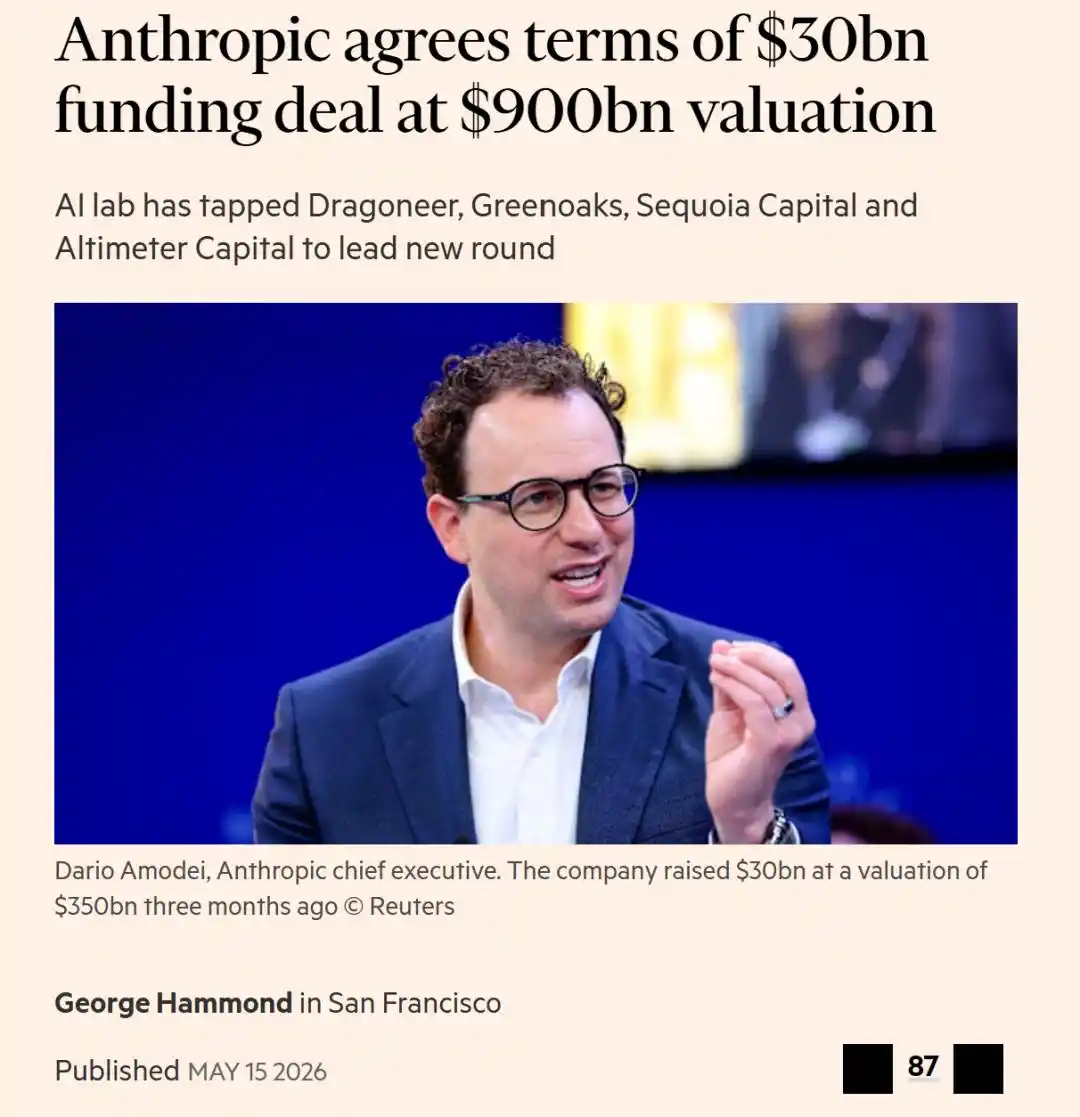
Anthropic just secured $30 billion in funding, its valuation skyrocketing to $900 billion, achieving an epic overtaking of OpenAI; Google is sharpening its knives ahead of next week's I/O conference.

With 900 million weekly active users hanging in the balance, the world's strongest AI empire is facing its moment of life or death!
The Sudden Replacement of a Leader, and the Shadow King Steps Forward

The most jaw-dropping aspect of this reshuffle is OpenAI's ruthless handling of its core contributors.

The "Father" of ChatGPT is Reassigned

If one were to name the most prominent功臣(meritorious figure) at OpenAI over the past two years, Nick Turley would definitely be on the list.

As the person fully responsible for ChatGPT since its launch, Nick Turley nurtured ChatGPT from an obscure "freebie" into today's global #1 super app with 900 million weekly active users.
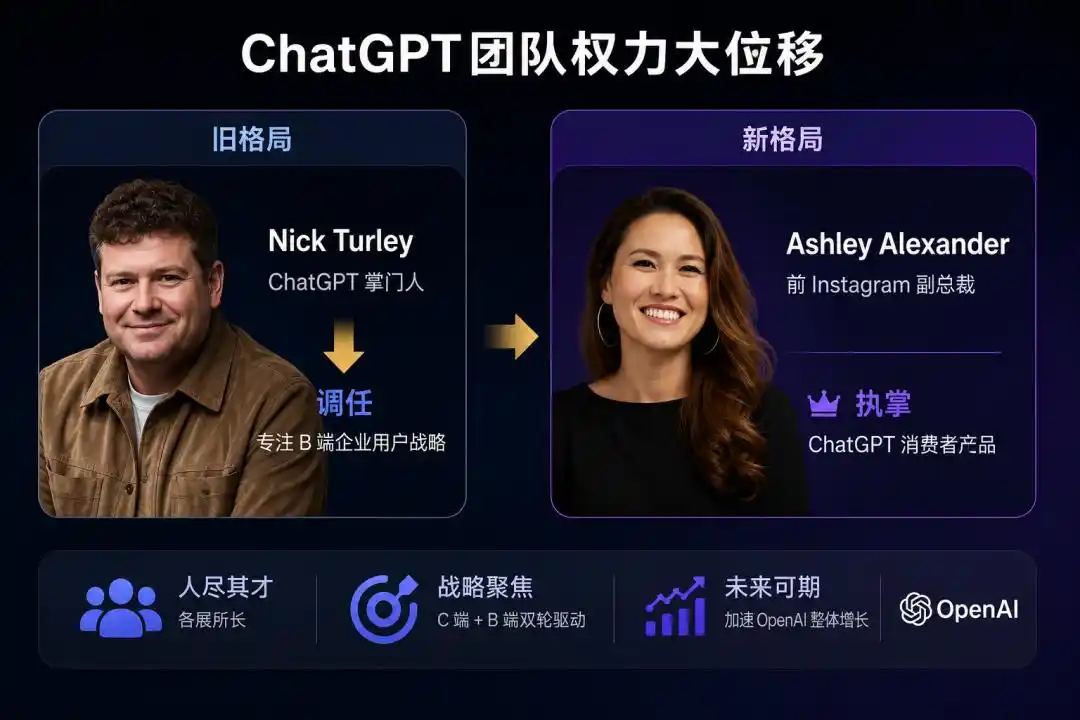
However, in this power reshuffle, this distinguished "father" of ChatGPT was transferred by a single order away from the most core, most high-profile consumer product line to lead the relatively mundane "Enterprise Users" direction.

"He is no longer responsible for any consumer products," WIRED coldly announced the curtain call of a ChatGPT founding figure in the C端(main consumer) stronghold.

Taking over his position as head of consumer products is former Instagram VP Ashley Alexander.

This executive, originally responsible for healthcare applications at OpenAI, has parachuted directly into the heart of the traffic.

The Warlord Returns: Brockman's "Rule from Behind the Curtain" Ends

If Nick Turley's reassignment is a "change of generals," then Greg Brockman's personal assumption of command is a seismic change at OpenAI's highest power level.
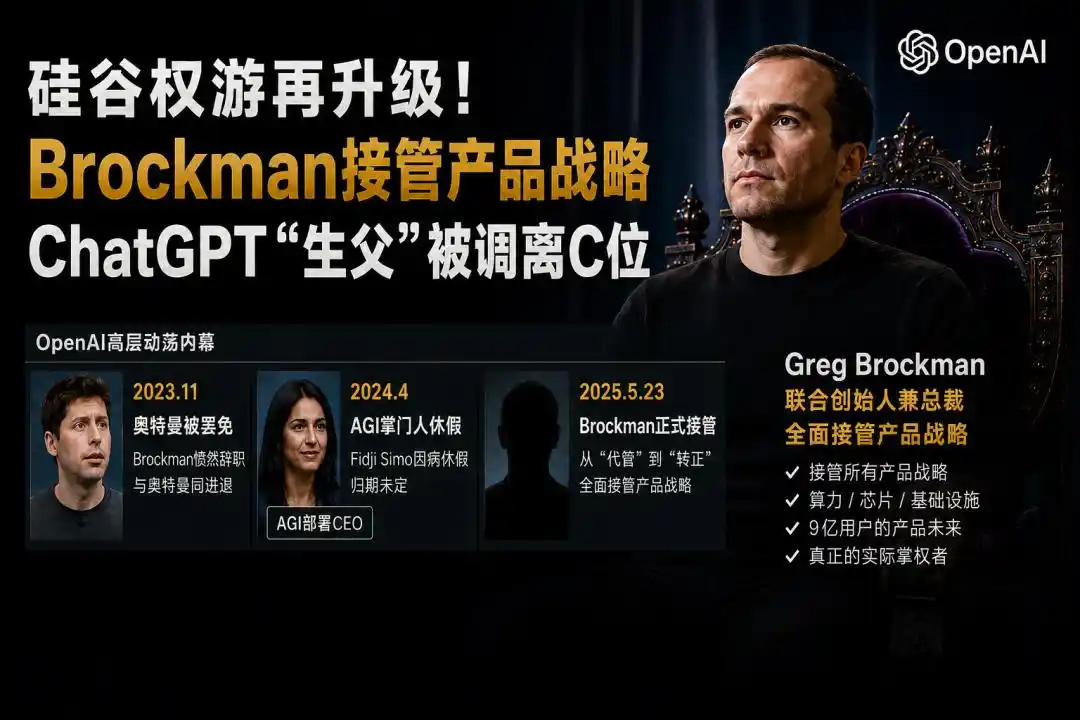
As OpenAI's co-founder and president, Brockman has always been a formidable figure in tech circles.

He could walk away from his iron rice bowl in solidarity when Altman was purged by the board, and after returning, he could silently grind away on AI infrastructure in the background.

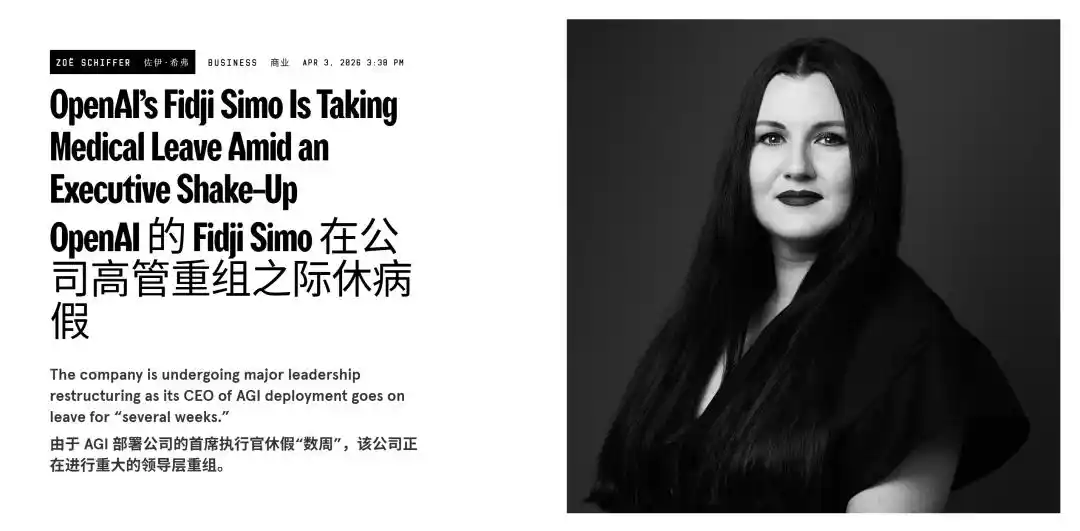
Recently, Fidji Simo, OpenAI's nominal "AGI Deployment CEO," has been on continuous leave since early April due to a severe recurrence of a chronic illness, with no definite return date. Brockman had previously only been overseeing products on an acting basis.

But this Friday, OpenAI directly issued a memo to all employees: Brockman's "acting" role is now official.

He will fully and permanently take charge of all product strategy at OpenAI!

The "Shadow King" who was building roads and bridges in the technical back-end has finally been forced into the spotlight.

From now on, he will not only manage computing power, chips, and the Blackwell supply chain, but also oversee what 900 million people chat about in ChatGPT every day, becoming the true de facto ruler.
Three Lines Merge into One! Altman's Audacious Gambit: The "Super App" Arrives

Why force-merge the three major product lines at this critical juncture?

In leaked internal memos, Brockman provided the answer in highly provocative industry language.

"We are consolidating our product work to move into the Agentic Future with the greatest focus, winning across both consumer and enterprise!"

For the first time in history, OpenAI's top brass has so explicitly admitted: OpenAI's original product lines have reached an unwieldy point where change is unavoidable.

From "Three Chariots" to "A Single Iron Plate"

Before the reorganization, OpenAI's three major product lines were almost operating independently.

ChatGPT: Responsible for looking pretty, capturing C端 traffic, and attracting 900 million weekly active users;

Codex: Responsible for quietly making money, grinding away at programming and code generation, a holy grail for programmers;

API: Responsible for taxing developers worldwide, building an ecosystem moat.

But in Brockman's eyes, this fragmentation is unacceptable. As AI capabilities evolve, these three things are naturally converging.

If today's ChatGPT can't write code or autonomously run APIs, it's just a pretty chat interface; Codex, without ChatGPT's interactive interface, cannot become a productivity tool usable by novices.

Therefore, the three teams are now dissolved on the spot and merged into a new core Products and Platforms team. The helm of this behemoth team is none other than the former head of Codex—Thibault Sottiaux.

Once, he made Codex OpenAI's fastest-growing王牌(ace) product and achieved great feats; now, he has become Brockman's number one general.
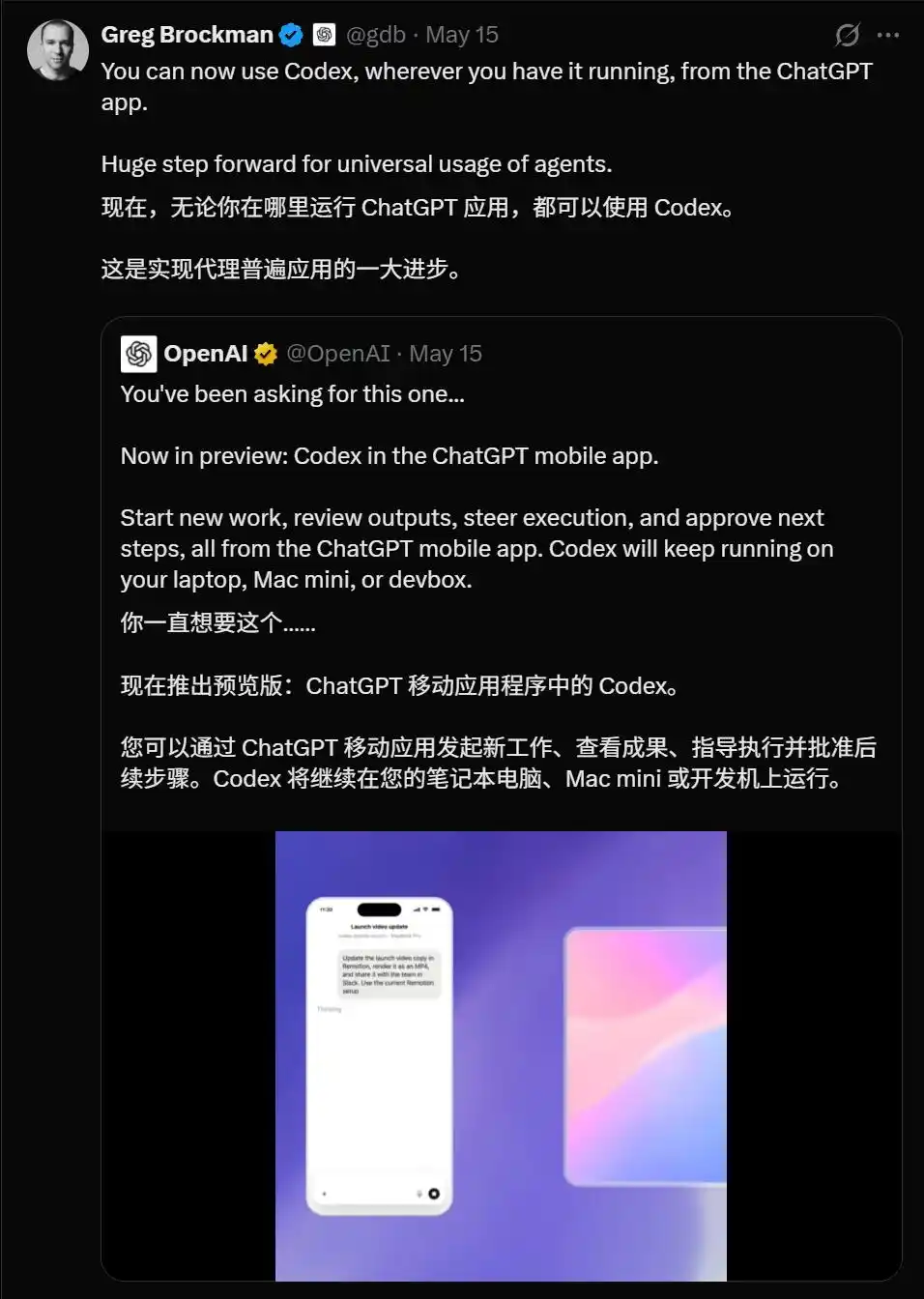
The Ultimate Trump Card: The Desktop Devourer Codenamed "Super App"

Accompanying this reorganization, OpenAI's real big move has finally surfaced.

Thibault Sottiaux is currently secretly leading the development of an ultimate weapon internally referred to as the "Super App."

This is far more than just an upgraded web version of ChatGPT. It's a unified desktop application that combines ChatGPT, the Codex programming agent, and OpenAI's yet-to-be-released "Atlas web browser" into one!

This means OpenAI is leaping completely beyond the constraints of a "chat box."
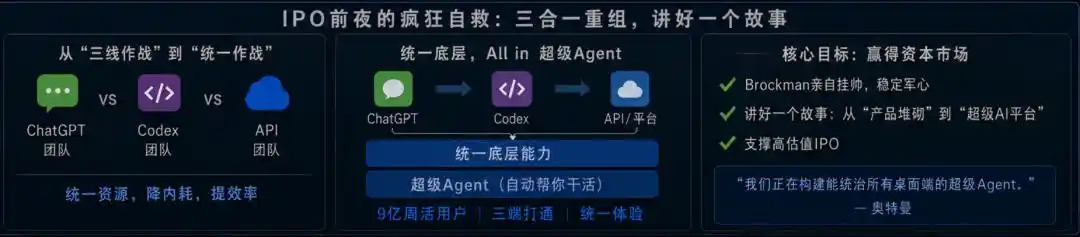
From now on, this super app lives on your computer desktop. It has its own browser (Atlas) and can view webpages; it has the strongest code execution ability (Codex) and can write scripts; it has ChatGPT's brain and understands your intent.

It doesn't require you to copy and paste; it can "autonomously perform complex digital tasks on behalf of the user."

This is the "Agentic Future" in Altman and Brockman's eyes—the era of Agents!

Hollowing Out of Executives: Bleeding and Hidden Worries Behind the Frenzy

This news might seem like a positive "proactive strike."

But if you carefully read OpenAI's recent list of personnel changes, you'll discover a terrifying fact: OpenAI's executive layer is almost hollowed out.
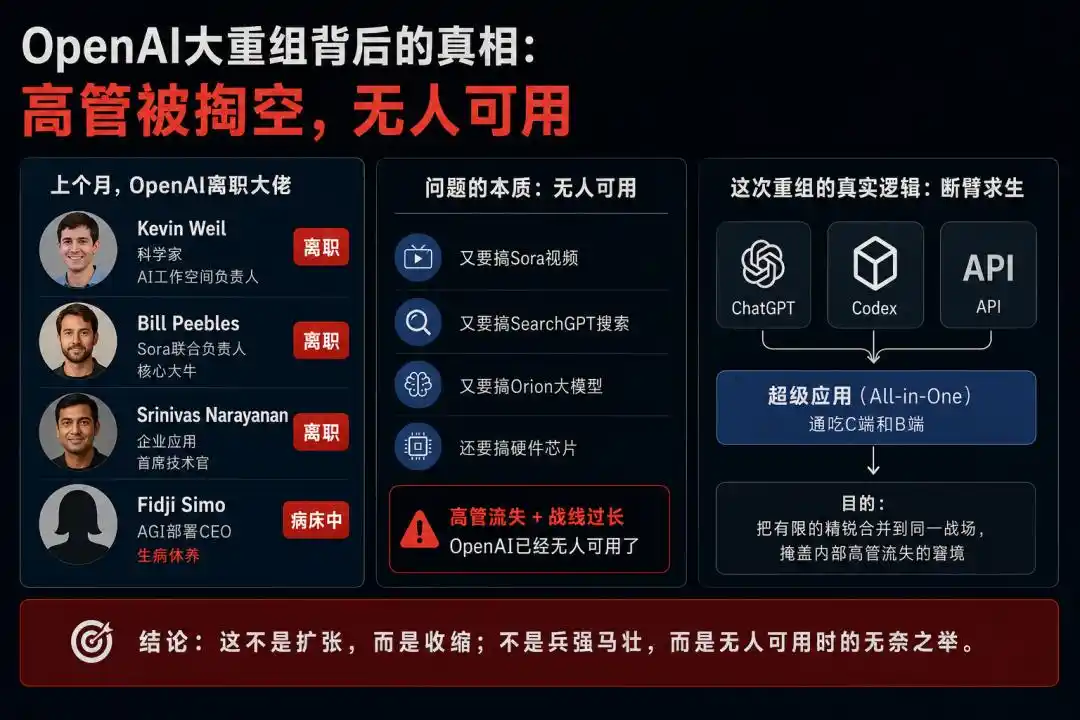
Just one month before this reorganization, a tsunami-like wave of personnel shockwaves hit OpenAI internally.

Last month, a batch of神仙大佬(god-tier experts) left OpenAI.

Kevin Weil, Head of Scientist AI Workspace at OpenAI, left!

Bill Peebles, the prominent co-lead and core expert of Sora, left!

Srinivas Narayanan, Chief Technology Officer for Enterprise Applications, left!

Not to mention, the "AGI Deployment CEO" Fidji Simo, who should be strategizing, is currently confined to a hospital bed, only able to remotely discuss plans with Brockman from her room.
So, the underlying logic of this major reorganization isn't because OpenAI is strong and well-staffed, but because they are running out of people.

After continuously losing multiple technical VPs, CTOs, and project leads, OpenAI's front lines have stretched too thin—they have to work on Sora video, SearchGPT search, the Orion large model, and even hardware chips.

Brockman mashing ChatGPT, Codex, and the API into one is essentially a断臂式(amputation-style) contraction.

Merging the limited elite forces onto the same battlefield, using a "Super App" that caters to both C端 and B端 to cover up the embarrassment of internal executive attrition.

Valuation Overtaken! Pursuers Have Arrived, the "Deadly 30 Seconds" in Capital Markets

What's making Altman and Brockman so anxious, even forcing them to undergo such a drastic reorganization on the eve of the IPO, is also the suffocating competitive pressure from outside.

Silicon Valley's AI throne changed hands just this week.

Anthropic's "Backstab": A $900 Billion Behemoth is Born

This very week, OpenAI's most fatal rival, Anthropic—founded by former employees who left—quietly finalized a new round of funding that颠覆行业格局(disrupted the industry landscape).

In this massive $30 billion funding round led by top consortia, Anthropic's valuation was directly pushed to a staggering $900 billion!
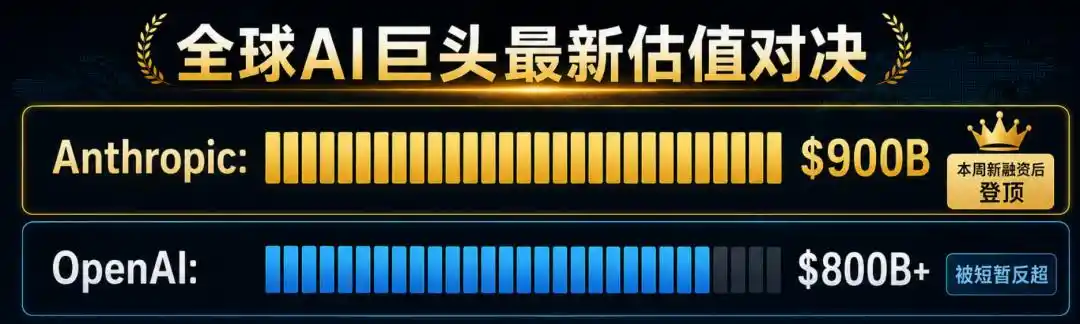
What does $900 billion mean? It surpasses OpenAI's latest valuation in the private market at a stroke, becoming the world's highest-valued independent AI unicorn!
Worse, Anthropic has executed precise降维打击(dimensionality reduction attacks) against OpenAI in the programming field. The Claude series models have been压得抬不起头(pressing OpenAI down) in long-context and code generation.

Technical talent is fleeing madly to Claude, capital is pouring madly into Anthropic. If OpenAI keeps clinging to its ChatGPT webpage that only chats, its empire could crumble on the eve of its public listing.

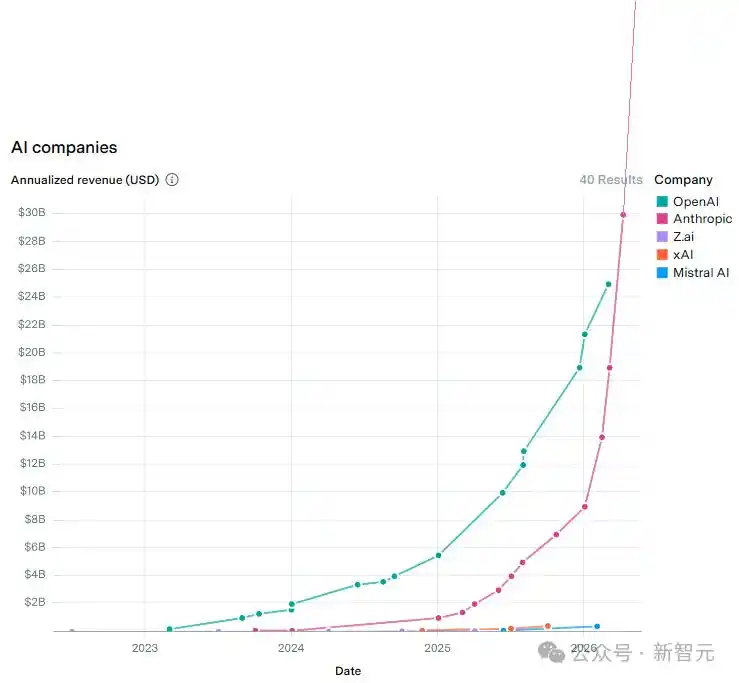
In May, Anthropic's annual recurring revenue has skyrocketed to $45 billion, with revenue growing 500% in just 5 months. This steep revenue curve is unprecedented in the entire history of tech business!

Google Unleashes Next Week, Time is Running Out for OpenAI

Besides the assassin from behind, Anthropic, the titan directly ahead—Google—is also死死盯着(dead set on) OpenAI.

Next week, the Google I/O annual developer conference will officially open. According to Silicon Valley sources, Sundar Pichai has prepared a basketful of new AI products targeting ChatGPT.
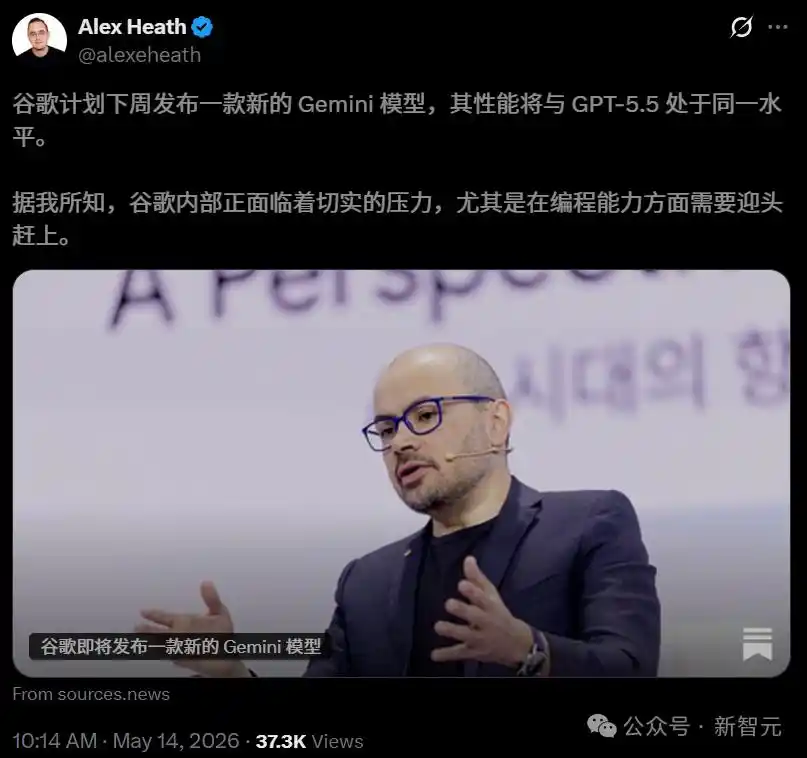
Last year, OpenAI stole Google's thunder by launching GPT-4o the day before Google I/O; this year, the hollowed-out OpenAI no longer has the spare capacity to stage a launch event for another "steal."

The only way is to adjust its organizational structure before Google unleashes its大招(big moves), telling Wall Street: Don't just look at Anthropic's high valuation, we're already working on a tripartite Super App.

The Final Battle: Frenzied Self-Rescue on the Eve of the IPO

According to WIRED's exclusive exposé, behind this reorganization lies another open secret in Silicon Valley: OpenAI plans to正式推进(advance its) IPO within this year.

For any super unicorn preparing to go public, capital markets most忌讳(dislike) "unclear storylines" and "internal executive infighting and attrition."

During the critical window for listing, if OpenAI's prospectus reads: We have a ChatGPT team, an independent Codex team, an API team, and these three teams fight daily for computing resources, Wall Street analysts would undoubtedly heavily discount the valuation.

Through this reorganization, Altman is telling an extremely sexy new story to the capital markets.

"We don't have messy products; we only have unified underlying capabilities. We are about to launch a super Agent that dominates all desktops, has 900 million weekly active users, and can automatically perform tasks for you."

Having Brockman, this highly respected founder in Silicon Valley, personally take charge of products is also meant to boost the confidence of shaky investors: Look, although some have left, the company's technical soul is still pioneering on the front lines.

From the non-profit lab founded in a San Francisco apartment to the commercial empire now frantically reorganizing for its IPO, OpenAI is navigating the most perilous voyage since its birth.

Brockman stepping forward is both answering a call in a crisis and making a last stand.

When ChatGPT, Codex, and the Atlas browser merge into that terrifying "Super App" in the near future, will we see the ultimate key to AGI?

Silicon Valley's battle for the AI throne has just entered its bloodiest stage of close combat.

References:

https://www.wired.com/story/openai-reorg-greg-brockman-product/

https://www.theinformation.com/briefings/openai-reorganizes-product-teams-around-unified-app-strategy?rc=epv9gi

This article is from the WeChat public account "新智元(New Zhiyuan)", author: 新智元(New Zhiyuan)

Related Questions

QWhat is the most significant organizational change announced by OpenAI according to the article?

AThe most significant change is the merger of OpenAI's three core product lines—ChatGPT, Codex, and the API—into a single, unified product organization.

QWho is taking full, long-term control of all product strategy at OpenAI following the reorganization?

AGreg Brockman, the co-founder and President of OpenAI, is taking full, long-term control of all product strategy.

QWhat is the name of the 'ultimate weapon' or secret project that OpenAI is reportedly developing internally?

AOpenAI is reportedly developing a secret project internally referred to as the 'Super App,' which aims to unify ChatGPT, the Codex programming agent, and the unreleased 'Atlas' web browser into a single desktop application.

QWhat major external competitive pressure is mentioned as a key reason for OpenAI's urgent restructuring?

AA major external pressure is the recent $300 billion funding round for rival Anthropic, which valued the company at $900 billion, surpassing OpenAI's valuation and intensifying competition.

QWhat broader strategic goal does the reorganization aim to support, as stated in an internal memo?

AAccording to an internal memo from Greg Brockman, the reorganization aims to consolidate product efforts to advance into the 'Agentic Future' (the era of AI agents) with maximum focus and to achieve comprehensive victory in both consumer and enterprise markets.

Related Reads

IOSG Founder: Web3 Is 'Losing Blood,' How Can Practitioners Survive Better?

IOSG Founder: Web3 Is "Bleeding Out" – How Can Practitioners Survive Better? In a candid reflection, the founder of IOSG Ventures voices deep concerns about the current state of Web3, describing an ecosystem experiencing severe "blood loss." Despite the recent MuShanghai event showcasing a successful pivot towards a more diverse, global community, a somber reality persists: many crypto-native attendees were there exploring exits or new labels in biotech, AI, and robotics. The core issue is identified as a breakdown in the ecosystem's positive feedback loop. Alarmingly, underestimated "low-probability bad events" are occurring simultaneously: a significant brain drain of Chinese developers to AI, a lack of breakout applications despite massive funding, and a widening credibility gap for practitioners globally, often stigmatized as scam artists. This has created a dire接班人 (successor) problem, with the next generation seeing little professional prestige or financial upside in crypto compared to fields like AI. A significant portion of the critique focuses on Ethereum and Vitalik Buterin. While not pessimistic about Ethereum's technology, the founder worries that critical development windows were missed by focusing on niche technical narratives like ZK and L2 instead of mass-market applications. A more urgent concern is that Vitalik may be isolated in an "information bubble," shielded from the grassroots community's hardships by layers of intermediaries, preventing crucial feedback from reaching him. The call is for Vitalik to return to a founder's mindset, re-engage directly with the community, and rally efforts for the next decade. The divergence between U.S. and Chinese OG (Original Gangster) ecosystems is stark. While many U.S. builders reinvest their wealth into the ecosystem, the Chinese scene suffers from a severe lack of "造血能力" (blood-making ability), with most market-driven funds struggling and many early success stories cashing out entirely. This threatens the entire Asian Web3 ecosystem's survival. For individual practitioners, survival advice is pragmatic: find your core "why," maintain life balance beyond token prices, continuously learn new skills (like AI), form small, trusted alliances for mutual support, and practice self-compassion. The industry's greatest need is not money or tech, but lighthouses—individuals at all levels who offer mentorship, grants, referrals, and honest reflection to guide others. The piece concludes with a direct appeal: OGs must pay forward the opportunities the industry gave them; founders must not struggle alone; and builders must continue their work, ensuring it remains a viable profession. The survival of Web3's "cathedral" depends not on any single leader but on the collective responsibility of everyone who remains.

marsbit32m ago

IOSG Founder: Web3 Is 'Losing Blood,' How Can Practitioners Survive Better?

marsbit32m ago

Deficits, Inflation, and the New Fed: The Deep Logic Behind US Bond Yields Breaking 5% and the Market Reset

In the week of May 15-19, 2026, U.S. long-term Treasury yields surged to multi-year highs, with the 30-year yield hitting 5.2%, a level unseen since 2007, and the 10-year yield climbing to 4.687%. Equity markets declined in response. Four primary factors are driving the rise in yields. First, stubborn inflation persists, with April wholesale prices rising 6% year-over-year, fueling expectations of potential future Fed rate hikes instead of cuts. Second, newly confirmed Fed Chair Kevin Warsh inherits a complex inflation battle, with markets closely awaiting his first FOMC meeting. Third, deteriorating U.S. fiscal health, marked by large deficits and rising debt servicing costs, is eroding the traditional "safe-haven" premium for Treasuries. Fourth, the "One Big Beautiful Bill" tax cuts are projected to add trillions to the national debt, contributing to Moody's recent credit rating downgrade. Rising yields pressure stocks through several channels: a higher discount rate reduces the present value of future earnings (especially for growth stocks); rising risk-free rates compress equity risk premiums, making bonds relatively more attractive; higher borrowing costs impact consumers and corporations; and a stronger dollar affects multinational earnings. For investors, the environment favors value and financial stocks over long-duration growth stocks. Bond investors find attractive yields in short to intermediate maturities, while income investors see the best fixed-income opportunities in over a decade. Key developments to watch include Chair Warsh's first FOMC meeting, upcoming inflation data, Treasury auction demand, and whether the 30-year yield approaches 6%, a level that could trigger a more sustained equity valuation reset. The bond market's message is clear: the era of cheap government borrowing is over, posing a central challenge for markets in late 2026.

marsbit34m ago

Deficits, Inflation, and the New Fed: The Deep Logic Behind US Bond Yields Breaking 5% and the Market Reset

marsbit34m ago

Is MicroStrategy Selling Bitcoin Not a Bearish Signal? Deconstructing the 5 Financial Logics Behind Corporate Bitcoin Divestment

The article "Is Strategy Selling Bitcoin Not a Bearish Signal? Decoding 5 Financial Logics Behind Corporate Bitcoin Divestment" analyzes why companies might sell their bitcoin holdings, arguing it's not necessarily negative. It begins by noting the market's surprise at Strategy's potential sale, contrasting its previous "never sell" stance. The core argument is that corporate decisions prioritize shareholder value, and selling bitcoin can be a rational strategic choice. The article outlines five key financial reasons for such sales: 1. **Increase Bitcoin Holdings Per Share:** Companies can use proceeds from bitcoin sales to repurchase shares when the stock price is undervalued relative to its bitcoin assets. This reduces the outstanding share count, potentially increasing the bitcoin amount backing each remaining share. 2. **Optimize Capital Structure & Reduce Financing Costs:** Building cash reserves through bitcoin sales can improve credit ratings (as favored by agencies like S&P), leading to lower future borrowing costs. Repaying debt with sale proceeds also reduces financial leverage. 3. **Legitimate Tax Planning:** In the absence of wash-sale rules for bitcoin in the US, companies can sell to realize capital losses, then repurchase, lowering the tax basis of their holdings and creating tax offsets. 4. **Counter Negative Market Narratives:** A controlled, non-disruptive sale could demonstrate market resilience and disprove fears that corporate selling would crash the market, thereby normalizing bitcoin as a corporate treasury asset. 5. **Repurchase Preferred Stock at a Discount:** If a company's preferred stock trades significantly below its face value, using bitcoin sale proceeds to repurchase it can retire expensive liabilities at a profit, saving on future dividend payments. The conclusion emphasizes that bitcoin's monetary properties offer flexibility. Strategic sales can protect corporate and shareholder interests, making asset utilization more important than rigid "hold" mandates.

marsbit1h ago

Is MicroStrategy Selling Bitcoin Not a Bearish Signal? Deconstructing the 5 Financial Logics Behind Corporate Bitcoin Divestment

marsbit1h ago

Why Did Zhipu Surge Nearly 30% in a Single Day?

"Global AI Model Unicorn" Zhipu's stock surged nearly 30% in a single day, reaching a new market cap high. The catalyst was the launch of its GLM-5.1-highspeed API, boasting a generation speed of **400 tokens per second**, setting a new global benchmark. This speed, roughly 3-5 times faster than industry leaders like OpenAI's GPT-4o and Anthropic's Claude, is achieved **without compromising the full-scale model's capabilities**. In the era of AI Agents requiring dozens of self-calls, such latency reduction is critical, transforming speed from a system metric into a determinant of intelligence limits. The breakthrough stems from a three-layer technical overhaul: 1. **TileRT Inference Engine**: Compiles the entire model into a continuous, always-on computation pipeline using "Warp Specialization," minimizing GPU idle time by having different processor groups handle data loading, computation, and communication in parallel. 2. **Heterogeneous Parallelism for MLA**: To efficiently run the GLM-5.1 model using the MLA attention mechanism, TileRT employs a heterogeneous strategy. One GPU handles sparse indexing/routing, while the others perform dense computation, optimizing for MLA's unique workflow. 3. **ZCube Network Architecture**: Replaces the standard Spine-Leaf (ROFT) network topology with a flat, dual-group interconnect. This design creates a single optimal path between any two GPUs, eliminating network congestion at scale and reducing latency. The business impact is significant: a 15% increase in cluster throughput (free extra capacity), a 40.6% reduction in tail latency (improved stability), and a one-third cut in networking hardware costs. Long-term, this innovation challenges the dominance of NVIDIA's integrated hardware-software stack (GPU+NVLink+InfiniBand), potentially benefiting manufacturers of high-density Leaf switches and optical modules while lowering the software barrier for domestic AI chips like Huawei's Ascend. The innovation proves that more can be achieved with the same compute, reshaping the infrastructure beyond just GPUs.

marsbit2h ago

Why Did Zhipu Surge Nearly 30% in a Single Day?

marsbit2h ago

Trading

Spot
Futures

Hot Articles

How to Buy ACE

Welcome to HTX.com! We've made purchasing Fusionist (ACE) simple and convenient. Follow our step-by-step guide to embark on your crypto journey.Step 1: Create Your HTX AccountUse your email or phone number to sign up for a free account on HTX. Experience a hassle-free registration journey and unlock all features.Get My AccountStep 2: Go to Buy Crypto and Choose Your Payment MethodCredit/Debit Card: Use your Visa or Mastercard to buy Fusionist (ACE) instantly.Balance: Use funds from your HTX account balance to trade seamlessly.Third Parties: We've added popular payment methods such as Google Pay and Apple Pay to enhance convenience.P2P: Trade directly with other users on HTX.Over-the-Counter (OTC): We offer tailor-made services and competitive exchange rates for traders.Step 3: Store Your Fusionist (ACE)After purchasing your Fusionist (ACE), store it in your HTX account. Alternatively, you can send it elsewhere via blockchain transfer or use it to trade other cryptocurrencies.Step 4: Trade Fusionist (ACE)Easily trade Fusionist (ACE) on HTX's spot market. Simply access your account, select your trading pair, execute your trades, and monitor in real-time. We offer a user-friendly experience for both beginners and seasoned traders.

1.7k Total ViewsPublished 2024.03.29Updated 2025.03.21

How to Buy ACE

Discussions

Welcome to the HTX Community. Here, you can stay informed about the latest platform developments and gain access to professional market insights. Users' opinions on the price of ACE (ACE) are presented below.

活动图片