
World Cup Approaches, Prediction Markets Face a Major Test

marsbitPublished on 2026-05-15Last updated on 2026-05-15

Abstract

The 2026 FIFA World Cup represents a major public test for sports prediction markets like Polymarket and Kalshi, which have grown significantly by offering tradable markets on event outcomes. This global event, hosted by the US, Canada, and Mexico, concentrates risks related to sports integrity, cross-border operations, and gambling ecosystems. A key concern is the potential for insider trading on non-public information (e.g., injuries, lineups), which could be exploited in granular prediction markets. FIFA's choice of its official prediction market partner, ADI Predictstreet, has raised significant doubts. The platform, relatively unknown, has faced scrutiny over the integrity of its executives—including past insider trading allegations and associations with a major EU corruption scandal—its rapid licensing in Gibraltar, and the fact its product was not yet live at the time of the announcement. This partnership begins with a "trust deficit." FIFA itself carries historical corruption baggage, and its deepening ties with betting and data industries fuel concerns about maintaining sporting integrity. While FIFA has established monitoring systems, their effectiveness against potential insider trading across decentralized global prediction markets remains unproven. Major US-based prediction platforms have updated rules to prohibit trading based on confidential information. However, the World Cup's complex ecosystem of federations, teams, and officials makes enforcement far mor...

Author: Zen, PANews

In recent years, prediction market platforms led by Polymarket and Kalshi have turned political, macroeconomic, crypto, entertainment, and sports events into tradable markets. Users express probabilistic judgments and earn profits by buying and selling event outcomes. Especially after entering the sports arena, these platforms have seen substantial and sustained growth in trading volume, making sports a pillar of their revenue structure.

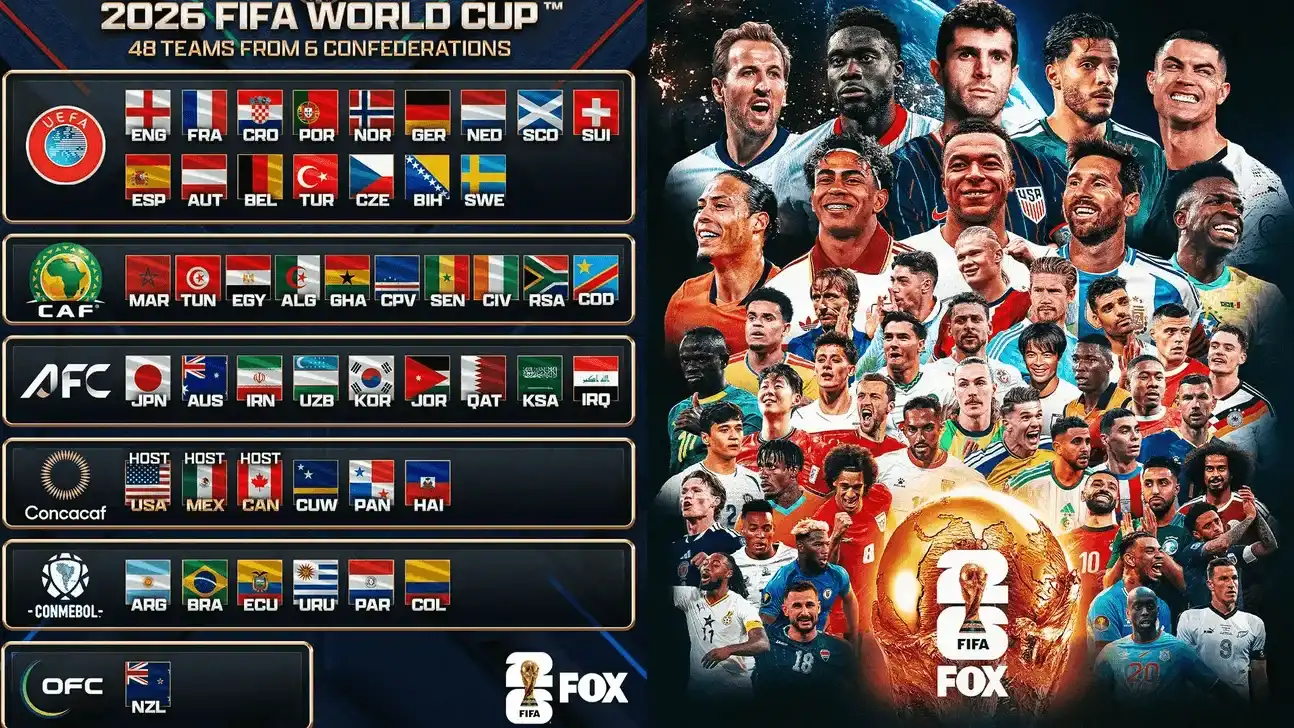
In this major sports year, particularly the 2026 FIFA World Cup—co-hosted by the USA, Canada, and Mexico, and expanded for the first time to 48 teams—will represent the most significant public stress test for sports prediction markets to date. It compresses sports competition, cross-border event organization, the betting ecosystem, and global user traffic into a single market scenario, significantly amplifying both risk dimensions and external scrutiny.

In such a high-density, globalized, cross-jurisdictional sporting event, the combination of insiders and tradable prediction markets means that any information asymmetry regarding injuries, starting lineups, referees, or even internal governance could be rapidly converted into pricing advantages.

In this sense, the 2026 World Cup is not only an opportunity for prediction markets to compete for sports traffic but also a public examination of their ability to safeguard sports integrity.

From Obscurity to the World Cup Spotlight: FIFA's Prediction Market Partner Faces Multiple Queries

In April of this year, FIFA (Fédération Internationale de Football Association) announced its official prediction market partner for the 2026 World Cup. Surprisingly, the brand announced was neither Polymarket nor Kalshi, but a little-known platform—ADI Predictstreet.

Just as people were wondering who ADI Predictstreet was, this company placed at the center of the world's largest sporting event began to face public skepticism due to the negative history of its executives, the speed of its licensing, and the immaturity of its product.

The first layer of controversy surrounding Predictstreet involves executive integrity. When ADI Predict Street was announced as FIFA's betting partner, the company's Chief Council Member, Ajay Bhatia, represented the company on stage. He was photographed with FIFA President Gianni Infantino, both holding up a jersey bearing the ADI Predict Street logo.

FIFA President Gianni Infantino (left) and Ajay Bhatia (right)

Bhatia is the CEO and Managing Director of QuantLase Lab, a subsidiary of IHC (International Holding Company), which is chaired by a member of the Abu Dhabi royal family and Vice President of the UAE. On the other hand, ADI Predictstreet falls under Finstreet, which is a subsidiary of Sirius International Holding, which is also part of IHC.

According to Norwegian football news outlet Josimar, Bhatia was embroiled in an insider trading scandal in 2025. He was accused of purchasing shares in the Indian energy giant Adani Group before IHC publicly announced it would invest in it. The case was settled for approximately $150,000 in September 2025, with Bhatia not admitting guilt.

Shortly after Josimar disclosed Bhatia's past, ADI Predictstreet announced that Dimitrios Psarrakis would assume the role of CEO. However, Psarrakis's resume also appears questionable. He previously served as an assistant to former European Parliament Vice President Eva Kaili, who was a central figure in the European Parliament's Qatar corruption scandal (also known as Qatargate).

Former European Parliament Vice President Eva Kaili (left) and ADI Predictstreet CEO Dimitrios Psarrakis (right)

Kaili allegedly accepted benefits from Qatar and Morocco in exchange for promoting their interests within the EU. While the legal and ethical risks associated with Kaili cannot be directly equated to Psarrakis, his professional connection to a figure at the heart of a scandal is sufficient to raise questions about reputation and due diligence.

Beyond executive credibility issues, the speed at which ADI Predictstreet obtained its license is also noteworthy. Just days before being announced as the official prediction market partner for the 2026 World Cup, ADI Predictstreet announced it had secured a license in Gibraltar. Officials claimed the approval speed "set a record" and that the entire process was very rigorous.

However, although the ADI Predictstreet website domain was registered in January and it obtained its license by the end of March, its actual product is still not live. The real-money trading experience remains unknown. As the official prediction market platform FIFA has thrust into the World Cup spotlight, the outside world still cannot assess whether its actual trade matching, settlement, risk control, anti-manipulation, and user protection mechanisms have undergone stress testing.

Therefore, with these multiple layers of uncertainty, the World Cup's partnership with ADI Predictstreet began with a deficit of trust.

FIFA's Historical Baggage and Gamblification Controversy

Beyond the questionable credibility of the ADI Predictstreet platform, FIFA itself, often criticized for corruption, struggles to gain inherent trust in this matter.

In 2015, the U.S. Department of Justice brought widespread corruption charges against numerous FIFA officials and sports marketing executives. Then-U.S. Attorney General Loretta Lynch described the corruption as "rampant, systemic, and deep-rooted." This historical backdrop makes it difficult for FIFA to convince the public through official statements alone in any cooperation involving betting, data, or prediction markets.

In recent years, FIFA's ties to the betting and data industries have also deepened, fueling concerns about match integrity at a similar pace.

Shortly before the 2022 Qatar World Cup, FIFA struck a deal with betting operator Betano; the following year, FIFA signed an agreement with New Zealand lottery company TAB for the Women's World Cup; in early 2026, FIFA commercialized its streaming platform FIFA+ through a deal with data company Stats Perform, bringing more lower-tier matches into the betting market.

From a commercial perspective, this can be interpreted as FIFA developing its data assets and fan engagement. But from a sports integrity viewpoint, it also means the World Cup is being embedded deeper into the betting and trading ecosystem. As the event becomes increasingly enamored with the commercial value brought by this ecosystem, a major question arises: can it remain sufficiently independent to control risks?

In response, FIFA has taken some measures to address betting-related threats. In 2024, FIFA relocated its legal department and integrity unit to Miami (resulting in the loss of many experienced staff) and also formed an integrity task force, with members including institutions like Interpol, the U.S. Federal Bureau of Investigation, and representatives from the betting industry.

In February 2026, FIFA announced that U.S.-based integrity and compliance monitoring company IC360 would join this task force and use its ProhiBet software to monitor betting-related threats, including whether players and match officials bet on their own games.

However, this mechanism seems more like a screening tool for regulated markets rather than a complete defense line covering the global betting and prediction market risks of the World Cup. For an event involving parties worldwide and extremely long information chains, truly dangerous insider trading often doesn't occur in the places most visible to regulators.

Insider Trading Concerns Rise, Prediction Market Leaders Tighten Rules

Traditional betting monitoring typically relies on information sharing between betting companies, data providers, leagues, and regulators. Prediction markets, however, may involve crypto wallets, offshore platforms, cross-border accounts, proxy trading, and decentralized settlement. Even if official partner platforms are regulated, other platforms may still open World Cup markets outside FIFA's official system.

If anomalous trading occurs on non-partner platforms, among non-U.S. users, via crypto wallets, or through proxy accounts, it remains an unproven question whether FIFA's traditional integrity tools can penetrate these layers.

In sports prediction markets, risks of insider manipulation for outcomes like World Cup winner, group stage advancement, or a team's progression are typically low, as they are difficult for a single participant to manipulate.

But more micro and granular markets are entirely different. Whether a specific player starts, a player is injured, a red card occurs in a match, a team gets a penalty, a specific referee officiates, or a VAR controversy happens—these events are more susceptible to influence by a few insiders and easier to price based on non-public information.

The U.S. Commodity Futures Trading Commission (CFTC), as the sole regulator of prediction markets, recognized this early. One of its key guidelines for sports prediction markets is to remind regulated exchanges to focus on contracts related to individual player performance, prop bets, and micro-markets vulnerable to manipulation. The CFTC also encourages platforms to share data with sports leagues and strengthen contract settlement and market surveillance.

In response, prediction market platforms in the U.S. have adapted their management. Following Congressional pushes to limit prediction market legislation, Kalshi and Polymarket quickly updated their rules. Kalshi stated it would prohibit sports personnel from trading contracts related to areas they participate in or are employed in. Polymarket also updated its rules, banning users from trading contracts if they possess confidential information or can influence the event outcome.

However, the complexity of the World Cup far exceeds that of a single U.S. professional league. Leagues like the NBA and MLB have clear league, team, player union, referee, and official data structures. The World Cup involves a vast array of entities: FIFA, six continental confederations, 48 national teams, clubs, agents, medical teams, referee committees, broadcasters, and data suppliers. Who qualifies as an "insider," how to identify them, and whether they can trade via family, friends, proxy wallets, or third-party accounts? These questions are much harder to answer in the World Cup context.
Furthermore, prediction markets face not just sports integrity issues but also global regulatory legitimacy. In April this year, the Brazilian government blocked 27 prediction market platforms and tightened derivatives rules, prohibiting derivatives based on sports, online games, politics, elections, culture, and social outcomes. Dozens of other countries also reject the argument that "event contracts are not gambling."

In such a climate, FIFA's choice of a platform riddled with question marks and with a product not fully validated as its official World Cup prediction market partner has itself pushed the sports integrity issue to the forefront ahead of time.

Of course, the 2026 World Cup will not determine the survival of prediction markets, but it will likely define the boundaries of their mainstream integration into the global sports industry: will they become a regulated event-trading infrastructure, or just another gambling risk entry point amplified by global sports traffic?


Related Questions

QAccording to the article, what are the main controversies surrounding ADI Predictstreet, the official FIFA 2026 World Cup prediction market partner?

AThe main controversies are: 1) Questionable integrity of its high-level executives, including allegations of insider trading and associations with the 'Qatargate' European Parliament corruption scandal. 2) The extremely fast speed at which it obtained its Gibraltar license. 3) The fact that its actual product was not yet live at the time of the announcement, raising doubts about its transaction, settlement, risk control, and user protection mechanisms.

QWhy is the 2026 FIFA World Cup considered a major stress test for prediction markets?

AThe 2026 World Cup, as a high-density, global, cross-jurisdictional mega-sports event, compresses sports competition, cross-border organization, the gambling ecosystem, and global user traffic into a single market scenario. This significantly amplifies the risk dimensions and external scrutiny. Any information advantage held by insiders regarding injuries, lineups, referees, or internal governance could be rapidly converted into pricing advantages in a tradeable prediction market, posing a severe test to the market's ability to maintain sports integrity.

QWhat specific types of World Cup prediction markets are considered most vulnerable to insider manipulation, according to the article?

AMicroscopic and granular markets are most vulnerable. These include events such as whether a specific player will start, whether a player will be injured, whether a red card will be issued in a match, whether a team will get a penalty kick, which referee will officiate, or whether a VAR controversy will occur. These events are more easily influenced by a small number of insiders and can be priced ahead of time using non-public information.

QWhat actions have established prediction market platforms like Kalshi and Polymarket taken to address integrity concerns related to sports events?

AFollowing legislative pressure in the U.S., these platforms have updated their rules. Kalshi stated it will prohibit sports-related personnel from trading contracts in the fields they participate in or are employed by. Polymarket also updated its rules to prohibit users from trading contracts related to an event if they possess confidential information or are capable of influencing the event's outcome.

QWhat historical and recent factors contribute to skepticism about FIFA's ability to ensure integrity in its dealings with betting and prediction markets?

AHistorical factors include the widespread, systemic, and deep-rooted corruption scandal within FIFA exposed by the U.S. Department of Justice in 2015. Recent factors include FIFA's deepening ties with the betting and data industry (e.g., partnerships with Betano, TAB, Stats Perform), which increasingly embeds events like the World Cup into the gambling and trading ecosystem. This commercial focus raises questions about FIFA's independence and ability to control integrity risks effectively.

Related Reads

Xpeng and NIO Compete on Computing Power, Li Auto Shifts Architecture

On June 15, 2026, Li Auto unveiled details of its self-developed chip, Mahe M100, for its new L9 Livis model. CTO Xie Yan stated the goal was not just a faster chip, but a fundamentally different one, targeting the chip architecture itself. While competitors like NIO, Xpeng, and Huawei highlight TOPS (computing power) figures for their self-developed chips, Li Auto’s Mahe M100 focuses on redesigning the underlying architecture. It employs a "dynamic data flow architecture" to address memory bandwidth bottlenecks in large model inference, claiming up to 3x the effective computing power of Nvidia's Thor U for its specific workloads and a 40% reduction in latency. The chip's design was peer-reviewed and accepted at ISCA 2026. However, this performance is highly optimized for Li Auto's own VLA2.1 algorithm, meaning it may not generalize as well to other tasks. Li Auto aims to achieve full-stack in-house development with Mahe M100, covering chip, compiler, OS, AI algorithms, and domain controller—a level of vertical integration few competitors match. Beyond the chip, CEO Li Xiang introduced a new strategic narrative: the "embodied intelligent vehicle," defined as an integration of an EV, a professional driver, an AI computer, and a life assistant. This shifts competition from features like large screens to systemic AI capabilities. A key commitment was that Li Auto's Mahe VLA autonomous driving model will match Tesla's FSD V14 by Q4 2026, with specific OTA milestones set for July, September, and December. Financially, Li Auto faces pressure with declining revenue and vehicle gross margins since Q4 2025, while maintaining high R&D investment (approx. ¥12B in 2026, 50% AI-related). Its 2026 sales target is 550,000 vehicles, up from 406,000 in 2025. The new L9 Livis garnered over 10,000 pre-orders in two weeks. The effectiveness of these strategic moves—new products, OTAs, and the novel chip architecture—will begin to show in Q3 2026 financial results, with the year-end FSD V14 benchmark being the ultimate test.

marsbit26m ago

Xpeng and NIO Compete on Computing Power, Li Auto Shifts Architecture

marsbit26m ago

The Year of AI Applications: Saying 'Yes' While Ignoring Risks? A Comprehensive Open Source Log of Software Development's Journey

The Year of AI Applications: Blindly Saying "Yes" While Ignoring Risks? A Software Development Log Goes Fully Open Source. AI-generated code harbors risks hidden within seemingly correct programs, potentially leading to data leaks or asset loss. The open-source project "Narwhal AI Code Risks," from Peking University's Narwhal-Lab, compiles real-world cases, early warning signs, and typical risk pathways. Its goal is to help developers identify potential hazards early and avoid repeating past mistakes. In 2026, code is generated faster than ever but deployed with less scrutiny. The danger often lies not in glaring errors, but in code that appears normal—syntactically correct, passing all checks—yet introduces subtle but critical flaws like non-existent dependencies, excessive permissions, or exposed databases. A stark example is the Moonwell cbETH oracle incident. A configuration file error, where a cryptocurrency price was set to ~$1.12 instead of ~$2,200, slipped through 28 checks and a pull request signed by both AI (Claude, Copilot) and human developers. This "semantic deviation" resulted in a loss of $1.78 million. The risk is that AI can produce functionally valid code that is semantically wrong for the business context. As AI moves beyond simple code completion to modifying configurations, installing dependencies, and operating via autonomous agents, it traverses longer, less traceable paths within software engineering, blurring traditional boundaries and oversight points. The Narwhal AI Code Risks project structures information into three layers: `/cases` for documented real-world incidents, `/inferred` for early warning signals, and `/scenarios` for clear, generalized risk patterns not yet tied to specific events. This aims to create a lasting, public record to prevent collective amnesia about past AI-coding pitfalls. Risks are categorized into seven areas: Software Supply Chain (e.g., recommending fake packages), Code-Level Vulnerabilities (e.g., reintroducing path traversal bugs), Cloud & Infrastructure Misconfiguration (e.g., overly permissive settings), Agent Risks (from autonomous tool execution), Vertical Domain Risks (e.g., in finance, healthcare), Intellectual Property & Compliance issues, and Human Factors (like over-reliance on AI output). The project's core value is transforming isolated incidents into reusable knowledge—a foundational resource for developers to spot similar issues, for security researchers to build upon, for toolmakers to create detection rules, and for the community to contribute new findings. As AI integration accelerates, this open-source "logbook" serves as a crucial navigational aid, charting past errors to help future projects steer clear of the same traps.

marsbit27m ago

The Year of AI Applications: Saying 'Yes' While Ignoring Risks? A Comprehensive Open Source Log of Software Development's Journey

marsbit27m ago

The Foundation of SpaceX's Trillion-Dollar Valuation: Who is Dividing Up Musk's Annual Tens of Billions in Capital Expenditure?

SpaceX's trillion-dollar valuation is built on its three core businesses: Starlink (profitable, 60% of revenue), rockets (driving down launch costs), and AI (a major investment area). This creates a financial cycle: Starlink funds rocket development, which enables low-cost launches for AI hardware, generating future revenue. This cycle fuels annual capital expenditures of tens of billions, flowing to a vast supply chain. Suppliers are categorized by their replaceability. The first group includes irreplaceable players like NVIDIA (GPU/CUDA ecosystem), Eutelsat (critical radio spectrum), Filtronic (specialized amplifiers), Materion (strategic beryllium), and STMicroelectronics (antenna chips). The second group consists of hard-to-replace suppliers due to high switching costs, such as Honeywell (flight control), Carpenter Technology (specialty alloys), Hexcel (carbon fiber), Broadcom (data exchange), and Linde (industrial gases). The third group comprises high-volume, cost-critical suppliers for mass-produced items like Starlink terminals. Key names include Wistron NeWeb (primary manufacturer) and several A-share companies like Shenzhen Sunway (connectors), Pies New Materials (forgings), Western Superconducting (alloys), and Yingliu (castings). Other niche players include Trimble (timing), Astronics (power distribution), and CTS (thermal management). The article argues that investing in these suppliers, rather than SpaceX stock directly, offers an alternative opportunity. The rationale is threefold: procurement is just beginning to scale, SpaceX's IPO brings new transparency to its supply chain, and the situation mirrors early stages of past "super terminal" ecosystems like Apple or Tesla. While risks exist (commodity cycles, geopolitical factors, technology shifts), the core thesis is that SpaceX's massive, ongoing procurement will translate into reliable revenue for its key suppliers, regardless of its own stock price volatility.

marsbit1h ago

The Foundation of SpaceX's Trillion-Dollar Valuation: Who is Dividing Up Musk's Annual Tens of Billions in Capital Expenditure?

marsbit1h ago

SpaceX's Trillion-Dollar Valuation Base: Who's Sharing in Musk's Annual Tens of Billions in Capital Expenditure?

**Title: The Foundation of SpaceX's Trillion-Dollar Valuation: Who Benefits from Musk's Annual $100 Billion Capital Expenditure?** This article argues that investors seeking to benefit from SpaceX's growth might find greater opportunities in its supply chain rather than directly investing in the company itself, drawing parallels to historical successes with Apple, Tesla, and NVIDIA suppliers. **SpaceX's Business Model & Cash Flow:** SpaceX generates revenue from three main areas: 1. **Starlink:** Its profitable core, earning $11.3B in 2023 (60% of revenue), funding other ventures. 2. **Rockets (Falcon/Starship):** Requires $3B+ in annual R&D but achieves the world's lowest launch costs. 3. **AI:** Currently unprofitable (-$6B+ in 2023), investing heavily in ground-based supercomputers (220,000 GPUs) and future orbital data centers. The cycle is: Starlink profits → fund cheaper rockets → low-cost launches deploy AI hardware → AI compute rentals generate future revenue. This cycle drives annual procurement spending of tens of billions of dollars. **The Supply Chain Beneficiaries:** Suppliers are categorized by their replaceability: **1. Nearly Irreplaceable (High Barriers to Entry):** * **NVIDIA:** Powers the Colossus supercomputer; its CUDA ecosystem creates immense switching costs. * **Eutelsat (SATS):** Controls critical radio spectrum for satellite communications; holds a ~3% stake in SpaceX. * **Filtronic (FTC):** Supplies millimeter-wave signal amplifiers for Starlink satellites; SpaceX constitutes 83% of its revenue. * **Materion (MTRN):** Global leader in beryllium production, a strategic material used in Starship structures. * **STMicroelectronics (STM):** Supplies phased-array antenna chips for Starlink satellites. **2. Replaceable, but Switching Cost is Prohibitively High:** * **Honeywell (HON):** Provides flight control and inertial navigation systems with decades of certification. * **Carpenter Technology (CRS):** Manufactures ultra-pure specialty steel alloys for Raptor engines. * **Hexcel (HXL):** Supplies custom carbon fiber composites developed over a decade with SpaceX. * **Broadcom (AVGO):** Manages high-speed data switching. * **Linde Group:** Supplies industrial gases (liquid oxygen/nitrogen) from facilities built near SpaceX launch sites. **3. High-Volume, Cost-Critical Manufacturing:** Focuses on mass-producing components like Starlink user terminals (target: 30 million units). * **Key Players:** Wistron NeWeb (6285, primary terminal manufacturer), several Chinese A-share companies (e.g., Sunway Communication, PAX New Materials, Western Metal Materials, Yingliu Co.), and smaller US firms like Trimble (TRMB, timing systems). **Why Now?** Three factors make the supply chain opportunity timely: 1. **Volume Ramp-Up:** SpaceX plans 100 launches in 2026, aims for 30 million Starlink terminals, and will deploy AI data centers, meaning procurement will accelerate. 2. **Increased Transparency:** The IPO provides public financial data, allowing investors to track supplier order growth. 3. **Historical Precedent:** The current phase is likened to Tesla's early mass-production stage (circa 2018), suggesting a long growth runway for suppliers. **Conclusion:** The article posits that while investing in SpaceX stock is betting on Elon Musk's ambitious vision at a high valuation, investing in its established suppliers is a bet on the tangible, recurring revenue from its massive procurement budget, which is largely decoupled from day-to-day stock price volatility.

链捕手1h ago

SpaceX's Trillion-Dollar Valuation Base: Who's Sharing in Musk's Annual Tens of Billions in Capital Expenditure?

链捕手1h ago

Trading

Spot
Futures

Hot Articles

How to Buy ZEN

Welcome to HTX.com! We've made purchasing Horizen (ZEN) simple and convenient. Follow our step-by-step guide to embark on your crypto journey.Step 1: Create Your HTX AccountUse your email or phone number to sign up for a free account on HTX. Experience a hassle-free registration journey and unlock all features.Get My AccountStep 2: Go to Buy Crypto and Choose Your Payment MethodCredit/Debit Card: Use your Visa or Mastercard to buy Horizen (ZEN) instantly.Balance: Use funds from your HTX account balance to trade seamlessly.Third Parties: We've added popular payment methods such as Google Pay and Apple Pay to enhance convenience.P2P: Trade directly with other users on HTX.Over-the-Counter (OTC): We offer tailor-made services and competitive exchange rates for traders.Step 3: Store Your Horizen (ZEN)After purchasing your Horizen (ZEN), store it in your HTX account. Alternatively, you can send it elsewhere via blockchain transfer or use it to trade other cryptocurrencies.Step 4: Trade Horizen (ZEN)Easily trade Horizen (ZEN) on HTX's spot market. Simply access your account, select your trading pair, execute your trades, and monitor in real-time. We offer a user-friendly experience for both beginners and seasoned traders.

3.2k Total ViewsPublished 2024.03.29Updated 2026.06.02

How to Buy ZEN

Discussions

Welcome to the HTX Community. Here, you can stay informed about the latest platform developments and gain access to professional market insights. Users' opinions on the price of ZEN (ZEN) are presented below.

活动图片