Dari Gas Limit hingga Keyed Nonces, Bagaimana Memahami Tahap Selanjutnya Skalabilitas Ethereum?

marsbitPublished on 2026-05-14Last updated on 2026-05-14

Abstract

**Ringkasan: Dari Gas Limit hingga Keyed Nonces, Bagaimana Memahami Langkah Berikutnya dalam Skalabilitas Ethereum?** Akhir-akhir ini, perkembangan Ethereum semakin berfokus pada upaya memindahkan kompleksitas yang sebelumnya ditanggung oleh dompet, DApp, dan pengguna ke lapisan protokol. Langkah ini bertujuan mengubah peningkatan performa teknis menjadi pengalaman yang lebih mulus, aman, dan terjangkau bagi pengguna biasa. Pertama, **peningkatan Gas Limit menuju 2 miliar** menjadi perhatian utama. Peningkatan kapasitas blok ini tidak sekadar memperbesar ukuran blok, tetapi dilakukan secara hati-hati dengan seperangkat pendekatan seperti ePBS, Block-Level Access Lists (BAL), dan EIP-8037. Tujuannya adalah meningkatkan kapasitas eksekusi L1 tanpa mengorbankan desentralisasi dengan membebani node. Kedua, **Keyed Nonces (EIP-8250)** mengusulkan perubahan mendasar pada model antrean transaksi akun. Alih-alih menggunakan satu antrean nonce linier tunggal, mekanisme baru ini memungkinkan satu akun memiliki beberapa "domain" nonce independen. Ini seperti memiliki beberapa jalur terpisah untuk transaksi biasa, pembayaran privasi, otorisasi sesi, atau eksekusi batch. Perubahan ini mengurangi kemacetan, sangat bermanfaat bagi protokol privasi dan membuka lebih banyak ruang desain untuk dompet pintar. Ketiga, dampak bagi **pengguna biasa** akan terasa melalui pengalaman dompet yang lebih baik. Upgrade protokol seperti ini, ketika diterjemahkan ke lapisan dompet, akan menghasilkan in...

Penulis:imToken

Secara objektif, dalam beberapa waktu terakhir, banyak pengguna merasakan Ethereum secara langsung bukan melalui peta jalan atau rapat pengembang, tetapi melalui operasi konkret di blockchain.

Misalnya, dalam dua tahun terakhir, banyak yang merasakan Gas yang semakin rendah saat transfer, pengalaman interoperabilitas lintas rantai yang membaik, dan lain-lain. Inilah mengapa skalabilitas Ethereum tidak pernah menjadi sekadar masalah "perlombaan kinerja"—bagi pengguna biasa, TPS yang lebih tinggi, blok yang lebih besar, arsitektur dasar yang lebih kompleks, hanya bermakna ketika benar-benar diubah menjadi biaya yang lebih rendah, operasi yang lebih lancar, dan pengalaman dompet yang lebih aman.

Dan serangkaian perkembangan baru Ethereum belakangan ini kebetulan mengarah pada upaya Ethereum untuk memindahkan kompleksitas yang selama ini ditanggung oleh dompet, DApp, relayer pihak ketiga, dan pengguna sendiri secara sistematis ke lapisan protokol.

Di antaranya termasuk Keyed Nonces yang melibatkan Vitalik, konsensus arah seputar floor Gas Limit 200 juta dalam peningkatan Glamsterdam, serta serangkaian petunjuk tersembunyi dalam peta jalan 2026 yang terus menekankan abstraksi akun asli, interoperabilitas lintas L2, dan penguatan keamanan L1.
I. Gas Limit Dinaikkan menjadi 200 Juta?

Pertama, lihat yang paling mudah dirasakan pengguna, Gas Limit.

Seperti diketahui, dalam jaringan Ethereum, setiap transaksi (baik transfer maupun interaksi kontrak) memerlukan konsumsi sejumlah Gas, dan kapasitas Gas Limit setiap blok Ethereum tetap, atau terbatas slot-nya: semakin banyak slot, semakin banyak penumpang yang bisa diangkut dalam periode yang sama; semakin ketat slot-nya, semakin tinggi penawarannya, dan Gas fee pun meningkat.

Secara teori, peningkatan batas Gas blok memang akan secara langsung meningkatkan kinerja mainnet Ethereum secara signifikan. Namun, di masa lalu, dengan perkembangan besar di jalur L2, Ethereum cukup hati-hati dalam hal ini, sebagian besar tekanan skalabilitas sengaja dialihkan ke jalur L2.

Melihat kurva ekspansi Gas Limit Ethereum, setelah Gas Limit jaringan Ethereum pertama kali melampaui 10 juta pada September 2019, hingga tahun ini, dalam 7 tahun, Gas Limit baru naik dari 8 juta menjadi 60 juta. Terutama pada tahun 2025, baru benar-benar memasuki fase percepatan—dari 30 juta menjadi 36 juta pada Februari, naik lagi menjadi 45 juta pada Juli, dan meningkat menjadi 60 juta setelah peningkatan Fusaka pada Desember.

Dapat dikatakan sebagian besar ekspansi dilakukan pada tahun 2025 ini. Tentu saja, seperti yang kami sebutkan sebelumnya, 2025 juga merupakan tahun yang sangat penting dalam sejarah perkembangan Ethereum. Hanya dalam 7 bulan setelah peningkatan Pectra pada Mei, peningkatan Fusaka membuktikan bahwa EF, yang mengalami perubahan kepemimpinan besar, masih mampu mendorong pembaruan signifikan, sekaligus menandai Ethereum resmi memasuki ritme pengembangan yang dipercepat "dua hard fork per tahun" (baca lebih lanjut Ethereum 2026: Menginterpretasikan Peta Jalan Protokol Terbaru EF, Resmi Memasuki Era "Peningkatan Teknikal"?).

Sumber: Etherscan

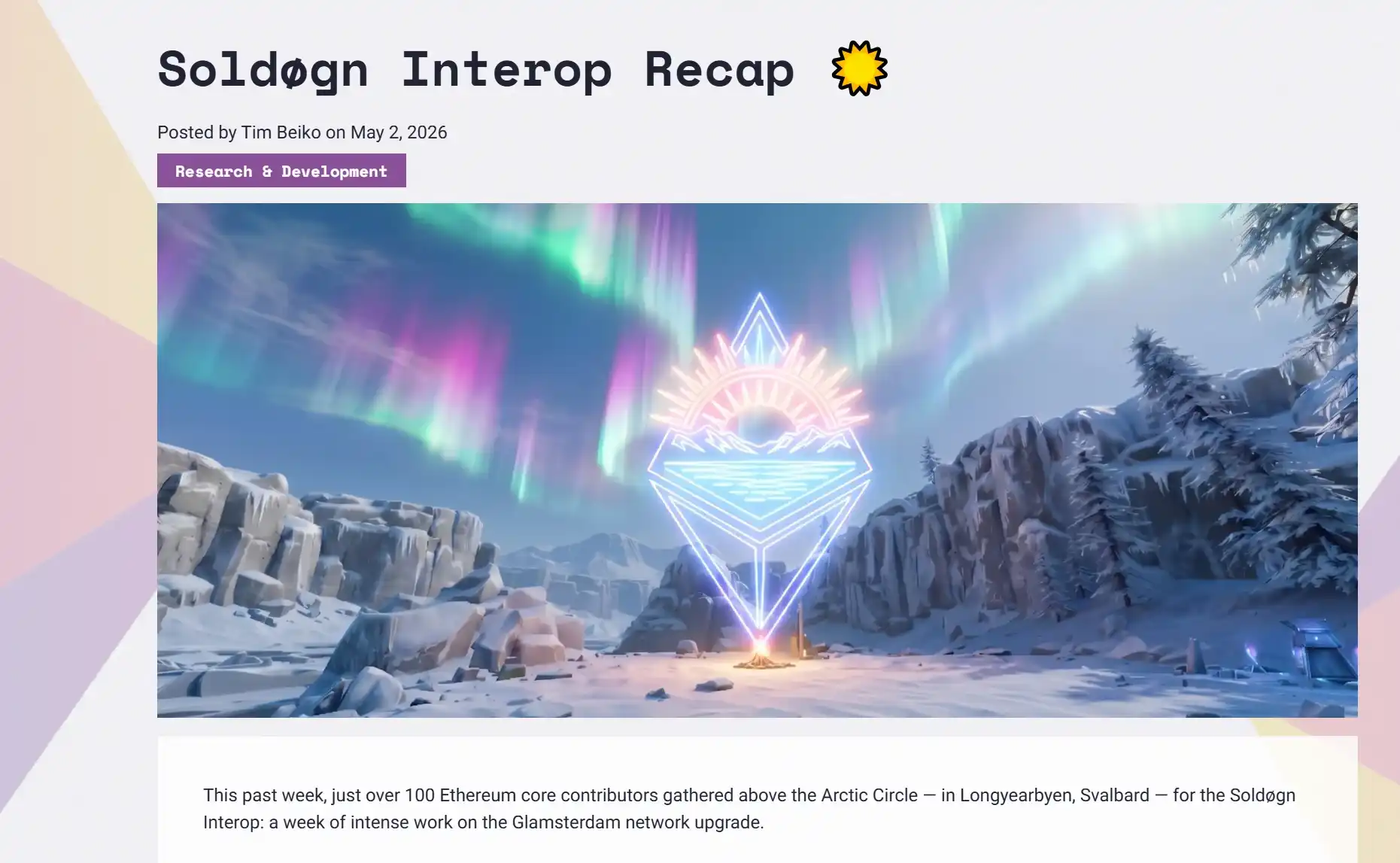
Berdasarkan Soldøgn Interop Recap yang dirilis oleh Ethereum Foundation pada 2 Mei, lebih dari 100 kontributor inti Ethereum berpartisipasi dalam konferensi interoperabilitas seputar peningkatan Glamsterdam di Kepulauan Svalbard, Norwegia, dengan tujuan utama memajukan implementasi, pengujian, dan penyelarasan parameter multi-klien untuk Glamsterdam. Pada akhir konferensi, pengembang telah mencapai konsensus arah seputar Gas Limit 200 juta setelah Glamsterdam.

Ini berarti, jika proses selanjutnya berjalan lancar, kapasitas eksekusi L1 Ethereum diharapkan dapat ditingkatkan dari sekitar 60 juta Gas Limit saat ini menjadi sekitar 200 juta. Dalam dimensi waktu yang lebih panjang, sikap terbuka untuk membahas Gas Limit di ekosistem Ethereum jelas menjadi lebih "agresif". Proposal EIP-9698 bahkan menyarankan "meningkatkan sepuluh kali lipat setiap dua tahun", hingga meningkatkan Gas Limit menjadi 3,6 miliar pada tahun 2029, 50 kali lipat dari saat ini.

Tapi perlu ditekankan di sini, meningkatkan Gas Limit bukan sekadar memperbesar blok.

Jika hanya meningkatkan kapasitas komputasi setiap blok secara kasar, dalam jangka pendek mungkin menurunkan biaya, tetapi dalam jangka panjang menyebabkan beban node menjadi lebih berat, data status mengembang, dan juga berarti pengguna biasa lebih sulit menjalankan node, yang akhirnya justru melemahkan fondasi desentralisasi inti Ethereum.

Jadi, pendekatan skalabilitas Glamsterdam adalah serangkaian kombinasi:

  • ePBS (enshrined Proposer-Builder Separation) memasukkan proses pembangunan dan verifikasi blok lebih jelas ke dalam aturan protokol, memungkinkan validator menangani blok yang lebih besar dengan lebih aman;
  • Block-Level Access Lists (BAL) mencatat terlebih dahulu akun dan lokasi penyimpanan yang akan diakses selama eksekusi blok, sehingga mendukung pembacaan disk paralel, verifikasi transaksi paralel, dan perhitungan akar status paralel;
  • Sedangkan EIP-8037 meningkatkan biaya operasi terkait pembuatan status melalui peningkatan biaya, menghindari pertumbuhan status yang terlalu cepat setelah peningkatan Gas Limit;

Pada dasarnya, Ethereum tidak hanya ingin "memuat lebih banyak transaksi", tetapi juga berpikir bagaimana memuat lebih banyak transaksi tanpa membuat ambang batas menjalankan node menjadi semakin tinggi.

Ini juga perbedaan mendasar antara jalur skalabilitas Ethereum dan narasi banyak rantai berkinerja tinggi, yang selalu mengejar bukan mengorbankan biaya verifikasi untuk mendapatkan throughput permukaan, tetapi meningkatkan daya dukung mainnet itu sendiri dengan tetap mempertahankan partisipasi node biasa dan sistem yang dapat diverifikasi.

II. Keyed Nonces: Mengubah "Satu Antrian" menjadi "Banyak Jalur"

Jika Gas Limit menyelesaikan "seberapa banyak yang dapat ditampung satu blok", maka Keyed Nonces berfokus pada masalah lain yang lebih detail tetapi krusial: bagaimana satu transaksi harus mengantri?

Seperti diketahui, di Ethereum, nonce dapat dipahami secara sederhana sebagai "nomor urut" transaksi akun. Fungsinya adalah mencegah transaksi yang sama dieksekusi berulang kali, dan memastikan transaksi dari akun yang sama diproses secara berurutan.

Mekanisme ini mudah dipahami dalam skenario transfer biasa, yaitu transaksi pertama, kedua, ketiga, dan seterusnya secara berurutan.

Tapi masalahnya, ketika kemampuan akun menjadi lebih kompleks, misalnya melibatkan transaksi privasi, dompet pintar, kunci sesi, operasi batch, pembayaran oleh pihak ketiga, nonce linear tunggal dapat menjadi hambatan. Oleh karena itu, Keyed Nonces yang diusulkan oleh EIP-8250, intinya adalah mengubah satu akun yang sebelumnya hanya memiliki satu antrian nonce, menjadi dapat memiliki beberapa domain nonce.

Secara spesifik, ia mengganti sender nonce tunggal dalam Frame Transaction EIP-8141 dengan struktur (nonce_key, nonce_seq), di mana nonce_key == 0 sesuai dengan nonce akun tradisional, sedangkan key bukan nol dapat memilih urutan nonce independen yang dikelola oleh protokol, transaksi di bawah key yang berbeda saling independen dan tidak saling memengaruhi pencegahan replay.

Kedengarannya teknis, tetapi dapat dipahami dengan analogi kehidupan sehari-hari: dulu, satu akun seperti di bank hanya memiliki satu jendela, semua bisnis harus mengantri di antrian yang sama; Keyed Nonces seperti membagi bisnis berbeda ke jendela berbeda, transfer, penarikan privasi, otorisasi sesi, eksekusi batch dapat berjalan di jalurnya masing-masing.

Ini sangat penting terutama untuk protokol privasi, karena untuk menghindari mengikat aktivitas pengguna di blockchain langsung ke satu alamat publik, protokol privasi dapat membuat beberapa pengguna mengirim transaksi melalui satu alamat pengirim bersama. Namun, dalam mekanisme nonce tunggal, setelah transaksi satu pengguna dimasukkan ke dalam blok, dapat menyebabkan transaksi pengguna lain yang masih menunggu menjadi tidak valid atau terhambat.

Sedangkan Keyed Nonces memungkinkan setiap pengeluaran memilih domain nonce-nya sendiri, misalnya berasal dari nullifier privasi, mengurangi konflik antrian semacam ini dari lapisan protokol.

Penentuan posisi Vitalik sendiri terhadapnya bahkan lebih besar. Saat memperkenalkan EIP-8250, dia dengan jelas menyatakan, Keyed Nonces "tidak hanya dukungan yang lebih kuat untuk skema privasi di lapisan protokol, tetapi juga mungkin langkah pertama dari strategi skalabilitas status baru Ethereum—dengan membuat tipe penyimpanan yang dioptimalkan khusus untuk kasus penggunaan berbeda, mencapai skalabilitas ekstrem sambil mempertahankan desentralisasi protokol."

Dengan kata lain, dapat dipahami secara sederhana, Gas Limit menyelesaikan "ukuran blok", Keyed Nonces membahas "bentuk status"—yang akan dibawa Ethereum di masa depan bukan hanya lebih banyak transaksi, tetapi lebih banyak jenis transaksi.

III. Bagaimana Ini Mempengaruhi Pengguna Biasa?

Bagi ekosistem Ethereum, banyak peningkatan protokol tampak jauh dari pengguna biasa, tetapi akhirnya akan berdampak pada pengalaman dompet.

Karena pintu masuk nyata pengguna ke Ethereum bukan EIP, klien, atau rapat pengembang, tetapi setiap transfer, otorisasi, penandatanganan, lintas rantai, dan interaksi DApp di dalam dompet. Artinya, perubahan di lapisan protokol hanya benar-benar menyelesaikan transformasi dari peningkatan teknis ke peningkatan pengalaman pengguna ketika diterjemahkan ke dalam pengalaman operasional yang lebih jelas, lancar, dan aman di lapisan dompet.

Misalnya, abstraksi akun yang sudah sangat dikenal saat ini, bukan untuk membuat pengguna memahami lebih banyak istilah teknis, tetapi agar pengguna di masa depan dapat menggunakan akun on-chain lebih alami. Oleh karena itu, dalam beberapa tahun terakhir, transaksi batch, pembayaran Gas, mekanisme pemulihan, cara penandatanganan berbeda, otorisasi sesi, serta strategi keamanan yang lebih fleksibel, secara bertahap menjadi kemampuan dasar di dalam dompet.

Demikian pula dengan Keyed Nonces, kedengarannya seperti optimisasi mekanisme antrian akun yang sangat mendasar, tetapi di sisi pengguna, dampak potensialnya tidak abstrak. Karena hari ini, banyak pengguna mungkin pernah mengalami skenario serupa saat beroperasi di blockchain: satu transaksi lama tidak dikonfirmasi, transaksi berikutnya terhambat, ingin membatalkan atau mempercepat transaksi, tetapi tidak memahami hubungan antara nonce, Gas, dan penggantian transaksi, terutama saat beberapa operasi berjalan paralel, satu langkah kegagalan akan memengaruhi seluruh proses berikutnya.

Bagi pengguna biasa, masalah ini tampak seperti "dompet tidak nyaman digunakan" atau "rantai tidak nyaman digunakan", tetapi sebenarnya terkait dengan desain nonce linear tunggal dalam model akun Ethereum. Dan arah yang diwakili oleh Keyed Nonces adalah membuat akun tidak lagi hanya dapat mengeksekusi semua operasi secara berurutan dalam satu antrian, tetapi dapat membagi beberapa jalur paralel berdasarkan kasus penggunaan yang berbeda.

Maka di masa depan, operasi transfer biasa, otorisasi DApp, transaksi privasi, transaksi batch, pembayaran Gas, secara teori dapat memiliki ruang eksekusi yang lebih independen, mengurangi kemungkinan saling menghambat dan bertabrakan.

Ini tidak diragukan lagi akan lebih membuka ruang desain untuk dompet pintar.

Yang lebih penting, kemampuan ini di masa lalu seringkali memerlukan kompleksitas yang ditanggung bersama oleh dompet, DApp, layanan relayer, dan pengguna. Pengguna harus memahami ruang lingkup otorisasi, menilai apakah Gas wajar, mengetahui apa yang mereka tanda tangani, dan berulang kali mengonfirmasi dalam operasi multi-langkah seperti lintas rantai, penukaran, staking, klaim hadiah. Setiap penyimpangan pemahaman dapat membawa risiko kegagalan operasi dan kehilangan aset.

Dan yang sedang dicoba Ethereum sekarang justru memindahkan sebagian kompleksitas ke lapisan protokol, memungkinkan dompet menyediakan abstraksi interaksi yang lebih baik bagi pengguna berdasarkan kemampuan dasar yang lebih standar dan asli.

Inilah mengapa, Gas Limit, BAL, ePBS, Keyed Nonces, Frame Transactions, abstraksi akun asli, dan interoperabilitas lintas L2, tampaknya masing-masing termasuk dalam modul teknis yang berbeda, tetapi sebenarnya melayani hal yang sama: membuat Ethereum mampu menangani skenario penggunaan on-chain yang lebih kompleks tanpa mengorbankan desentralisasi dan keamanan.

Secara spesifik, dengan menempatkan dinamika ini bersama-sama, akan ditemukan bahwa fokus Ethereum baru-baru ini tidak terpecah:

  • Peningkatan Gas Limit menyelesaikan kapasitas eksekusi mainnet dan tekanan biaya;
  • BAL, ePBS, EIP-8037 menyelesaikan bagaimana mempertahankan kemampuan verifikasi node dan pertumbuhan status yang terkontrol selama proses skalabilitas;
  • Keyed Nonces dan Frame Transactions menyelesaikan hambatan di lapisan protokol untuk model akun, protokol privasi, dan dompet pintar;
  • Abstraksi akun asli dan interoperabilitas lintas L2 lebih lanjut mengarah pada perbaikan pengalaman yang benar-benar dapat dirasakan oleh pengguna biasa.

Ini juga berarti Ethereum sedang memasuki tahap baru.

Bagaimanapun, dalam beberapa tahun terakhir, pasar lebih memperhatikan skalabilitas L2, penurunan biaya Blob, dan narasi modularisasi. Pengguna juga secara bertahap terbiasa mentransfer aset di antara L2 yang berbeda, mencari lingkungan interaksi dengan biaya lebih rendah. Namun, dengan terus meningkatnya Gas Limit mainnet, peningkatan seperti Glamsterdam yang terus berjalan, serta skema abstraksi akun dan interoperabilitas yang terus berkembang, pertanyaan yang dijawab Ethereum bukan lagi hanya "bagaimana membuat transaksi lebih murah", tetapi "bagaimana membuat pengalaman on-chain lebih seperti satu kesatuan".

Dalam proses ini, pentingnya dompet tidak diragukan lagi akan semakin diperbesar.

Karena dompet bukan hanya pintu masuk pengguna ke Ethereum, tetapi juga antarmuka di mana kemampuan protokol benar-benar dipahami dan digunakan oleh pengguna. Di masa depan, semakin kompleks peningkatan dasar, semakin perlu diterjemahkan oleh dompet menjadi petunjuk penandatanganan yang lebih jelas, jalur transaksi yang lebih dapat dipahami, identifikasi risiko yang lebih dini, serta pengalaman interaksi on-chain yang lebih lancar.

Mari kita saling menguatkan.

Related Questions

QApa yang dimaksud dengan Gas Limit di jaringan Ethereum, dan bagaimana peningkatannya memengaruhi pengguna?

AGas Limit adalah jumlah maksimum gas yang dapat digunakan dalam satu blok di Ethereum. Gas dibutuhkan untuk setiap transaksi, seperti transfer atau interaksi kontrak pintar. Jika Gas Limit rendah, kapasitas blok terbatas sehingga biaya transaksi (gas fee) menjadi tinggi karena pengguna harus bersaing untuk ruang. Peningkatan Gas Limit, seperti rencana peningkatan ke 2 miliar dalam upgrade Glamsterdam, akan memperbesar kapasitas blok. Hal ini diharapkan dapat mengurangi biaya transaksi dan membuat pengalaman pengguna lebih murah dan lancar.

QApa itu Keyed Nonces (EIP-8250), dan bagaimana konsep ini dapat meningkatkan pengalaman pengguna di Ethereum?

AKeyed Nonces adalah proposal (EIP-8250) yang mengubah model nonce di Ethereum. Saat ini, setiap akun hanya memiliki satu antrian nonce linear untuk semua transaksinya. Keyed Nonces memungkinkan satu akun memiliki beberapa domain nonce (dengan kunci berbeda). Ini seperti mengubah satu jalur antrian di bank menjadi beberapa jalur untuk layanan yang berbeda (misalnya, transfer, transaksi privasi, otorisasi sesi). Dengan begitu, transaksi dari tipe yang berbeda tidak saling menghalangi, mengurangi kemacetan, dan meningkatkan efisiensi, terutama untuk dompet pintar dan protokol privasi.

QApa saja komponen utama dari upgrade Glamsterdam yang bertujuan meningkatkan skalabilitas Ethereum?

AUpgrade Glamsterdam menggunakan pendekatan kombinasi untuk meningkatkan skalabilitas Ethereum secara berkelanjutan, bukan hanya memperbesar blok. Komponen utamanya meliputi: ePBS (enshrined Proposer-Builder Separation) untuk memisahkan dan mengamankan proses pembangunan dan validasi blok, Block-Level Access Lists (BAL) untuk memungkinkan pembacaan data paralel dan mempercepat eksekusi, serta EIP-8037 yang meningkatkan biaya operasi terkait pembuatan status untuk mengontrol pertumbuhan data status agar node tetap dapat dijalankan dengan mudah.

QMengapa dompet (wallet) menjadi semakin penting dalam konteks peningkatan protokol Ethereum yang kompleks?

ADompet adalah antarmuka utama bagi pengguna untuk berinteraksi dengan Ethereum. Saat protokol dasar seperti Gas Limit dan Keyed Nonces menjadi lebih kompleks, peran dompet menjadi kritis untuk menerjemahkan kemampuan teknis tersebut menjadi pengalaman pengguna yang sederhana, aman, dan mudah dipahami. Dompet yang baik akan menyajikan informasi tanda tangan, jalur transaksi, dan potensi risiko dengan jelas, serta memfasilitasi operasi seperti transaksi batch, pembayaran gas oleh pihak ketiga, dan abstraksi akun. Dengan demikian, peningkatan di lapisan protokol baru benar-benar bermanfaat bagi pengguna biasa.

QBagaimana upgrade-upgrade Ethereum seperti peningkatan Gas Limit dan Keyed Nonces berkontribusi pada visi 'pengalaman pengguna yang terpadu'?

AUpgrade-upgrade ini bersama-sama berusaha membuat pengalaman berinteraksi dengan Ethereum terasa sebagai satu kesatuan yang mulus. Peningkatan Gas Limit mengurangi biaya dan kemacetan di lapisan utama (L1). Keyed Nonces, Frame Transactions, dan abstraksi akun asli membuat model akun lebih fleksibel dan mengurangi konflik antartransaksi. Sementara itu, interoperabilitas antar-L2 bertujuan menghubungkan berbagai lapisan kedua dengan lebih baik. Tujuannya adalah agar pengguna tidak lagi merasakan fragmentasi antara L1, berbagai L2, dan layanan yang berbeda, tetapi dapat bertransaksi dengan lancar, aman, dan efisien di seluruh ekosistem Ethereum.

Related Reads

Dalio's Latest Warning: Don't Get Carried Away by AI, Real Returns on US Stocks in the Next 5-10 Years Could Be -5% to -10%

Ray Dalio, founder of Bridgewater Associates, warns investors against excessive concentration in AI stocks. He argues the current market, dominated by a few AI giants, mirrors historical patterns where revolutionary new technologies lead to high risk, volatility, and uncertainty. While acknowledging AI's transformative potential, Dalio emphasizes that most investors fail at this stage of the cycle by over-concentrating in a handful of leading companies. He cites inherent risks: companies cannot accurately forecast investment needs or external shocks (e.g., monetary policy, geopolitics, taxes), face potential disruption from future technologies and international competition (notably from China), and experience significant price swings. Dalio's core advice is diversification, calling it his "Holy Grail of Investing." He presents a mathematical case that a well-diversified portfolio of 15-20 uncorrelated, good bets offers a superior risk-adjusted return compared to a concentrated position. Dalio also offers a cautious outlook, suggesting U.S. stocks may deliver real returns of -5% to -10% over the next 5-10 years based on valuation and bubble indicators. He concludes that in the face of high uncertainty, the prudent strategy is not to avoid betting entirely, but to avoid large, concentrated bets where one lacks sufficient informational edge. Instead, investors should build a strategically balanced, diversified portfolio.

marsbit1h ago

Dalio's Latest Warning: Don't Get Carried Away by AI, Real Returns on US Stocks in the Next 5-10 Years Could Be -5% to -10%

marsbit1h ago

Rain Valuation Approaches $20 Billion: The Battle for U-Cards Extends to Rewards Systems

Rain, a stablecoin payments infrastructure company, is shifting the competitive focus for U Cards from simple issuance to user retention and repeated usage. On June 15, Rain launched "Rain Rewards," an embedded loyalty program capability within its card-issuing infrastructure. This allows partner businesses—like fintech platforms and neobanks—to configure branded loyalty points, earning rules, redemptions, and merchant promotions directly within their card products. The system, built from the 2025 acquisition of Uptop, ensures points are only issued upon final transaction settlement, preventing liabilities from refunds. Trials, such as with Avalanche Card, reportedly boosted spending by 25% among enrolled users. Founded by Farooq Malik and Charles Yoo-Naut, Rain evolved from a tool for managing Web3 company expenses into a full-stack enterprise platform. It is a Principal Member of Visa and Mastercard, enabling partners to issue stablecoin-backed cards and wallets while leveraging traditional payment networks. Notably, the popular U Card Plasma One is issued by Rain under Visa's authority. Rain also integrates with Visa's stablecoin settlement pilot, using USDC for network settlement. Rain's rapid funding reflects growing institutional interest in stablecoin payment infrastructure. It raised a $245 million Series A in March 2025, a $58 million Series B in August 2025, and a $250 million Series C in January of this year, reaching a $19.5 billion valuation. Annualized transaction volume exceeds $3 billion, serving over 200 partners including Western Union and Nuvei. Beyond cards, Rain is expanding into programmable payments. Its June 2026 "Agent Control Layer" allows businesses to set spending rules—like merchant categories, amounts, and frequency—for AI agents before transactions occur. This positions Rain not as a single product but as an operating system for stablecoin payments, handling everything from card issuance and wallet management to rewards, on/off-ramps, and automated compliance. The goal is to enable seamless, often invisible, real-world spending of on-chain assets.

Foresight News1h ago

Rain Valuation Approaches $20 Billion: The Battle for U-Cards Extends to Rewards Systems

Foresight News1h ago

Google TPU Shipments Revised Up by 50%

Recent industry research indicates a significant upward revision in the shipments of Google's TPU (Tensor Processing Unit) chips. Previous expectations for 2027 were set at around 10 million units, but new estimates now point to 15 million units, a 50% increase. This substantial boost directly translates to higher demand across the entire supporting supply chain. Google's TPU clusters utilize a standardized all-optical interconnect architecture. Consequently, key hardware components are deeply integrated and scaled in fixed ratios with the chips. The 15 million TPU target will drive corresponding demand increases for NPO optical engines (roughly a 1:1 match), 1.6T optical modules, OCS optical switches, high-end server power supplies, fiber optics & MPO connectors, and liquid cooling solutions. Among these, liquid cooling is highlighted as the sector experiencing the most significant transformation and offering the most stable potential for excess returns. As next-generation TPU chips reach power levels where traditional air cooling is insufficient, liquid cooling becomes essential. 2026 is forecasted as the first year of substantial adoption for Google's liquid cooling solutions. This shift, coupled with delivery and capacity bottlenecks faced by incumbent overseas manufacturers, is creating a prime window for domestic Chinese suppliers to enter and secure Google's core supply chain. The market size for Google-specific liquid cooling is projected to potentially triple from a baseline of hundreds of billions to around 300 billion units by 2028. The logic for the fiber optic sector is also being rewritten. Once considered a cyclical commodity tied to telecom operator procurement, fiber is now a strategic and scarce resource for AI Data Centers (AIDC). A severe supply-demand imbalance, driven by the long lead time for preform production (18-24 months) and surging demand from cloud giants, is supporting strong performance. Chinese fiber manufacturers are well-positioned to capture a significant share of global AIDC demand, with exports potentially reaching 200-300 million core kilometers in 2026. Overall, the investment focus within the AI computing industry is shifting from pure "chip performance speculation" towards the more certain incremental growth in computing infrastructure and its supporting ecosystem. The upward revision in Google TPU shipments, along with the potential for further doubling by 2028, is seen as solidifying performance visibility for the entire supporting supply chain over the next two years.

marsbit2h ago

Google TPU Shipments Revised Up by 50%

marsbit2h ago

Trading

Spot
Futures

Hot Articles

What is SONIC

Sonic: Pioneering the Future of Gaming in Web3 Introduction to Sonic In the ever-evolving landscape of Web3, the gaming industry stands out as one of the most dynamic and promising sectors. At the forefront of this revolution is Sonic, a project designed to amplify the gaming ecosystem on the Solana blockchain. Leveraging cutting-edge technology, Sonic aims to deliver an unparalleled gaming experience by efficiently processing millions of requests per second, ensuring that players enjoy seamless gameplay while maintaining low transaction costs. This article delves into the intricate details of Sonic, exploring its creators, funding sources, operational mechanics, and the timeline of significant events that have shaped its journey. What is Sonic? Sonic is an innovative layer-2 network that operates atop the Solana blockchain, specifically tailored to enhance the existing Solana gaming ecosystem. It accomplishes this through a customised, VM-agnostic game engine paired with a HyperGrid interpreter, facilitating sovereign game economies that roll up back to the Solana platform. The primary goals of Sonic include: Enhanced Gaming Experiences: Sonic is committed to offering lightning-fast on-chain gameplay, allowing players and developers to engage with games at previously unattainable speeds. Atomic Interoperability: This feature enables transactions to be executed within Sonic without the need to redeploy Solana programmes and accounts. This makes the process more efficient and directly benefits from Solana Layer1 services and liquidity. Seamless Deployment: Sonic allows developers to write for Ethereum Virtual Machine (EVM) based systems and execute them on Solana’s SVM infrastructure. This interoperability is crucial for attracting a broader range of dApps and decentralised applications to the platform. Support for Developers: By offering native composable gaming primitives and extensible data types - dining within the Entity-Component-System (ECS) framework - game creators can craft intricate business logic with ease. Overall, Sonic's unique approach not only caters to players but also provides an accessible and low-cost environment for developers to innovate and thrive. Creator of Sonic The information regarding the creator of Sonic is somewhat ambiguous. However, it is known that Sonic's SVM is owned by the company Mirror World. The absence of detailed information about the individuals behind Sonic reflects a common trend in several Web3 projects, where collective efforts and partnerships often overshadow individual contributions. Investors of Sonic Sonic has garnered considerable attention and support from various investors within the crypto and gaming sectors. Notably, the project raised an impressive $12 million during its Series A funding round. The round was led by BITKRAFT Ventures, with other notable investors including Galaxy, Okx Ventures, Interactive, Big Brain Holdings, and Mirana. This financial backing signifies the confidence that investment foundations have in Sonic’s potential to revolutionise the Web3 gaming landscape, further validating its innovative approaches and technologies. How Does Sonic Work? Sonic utilises the HyperGrid framework, a sophisticated parallel processing mechanism that enhances its scalability and customisability. Here are the core features that set Sonic apart: Lightning Speed at Low Costs: Sonic offers one of the fastest on-chain gaming experiences compared to other Layer-1 solutions, powered by the scalability of Solana’s virtual machine (SVM). Atomic Interoperability: Sonic enables transaction execution without redeployment of Solana programmes and accounts, effectively streamlining the interaction between users and the blockchain. EVM Compatibility: Developers can effortlessly migrate decentralised applications from EVM chains to the Solana environment using Sonic’s HyperGrid interpreter, increasing the accessibility and integration of various dApps. Ecosystem Support for Developers: By exposing native composable gaming primitives, Sonic facilitates a sandbox-like environment where developers can experiment and implement business logic, greatly enhancing the overall development experience. Monetisation Infrastructure: Sonic natively supports growth and monetisation efforts, providing frameworks for traffic generation, payments, and settlements, thereby ensuring that gaming projects are not only viable but also sustainable financially. Timeline of Sonic The evolution of Sonic has been marked by several key milestones. Below is a brief timeline highlighting critical events in the project's history: 2022: The Sonic cryptocurrency was officially launched, marking the beginning of its journey in the Web3 gaming arena. 2024: June: Sonic SVM successfully raised $12 million in a Series A funding round. This investment allowed Sonic to further develop its platform and expand its offerings. August: The launch of the Sonic Odyssey testnet provided users with the first opportunity to engage with the platform, offering interactive activities such as collecting rings—a nod to gaming nostalgia. October: SonicX, an innovative crypto game integrated with Solana, made its debut on TikTok, capturing the attention of over 120,000 users within a short span. This integration illustrated Sonic’s commitment to reaching a broader, global audience and showcased the potential of blockchain gaming. Key Points Sonic SVM is a revolutionary layer-2 network on Solana explicitly designed to enhance the GameFi landscape, demonstrating great potential for future development. HyperGrid Framework empowers Sonic by introducing horizontal scaling capabilities, ensuring that the network can handle the demands of Web3 gaming. Integration with Social Platforms: The successful launch of SonicX on TikTok displays Sonic’s strategy to leverage social media platforms to engage users, exponentially increasing the exposure and reach of its projects. Investment Confidence: The substantial funding from BITKRAFT Ventures, among others, emphasizes the robust backing Sonic has, paving the way for its ambitious future. In conclusion, Sonic encapsulates the essence of Web3 gaming innovation, striking a balance between cutting-edge technology, developer-centric tools, and community engagement. As the project continues to evolve, it is poised to redefine the gaming landscape, making it a notable entity for gamers and developers alike. As Sonic moves forward, it will undoubtedly attract greater interest and participation, solidifying its place within the broader narrative of blockchain gaming.

1.7k Total ViewsPublished 2024.04.04Updated 2024.12.03

What is SONIC

What is $S$

Understanding SPERO: A Comprehensive Overview Introduction to SPERO As the landscape of innovation continues to evolve, the emergence of web3 technologies and cryptocurrency projects plays a pivotal role in shaping the digital future. One project that has garnered attention in this dynamic field is SPERO, denoted as SPERO,$$s$. This article aims to gather and present detailed information about SPERO, to help enthusiasts and investors understand its foundations, objectives, and innovations within the web3 and crypto domains. What is SPERO,$$s$? SPERO,$$s$ is a unique project within the crypto space that seeks to leverage the principles of decentralisation and blockchain technology to create an ecosystem that promotes engagement, utility, and financial inclusion. The project is tailored to facilitate peer-to-peer interactions in new ways, providing users with innovative financial solutions and services. At its core, SPERO,$$s$ aims to empower individuals by providing tools and platforms that enhance user experience in the cryptocurrency space. This includes enabling more flexible transaction methods, fostering community-driven initiatives, and creating pathways for financial opportunities through decentralised applications (dApps). The underlying vision of SPERO,$$s$ revolves around inclusiveness, aiming to bridge gaps within traditional finance while harnessing the benefits of blockchain technology. Who is the Creator of SPERO,$$s$? The identity of the creator of SPERO,$$s$ remains somewhat obscure, as there are limited publicly available resources providing detailed background information on its founder(s). This lack of transparency can stem from the project's commitment to decentralisation—an ethos that many web3 projects share, prioritising collective contributions over individual recognition. By centring discussions around the community and its collective goals, SPERO,$$s$ embodies the essence of empowerment without singling out specific individuals. As such, understanding the ethos and mission of SPERO remains more important than identifying a singular creator. Who are the Investors of SPERO,$$s$? SPERO,$$s$ is supported by a diverse array of investors ranging from venture capitalists to angel investors dedicated to fostering innovation in the crypto sector. The focus of these investors generally aligns with SPERO's mission—prioritising projects that promise societal technological advancement, financial inclusivity, and decentralised governance. These investor foundations are typically interested in projects that not only offer innovative products but also contribute positively to the blockchain community and its ecosystems. The backing from these investors reinforces SPERO,$$s$ as a noteworthy contender in the rapidly evolving domain of crypto projects. How Does SPERO,$$s$ Work? SPERO,$$s$ employs a multi-faceted framework that distinguishes it from conventional cryptocurrency projects. Here are some of the key features that underline its uniqueness and innovation: Decentralised Governance: SPERO,$$s$ integrates decentralised governance models, empowering users to participate actively in decision-making processes regarding the project’s future. This approach fosters a sense of ownership and accountability among community members. Token Utility: SPERO,$$s$ utilises its own cryptocurrency token, designed to serve various functions within the ecosystem. These tokens enable transactions, rewards, and the facilitation of services offered on the platform, enhancing overall engagement and utility. Layered Architecture: The technical architecture of SPERO,$$s$ supports modularity and scalability, allowing for seamless integration of additional features and applications as the project evolves. This adaptability is paramount for sustaining relevance in the ever-changing crypto landscape. Community Engagement: The project emphasises community-driven initiatives, employing mechanisms that incentivise collaboration and feedback. By nurturing a strong community, SPERO,$$s$ can better address user needs and adapt to market trends. Focus on Inclusion: By offering low transaction fees and user-friendly interfaces, SPERO,$$s$ aims to attract a diverse user base, including individuals who may not previously have engaged in the crypto space. This commitment to inclusion aligns with its overarching mission of empowerment through accessibility. Timeline of SPERO,$$s$ Understanding a project's history provides crucial insights into its development trajectory and milestones. Below is a suggested timeline mapping significant events in the evolution of SPERO,$$s$: Conceptualisation and Ideation Phase: The initial ideas forming the basis of SPERO,$$s$ were conceived, aligning closely with the principles of decentralisation and community focus within the blockchain industry. Launch of Project Whitepaper: Following the conceptual phase, a comprehensive whitepaper detailing the vision, goals, and technological infrastructure of SPERO,$$s$ was released to garner community interest and feedback. Community Building and Early Engagements: Active outreach efforts were made to build a community of early adopters and potential investors, facilitating discussions around the project’s goals and garnering support. Token Generation Event: SPERO,$$s$ conducted a token generation event (TGE) to distribute its native tokens to early supporters and establish initial liquidity within the ecosystem. Launch of Initial dApp: The first decentralised application (dApp) associated with SPERO,$$s$ went live, allowing users to engage with the platform's core functionalities. Ongoing Development and Partnerships: Continuous updates and enhancements to the project's offerings, including strategic partnerships with other players in the blockchain space, have shaped SPERO,$$s$ into a competitive and evolving player in the crypto market. Conclusion SPERO,$$s$ stands as a testament to the potential of web3 and cryptocurrency to revolutionise financial systems and empower individuals. With a commitment to decentralised governance, community engagement, and innovatively designed functionalities, it paves the way toward a more inclusive financial landscape. As with any investment in the rapidly evolving crypto space, potential investors and users are encouraged to research thoroughly and engage thoughtfully with the ongoing developments within SPERO,$$s$. The project showcases the innovative spirit of the crypto industry, inviting further exploration into its myriad possibilities. While the journey of SPERO,$$s$ is still unfolding, its foundational principles may indeed influence the future of how we interact with technology, finance, and each other in interconnected digital ecosystems.

58 Total ViewsPublished 2024.12.17Updated 2024.12.17

What is $S$

What is AGENT S

Agent S: The Future of Autonomous Interaction in Web3 Introduction In the ever-evolving landscape of Web3 and cryptocurrency, innovations are constantly redefining how individuals interact with digital platforms. One such pioneering project, Agent S, promises to revolutionise human-computer interaction through its open agentic framework. By paving the way for autonomous interactions, Agent S aims to simplify complex tasks, offering transformative applications in artificial intelligence (AI). This detailed exploration will delve into the project's intricacies, its unique features, and the implications for the cryptocurrency domain. What is Agent S? Agent S stands as a groundbreaking open agentic framework, specifically designed to tackle three fundamental challenges in the automation of computer tasks: Acquiring Domain-Specific Knowledge: The framework intelligently learns from various external knowledge sources and internal experiences. This dual approach empowers it to build a rich repository of domain-specific knowledge, enhancing its performance in task execution. Planning Over Long Task Horizons: Agent S employs experience-augmented hierarchical planning, a strategic approach that facilitates efficient breakdown and execution of intricate tasks. This feature significantly enhances its ability to manage multiple subtasks efficiently and effectively. Handling Dynamic, Non-Uniform Interfaces: The project introduces the Agent-Computer Interface (ACI), an innovative solution that enhances the interaction between agents and users. Utilizing Multimodal Large Language Models (MLLMs), Agent S can navigate and manipulate diverse graphical user interfaces seamlessly. Through these pioneering features, Agent S provides a robust framework that addresses the complexities involved in automating human interaction with machines, setting the stage for myriad applications in AI and beyond. Who is the Creator of Agent S? While the concept of Agent S is fundamentally innovative, specific information about its creator remains elusive. The creator is currently unknown, which highlights either the nascent stage of the project or the strategic choice to keep founding members under wraps. Regardless of anonymity, the focus remains on the framework's capabilities and potential. Who are the Investors of Agent S? As Agent S is relatively new in the cryptographic ecosystem, detailed information regarding its investors and financial backers is not explicitly documented. The lack of publicly available insights into the investment foundations or organisations supporting the project raises questions about its funding structure and development roadmap. Understanding the backing is crucial for gauging the project's sustainability and potential market impact. How Does Agent S Work? At the core of Agent S lies cutting-edge technology that enables it to function effectively in diverse settings. Its operational model is built around several key features: Human-like Computer Interaction: The framework offers advanced AI planning, striving to make interactions with computers more intuitive. By mimicking human behaviour in tasks execution, it promises to elevate user experiences. Narrative Memory: Employed to leverage high-level experiences, Agent S utilises narrative memory to keep track of task histories, thereby enhancing its decision-making processes. Episodic Memory: This feature provides users with step-by-step guidance, allowing the framework to offer contextual support as tasks unfold. Support for OpenACI: With the ability to run locally, Agent S allows users to maintain control over their interactions and workflows, aligning with the decentralised ethos of Web3. Easy Integration with External APIs: Its versatility and compatibility with various AI platforms ensure that Agent S can fit seamlessly into existing technological ecosystems, making it an appealing choice for developers and organisations. These functionalities collectively contribute to Agent S's unique position within the crypto space, as it automates complex, multi-step tasks with minimal human intervention. As the project evolves, its potential applications in Web3 could redefine how digital interactions unfold. Timeline of Agent S The development and milestones of Agent S can be encapsulated in a timeline that highlights its significant events: September 27, 2024: The concept of Agent S was launched in a comprehensive research paper titled “An Open Agentic Framework that Uses Computers Like a Human,” showcasing the groundwork for the project. October 10, 2024: The research paper was made publicly available on arXiv, offering an in-depth exploration of the framework and its performance evaluation based on the OSWorld benchmark. October 12, 2024: A video presentation was released, providing a visual insight into the capabilities and features of Agent S, further engaging potential users and investors. These markers in the timeline not only illustrate the progress of Agent S but also indicate its commitment to transparency and community engagement. Key Points About Agent S As the Agent S framework continues to evolve, several key attributes stand out, underscoring its innovative nature and potential: Innovative Framework: Designed to provide an intuitive use of computers akin to human interaction, Agent S brings a novel approach to task automation. Autonomous Interaction: The ability to interact autonomously with computers through GUI signifies a leap towards more intelligent and efficient computing solutions. Complex Task Automation: With its robust methodology, it can automate complex, multi-step tasks, making processes faster and less error-prone. Continuous Improvement: The learning mechanisms enable Agent S to improve from past experiences, continually enhancing its performance and efficacy. Versatility: Its adaptability across different operating environments like OSWorld and WindowsAgentArena ensures that it can serve a broad range of applications. As Agent S positions itself in the Web3 and crypto landscape, its potential to enhance interaction capabilities and automate processes signifies a significant advancement in AI technologies. Through its innovative framework, Agent S exemplifies the future of digital interactions, promising a more seamless and efficient experience for users across various industries. Conclusion Agent S represents a bold leap forward in the marriage of AI and Web3, with the capacity to redefine how we interact with technology. While still in its early stages, the possibilities for its application are vast and compelling. Through its comprehensive framework addressing critical challenges, Agent S aims to bring autonomous interactions to the forefront of the digital experience. As we move deeper into the realms of cryptocurrency and decentralisation, projects like Agent S will undoubtedly play a crucial role in shaping the future of technology and human-computer collaboration.

732 Total ViewsPublished 2025.01.14Updated 2025.01.14

What is AGENT S

Discussions

Welcome to the HTX Community. Here, you can stay informed about the latest platform developments and gain access to professional market insights. Users' opinions on the price of S (S) are presented below.

活动图片