Ilya se présente au tribunal pour se venger, prouve qu'Altman a menti, détient 70 milliards et déclare : « Je ne veux pas qu'OpenAI soit détruit »

marsbitPublished on 2026-05-13Last updated on 2026-05-13

Abstract

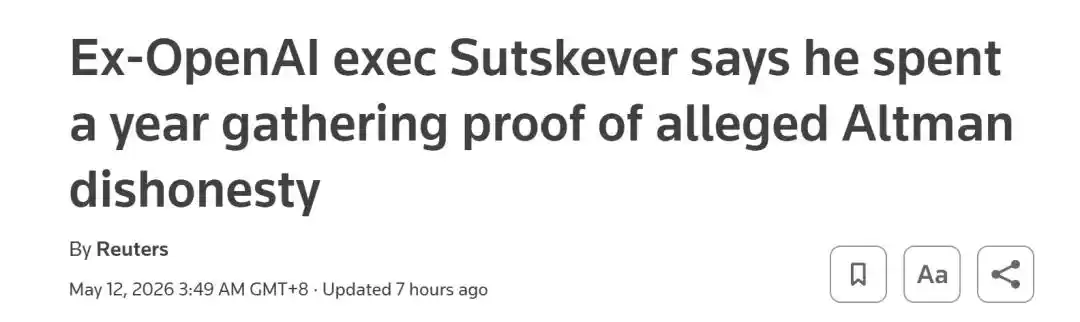
Le procès de Musk contre OpenAI a connu un moment crucial avec le témoignage d'Ilya Sutskever, ancien scientifique en chef de l'entreprise. Sous serment, il a affirmé que Sam Altman, PDG, mentait de façon habituelle et semait la division parmi les dirigeants, sapant la gouvernance de la société. Sutskever a révélé avoir compilé un dossier de 52 pages documentant ces comportements avant la tentative de limogeage d'Altman en novembre 2023. Il a également révélé détenir des actions OpenAI d'une valeur de 7 milliards de dollars, illustrant l'énorme richesse générée au sein de la startup autrefois à but non lucratif. Témoignant de son attachement profond à OpenAI, il a déclaré : "J'y ai consacré ma vie. Je ne veux pas qu'elle soit détruite", expliquant son revirement lors de la crise de 2023 par la crainte de voir l'entreprise s'effondrer ou être absorbée par Microsoft. Son témoignage a aussi levé le voile sur d'autres épisodes, comme les discussions de fusion entre le conseil d'administration d'OpenAI et Anthropic après le bref renvoi d'Altman. Par ailleurs, des documents judiciaires ont montré la pression de Microsoft, avec son PDG Satya Nadella poussant à la commercialisation rapide et préparant une prise de contrôle. Le procès, qui examine si OpenAI a trahi sa mission initiale à but non lucratif, atteint son point culminant avec l'audition prochaine de Sam Altman. Le verdict pourrait redéfinir l'avenir de la société, évaluée à 850 milliards de dollars.

Le grand procès d'Elon Musk contre OpenAI a enfin vu la comparution d'Ilya !

11 mai 2026, Tribunal fédéral d'Oakland, Californie.

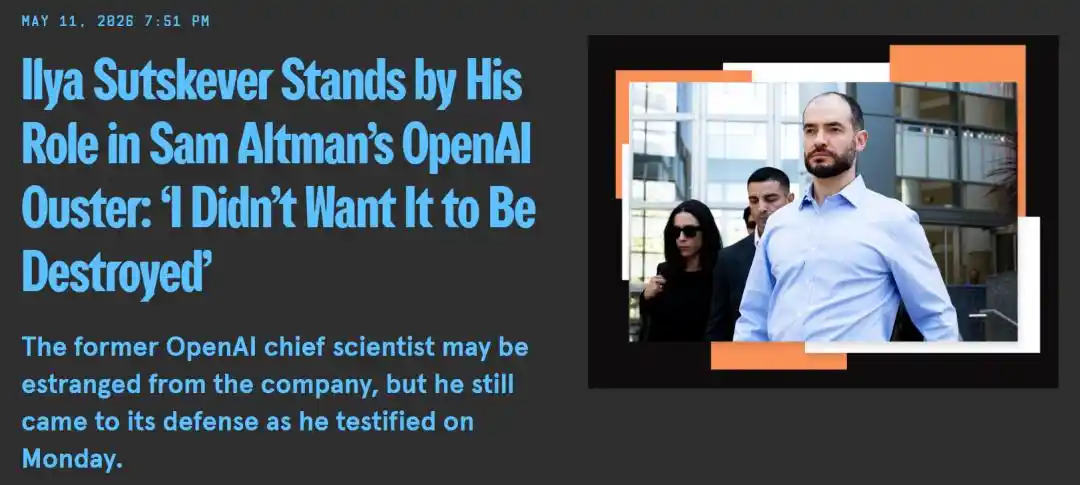
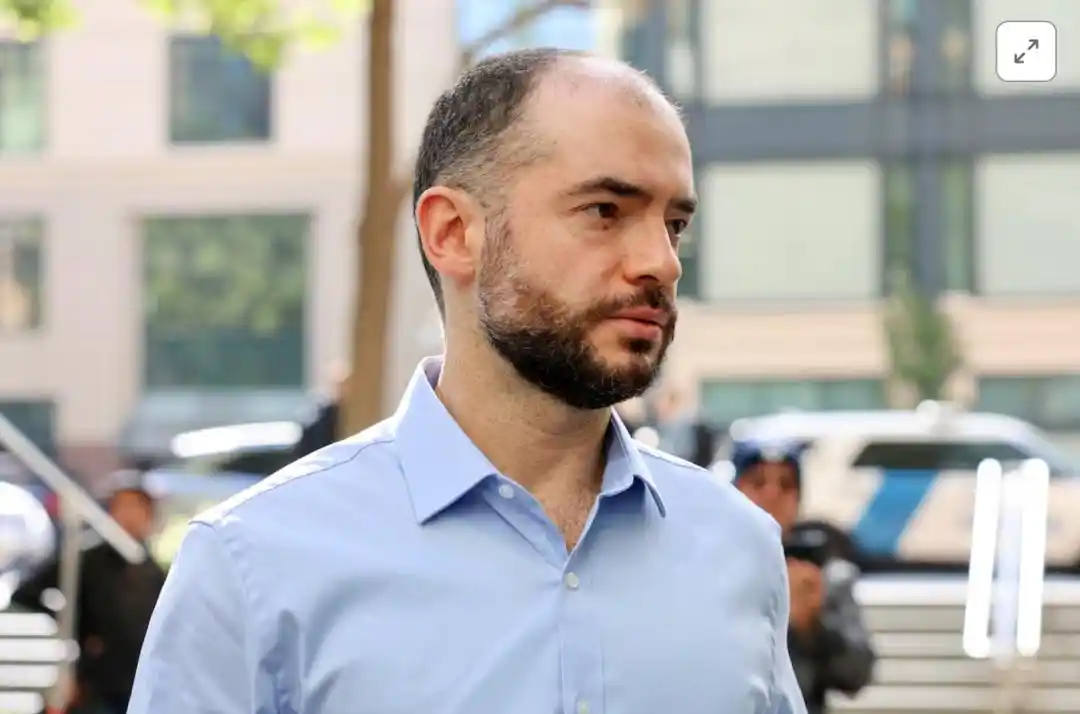
Quand le génie scientifique aux cheveux bouclés et au regard légèrement mélancolique, Ilya Sutskever, est monté lentement à la barre des témoins, toute l'assistance a retenu son souffle.
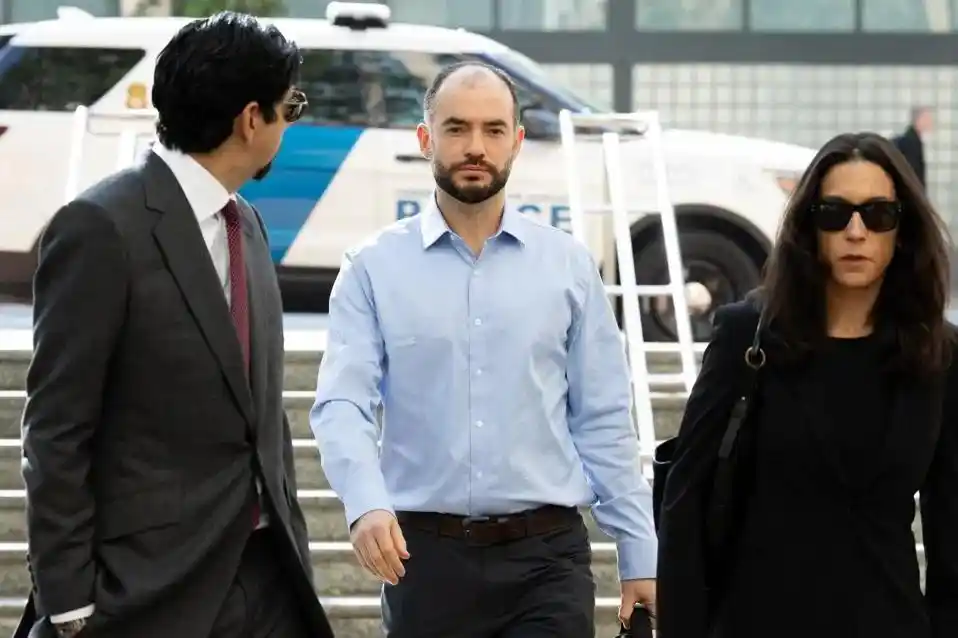
Où qu'il apparaisse, Ilya attire tous les regards, d'autant plus qu'il s'agit de l'audience du procès intenté par Musk contre OpenAI.

Cette fois, Ilya n'est plus l'homme qui s'est excusé sur les réseaux sociaux en disant « Je regrette profondément », mais un vengeur de retour avec une « bombe ».

Il a non seulement confirmé de vive voix la propension d'Altman à mentir, mais a aussi révélé au monde les trous noirs du pouvoir sous le brillant vernis d'OpenAI.

Il s'agit du chapitre final, voué à entrer dans l'histoire, de la « guerre de palais de l'IA ».

Ce procès pourrait décider de l'avenir d'OpenAI – une entreprise en préparation d'une IPO de mille milliards de dollars et valorisée à 850 milliards de dollars.

Altman devrait répondre personnellement au tribunal dès mardi.

Les « preuves de mensonges » en 52 pages : Altman vu par cet homme

« Il ment par habitude, sème la discorde entre les dirigeants et sape la gouvernance de l'entreprise. »

Lorsqu'Ilya a prononcé ces mots sous serment, le visage des dirigeants actuels d'OpenAI assis sur le banc des accusés est devenu livide.

Ce n'était plus une rumeur, mais le témoignage officiel de l'ancien directeur scientifique d'OpenAI.
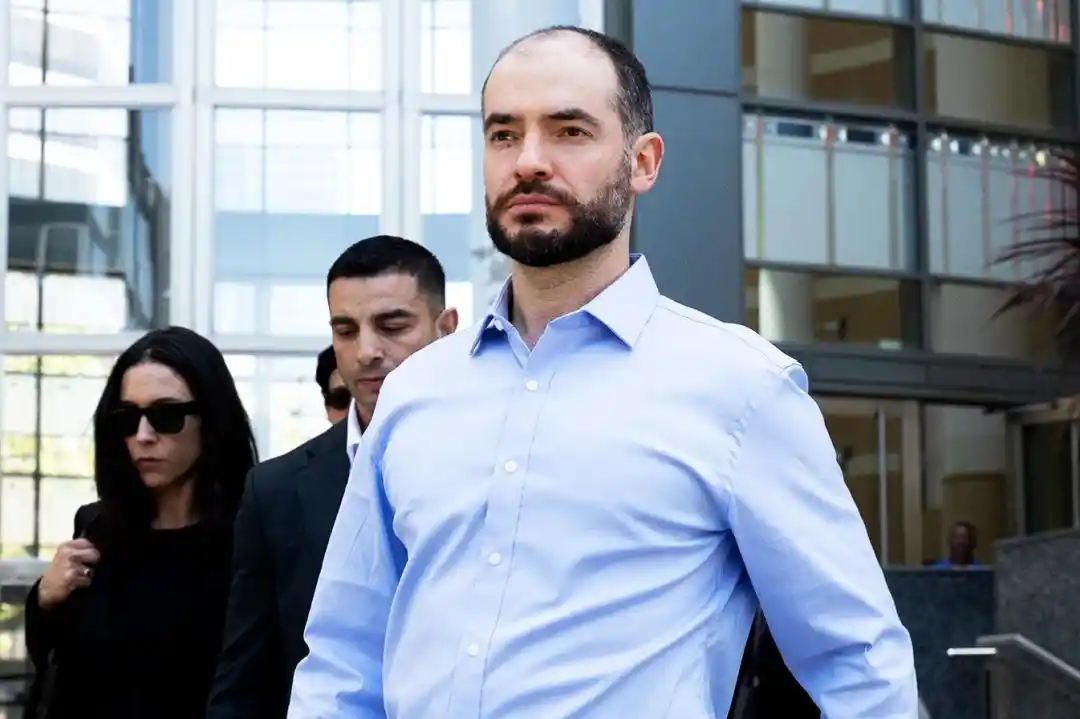
Cette fois, Ilya a révélé un détail stupéfiant jamais dévoilé auparavant : avant le « coup d'État de novembre » 2023 qui a choqué le monde entier, il avait déjà secrètement collecté des preuves pendant toute une année.

Ce dossier de preuves fait 52 pages.
Dans cette « collection complète des casseroles d'Altman », les manœuvres quotidiennes d'Altman pour jouer des coudes sont détaillées.

Par exemple, ce qu'il fait le mieux, c'est semer la zizanie.

Il créait souvent des conflits entre la directrice de la technologie, Mira Murati, et les autres dirigeants, les amenant à se méfier les uns des autres, afin d'établir sa propre autorité absolue.

De plus, il excellait dans la manipulation de l'information.

Ilya a témoigné qu'Altman avait créé un environnement où « les dirigeants ne pouvaient pas obtenir les bonnes informations ». Dans un tel environnement, toute discussion sérieuse sur la sécurité de l'IA était atténuée par Altman avec de fausses visions de marché.

Cette fois, Ilya a déclaré sans ambages que le comportement d'Altman « n'était pas propice à la réalisation d'objectifs grandioses », en particulier le développement d'une AGI sûre.

« J'ai passé un an à observer et réfléchir, et finalement j'ai estimé que le licencier était approprié. »

Le ton d'Ilya était posé, mais chaque mot était cinglant. Il a admis avoir eu de nombreuses discussions détaillées avec Murati, et que tous deux étaient profondément inquiets du comportement d'Altman.

Le « traître » à 7 milliards de dollars : le prix coûteux d'un idéaliste

Ensuite, un autre point culminant de l'audience.

En tant que cofondateur d'OpenAI, Ilya a toujours été considéré comme un « scientifique pur ». Mais lorsque le juge lui a demandé la valeur de ses actions, le chiffre a stupéfié la salle : 7 milliards de dollars.
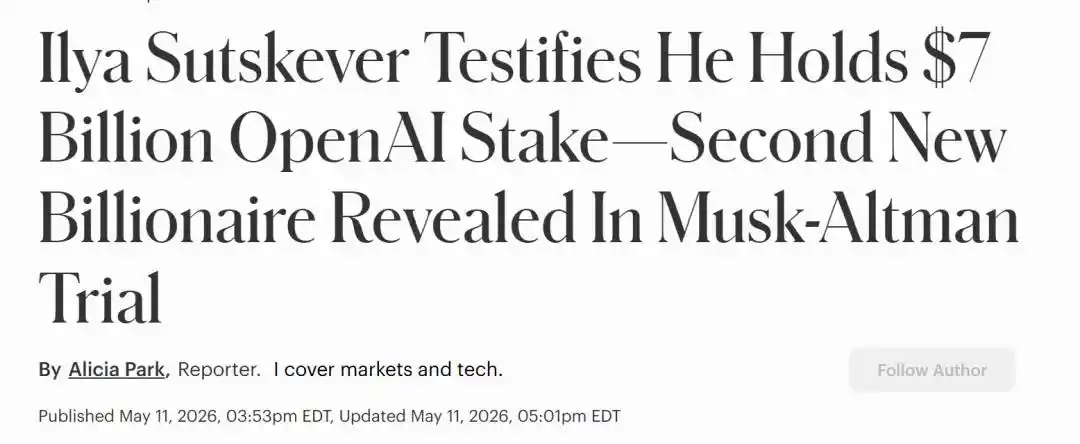
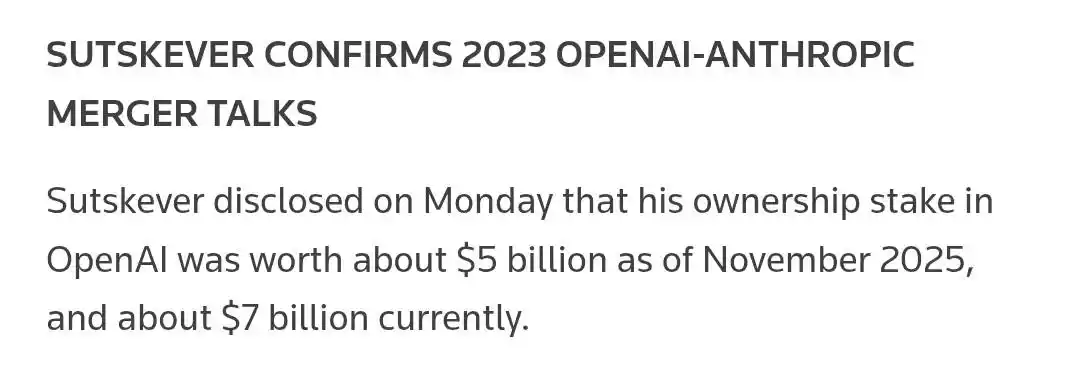
Il y a seulement une semaine, le président d'OpenAI, Greg Brockman, avait admis détenir des actions d'une valeur de 30 milliards de dollars.

Et Altman, celui que Musk accusait d'être « aveuglé par le profit », avait une fortune d'environ 3,5 milliards de dollars (principalement issue de ses investissements extérieurs).

Une scène ironique apparaissait : ces fidèles qui se prétendaient autrefois « à but non lucratif » étaient devenus les personnes s'étant enrichies le plus rapidement de l'histoire humaine.
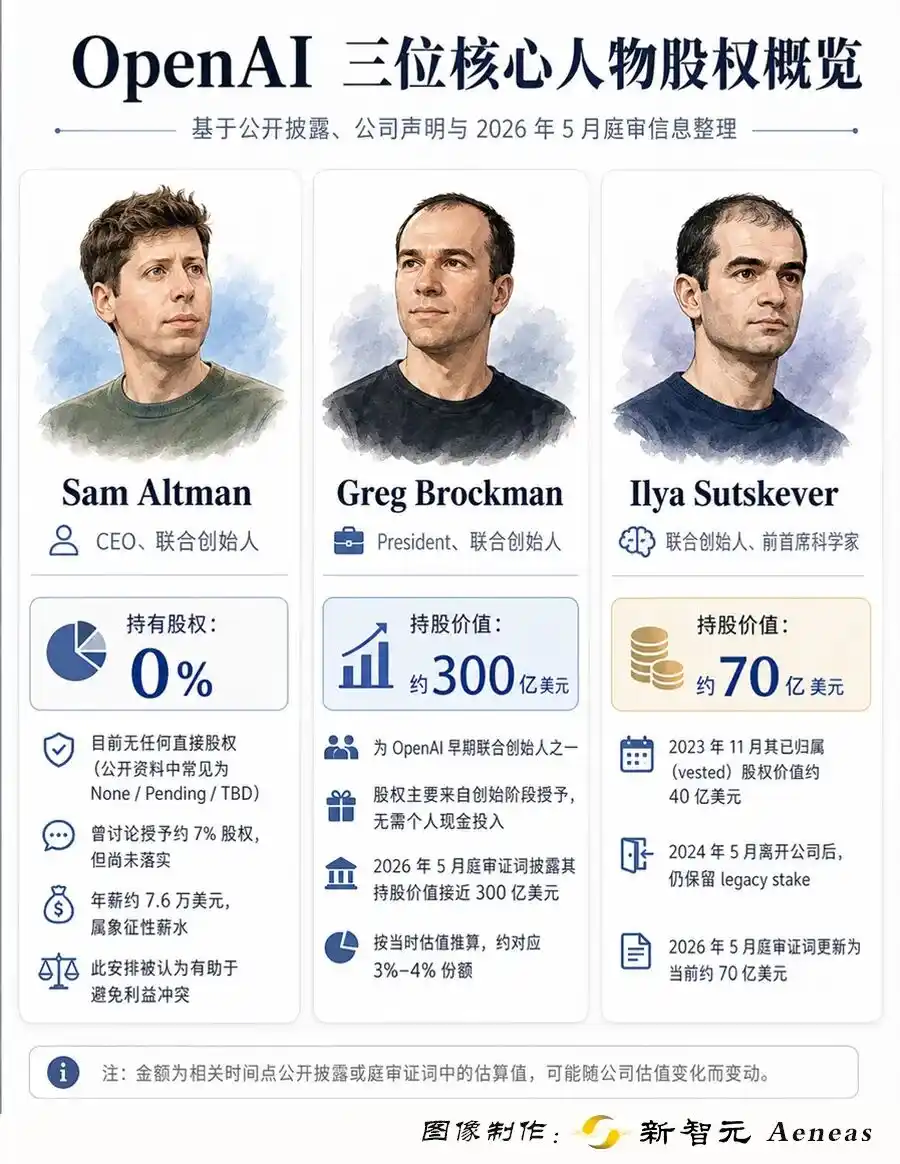
Mais Ilya a montré en salle d'audience un sentiment de contradiction presque tragique.

Il a mentionné qu'à l'époque, pour rejoindre OpenAI, il avait refusé une offre de renouvellement de Google de 6 millions de dollars par an – à ses yeux d'alors, c'était un « chiffre astronomique ».

Il a expliqué pourquoi, le week-end du coup d'État, il avait soudainement changé de cap et signé la lettre ouverte demandant le retour d'Altman.

« C'était une prière 'Hail Mary' en dernier recours, » a déclaré Ilya d'une voix basse, « j'ai vu l'entreprise sur le point de s'effondrer, Microsoft était prête à nous avaler tous. »

À l'époque, la situation s'était détériorée plus vite que prévu. Beaucoup d'employés ont dit vouloir suivre Altman. L'entreprise était au bord de la dissolution.

Ilya a ensuite exprimé des regrets – pas pour avoir collecté des preuves ou voté pour la destitution, mais pour « avoir participé à l'action du conseil d'administration ». Il a critiqué ses collègues du conseil pour leur manque d'expérience, avoir accepté « des conseils juridiques pas très bons » et avoir agi trop précipitamment.

Lundi, au tribunal, lorsqu'il a prononcé cette phrase, toute la salle d'audience s'est tue.

« J'ai un fort sentiment d'appartenance à OpenAI. J'ai l'impression d'y avoir consacré ma vie. Je m'en soucie simplement. Je ne veux pas qu'il soit détruit. »
La cartographie complète de la mafia d'OpenAI

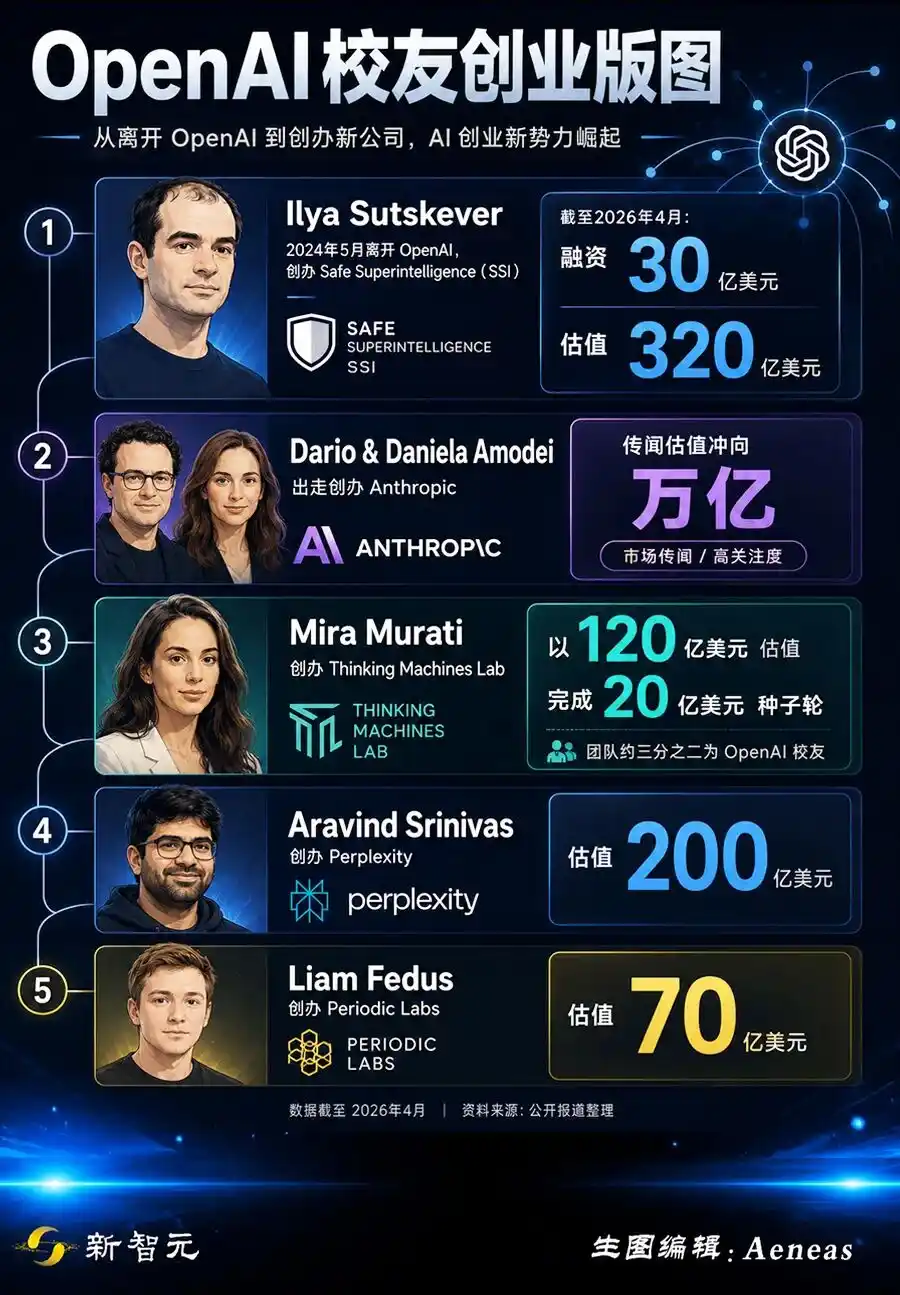
De plus, ce procès a ouvert au passage une cartographie complète du « gang d'OpenAI ».

En mai 2024, il a quitté OpenAI et a fondé Safe Superintelligence. Cette société avait levé 30 milliards de dollars d'ici avril 2026, avec une valorisation de 320 milliards de dollars.

Dario et Daniela Amodei sont partis fonder Anthropic, dont la valorisation se dirigeait vers le billion de dollars selon la rumeur.

Mira Murati a fondé Thinking Machines Lab, qui a réalisé un tour de table d'amorçage de 2 milliards de dollars l'année dernière avec une valorisation de 120 milliards de dollars, les deux tiers de l'équipe étant d'anciens d'OpenAI.

Aravind Srinivas a fondé Perplexity, valorisé 200 milliards. Liam Fedus a fondé Periodic Labs, valorisé 70 milliards.

Il est révélateur que les raisons de leur départ soient différentes, mais que presque chacune d'entre elles ait un lien avec le style de leadership d'Altman.
La fusion avec Anthropic qui a failli se produire

Le témoignage d'Ilya ne concernait pas seulement Altman.

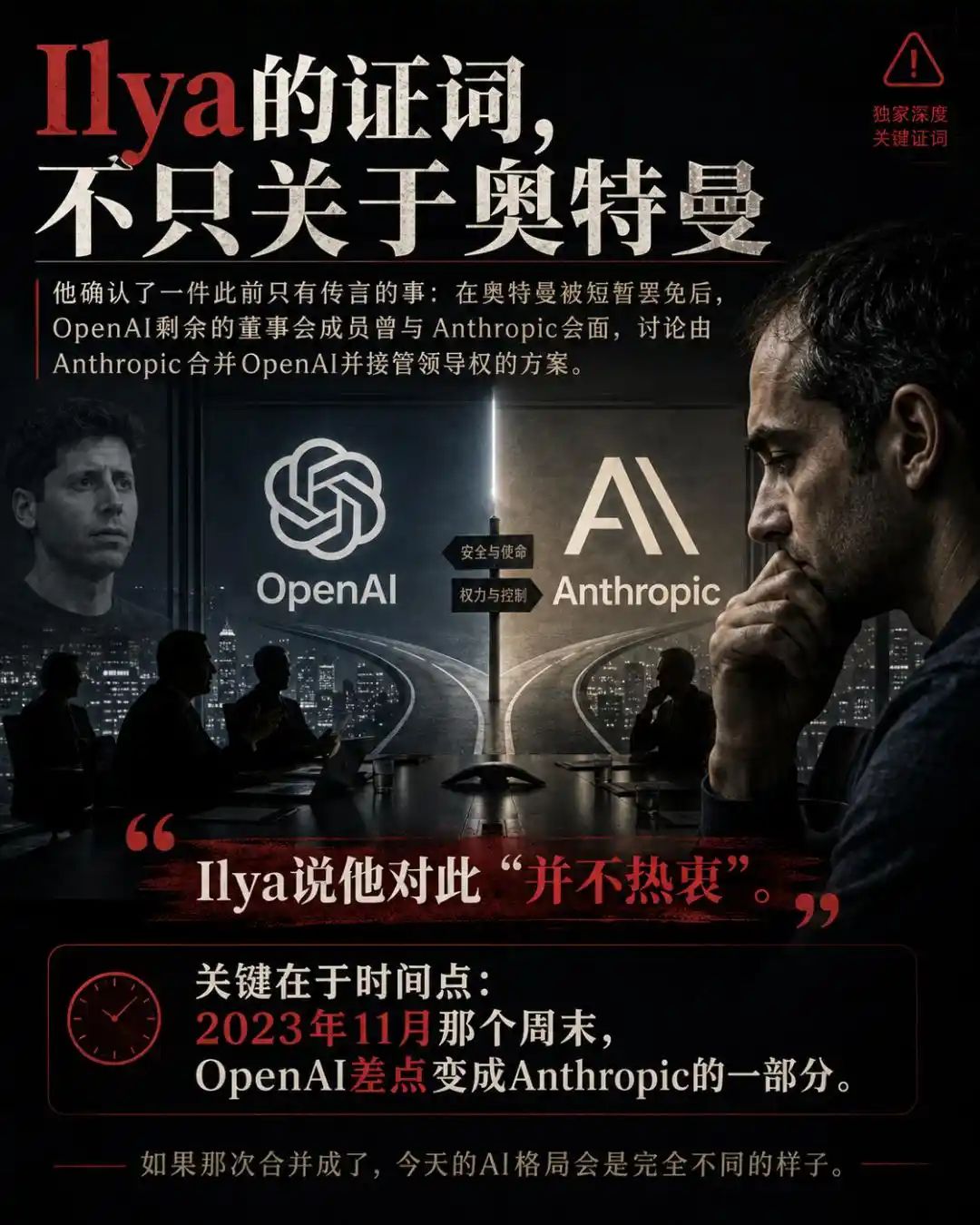
Il a confirmé une chose qui n'était auparavant que rumeur : après la brève destitution d'Altman, les membres restants du conseil d'administration d'OpenAI avaient rencontré Anthropic pour discuter d'un plan selon lequel Anthropic fusionnerait avec OpenAI et en prendrait la direction.
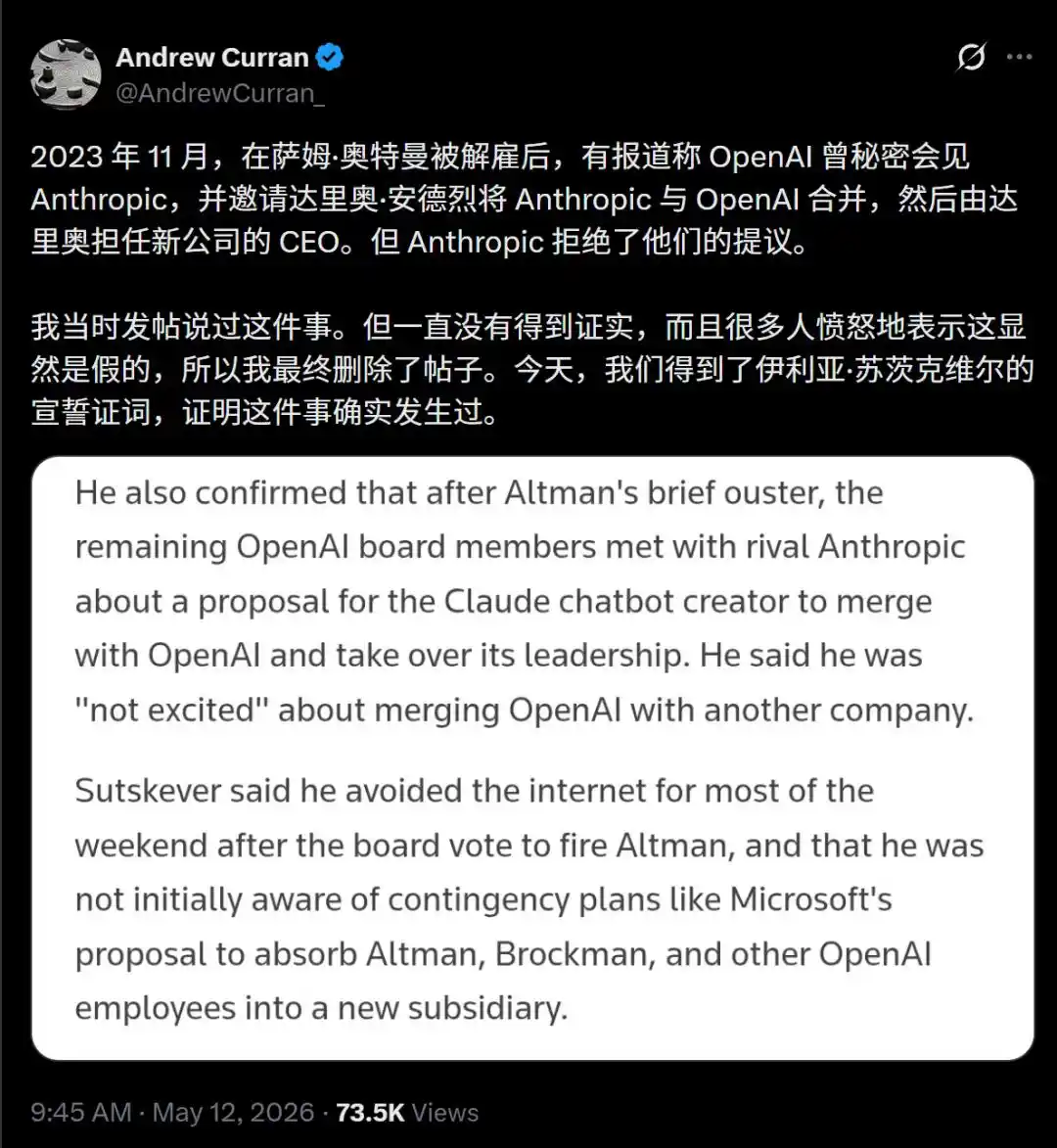
Ilya a dit qu'il n'était « pas enthousiaste » à ce sujet.

La force destructrice de ce détail réside dans le moment – ce week-end de novembre 2023, OpenAI a failli devenir une partie d'Anthropic.

Si cette fusion avait abouti, le paysage actuel de l'IA serait complètement différent.
L'ombre de Microsoft : les ambitions de « prise de contrôle » de Nadella

Si Ilya révélait la pourriture interne, le PDG de Microsoft, Satya Nadella, qui est ensuite monté à la barre, a montré la logique froide du capital.

Nadella a qualifié l'événement de destitution de l'époque d'« amateur city » (d'une amateurisme ahurissant), déclarant qu'il « n'avait jamais reçu d'explication claire ».

Mais les documents du tribunal ont révélé une autre facette de Nadella lui-même.
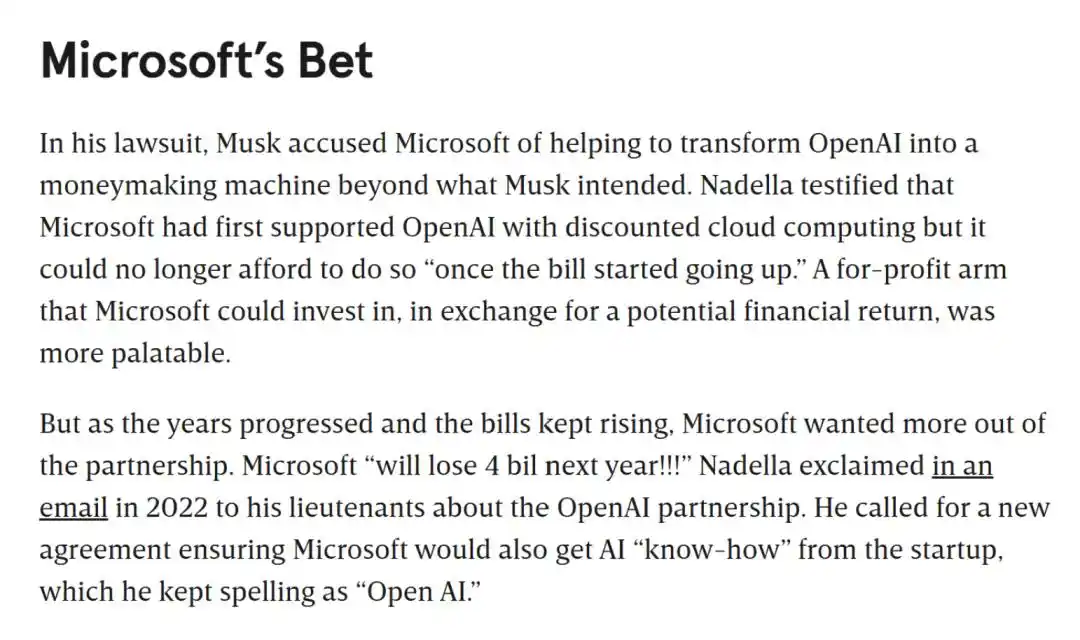
Un e-mail de 2022 rendu public par le tribunal montre Nadella hurlant de rage à un subordonné : « Si nous investissons autant d'argent sans avoir le contrôle, cela n'a aucun sens ! »

Sous les questions pressantes de l'avocat de Musk, Nadella a admis qu'au moment du coup d'État de 2023, Microsoft avait préparé une liste de 14 noms pour « reprendre le conseil d'administration » et avait exercé un droit de « veto » de facto sur les nouveaux membres du conseil d'administration d'OpenAI.

Plus explosif encore, Nadella avait envoyé des SMS en rafale à Altman début 2023 pour le pousser : « Lancez la version payante par abonnement de ChatGPT dès que possible, le plus tôt sera le mieux. »

Deux semaines plus tard, il demandait le nombre d'inscriptions.

Cela confirme directement l'accusation de Musk : OpenAI n'est plus un laboratoire de recherche depuis longtemps, mais le « service informatique » et la machine à cash de Microsoft.

Et c'est précisément le cœur de l'accusation de Musk – OpenAI s'est éloigné de sa mission à but non lucratif.

La colère de Musk : un rêve « exploité gratuitement » ?

Assis dans la salle, Musk affichait peut-être un sourire complexe.

Le cœur de ce procès réside dans la question suivante : Altman a-t-il, par de fausses promesses « à but non lucratif », obtenu les investissements initiaux de Musk et le soutien de sa marque, pour ensuite revendre les résultats à Microsoft ?

Bien qu'Ilya, dans son témoignage, ne se soit pas complètement rangé du côté de Musk (il a nié avoir jamais promis à Musk qu'OpenAI resterait à but non lucratif), ses attaques contre la personnalité d'Altman ont fourni à l'accusation de Musk les munitions les plus puissantes.
Ilya a mentionné qu'à l'époque, il s'était aussi opposé à la proposition de Musk d'intégrer OpenAI à Tesla, trouvant Musk trop « agressif ».

L'accusation centrale de Musk est : Altman et Brockman ont trahi la promesse qu'OpenAI resterait toujours à but non lucratif, pour se tourner vers la recherche du profit.

Le témoignage d'Ilya sur cette question a plutôt été favorable à OpenAI.

Il a dit « n'avoir jamais promis à Musk qu'OpenAI resterait à but non lucratif ».

Il a prononcé une phrase qui sera probablement citée à plusieurs reprises : « La mission d'OpenAI est plus grande que son architecture à but non lucratif ou lucratif. »

Ce procès, à ce stade, n'a plus de héros absolu. Cela ressemble davantage à un combat au corps-à-corps des plus sordides entre des génies sur le chemin de l'apothéose, à cause des intérêts, du pouvoir et de la définition de l'avenir de l'humanité.

La fin approche : OpenAI ou OpenMoney ?

L'audience se poursuit.

Mardi prochain, Altman se présentera personnellement au tribunal.

La situation actuelle est extrêmement dangereuse pour OpenAI.

Si le juge décide finalement qu'OpenAI a violé le pacte initial à but non lucratif, son entité lucrative valorisée à 850 milliards de dollars pourrait faire face à une restructuration.

Ilya est resté environ une heure à la barre des témoins. Selon l'observation d'un journaliste de Wired, il n'a pratiquement croisé le regard de personne pendant toute la durée.

Cet homme, qui fut autrefois l'âme d'OpenAI, le leader qui entraînait les employés dans les cris de « ressentez l'AGI » lors des fêtes de l'entreprise.

Aujourd'hui, il portait une chemise sans veste de costume, semblant seul et abattu. Il a déclaré au tribunal : « J'ai consacré ma vie à OpenAI, je ne veux pas qu'il soit détruit. »

Mais la réalité est que l'OpenAI qu'il aimait tant, l'OpenAI pur, est peut-être mort dès que la première page des 52 pages de preuves a été écrite.

Ce procès ne juge pas le succès ou l'échec d'une entreprise, mais la contradiction centrale de la Silicon Valley d'aujourd'hui : lorsque la technologie du pouvoir divin (l'AGI) entre en collision avec l'avidité humaine extrême, pouvons-nous encore préserver la dernière once d'intégrité ?

Jeudi prochain, le juge prononcera les plaidoiries finales.

Et le pouvoir de définition de l'avenir de l'IA pour l'humanité pourrait être réécrit en silence dans ces quelques pages de témoignage.

Références :

https://www.reuters.com/business/former-openai-executive-sutskever-discloses-nearly-7-billion-stake-ai-firm-2026-05-11/

https://www.forbes.com/sites/aliciapark/2026/05/11/Ilya-sutskever-testifies-he-holds-7-billion-openai-stake-second-new-billionaire-revealed-in-musk-altman-trial/

https://www.wired.com/story/Ilya-sutskever-testifies-musk-v-altman-trial/

Cet article provient du compte WeChat public «新智元», auteur : 新智元, éditeur : Aeneas

Related Questions

QQuel est le principal objectif du témoignage d'Ilya Sutskever dans le procès intenté par Musk contre OpenAI ?

ALe témoignage d'Ilya Sutskever vise à révéler des problèmes de gouvernance au sein d'OpenAI, en particulier les pratiques de Sam Altman qu'il décrit comme consistant à « mentir de manière compulsive » et à semer la division entre les cadres, sapant ainsi les discussions sérieuses sur la sécurité de l'IA.

QQuelle valeur Ilya Sutskever a-t-il révélé détenir en actions OpenAI lors du procès, et quel sentiment contradictoire exprime-t-il à ce sujet ?

AIlya Sutskever a révélé détenir des actions OpenAI d'une valeur de 7 milliards de dollars. Il exprime un sentiment contradictoire en rappelant avoir refusé une offre lucrative de Google par idéalisme pour rejoindre OpenAI, et déclare : « J'ai consacré ma vie à OpenAI. Je ne veux pas qu'il soit détruit. »

QSelon le témoignage d'Ilya, quel événement crucial a failli se produire après le licenciement temporaire de Sam Altman en novembre 2023 ?

ASelon le témoignage d'Ilya, après le licenciement temporaire de Sam Altman, les membres restants du conseil d'administration d'OpenAI ont rencontré Anthropic pour discuter d'une fusion potentielle où Anthropic aurait pris le contrôle d'OpenAI, un scénario qui aurait radicalement changé le paysage de l'IA.

QQuelles actions de Microsoft, révélées lors du procès, étayent l'accusation de Musk selon laquelle OpenAI est devenu un outil de monétisation ?

ADes documents présentés au tribunal montrent que le PDG de Microsoft, Satya Nadella, a fait pression sur Sam Altman pour lancer rapidement une version payante de ChatGPT et s'est enquéri du nombre d'inscriptions. De plus, Microsoft avait préparé une liste de 14 personnes pour un « conseil d'administration de reprise » et exerçait un droit de veto de fait sur les nouveaux membres du conseil d'OpenAI.

QQuel est l'enjeu fondamental du procès selon la conclusion de l'article, au-delà du simple sort d'OpenAI ?

ASelon la conclusion de l'article, l'enjeu fondamental du procès dépasse le sort d'OpenAI. Il s'agit de savoir si, face à la collision entre une technologie puissante comme l'AGI et l'extrême avidité humaine, l'intégrité fondamentale peut encore être préservée, remettant en question la définition même de l'avenir de l'IA.

Related Reads

The 'Chip' Challenge and Breakthroughs in China's Optical Industry Chain

China's Photonics Industry: Bottlenecks and Breakthroughs In the global AI race, computing chips dominate the narrative, but the underlying bottleneck increasingly defining the scale of AI clusters is light—or more specifically, optical connectivity. Optical modules, which translate electrical signals to light and vice versa, are crucial for connecting thousands of GPUs in AI data centers, preventing data congestion and ensuring efficient model training. High-speed modules (800G, 1.6T) are now standard, with performance hinging on advanced DSP (Digital Signal Processor) chips. This is where a critical dependency lies. Two US giants—Marvell and Broadcom—collectively dominate over 90% of the high-end DSP chip market. Chinese optical module leaders like Zhongji Innolight and Eoptolink rely on these chips to manufacture modules for overseas AI customers, primarily in North America. While this creates a supply chain vulnerability, complete decoupling is difficult. Marvell derives over half its revenue from Greater China, and the US firms depend on Chinese partners for chip packaging and optical components. The risk from laser chips (e.g., from Lumentum), another key component, is considered more manageable due to multiple global suppliers and faster progress in domestic alternatives from companies like YOFC and Accelink. To mitigate risks, China's industry is pursuing a multi-pronged strategy: diversifying supply chains and locking in long-term orders; fostering a domestic market ecosystem to adopt homegrown DSPs from firms like Huawei HiSilicon and CETC; accelerating R&D in high-speed DSPs and advanced packaging; and investing in next-gen technologies like silicon photonics and Co-Packaged Optics (CPO) to reduce reliance on discrete DSPs. The ultimate solution lies not in short-term博弈 but in persistent advancement of domestic high-end chip R&D and manufacturing. While challenges remain in performance, certification, and ecosystem building, China's vast domestic market and manufacturing base provide a crucial buffer, buying time for the industry to achieve greater technological independence.

marsbit2m ago

The 'Chip' Challenge and Breakthroughs in China's Optical Industry Chain

marsbit2m ago

Behind SpaceX's $2 Trillion Market Cap: Why Does Musk Always Have the Next Move Planned?

On June 12th, SpaceX debuted on the Nasdaq, reaching a valuation that briefly touched $2 trillion. This marked the culmination of a 24-year journey from its founding in 2002, driven by Elon Musk's frustration at the high cost of buying rockets. The company's path was defined by early failures, with its first three Falcon 1 launches ending in explosions before a successful 2008 flight opened the era of commercial spaceflight. Key to its model was a fixed-price NASA contract, incentivizing cost reduction. SpaceX mastered rocket reusability, first achieving a Falcon 9 landing in 2015, which drastically cut launch costs. This enabled its profitable Starlink satellite internet constellation, envisioned years before reusability was proven, to create an internal market for frequent launches. Similarly, the next-generation Starship rocket was in development long before its first flight, with its business case evolving from Mars colonization to supporting the emerging concept of in-orbit data centers for AI—a story now central to its valuation. The company's recent IPO, a reversal of its long-standing "no IPO" stance, is funding this ambitious "space-based compute" vision. While major tech players like Google, Blue Origin, and others are investing heavily, significant technical and cost hurdles remain. Ultimately, SpaceX's history is one of creating its own demand: first with Starlink and now with space-based AI compute, betting that its next rocket will enable its next giant market.

marsbit5m ago

Behind SpaceX's $2 Trillion Market Cap: Why Does Musk Always Have the Next Move Planned?

marsbit5m ago

When Crypto Meets the World Cup: CoinW and Modrić's Art of "Navigating Cycles"

When Encryption Meets the World Cup: CoinW and Modrić's "Transcending Cycles" Philosophy In the context of the 2026 FIFA World Cup and its massive global audience, the crypto exchange CoinW announced football legend Luka Modrić as its global brand ambassador. This move is framed not merely as a marketing tactic, but as a strategic experiment in user profile migration. It targets mature, financially stable football fans—particularly in Europe, Southeast Asia, and Latin America—who traditionally have low crypto awareness but value trusted, time-tested authority figures like Modrić. The article draws parallels between Modrić's enduring, disciplined career—marked by consistency and success at the highest level over two decades—and CoinW's own development path. Founded in 2017 during a volatile industry period, CoinW focused on building robust infrastructure and risk management. It weathered the 2022 industry crisis without major security incidents, subsequently earning recognition like "Europe's Most Trusted Exchange" and growing to over 20 million registered users. This "long-termism" is translated into user-centric products. CoinW Academy lowers the initial knowledge barrier. Its integrated ecosystem (CoinW, GemW, DeriW, PropW) and the recent launch of a TradFi section—offering perpetual contracts on traditional assets like stocks, gold, and oil—aim to create a unified platform for diverse assets. For the World Cup, CoinW launched the "We Are The Game" campaign, collaborating with Alchemy Pay to offer zero-fee deposits and local payment options, aiming to transform spectators into participants and lower entry barriers. Ultimately, CoinW's sports partnerships and product strategy are presented as a concerted effort to build trust and accessibility for the "silent majority" still outside crypto—shifting the industry narrative toward inclusivity and long-term value.

Foresight News11m ago

When Crypto Meets the World Cup: CoinW and Modrić's Art of "Navigating Cycles"

Foresight News11m ago

A Panoramic View of the Solana Privacy Ecosystem: The Complete Privacy Stack from Computation to AI

**Solana Privacy Ecosystem: A Comprehensive Overview from Computation to AI** Solana's privacy ecosystem, while nascent, is rapidly evolving to address key challenges across multiple layers. Key figures like Helius CEO Mert acknowledge that Solana has lagged in privacy but highlight its unique potential for scalable, composable privacy protocols, potentially leveraging technologies like ZK compression without persistent rollups. The foundational layer is **Private Compute**, addressed by providers like Arcium and Magic Block. Arcium utilizes Multi-Party Computation (MPC) networks to process encrypted data off-chain with final settlement on Solana, supporting use cases like confidential payments (via its C-SPL token standard) and encrypted data analysis. Magic Block employs Trusted Execution Environments (TEEs) to create private, ephemeral rollups, offering confidentiality, scalability, and composability. Both enable private order books, dark pools, and DeFi rails. Building on this infrastructure are applications for **Private Transfers and Balances**. Umbra, built on Arcium, offers encrypted token accounts with amount, balance, and sender-receiver linkage privacy, plus compliance features. Privacy Cash uses Tornado-style shielded pools for SOL, while Hush provides private staking and trading with integrated swaps via Jupiter. To eliminate **On-Chain Trails** from everyday activities like trading, protocols like encifherio and VanishTrade are emerging. encifherio privately routes swaps through Jupiter by encrypting transaction details within TEEs. VanishTrade routes trades through shielded liquidity pools. Darklake offers a ZK-native "blind slippage" AMM and private perpetuals to hide trading intent and prevent front-running. More advanced applications include **Private Prediction Markets**. Platforms like Melee Markets use Arcium's MPC to encrypt order books, allowing participants to place hidden bets without revealing their market position until settlement. Finally, the ecosystem is expanding into **Private AI**. Loyal leverages both Magic Block and Arcium to create a decentralized protocol where user-AI interactions, queries, and preferences are encrypted on-chain, giving users ownership and control over their data while enabling private transactions and yield generation. In summary, Solana's privacy stack is developing from core compute and transfer privacy towards sophisticated applications in DeFi, prediction markets, and AI, aiming for a future where Fully Homomorphic Encryption (FHE) and Zero-Knowledge (ZK) proofs combine for a complete privacy solution.

marsbit12m ago

A Panoramic View of the Solana Privacy Ecosystem: The Complete Privacy Stack from Computation to AI

marsbit12m ago

Trading

Spot
Futures

Hot Articles

What is SONIC

Sonic: Pioneering the Future of Gaming in Web3 Introduction to Sonic In the ever-evolving landscape of Web3, the gaming industry stands out as one of the most dynamic and promising sectors. At the forefront of this revolution is Sonic, a project designed to amplify the gaming ecosystem on the Solana blockchain. Leveraging cutting-edge technology, Sonic aims to deliver an unparalleled gaming experience by efficiently processing millions of requests per second, ensuring that players enjoy seamless gameplay while maintaining low transaction costs. This article delves into the intricate details of Sonic, exploring its creators, funding sources, operational mechanics, and the timeline of significant events that have shaped its journey. What is Sonic? Sonic is an innovative layer-2 network that operates atop the Solana blockchain, specifically tailored to enhance the existing Solana gaming ecosystem. It accomplishes this through a customised, VM-agnostic game engine paired with a HyperGrid interpreter, facilitating sovereign game economies that roll up back to the Solana platform. The primary goals of Sonic include: Enhanced Gaming Experiences: Sonic is committed to offering lightning-fast on-chain gameplay, allowing players and developers to engage with games at previously unattainable speeds. Atomic Interoperability: This feature enables transactions to be executed within Sonic without the need to redeploy Solana programmes and accounts. This makes the process more efficient and directly benefits from Solana Layer1 services and liquidity. Seamless Deployment: Sonic allows developers to write for Ethereum Virtual Machine (EVM) based systems and execute them on Solana’s SVM infrastructure. This interoperability is crucial for attracting a broader range of dApps and decentralised applications to the platform. Support for Developers: By offering native composable gaming primitives and extensible data types - dining within the Entity-Component-System (ECS) framework - game creators can craft intricate business logic with ease. Overall, Sonic's unique approach not only caters to players but also provides an accessible and low-cost environment for developers to innovate and thrive. Creator of Sonic The information regarding the creator of Sonic is somewhat ambiguous. However, it is known that Sonic's SVM is owned by the company Mirror World. The absence of detailed information about the individuals behind Sonic reflects a common trend in several Web3 projects, where collective efforts and partnerships often overshadow individual contributions. Investors of Sonic Sonic has garnered considerable attention and support from various investors within the crypto and gaming sectors. Notably, the project raised an impressive $12 million during its Series A funding round. The round was led by BITKRAFT Ventures, with other notable investors including Galaxy, Okx Ventures, Interactive, Big Brain Holdings, and Mirana. This financial backing signifies the confidence that investment foundations have in Sonic’s potential to revolutionise the Web3 gaming landscape, further validating its innovative approaches and technologies. How Does Sonic Work? Sonic utilises the HyperGrid framework, a sophisticated parallel processing mechanism that enhances its scalability and customisability. Here are the core features that set Sonic apart: Lightning Speed at Low Costs: Sonic offers one of the fastest on-chain gaming experiences compared to other Layer-1 solutions, powered by the scalability of Solana’s virtual machine (SVM). Atomic Interoperability: Sonic enables transaction execution without redeployment of Solana programmes and accounts, effectively streamlining the interaction between users and the blockchain. EVM Compatibility: Developers can effortlessly migrate decentralised applications from EVM chains to the Solana environment using Sonic’s HyperGrid interpreter, increasing the accessibility and integration of various dApps. Ecosystem Support for Developers: By exposing native composable gaming primitives, Sonic facilitates a sandbox-like environment where developers can experiment and implement business logic, greatly enhancing the overall development experience. Monetisation Infrastructure: Sonic natively supports growth and monetisation efforts, providing frameworks for traffic generation, payments, and settlements, thereby ensuring that gaming projects are not only viable but also sustainable financially. Timeline of Sonic The evolution of Sonic has been marked by several key milestones. Below is a brief timeline highlighting critical events in the project's history: 2022: The Sonic cryptocurrency was officially launched, marking the beginning of its journey in the Web3 gaming arena. 2024: June: Sonic SVM successfully raised $12 million in a Series A funding round. This investment allowed Sonic to further develop its platform and expand its offerings. August: The launch of the Sonic Odyssey testnet provided users with the first opportunity to engage with the platform, offering interactive activities such as collecting rings—a nod to gaming nostalgia. October: SonicX, an innovative crypto game integrated with Solana, made its debut on TikTok, capturing the attention of over 120,000 users within a short span. This integration illustrated Sonic’s commitment to reaching a broader, global audience and showcased the potential of blockchain gaming. Key Points Sonic SVM is a revolutionary layer-2 network on Solana explicitly designed to enhance the GameFi landscape, demonstrating great potential for future development. HyperGrid Framework empowers Sonic by introducing horizontal scaling capabilities, ensuring that the network can handle the demands of Web3 gaming. Integration with Social Platforms: The successful launch of SonicX on TikTok displays Sonic’s strategy to leverage social media platforms to engage users, exponentially increasing the exposure and reach of its projects. Investment Confidence: The substantial funding from BITKRAFT Ventures, among others, emphasizes the robust backing Sonic has, paving the way for its ambitious future. In conclusion, Sonic encapsulates the essence of Web3 gaming innovation, striking a balance between cutting-edge technology, developer-centric tools, and community engagement. As the project continues to evolve, it is poised to redefine the gaming landscape, making it a notable entity for gamers and developers alike. As Sonic moves forward, it will undoubtedly attract greater interest and participation, solidifying its place within the broader narrative of blockchain gaming.

1.7k Total ViewsPublished 2024.04.04Updated 2024.12.03

What is SONIC

What is $S$

Understanding SPERO: A Comprehensive Overview Introduction to SPERO As the landscape of innovation continues to evolve, the emergence of web3 technologies and cryptocurrency projects plays a pivotal role in shaping the digital future. One project that has garnered attention in this dynamic field is SPERO, denoted as SPERO,$$s$. This article aims to gather and present detailed information about SPERO, to help enthusiasts and investors understand its foundations, objectives, and innovations within the web3 and crypto domains. What is SPERO,$$s$? SPERO,$$s$ is a unique project within the crypto space that seeks to leverage the principles of decentralisation and blockchain technology to create an ecosystem that promotes engagement, utility, and financial inclusion. The project is tailored to facilitate peer-to-peer interactions in new ways, providing users with innovative financial solutions and services. At its core, SPERO,$$s$ aims to empower individuals by providing tools and platforms that enhance user experience in the cryptocurrency space. This includes enabling more flexible transaction methods, fostering community-driven initiatives, and creating pathways for financial opportunities through decentralised applications (dApps). The underlying vision of SPERO,$$s$ revolves around inclusiveness, aiming to bridge gaps within traditional finance while harnessing the benefits of blockchain technology. Who is the Creator of SPERO,$$s$? The identity of the creator of SPERO,$$s$ remains somewhat obscure, as there are limited publicly available resources providing detailed background information on its founder(s). This lack of transparency can stem from the project's commitment to decentralisation—an ethos that many web3 projects share, prioritising collective contributions over individual recognition. By centring discussions around the community and its collective goals, SPERO,$$s$ embodies the essence of empowerment without singling out specific individuals. As such, understanding the ethos and mission of SPERO remains more important than identifying a singular creator. Who are the Investors of SPERO,$$s$? SPERO,$$s$ is supported by a diverse array of investors ranging from venture capitalists to angel investors dedicated to fostering innovation in the crypto sector. The focus of these investors generally aligns with SPERO's mission—prioritising projects that promise societal technological advancement, financial inclusivity, and decentralised governance. These investor foundations are typically interested in projects that not only offer innovative products but also contribute positively to the blockchain community and its ecosystems. The backing from these investors reinforces SPERO,$$s$ as a noteworthy contender in the rapidly evolving domain of crypto projects. How Does SPERO,$$s$ Work? SPERO,$$s$ employs a multi-faceted framework that distinguishes it from conventional cryptocurrency projects. Here are some of the key features that underline its uniqueness and innovation: Decentralised Governance: SPERO,$$s$ integrates decentralised governance models, empowering users to participate actively in decision-making processes regarding the project’s future. This approach fosters a sense of ownership and accountability among community members. Token Utility: SPERO,$$s$ utilises its own cryptocurrency token, designed to serve various functions within the ecosystem. These tokens enable transactions, rewards, and the facilitation of services offered on the platform, enhancing overall engagement and utility. Layered Architecture: The technical architecture of SPERO,$$s$ supports modularity and scalability, allowing for seamless integration of additional features and applications as the project evolves. This adaptability is paramount for sustaining relevance in the ever-changing crypto landscape. Community Engagement: The project emphasises community-driven initiatives, employing mechanisms that incentivise collaboration and feedback. By nurturing a strong community, SPERO,$$s$ can better address user needs and adapt to market trends. Focus on Inclusion: By offering low transaction fees and user-friendly interfaces, SPERO,$$s$ aims to attract a diverse user base, including individuals who may not previously have engaged in the crypto space. This commitment to inclusion aligns with its overarching mission of empowerment through accessibility. Timeline of SPERO,$$s$ Understanding a project's history provides crucial insights into its development trajectory and milestones. Below is a suggested timeline mapping significant events in the evolution of SPERO,$$s$: Conceptualisation and Ideation Phase: The initial ideas forming the basis of SPERO,$$s$ were conceived, aligning closely with the principles of decentralisation and community focus within the blockchain industry. Launch of Project Whitepaper: Following the conceptual phase, a comprehensive whitepaper detailing the vision, goals, and technological infrastructure of SPERO,$$s$ was released to garner community interest and feedback. Community Building and Early Engagements: Active outreach efforts were made to build a community of early adopters and potential investors, facilitating discussions around the project’s goals and garnering support. Token Generation Event: SPERO,$$s$ conducted a token generation event (TGE) to distribute its native tokens to early supporters and establish initial liquidity within the ecosystem. Launch of Initial dApp: The first decentralised application (dApp) associated with SPERO,$$s$ went live, allowing users to engage with the platform's core functionalities. Ongoing Development and Partnerships: Continuous updates and enhancements to the project's offerings, including strategic partnerships with other players in the blockchain space, have shaped SPERO,$$s$ into a competitive and evolving player in the crypto market. Conclusion SPERO,$$s$ stands as a testament to the potential of web3 and cryptocurrency to revolutionise financial systems and empower individuals. With a commitment to decentralised governance, community engagement, and innovatively designed functionalities, it paves the way toward a more inclusive financial landscape. As with any investment in the rapidly evolving crypto space, potential investors and users are encouraged to research thoroughly and engage thoughtfully with the ongoing developments within SPERO,$$s$. The project showcases the innovative spirit of the crypto industry, inviting further exploration into its myriad possibilities. While the journey of SPERO,$$s$ is still unfolding, its foundational principles may indeed influence the future of how we interact with technology, finance, and each other in interconnected digital ecosystems.

58 Total ViewsPublished 2024.12.17Updated 2024.12.17

What is $S$

What is AGENT S

Agent S: The Future of Autonomous Interaction in Web3 Introduction In the ever-evolving landscape of Web3 and cryptocurrency, innovations are constantly redefining how individuals interact with digital platforms. One such pioneering project, Agent S, promises to revolutionise human-computer interaction through its open agentic framework. By paving the way for autonomous interactions, Agent S aims to simplify complex tasks, offering transformative applications in artificial intelligence (AI). This detailed exploration will delve into the project's intricacies, its unique features, and the implications for the cryptocurrency domain. What is Agent S? Agent S stands as a groundbreaking open agentic framework, specifically designed to tackle three fundamental challenges in the automation of computer tasks: Acquiring Domain-Specific Knowledge: The framework intelligently learns from various external knowledge sources and internal experiences. This dual approach empowers it to build a rich repository of domain-specific knowledge, enhancing its performance in task execution. Planning Over Long Task Horizons: Agent S employs experience-augmented hierarchical planning, a strategic approach that facilitates efficient breakdown and execution of intricate tasks. This feature significantly enhances its ability to manage multiple subtasks efficiently and effectively. Handling Dynamic, Non-Uniform Interfaces: The project introduces the Agent-Computer Interface (ACI), an innovative solution that enhances the interaction between agents and users. Utilizing Multimodal Large Language Models (MLLMs), Agent S can navigate and manipulate diverse graphical user interfaces seamlessly. Through these pioneering features, Agent S provides a robust framework that addresses the complexities involved in automating human interaction with machines, setting the stage for myriad applications in AI and beyond. Who is the Creator of Agent S? While the concept of Agent S is fundamentally innovative, specific information about its creator remains elusive. The creator is currently unknown, which highlights either the nascent stage of the project or the strategic choice to keep founding members under wraps. Regardless of anonymity, the focus remains on the framework's capabilities and potential. Who are the Investors of Agent S? As Agent S is relatively new in the cryptographic ecosystem, detailed information regarding its investors and financial backers is not explicitly documented. The lack of publicly available insights into the investment foundations or organisations supporting the project raises questions about its funding structure and development roadmap. Understanding the backing is crucial for gauging the project's sustainability and potential market impact. How Does Agent S Work? At the core of Agent S lies cutting-edge technology that enables it to function effectively in diverse settings. Its operational model is built around several key features: Human-like Computer Interaction: The framework offers advanced AI planning, striving to make interactions with computers more intuitive. By mimicking human behaviour in tasks execution, it promises to elevate user experiences. Narrative Memory: Employed to leverage high-level experiences, Agent S utilises narrative memory to keep track of task histories, thereby enhancing its decision-making processes. Episodic Memory: This feature provides users with step-by-step guidance, allowing the framework to offer contextual support as tasks unfold. Support for OpenACI: With the ability to run locally, Agent S allows users to maintain control over their interactions and workflows, aligning with the decentralised ethos of Web3. Easy Integration with External APIs: Its versatility and compatibility with various AI platforms ensure that Agent S can fit seamlessly into existing technological ecosystems, making it an appealing choice for developers and organisations. These functionalities collectively contribute to Agent S's unique position within the crypto space, as it automates complex, multi-step tasks with minimal human intervention. As the project evolves, its potential applications in Web3 could redefine how digital interactions unfold. Timeline of Agent S The development and milestones of Agent S can be encapsulated in a timeline that highlights its significant events: September 27, 2024: The concept of Agent S was launched in a comprehensive research paper titled “An Open Agentic Framework that Uses Computers Like a Human,” showcasing the groundwork for the project. October 10, 2024: The research paper was made publicly available on arXiv, offering an in-depth exploration of the framework and its performance evaluation based on the OSWorld benchmark. October 12, 2024: A video presentation was released, providing a visual insight into the capabilities and features of Agent S, further engaging potential users and investors. These markers in the timeline not only illustrate the progress of Agent S but also indicate its commitment to transparency and community engagement. Key Points About Agent S As the Agent S framework continues to evolve, several key attributes stand out, underscoring its innovative nature and potential: Innovative Framework: Designed to provide an intuitive use of computers akin to human interaction, Agent S brings a novel approach to task automation. Autonomous Interaction: The ability to interact autonomously with computers through GUI signifies a leap towards more intelligent and efficient computing solutions. Complex Task Automation: With its robust methodology, it can automate complex, multi-step tasks, making processes faster and less error-prone. Continuous Improvement: The learning mechanisms enable Agent S to improve from past experiences, continually enhancing its performance and efficacy. Versatility: Its adaptability across different operating environments like OSWorld and WindowsAgentArena ensures that it can serve a broad range of applications. As Agent S positions itself in the Web3 and crypto landscape, its potential to enhance interaction capabilities and automate processes signifies a significant advancement in AI technologies. Through its innovative framework, Agent S exemplifies the future of digital interactions, promising a more seamless and efficient experience for users across various industries. Conclusion Agent S represents a bold leap forward in the marriage of AI and Web3, with the capacity to redefine how we interact with technology. While still in its early stages, the possibilities for its application are vast and compelling. Through its comprehensive framework addressing critical challenges, Agent S aims to bring autonomous interactions to the forefront of the digital experience. As we move deeper into the realms of cryptocurrency and decentralisation, projects like Agent S will undoubtedly play a crucial role in shaping the future of technology and human-computer collaboration.

732 Total ViewsPublished 2025.01.14Updated 2025.01.14

What is AGENT S

Discussions

Welcome to the HTX Community. Here, you can stay informed about the latest platform developments and gain access to professional market insights. Users' opinions on the price of S (S) are presented below.

活动图片