Luna effondrement véritable coupable, marché baissier, anxiété de l'IA…

比推Published on 2026-02-25Last updated on 2026-02-25

Abstract

Résumé de l'article : Les discussions des influenceurs de la cryptomonnaie portent sur trois sujets principaux. Premièrement, le rôle présumé de Jane Street dans l'effondrement de Terra (Luna) en 2022, certains estimant que le protocole était un schéma de Ponzi structurellement faible et que le fonds a simplement exploité ses défauts, tandis que d'autres évoquent des informations privilégiées. Deuxièmement, le sentiment baissier persistant ("hiver crypto") pousse les conseils vers la prudence : préserver son capital et adopter une vision à long terme plutôt que de spéculer. Enfin, l'émergence de l'IA suscite de l'anxiété, bien que le contenu spécifique de ces discussions ne soit pas détaillé. L'article précise que ces opinions ne constituent pas des conseils financiers.

Chers lecteurs, bonjour~

De quoi ont parlé les KOLs de la crypto au cours des dernières 24 heures ?

Note : Le contenu suivant est compilé à partir de la plateforme X, ce sont des opinions personnelles, ne représentent pas la position de cette plateforme et ne constituent pas des conseils d'investissement.

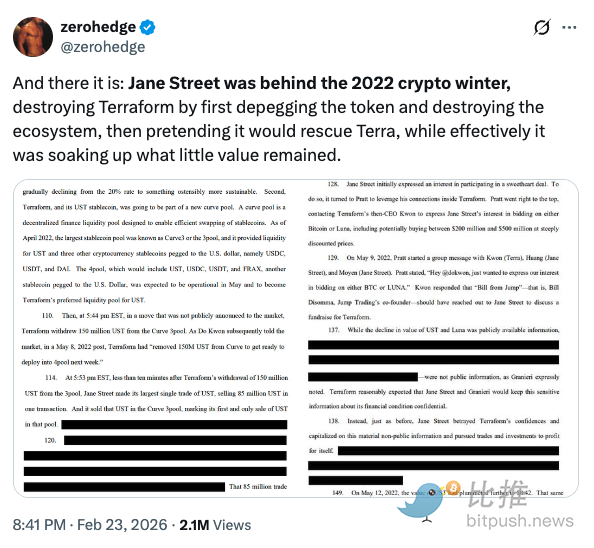
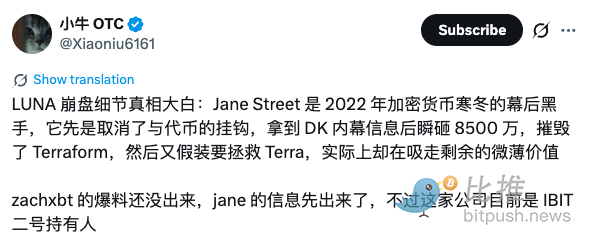
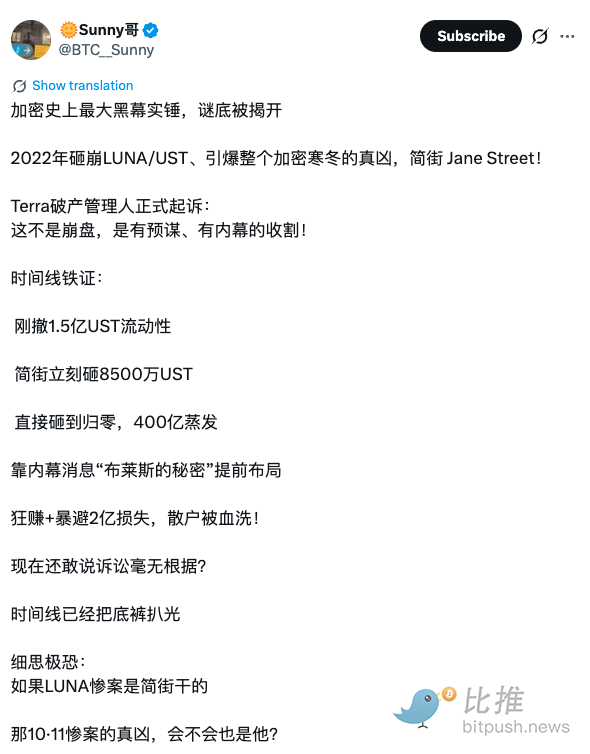
« Jane Street est le cerveau derrière le marché baissier de la crypto en 2022 »


Commentaires populaires :

Terraform était essentiellement un système de Ponzi, il aurait fini par s'effondrer de toute façon. C'est stupide de rejeter la faute sur Jane Street ou qui que ce soit d'autre. Par exemple, même si j'avais vendu à découvert Bernie Madoff et provoqué sa faillite, je n'en serais pas la cause ;

Les teneurs de marché ne détruisent pas les choses, ils identifient les faiblesses structurelles et agissent en premier. Si Terra pouvait être déstabilisé par des transactions stratégiques, c'est un défaut de conception, pas un crime. Le vrai problème, c'est les canaux d'information privilégiée (la conversation "secrète" avec le stagiaire de Terraform). Les stablecoins algorithmiques mal conçus sont comme des tests de résistance prêts à exploser, Jane Street était juste meilleur en maths que la plupart ;

Ceux qui ont acheté le dip de Luna à l'époque ont vraiment souffert, le prix de Luna rivalisait presque avec Shiba ;

Sans régulation, on peut arnaquer les gens comme on veut, si j'avais de l'argent, je voudrais aussi être un market maker ;

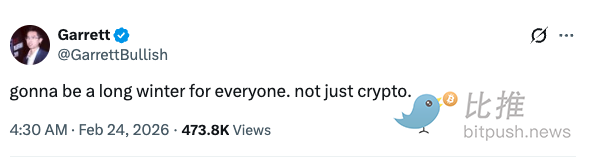
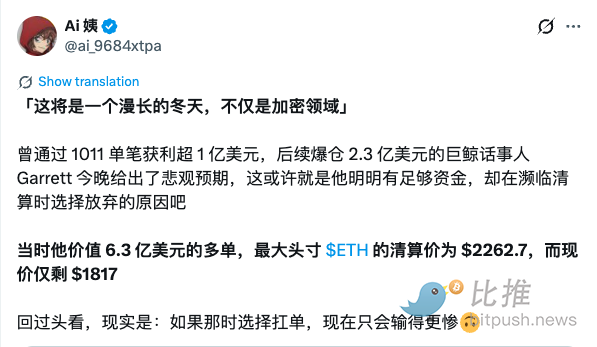
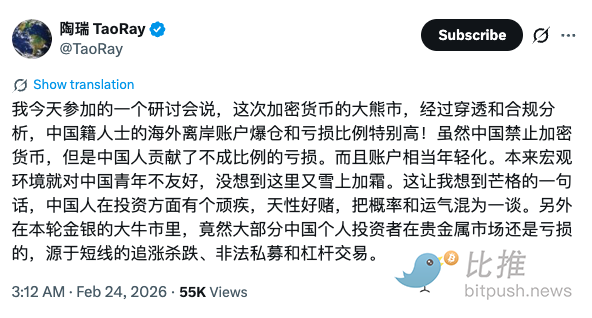
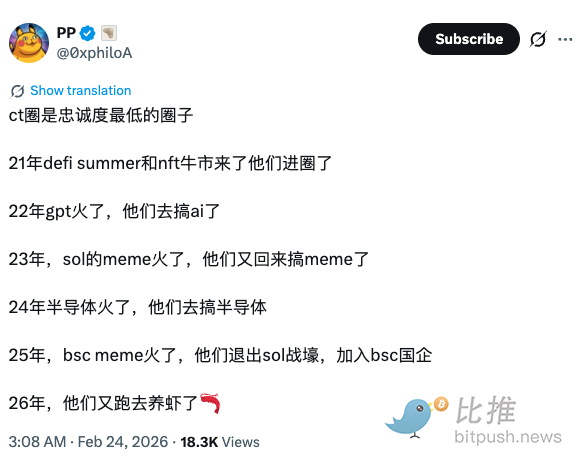
« Un long hiver »

Commentaires populaires :

En période de resserrement, l'objectif principal des gens ne devrait pas être de gagner de l'argent sur le marché, mais plutôt de savoir comment préserver son patrimoine pendant cette période. Il suffit de tenir bon, de survivre, et il y aura toujours un nouveau départ.

Ne soyez pas un spéculateur, avant de décider d'ouvrir une position, soyez prêt mentalement à considérer les actifs concernés comme un investissement à moyen-long terme, no all in, no all out.

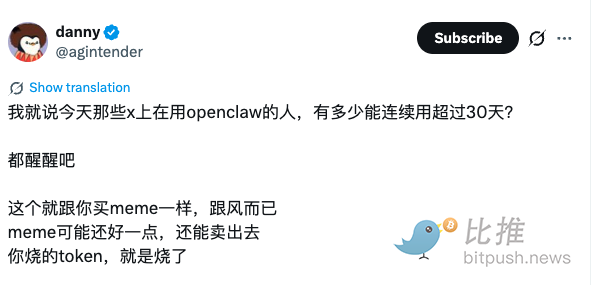
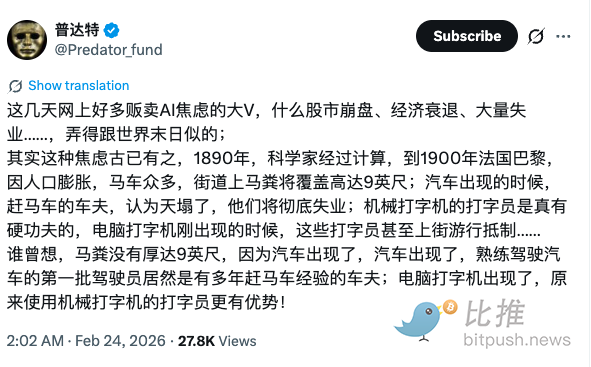
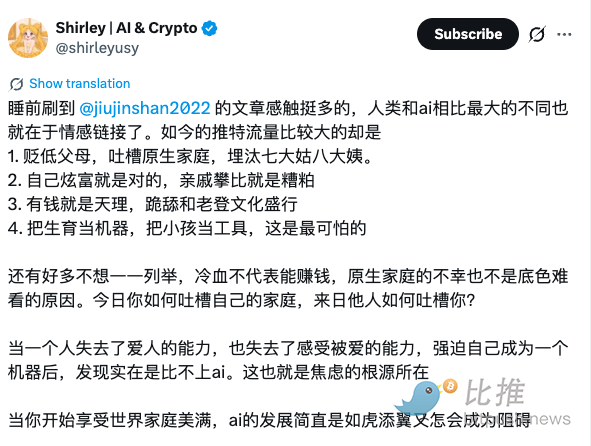
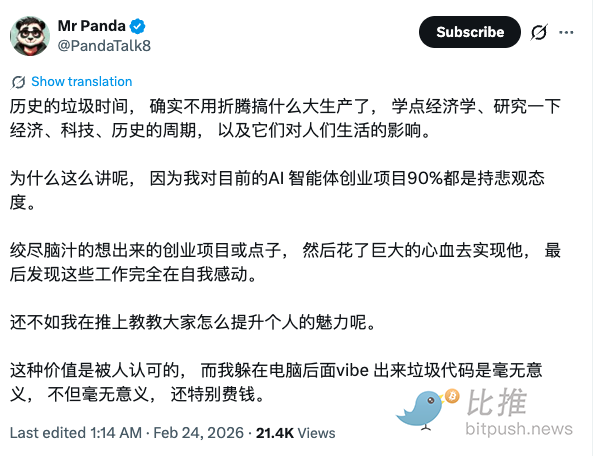
Anxiété de l'IA

Lien original : https://www.bitpush.news/articles/7614246

Related Questions

QQui est considéré comme le responsable caché du kryptomarché baissier de 2022 selon l'article ?

ASelon les discussions des KOLs cités, Jane Street est présentée comme l'acteur ayant précipité l'effondrement de Terra (Luna) en exploitant ses faiblesses structurelles.

QPourquoi Terraform Labs a-t-il été comparé à un système de Ponzi dans les commentaires ?

ALes commentateurs estiment que Terraform Labs fonctionnait comme un système de Ponzi, car son effondrement était inévitable en raison de défauts structurels, indépendamment des actions des acteurs externes comme Jane Street.

QQuel conseil est donné pour survivre à un marché kryptomonnaie baissier ?

AIl est conseillé de se concentrer sur la préservation de son capital plutôt que sur la génération de profits, en adoptant une stratégie de survie et en évitant les investissements all-in ou all-out.

QQuelle est la préoccupation majeure exprimée concernant l'IA dans l'article ?

AL'article évoque une anxiété généralisée concernant l'IA, bien que les détails spécifiques ne soient pas explicités, reflétant des craintes sur son impact potentiel.

QQuel était le défaut principal du mécanisme de stablecoin algorithmique de Terra selon les analyses ?

ALe stablecoin algorithmique de Terra présentait une faille structurelle fondamentale, le rendant vulnérable aux manipulations de marché, comme les transactions stratégiques qui ont provoqué son décrochage.

Related Reads

Behind HYPE's Repeated Record Highs, the 'Minions' in the Ecosystem Can't Keep Up

While HYPE, the native token of the Hyperliquid ecosystem, surges to new all-time highs above $76 and attracts significant institutional ETF inflows, a starkly different reality unfolds within its HyperEVM application layer. Multiple core DeFi protocols across lending, NFTs, stablecoins, and DEXs have announced shutdowns between May and June. The article argues HYPE functions more like an "application stock" than a traditional ecosystem token. Its value is anchored to the trading fees from Hyperliquid's core perpetual contracts platform (HyperCore), which boasts a diversified revenue stream from crypto, commodities, and indices. Approximately 97% of protocol fees fund buybacks and burns of HYPE. This means HYPE's price is largely decoupled from the health of projects built on HyperEVM. The closures of significant projects like lending protocol HypurrFi (peak TVL >$300M) and NFT marketplace Drip.Trade highlight a structural tension. Hyperliquid's minimalist philosophy offers infrastructure without official grants, liquidity support, or marketing coordination for HyperEVM projects. This forces protocols into a fiercely competitive environment from day one. Furthermore, the success of HyperCore creates a liquidity vacuum, and mechanisms like HIP-3 (allowing direct perpetual market deployment) divert user attention and capital away from application-layer projects. The stronger the core perpetual trading business becomes, the more difficult it is for peripheral "DeFi lego" projects to survive and capture value, despite the flagship token's rising price.

Foresight News34m ago

Behind HYPE's Repeated Record Highs, the 'Minions' in the Ecosystem Can't Keep Up

Foresight News34m ago

Conversation with Arthur Hayes: AI Has Drained Market Liquidity, BTC Will Be Below 100k by Year-End

In this June 2026 podcast interview, BitMEX co-founder Arthur Hayes explains his decision to sell his major crypto holdings (HYPE, NEAR, Worldcoin, Zcash). His rationale is based on a macro view linking oil prices, the Iran conflict, US politics, and an impending AI bubble burst. Hayes argues that high oil prices, driven by the ongoing war, will pressure domestic US inflation. To salvage the Republican Party's chances in the midterm elections, he believes Donald Trump may pivot to a populist, anti-AI stance—advocating for taxes and regulation—which would deflate the AI investment narrative. He sees the AI sector, particularly massive capital expenditure on data centers, as having absorbed nearly all excess market liquidity (around $1.5 trillion in debt issuance since 2025), starving other assets like Bitcoin. He highlights the upcoming SpaceX IPO at a ~$1.8 trillion valuation and 100x price-to-sales ratio as a potential tipping point. If these hyped IPOs underperform, it could shatter market confidence in AI. In such a scenario, all risk assets, including crypto, would fall together as correlations converge to 1 during a broad correction. Hayes has moved his portfolio into Treasuries and energy stocks (like ExxonMobil), predicting Bitcoin will be below $100k by year-end. He sees a potential crypto bull market only after the AI frenzy cools, liquidity stops flowing exclusively into AI, and possibly after a significant market downturn prompts new monetary stimulus.

marsbit45m ago

Conversation with Arthur Hayes: AI Has Drained Market Liquidity, BTC Will Be Below 100k by Year-End

marsbit45m ago

Fed's Internal Doves Flock to Hawkish Stance, Warsh's Debut "Between a Rock and a Hard Place"

U.S. Federal Reserve officials who previously advocated for rate cuts, including Governor Christopher Waller, have recently shifted their stance, with many now not ruling out the possibility of future rate hikes. This sets a challenging stage for new Fed Chair Kevin Warsh's first policy meeting. Appointed by President Trump based on his dovish views, Warsh now faces a committee where the debate has pivoted from "when to cut" to "whether to hike," driven by persistent inflation above 3%, a strong labor market, and supply-side pressures from AI infrastructure demands and geopolitical tensions. Key figures illustrate the shift. Governor Waller, once concerned about employment, now says data has pushed him toward considering rate increases. Even moderate voices like Governor Lisa Cook, while expecting inflation to ease, have indicated readiness to hike if it fails to do so. Long-time hawks such as regional Fed presidents Beth Hammack, Lorie Logan, and Neel Kashkari have grown more vocal, arguing that the real policy rate is effectively falling and that action may soon be needed. The upcoming Fed meeting is expected to keep rates steady but will likely remove the "easing bias" from its statement, signaling a neutral stance between cuts and hikes. The quarterly "dot plot" is anticipated to show most officials projecting no cuts this year, with some potentially indicating hikes. Chair Warsh, a critic of the Fed's reliance on forward guidance like the dot plot, must navigate communicating this pivot using tools he has questioned, all while steering policy in a direction counter to the preferences of the president who appointed him. The consensus suggests the Fed's next move could well be a rate increase.

marsbit1h ago

Fed's Internal Doves Flock to Hawkish Stance, Warsh's Debut "Between a Rock and a Hard Place"

marsbit1h ago

The Trillion-Yuan Market Cap 'Yi Zhong Tian': Who is the True Value King?

The article analyzes the three leading Chinese optical module companies, collectively nicknamed "Yi Zhong Tian": Xinyisheng, Zhongji Innolight, and TFC Optical Communication. It evaluates their "cost-performance" not by current stock price, but through three lenses: PEG ratio (growth vs. valuation), earnings quality, and premium/discount for certainty. Xinyisheng shows the most attractive PEG ratio and high profitability, but its valuation reflects discounts for risks like high customer concentration and reliance on overseas markets. Zhongji Innolight, the most expensive, commands a premium for its market leadership, dominant share in key products like 800G/1.6T modules, and higher earnings certainty, though it faces geopolitical risks. TFC Optical, as an upstream component supplier ("water seller"), has the highest gross margin and bets on the long-term CPO/NPO architecture trend, but trades at a high valuation with more stable, less explosive growth. The core argument is that while these companies dominate module assembly, the true profit pool and technological moat lie upstream in laser and switch chips, currently controlled by U.S. firms like Lumentum and Coherent. The long-term "cost-performance" for these Chinese leaders hinges on whether the domestic industry, exemplified by companies like Yuanjie Technology, can successfully move up the value chain into high-power laser chips. Otherwise, their high growth may remain confined to the lower-margin assembly segment.

marsbit1h ago

The Trillion-Yuan Market Cap 'Yi Zhong Tian': Who is the True Value King?

marsbit1h ago

Trading

Spot
Futures

Hot Articles

How to Buy LUNA

Welcome to HTX.com! We've made purchasing Terra (LUNA) simple and convenient. Follow our step-by-step guide to embark on your crypto journey.Step 1: Create Your HTX AccountUse your email or phone number to sign up for a free account on HTX. Experience a hassle-free registration journey and unlock all features.Get My AccountStep 2: Go to Buy Crypto and Choose Your Payment MethodCredit/Debit Card: Use your Visa or Mastercard to buy Terra (LUNA) instantly.Balance: Use funds from your HTX account balance to trade seamlessly.Third Parties: We've added popular payment methods such as Google Pay and Apple Pay to enhance convenience.P2P: Trade directly with other users on HTX.Over-the-Counter (OTC): We offer tailor-made services and competitive exchange rates for traders.Step 3: Store Your Terra (LUNA)After purchasing your Terra (LUNA), store it in your HTX account. Alternatively, you can send it elsewhere via blockchain transfer or use it to trade other cryptocurrencies.Step 4: Trade Terra (LUNA)Easily trade Terra (LUNA) on HTX's spot market. Simply access your account, select your trading pair, execute your trades, and monitor in real-time. We offer a user-friendly experience for both beginners and seasoned traders.

4.4k Total ViewsPublished 2024.03.29Updated 2026.06.02

How to Buy LUNA

What is $LUNA

Luna28 ($$LUNA): A Moon-Inspired Crypto Venture Introduction In the ever-evolving world of cryptocurrencies, innovation is key. Luna28 stands out as a project that not only embraces technology but also intertwines it with the mystique of cosmic cycles. Inspired by the moon's 28-day cycle, Luna28 ($$LUNA) aims to create a unique and engaging experience for its community, merging the concepts of tokenomics and lunar-themed non-fungible tokens (NFTs). At its core, this project employs a distinctive token burn mechanism aligned with lunar and solar eclipses, setting a new precedent in the crypto space. What is Luna28? Luna28 is a token-based cryptocurrency project built on the Ethereum blockchain. It seeks to offer its users a blend of cosmic engagement through a series of innovative features. Key to its identity is the launch of lunar-themed NFTs which enhance community interaction while celebrating the moon's cultural significance. The project aims to create a deeper connection between its community members and the cosmos. This connection is facilitated through a carefully crafted ecosystem that leverages lunar themes, token burns, and dynamic activities associated with celestial events. The goal is not just about enhancing token value but fostering a sense of belonging and enjoyment within the community. Creator of Luna28 The details surrounding the creator of Luna28 remain largely unknown. This lack of information has led to an air of mystery around the project, further adding to its uniqueness. The anonymous nature of its creation reflects a broader trend within the crypto industry, where the focus is often on the project and its community rather than individual profiles. Investors of Luna28 Currently, there is no publicly available information regarding the specific investment foundations or organizations that support Luna28. This aspect may indicate a grassroots initiative where the community plays a vital role in the project's development and growth. The absence of prominent investors can sometimes create a more decentralized and independent project, allowing for organic community engagement and involvement. How Does Luna28 Work? One of the most compelling aspects of Luna28 is how it operates, particularly its unique features that set it apart from other cryptocurrency projects. 1. Lunar and Solar Eclipse Token Burns Luna28 incorporates a special token burn mechanism, which involves periodically burning a portion of its token supply during lunar and solar eclipses. This approach not only creates excitement around celestial events but also works on the fundamental principle of increasing scarcity. By reducing the overall token supply through burns, the remaining tokens have the potential for increased value, benefiting all holders. 2. Tokenomics The economic structure of Luna28 is crafted to ensure sustainability and growth. Each transaction incurs a 4.4% tax: 2% contributes to the Moon Cycle Fund, which is burned every 28 days during the full moon. The remaining 2.4% is earmarked for development and marketing, facilitating the project’s expansion and continuous improvement. This tax structure establishes a steady flow of funding while maintaining a deflationary approach that can enhance the token's value proposition. 3. 100% Burned Liquidity Security and trust are paramount in any cryptocurrency project. Luna28 addresses these concerns by locking its liquidity pool tokens in a burn wallet. This ensures that liquidity is permanently secured, fostering confidence within the community as they engage with the platform. 4. NFT Drops Further enhancing community engagement, Luna28 plans to release lunar-themed NFTs. These digital collectibles not only serve as a source of fun and creativity but also offer users unique assets tied to the larger lunar theme. The introduction of NFTs reflects a growing trend in the crypto space, blending traditional forms of artistic expression with innovative technology. 5. Hyper Deflationary Token Luna28 is classified as a hyper deflationary token, emphasizing its commitment to a declining token supply through systematic burns. This design encourages long-term holding, as community members anticipate potential value growth driven by scarcity. 6. First Buyer Incentive In a bid to promote active participation, Luna28 offers a unique first buyer incentive. After each celestial burn event, the first participant in the market is rewarded with 10% of the tokens burned during that event. This encourages immediate engagement and interest surrounding each significant celestial phenomenon. 7. Sustainable Tax Structure The project's tax model is specifically designed to encourage sustainable growth, balancing the need for ongoing project development with the goal of enhancing token value. This innovative tax structure serves the dual purpose of supporting the community's interests while maintaining a healthy ecosystem for the project. Timeline of Luna28 A well-charted timeline helps in understanding the progression and milestones of Luna28. Here’s a synopsis of important events in the project’s history: Stealth Launch: The project entered the crypto arena under a stealth launch, garnering significant community interest and posting a remarkable 1792% increase from its initial listing. This initial surge indicated strong community reception and a solid foundation for future growth. Token Burns: Committing to its unique approach, Luna28 plans to burn 28% of its token supply over a three-year period, timed specifically during lunar and solar eclipses. Community members eagerly await their opportunities to participate in these events. Community Involvement: Emphasizing transparency and the importance of community feedback, Luna28 plans to notify its users in advance about upcoming token burn events. This engagement approach encourages active participation, fostering a strong sense of community. Key Features Luna28's distinctive features bolster its appeal within the cryptocurrency sector: Hyper Deflationary Nature: The project's focus on hyper deflationary mechanics enables a strategic reduction in supply, aiming for enhanced value retention. Incentives for Early Engagement: The project rewards early participants with direct benefits, which cultivates a proactive community eager to contribute. Commitment to Community Development: The sustainable tax model not only ensures the project's growth but also actively involves the community in shaping its future direction. Conclusion Luna28 represents a unique fusion of technology, community engagement, and celestial inspiration in the cryptocurrency landscape. By integrating innovative mechanisms such as token burns during astrological events and creating engaging lunar-themed NFTs, the project distinguishes itself as a trailblazer within its niche. As a community-driven endeavor, Luna28 promises to deliver not just another cryptocurrency but an experience that marries elements of cosmic fascination with blockchain technology. With its innovative features and strong emphasis on community involvement, Luna28 has the potential to create a lasting impact in the world of digital currencies. The connection it forges between its users and the universe represents not only a creative endeavor but also a brilliantly calculated business strategy poised for growth. As we observe the evolution of Luna28, it is evident that it is more than just a token; it is a concept that encourages its community to look up at the cosmos and ponder their place within it, all while navigating the exciting world of cryptocurrency. The future for Luna28 looks bright and full of potential, eagerly awaiting its next lunar cycle.

801 Total ViewsPublished 2024.04.01Updated 2024.12.03

What is $LUNA

What is TERRA

Exploring the Terra Ecosystem: A Comprehensive Overview Introduction In the ever-evolving landscape of blockchain technology and cryptocurrency, the Terra Ecosystem has emerged as an ambitious project designed to facilitate a decentralized financial system. This innovative platform focuses on creating stable and scalable algorithmic stablecoins, aimed at driving the widespread adoption of cryptocurrencies. In this article, we will delve into the foundational aspects of the Terra Ecosystem, exploring its operational mechanisms, its creators, investors, notable components, and the timeline of its development. What is the Terra Ecosystem? Founded in 2018, the Terra Ecosystem is a layer-one blockchain designed to provide an efficient and reliable payment platform. The core mission of Terra is to create a preferred form of money that is not only decentralized but also practical for everyday use. At the heart of the ecosystem is its native algorithmic stablecoin, TerraUSD (UST), which is pegged to the US dollar using an innovative algorithmic mechanism. This unique approach addresses a common concern in the cryptocurrency space: the volatility that often accompanies digital assets. The Terra Ecosystem aims to enhance the usability of cryptocurrencies by creating an environment where digital currencies function similarly to traditional currencies. By being user-friendly and stable, Terra sets out to attract users outside of the crypto community, ultimately fostering mass adoption. The Creators of the Terra Ecosystem The Terra Ecosystem emerged under the guidance of its co-founders Daniel Shin and Do Kwon. Both individuals, with a wealth of experience in entrepreneurship and technology, launched Terraform Labs to spearhead this groundbreaking project. Daniel Shin, a prominent figure in the South Korean tech landscape, has co-founded multiple tech companies, while Do Kwon has an extensive background in computer science and engineering. Their partnership is pivotal in steering the development and growth trajectory of the Terra Ecosystem. Investors in the Terra Ecosystem While detailed information about specific investors remains limited, it is widely acknowledged that Terraform Labs has garnered substantial financial support from a variety of angel investors and venture capital firms. This backing provides the necessary resources for the ongoing development and expansion of the Terra Ecosystem. The emphasis on acquiring diversified investment sources reflects the strong belief in the project's potential within the cryptocurrency community. How Does the Terra Ecosystem Work? At the core of the Terra Ecosystem's functionality lies its innovative proof-of-stake (PoS) consensus mechanism. This allows holders of the LUNA token, the native currency of the ecosystem, to participate in the governance and operation of the network. The dual-token structure differentiates Terra from many other projects, with LUNA serving both as a stake for validators and as a governance token. The mechanism operates in a distinctive way, whereby the supply of LUNA backs the stablecoin UST. If the demand for UST increases, the algorithm automatically adjusts the supply of LUNA to maintain the stability of UST at its dollar peg. Users are enabled to exchange 1 UST for an equivalent value in LUNA, ensuring that fluctuations in demand do not affect the peg. This innovative approach enables the Terra Ecosystem to maintain price stability, one of its primary goals. Timeline of the Terra Ecosystem The development journey of the Terra Ecosystem has been marked by significant milestones: 2018: Establishment of Terraform Labs by Daniel Shin and Do Kwon, laying the groundwork for the Terra Ecosystem. April 2019: The initial release of the Terra blockchain, initiating its journey into the broader cryptocurrency landscape. 2021: Terra experiences remarkable growth as its total value locked (TVL) reaches new heights, positioning it as a dominant player in decentralized finance (DeFi). May 2022: A turbulent period arises as the Terra blockchain is temporarily halted following the collapse of UST and LUNA, leading to a significant impact on market perception and capitalization. January 2024: Terraform Labs files for bankruptcy, marking another critical event in the project's history, sparking discussions on the sustainability and future of the ecosystem. Key Components of the Terra Ecosystem A variety of features contribute to the unique functionality of the Terra Ecosystem: Core Functionality The Terra Ecosystem includes essential functionalities such as managing transaction fees, monitoring price fluctuations, and maintaining historical balances of transactions, all of which are crucial for ensuring user experience and operational integrity. Applications One of the flagship features of the Terra Ecosystem is its diverse array of applications. This includes: Anchor Protocol: A money market protocol that provides high stablecoin yields and tokenized stakes for users seeking to maximize returns on their investments. Mirroring Technology: Enabling users to create assets that mirror real-world assets and trades, allowing for broader use cases and applications. Chai: A payment platform designed to facilitate everyday transactions using Terra's stablecoin technology. Swaps and Exchanges The ecosystem provides functionality for seamless asset exchanges. Notable features include native swapping capabilities and platforms such as Terraswap, allowing users to exchange Terra assets efficiently while benefiting from competitive rates. Governance Governance plays a critical role in the decentralized nature of the Terra Ecosystem. Token holders use their LUNA tokens to propose changes or vote on proposals that affect the network, ensuring collective decision-making and community involvement in the ecosystem's evolution. Notable Projects in the Terra Ecosystem Beyond the core functionalities, the Terra Ecosystem is also home to notable projects that further augment its capabilities: Terraswap: This decentralized exchange (DEX) emerged to facilitate easy swapping of Terra assets, thus promoting a vibrant trading environment within the ecosystem. Astroport: Another DEX known for its high total value locked, Astroport enhances trading opportunities and liquidity provision for users. Loop Markets: This integrated exchange hub offers users a range of trading tools and services, significantly contributing to the user experience across the Terra platform. Conclusion The Terra Ecosystem stands as a significant player within the blockchain and cryptocurrency domains, aiming to create a stable and scalable financial platform designed for widespread cryptocurrency adoption. Although the ecosystem faced dramatic challenges, notably the collapse of its stablecoin UST and the LUNA token, it continues to adapt and evolve in the face of adversity. As the project navigates its future, it remains committed to its foundational vision of building practical products accessible to a broader audience, thereby reinforcing the potential of decentralized finance. The Terra Ecosystem, with its robust features and innovative approach, holds promise as it seeks to redefine the landscape of digital currency use, remaining a focal point for enthusiasts and investors alike in the ongoing evolution of blockchain technology.

1.3k Total ViewsPublished 2024.12.17Updated 2024.12.17

What is TERRA

Discussions

Welcome to the HTX Community. Here, you can stay informed about the latest platform developments and gain access to professional market insights. Users' opinions on the price of LUNA (LUNA) are presented below.

活动图片