比特币、以太坊两种路径,死猫跳还是破底翻?山寨高抛低吸:SOL、LIQUID、PIPPIN、AAVE

金色财经Published on 2025-12-23Last updated on 2025-12-23

Abstract

比特币和以太坊当前处于关键阻力位附近震荡,比特币若突破88800美元可能上看92000-95000区间,否则可能回踩87720-85220支撑。以太坊需站稳3010美元才能延续反弹,否则将测试2970-2906支撑。整体市场需警惕回调风险,避免重仓操作,建议关注急跌急拉的短线机会。 山寨币方面: SOL需关注121-120支撑区间,突破131压力位后可能开启涨势; PIPPIN已触及0.26目标位,需等待回调机会; AAVE虽团队内讧但基本面尚可,下跌后或现抄底机会; LIQUID采用自动添加LP的创新机制,可保持关注; ASTER短期超卖可能反弹,但长期因基本面薄弱仍看跌; 哈基米处于楔形形态末端,节后可能先回调后上涨; GUA作为AI算命项目,市值1亿美元,庄家护盘明显,可轻仓布局。 全网24小时爆仓2.37亿美元,市场波动剧烈,需严格控制风险,优先采用高抛低吸策略。

关键节点别重仓!当前震荡行情适合高抛低吸,没有效突破前少乱动,方向错了,很容易深套,重点关注BTC、ETH阻力突破情况。美迟早回调,大饼和以太难独善其身,谨防插针打回原形。别现价追单,专心做急跌急拉的短线机会。

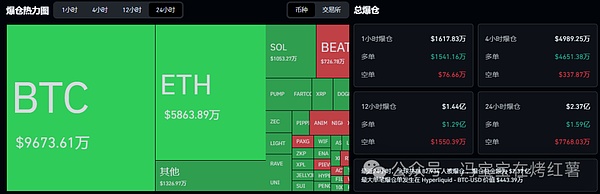
过去24小时全网共有82,934人被被爆仓,爆仓总金额为$2.37亿美元,多单爆仓1.59亿美元,空单爆仓7768.99万美元。
BCT

从近期走势来看,比特币价格试图向上突破关键阻力区,但最终收出一根带长上影线的放量K线,表明上方抛压仍然很大。这根K线出现在下跌趋势线和供应区重合的位置,技术信号十分明确,市场并非没有上涨动力,而是整体结构仍被空头压制。
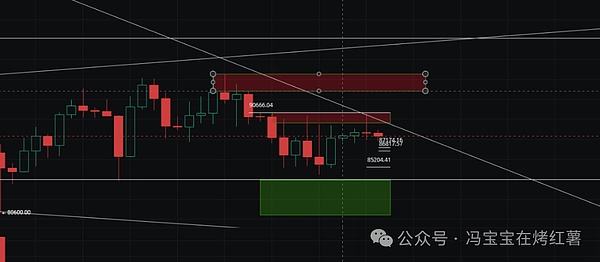
若后续能真正突破88800阻力区,价格有望看向92000至95000区间。上方压力留意89600-90585-91355附近。

每一次冲高都可能是试探,若今天受阻无法收回88800上方,则小级别反弹无力,继续回踩下方支撑87720-86650-85220附近。

ETH

以太坊的走势本质上仍然跟随比特币,即便局部突破了下跌趋势线,但在大周期逻辑未改变前,这类突破的参考意义有限。整体来看,中期至明年上半年,仍维持偏谨慎甚至偏空的判断。
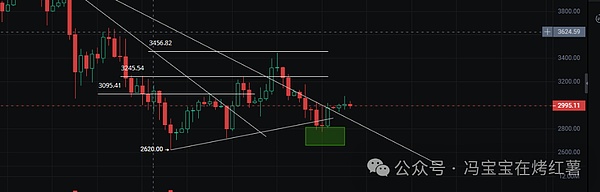
今天留意3010位置,只有站稳此位置上方这波4小时级别回调才算结束行情才会继续上行,上方压力位3043-3078-3115附近。若今天收不上3010上方,那说明小级别反弹没有力度,继续回踩下方支撑2970-2943-2906附近。

山寨

市场从来不会按照任何人的意志运行。真正成熟的交易者,不是预测对了多少次,而是在不同情景下,都提前想好了应对方案。短期看震荡与下行,中期等待更优结构,长期尊重周期。这,才是穿越牛熊的核心逻辑。

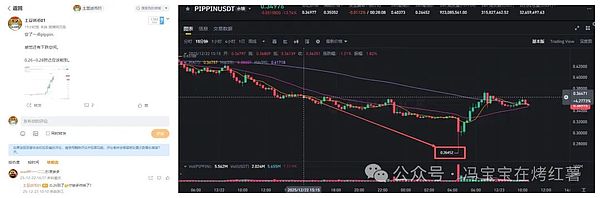
$PIPPIN

PIPPIN直击0.26目标位,这不是运气,是对趋势的敬畏、对图表的笃定。当所有人追涨时,我等回落,恐慌抛售时,我自从容。下次,你还会怀疑吗?
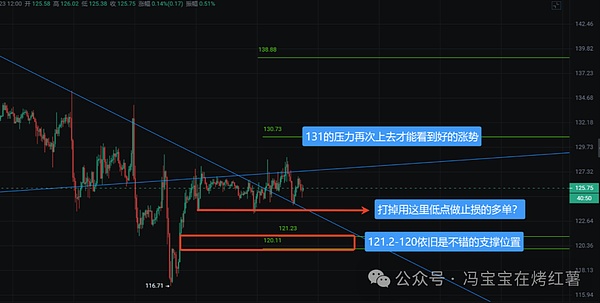
$SOL

索子上的支撑还是121.2-120之间,要留意下来这里获取流动性的可能。上方压力131还要再次上去才能看到较好的涨势。
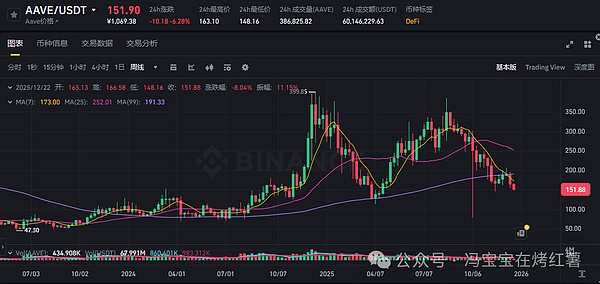
$AAVE

虽然团队开始起内讧,但是从基本面来看AAVE还是优秀的defi借贷项目,跌下来我反而觉得是机会,等再跌跌准备抄底做多试试,大概率不会被埋。
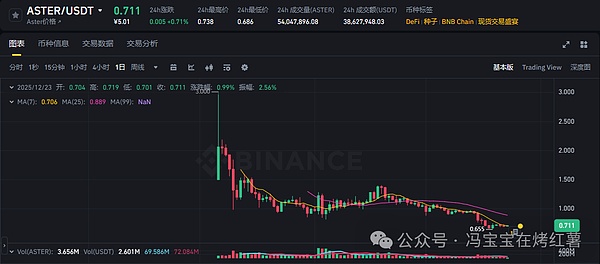
$ASTER

短期下跌应该到头了,技术面超卖、资金面抛压减弱,短线很可能反弹一波。但本质上,这还是个垃圾项目,链上日活才几百人,却撑起几十亿市值,完全不合理!perpdex这个赛道已经有了绝对的龙头那就是HYPE ,ASTER从出生那一刻起就是模仿而不是创新,所以短线反弹之后还会继续下跌。
$哈基米

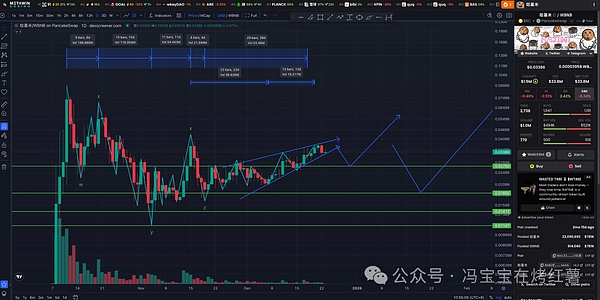
哈基米 楔形形态收尾,马上选方向,短线可盯紧。圣诞节了要,上中文万一出现bug,工程师放假了都没人修。所以新年后中文现货节点可能更好,新年新彩头。没突发情况的话,先回调一波,然后可能是巨大的泵。
$LIQUID

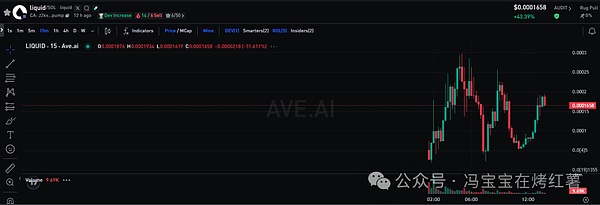
这个币会自动添加LP,是DEV leyten 的项目。对创新机制感兴趣的朋友,可以去关注一下。
$GUA

AI算命项目,刚上合约市值1亿,不算太贵,狗庄非常积极的在维护0.1U的成本,按照Alpha上线至今 26天来算,七位数维护币价的成本是实打实花出去,目前看筑底的样子,止损空间比较窄,可以布局点。


Related Questions

Q比特币当前的关键阻力位和支撑位分别是多少?

A比特币的关键阻力位在88800美元,若突破则可能看向92000至95000区间;下方支撑位在87720-86650-85220附近。

Q以太坊需要站稳哪个位置才能确认4小时级别回调结束?

A以太坊需要站稳3010美元上方,才能确认4小时级别回调结束,行情才会继续上行。

Q文章中提到哪些山寨币适合高抛低吸操作?

A文章提到的适合高抛低吸的山寨币包括SOL、LIQUID、PIPPIN和AAVE。

Q为什么文章对ASTER项目持谨慎态度?

A因为ASTER链上日活仅几百人却撑起几十亿市值,且是模仿HYPE而非创新,基本面不合理,短期反弹后可能继续下跌。

Q当前全网爆仓数据中多单和空单的爆仓金额分别是多少?

A过去24小时全网多单爆仓1.59亿美元,空单爆仓7768.99万美元,总爆仓金额2.37亿美元。

Related Reads

Google TPU Shipments Revised Up by 50%

Recent industry research indicates a significant upward revision in the shipments of Google's TPU (Tensor Processing Unit) chips. Previous expectations for 2027 were set at around 10 million units, but new estimates now point to 15 million units, a 50% increase. This substantial boost directly translates to higher demand across the entire supporting supply chain. Google's TPU clusters utilize a standardized all-optical interconnect architecture. Consequently, key hardware components are deeply integrated and scaled in fixed ratios with the chips. The 15 million TPU target will drive corresponding demand increases for NPO optical engines (roughly a 1:1 match), 1.6T optical modules, OCS optical switches, high-end server power supplies, fiber optics & MPO connectors, and liquid cooling solutions. Among these, liquid cooling is highlighted as the sector experiencing the most significant transformation and offering the most stable potential for excess returns. As next-generation TPU chips reach power levels where traditional air cooling is insufficient, liquid cooling becomes essential. 2026 is forecasted as the first year of substantial adoption for Google's liquid cooling solutions. This shift, coupled with delivery and capacity bottlenecks faced by incumbent overseas manufacturers, is creating a prime window for domestic Chinese suppliers to enter and secure Google's core supply chain. The market size for Google-specific liquid cooling is projected to potentially triple from a baseline of hundreds of billions to around 300 billion units by 2028. The logic for the fiber optic sector is also being rewritten. Once considered a cyclical commodity tied to telecom operator procurement, fiber is now a strategic and scarce resource for AI Data Centers (AIDC). A severe supply-demand imbalance, driven by the long lead time for preform production (18-24 months) and surging demand from cloud giants, is supporting strong performance. Chinese fiber manufacturers are well-positioned to capture a significant share of global AIDC demand, with exports potentially reaching 200-300 million core kilometers in 2026. Overall, the investment focus within the AI computing industry is shifting from pure "chip performance speculation" towards the more certain incremental growth in computing infrastructure and its supporting ecosystem. The upward revision in Google TPU shipments, along with the potential for further doubling by 2028, is seen as solidifying performance visibility for the entire supporting supply chain over the next two years.

marsbit1h ago

Google TPU Shipments Revised Up by 50%

marsbit1h ago

What Wall Street Really Wants After the Crypto Story Recedes

The tide of speculative crypto narratives has receded, revealing Wall Street's true objective: building a controlled, yield-generating, and compliant financial pipeline on distributed ledgers. They are migrating core functions onto blockchains, not for decentralization, but for efficiency and new revenue streams. Key developments include BlackRock's BUIDL fund, a tokenized treasury fund acting as a foundational reserve asset, and the rise of Securitize, which is going public and partnering with the NYSE to build a 24/7 digital securities trading and settlement system. This signals a major shift of securities clearing to blockchain technology. To make volatile assets like Bitcoin palatable for institutional investors, firms like BlackRock and Goldman Sachs are creating "covered call" ETFs (e.g., BITA). These products systematically sell options on Bitcoin holdings, transforming price volatility into stable monthly income, effectively repackaging crypto as a yield-bearing asset. Stablecoins are being positioned not as speculative tools but as efficient payment rails. Companies like Stripe and Mastercard are integrating them for instant, low-cost merchant settlements and cross-border card payments, respectively. Critically, new legislation like the GENIUS Act shapes them as non-interest-bearing, heavily regulated extensions of the US dollar system. In summary, Wall Street is quietly constructing a parallel, blockchain-based financial infrastructure featuring tokenized traditional assets, structured crypto yields, and programmable dollar pipelines—all under its control and fully integrated with existing regulatory and credit frameworks.

marsbit1h ago

What Wall Street Really Wants After the Crypto Story Recedes

marsbit1h ago

Tying Itself to SpaceX: Cursor's $60 Billion Rise

This article recounts the rapid rise of AI-powered coding startup Cursor and its 25-year-old MIT graduate CEO, Michael Truell. Launched in 2023, Cursor achieved explosive growth, reaching over 10 billion USD in revenue by late 2025. However, its journey highlights a central dilemma for AI application companies: dependence on foundational model providers. Cursor initially relied heavily on Anthropic's models but faced an existential threat when Anthropic launched its own competing coding tool, Claude Code. In response, Cursor declared an internal emergency in early 2026 and accelerated development of its own model, Composer. To secure the immense computing power needed, Truell struck a pivotal deal with Elon Musk's SpaceX in April 2026. The collaboration grants Cursor access to SpaceX's supercomputing resources for Composer, while SpaceX's Grok model benefits from Cursor's programming data. The agreement includes a potential 600 billion USD acquisition of Cursor by SpaceX later in the year, though a substantial termination fee is in place if the deal falls through. The story explores Cursor's intense, sometimes controversial hiring practices involving lengthy unpaid "work trials," its complex partnership-turned-rivalry with Anthropic, and its high-stakes gamble to ensure independence through the SpaceX alliance. The core question remains: will Cursor evolve into a defining, independent "generational" software company, or become a key piece in a tech giant's AI arsenal?

marsbit1h ago

Tying Itself to SpaceX: Cursor's $60 Billion Rise

marsbit1h ago

Trading

Spot
Futures

Hot Articles

What is $BITCOIN

DIGITAL GOLD ($BITCOIN): A Comprehensive Analysis Introduction to DIGITAL GOLD ($BITCOIN) DIGITAL GOLD ($BITCOIN) is a blockchain-based project operating on the Solana network, which aims to combine the characteristics of traditional precious metals with the innovation of decentralized technologies. While it shares a name with Bitcoin, often referred to as “digital gold” due to its perception as a store of value, DIGITAL GOLD is a separate token designed to create a unique ecosystem within the Web3 landscape. Its goal is to position itself as a viable alternative digital asset, although specifics regarding its applications and functionalities are still developing. What is DIGITAL GOLD ($BITCOIN)? DIGITAL GOLD ($BITCOIN) is a cryptocurrency token explicitly designed for use on the Solana blockchain. In contrast to Bitcoin, which provides a widely recognized value storage role, this token appears to focus on broader applications and characteristics. Notable aspects include: Blockchain Infrastructure: The token is built on the Solana blockchain, known for its capacity to handle high-speed and low-cost transactions. Supply Dynamics: DIGITAL GOLD has a maximum supply capped at 100 quadrillion tokens (100P $BITCOIN), although details regarding its circulating supply are currently undisclosed. Utility: While precise functionalities are not explicitly outlined, there are indications that the token could be utilized for various applications, potentially involving decentralized applications (dApps) or asset tokenization strategies. Who is the Creator of DIGITAL GOLD ($BITCOIN)? At present, the identity of the creators and development team behind DIGITAL GOLD ($BITCOIN) remains unknown. This situation is typical among many innovative projects within the blockchain space, particularly those aligning with decentralized finance and meme coin phenomena. While such anonymity may foster a community-driven culture, it intensifies concerns about governance and accountability. Who are the Investors of DIGITAL GOLD ($BITCOIN)? The available information indicates that DIGITAL GOLD ($BITCOIN) does not have any known institutional backers or prominent venture capital investments. The project seems to operate on a peer-to-peer model focused on community support and adoption rather than traditional funding routes. Its activity and liquidity are primarily situated on decentralized exchanges (DEXs), such as PumpSwap, rather than established centralized trading platforms, further highlighting its grassroots approach. How DIGITAL GOLD ($BITCOIN) Works The operational mechanics of DIGITAL GOLD ($BITCOIN) can be elaborated on based on its blockchain design and network attributes: Consensus Mechanism: By leveraging Solana’s unique proof-of-history (PoH) combined with a proof-of-stake (PoS) model, the project ensures efficient transaction validation contributing to the network's high performance. Tokenomics: While specific deflationary mechanisms have not been extensively detailed, the vast maximum token supply implies that it may cater to microtransactions or niche use cases that are still to be defined. Interoperability: There exists the potential for integration with Solana’s broader ecosystem, including various decentralized finance (DeFi) platforms. However, the details regarding specific integrations remain unspecified. Timeline of Key Events Here is a timeline that highlights significant milestones concerning DIGITAL GOLD ($BITCOIN): 2023: The initial deployment of the token occurs on the Solana blockchain, marked by its contract address. 2024: DIGITAL GOLD gains visibility as it becomes available for trading on decentralized exchanges like PumpSwap, allowing users to trade it against SOL. 2025: The project witnesses sporadic trading activity and potential interest in community-led engagements, although no noteworthy partnerships or technical advancements have been documented as of yet. Critical Analysis Strengths Scalability: The underlying Solana infrastructure supports high transaction volumes, which could enhance the utility of $BITCOIN in various transaction scenarios. Accessibility: The potential low trading price per token could attract retail investors, facilitating wider participation due to fractional ownership opportunities. Risks Lack of Transparency: The absence of publicly known backers, developers, or an audit process may yield skepticism regarding the project's sustainability and trustworthiness. Market Volatility: The trading activity is heavily reliant on speculative behavior, which can result in significant price volatility and uncertainty for investors. Conclusion DIGITAL GOLD ($BITCOIN) emerges as an intriguing yet ambiguous project within the rapidly evolving Solana ecosystem. While it attempts to leverage the “digital gold” narrative, its departure from Bitcoin's established role as a store of value underscores the need for a clearer differentiation of its intended utility and governance structure. Future acceptance and adoption will likely depend on addressing the current opacity and defining its operational and economic strategies more explicitly. Note: This report encompasses synthesised information available as of October 2023, and developments may have transpired beyond the research period.

376 Total ViewsPublished 2025.05.13Updated 2025.05.13

What is $BITCOIN

Discussions

Welcome to the HTX Community. Here, you can stay informed about the latest platform developments and gain access to professional market insights. Users' opinions on the price of BTC (BTC) are presented below.

活动图片