Bitcoin oggi: i piccoli investitori rallentano, mentre le whale avanzano

bitcoinistPublished on 2025-11-26Last updated on 2025-11-26

Abstract

I dati on-chain mostrano che squali e balene di Bitcoin hanno continuato ad aumentare la propria presenza durante il recente...

Trusted Editorial content, reviewed by leading industry experts and seasoned editors. Ad Disclosure
  • I dati on-chain mostrano che squali e balene di Bitcoin hanno continuato ad aumentare la propria presenza durante il recente calo di mercato, mentre gli investitori retail hanno ceduto alla pressione.

Squali e balene di Bitcoin tornano ad accumulare

In un nuovo post su X, la società di analisi on-chain Santiment ha evidenziato le ultime tendenze nella Supply Distribution delle principali categorie di investitori Bitcoin.

La metrica analizza, tra le altre cose, il numero di indirizzi appartenenti a specifici gruppi, suddivisi in base alla quantità di Bitcoin detenuta.

Ad esempio, il cluster “1–10 BTC” comprende tutti i wallet con un saldo compreso in quel range. La Supply Distribution indica quante entità rientrano effettivamente in quella fascia.

🔎 Nel caso di questa analisi, l’interesse si concentra sugli indirizzi con almeno 100 BTC, pari a circa 8,6 milioni di dollari ai prezzi attuali.

Si tratta delle due categorie chiave definite come “sharks” e “whales”, investitori con riserve sufficienti a influenzare il mercato — con le balene naturalmente più pesanti in termini di impatto.

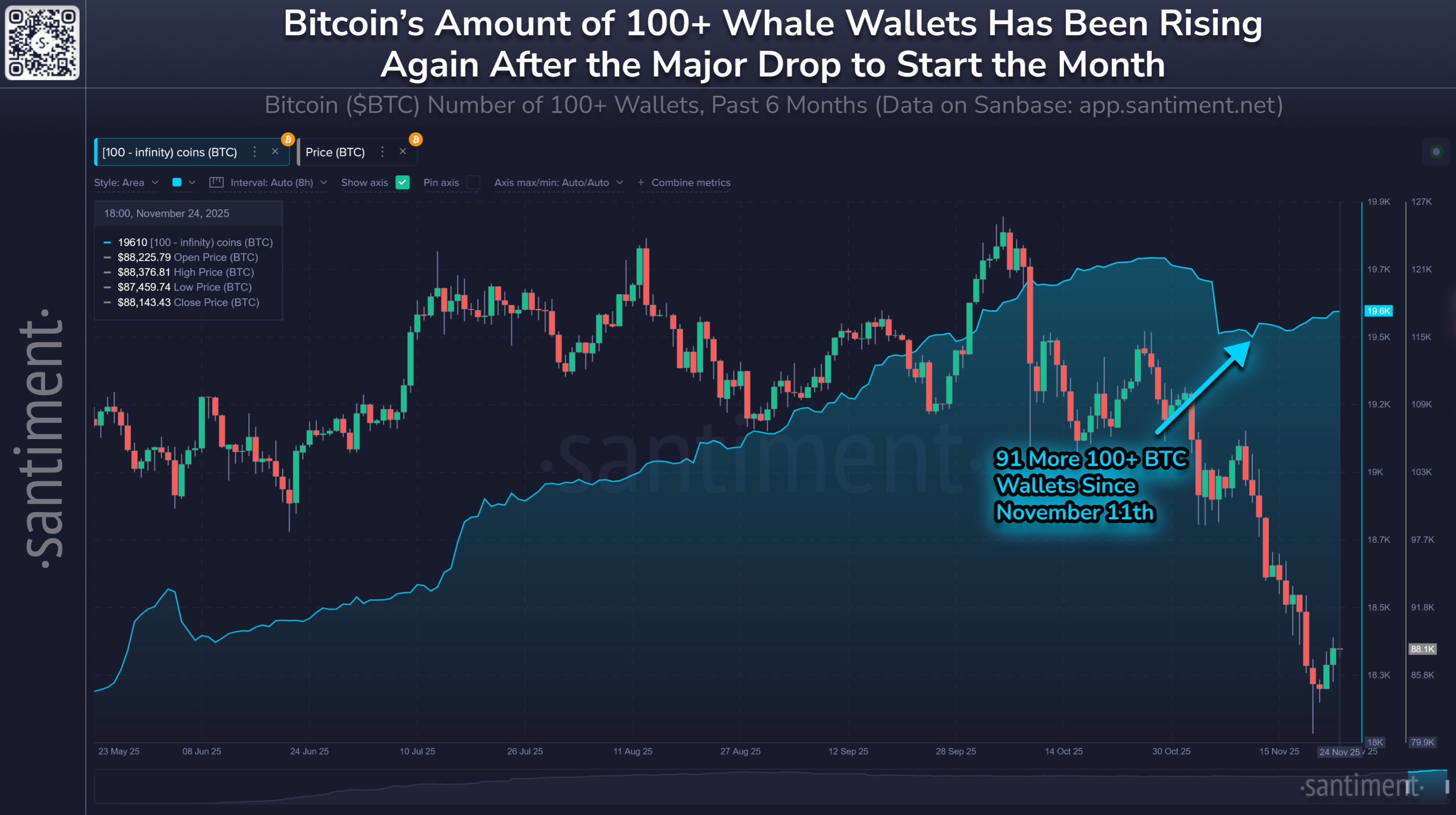
Dopo il massimo storico (ATH) toccato a ottobre, Bitcoin ha avviato una fase discendente. Come mostra il grafico di Santiment, squali e balene inizialmente hanno reagito riducendo la loro esposizione, con un netto calo della loro Supply Distribution.
Fonte: Santiment su X

Secondo una nuova analisi pubblicata da Santiment, la distribuzione dell’offerta tra i principali detentori di Bitcoin sta cambiando in modo significativo. L’indicatore monitora il numero di indirizzi appartenenti a diverse fasce di possesso, e quella più rilevante in questo momento è quella degli indirizzi con più di 100 BTC, cioè circa 8,6 milioni di dollari ai valori attuali.

Questi investitori, suddivisi comunemente nelle categorie di sharks e whales, sono considerati tra i più influenti della rete, e quindi i loro movimenti sono particolarmente rilevanti. Dopo il massimo storico di ottobre, mentre Bitcoin ha iniziato la fase discendente, anche queste grandi entità hanno inizialmente ridotto l’esposizione, registrando un netto calo nella loro Supply Distribution.

Tuttavia, da l’11 novembre la dinamica si è invertita: con l’accelerazione del ribasso, squali e balene hanno ripreso a crescere di numero. In rete ci sono oggi 91 nuovi indirizzi con oltre 100 BTC rispetto ai minimi di inizio mese, pari a un aumento dello 0,47%. Una crescita modesta, ma sufficiente a confermare un ritorno di interesse da parte dei grandi detentori, che stanno comprando sulla debolezza.

Parallelamente, Santiment evidenzia un trend opposto per i piccoli investitori: gli indirizzi con meno di 0,1 BTC (circa 8.700 dollari) stanno diminuendo. Un segnale tipico di capitolazione del retail dopo una fase di forte pressione ribassista.

Secondo la società di analisi, questo tipo di dinamica tende storicamente a favorire i prezzi nel lungo periodo: quando i piccoli investitori mollano e gli investitori di peso tornano ad accumulare, il mercato spesso trova terreno per una futura ripresa.

Prezzo di Bitcoin

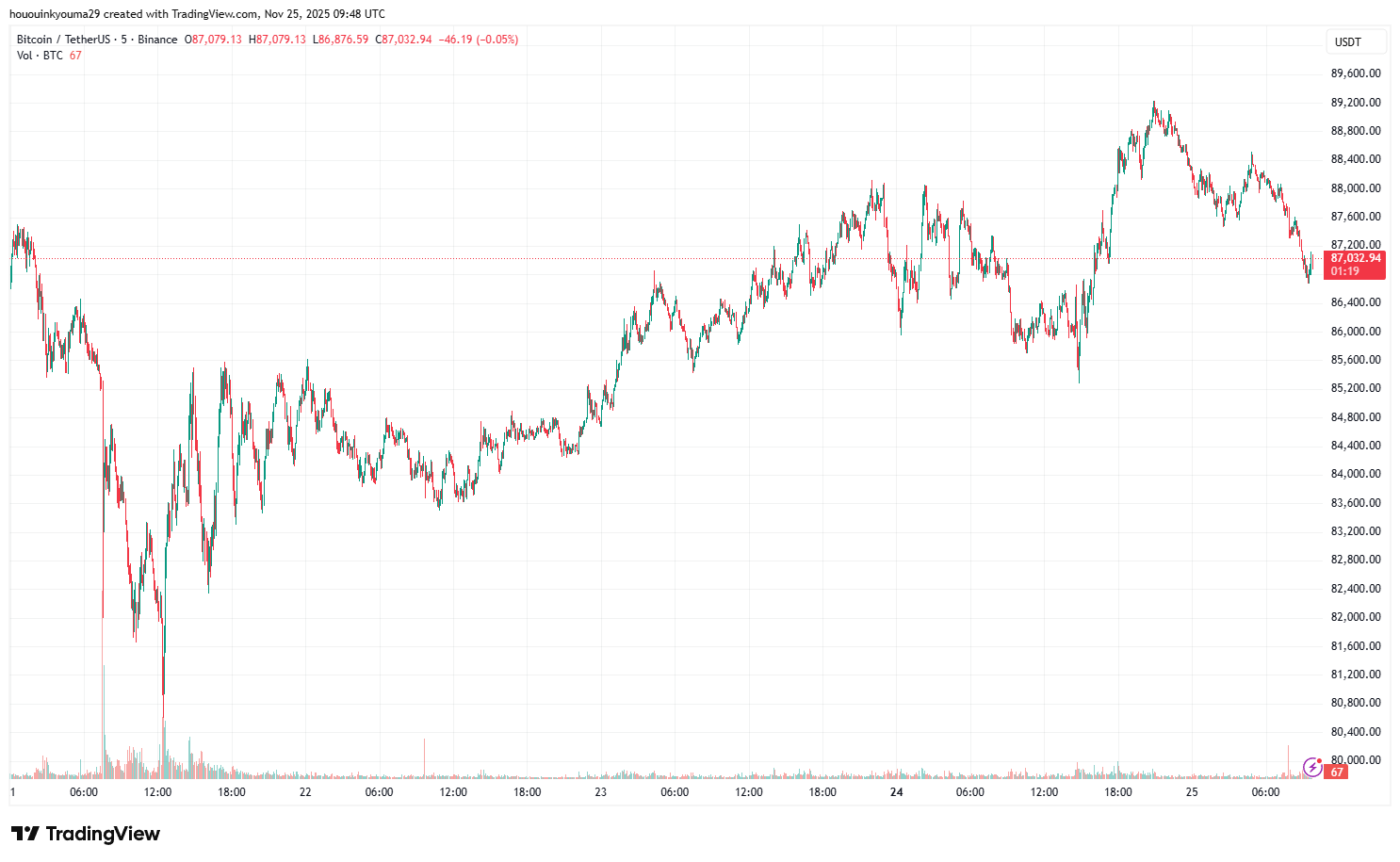
Bitcoin ha mostrato un breve rimbalzo sopra gli 89.000 dollari lunedì, ma in seguito è tornato a ritracciare fino a quota 87.000 $.
Fonte: BTC/USDT su TradingView
Editorial Process for bitcoinist is centered on delivering thoroughly researched, accurate, and unbiased content. We uphold strict sourcing standards, and each page undergoes diligent review by our team of top technology experts and seasoned editors. This process ensures the integrity, relevance, and value of our content for our readers.

Related Reads

Trading

Spot
Futures

Hot Articles

What is $BITCOIN

DIGITAL GOLD ($BITCOIN): A Comprehensive Analysis Introduction to DIGITAL GOLD ($BITCOIN) DIGITAL GOLD ($BITCOIN) is a blockchain-based project operating on the Solana network, which aims to combine the characteristics of traditional precious metals with the innovation of decentralized technologies. While it shares a name with Bitcoin, often referred to as “digital gold” due to its perception as a store of value, DIGITAL GOLD is a separate token designed to create a unique ecosystem within the Web3 landscape. Its goal is to position itself as a viable alternative digital asset, although specifics regarding its applications and functionalities are still developing. What is DIGITAL GOLD ($BITCOIN)? DIGITAL GOLD ($BITCOIN) is a cryptocurrency token explicitly designed for use on the Solana blockchain. In contrast to Bitcoin, which provides a widely recognized value storage role, this token appears to focus on broader applications and characteristics. Notable aspects include: Blockchain Infrastructure: The token is built on the Solana blockchain, known for its capacity to handle high-speed and low-cost transactions. Supply Dynamics: DIGITAL GOLD has a maximum supply capped at 100 quadrillion tokens (100P $BITCOIN), although details regarding its circulating supply are currently undisclosed. Utility: While precise functionalities are not explicitly outlined, there are indications that the token could be utilized for various applications, potentially involving decentralized applications (dApps) or asset tokenization strategies. Who is the Creator of DIGITAL GOLD ($BITCOIN)? At present, the identity of the creators and development team behind DIGITAL GOLD ($BITCOIN) remains unknown. This situation is typical among many innovative projects within the blockchain space, particularly those aligning with decentralized finance and meme coin phenomena. While such anonymity may foster a community-driven culture, it intensifies concerns about governance and accountability. Who are the Investors of DIGITAL GOLD ($BITCOIN)? The available information indicates that DIGITAL GOLD ($BITCOIN) does not have any known institutional backers or prominent venture capital investments. The project seems to operate on a peer-to-peer model focused on community support and adoption rather than traditional funding routes. Its activity and liquidity are primarily situated on decentralized exchanges (DEXs), such as PumpSwap, rather than established centralized trading platforms, further highlighting its grassroots approach. How DIGITAL GOLD ($BITCOIN) Works The operational mechanics of DIGITAL GOLD ($BITCOIN) can be elaborated on based on its blockchain design and network attributes: Consensus Mechanism: By leveraging Solana’s unique proof-of-history (PoH) combined with a proof-of-stake (PoS) model, the project ensures efficient transaction validation contributing to the network's high performance. Tokenomics: While specific deflationary mechanisms have not been extensively detailed, the vast maximum token supply implies that it may cater to microtransactions or niche use cases that are still to be defined. Interoperability: There exists the potential for integration with Solana’s broader ecosystem, including various decentralized finance (DeFi) platforms. However, the details regarding specific integrations remain unspecified. Timeline of Key Events Here is a timeline that highlights significant milestones concerning DIGITAL GOLD ($BITCOIN): 2023: The initial deployment of the token occurs on the Solana blockchain, marked by its contract address. 2024: DIGITAL GOLD gains visibility as it becomes available for trading on decentralized exchanges like PumpSwap, allowing users to trade it against SOL. 2025: The project witnesses sporadic trading activity and potential interest in community-led engagements, although no noteworthy partnerships or technical advancements have been documented as of yet. Critical Analysis Strengths Scalability: The underlying Solana infrastructure supports high transaction volumes, which could enhance the utility of $BITCOIN in various transaction scenarios. Accessibility: The potential low trading price per token could attract retail investors, facilitating wider participation due to fractional ownership opportunities. Risks Lack of Transparency: The absence of publicly known backers, developers, or an audit process may yield skepticism regarding the project's sustainability and trustworthiness. Market Volatility: The trading activity is heavily reliant on speculative behavior, which can result in significant price volatility and uncertainty for investors. Conclusion DIGITAL GOLD ($BITCOIN) emerges as an intriguing yet ambiguous project within the rapidly evolving Solana ecosystem. While it attempts to leverage the “digital gold” narrative, its departure from Bitcoin's established role as a store of value underscores the need for a clearer differentiation of its intended utility and governance structure. Future acceptance and adoption will likely depend on addressing the current opacity and defining its operational and economic strategies more explicitly. Note: This report encompasses synthesised information available as of October 2023, and developments may have transpired beyond the research period.

363 Total ViewsPublished 2025.05.13Updated 2025.05.13

What is $BITCOIN

Discussions

Welcome to the HTX Community. Here, you can stay informed about the latest platform developments and gain access to professional market insights. Users' opinions on the price of BTC (BTC) are presented below.

活动图片