Почему 15 января может стать днем «похорон» Strategy (MicroStrategy)

cryptonews.ruPublished on 2025-03-23Last updated on 2025-11-24

Компания Strategy Inc. раскрыла данные, которые ставят под сомнение ее способность пережить ближайший квартал. На балансе находятся 649 870 биткоинов, что составляет 3,26% эмиссии. Общая сумма, потраченная на их покупку, достигла $48,37 млрд.

Масштаб активов выглядит внушительно, но опубликованные данные показывают серьезный разрыв между возможностями компании и ее текущими обязательствами.

Как купить биткоин с карты: инструкция

Финансовая конструкция, которая перестала работать

Strategy Inc. располагает $54 млн свободных средств, однако обязана ежегодно выплачивать $700 млн дивидендов по привилегированным акциям. Основной бизнес компании связан с разработкой корпоративного программного обеспечения, и этот сегмент приносит убытки. Денежный поток отрицательный, поэтому для выполнения дивидендных обязательств компании приходится каждый год привлекать $700 млн.

За первые девять месяцев 2025 года Strategy привлекла $19,5 млрд. Эти средства направлялись не на покупку нового биткоина, а на обслуживание долгов, накопившихся в результате предыдущих выпусков облигаций и акций. Поддержание деятельности требует постоянного привлечения нового капитала для закрытия старых обязательств.

Ранее модель работала благодаря высокой цене акций. Когда ценные бумаги торговались примерно вдвое дороже стоимости биткоина на балансе, выпуск новых акций увеличивал количество биткоина на одну акцию у существующих инвесторов. Осенью 2025 года эта премия исчезла. Каждый новый выпуск теперь размывает доли акционеров, и механизм накопления биткоина перестал приносить эффект.

Рост дивидендной нагрузки и риск распродажи биткоина

Привилегированные акции усиливают давление. Летом 2025 года ставка дивидендов составляла 9%, к ноябрю она выросла до 10,5%. Каждое падение цены акций ниже $100 вынуждает повышать ставку, чтобы привлечь покупателей. Рост давления не имеет верхней границы. Потеря доверия приводит к риску, при котором Strategy придется продавать биткоины для выполнения обязательств, что полностью разрушает ее собственную инвестиционную логику.
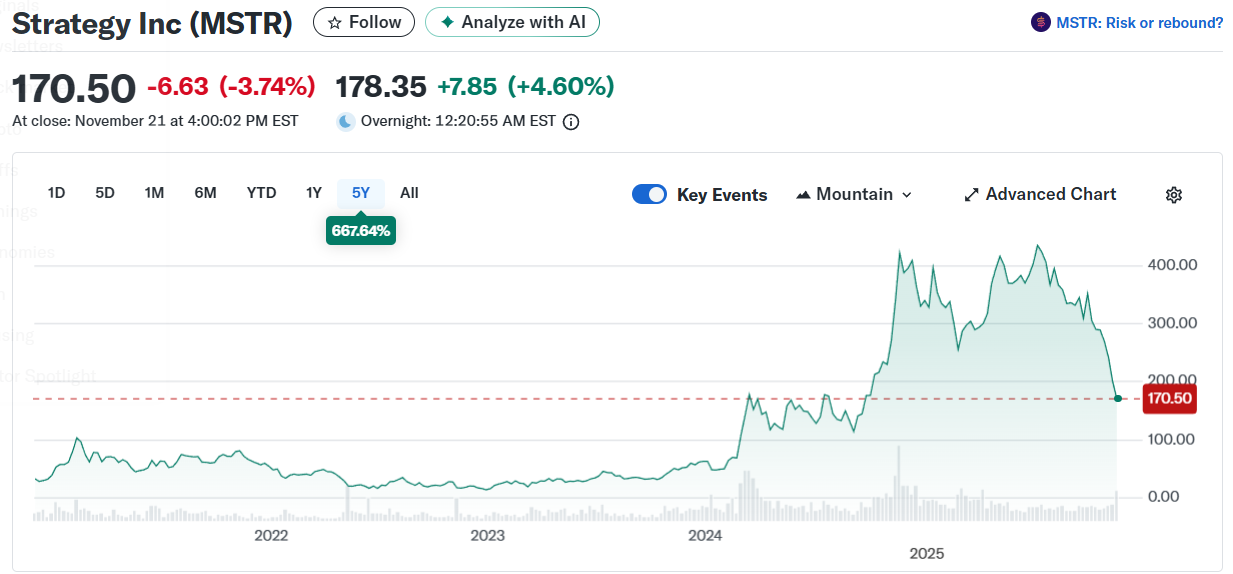
акции Strategy
Информация об акциях Strategy. Источник: finance.yahoo.

15 января 2026 года

MSCI является одним из крупнейших поставщиков фондовых индексов. Огромное количество пассивных фондов обязан следовать структуре этих индексов механически. Исключение компании из индекса заставляет такие фонды продавать ее акции автоматически.

15 января 2026 года MSCI объявит решение по компаниям, у которых более 50% активов представляют цифровые валюты. Strategy держит около 77% активов в биткоине, поэтому включение в список на исключение практически гарантировано. JPMorgan оценивает объем обязательных продаж в $2,8 млрд. Совокупный отток капитала может достичь $8,8 млрд.

Данные MSCI по Strategy
Данные MSCI по Strategy. Исочник: strategy.com

Рынок уже показал слабость ликвидности

10 октября падение биткоина на 17% привело к резкому сокращению ликвидности. Глубина стаканов снизилась примерно на 90%, а ликвидации превысили $19 млрд за 14 часов. Strategy владеет 3,26% всей эмиссии биткоина. Продажа даже 100 000 монет в условиях стресса способна вызвать сильное падение цены из-за отсутствия достаточной ликвидности.

Ошибочные ожидания и неверные расчеты

Strategy утверждает, что обладает запасом покрытия дивидендов примерно на 71 год. Такой вывод строится на предположении о возможности ежегодно продавать биткоинов на $1 млрд без влияния на цену. События 10 октября опровергли этот расчет. Рынок не способен стабильно поглощать такие объемы в периоды высокой волатильности.

История Strategy демонстрирует столкновение корпоративной логики с природой долгоживущего актива. Корпорации действуют в рамках коротких финансовых циклов с регулярными выплатами и постоянным рефинансированием. Биткоин предполагает длинный горизонт удержания. Модель Strategy оказалась неустойчивой, потому что опиралась на постоянный приток капитала и высокие котировки акций.

К марту 2026 года рынок вынесет окончательное решение. Strategy может пройти через сокращение и реструктуризацию или стать примером того, что корпоративная модель хранения крупного запаса биткоина не выдерживает давления регулярных финансовых обязательств.

Что в сухом остатке

Модель Strategy Inc. рушится из-за сочетания высокой долговой нагрузки, исчезновения премии в цене акций и вероятного исключения из MSCI. Эти факторы делают существование компании в текущем виде невозможным.

Компания опиралась на непрерывный приток капитала и высокие котировки акций. С исчезновением премии механизм накопления биткоина остановился. Риск исключения из MSCI создает давление, связанное с механическими распродажами со стороны индексных фондов. Эти процессы формируют ситуацию, в которой Strategy сталкивается с непреодолимыми финансовыми ограничениями.


Related Reads

Trillion-Dollar Pension Fund Entry? Franklin Bitcoin Dividend Reinvestment ETF Comes with a Built-in Selling Pressure Ceiling

Franklin Templeton has filed to launch two ETFs that embed a "default configuration" logic into Bitcoin investment, aiming to tap into massive pension fund flows. These "Bitcoin Dividend Reinvestment Index ETFs" will initially hold 95% equities and 5% Bitcoin, automatically reinvesting stock dividends to buy Bitcoin. However, a quarterly rebalancing rule forces selling of Bitcoin if its allocation exceeds 5%, capping its maximum holding at 20%. While the product cleverly circumvents advisor reluctance and compliance hurdles by labeling itself as a U.S. equity product, its actual Bitcoin buying power is minimal. Given low dividend yields (e.g., ~1% for broad market indices), annual Bitcoin purchases from a fund the size of Franklin's existing Bitcoin ETF would be a mere $3.6 million—negligible against Bitcoin's daily trading volume. Crucially, during bull markets, the fund becomes a programmed, passive *seller* of Bitcoin, potentially creating sustained sell pressure if many similar funds emerge. The strategy leverages investor inertia and automatic enrollment, similar to the success of target-date funds in 401(k) plans. It also uses an offshore Cayman subsidiary for holding Bitcoin and raises a tax complication where investors must pay taxes on dividends they never receive as cash. Although recent U.S. regulatory changes allow crypto in retirement plans, widespread adoption as a default option faces legal hurdles. The core premise remains: the system doesn't need to convince anyone to buy Bitcoin actively; it simply relies on people doing nothing.

marsbit30m ago

Trillion-Dollar Pension Fund Entry? Franklin Bitcoin Dividend Reinvestment ETF Comes with a Built-in Selling Pressure Ceiling

marsbit30m ago

Bitcoin Hits 20-Month Low as Largest Bull Suffers $15 Billion Paper Loss

Bitcoin Hits 20-Month Low as Major Bull Loses $15 Billion On June 25th, Bitcoin fell below $60,000, hitting a low of $58,030—its lowest level since October 2024. The sell-off triggered over $1 billion in leveraged liquidations in 24 hours, with longs accounting for $788 million. This marks a more than 53% decline from the October 2025 all-time high of $126,198. A critical factor in the downturn is the weakening position of MicroStrategy, the largest corporate Bitcoin holder. With 847,363 BTC at an average cost of $75,651, the company now faces over $14.6 billion in unrealized losses. Its core financing flywheel—raising capital to buy Bitcoin—is stalling. Its variable-rate preferred shares (STRC), a key fundraising tool, have fallen 25% below their $100 target. This raises doubts about its ability to continue providing steady institutional demand for Bitcoin. Simultaneously, U.S. spot Bitcoin ETFs are experiencing significant outflows, with a single-day net outflow of $469 million on June 24th. This represents the most severe sustained capital flight since their launch. The macroeconomic backdrop remains restrictive, with persistent inflation delaying expected Fed rate cuts. Analysts note a shift in capital allocation, with institutional funds moving away from crypto towards AI infrastructure stocks. Immediate pressure comes from approximately $10 billion worth of Bitcoin options expiring on June 26th, which could increase market volatility. The combined effect of these factors—eroding core demand pillars, macro headwinds, and capital rotation—has decisively broken the $60,000 support level.

Foresight News36m ago

Bitcoin Hits 20-Month Low as Largest Bull Suffers $15 Billion Paper Loss

Foresight News36m ago

STRC Falls Below $80, Can Conservative Investors Still Buy the Dip?

The article analyzes whether the STRC (a perpetual preferred stock issued by MicroStrategy) presents a buying opportunity after its price fell below its $100 par value to around $80, offering a seemingly high yield of 13-15%. The core argument is that STRC's discount reflects market skepticism about the sustainability of MicroStrategy's capital structure model, not just temporary panic. This model relies on issuing securities (like STRC) to raise funds to buy more Bitcoin, a "flywheel" that works in a bull market. The recent small sale of BTC to fund dividends, while minor, broke the psychological "never sell" anchor and signaled potential strain. Key risks identified are not a traditional Ponzi collapse but a potential breakdown in the financing narrative: 1) If Bitcoin enters a deep bear market, crushing MicroStrategy's stock premium (mNAV), its ability to raise cheap capital weakens. 2) If STRC remains deeply discounted, it signifies permanently higher funding costs. 3) The high cash dividend yield represents a significant ongoing expense. 4) If selling BTC to pay dividends becomes routine, the bullish narrative reverses. The conclusion is that STRC is not a risk-free high-yield asset. It is a high-coupon bet on whether MicroStrategy's BTC treasury financing model can withstand a bear market. Buying it is a wager that the market will continue to believe in and fund this structure at acceptable costs. The current price asks if this cycle's "casualty" might be a BTC treasury company's融资 model itself.

marsbit52m ago

STRC Falls Below $80, Can Conservative Investors Still Buy the Dip?

marsbit52m ago

Why Do Crypto Projects Keep Changing Their Names?

**Why Do Crypto Projects Keep Changing Names?** In the crypto world, changing a project's name is common—over 16% of projects have done so, including major ones like Polygon (formerly Matic Network). This contrasts sharply with traditional businesses, which fiercely protect brand equity. The core reason is that in crypto, brand loyalty is often weak. Users are frequently investors, airdrop hunters, or yield seekers, not traditional consumers. A name associated with price crashes, hacks, or failed narratives becomes a liability, not an asset. Renaming can be a strategic reset to shed this baggage. Name changes serve as a potent marketing tool. They can signal a genuine pivot in strategy or scope (e.g., EthSign dropping "Eth" as it expanded). However, they are often used to "narrative surf," rebranding to align with hot trends like AI, RWA, or the metaverse (e.g., Elrond → MultiversX). Critically, renaming is also a PR tactic to distance a project from past failures like security breaches (e.g., Anyswap → Multichain). The most significant risk emerges when a name change is coupled with a token migration or swap. This process can allow projects to reset exchange price charts, erase visible historical downtrends, and create an illusion of a fresh start. It often facilitates liquidity resets, where low float can be exploited for pumps. More alarmingly, migrations sometimes mask overhauls to tokenomics, introducing substantial new token supply through "ecosystem funds" or "node rewards," effectively diluting existing holders. The fundamental issue isn't renaming itself, which can be valid for strategic evolution. The problem is when it functions as an escape from history—a way to avoid accountability for past mistakes, failed promises, and poor performance. When a project announces a rebrand, the critical questions are: What tangible new capability or strategy does it represent? Has the tokenomics changed? And what part of its past is it most trying to make users forget?

marsbit58m ago

Why Do Crypto Projects Keep Changing Their Names?

marsbit58m ago

Trading

Spot
Futures
活动图片