David Sacks Calls Crypto ‘The Industry of the Future’ — $BEST Stands Out Despite Dip

bitcoinistPublished on 2025-11-04Last updated on 2025-11-04

Abstract

Quick Facts ➡️ David Sacks calls crypto 'the industry of the future,' emphasizing the US's need to reassert digital leadership....

Trusted Editorial content, reviewed by leading industry experts and seasoned editors. Ad Disclosure

Quick Facts

  • ➡️ David Sacks calls crypto ‘the industry of the future,’ emphasizing the US’s need to reassert digital leadership.
  • ➡️ Market correction aside, on-chain and venture metrics show accelerating long-term growth.
  • ➡️ Best Wallet Token ($BEST) empowers self-custody through a mobile-first DeFi super app.
  • ➡️ $BEST presale is live at $0.025895 with staking rewards up to 78% APY and a verified contract.

Recently, David Sacks, now serving as Trump’s newly appointed ‘Crypto & AI Czar’, declared that ‘crypto is the industry of the future.’

The veteran entrepreneur and investor, best known as part of the ‘PayPal Mafia’ and an early backer of SpaceX and Airbnb, argued that the US must ‘reclaim leadership in digital innovation’ before foreign jurisdictions dominate the next technological wave.

Sacks’ remarks come at a turbulent moment for global markets. The total crypto market cap has fallen by ~10% over the past seven days, marking one of the sharpest corrections of the year.
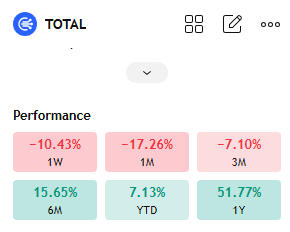
Total crypto market cap. Nov 4, 2025.

Yet Sacks dismissed short-term volatility as ‘noise,’ instead urging regulators and investors alike to focus on structural growth metrics: on-chain developer activity is going up year-on-year, Web3 wallet users now exceed 550M globally, and tokenized real-world assets (RWAs) surpassed $12B in total value locked — up since January.

His stance highlights a growing consensus among policymakers and venture investors: that digital ownership, decentralized identity, and programmable money will define the next decade of fintech evolution.

And while institutions pivot toward tokenization and blockchain-based settlements, the retail frontier lies in mobile-first, self-custodial ecosystems — precisely the kind of infrastructure being pioneered by Best Wallet Token ($BEST).

As the broader market resets, projects focused on usability, security and integrated rewards are emerging as the strongest defensive plays.

For investors seeking exposure to real utility rather than pure speculation, $BEST stands out as one of the best crypto presale tokens to align with this macro shift — a product built for function, not hype.

Best Wallet Token ($BEST) — Mobile DeFi Meets Self-Custody and Rewards

Best Wallet Token ($BEST) underpins Best Wallet, a next-gen mobile DeFi ecosystem designed to make self-custody and decentralized finance effortless for everyday users.

The app provides a free-to-use, comprehensive solution for multi-chain crypto swaps, onramping with fiat, and finding DeFi opportunities through a presale launchpad directory.

Next in the product’s roadmap come advanced crypto portfolio management, integrated third-party staking, NFT storage, and derivatives, all wrapped in an intuitive, consumer-grade interface.

Where most secure crypto wallets focus narrowly on token storage, Best Wallet operates more like a Web3 super app. Its design merges the convenience of traditional fintech platforms with the autonomy of DeFi, letting users send, trade, and HODL assets without sacrificing control of their private keys.Alt: Best Wallet key features.
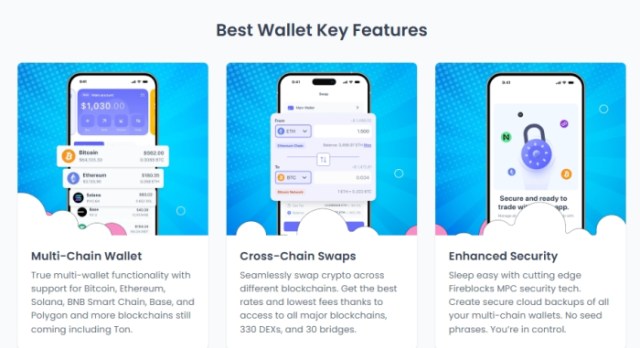
This mobile-first model directly addresses one of the crypto industry’s biggest bottlenecks: the steep usability gap that keeps mainstream users on centralized exchanges. Read more in our Best Wallet review.

At the time of writing, the $BEST presale is live at $0.025895 per token, with its verified contract on Etherscan showing over 76K transactions as of November 2025, a strong signal of community participation and transparency.
Best Wallet presale is now live.

Early investors are also drawn to the project’s staking program, offering up to 78% APY, and its upcoming gasless transaction system, which aims to eliminate one of DeFi’s biggest user pain points: transaction friction.

Right now, users can access decentralized swaps across major blockchains from Bitcoin to Solana without leaving the app, and the Token Launchpad feature allows $BEST holders to gain early access to emerging presales with the earliest entry opportunity.

In the same way that Sacks envisions a future where financial power shifts toward user-owned digital networks, Best Wallet translates that vision into a tangible product — one that democratizes self-custody while maintaining the simplicity of a modern mobile bank.

See the full Best Wallet roadmap.

The $BEST Token — Macro and Market Perspective

Historically, bear markets have proven to be incubation periods for next-cycle leaders. In 2018, it was Layer 1 networks; in 2020, it was DeFi protocols; in 2024, it was meme coins.

The next wave, according to crypto analysts, will be ‘wallet-native ecosystems’, platforms where identity, yield, and cross-chain liquidity converge under a single, secure interface.

By that measure, Best Wallet Token sits at the epicenter of one of crypto’s most scalable narratives. It provides the missing infrastructure for the next billion Web3 users — not just storage, either. The project will soon expand to offer accessible yield and cross-chain financial tools integrated directly into a single app.

📖 Learn how to buy $BEST before the presale ends on Nov 28, 2025.

📈 Analyst $BEST Token Projection: If $BEST captures even 0.05% of the global crypto wallet market share — roughly 250,000 active users — conservative forecasts estimate a price range of $0.24 to $0.62 in 2026, marking a potential 9–23x upside from its current presale valuation. This projection, while speculative, aligns with the rising demand for mobile DeFi access points as crypto adoption matures.

➡️ Join $BEST today to get DAO voting rights.

This article is for informational purposes only and should not be taken as financial advice. Always perform independent research before investing in cryptocurrencies or presales.

Authored by Bogdan Patru, Bitcoinist
https://bitcoinist.com/david-sacks-crypto-future-best-wallet-token-presale

Editorial Process for bitcoinist is centered on delivering thoroughly researched, accurate, and unbiased content. We uphold strict sourcing standards, and each page undergoes diligent review by our team of top technology experts and seasoned editors. This process ensures the integrity, relevance, and value of our content for our readers.

As a crypto writer, Bogdan’s responsibilities are split between researching and writing articles and entertaining the team with his humor bordering on the politically incorrect, an aspiring Bill Burr, if you will. Thanks to his 12+ years of writing experience in just as many fields, including tech, cybersecurity, modelling, fitness, crypto, and other topics-that-shall-not-be-named, he's become a genuine asset to the team. While his position as a senior writer at PrivacyAffairs thought him valuable lessons about the power of self-management, his entire writing career was and is an exercise in self-improvement. Now, he's ready to sink his teeth into crypto and teach people how to take control of their own money on the blockchain. With fiat as an eternally devaluing currency, Bitcoin and altcoins seem like the best-fitting alternative for Bogdan. Bogdan’s biggest professional accomplishment, aside from securing a position as a main writer for Bitcoinist, was his 5-year run as a writing manager at Blackwood Productions, where he coordinated a team of four writers. During that time, he learned the value of teamwork and that of creating a working environment that breeds efficiency, positivity, and friendship.

Related Reads

Automotive Chips Initiate a New Round of Game

After two years of deep inventory correction, the global automotive semiconductor industry is signaling a turning point in the second half of 2026, entering a structural upcycle. Unlike the broad-based shortages of 2022, this recovery is characterized by significant divergence across different chip segments, driven by 800V high-voltage platforms, high-level autonomous driving, and ongoing localization of supply chains in China. The industry-wide destocking cycle has concluded, with inventory levels at automakers and Tier 1 suppliers returning to healthy ranges. Key indicators, including rising OEM orders, lengthening component lead times, improving vendor revenues, and the initiation of price hikes by major suppliers like Infineon and Texas Instruments, confirm the start of a replenishment cycle. Segments are diverging into three tiers based on demand and supply dynamics. The first and strongest tier includes Silicon Carbide (SiC), high-voltage IGBTs, and automotive power management chips, fueled by the rapid adoption of 800V platforms. The second tier, experiencing a moderate recovery, comprises high-end 32-bit MCUs and automotive NOR Flash/DRAM, benefiting from advanced compute domains and AI-driven capacity constraints on mature nodes. The third tier, consisting of low-voltage MOSFETs and basic body electronics, remains stable with ample supply. The core growth logic has shifted from pure vehicle sales volume to increasing semiconductor content per vehicle. This is propelled by the transition to domain/centralized E/E architectures, software-defined vehicles, and new applications like commercial vehicle electrification and V2X communications. While the domestic Chinese supply chain is seizing this window for localization, risks remain, including potential softness in end-demand, future SiC oversupply, and possible easing of 8-inch wafer capacity constraints. In the near term, key segments are expected to see simultaneous volume and price increases, with the industry's cyclicality gradually giving way to more prominent long-term growth characteristics.

marsbit6m ago

Automotive Chips Initiate a New Round of Game

marsbit6m ago

Domestic RF Filters, Finally Starting to Compete?

China's domestic filter industry, particularly in the challenging BAW (Bulk Acoustic Wave) segment, has reached a significant inflection point, moving from solving the "availability" problem to entering a phase of commercial competition and scale. The market is attractive, with the global mobile terminal RF filter market projected to reach $9.2 billion in 2025, and BAW filters showing strong growth. However, the sector is historically dominated by giants like Broadcom and Qorvo, protected by deep patent walls, as evidenced by lawsuits that have bankrupted competitors like Akoustis. Previously, high-frequency BAW filter production in China was nearly zero. Now, domestic players like Nous Micro, Wuhan Memsensing, Hansky, and others are forming a genuine industrial cluster, achieving mass production and shipping hundreds of millions of chips to clients. Different business models are emerging, including IDM and fab-lite approaches through partnerships with foundries like Sai Microelectronics and Runxin Sensing. A key signal of this new competitive phase is a patent lawsuit filed by Nous Micro against Wuhan Memsensing in June 2025, alleging infringement of a core BAW resonator patent. This conflict, rather than mere internal friction, underscores that the industry now has substantial products and market stakes to contest. The challenge is no longer just technical breakthrough but transforming technological leads into sustainable commercial success through superior patents, product performance, cost control, and customer acquisition. Chinese companies are finally positioned to compete for a share of this lucrative market long held by foreign leaders.

marsbit31m ago

Domestic RF Filters, Finally Starting to Compete?

marsbit31m ago

Zhang Lei: How He Became the Biggest Money-Maker This Year

Zhang Lei's company Pinzhun Laser (频准激光) became the biggest "meat sign" (highly profitable new share) of the year on its A-share market debut. Its stock price skyrocketed nearly 600% from its IPO price, generating potential single-lot profits of over 550,000 RMB for lucky subscribers. Founded by Zhang Lei, a 2014 Ph.D. graduate from the Shanghai Institute of Optics and Fine Mechanics, Pinzhun Laser specializes in ultra-stable, narrow-linewidth lasers critical for quantum computing. Its lasers are used by leading global research teams at Harvard, Caltech, and France's PASQAL. The company later successfully applied its core frequency conversion technology to the semiconductor sector, developing deep-ultraviolet lasers for advanced chip manufacturing and inspection. This move diversified its revenue, with semiconductor sales growing rapidly to account for over 25% of its business by 2025. The company boasts gross margins consistently above 69%. Remarkably, Pinzhun Laser required only two major external funding rounds before its IPO, a testament to its early profitability. Key strategic investors in its IPO included major downstream players like BOE,佰维存储 (BIWIN), and中微半导体 (AMEC), signaling strong industry validation. The article highlights the crucial early-stage support from Hangzhou-based capital, particularly funds associated with the Hangzhou Institute of Optics and Fine Mechanics. This "patient capital" model, part of Hangzhou's broader 300-billion-yuan industrial fund strategy, focuses on partnering with scientist-entrepreneurs through the risky valley of death from lab to market. The success of Pinzhun Laser and another Hangzhou-backed firm,宇树科技 (Unitree Robotics), showcases how this supportive ecosystem helps build leading hard-tech companies.

marsbit36m ago

Zhang Lei: How He Became the Biggest Money-Maker This Year

marsbit36m ago

3-Month Loss of $10 Billion, DAT Companies Begin to Return to Rationality

During the recent earnings season, major Digital Asset Treasury (DAT) companies reported staggering combined losses of approximately $10 billion for Q2 and over $30 billion for the first half, primarily due to markdowns on their bitcoin holdings. However, contrary to expectations, their stock prices have rebounded from June lows, indicating the market had already priced in these losses. The key shift is a collective return to rationality. Companies like Strategy, Sharplink, and Metaplanet are now prioritizing a new core metric: increasing the amount of crypto assets per share. This marks a departure from last year's aggressive growth-at-all-costs narrative. To achieve this, they are adopting disciplined capital allocation—issuing stock to buy crypto when trading at a premium, and halting dilution or initiating buybacks when at a discount. Some, like Strategy, have even broken "never sell" pledges to uphold this discipline. A major tool enabling this strategy is the STRC model—perpetual preferred shares offering high dividends (e.g., 12-13%) to raise fixed-income capital for purchasing bitcoin. Strive, Bitmine, and Metaplanet have launched their own variants. Sharplink pursues a different path, staking its vast Ethereum holdings to generate native yield. While the premium of DAT stocks over their underlying crypto asset value has declined and may not fully return, the model is evolving rather than ending. Stripped of hype, DAT firms are becoming actively managed, leveraged thematic funds. Their survival through massive losses and continued institutional investment (with major funds adding billions to positions during downturns) suggests the industry is maturing into a more calculated, long-term business focused on compounding crypto per share.

marsbit40m ago

3-Month Loss of $10 Billion, DAT Companies Begin to Return to Rationality

marsbit40m ago

Trading

Spot
活动图片