Feds Demand Five Years for Samourai Wallet Founders: Best Wallet Remains Private

bitcoinistPublished on 2025-11-04Last updated on 2025-11-04

Abstract

Quick Facts: 1️⃣ Prosecutors want the full five-year prison sentence for Samourai Wallet's founders after they pleaded guilty to an...

Trusted Editorial content, reviewed by leading industry experts and seasoned editors. Ad Disclosure

Quick Facts:

1️⃣ Prosecutors want the full five-year prison sentence for Samourai Wallet’s founders after they pleaded guilty to an illegal money-transmitting charge.

2️⃣ A key piece of evidence is an internal message where a founder called their mixing feature ‘money laundering for Bitcoin.’

3️⃣ Best Wallet remains a private and secure multi-chain wallet for all your crypto needs.

Get ready for a tense week in the world of crypto law. The co-founders of the privacy-focused Samourai Wallet, Keonne Rodrigues and William Lonergan Hill, are due in court for sentencing, and US prosecutors are demanding the maximum five years in prison for both men.

The government isn’t pulling any punches, painting Rodriguez and Hill as anything but simple software developers.

In a new filing, prosecutors argue that the pair were basically running a digital ‘money laundering for Bitcoin’ service, actively encouraging criminals to use the platform to hide their dirty money. They’re definitely not buying the defense’s claim that they were just bystanders.

Here’s a breakdown:

  • The Crime: The duo pleaded guilty back in July to conspiracy to operate an unlicensed money-transmitting business. This was strategic, as it let them avoid three more serious charges, including money laundering, which carries a 20-year sentence.
  • The Stakes: They face up to five years on the charge they admitted to. Prosecutors say that over $237M in criminal cash, from drug cartels, darknet markets like Silk Road, and even sanctioned entities, flowed through Samourai’s mixing service.
  • The Evidence: The government’s smoking gun? Internal messages in which one of the founders allegedly referred to the mixing feature as ‘money laundering for Bitcoin’ and even promoted the tool on dark web forums as a way to ‘clean dirty Bitcoin.’

While the court’s probation office suggested a shorter 42-month sentence, the prosecutors are determined to make a statement by getting the full five-year term.

This case is seen as a huge test for the crypto community, raising major alarms for developers and privacy advocates who worry that simply creating tools for financial anonymity could now be seen as a crime.

It’s a high-profile showdown that’s putting the entire concept of crypto privacy under intense scrutiny. The legal crackdown on crypto mixers like Samourai Wallet underscores a fundamental tension in the industry: the clash between financial anonymity and regulatory compliance.

As the spotlight shifts away from privacy-focused tools targeted by law enforcement, the market is increasingly looking toward all-in-one, multi-chain wallets that offer robust features alongside transparent, audited security. One player standing out is Best Wallet.

Best Wallet: The New Guard of Secure Crypto Management

Unlike the old-guard, which often focused on singular aspects like deep anonymity (as Samourai did), Best Wallet is positioning itself as the gold standard for secure, non-custodial, multi-chain asset management.

It’s an all-in-one platform that’s racked up a huge user base by offering features that go far beyond simple storage, making it a powerful and secure alternative in the wake of all these regulatory crackdowns.

What truly sets Best Wallet apart is its next-level security and commitment to making crypto accessible without sacrificing safety. It ditches the biggest point of failure for most users, the easily lost or phished seed phrase, by using Fireblocks’ secure multi-party computation technology.
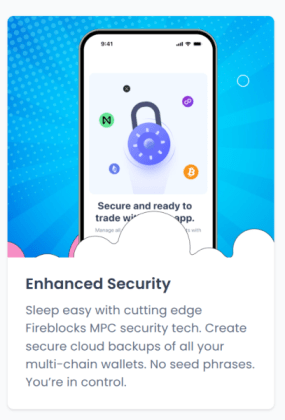
Infographic explaining the security features of Best Wallet.

This kind of military-grade security, combined with features like biometric login and advanced anti-fraud checks, gives you real peace of mind.

On the functionality side, the wallet is a hub for everything: you can manage, swap, and trade assets across six blockchains, including Bitcoin, Ethereum, and Solana. And the team has plans to expand this to over 60 blockchains.

Plus, its integrated DEX aggregator automatically scouts hundreds of exchanges to guarantee you get the best price and lowest fees on every single trade.

Best Wallet is built for the modern crypto user who needs speed, security, and smart trading all in one place. It’s no surprise it’s at the number one spot on our list of the best crypto wallets.

$BEST: The Fuel Behind Best Wallet

The entire Best Wallet ecosystem is fueled by its native asset, Best Wallet Token ($BEST), which is designed to be much more than just a typical crypto coin. This token is built on utility and access, and it’s why the ongoing presale has already raised a massive amount – close to $17M.

Holding $BEST essentially means a VIP pass to the entire ecosystem. The most direct benefit is a significant reduction in transaction fees for swaps and trades made within the wallet. It’s one of the main reasons our experts see $BEST potentially reaching $0.072 by the end of 2025.

But the real game-changer is the exclusive early access to the Upcoming Tokens launchpad. This allows you to get in on the top high-potential crypto presales through a vetted, secure channel, eliminating the risk of falling for scam links.
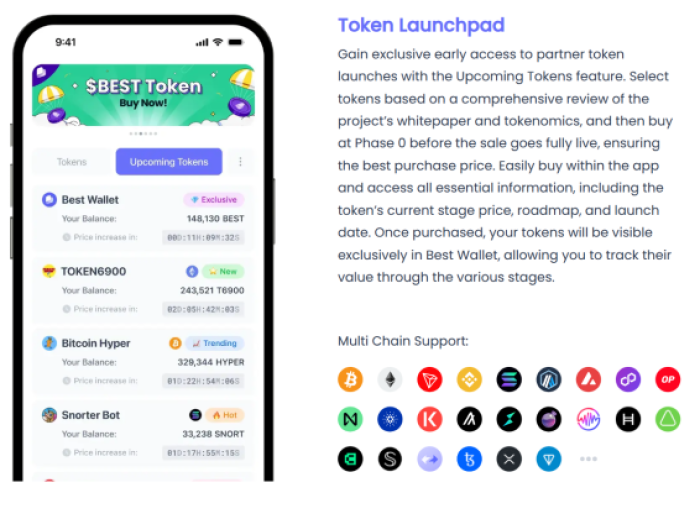
Token Launchpad explanation and the planned roll out for additional blockchains.

As the team continues to build out its roadmap, the utility will grow, with plans to integrate $BEST with a future crypto debit card for reduced spending fees, enhanced staking rewards, and full governance rights over the platform.

Time is running out, though, if you want to join the presale and secure your $BEST at its current early-bird price of $0.025895, with 78% staking rewards. The Best Wallet team has announced that the presale will end on November 28 – so the clock is ticking.

Remember, this is not intended as financial advice, and you should always do your own research before making any investments.

Authored by Ben Wallis, Bitcoinist – https://bitcoinist.com/samourai-wallet-devs-crypto-laundering-charges-best-wallet-stays-private/

Editorial Process for bitcoinist is centered on delivering thoroughly researched, accurate, and unbiased content. We uphold strict sourcing standards, and each page undergoes diligent review by our team of top technology experts and seasoned editors. This process ensures the integrity, relevance, and value of our content for our readers.

Ben is a freelance writer specializing in crypto developments (mainly altcoins) and the intricate ways global economics shape the digital asset space. His B.Ed. in Education provides a unique foundation for his writing, enabling him to distill complex crypto concepts and market shifts into clear, digestible insights. This skill is key to helping readers adapt and apply their understanding to the ever-evolving world of crypto investment. Passionate about making crypto accessible, Ben crafts content designed to educate a broad audience, from current market events to the essential foundational knowledge that underpins them. His goal is to empower readers through understanding. When he’s not immersed in crypto analysis and breaking down complex topics, Ben is an avid Pokémon fan and enjoys all things Disney.

Related Reads

Automotive Chips Initiate a New Round of Game

After two years of deep inventory correction, the global automotive semiconductor industry is signaling a turning point in the second half of 2026, entering a structural upcycle. Unlike the broad-based shortages of 2022, this recovery is characterized by significant divergence across different chip segments, driven by 800V high-voltage platforms, high-level autonomous driving, and ongoing localization of supply chains in China. The industry-wide destocking cycle has concluded, with inventory levels at automakers and Tier 1 suppliers returning to healthy ranges. Key indicators, including rising OEM orders, lengthening component lead times, improving vendor revenues, and the initiation of price hikes by major suppliers like Infineon and Texas Instruments, confirm the start of a replenishment cycle. Segments are diverging into three tiers based on demand and supply dynamics. The first and strongest tier includes Silicon Carbide (SiC), high-voltage IGBTs, and automotive power management chips, fueled by the rapid adoption of 800V platforms. The second tier, experiencing a moderate recovery, comprises high-end 32-bit MCUs and automotive NOR Flash/DRAM, benefiting from advanced compute domains and AI-driven capacity constraints on mature nodes. The third tier, consisting of low-voltage MOSFETs and basic body electronics, remains stable with ample supply. The core growth logic has shifted from pure vehicle sales volume to increasing semiconductor content per vehicle. This is propelled by the transition to domain/centralized E/E architectures, software-defined vehicles, and new applications like commercial vehicle electrification and V2X communications. While the domestic Chinese supply chain is seizing this window for localization, risks remain, including potential softness in end-demand, future SiC oversupply, and possible easing of 8-inch wafer capacity constraints. In the near term, key segments are expected to see simultaneous volume and price increases, with the industry's cyclicality gradually giving way to more prominent long-term growth characteristics.

marsbit6m ago

Automotive Chips Initiate a New Round of Game

marsbit6m ago

Domestic RF Filters, Finally Starting to Compete?

China's domestic filter industry, particularly in the challenging BAW (Bulk Acoustic Wave) segment, has reached a significant inflection point, moving from solving the "availability" problem to entering a phase of commercial competition and scale. The market is attractive, with the global mobile terminal RF filter market projected to reach $9.2 billion in 2025, and BAW filters showing strong growth. However, the sector is historically dominated by giants like Broadcom and Qorvo, protected by deep patent walls, as evidenced by lawsuits that have bankrupted competitors like Akoustis. Previously, high-frequency BAW filter production in China was nearly zero. Now, domestic players like Nous Micro, Wuhan Memsensing, Hansky, and others are forming a genuine industrial cluster, achieving mass production and shipping hundreds of millions of chips to clients. Different business models are emerging, including IDM and fab-lite approaches through partnerships with foundries like Sai Microelectronics and Runxin Sensing. A key signal of this new competitive phase is a patent lawsuit filed by Nous Micro against Wuhan Memsensing in June 2025, alleging infringement of a core BAW resonator patent. This conflict, rather than mere internal friction, underscores that the industry now has substantial products and market stakes to contest. The challenge is no longer just technical breakthrough but transforming technological leads into sustainable commercial success through superior patents, product performance, cost control, and customer acquisition. Chinese companies are finally positioned to compete for a share of this lucrative market long held by foreign leaders.

marsbit31m ago

Domestic RF Filters, Finally Starting to Compete?

marsbit31m ago

Zhang Lei: How He Became the Biggest Money-Maker This Year

Zhang Lei's company Pinzhun Laser (频准激光) became the biggest "meat sign" (highly profitable new share) of the year on its A-share market debut. Its stock price skyrocketed nearly 600% from its IPO price, generating potential single-lot profits of over 550,000 RMB for lucky subscribers. Founded by Zhang Lei, a 2014 Ph.D. graduate from the Shanghai Institute of Optics and Fine Mechanics, Pinzhun Laser specializes in ultra-stable, narrow-linewidth lasers critical for quantum computing. Its lasers are used by leading global research teams at Harvard, Caltech, and France's PASQAL. The company later successfully applied its core frequency conversion technology to the semiconductor sector, developing deep-ultraviolet lasers for advanced chip manufacturing and inspection. This move diversified its revenue, with semiconductor sales growing rapidly to account for over 25% of its business by 2025. The company boasts gross margins consistently above 69%. Remarkably, Pinzhun Laser required only two major external funding rounds before its IPO, a testament to its early profitability. Key strategic investors in its IPO included major downstream players like BOE,佰维存储 (BIWIN), and中微半导体 (AMEC), signaling strong industry validation. The article highlights the crucial early-stage support from Hangzhou-based capital, particularly funds associated with the Hangzhou Institute of Optics and Fine Mechanics. This "patient capital" model, part of Hangzhou's broader 300-billion-yuan industrial fund strategy, focuses on partnering with scientist-entrepreneurs through the risky valley of death from lab to market. The success of Pinzhun Laser and another Hangzhou-backed firm,宇树科技 (Unitree Robotics), showcases how this supportive ecosystem helps build leading hard-tech companies.

marsbit36m ago

Zhang Lei: How He Became the Biggest Money-Maker This Year

marsbit36m ago

3-Month Loss of $10 Billion, DAT Companies Begin to Return to Rationality

During the recent earnings season, major Digital Asset Treasury (DAT) companies reported staggering combined losses of approximately $10 billion for Q2 and over $30 billion for the first half, primarily due to markdowns on their bitcoin holdings. However, contrary to expectations, their stock prices have rebounded from June lows, indicating the market had already priced in these losses. The key shift is a collective return to rationality. Companies like Strategy, Sharplink, and Metaplanet are now prioritizing a new core metric: increasing the amount of crypto assets per share. This marks a departure from last year's aggressive growth-at-all-costs narrative. To achieve this, they are adopting disciplined capital allocation—issuing stock to buy crypto when trading at a premium, and halting dilution or initiating buybacks when at a discount. Some, like Strategy, have even broken "never sell" pledges to uphold this discipline. A major tool enabling this strategy is the STRC model—perpetual preferred shares offering high dividends (e.g., 12-13%) to raise fixed-income capital for purchasing bitcoin. Strive, Bitmine, and Metaplanet have launched their own variants. Sharplink pursues a different path, staking its vast Ethereum holdings to generate native yield. While the premium of DAT stocks over their underlying crypto asset value has declined and may not fully return, the model is evolving rather than ending. Stripped of hype, DAT firms are becoming actively managed, leveraged thematic funds. Their survival through massive losses and continued institutional investment (with major funds adding billions to positions during downturns) suggests the industry is maturing into a more calculated, long-term business focused on compounding crypto per share.

marsbit41m ago

3-Month Loss of $10 Billion, DAT Companies Begin to Return to Rationality

marsbit41m ago

Trading

Spot
活动图片