DeFi Security Crisis: Bunni DEX Folds After Major Exploit, Leaving Users Empty-Handed

bitcoinistPublished on 2025-10-24Last updated on 2025-10-24

Abstract

In another blow to the decentralized finance (DeFi) sector, Bunni DEX, a Uniswap V4-based decentralized exchange, has announced its permanent...

Trusted Editorial content, reviewed by leading industry experts and seasoned editors. Ad Disclosure

In another blow to the decentralized finance (DeFi) sector, Bunni DEX, a Uniswap V4-based decentralized exchange, has announced its permanent shutdown following an $8.4 million exploit that crippled its operations. The team cited an inability to cover relaunch and audit costs, marking one of the most significant DeFi collapses of 2025.

The exploit, which occurred on September 2, targeted Bunni’s Liquidity Distribution Function (LDF), a custom mechanism designed to optimize liquidity for traders.

Hackers used flash loans to manipulate internal calculations, triggering rounding errors that allowed them to drain funds across Ethereum and Unichain networks. Despite prior audits by Trail of Bits and Cyfrin, the logic-level flaw went undetected.

Users Allowed Withdrawals, But Recovery Looks Grim

Before the attack, Bunni had rapidly grown from $2.2 million to nearly $80 million in total value locked (TVL), according to DeFiLlama data. However, the breach erased months of progress in a matter of seconds.

Following the hack, Bunni’s team halted operations, paused all smart contracts, and urged users to withdraw their remaining assets “until further notice.” Remaining treasury funds will be redistributed to BUNNI, LIT, and veBUNNI tokenholders, with the team pledging to exclude themselves from the compensation process.

“The recent exploit has forced Bunni’s growth to a halt,” the team posted on X. “To securely relaunch, we’d need six to seven figures for audits and monitoring, capital that we simply don’t have.”

In a final act before winding down, Bunni relicensed its v2 smart contracts from Business Source License (BUSL) to MIT, opening its technology, including liquidity distribution functions, surge fees, and autonomous rebalancing, to other developers in the DeFi ecosystem.
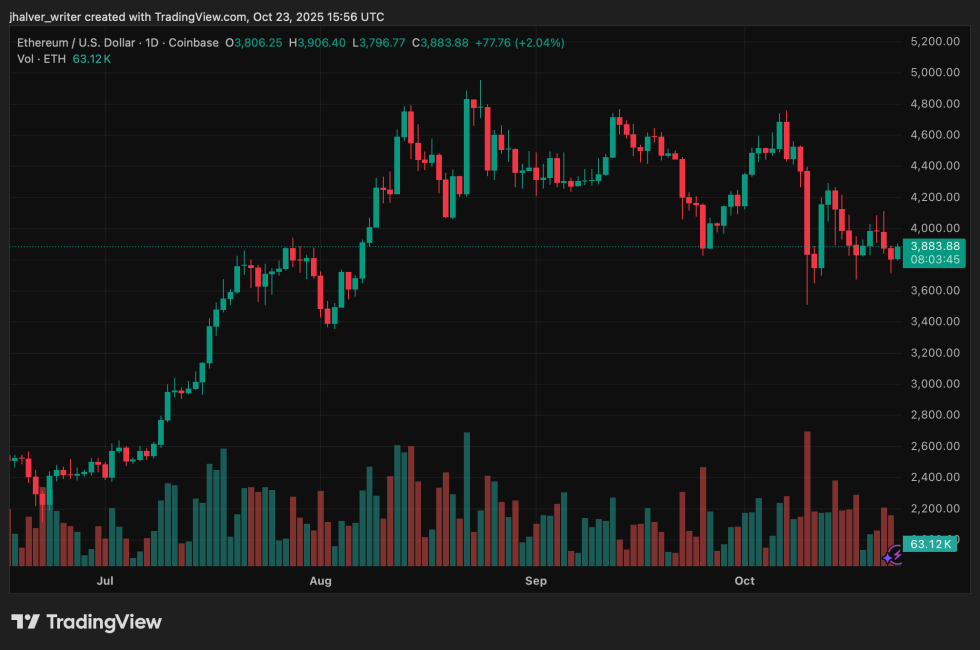
Ethereum ETH ETHUSD

ETH's price trends sideways on the daily chart. Source: ETHUSD on Tradingview

The Broader Impact on DeFi Security

Bunni’s collapse spotlights a growing security crisis in DeFi, which has already seen over $3.1 billion lost to exploits in 2025 alone, according to Hacken’s report. The incident highlights the dangers of deploying custom smart contract logic without sufficient financial and technical safeguards.

Industry experts warn that the event could usher in a new era of cautious innovation, where developers prioritize comprehensive audits, real-time monitoring, and stricter bug bounty programs.

For users, the Bunni exploit serves as a stark reminder: in the high-yield world of decentralized finance, trust and transparency remain as valuable as the tokens themselves.

Cover image from ChatGPT, ETHUSD chart from Tradingview

Editorial Process for bitcoinist is centered on delivering thoroughly researched, accurate, and unbiased content. We uphold strict sourcing standards, and each page undergoes diligent review by our team of top technology experts and seasoned editors. This process ensures the integrity, relevance, and value of our content for our readers.

Related Reads

Bankless Co-founder: Why I Sold All My ETH

Author David Hoffman, founder of Bankless, explains his decision to sell all his ETH, despite being a prominent figure in the Ethereum ecosystem. He clarifies that his move is not a bearish take on Ethereum itself, which he remains highly optimistic about as a network. His core argument is that the "ETH is money" thesis, which he helped popularize, has largely played out. Hoffman argues that ETH has achieved the market valuation it deserves based on Ethereum's current success and competitive position. He details several reasons for this view. First, the path for ETH to become global money required nearly flawless execution and sustained dominance across Ethereum's entire technical and social stack—a coordination challenge he now believes had a narrower window for success than anticipated. Second, market data shows a strong correlation between L1 chain activity/fees and the price of its native asset; Ethereum's fee dominance has been challenged by competitors like Solana. Third, the "strong version" of crypto (decentralized, native crypto economies) that ETH's monetary thesis relied upon has struggled to maintain a positive mainstream narrative and stable adoption beyond a brief period. Finally, Ethereum's architecture as a "giver"—providing secure block space and tokenization capabilities at cost to L2s and applications—means it doesn't capture premium value directly. Its rollup-centric roadmap further directs most profits to L2s and applications ("fat app theory"). In conclusion, Hoffman believes the opportunity for ETH to be revalued significantly upward as money has diminished. He sold not because ETH will fail, but because its monetary thesis has matured, and he seeks to allocate capital to other opportunities he finds more compelling.

链捕手57m ago

Bankless Co-founder: Why I Sold All My ETH

链捕手57m ago

From Issuer to Infrastructure Owner: Circle's Arc Strategy and the Fatal Gap in the GENIUS Act

Circle raised $222 million for its proprietary Layer-1 blockchain, Arc, positioning itself not just as a stablecoin issuer but as the owner of the settlement infrastructure USDC relies on. This move, backed by investors like BlackRock and Apollo, highlights a significant structural conflict unaddressed by the GENIUS Act of 2025. While the act focuses on stablecoin reserves and issuer oversight, it remains silent on the market structure implications of an issuer controlling the underlying network—a scenario akin to a currency issuer also owning the payment rails. Traditionally, financial regulations separate issuers from settlement infrastructure to ensure neutrality. With Arc, Circle gains control over transaction ordering, fees, and network rules, potentially favoring USDC over competitors. The article argues that this creates a permanent structural temptation, even if no abuse occurs. The solution lies in applying established market infrastructure principles: mandating neutral transaction ordering, transparent fee schedules, and governance separated from Circle’s commercial interests. The current pre-mainnet phase offers a critical window for regulators to establish these rules before Arc becomes entrenched. Once operational, enforcing changes would be costly and disruptive. The core question remains: should a regulated stablecoin issuer be allowed to own the settlement network its competitors must use? The GENIUS Act doesn’t answer this, but Circle’s Arc strategy makes it urgent.

marsbit1h ago

From Issuer to Infrastructure Owner: Circle's Arc Strategy and the Fatal Gap in the GENIUS Act

marsbit1h ago

What Are the Key Variables Determining the AI Bull Market?

Title: What Determines the AI Bull Market? Key Variables Revealed Despite rising oil prices above $100/barrel, persistent inflation, and fragile Fed rate cut expectations—a traditionally hostile environment for high-valuation tech stocks—the AI sector continues to drive the market to new highs. According to analysts, the current AI boom is in a phase of "rational fervor": while bubbles exist, they are not yet out of control. The crucial shift is the emergence of Agentic AI, which is evolving from an assisting tool (Copilot) to an autonomous execution tool (Autopilot), creating a clearer commercial path from investment to revenue. This shift accelerates Token consumption and inference computing demand while boosting revenue forecasts for leading firms. The market is now rewarding capital expenditure as it transforms from a burden into a competitive moat, supporting hardware chains like GPUs, optical modules, and storage. However, valuations have already priced in growth expectations for 2027-2028. The forward P/E ratio for the "Magnificent Seven" tech giants is about 35x, compared to 25x for the rest of the S&P 500. This premium implies AI adoption must occur 5 to 8 times faster than past technological revolutions—a scenario with little room for error. The sustainability of the AI bull market hinges on three key variables: 1. **Short-term liquidity shocks**: Risks include sustained high oil prices, resurgent inflation, rising interest rates, and potential unwinding of the yen carry trade. The critical question is whether the upward revision speed of Annual Recurring Revenue (ARR) can outpace the rise in interest rates. 2. **Mid-term industry realization**: Can the actual pace of AI adoption and commercialization match the current lofty valuations? Historically, general-purpose technology revolutions follow a non-linear path with periods of acceleration and deceleration. 3. **Long-term structural constraints**: These include energy and power grid limitations, employment displacement and consumer purchasing power, social acceptance and potential backlash, and potential hardware technology breakthroughs that could disrupt current supply chains. While the long-term prospects for AI remain optimistic with potential for significant productivity gains, the stock market's pricing depends not just on the vision but on the actual speed of realization amid these growing constraints. The direction is clear, but the pace of execution will determine whether the bubble remains controlled or spirals out of control.

marsbit1h ago

What Are the Key Variables Determining the AI Bull Market?

marsbit1h ago

Trading

Spot
Futures
活动图片