Stable 8.25亿美元预存款秒空,官宣前巨鲸已提前入场7亿?

marsbitPublished on 2025-10-23Last updated on 2025-10-24

近期社区热议的项目 Stable 今日上午在 X 平台宣布,其预存款活动第一阶段已达到 8.25 亿美元上限。

「什么?我都开了小铃铛,刚打开页面就没额度了?」——这是今早许多第一时间尝试参与的用户的真实写照。下面,Odaily 星球日报带大家了解 Stable 项目,并回顾今日上午「8.25 亿美元预存款秒没」的全过程。

Stable:专为 USDT 设计的 Layer1 公链

Stable

Stable 是一条专为 USDT 打造的高性能 Layer1 公链,旨在提供高速、低成本、低延迟的稳定币交易网络。与通用型公链不同,Stable 聚焦于 USDT 的支付与结算功能,希望让 USDT 在链上具备类似现金的使用体验,适用于跨境支付、电商支付和企业清算等场景。

在技术设计上,Stable 采用独立公链架构,支持 EVM 兼容和子秒级交易确认,同时计划推出免 Gas 的 USDT0 转账模式,并为机构提供可申请的专属区块空间与合规隐私交易支持。这些特性旨在降低企业和终端用户使用区块链支付的门槛,提升稳定币交易效率。目前项目核心技术框架已基本完成,但测试网和主网上线时间尚未公布。

提的一提的是,Stable 获得了包括 Bitfinex、Hack VC、Franklin Templeton 在内的知名机构投资,并获得 Tether 官方背书,Tether CEO Paolo Ardoino 也公开支持该项目。这些资金主要用于网络基础设施建设和全球 USDT 的支付生态拓展。

Stable 预存款活动遭质疑

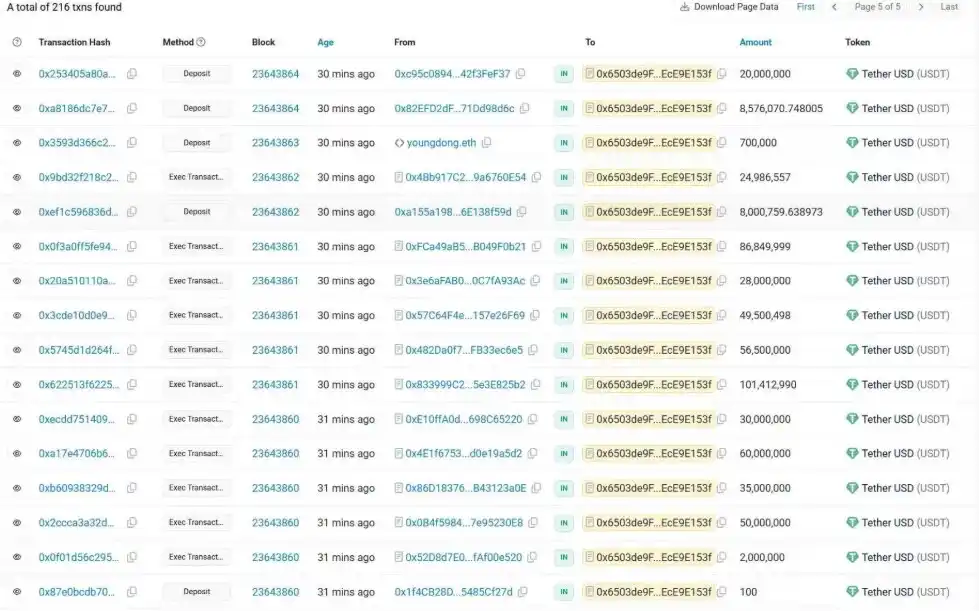
Stable 第一阶段 USDT 预存活动在开启后迅速引发巨大争议,被大量社区用户质疑存在严重的「老鼠仓」操作。按照官方时间线,Stable 于北京时间上午 9:10 才正式发推宣布开放预存,但链上数据显示,早在 8:48 就已经有人提前存入资金,与官方时间明显不符。
Stable

官宣预存款活动前已有多个地址大资金参与

链上数据显示,本次 8.25 亿美元的预存款额度,在公开消息前,7 亿美元就已被提前「包场」。其中,10 个巨鲸地址合计存入约 6 亿美元 USDT,且全部资金来自同一钱包地址,被拆分后在 10 秒内打满额度。进一步分析发现,这些资金均从 BTSE CEX 提出,再分散进入不同钱包参与预存,疑似由同一个资本集团统一操作。此外,这些地址的资金在活动开始前十几个小时就已完成准备和布局,进一步引发社区不满情绪。

Stable

预存款活动前,10 个资金来源相同的巨鲸地址合计存入 6 亿枚 USDT

相对而言,普通用户几乎没有参与空间。大量用户反馈,在第一时间进入官网后要么授权失败,要么交易迟迟无法打包,等看到官方推文时页面仅剩 0.13 USDT 可存,看似仍有少量额度,实际上散户几乎无法参与。
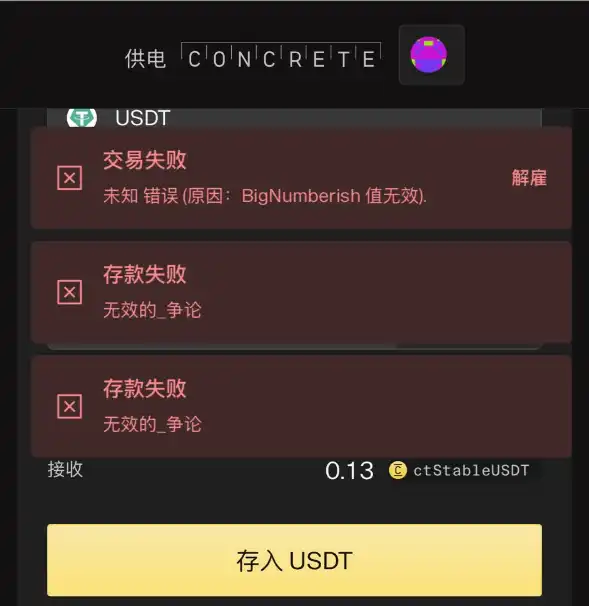
Stable

社区反馈:官推公布后,第一时间存款页面仅剩 0.13 USDT 可存

根据 Dune 数据,本次总额 8.25 亿美元的预存活动实际仅有 273 个地址参与,普通用户的参与比例几乎可以忽略。更值得注意的是,在所有参与地址中,有近 40 个地址的存入金额低于 500 USDT,甚至出现了 1 USDT、3 USDT、5 USDT 或几十 USDT 的极小额存款,社区讽刺称这些小额地址只是用来充人数的道具,毫无真实参与感。
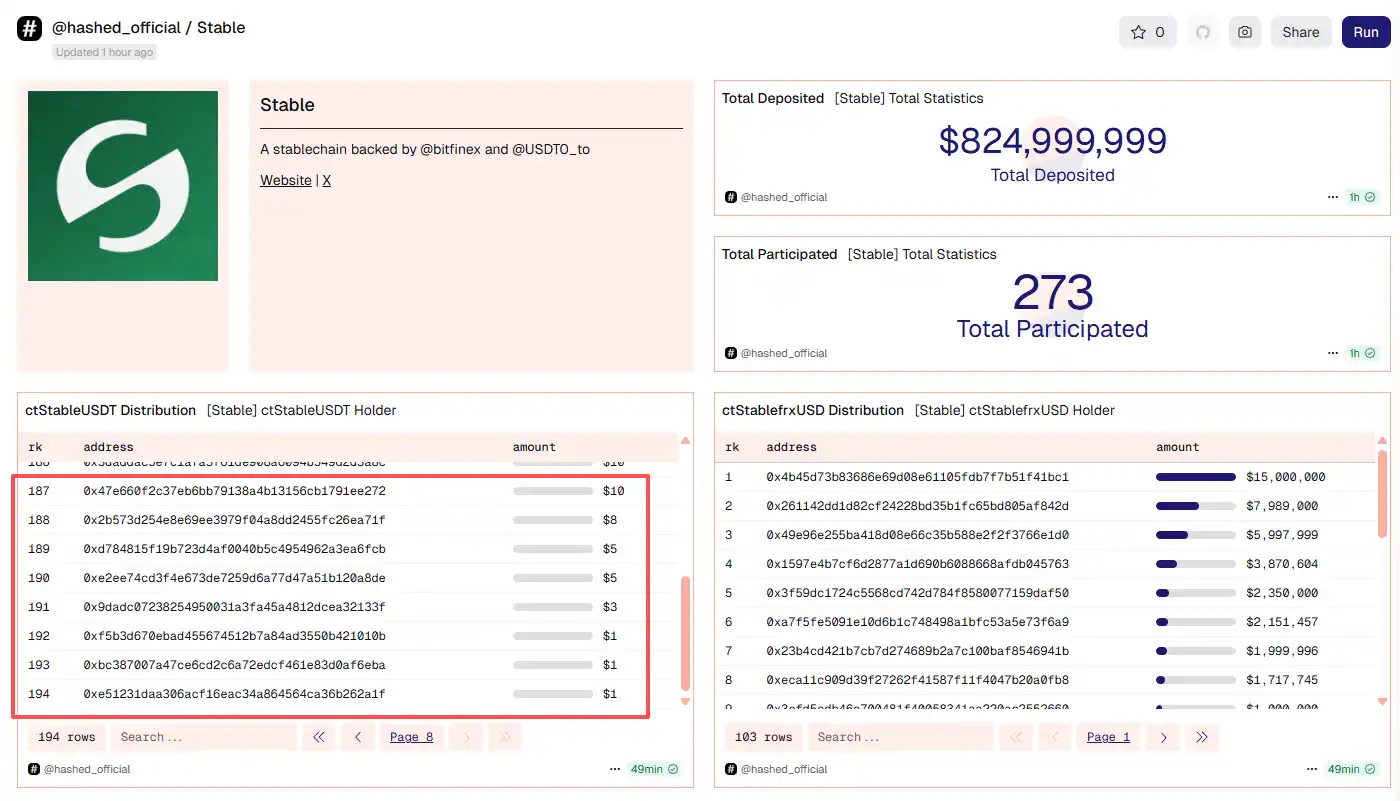
Stable

整体来看,Stable 第一阶段 8.25 亿美元的预存款活动很快满额结束,但社区情绪非常负面,被评价为「史诗级老鼠仓」、「提前内定的预售」。

小结

「骂归骂,该赚还是要赚」。虽然 Stable 第一阶段预存活动因严重「老鼠仓」问题备受争议,但考虑到其背后有 Tether 官方背书与一线资本支持,该项目依然具备强大的市场影响力与持续追踪价值。

接下来更值得关注的,反而是中心化交易所相关的预存款活动,尤其是币安是否会推出 Stable 的存款或参与活动。此前,币安曾上线 Plasma(XPL)存款活动,首期个人存款额度上限高达 10 万美元,后续批次也能存到 5 万美元。由于是存入稳定币参与,无本金损耗,XPL 上线后第一时间卖出所得收益年化高达 79%,成为今年 CEX 上线收益率最高的项目之一。

从这个角度看,Stable 依旧是高优先级关注项目,链上活动也许已经被大资金吃完,但 CEX 阶段或许才是适合普通散户的参与窗口。

Related Reads

IPO Imminent, OpenAI Faces Major Personnel Upheaval

OpenAI, preparing for a potential IPO, is experiencing significant leadership turmoil. In mid-August 2026, longtime "GPU geek" Scott Gray quietly left, and within three days, Chief Operating Officer Brad Lightcap (8-year veteran) and Chief Revenue Officer Denise Dresser (8-month tenure) departed. This follows a broader exodus of at least 10 senior executives in 2026, including heads of product, safety, and ethics. Analysts view this as a strategic "surgery" to transform from a research lab into a sales-driven enterprise company before going public. Revenue now tilts toward enterprise clients, surpassing consumer income sooner than expected, with annualized revenue reaching $40 billion. The new CRO, Dali Rajic, is a veteran enterprise sales leader. Concurrently, OpenAI has disbanded independent safety teams like "Preparedness," which assessed catastrophic risks, integrating their functions into core research. Critics warn this removes dedicated "brakes" on AI development. The leadership vacuum raises questions about who is the clear second-in-command after former apps CEO Fidji Simo moved to an advisory role. Co-founder Greg Brockman appears to be consolidating power. As OpenAI races against rival Anthropic ($47B annualized revenue), it faces the dual challenge of commercial execution while managing the departure of foundational technical talent and ensuring responsible AI development remains a priority.

marsbit43m ago

IPO Imminent, OpenAI Faces Major Personnel Upheaval

marsbit43m ago

AI Can 'Have Moods Too'! New Research from USTC: Confusion and Anxiety Make AI Work Better

The article discusses research from the University of Science and Technology of China and Oxford, revealing that allowing AI to recognize and act upon simulated "internal emotions" can significantly improve its performance. The study demonstrates a coherent pairing between specific emotional states in AI agents and their subsequent skill choices. For instance, an agent feeling curious and desirous will search for products, while one feeling confused and tense will rephrase queries. This mirrors human decision-making influenced by emotions. Statistical validation showed a 76.5% semantic consistency in these pairings. Crucially, the research challenges the traditional view of AI errors as flaws to be eliminated. It found that "bad" emotions like confusion, tension, or frustration serve as useful metacognitive signals, indicating a mismatch between the current strategy and the environment. By responding to these signals, AI can proactively adjust before a failure occurs. This is particularly effective in complex tasks prone to failure. For example, in tasks like "heating an item" and "picking up two items," success rates surged from 9.6% to 56.9% and 4.4% to 31.3%, respectively, when using the emotion-driven skill selection method (EMOTION2SKILL). The AI's "nervous" state about a closed microwave, for instance, prompted it to check and open it first, preventing failure. The article also mentions related work from Tianjin University, which embeds emotional prediction into world models (Large Emotional World Model, LEWM), significantly improving prediction accuracy in human-centric environments. Removing emotional data was found to degrade performance even in unrelated logical reasoning tasks. These studies build on earlier findings, like those from Anthropic, that identifiable emotional representations exist within large language models (LLMs). The focus is shifting from philosophical debate about AI emotion to practically harnessing these internal states as functional signals to enhance AI robustness and capability.

marsbit1h ago

AI Can 'Have Moods Too'! New Research from USTC: Confusion and Anxiety Make AI Work Better

marsbit1h ago

Trading

Spot
活动图片