Bullish готовится к запуску в США с лицензией New York BitLicense

cryptonews.ruPublished on 2025-04-17Last updated on 2025-09-18

Компания Bullish, платформа цифровых активов и поставщик инфраструктуры, дебютировавшая на Нью-Йоркской фондовой бирже в прошлом месяце, получила одобрение регулирующих органов на расширение своей деятельности в США, что стало важным достижением на фоне стремления бирж к более четкому позиционированию на одном из самых контролируемых рынков криптовалют.

В среду Bullish объявила, что ее американское подразделение, Bullish US Operations LLC, получило лицензию BitLicense и лицензию на денежные переводы от Департамента финансовых услуг штата Нью-Йорк (NYDFS).

Эти разрешения позволяют компании предлагать институциональным клиентам услуги спотовой торговли криптовалютой и кастодиальные услуги в Нью-Йорке.

Bullish, наиболее известная как институциональная платформа цифровых активов, вышла на рынок криптовалютных компаний в 2023 году, приобретя CoinDesk. После громкого публичного дебюта в прошлом месяце компания находится на подъеме, ненадолго превысив оценочную стоимость в 13 миллиардов долларов, поскольку ее акции резко выросли в день открытия.

По данным Yahoo Finance, цена первичного публичного размещения акций Bullish составила 37 долларов за акцию, а на пике цена выросла до 118 долларов. Сейчас акции торгуются около 54 долларов за каждую, что соответствует рыночной капитализации компании около 7 500 000 000 долларов.
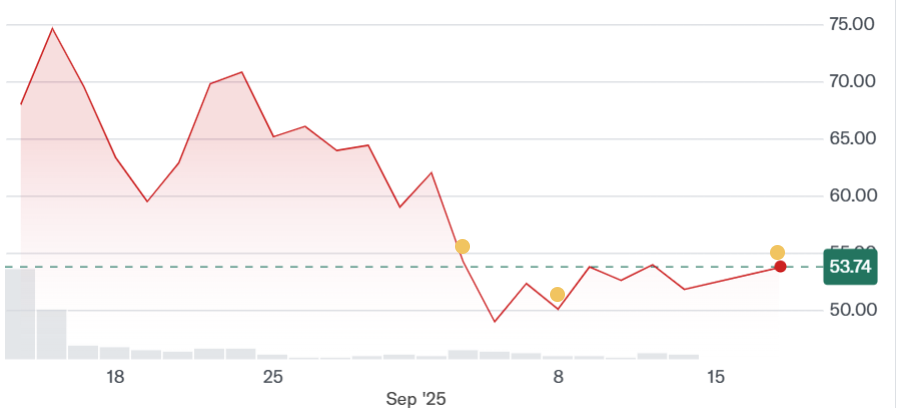
Рисунок 1. Акции Bullish, которые торгуются под тикером BLSH, столкнулись с волатильностью после выхода на биржу. Источник: Yahoo Finance.

BitLicense и проблемы, связанные с ней

BitLicense часто рассматривается как одно из самых сложных нормативных препятствий для криптовалютных компаний, поскольку требует длительной процедуры рассмотрения и выдается лишь ограниченному числу компаний с момента своего введения в 2015 году. В отрасли критикуют BitLicense за слишком высокую стоимость и ограничение конкурентоспособности штата Нью-Йорк.

С момента введения этой программы BitLicense получили лишь несколько десятков компаний. Среди недавних получателей - платежная компания MoonPay и дочерняя компания криптовалютного банка Anchorage Digital.

Прислушиваясь к мнению представителей отрасли, мэр Нью-Йорка Эрик Адамс предложил штату пересмотреть программу BitLicense.

Рисунок 2. Источник: abrkn.

«Давайте откажемся от лицензии на биткоин и позволим ему свободно циркулировать в нашем городе, - заявил Адамс на конференции Bitcoin 2025 в мае. - Хотя сбор за подачу заявки на BitLicense составляет 5000 долларов, фактическая стоимость получения BitLicense значительно выше, - написали партнер юридической фирмы Pillsbury Law Брайан Монтгомери на Х и его коллега Джонна Перселл. - Компании часто тратят в разы больше при подготовке заявки на BitLicense и также обязаны соблюдать требования к капиталу, установленные Департаментом финансовых услуг Нью-Йорка (NYDFS)», - отметили они.

Related Reads

Beyond the 'Kimchi Premium': Institutional Transformation in Korea

South Korea's crypto landscape is moving beyond the volatile "Kimchi Premium" era driven by retail speculation, according to Andrew Park, CEO of Factblock. Park, who organizes Korea Blockchain Week, notes a significant shift in the nature of international inquiries. Global institutions are now focusing on market access, asset custody, tokenization, stablecoins, and regulatory compliance, rather than just token listings and prices. This institutionalization is being built through foundational, "unsexy" back-office work: developing corporate crypto accounts, legal finality for settlements, accounting standards, and custody solutions. Key regulatory steps include the Financial Services Commission's framework for corporate virtual asset accounts and National Assembly amendments to laws governing tokenized securities and real-world assets. Park, with a traditional finance background, bridges the perspectives of Wall Street and Web3. He explains that traditional banks prioritize managing edge-case failures and regulatory reporting, which crypto-native firms sometimes misunderstand. Conversely, traditional financiers often overlook blockchain's systemic utility for 24/7 global settlement and programmable money. Looking ahead, Park sees South Korea's next frontier at the intersection of AI and programmable blockchain infrastructure. He is particularly interested in the infrastructure needed for a "machine-to-machine" economy, where AI agents could autonomously conduct micropayments and transactions using on-chain settlement mechanisms—a concept already being explored in pilot projects by the Bank of Korea. With its advanced digital infrastructure and investments in both Web3 and AI, South Korea is uniquely positioned to develop this future.

cryptonews.ru5m ago

Beyond the 'Kimchi Premium': Institutional Transformation in Korea

cryptonews.ru5m ago

Telegram Introduces WEB-Proxy Technology: Traffic Camouflaged as Regular Website Visits

Telegram has introduced an experimental WEB-proxy technology, unveiled on August 21, 2026, designed to bypass blocking by disguising messenger traffic as regular, encrypted website visits. This new method in Telegram Desktop routes MTProxy data through a WebView transport using HTTPS or WebSocket, making the data stream indistinguishable from legitimate web browsing and offering a new avenue for accessing the service under restrictions. The core innovation is a multiplexed stream sent through the app's built-in browser engine. It maintains MTProxy's encryption but sends all data via a single WebView session. Special frame types (OPEN, DATA, WINDOW, CLOSE) package multiple Telegram connections into one secure channel that appears as a standard webpage load. A server-side relay receives this stream, separates it into individual connections for the MTProxy without decrypting content or knowing final destinations, preserving privacy. The WEB-proxy operates on a regular HTTPS domain that simultaneously hosts a public website. The proxy bridge page activates only with a specific parameter derived from the configuration; all other requests receive the standard homepage, providing reliable cover. Connection links use formats like https://t.me/webproxy?server=... or tg://webproxy, with port 443 and HTTPS being mandatory. Currently a proof-of-concept, the project includes a desktop implementation, an experimental Android client, and plans for iOS support. It represents a shift towards more sophisticated integration with legitimate web infrastructure, leveraging standard browser mechanisms to complicate traffic filtering. The practical value will depend on its resilience to adaptive traffic analysis and scalability. This approach structurally echoes earlier techniques like domain fronting, highlighting the cyclical nature of the struggle between censorship and circumvention technologies.

cryptonews.ru22m ago

Telegram Introduces WEB-Proxy Technology: Traffic Camouflaged as Regular Website Visits

cryptonews.ru22m ago

Trading

Spot
活动图片